标签: Asia

亚洲

  • Abu Dhabi ranked world’s safest city for 10 consecutive years

    Abu Dhabi ranked world’s safest city for 10 consecutive years

    Abu Dhabi has achieved an unprecedented milestone by securing its position as the world’s safest urban center for the tenth consecutive year, according to an official announcement from the Abu Dhabi Media Office on January 17, 2026. This remarkable decade-long recognition, spanning from 2017 through 2026, establishes a new global benchmark in urban security excellence.

    The designation originates from Numbeo, the world’s largest crowd-sourced database tracking urban living conditions across 382 global cities. The emirate’s consistent top ranking reflects its sustained commitment to implementing comprehensive safety measures and maintaining exceptional quality of life standards.

    This achievement aligns with the United Arab Emirates’ growing appeal among international residents. Recent demographic studies reveal that approximately 19% of expatriates express intentions to establish permanent residence in the UAE. The Expat Insider 2025 survey, published by InterNations on September 2, 2025, further substantiates this trend, indicating that 18% of foreign residents plan to remain indefinitely, while 39% are considering extended stays.

    Major General Ahmed Saif bin Zaitoun Al Muhairi, Commander-in-Chief of Abu Dhabi Police, attributed this success to the visionary leadership of UAE President Sheikh Mohammed bin Zayed Al Nahyan. He elaborated on Abu Dhabi’s innovative security framework that integrates continuous surveillance operations, predictive policing strategies, artificial intelligence implementation, and community partnership programs.

    The comprehensive security model employs a multi-faceted approach focusing on personnel development, institutional collaboration, and technological advancement. This includes substantial investments in smart systems that enhance real-time decision-making capabilities and reinforce public confidence through transparent security operations.

    Complementing this perspective, Major General Sheikh Mohammed bin Tahnoun Al Nahyan, Director General of Abu Dhabi Police, emphasized that urban safety represents a fundamental component of sustainable development strategy. The achievement has positioned Abu Dhabi as an international hub for living standards, business investment, and workforce development, establishing a replicable model for global cities pursuing comprehensive security solutions.

  • Iraq takes full control of air base after US withdrawal, defence ministry says

    Iraq takes full control of air base after US withdrawal, defence ministry says

    The Iraqi Ministry of Defense confirmed on Saturday that the nation’s armed forces have officially assumed full operational control of the Ain al-Asad Airbase, following the complete withdrawal of United States-led coalition personnel. This strategic transfer of authority marks a pivotal moment in the ongoing reconfiguration of Iraq’s sovereign defense capabilities and its military relationship with international partners.

    The handover process stems from a bilateral understanding initially reached in 2024 between the governments in Washington and Baghdad. This agreement outlined a structured roadmap for the departure of all coalition forces operating under US command within Iraqi territory. Located in the western Anbar province, the Ain al-Asad Airbase has been a significant strategic asset, housing a substantial portion of the international coalition’s troops and equipment for years.

    This development is widely interpreted as a concrete step toward fulfilling the long-term strategic objective of the Iraqi government: asserting complete sovereign control over its national security infrastructure. The smooth transition of this key military installation is being presented by Iraqi authorities as a testament to the growing operational readiness and self-sufficiency of the Iraqi military and security forces. The event signifies a new chapter in the US-Iraq security relationship, likely shifting toward a model based more on advisory roles and arms-length support rather than the permanent, large-scale presence of foreign combat troops.

  • Iran’s supreme leader says ‘thousands killed’ in unrest, blames Trump and Israel

    Iran’s supreme leader says ‘thousands killed’ in unrest, blames Trump and Israel

    In an unprecedented public statement, Iran’s Supreme Leader Ayatollah Ali Khamenei has formally acknowledged that “several thousand” people lost their lives during recent nationwide protests, marking the first official recognition of the substantial death toll from the unrest. The comments, delivered on Saturday, represent a significant departure from previous government statements regarding the scale of the casualties.

    Khamenei directly attributed responsibility for the violence to United States President Donald Trump, asserting that Washington bore culpability for the widespread casualties, destruction, and social turmoil experienced across Iran. “We consider the US president criminal for the casualties, damages and slander he inflicted on the Iranian nation,” Khamenei declared through state media channels, emphasizing that the latest anti-government demonstrations differed from previous incidents due to Trump’s personal involvement.

    The protests initially erupted on December 28th, primarily driven by economic grievances, but rapidly evolved into the most severe civil unrest witnessed in Iran in recent years. Khamenei further accused Iran’s longstanding adversaries, the United States and Israel, of orchestrating the violence, claiming that “those linked to Israel and the US caused massive damage and killed several thousand” through arson attacks, destruction of public property, and deliberate efforts to incite chaos.

    Despite Trump’s repeated warnings against using capital punishment against protesters—including threats of “very strong action” if executions proceeded—and his Friday social media claim that Iranian authorities had halted mass hangings, Tehran promptly rejected this assertion, stating there was “no plan to hang people.”

    In remarks widely interpreted as a response to Washington, Khamenei asserted Iran would not be provoked into armed conflict while vowing that “we will not let domestic or international criminals go unpunished.”

    Independent verification of casualties remains challenging due to extensive internet restrictions. The US-based Human Rights Activists News Agency has documented at least 3,090 verified deaths, including 2,885 protesters, alongside more than 22,000 arrests since the unrest began. Internet monitoring group NetBlocks reported connectivity had slightly improved after exceeding 200 hours of near-total shutdown but remained at approximately two percent of normal levels.

    Iranian state media has reported the arrest of thousands described as “rioters and terrorists,” including individuals allegedly connected to foreign-based opposition groups seeking to overthrow the Islamic Republic. Meanwhile, Israeli officials have publicly expressed support for exiled opposition figures, with Heritage Minister Amichai Eliyahu recently claiming Israel maintained operatives “on the ground” in Iran aimed at weakening Tehran’s capabilities, though denying direct involvement in attempts to topple the leadership.

  • Pat Dobbs dominates Jebel Ali Preps with back-to-back wins at ‘yellow’ racecourse

    Pat Dobbs dominates Jebel Ali Preps with back-to-back wins at ‘yellow’ racecourse

    Veteran jockey Pat Dobbs delivered a spectacular performance at Jebel Ali Racecourse on Saturday, securing decisive victories in both feature prep races to reinforce his status as one of the UAE’s most accomplished riders. The Irish horseman, a mainstay of Doug Watson’s championship-winning Red Stables, added two more triumphs to his impressive record in the region.

    Dobbs first demonstrated his tactical prowess aboard Arlan in the 2000-meter Tobougg Corner Stakes, executing a perfectly timed run to edge out Elusive Trevor by a head, with Secret Manner finishing a close third. The jockey then partnered with Qatari trainer Hamad Al Jehani to guide David Of Athens to a dominant 2.5-length victory in the Jebel Ali Mile Prep Stakes, comfortably ahead of rivals Saayedd and Kafoo.

    With over two decades of experience in the Emirates racing circuit, Dobbs has now accumulated more than 200 victories in the region. His most notable achievement remains his 2017 Godolphin Mile triumph aboard Second Summer, cementing his legacy as one of the UAE’s most consistent performers.

    The racing card also featured a strong showing from the combination of champion trainer Bhupat Seemar and jockey Tadhg O’Shea, who secured a double through Omaha Front in the Al Shafar Investment Stakes and Ashwaan in the Commercial Bank Of Dubai Stakes. These victories propelled O’Shea to 21 wins for the season, narrowing the gap to championship leader Silvestre de Sousa (26 wins).

    In the trainers’ championship, Seemar remains tied with Ibrahim Al Hadhrami at 23 victories each, while defending champion Musabbeh Al Mheiri stays in contention following No Escape’s success in the JARC Sprint Handicap. With both titles remaining fiercely contested, the UAE racing season appears poised for an exhilarating conclusion over the coming months.

  • UAE Lottery announces winning numbers; 3 players take home Dh100,000 each

    UAE Lottery announces winning numbers; 3 players take home Dh100,000 each

    The UAE Lottery has announced the results of its 33rd weekly Lucky Day draw, distributing substantial cash prizes to fortunate participants. Three separate ticket holders each secured Dh100,000 in the latest Saturday drawing, marking another successful event in the revamped lottery format.

    Held on January 17, 2026, the Lucky Day draw #260117 featured winning numbers 14, 22, 11, 10, 24, and 26 with month indicator 8. The three Lucky Chance winners who claimed the Dh100,000 prizes were identified by their unique IDs: BA2507375, DH8483124, and AU1971772.

    The transition to weekly Saturday drawings, implemented during the lottery’s first anniversary celebration, has proven remarkably successful. This revised format has already created over 200 Lucky Chance winners since its introduction, demonstrating increased winning opportunities for participants.

    The current lottery structure offers substantial prize tiers, including a massive Dh30 million grand prize, a Dh5 million second prize, and the weekly Dh100,000 Lucky Chance awards. This prize distribution system continues to attract participants across the United Arab Emirates, offering life-changing financial opportunities through regulated gaming.

    The UAE Lottery’s consistent Saturday schedule provides regular entertainment and winning possibilities for residents, contributing to the nation’s gaming and entertainment landscape while maintaining transparent and verifiable drawing procedures.

  • SDF reports ‘intense clashes’ as Syrian army advances in Aleppo and Raqqa

    SDF reports ‘intense clashes’ as Syrian army advances in Aleppo and Raqqa

    A fragile withdrawal agreement between Syrian government forces and the Kurdish-led Syrian Democratic Forces (SDF) has collapsed, triggering intense military confrontations in northern Syria. The SDF reports being engaged in fierce clashes with pro-Damascus factions advancing on territories in Raqqa province, prompting Kurdish authorities to impose an indefinite curfew.

    The conflict erupted after the SDF agreed to withdraw its fighters east of the Euphrates River following two days of hostilities in the Aleppo region. While government troops successfully captured several towns and villages southwest of the Euphrates, they subsequently declared Kurdish-held areas in Raqqa province—including the strategic city of Tabqa—a “closed military zone.”

    According to SDF statements, Damascus violated the ceasefire agreement by launching attacks before Kurdish forces had completed their withdrawal from Deir Hafer and Maskana in Aleppo province. The SDF claims some of its fighters remain besieged in Deir Hafer due to what they term “government treachery.”

    Syrian state media presents a contrasting narrative, accusing Kurdish fighters of planting explosives on a bridge along the eastern road to Raqqa—an action the military warned could “disrupt the agreement” and incur “severe consequences.” The army has demanded the SDF immediately fulfill its commitment to withdraw completely east of the Euphrates and evacuate its fighters from Tabqa.

    Meanwhile, the Syrian government announced the capture of Raqqa province’s Resafa area and several nearby villages, including al-Thawra and a significant oil field in the region.

    The military escalation occurs alongside a potentially transformative political development: Syrian Interim President Ahmad al-Sharaa issued a decree formally recognizing the legal status and cultural rights of Syrian Kurdish citizens. This unprecedented acknowledgment of Kurdish national rights since Syria’s 1946 independence has been met with skepticism by Kurdish parties, who view it as symbolic rather than a substantive solution to their longstanding demands.

  • ‘Young 40s’: Gen Z has found a new way to mock millennials for their style in South Korea

    ‘Young 40s’: Gen Z has found a new way to mock millennials for their style in South Korea

    A new cultural phenomenon dubbed “Young 40s” has ignited intense generational tensions across South Korea, transforming fashion choices into social battlegrounds. What began as innocent style expressions by forty-somethings has evolved into a nationwide debate about age appropriateness, generational privilege, and shifting social hierarchies.

    The controversy centers on middle-aged men like Ji Seung-ryeol, a 41-year-old fashion enthusiast who finds himself unexpectedly at the epicenter of online ridicule. Despite diligently sharing his carefully curated mirror selfies on Instagram—featuring coveted streetwear items like Nike Air Jordans and Stüssy T-shirts—he now faces widespread mockery for embracing styles traditionally associated with Gen Z and younger millennials.

    The movement gained momentum following last September’s iPhone 17 release, when the smartphone—long considered a youth status symbol—suddenly became recast as a tacky trademark of desperate middle-agers. AI-generated caricatures depicting middle-aged men decked out in streetwear while clutching iPhones have gone viral, with Gen Z critics labeling them as trying too hard to appear youthful while refusing to accept the passage of time.

    Market research from Gallup reveals telling consumption patterns: while most young South Koreans still prefer iPhone to Samsung Galaxy, Apple’s market share has declined by 4% among Gen Z consumers while surging 12% among forty-somethings over the past year.

    This phenomenon represents more than mere fashion criticism—it exposes Korea’s complex relationship with age dynamics. In a society where even single-year age differences establish social hierarchy dictating everything from conversational honorifics to drinking etiquette, the Young 40s memes signify youth’s growing skepticism toward forced reverence for elders. Just years earlier, the term “kkondae” emerged to describe rigid, condescending elders, indicating preexisting generational friction.

    According to Korea University sociology professor Lee Jae-in, social media has exacerbated these tensions by creating spaces where “multiple generations mix within the same space,” dismantling traditional boundaries that once separated generational cultural consumption.

    The term “Young 40” originally emerged in 2010s marketing circles to describe health-conscious, tech-comfortable forty-somethings with youthful sensibilities. Trend analyst Kim Yong-Sup, widely credited with coining the term, notes that as South Korea’s median age rose, these consumers moved from society’s margins to its center.

    However, analytics platform SomeTrend reveals the term has taken a sardonic turn, with over 100,000 online mentions in the past year—more than half in negative contexts frequently accompanied by words like “old” and “disgusting.” An even more derogatory offshoot, “Sweet Young 40,” sarcastically labels middle-aged men who flirt with younger women.

    Psychologist Oh Eun-kyung suggests these jokes represent “punching up” at privileged generations who accumulated wealth during economic stability and property booms, unlike contemporary youth facing soaring housing prices and cut-throat job competition. To struggling younger generations, Young 40s symbolize “the generation that made it through just before the door of opportunity closed”—not merely individuals with personal taste but symbols of privilege and power.

    Yet those living the reality tell a different story. Ji remembers submitting approximately 70 job applications during the Asian financial crisis of the late 1990s, representing a generation that “had very little to enjoy growing up, and only began to enjoy things later, as adults.”

    Now in workplaces, many forty-somethings feel caught between generations—sandwiched between older superiors who maintained “strict, top-down systems” and younger colleagues who constantly question “why.” This interstitial position, once considered a badge of honor, now generates self-consciousness about being labeled kkondae or Young 40.

    As another fashionable 41-year-old named Kang observes, the phenomenon ultimately reveals a universal human desire: “As you get older, longing for youth becomes completely natural. Wanting to look young is something every generation shares.”

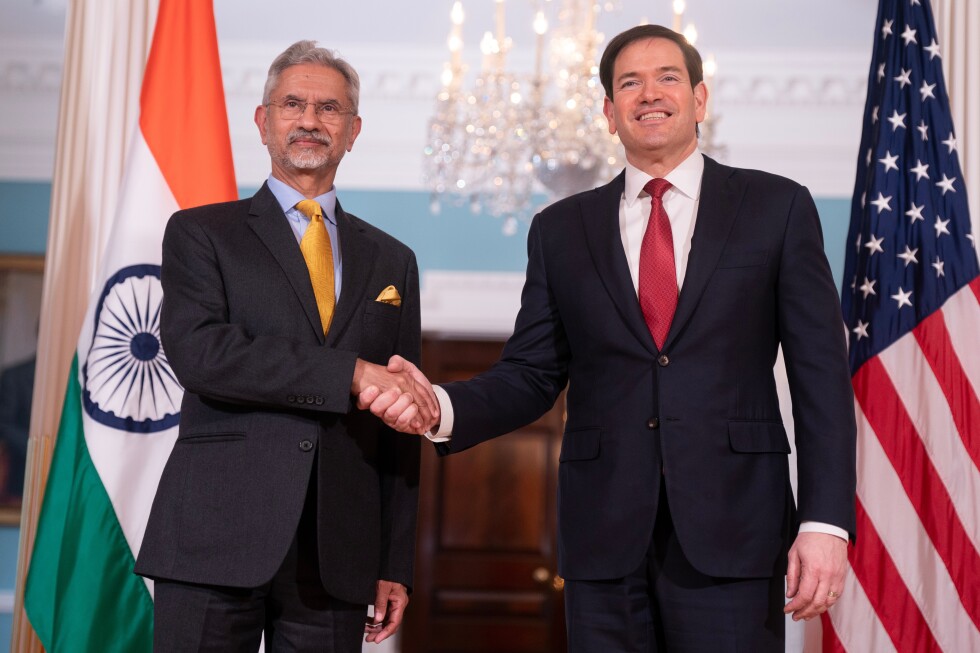
  • India pushes for consular access to 16 Indian crew members detained by Iran

    India pushes for consular access to 16 Indian crew members detained by Iran

    The Indian Embassy in Tehran has escalated diplomatic engagements with Iranian authorities to secure consular access to sixteen Indian crew members detained aboard the merchant vessel MT Valiant Roar. Despite persistent diplomatic correspondence and high-level meetings initiated since December 14, 2025, Iranian officials have yet to grant access to the detained seafarers.

    The maritime incident occurred in international waters near Dibba Port, UAE, on December 8, 2025, when Iranian Revolutionary Guard Corps (IRGC) intercepted the vessel alleging involvement in smuggling approximately 6,000 metric tons of fuel. The Indian Consulate in Bandar Abbas immediately activated diplomatic channels upon notification of the detention in mid-December.

    Ambassadorial-level interventions in both Bandar Abbas and Tehran have emphasized the urgency of permitting communication between crew members and their families in India. Concurrently, Indian diplomatic missions have coordinated with the UAE-based ship-owning company to ensure legal representation and continuous provision of essential supplies.

    Critical humanitarian interventions include the emergency provisioning of food, water, and fuel supplies facilitated through coordination with the Iranian navy in early January 2026. The Indian Consulate in Dubai continues to pressure the vessel’s ownership company to maintain regular provisions and secure competent legal defense for the ongoing judicial proceedings in Iranian courts.

    The diplomatic statement emerged following emotional appeals from families of detained crew members, including Third Engineer Ketan Mehta, who publicly sought Prime Minister Narendra Modi’s intervention for their relatives’ safe return. Indian authorities maintain that while the matter remains subject to Iran’s judicial process, they continue advocating for expedited proceedings and immediate consular access.

  • Philippines arrests Estonian vlogger for harassment, ‘offensive’ remarks toward Filipinos

    Philippines arrests Estonian vlogger for harassment, ‘offensive’ remarks toward Filipinos

    Philippine authorities have taken decisive action against Estonian digital creator Siim Roosipuu, arresting and initiating deportation proceedings following numerous complaints of harassment and inappropriate conduct toward Filipino citizens. The Bureau of Immigration (BI) confirmed the 34-year-old vlogger’s apprehension on January 15th through coordinated operations involving intelligence operatives, the Philippine National Police, and anti-terrorism units.

    Roosipuu, who operates the YouTube channel ‘Pro Life Traveler,’ stands accused of multiple violations including unauthorized filming, harassment of minors, and creating offensive content that humiliated local residents. The situation escalated when local officials in Negros Oriental declared him persona non grata, forwarding their formal resolution to national agencies for enforcement action.

    BI Commissioner Joel Anthony Viado delivered a stern warning to foreign content creators, stating: ‘The Philippines is not a content playground. We welcome tourists and legitimate creators, but anyone who exploits our people for views, clicks, or profit will face arrest, deportation, and blacklisting.’ He emphasized that visitors who ‘provoke, insult, or humiliate Filipinos’ would experience short stays and permanent exits from the country.

    The case bears resemblance to previous incidents involving foreign vloggers, particularly Russian content creator Vitaly Zdorovetskiy, who faced criminal charges after livestreaming harassment activities in Taguig City. Philippine authorities have demonstrated increased vigilance toward digital creators who violate local laws and cultural norms while pursuing online engagement.

    The Bureau of Immigration has commenced formal deportation procedures, ensuring Roosipuu will be permanently barred from re-entering the Philippines following his removal from the country.

  • Tongji University’s Wu Jiang assumes presidency of architects’ Asia council

    Tongji University’s Wu Jiang assumes presidency of architects’ Asia council

    In a historic appointment, Professor Wu Jiang from Shanghai’s Tongji University has been inaugurated as the 23rd President of the Architects Regional Council Asia (ARCASIA). The landmark transition occurred during a formal handover ceremony held at Tongji University on Saturday, marking the first time since the council’s establishment in 1979 that a representative from the Chinese mainland has assumed this prestigious leadership role.

    Professor Wu addressed the gathering with a forward-looking vision, emphasizing the critical juncture at which architecture stands today. “With the rapid advancement of digital and intelligent technologies, our field confronts both unprecedented challenges and extraordinary opportunities,” he stated. “ARCASIA must respond proactively to empower Asian architects in harnessing these transformative developments.”

    Highlighting his dual responsibilities as both practitioner and educator, Wu added: “As an architectural educator, I consider it my fundamental duty to foster extensive exchanges and elevate educational standards across Asia’s architectural institutions during my tenure.”

    The newly elected president brings exceptional qualifications to the position. His distinguished credentials include serving as Executive Director of the Architectural Society of China, Chairman of the ASC’s Architectural Education Branch, and Vice-Chairman of the Urban Planning Society of China. Additionally, Wu holds the prestigious title of Honorary Fellow from the American Institute of Architects and has been elected as an Academician of the French Academy of Architecture.

    Wu’s ascent to the presidency follows his 2018 appointment as ARCASIA Vice-President, where he represented the Architectural Society of China and led engagement initiatives with the regional body. Established in 1979, ARCASIA currently represents professional architectural associations from 24 countries and regions across Asia, standing as the continent’s most authoritative organization for the architectural profession.