标签: Asia

亚洲

  • Maryam Nawaz in Punjab: A governance model built on delivery, visibility, and reform

    Maryam Nawaz in Punjab: A governance model built on delivery, visibility, and reform

    In Pakistan’s most populous and politically significant province of Punjab, Chief Minister Maryam Nawaz Sharif has initiated a distinctive governance approach centered on tangible service delivery rather than rhetorical announcements. This administrative philosophy operates on the principle that effective governance must be experientially felt by citizens in their daily lives rather than merely proclaimed through political channels.

    The strategic focus encompasses critical public sectors including sanitation, transportation, healthcare, education, housing, and agricultural support. The Suthra Punjab initiative exemplifies this systemic approach, treating waste management not as a temporary campaign but as a permanent operational system requiring coordinated logistics, contractor discipline, and continuous monitoring. This visible service delivery functions as both administrative mechanism and political statement—demonstrating state competence through consistent execution.

    Transportation modernization represents another pillar of this governance model, with electric bus integration and transit infrastructure upgrades addressing both urban mobility and environmental concerns. The administration recognizes efficient transport as fundamental economic policy that expands access to employment and education while mitigating Punjab’s severe air pollution challenges.

    Healthcare accessibility receives innovative attention through the Clinics on Wheels program, which delivers primary medical services directly to underserved communities, reversing the traditional expectation that citizens must navigate distant facilities. This mobile healthcare approach complements the upgraded Maryam Nawaz Health Clinics featuring improved staffing and digital record-keeping systems.

    The administration demonstrates notable technological ambition through comprehensive AI integration, including mandatory AI training for cabinet members—a first in Pakistan’s governance history—and AI education implementation across provincial government schools. This digital transformation initiative reflects a data-driven approach to policy decisions and modern governance.

    Educational investments target human capital development through the Honhaar Scholarship Programme and laptop distribution, reducing financial barriers to higher education while expanding digital access. Housing policy addresses urban growth through the Apni Chhat, Apna Ghar initiative, providing structured home ownership opportunities for low-income families rather than temporary shelter solutions.

    Agricultural support mechanisms include the Kisan Card system, offering registered farmers structured access to inputs and financial resources, thereby reducing dependence on informal credit markets and stabilizing rural incomes.

    A defining characteristic of this governance model is its emphasis on performance metrics and monitoring dashboards across all sectors, representing a shift toward evidence-based administration that prioritizes measurable outcomes over political announcements. While still in its early implementation phase, this service-oriented approach carries both promise and risk—visible failures in delivery could quickly undermine public trust, but successful execution may establish new standards for provincial governance throughout Pakistan.

  • Reform candidate Matt Goodwin: From ‘liberal left’ to Islamophobia sceptic

    Reform candidate Matt Goodwin: From ‘liberal left’ to Islamophobia sceptic

    The upcoming Gorton and Denton by-election in Greater Manchester has emerged as a critical test for Prime Minister Keir Starmer’s leadership, with the selection of controversial right-wing commentator Matt Goodwin as Reform UK’s candidate adding fuel to the political fire.

    The electoral contest gained national significance after Labour’s national executive committee blocked Mayor Andy Burnham—considered a potential leadership challenger to Starmer—from contesting the seat. This move positioned the February 26th vote as a referendum on Starmer’s premiership.

    Reform UK’s candidate selection has drawn particular attention due to Goodwin’s extensive history of provocative statements regarding ethnicity and Islam. The GB News presenter has repeatedly asserted that British-born individuals with immigrant parents cannot automatically claim British identity, comments that Liberal Democrats have labeled as overtly racist—a characterization Goodwin vehemently denies.

    The constituency’s demographic composition, where over 25% of voters identify as Muslim and 44% belong to ethnic minorities, sets the stage for heightened scrutiny of Goodwin’s past statements. His controversial claims include describing demographic changes as a ‘crisis,’ asserting connections between ethnicity and criminal behavior, and challenging the concept of Islamophobia as ‘highly politicized.’

    Goodwin’s background presents contradictions: a former academic who studied far-right movements and served as a government advisor on anti-Muslim hatred between 2013-2015, he has transformed into a prominent right-wing media figure. He claims to have abandoned his former ‘liberal left’ affiliations, now advocating for stricter immigration controls and cultural assimilation.

    The by-election occurs against a backdrop of Labour’s declining poll numbers and Reform UK’s surging popularity. With ethnic and religious identity poised to become central campaign issues, Goodwin’s candidacy represents both an opportunity for Reform to gain parliamentary footing and a potential liability given the constituency’s diverse electorate.

  • Australian Open: Sinner sets up blockbuster Djokovic semifinal clash

    Australian Open: Sinner sets up blockbuster Djokovic semifinal clash

    Defending champion Jannik Sinner delivered a commanding performance against American eighth seed Ben Shelton, securing a decisive 6-3, 6-4, 6-4 victory to advance to the Australian Open semifinals. The Italian second seed, who remains undefeated in his nine encounters with Shelton without conceding a single set, demonstrated exceptional court mastery despite facing formidable challenges from his opponent’s powerful left-handed serves.

    The match featured several pivotal moments, including Sinner’s spectacular fourth-game winner where he expertly guided the ball around the net post. While Shelton elevated his game in the second set, creating a breakpoint opportunity at 1-2, Sinner neutralized the threat and maintained control throughout the contest. The victory marks Sinner’s ninth consecutive Grand Slam semifinal appearance and sixth in succession.

    Addressing post-match challenges, Sinner revealed his physical readiness has improved significantly since experiencing cramps during his third-round match against American Eliot Spizzirri. ‘I feel stronger physically again,’ Sinner confirmed during his on-court interview. ‘I’m happy to be in the semifinals again. We all know what challenge I’m up against and I’m looking forward to it.’

    The triumph sets the stage for a highly anticipated semifinal clash against ten-time Australian Open champion Novak Djokovic, creating what promises to be a monumental battle between established greatness and emerging excellence. Sinner acknowledged the significance of facing the 24-time major champion, stating: ‘These are the moments you practice for. You have to play at your best. We’re still lucky to have Novak playing incredible tennis at his age. Hopefully, it’s going to be a great, great battle out here.’

  • Iran rejects talks with US amid military ‘threats’

    Iran rejects talks with US amid military ‘threats’

    In a significant escalation of Middle East tensions, Iran has formally rejected any possibility of negotiations with the United States, citing the presence of a U.S. naval strike group in regional waters as an unacceptable military threat. The USS Abraham Lincoln-led carrier group has been deployed to the Middle East, though U.S. Central Command has not disclosed its exact positioning.

    Iranian Foreign Minister Abbas Araghchi declared that ‘conducting diplomacy through military threat cannot be effective or useful,’ emphasizing that Tehran would not engage in talks while facing what it perceives as coercion. This diplomatic stalemate unfolds alongside revelations of a devastating human rights crisis within Iran, where a verified death toll from recent protests has surpassed 6,200, according to the U.S.-based Human Rights Activists News Agency (HRANA).

    Simultaneously, Iran is pursuing a diplomatic offensive across the Arab world. President Masoud Pezeshkian has engaged with Saudi Crown Prince Mohammed bin Salman, while top security official Ali Larijani has consulted with Qatari leadership. These efforts appear aimed at rallying regional support and isolating American positions. Egyptian officials have separately communicated with both Iranian and American diplomats, advocating for de-escalation and the creation of conditions conducive to resumed dialogue.

    The domestic situation remains dire, with HRANA reporting over 42,000 arrests and warning of ‘new dimensions’ in the security crackdown, including hospital searches for wounded protesters and arrests of medical personnel. Concerns are mounting that protesters may face execution, following Iran’s recent execution of an alleged Mossad agent and judicial indications that some detainees could face capital charges.

  • ‘Time is running out’: Trump urges Iran to make nuclear deal or risk ‘far worse’ attack

    ‘Time is running out’: Trump urges Iran to make nuclear deal or risk ‘far worse’ attack

    President Donald Trump has intensified diplomatic pressure on Tehran through a stark public ultimatum, warning that Iranian leadership must immediately engage in nuclear negotiations or face devastating military consequences. The warning came via social media on Wednesday, January 28, 2026, with the President emphasizing that “time is running out” for diplomatic resolution.

    Trump referenced previous military operations against Iran, specifically mentioning ‘Operation Midnight Hammer’ as precedent for the seriousness of his threats. His statement highlighted that a “massive armada” is currently positioned near Iranian waters, with the USS Abraham Lincoln strike group confirmed to have entered Middle Eastern territories by U.S. Central Command.

    The escalation follows Iran’s firm rejection of negotiations under military intimidation. Iranian Foreign Minister Abbas Araghchi stated unequivocally that “conducting diplomacy through military threat cannot be effective or useful,” demanding that the U.S. “set aside threats, excessive demands and raising illogical issues” for any productive dialogue to occur.

    This confrontation builds upon years of strained relations since Trump’s withdrawal from the 2015 multinational nuclear agreement during his first term. The administration has maintained military action as a persistent option, particularly following Washington’s support of Israel’s 12-day campaign against Iranian nuclear and missile programs in June.

    Despite earlier threats regarding Iran’s domestic protest suppression, the immediate likelihood of military engagement appeared to diminish recently as both nations expressed tentative openness to diplomatic channels. Behind the scenes, Iranian officials have engaged in diplomatic outreach to key Arab states seeking regional support against potential American aggression.

  • Watch: Massive avalanche engulfs Jammu and Kashmir’s Sonamarg tourist resort

    Watch: Massive avalanche engulfs Jammu and Kashmir’s Sonamarg tourist resort

    A dramatic avalanche event unfolded in the Himalayan region of Jammu and Kashmir on Tuesday night, with security cameras capturing the terrifying moment when a massive wall of snow descended upon the popular Sonamarg tourist resort. The incident occurred at approximately 10:12 PM local time, as subzero temperatures and heavy snowfall created dangerous conditions throughout the valley.

    Surveillance footage circulated by Indian media outlets shows the powerful avalanche maneuvering through mountainous terrain before engulfing several structures in the resort area. Remarkably, despite the substantial force of the snowslide, local authorities confirmed no casualties resulted from the event, attributing the fortunate outcome to timely warnings and evacuation procedures.

    The avalanche formed part of a broader weather crisis affecting the region, where western disturbances have triggered the heaviest snowfall witnessed in a quarter-century. The extreme conditions have paralyzed transportation networks, stranding thousands of vehicles along the Jammu-Srinagar highway since Monday and prompting significant flight cancellations at Srinagar Airport.

    Meteorological officials from India’s weather department reported continuing snowfall and rainfall across multiple Jammu regions, accompanied by isolated thunderstorms with lightning, hail, and gusty winds reaching 40-50 kmph. The Pir Panjal range, particularly the Kotranka-Budhal belt, has experienced exceptional accumulation, unexpectedly transforming the area into a tourist attraction despite the hazardous conditions.

    Administrative response efforts are underway, with Deputy Commissioner Abhishek Sharma confirming that restoration teams are working to reinstate essential services including electricity, road access, and emergency provisions. ‘Continuous work on road traffic management is underway from early morning,’ Sharma stated, emphasizing the priority of ensuring uninterrupted rations, water, medical care, and emergency services for affected communities.

  • Trump says ‘massive armada’ will strike Iran with ‘speed and violence’ unless deal made

    Trump says ‘massive armada’ will strike Iran with ‘speed and violence’ unless deal made

    Former US President Donald Trump has issued a direct military threat against Iran through his Truth Social platform, declaring that a substantial naval fleet is currently en route to the region. Trump emphasized the armada’s readiness to execute operations with maximum force unless Tehran agrees to negotiate a nuclear non-proliferation agreement.

    Drawing parallels to previous military operations in Venezuela that ultimately resulted in the capture of President Nicolas Maduro, Trump characterized the current deployment as significantly larger and more capable. He explicitly warned that the military force stands prepared to fulfill its mission with unprecedented speed and violence if diplomatic efforts fail.

    The former president referenced previous airstrikes against Iranian nuclear facilities in June 2025, known as ‘Operation Midnight Hammer,’ as precedent for potential military action. Trump asserted that any future offensive would substantially exceed previous operations in scale and destruction.

    This escalation occurs amid reports that the Trump administration is considering precision strikes targeting high-ranking Iranian officials allegedly connected to recent protester fatalities. While Israel media outlets suggest Britain, Jordan, and the United Arab Emirates might provide logistical support for potential operations, the UAE foreign ministry has explicitly denied permitting use of its territory or airspace for military actions against Iran.

    Iranian Foreign Minister Abbas Araghchi responded by rejecting negotiations under current threat conditions, stating that productive diplomacy cannot coexist with military ultimatums. Despite acknowledging communication channels with Washington, Araghchi clarified that Tehran has not actively sought negotiations and maintains its position that the United States must cease threats and excessive demands before meaningful dialogue can occur.

  • US troops to conduct multi-day exercise in Middle East; what does it mean for Iran?

    US troops to conduct multi-day exercise in Middle East; what does it mean for Iran?

    The United States Air Force has initiated a comprehensive, multi-day military exercise across the Central Command (CENTCOM) operational zone, signaling a significant demonstration of aerial combat readiness. Announced on January 26th, the drills are strategically designed to showcase the rapid deployment, dispersion, and sustained operational capacity of American combat airpower in volatile regions.

    Concurrently, Qatar has commenced the ‘Arabian Gulf Security 4’ drill, a joint tactical operation integrating security forces from Gulf Cooperation Council (GCC) member states, including the United Arab Emirates, with specialized units from the United States. This parallel exercise underscores a coordinated approach to regional security preparedness.

    Lieutenant General Derek France, commander of AFCENT and the Combined Forces Air Component for CENTCOM, emphasized the critical nature of the maneuvers. He stated the operations are fundamental to upholding commitments to maintaining combat-ready personnel and ensuring the disciplined execution necessary to project airpower precisely where and when it is required. The exercises will serve to validate protocols for the swift mobilization of personnel and aircraft, alongside testing integrated, multi-national command and control systems across extensive operational theaters.

    These military developments unfold against a backdrop of escalating diplomatic friction between Washington and Tehran. The tensions have been fueled by widespread protests within Iran over recent weeks. US President Donald Trump has publicly assured Iranian citizens of impending ‘help,’ subsequently asserting that American pressure compelled Iran to halt 800 scheduled executions—a claim that adds a layer of psychological dimension to the standoff.

    Iran has remained steadfast in its refusal to engage in negotiations with the United States, condemning what it perceives as threats against the Islamic Republic. President Trump has deliberately kept all options, including potential military action in response to Tehran’s suppression of protesters, on the table. Security analysts speculate that any US intervention could range from targeted strikes on military infrastructure to precision operations aimed at the leadership under Ayatollah Ali Khamenei.

    In response, top Iranian officials are reportedly conducting diplomatic outreach to key Arab states to garner support, with several nations publicly denying they would permit their airspace to be used for offensive actions against Iran. Iranian Foreign Minister Abbas Araghchi has advocated for diplomatic solutions, asserting that military threats are ineffective. He clarified in televised remarks that Iran has not sought negotiations and has had no recent contact with US Middle East envoy Steve Witkoff, insisting that productive talks require the cessation of threats and ‘excessive demands.’

  • Chongqing sets GDP growth target of over 5% for 2026

    Chongqing sets GDP growth target of over 5% for 2026

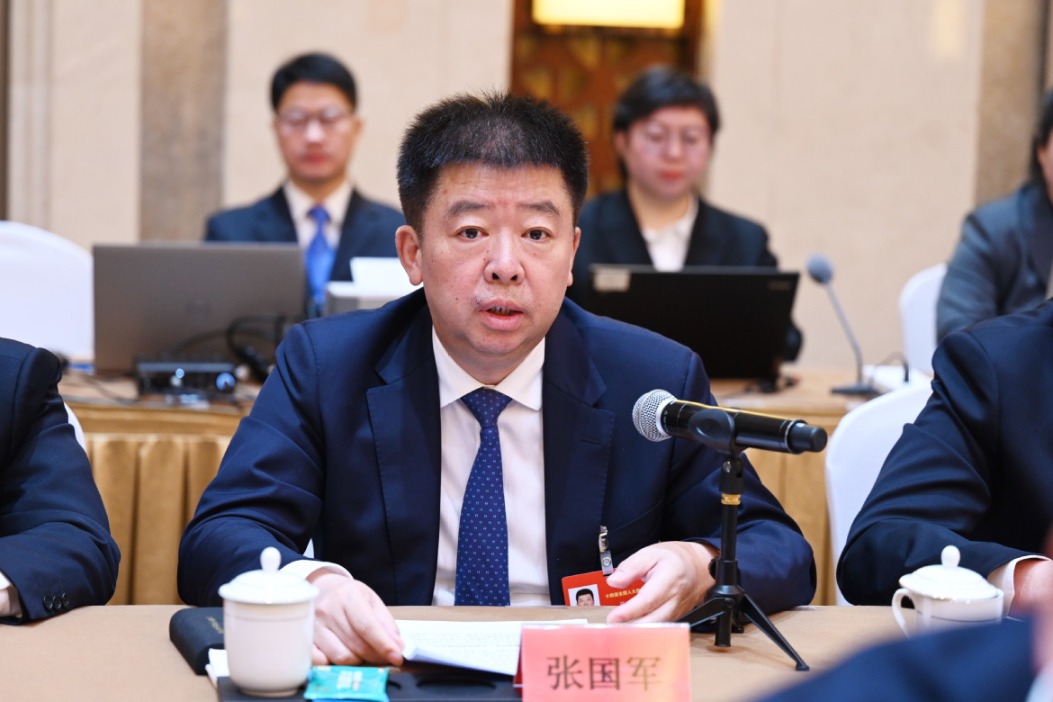
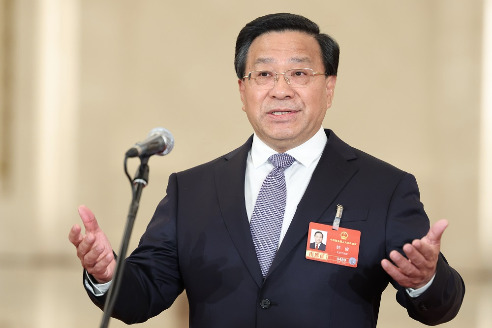
    The southwestern Chinese metropolis of Chongqing has officially established its economic development objectives for 2026, targeting a gross domestic product (GDP) expansion exceeding 5 percent. This announcement emerged from the inaugural session of the municipal people’s congress convened on January 28, 2026.

    Mayor Hu Henghua, presenting the municipal government’s annual work report to legislative delegates, revealed that Chongqing’s economic output reached 3.37 trillion yuan (approximately $485.22 billion) in the previous fiscal year, achieving a robust growth rate of 5.3 percent. This performance demonstrates the city’s resilient economic fundamentals despite global economic uncertainties.

    As a critical industrial hub in China’s strategic development blueprint, Chongqing’s growth target reflects the municipality’s commitment to sustainable economic development while maintaining stability in regional economic contributions. The projected growth rate aligns with national economic planning objectives while accounting for local industrial capabilities and market conditions.

    The announced target emerges amid China’s ongoing economic transformation toward high-quality development, with major manufacturing centers like Chongqing playing pivotal roles in balancing growth stability with technological advancement. The city’s strategic positioning within the Yangtze River Economic Belt further amplifies its significance in regional economic integration efforts.

    Economic analysts will monitor Chongqing’s performance throughout 2026 as an indicator of regional economic health and the effectiveness of municipal development policies implemented across China’s southwestern industrial corridor.

  • Cyprus–UAE Engagement: From Momentum to Investment

    Cyprus–UAE Engagement: From Momentum to Investment

    The strategic partnership between Cyprus and the United Arab Emirates has evolved into a structured economic framework designed to transform diplomatic alignment into tangible investment outcomes. This relationship, built on mutual trust and shared vision for progress, is now demonstrating measurable results in trade and investment sectors.

    The recent high-level visit by the UAE President to Cyprus, accompanied by senior officials and business leaders, underscored the depth of bilateral ties and reinforced Cyprus’s position as a stable European partner in a region valuing predictability. This engagement culminated in the December 2025 establishment of the Cyprus-UAE Joint Business and Investment Council through a signed Memorandum of Understanding, creating a permanent platform for opportunity identification and stakeholder coordination.

    Cyprus continues to emerge as a compelling EU investment destination, offering UAE and GCC partners direct access to the European Single Market. The nation’s robust legal framework, strategic geographical positioning, and highly skilled English-speaking professional ecosystem provide exceptional advantages for market entry and regulatory certainty. Cyprus maintains strong economic fundamentals, ranking among the EU’s fastest-growing economies with near full employment, reduced public debt below 60% of GDP, and consistent ‘A’ credit ratings from major international agencies.

    Bilateral cooperation focuses on investment-ready sectors including shipping, energy, technology, and automation. Cyprus’s technology sector has experienced remarkable growth, hosting over 800 technology-driven companies across ICT, fintech, gaming, and technology-enabled services. The ICT sector contributes approximately 14% to GDP directly and indirectly, with Cyprus ranking third in the EU for sector growth. Foreign technology investment surged by over 200% in 2024, while the number of ICT professionals doubled within three years.

    Cyprus is enhancing its innovation infrastructure through regulatory mechanisms including the Capital Markets Commission sandbox, the Central Bank’s Innovation Hub, and an upcoming AI Sandbox. These initiatives position Cyprus as a testing and scaling ground for new solutions targeting the 450-million-consumer EU market.

    Beyond economic factors, Cyprus offers quality living conditions and a supportive environment for international professionals, supported by 12 universities, 9 research institutes, and 7 centers of excellence. Invest Cyprus facilitates investor transition from interest to execution, with the Joint Business Council serving as a practical channel for sustained engagement and accelerated cooperation across priority sectors.

    Both nations demonstrate that ambition transcends physical size, with the partnership now focused on delivering concrete results through targeted sector partnerships and investment flows, positioning Cyprus as the reliable EU gateway for regional and global growth.