标签: Asia

亚洲

  • Israel to suspend several aid groups operating in Gaza, starting January 1

    Israel to suspend several aid groups operating in Gaza, starting January 1

    Israel’s Ministry of Diaspora Affairs and Combating Antisemitism announced on Tuesday its decision to suspend multiple humanitarian organizations operating in Gaza effective January 1, 2025. The regulatory action targets groups that allegedly failed to comply with enhanced security protocols requiring detailed employee information to prevent potential terrorist affiliations.

    The ministry stated that affected organizations had received formal notifications regarding license revocations after demonstrating what officials characterized as insufficient cooperation. These groups reportedly refused to submit comprehensive lists of their Palestinian staff members, preventing authorities from conducting necessary security vetting procedures.

    According to official statements, the suspended organizations—whose identities remain undisclosed—must completely cease operations by March 1. Ministry representatives emphasized that these groups had been given a ten-month compliance window but ultimately failed to meet updated regulatory requirements governing international NGOs in Palestinian territories.

    In a significant development, the ministry specifically implicated Doctors Without Borders (Médecins Sans Frontières or MSF), alleging that two employees maintained connections with militant organizations. Officials claimed one individual was identified as a Palestinian Islamic Jihad member in June 2024, while another was allegedly a Hamas sniper as of September 2024. The ministry asserted that MSF failed to provide complete disclosure regarding these individuals’ identities and roles despite repeated requests.

    MSF responded to these allegations by stating the organization would never knowingly employ individuals engaged in military activities, noting such affiliations would endanger both staff and patients. The medical charity confirmed ongoing registration discussions with Israeli authorities but clarified it had not yet received formal re-registration decisions.

    The ministry maintained that these measures would not significantly disrupt humanitarian aid distribution, estimating that fewer than 15% of operating organizations violated the updated regulatory framework. However, multiple NGOs have expressed concerns to international media about substantial impacts on aid distribution capabilities throughout Gaza.

    This regulatory tightening occurs amid ongoing humanitarian challenges in the region. Despite October ceasefire agreements stipulating 600 daily aid trucks, current figures range between 100-300 trucks according to United Nations and NGO reports, creating significant supply shortages for Gaza’s population.

  • Two midnight ball drops, jumping over 7 waves: How some countries will ring in New Year 2026

    Two midnight ball drops, jumping over 7 waves: How some countries will ring in New Year 2026

    As the world prepares to welcome 2026, nations are finalizing plans for distinctive celebrations that blend cultural heritage with contemporary festivities. Beyond the universal spectacle of fireworks illuminating skies across time zones, numerous countries will observe New Year’s Eve through rituals deeply rooted in their historical and spiritual traditions.

    In New York’s Times Square, organizers have planned an unprecedented double ball drop ceremony. The iconic descent will occur initially at 11:59 PM for its traditional sixty-second journey. However, in a historic departure from convention, a second descent will commence at 12:04 AM to commemorate the 250th anniversary of American independence. This special celebration will feature the sphere illuminated in patriotic red, white, and blue hues, accompanied by confetti showers and a pyrotechnic finale synchronized to Ray Charles’ “America the Beautiful.”

    Japan will maintain its ancient Buddhist practice of Joya no Kane, where temple bells resonate 108 times at midnight. This ritual symbolizes the purification of 108 human earthly desires and attachments. While typically performed by monks, some temples permit public participation in this profound spiritual cleansing ceremony.

    Rio de Janeiro will host the vibrant Festa de Iemanjá, honoring the African-derived deity regarded as queen of the oceans. Celebrants clad in white garments will gather along Copacabana Beach at midnight to perform ceremonial dances in the waters. Participants will leap over seven consecutive waves while articulating their aspirations for the forthcoming year, believing this act conveys their petitions to the oceanic divinity.

    London’s celebration will center around the precisely engineered mechanisms of Big Ben. The 166-year-old clock tower, maintained by three dedicated horologists requiring ear protection against its 115-decibel chimes, will mark midnight with astonishing accuracy. In 2025, the landmark’s strike registered within five-thousandths of a second of true midnight.

    Berlin will transform its historical Brandenburg Gate vicinity into what authorities are promoting as the “planet’s most extensive dance floor.” This complimentary techno celebration will accommodate 20,000 revelers across a stretch extending to the Victory Column, featuring 16 mobile sound systems and 100 DJs culminating in a seven-minute pyrotechnic display above the Quadriga statue.

  • A forgotten chapter: The stories of Allied POWs in Nagasaki during the atomic bombing

    A forgotten chapter: The stories of Allied POWs in Nagasaki during the atomic bombing

    Eight decades after the atomic devastation of Nagasaki, the overlooked narrative of Allied prisoners of war who endured both Japanese captivity and nuclear destruction is finally emerging through dedicated research and reconciliation efforts. On August 9, 1945, when the United States dropped the “Fat Man” plutonium bomb, hundreds of POWs from Allied nations were held in brutal camps across Nagasaki, their existence largely absent from historical accounts.

    Recent commemorations have brought together descendants of Dutch POWs and Japanese atomic bombing survivors, united in honoring all victims of that catastrophic day. The POWs, primarily Dutch servicemen captured in Indonesia, were transported via notorious “hell ships” to Nagasaki, where they were imprisoned at Fukuoka Camp No. 2 and Camp No. 14. According to the POW Research Network Japan, approximately 150,000 Allied prisoners were held across Asia during WWII, with 36,000 forcibly relocated to Japan to address wartime labor shortages.

    The atomic impact varied dramatically between camps. Camp No. 2, situated approximately 10 kilometers from ground zero, experienced shattered windows and structural damage but no immediate fatalities. In stark contrast, Camp No. 14—located much closer to the epicenter—suffered complete destruction, resulting in eight POW deaths and dozens injured. Survivor accounts describe the terrifying moment of detonation: a colossal orange fireball, purple smoke, and the iconic triple-layer mushroom cloud.

    Post-war trauma extended far beyond physical injuries. Johan Willem Schram, a Dutch sailor imprisoned at Camp No. 2, returned to the Netherlands but remained emotionally scarred, feeling both Japan and his homeland had treated POWs with disrespect. His son Andre documented these experiences in “Johan’s Story,” highlighting the complex legacy of suffering and the need for genuine reconciliation.

    Despite Japanese laws providing medical support for certified atomic bombing survivors—currently numbering 99,000, down from 372,000 in 1980—only 11 former POWs (seven Dutch, three Australian, and one British) have received official recognition. Researchers like Taeko Sasamoto of the POW Research Network note that the issue has been “swept under the rug,” requiring meticulous examination of neglected historical documents.

    The recent granite monument in Nagasaki, featuring three inscribed panels, symbolizes growing efforts to acknowledge this dual tragedy. As Kazuhiro Ihara, whose father survived the bombing and dedicated himself to POW reconciliation, emphasizes: these commemorations represent a crucial step toward healing wounds that have persisted for generations.

  • Boeing to make up to 50 new F-15 fighter jets for Israel

    Boeing to make up to 50 new F-15 fighter jets for Israel

    In a significant defense procurement announcement, the US Department of War has granted Boeing an $8.6 billion contract to manufacture a fleet of F-15IA fighter jets specifically configured for the Israeli Air Force. The revelation came shortly after a joint press conference between US President Donald Trump and Israeli Prime Minister Benjamin Netanyahu in Palm Beach, Florida.

    The comprehensive agreement encompasses the design, integration, instrumentation, testing, production, and delivery of 25 new F-15IA aircraft, with a contractual provision for an additional 25 units. This follows a previous November 2024 agreement valued at $5.2 billion for an equivalent number of aircraft.

    The F-15IA represents a specialized variant of the classic F-15 platform, engineered to meet Israel’s unique operational requirements. This advanced aircraft is intended to replace Israel’s aging ‘Ra’am’ fleet. According to US Air Force specifications, the F-15IA is capable of maintaining air supremacy and outperforming any contemporary adversary aircraft.

    Technical specifications highlight its exceptional capabilities, including a high engine thrust-to-weight ratio and low wing-loading that provide superior maneuverability. The aircraft’s sophisticated radar and Identification Friend or Foe (IFF) system position it among the world’s most advanced fighter jets, with a maximum speed reaching 1,875 mph.

    Production will be conducted at Boeing’s St. Louis, Missouri facility, with deliveries projected for completion by 2035. The United States continues to dominate as the primary global supplier of tactical fighter jets, having previously customized F-15 variants for Japan, South Korea, Qatar, and Saudi Arabia.

    The contract announcement coincided with diplomatic discussions between Trump and Netanyahu regarding Gaza ceasefire negotiations. President Trump expressed unequivocal support for Israel’s leadership, describing Netanyahu as a ‘wartime prime minister at the highest level’ and emphasizing that ‘with most other leaders, Israel would not exist.’

    When questioned about Israel’s military actions in Gaza, where over 71,000 casualties have been reported since October 2023 using US-supplied aircraft and weaponry, Trump stated he had no concerns about Israel’s decisions, asserting that Israel had ‘lived up to the plan 100 percent.’

  • Former Australian cricketer Damien Martyn is in serious condition in a Brisbane hospital

    Former Australian cricketer Damien Martyn is in serious condition in a Brisbane hospital

    BRISBANE, Australia — The global cricket community has united in support of former Australian Test cricketer Damien Martyn, who remains hospitalized in serious condition battling meningitis. The 54-year-old right-handed batsman, renowned for his elegant stroke play during a distinguished international career, is currently receiving intensive medical care at a Brisbane hospital.

    According to multiple Australian media reports confirmed Wednesday, Martyn has been placed in an induced coma as medical professionals treat a severe case of meningitis. The former Western Australia captain fell critically ill in recent days, prompting an outpouring of support from teammates, cricket officials, and fans worldwide.

    Former Test teammate Darren Lehmann expressed emotional support on social media, writing: “Lots of love and prayers sending Damien Martyn’s way. Keep strong and fighting legend. Love to the family.” Close friend and former Australian wicketkeeper Adam Gilchrist told News Corp that Martyn is “getting the best of treatment” while acknowledging the widespread support from the cricket community.

    Cricket Australia Chief Executive Todd Greenberg issued an official statement expressing profound concern: “I’m saddened to hear of Damien’s illness. The best wishes of everyone at CA and in the wider cricket community are with him at this time.”

    Martyn’s international career spanned 67 Test matches where he maintained an impressive batting average of 46.37, including 13 centuries with a highest score of 165 against New Zealand in 2005. The Darwin-born cricketer made his Test debut at just 21 years old during the 1992-93 home series against West Indies, replacing veteran Dean Jones.

    Beyond his Test accomplishments, Martyn represented Australia in 208 One-Day Internationals, averaging 40.8 runs. He was instrumental in two World Cup victories (1999 and 2003), famously scoring an unbeaten 88 in the 2003 final against India while batting with a broken finger. Martyn also contributed to Australia’s 2006 Champions Trophy triumph before transitioning into commentary work following his retirement from international cricket after the 2006-07 Ashes series.

  • The viral moments that grabbed India’s attention this year

    The viral moments that grabbed India’s attention this year

    India’s vibrant social media ecosystem witnessed an extraordinary array of viral phenomena throughout 2025, capturing national attention across diverse spheres from sporting glory to interstellar achievement. These digitally amplified moments not only entertained millions but also reflected the nation’s evolving cultural identity on the global stage.

    The year’s celebrity highlight emerged from New York’s Metropolitan Museum of Art, where Bollywood icon Shah Rukh Khan made his spectacular Met Gala debut. Donning an exquisite Sabyasachi Mukherjee creation complemented by signature accessories, Khan’s red carpet appearance generated unprecedented international fan enthusiasm. His long-awaited participation in the prestigious ‘Superfine: Tailoring Black Style’ themed event sparked widespread discussion about Indian representation in global fashion.

    Cultural fusion took center stage during March’s Commonwealth Day observances at Westminster Abbey, where the Shree Muktajeevan Swamibapa Pipe Band delivered an unexpected musical interlude. Their Scottish-regalia-clad performance of the Bollywood classic ‘Dhoom Machale’ to honor arriving royalty became an instant social media sensation, beautifully symbolizing the intersection of Indian and Western traditions.

    November witnessed seismic celebrations across the nation as India’s women’s cricket team secured their historic first World Cup championship. Captain Harmanpreet Kaur’s tournament-clinching catch against South Africa at Mumbai’s DY Patil Stadium ignited spontaneous public gatherings and nighttime fireworks displays. The ICC’s documentation of this watershed moment achieved staggering digital engagement, amassing nearly 90 million Instagram views and cementing the victory’s status as a transformative achievement for gender equality in sports.

    Space exploration reached new heights with Group Captain Shubhanshu Shukla becoming India’s pioneering astronaut to board the International Space Station aboard the Axiom Mission 4. His June mission from NASA’s Kennedy Space Center culminated in triumphant hometown celebrations and captured public imagination through educational content demonstrating zero-gravity technical procedures, which accumulated over 25 million views.

    The chess world witnessed dramatic moments when Indian prodigy Gukesh Dommaraju defeated reigning champion Magnus Carlsen at the Norway Chess tournament. Carlsen’s uncharacteristic emotional display following the match spawned countless creative parodies across social platforms, transforming a competitive chess moment into widespread cultural commentary through humorous recreations in mundane scenarios.

    These digitally immortalized instances collectively painted a portrait of a nation embracing global recognition while celebrating domestic achievements across entertainment, sports, and scientific frontiers.

  • NYE 2026 in Dubai: Road closures in JBR revealed, to remain open for pedestrians

    NYE 2026 in Dubai: Road closures in JBR revealed, to remain open for pedestrians

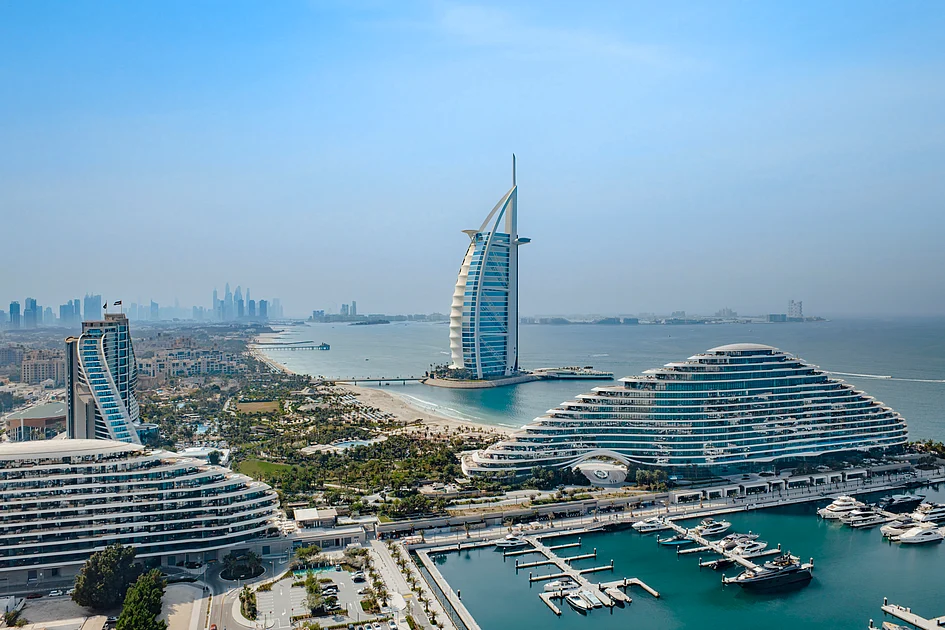
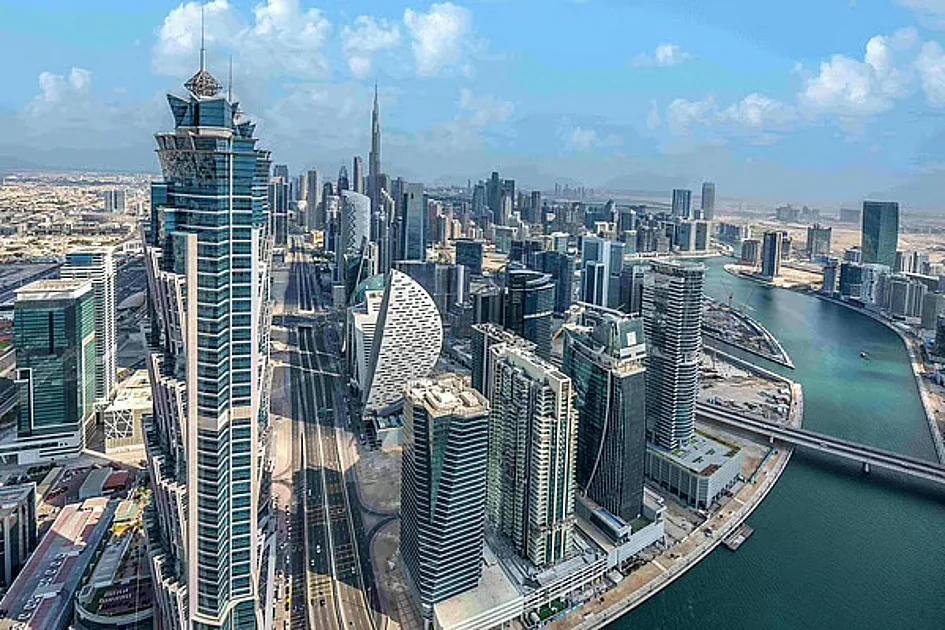
    Dubai’s Roads and Transport Authority (RTA) has implemented an extensive traffic management strategy for New Year’s Eve 2026 celebrations, transforming the Jumeirah Beach Residence (JBR) area into an exclusive pedestrian zone. The meticulously planned arrangements will see King Salman Bin Abdulaziz Al Saud Street closed to general traffic from 4pm on December 31st, permitting only taxi access during initial phases before implementing complete vehicle restrictions between 11pm and 1am.

    The waterfront destination at JBR’s The Beach promises spectacular fireworks viewing opportunities for residents and visitors, with its prime location near Dubai Marina and Jumeirah Lakes Towers offering panoramic coastal vistas. As Bluewaters Island approaches maximum capacity, authorities will enact temporary access restrictions based on real-time crowd conditions to ensure public safety.

    Complementing the road closures, Dubai’s public transportation system will operate extended services to accommodate revelers. Both Red and Green Metro lines will run continuously for 43 hours commencing at 5am on December 31st through midnight on January 2nd, 2026—marking an all-night operational schedule during peak celebration periods. The RTA strongly advises utilizing metro and tram services when traveling to JBR destinations.

    Comprehensive traffic control measures will be implemented citywide, including partial closures along Sheikh Zayed Road beginning early evening. These coordinated efforts form part of Dubai’s broader strategy to manage anticipated large-scale attendance while maintaining smooth traffic flow and enhancing pedestrian safety during one of the city’s most anticipated annual events.

  • UAE announces withdrawal of its forces from Yemen following Saudi criticism

    UAE announces withdrawal of its forces from Yemen following Saudi criticism

    In a significant escalation of tensions between Gulf allies, the United Arab Emirates has declared the complete withdrawal of its remaining military personnel from Yemen. This decision comes mere hours after Saudi Arabia conducted airstrikes against UAE-backed forces and issued an unprecedented public condemnation of Abu Dhabi’s activities in the protracted conflict.

    The Emirati Defense Ministry stated formally that ‘in light of recent developments’ it was terminating the presence of its ‘remaining counterterrorism personnel in Yemen of its own volition.’ While emphasizing that the majority of UAE forces had concluded their operational role in 2019, the ministry noted that specialized teams had remained engaged in counter-terrorism efforts alongside international partners until now.

    This dramatic development follows Tuesday morning’s Saudi airstrikes targeting the Southern Transitional Council (STC) in the port city of Mukalla. Riyadh justified these strikes by claiming the targeted weapons and vehicles arriving from Fujairah, UAE, ‘constituted an imminent threat.’ STC representatives contested this account, asserting the strikes hit civilian infrastructure instead.

    Subsequently, Saudi Arabia’s foreign ministry published a strongly worded statement expressing disappointment with UAE actions it claimed were ‘pressuring’ the STC to conduct military operations along Saudi Arabia’s southern border regions. The kingdom explicitly declared such activities a direct threat to its national security and regional stability, emphasizing that ‘any threat to its national security is a red line.’

    Yemen expert Mohammed al-Basha clarified that the UAE had already withdrawn most military hardware six years ago, with current presence consisting primarily of rotating advisory, intelligence, and counter-terrorism personnel rather than large-scale combat forces. The UAE has backed the STC since 2017 through comprehensive support including funding, military assistance, and training, though analysts note Abu Dhabi maintains it doesn’t control the group’s political objectives.

    In response to Saudi actions, the UAE expressed surprise and rejected Riyadh’s account, stating the strike occurred without coalition consultation and that the targeted shipment contained vehicles for UAE forces rather than weapons. Abu Dhabi denounced the Saudi statement as containing ‘fundamental inaccuracies’ and categorically rejected implications of directing Yemeni military operations.

    The escalating rift emerges amid ongoing power struggles within Yemen’s anti-Houthi leadership. Presidential Leadership Council head Rashad al-Alimi called for Emirati forces to withdraw and canceled a joint defense agreement with the UAE, though STC officials immediately challenged his authority to make such decisions unilaterally.

  • Indian FM to attend Bangladesh ex-PM Zia’s state funeral

    Indian FM to attend Bangladesh ex-PM Zia’s state funeral

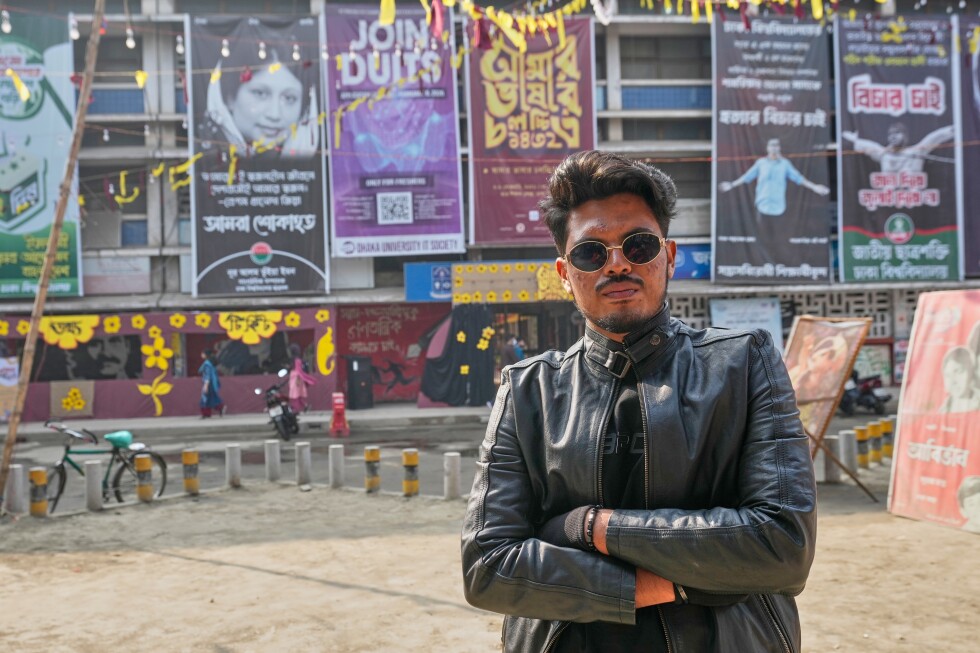
    India’s External Affairs Minister Subrahmanyam Jaishankar will travel to Dhaka on Wednesday to attend the state funeral of former Bangladeshi Prime Minister Khaleda Zia, marking the highest-level Indian diplomatic visit since the 2024 political upheaval that transformed bilateral relations between the neighboring nations.

    The funeral ceremony for Zia, Bangladesh’s first female prime minister who passed away Tuesday at age 80, is anticipated to draw massive public gatherings in the capital city. India’s Ministry of External Affairs confirmed Jaishankar will officially represent both the Indian government and its citizens during the solemn proceedings.

    This diplomatic mission occurs against the backdrop of significantly strained India-Bangladesh relations following the 2024 overthrow of former Prime Minister Sheikh Hasina, who sought refuge in India and remains there despite repeated extradition requests from Dhaka. In November, a Bangladeshi court sentenced Hasina to death in absentia for her alleged role in authorizing lethal force against mass protests.

    The geopolitical landscape has been further complicated by India’s expressed concerns regarding minority treatment in Bangladesh and the upcoming February 12, 2026 elections—the first since the widespread uprising. These elections position Zia’s Bangladesh Nationalist Party (BNP) as a potential frontrunner, with her recently returned son Tarique Rahman, ending 17 years of exile, emerging as a probable prime ministerial candidate should the party secure majority control.

    Notably, Indian Prime Minister Narendra Modi extended condolences while expressing hope that Zia’s “vision and legacy will continue to guide our partnership,” signaling diplomatic outreach despite ongoing tensions. The situation remains delicate as Nobel Peace Prize laureate Muhammad Yunus, Bangladesh’s interim leader, has accused India of exaggerating violence scale during the unrest period.

  • The golf stories fans talked about in 2025: 10 major themes that sparked conversation

    The golf stories fans talked about in 2025: 10 major themes that sparked conversation

    The year 2025 emerged as a watershed period for professional golf, generating unprecedented dialogue around player legacies, innovative formats, and the sport’s societal impact. Rather than merely reporting events, golf journalism sparked substantive conversations that engaged global audiences and prompted reevaluation of traditional norms.

    Central to these discussions were the ongoing narratives surrounding legendary figures. Tiger Woods’ complex career trajectory—marked by extraordinary triumphs and significant physical challenges—remained a focal point for analyzing athletic perseverance. Simultaneously, Rory McIlroy’s alignment with Dubai’s fitness initiatives highlighted golf’s evolving role in promoting wellness culture, particularly through his endorsement of Sheikh Hamdan’s vision for a healthier population.

    Structural innovations captured significant attention, with the debut of the Indian Golf Premier League in Dubai drawing comparisons to cricket’s successful IPL model. This format experimentation coincided with important debates about golf’s traditional rules, particularly the Ryder Cup’s retention policy for defending champions in tied matches, which divided purists and modernizers.

    The sport’s educational and developmental aspects gained prominence through initiatives like the JAGA-ESM partnership in the UAE, which transformed golf from recreational activity to educational pathway. Research validating golf’s health benefits—including longevity and social connectivity—provided scientific backing for these developmental programs, while the DP World Tour Play-Offs demonstrated how elite competitions could drive youth engagement and sustainability initiatives.

    Safety concerns entered the conversation following post-Ryder Cup celebrations that highlighted security vulnerabilities for players and families. Meanwhile, cross-sport comparisons gained traction when former cricketer JP Duminy asserted golf’s mental superiority, adding dimension to understanding athletic demands.

    These multifaceted discussions positioned golf not merely as athletic competition but as cultural phenomenon intersecting with health, education, and social development—a transformation that kept the sport firmly in the global spotlight throughout 2025.