标签: Asia

亚洲

  • AS700 airship receives production certificate, readies for flight services

    AS700 airship receives production certificate, readies for flight services

    China’s aviation sector has achieved a significant breakthrough with the AS700 airship receiving its official production certificate from the Civil Aviation Administration of China (CAAC) on December 31, 2024. This regulatory milestone, granted during a formal ceremony in Jingmen, Hubei province, authorizes the commencement of serial production and delivery operations for what represents China’s largest domestically developed airship.

    The certification marks the culmination of an extensive development program that began in August 2018 under the supervision of the Special Aircraft Research Institute, a subsidiary of state-owned Aviation Industry Corp of China (AVIC). The comprehensive testing phase involved 187 experimental flights accumulating over 600 flight hours, thoroughly validating the aircraft’s performance and safety parameters.

    Technically sophisticated, the AS700 features piston engine propulsion capable of achieving maximum speeds of 100 kilometers per hour with an operational ceiling of 3,100 meters. The airship boasts substantial payload capacity with a maximum takeoff weight of 4.15 metric tons, accommodating one pilot alongside nine passengers. Its design enables extended operational range up to 700 kilometers with endurance capabilities reaching 10 hours continuously.

    While initially conceived for aerial tourism applications, the AS700 demonstrates remarkable operational versatility across multiple sectors. Beyond passenger transportation, designers highlight its suitability for specialized missions including mineral exploration, maritime surveillance, law enforcement patrols, cargo transportation, and emergency response operations.

    The program has already secured substantial market validation with 42 confirmed orders, including the first delivery to Taicang Cultural Tourism Development Group, a state-owned enterprise in Jiangsu province. This initial transfer signals the commencement of commercial aerial sightseeing services, establishing new paradigms for low-altitude tourism experiences across China.

    This achievement represents the second major regulatory milestone for the program following the type certificate received in December 2023, collectively establishing the AS700 as China’s first fully certified manned airship developed through domestic aerospace capabilities.

  • Xinjiang sees record grain, cotton outputs

    Xinjiang sees record grain, cotton outputs

    China’s Xinjiang Uygur Autonomous Region has shattered production records in both cotton and grain harvests for 2025, marking a significant advancement in agricultural productivity. The remarkable yields have been propelled by comprehensive modernization initiatives including large-scale mechanization, enhanced farming techniques, and superior crop varieties.

    Official statistics reveal cotton production reached an unprecedented 6.17 million metric tons, surpassing the 6 million ton threshold for the first time and constituting 92.8% of China’s total output. Simultaneously, grain yields climbed to 8,291.9 kilograms per hectare, maintaining Xinjiang’s position as the national leader for the second consecutive year.

    Wei Fenghua, an official from the National Bureau of Statistics, attributed this agricultural success to multiple factors including extensive mechanized farming operations and sustained favorable cotton market prices that have encouraged continued cultivation expansion. The region’s cotton yield per hectare reached 2,379 kg, exceeding the national average by 150 kg, benefiting from optimal climatic conditions, abundant sunlight, sophisticated field management practices, and genetically improved seed varieties.

    The mechanization revolution has been particularly transformative. In Awat county, Aksu prefecture, the Yuhao Farmers’ Cooperative has automated over 80% of cotton operations from planting to harvesting. Cooperative manager Wang Hongwei explained how land leveling and adoption of high-yield, disease-resistant cotton varieties have enabled large-scale equipment deployment.

    Domestic agricultural machinery has played a crucial role in this transformation. Self-propelled cotton harvesters, predominantly manufactured domestically, can now process 10 hectares daily—equivalent to approximately 100 manual laborers. Local data indicates domestic machinery accounted for over 80% of cotton harvesters in Aksu’s Awat and Shaya counties.

    Agricultural equipment operators have increasingly embraced Chinese-made machinery, noting advantages in maintenance speed, warranty support, and training tailored to local conditions. Hao Jiangshan, who transitioned from imported to domestic harvesters after five years, exemplifies this shift. Yue Xingchun, manager at Shaya Boshiran Intelligent Agricultural Machinery Co, confirmed domestic equipment now matches imported models in performance while being specifically designed for Chinese field dimensions and operational requirements.

    Grain production similarly demonstrated robust growth, with total output reaching 24.32 million tons—an increase of 1.02 million tons from 2024. Over the past five years, Xinjiang’s annual grain output has expanded by 8.49 million tons, contributing 18.7% of China’s total growth during this period—the largest regional increase nationwide.

    Xinjiang’s agriculture department highlighted how approximately 4 million hectares of high-standard farmland have facilitated these achievements through technologies including rational dense planting and precision water-fertilizer regulation. Future plans involve concentrating cotton cultivation in mechanization-friendly zones, expanding local processing capabilities for wheat, corn, and cotton, and continuing yield optimization through technological innovation and improved farming practices.

  • China in elite global manufacturing club

    China in elite global manufacturing club

    China has achieved a historic milestone by entering the top tier of global manufacturing powers, according to a comprehensive report released on December 31, 2025. The nation’s manufacturing sector has surpassed Japan for the first time, positioning itself alongside Germany and the United States in the elite group of industrial leaders.

    The annual manufacturing development assessment, jointly published by the Chinese Academy of Engineering’s Centre for Strategic Studies, the China Academy of Machinery Science and Technology Group Co, and the China Industrial Control Systems Cyber Emergency Response Team, evaluates nine major economies across five critical indicators: scale development, quality and efficiency, structure optimization, innovation capacity, and sustainable development.

    Qin Hanjun, Chairman of the China Academy of Machinery Science and Technology Group Co, announced at a Beijing press conference that China’s manufacturing index has consistently exceeded 120 points for four consecutive years, firmly establishing the country within the second tier of manufacturing nations. The United States maintains a commanding lead with a score of 190.89, while Germany, China, and Japan form a competitive cluster scoring between 120 and 140.

    The report highlights innovation as the primary catalyst behind China’s manufacturing ascent. Research and development investment within the sector has more than doubled since 2012, rising from 0.85% to 1.82% in 2024. This sustained commitment to innovation has yielded tangible results, with China leading globally in Patent Cooperation Treaty applications for both 2023 and 2024.

    China has achieved world leadership in several advanced manufacturing sectors, including information and communication equipment, advanced rail transit systems, electrical power infrastructure, and new energy vehicles. Professor You Zheng, President of Huazhong University of Science and Technology and Chinese Academy of Engineering academician, identified key global trends reshaping manufacturing, including a strategic shift from efficiency-focused to security-focused supply chains, accelerated green transformation, and intensifying technological competition.

    Looking toward 2030, China anticipates maintaining world-leading positions in seven core industries while achieving breakthrough innovations in original technologies. By 2035, six additional sectors including new display equipment, robotics, and energy storage systems are projected to join China’s portfolio of globally competitive manufacturing capabilities.

  • Joint operations along Mekong River elevate security, promote well-being

    Joint operations along Mekong River elevate security, promote well-being

    A landmark security initiative along the Mekong River has yielded transformative results, with China, Laos, Myanmar, and Thailand successfully completing their 160th joint patrol operation. The coordinated effort, conducted from December 27-30, 2025, involved approximately 170 law enforcement personnel and six patrol vessels navigating from Guanlei Port in China’s Yunnan province to Jingha Port.

    The comprehensive patrol mechanism has fundamentally altered the security landscape of this vital waterway. According to Humphan Keovanglat, Political Commissar of Laos’ Luang Namtha military area, “Cross-border travel now occurs smoothly and securely, trade flows without interruption, and local communities report substantially increased feelings of safety and fulfillment.”

    The operation represents one of Southeast Asia’s most successful multinational security collaborations, establishing an intelligence-sharing framework that enables rapid response capabilities. Captain Than Naing Oo of Myanmar’s Patrol Boat 171 emphasized that “this joint mechanism facilitates immediate intelligence exchange, strengthening our collective security cooperation while simultaneously promoting regional development.”

    Chinese veteran officer Ran Xi, who has served with Yunnan’s water patrol division since 2011, confirmed the dramatic security improvements: “Commercial vessels now navigate independently without security concerns, and we’ve witnessed a complete cessation of armed incidents along patrolled sections in recent years.”

    The enhanced security has generated tangible economic and social benefits. Thai tourist Kongkham Khamtip, 51, recently completed a stress-free journey from the Golden Triangle to Guanlei Port, noting “the river feels exceptionally secure, making for a relaxing voyage amid stunning scenery.” Cross-border commerce has similarly flourished, with Myanmar resident Sa Yin, 19, regularly traveling to China to purchase quality animal feed and visit family.

    Local merchant Zhang Yisheng reported significant increases in cross-border shopping, particularly during festival periods when customers from Myanmar routinely spend hundreds to thousands of yuan. The cooperation extends beyond security operations to include cultural exchanges, with personnel from all four nations recently participating in friendship sports events to strengthen interpersonal bonds.

    Jiang Zhida, senior research fellow at the China Institute of International Studies, characterized the initiative as “a crucial safeguard for stability and prosperity throughout the Lancang-Mekong region, establishing the security foundation necessary for building a shared future community.”

  • Huge crowds join funeral prayers for former Prime Minister Khaleda Zia in Bangladesh

    Huge crowds join funeral prayers for former Prime Minister Khaleda Zia in Bangladesh

    DHAKA, Bangladesh — The capital city witnessed an unprecedented outpouring of grief Wednesday as immense crowds gathered outside the national parliament building to pay final respects to former Prime Minister Khaleda Zia, who passed away Tuesday at age 80 following extended health complications.

    From early morning, continuous streams of mourners from Dhaka and distant regions converged on Manik Mia Avenue, transforming the parliamentary precinct into a sea of solemnity. Emotional scenes unfolded as distraught supporters, many referring to Zia as ‘mother,’ traveled overnight from rural areas to participate in the funeral prayers. The collective mourning extended kilometers beyond the main venue, with major thoroughfares filling with citizens offering prayers simultaneously.

    The state funeral attracted international attention, with dignitaries from India, Pakistan, Sri Lanka, and Nepal joining representatives from 32 nations according to local media reports. Zia’s flag-draped coffin was transported via security-escorted vehicle from the hospital to her residence before reaching the funeral site, where approximately 10,000 security personnel including military forces maintained order.

    Interim authorities under Nobel laureate Muhammad Yunus declared a three-day national mourning period and a public holiday for Wednesday, with flags flying at half-mast nationwide. Zia will be laid to rest beside her husband, former President Ziaur Rahman, who was assassinated in the 1981 military coup.

    Zia’s political journey began following her husband’s assassination, culminating in her 1991 election as Bangladesh’s first female prime minister through a landslide democratic victory that established parliamentary governance. She led the Bangladesh Nationalist Party (BNP) until her death, maintaining a historic rivalry with former Prime Minister Sheikh Hasina of the Awami League.

    The political landscape remains charged as Zia’s eldest son, Tarique Rahman, currently leads BNP as the front-running party for February’s elections. Meanwhile, Hasina remains in exile in India since August 2024 after receiving a death sentence in November for crimes against humanity related to last year’s mass uprising.

  • Jailed HK tycoon’s ‘teeth rotting and fingernails falling off’, daughter tells BBC

    Jailed HK tycoon’s ‘teeth rotting and fingernails falling off’, daughter tells BBC

    The deteriorating health of imprisoned Hong Kong pro-democracy publisher Jimmy Lai has sparked international concern as his family intensifies efforts to secure his release. Lai, a 78-year-old British citizen detained since December 2020, faces life imprisonment following his recent conviction under Hong Kong’s national security legislation.

    According to his daughter Claire Lai, who resides in exile in London, her father’s physical condition has significantly declined during his incarceration. She reports concerning symptoms including substantial weight loss, deteriorating dental health, fingernails that “turn purplish grey and sometimes fall off,” and the development of previously nonexistent cardiac issues. The diabetic octogenarian also experiences severe back and waist pain that occasionally prevents him from standing or leaving his bed.

    These claims contradict official statements from Chinese authorities, whose Foreign Ministry spokesperson in Hong Kong maintains that Lai’s “lawful rights and interests have been fully protected, and he is in good health.” Officials assert that prison authorities provide “a safe, humane, appropriate, and healthy custodial environment in accordance with the law.”

    The case has emerged as a diplomatic flashpoint ahead of UK Prime Minister Keir Starmer’s scheduled meeting with Chinese President Xi Jinping in January 2026—the first such visit by a British leader since 2018. Lai’s family has personally appealed to Starmer to advocate for his release during the upcoming talks.

    Lai’s conviction earlier this month under the National Security Law (NSL) stemmed from allegations that he colluded with foreign forces by lobbying governments to impose sanctions on Hong Kong and China. He received additional convictions under colonial-era legislation for publishing seditious material in his now-defunct Apple Daily newspaper.

    The British government has condemned the prosecution as “politically motivated persecution,” asserting that Lai was “targeted for peacefully exercising his right to freedom of expression.” UK officials have repeatedly called for the NSL’s repeal and cessation of all related prosecutions.

    Chinese authorities have rebuked Western criticism, characterizing external pressure as attempts to “influence judicial verdicts through political pressure [that] blatantly trample on the spirit of the rule of law.” Beijing maintains that the NSL, implemented in 2020 following massive pro-democracy protests, is essential for maintaining stability in Hong Kong, though critics argue it effectively criminalizes dissent.

  • Hong Kong rings in 2026 without fireworks after deadliest blaze in decades

    Hong Kong rings in 2026 without fireworks after deadliest blaze in decades

    Hong Kong will break with longstanding tradition by canceling its iconic New Year’s Eve fireworks display over Victoria Harbor following November’s catastrophic fire that claimed 161 lives. Instead of the customary pyrotechnic spectacle, the city will host a musical performance featuring soft rock duo Air Supply and other artists in Central district.

    The tourism board’s alternative celebration will transform eight landmark buildings into giant countdown clocks, presenting a three-minute light show at midnight. This marks a significant departure from the territory’s traditional celebrations that typically draw hundreds of thousands of spectators to the harborfront.

    Cultural Secretary Rosanna Law acknowledged the economic impact on hotels and restaurants, recognizing how the cancellation affects local businesses. The decision reflects the city’s somber mood after the Wang Fuk Court blaze in Tai Po district, the deadliest fire since 1948.

    Authorities identified substandard netting and foam board installations as contributing factors in the fire’s rapid spread through the renovation site. The tragedy has left thousands of residents displaced, many struggling to recover from both personal loss and the destruction of homes they spent years acquiring.

    Historical precedents show Hong Kong has canceled fireworks following past tragedies, including the 2012 vessel collision that killed 39 people and the 2018 bus crash that claimed 19 lives. The COVID-19 pandemic and 2019 protests also led to previous cancellations.

    The cultural significance of fireworks traces back to second-century China, where bamboo stems created natural explosions when thrown into fire. Chinese monk Li Tian of the Tang dynasty (618-907 CE) is credited with developing the first documented firecrackers using gunpowder in enclosed bamboo stems, creating traditions to ward off evil spirits during celebrations.

  • Pakistan’s polio cases fell by half in 2025 despite attacks on vaccination teams

    Pakistan’s polio cases fell by half in 2025 despite attacks on vaccination teams

    ISLAMABAD — Pakistan’s national health authorities have announced a remarkable 59% reduction in polio cases for 2025, marking significant progress in the country’s prolonged eradication campaign. Official data reveals only 30 confirmed polio infections throughout the year, compared to 74 cases documented during the previous year’s reporting period.

    The encouraging statistics were released by the government-operated Polio Eradication Initiative following the conclusion of Pakistan’s final nationwide vaccination drive targeting approximately 45 million children. Anwarul Haq, Coordinator of the National Emergency Operations Centre for Polio Eradication, confirmed to international media that no fresh infections have been detected anywhere across the country since September 2025.

    This epidemiological achievement comes despite persistent security challenges that have plagued vaccination efforts for decades. Militant groups continue to target health workers and their security details based on conspiracy theories alleging vaccination campaigns represent Western plots to sterilize Muslim children. Since the 1990s, over 200 polio workers and protecting police officers have been killed in such attacks.

    Health authorities reported reaching over 98% of the target population during the most recent vaccination campaign. However, access limitations remain particularly acute in certain districts of the northwestern Khyber Pakhtunkhwa province, where security constraints and community resistance continue to hamper immunization activities.

    Pakistan and neighboring Afghanistan maintain the dubious distinction of being the world’s only remaining countries where wild poliovirus transmission persists. Health officials acknowledge both the substantial momentum gained and the lingering vulnerabilities in the decades-long eradication effort. While vaccination coverage has dramatically improved and case numbers have plummeted, low-level transmission in inaccessible regions continues to pose significant risks of resurgence.

    The government has announced plans to launch the first anti-polio campaign of the new year during February’s first week, maintaining continuous pressure on the virus through sustained immunization efforts.

  • In a breakneck digital era, the ancient art of Peking opera works hard to keep flourishing

    In a breakneck digital era, the ancient art of Peking opera works hard to keep flourishing

    In a striking display of artistic precision, Peking opera performer Zhang Wanting captivates a Beijing theater audience with an extraordinary balancing act. Perched on the narrow handle of a rosewood chair, the 30-year-old actress executes a gravity-defying pose known as ‘tanhai’ (gazing over the sea) while adorned in traditional warrior costume. This remarkable feat represents the culmination of over a decade’s dedication to mastering one of Peking opera’s most demanding physical disciplines.

    Zhang’s journey began in China’s Hebei province at age seven, when she first encountered the art form at a local cultural center. Recognizing both talent and determination in the young performer, she pursued professional training at a theater school in Jiangsu province. Like most Peking opera artists, Zhang started her rigorous training regimen before dawn each day, building the physical strength and flexibility essential to the craft.

    The signature chair technique she now performs originates from the Song School of Peking opera, founded in the early 20th century. This innovative tradition elevated female martial roles to center stage through creative stunts and refreshed performance styles. Zhang studied directly under Song Danju, daughter of the school’s founder, learning the specialized chair sequence that combines martial arts with acrobatic movements adapted from northwestern Chinese folk opera.

    Mastering the technique required conquering both physical and psychological challenges. Zhang spent an entire semester practicing on a chair handle merely 8.5 centimeters wide, developing the balance and courage necessary for the performance. Each movement demanded months of repetition—for the jumping sequence alone, she performed approximately 50 daily leaps through the chair’s narrow frame, often finishing rehearsals with trembling muscles and bruised thighs.

    Despite growing competition from digital entertainment, young artists like Zhang continue to preserve and evolve Peking opera traditions. As a professional performer with Beijing’s prestigious Jingju Theatre Company, she has delivered over 150 shows in nine years, continually refining her technique while staying true to the art form’s emotional core. For Zhang, the ultimate reward remains the audience’s applause—a validation of both technical excellence and artistic expression.

  • ROK leader’s visit to help boost bilateral ties

    ROK leader’s visit to help boost bilateral ties

    In a significant diplomatic development, South Korean President Lee Jae-myung will commence a four-day state visit to China beginning Sunday, marking his first official trip to the country since assuming office in June 2025. This visit represents the first by a South Korean head of state since 2019, signaling a potential thaw in bilateral relations between the two Northeast Asian neighbors.

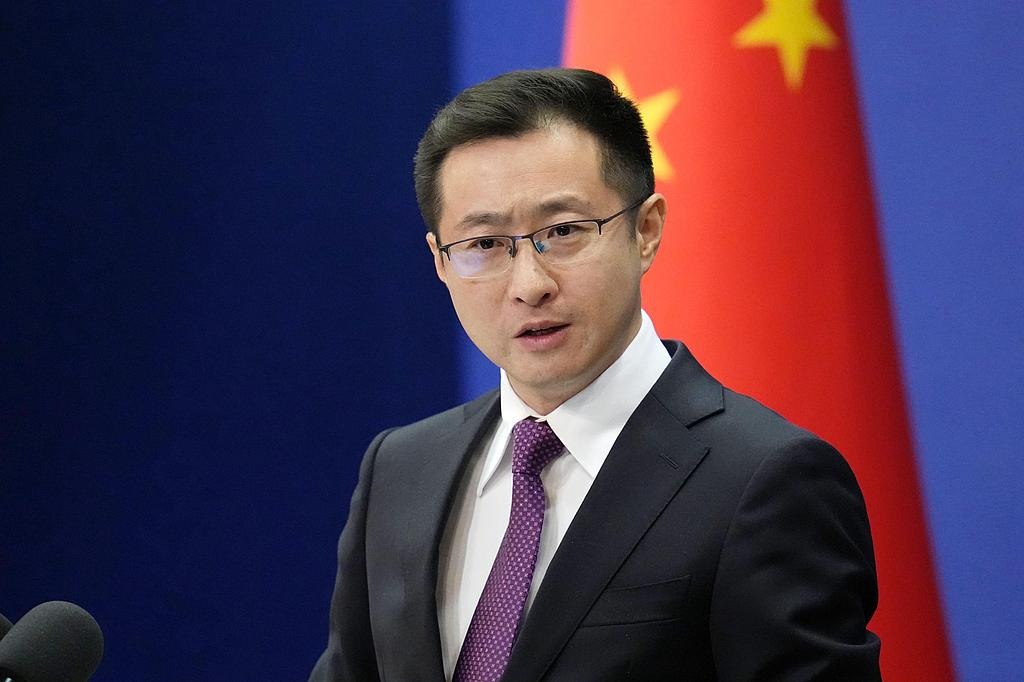
    The Chinese Foreign Ministry confirmed the visit through spokesman Lin Jian, who emphasized the strategic importance of the two nations as key regional partners. “Under the strategic guidance of both heads of state, this visit is anticipated to significantly advance the China-ROK strategic cooperative partnership,” Lin stated during a regular press briefing.

    Accompanying President Lee will be a substantial delegation of over 200 South Korean business leaders, including executives from corporate giants Samsung Electronics, SK Group, Hyundai Motor Group, and LG Group. This substantial commercial contingent underscores the economic dimension of the visit, with both nations preparing to discuss cooperation in multiple sectors including supply chain security, investment frameworks, digital economy initiatives, transnational crime prevention, and environmental protection measures.

    The timing of the visit coincides with the 10th anniversary of the China-ROK free trade agreement, with both parties having agreed to accelerate second-phase negotiations to deepen economic integration. Bilateral trade reached $328.08 billion in 2024, reflecting a 5.6% year-on-year increase despite global economic headwinds.

    Recent reciprocal visa facilitation measures have further strengthened people-to-people exchanges. China implemented visa-free entry for South Korean tourists and business visitors in November 2024, with South Korea reciprocating for Chinese group tourists in September 2025, resulting in a notable surge in cross-border travel.

    This visit builds upon the momentum generated by the meeting between President Lee and Chinese President Xi Jinping during the Asia-Pacific Economic Cooperation summit in Gyeongju, South Korea, last November. According to Professor Zhan Debin of Shanghai University of International Business and Economics, while President Xi’s previous visit to South Korea helped stabilize bilateral relations, President Lee’s upcoming visit aims to “explore ways to make further progress on the basis of that stability,” particularly through enhanced economic cooperation and cultural exchanges.