标签: Asia

亚洲

  • China and the EU agree on steps to resolve their dispute over EV imports

    China and the EU agree on steps to resolve their dispute over EV imports

    In a significant development for global trade relations, China and the European Union announced on Monday a mutually acceptable framework to resolve their escalating dispute over Chinese electric vehicle imports. The breakthrough follows months of tension after the EU imposed tariffs of up to 35.3% on Chinese EV manufacturers earlier this year.

    The European Commission released a detailed guidance document outlining specific requirements for Chinese automakers seeking to export to EU markets. The framework establishes minimum import pricing structures and comprehensive investment commitments within European territories. According to EU officials, the varied nature of electric vehicles necessitated tailored pricing mechanisms to effectively address market distortion concerns while maintaining compliance with World Trade Organization regulations.

    China’s Commerce Ministry welcomed the agreement, stating it “not only ensures the healthy development of China-EU economic relations but also safeguards the rules-based international trade order.” The China Chamber of Commerce to the EU described the arrangement as facilitating a “soft landing” for what had become a potentially damaging trade confrontation.

    Industry analysts note that the compromise reflects the complex interdependence between the two economic powers. European manufacturers remain heavily dependent on Chinese battery technology, rare earth materials, and semiconductor components, creating what ING senior economist Rico Luman characterized as “a necessary balancing act to avoid frustrating the trade relationship.”

    The agreement emerges against a backdrop of remarkable market transformation. European imports of battery-electric vehicles skyrocketed from $1.6 billion in 2020 to $11.5 billion in 2023, with significant portions originating from Western automakers operating Chinese production facilities, including Tesla and BMW. Despite the previously imposed tariffs, Chinese-manufactured vehicles captured 6% of EU market share in early 2025, up from 5% during the same period in 2024.

    Projections from consulting firm AlixPartners suggest Chinese automakers could double their European market presence to approximately 10% by 2030, highlighting the continued importance of structured trade relationships for both parties involved.

  • Tokyo urged to mend relations with Beijing

    Tokyo urged to mend relations with Beijing

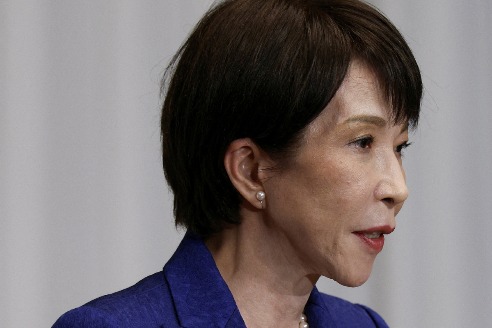
    Japan’s business and academic leaders are issuing urgent appeals for diplomatic reconciliation with Beijing following China’s imposition of stringent export controls on dual-use technologies. The measures, enacted in response to Japanese Prime Minister Sanae Takaichi’s controversial statements regarding Taiwan, threaten to severely disrupt Japan’s manufacturing supply chains and potentially trigger broader economic consequences.

  • New US ambassador to India pushes for deeper trade ties despite tension over Russian oil

    New US ambassador to India pushes for deeper trade ties despite tension over Russian oil

    NEW DELHI — The United States and India are intensifying efforts to finalize a comprehensive bilateral trade agreement despite ongoing tensions over New Delhi’s continued purchases of Russian crude oil. Sergio Gor, the newly appointed U.S. ambassador-designate to India, confirmed ongoing high-level discussions aimed at strengthening economic and strategic partnerships between the two nations.

    Addressing the diplomatic friction stemming from India’s energy imports, Gor acknowledged disagreements while emphasizing the countries’ shared commitment to resolution. “Real friends can disagree, but always resolve their differences in the end,” stated Gor during his inaugural address at the U.S. Embassy. He recognized the complexity of negotiating with the world’s largest democracy but expressed determination to reach mutually beneficial agreements.

    The trade relationship faces significant challenges following former President Donald Trump’s executive order imposing additional 25% tariffs on Indian imports, bringing total U.S. tariffs to 50%. These measures specifically target India’s acquisition of Russian petroleum, which the previous administration argued indirectly supported Moscow’s military operations in Ukraine.

    In a significant strategic development, Gor simultaneously announced India’s formal invitation to join Pax Silica—a U.S.-led initiative designed to establish secure silicon supply chains encompassing critical minerals, advanced manufacturing, semiconductors, and artificial intelligence. The coalition already includes Japan, South Korea, the United Kingdom, and Israel.

    Despite obstacles in trade negotiations, particularly regarding energy sourcing and protection of India’s agricultural and industrial sectors, both countries continue collaborating across multiple domains including security, counterterrorism, energy technology, education, and healthcare. Meanwhile, India has accelerated its pursuit of alternative trade agreements, recently finalizing pacts with Oman and New Zealand.

  • ‘Factory flaw’ spurs toy horse to instant popularity

    ‘Factory flaw’ spurs toy horse to instant popularity

    An inadvertent manufacturing defect has transformed an ordinary plush toy into an overnight cultural phenomenon, capturing the collective sentiment of China’s young professionals. The toy horse, originally conceived as a cheerful mascot for the upcoming Chinese Year of the Horse, emerged from a Yiwu factory with its mouth accidentally stitched into a distinctive downturned pout rather than the intended smile.

    The toy’s unexpected journey to fame began when a Hangzhou social media user received the flawed product and shared images online. Within days, the hashtag #YiwuCryCryHorseGoneViral amassed approximately 100 million views on Sina Weibo, with netizens dubbing it the ‘cry-cry horse.’ The toy’s melancholic expression, juxtaposed with determined eyes, resonated deeply with office workers who identified it as a perfect representation of the ‘cattle-and-horse’ mentality—a euphemism for enduring overwork while maintaining outward composure.

    Professor Wang Bin of Renmin University interpreted this phenomenon as a psychological response to widespread social fatigue, noting that the toy serves as an emotional anchor for consumers navigating daily pressures and uncertainties. The manufacturing company in Yiwu—dubbed the ‘world’s supermarket’ for its massive small commodities market—demonstrated remarkable agility by rapidly expanding production from two to over ten assembly lines, with workers now specifically trained to replicate the accidental ‘sad mouth’ design.

    Industrial expert Professor Zhu Huasheng of Beijing Normal University highlighted how this incident exemplifies a paradigm shift in manufacturing, where consumer sentiment directly influences production through real-time digital feedback. Yiwu’s extensive network of small suppliers, capable of rapid retooling and small-batch production, has integrated digital platforms that provide high-resolution data on emerging emotional trends, allowing factories to identify and validate new market signals almost overnight.

    Despite the toy’s viral success, the company has maintained its retail price at 25 yuan ($3.50) and plans to award bonuses to the production team responsible for the accidental design. The phenomenon illustrates how consumers, particularly young people, have evolved from passive buyers to active participants whose emotional expressions directly shape manufacturing outcomes, though manufacturers remain cognizant of the transient nature of internet trends and maintain strategies focused on hyper-agile production cycles.

  • Japan will host summit with South Korea to bolster ties as Tokyo’s relations with Beijing worsen

    Japan will host summit with South Korea to bolster ties as Tokyo’s relations with Beijing worsen

    In a significant diplomatic move, Japanese Prime Minister Sanae Takaichi will welcome South Korean President Lee Jae Myung for a bilateral summit in the historic city of Nara on Tuesday. This meeting represents the third high-level engagement between the two leaders within three months, signaling a concerted effort to stabilize relations between the two Northeast Asian nations.

    The summit occurs against a complex geopolitical backdrop characterized by China’s growing regional influence and ongoing tensions surrounding Taiwan. The discussions are expected to address critical issues including trade security, North Korea’s nuclear ambitions, and coordinated responses to China’s expanding military presence. Both nations face additional pressure from the United States to increase defense expenditures amid former President Trump’s unpredictable foreign policy approach.

    This diplomatic encounter follows President Lee’s recent visit to China, where President Xi Jinping emphasized historical Sino-Korean alliances against Japan during World War II. Despite these overtures, Lee is anticipated to maintain a neutral stance between Beijing and Tokyo.

    Japanese Foreign Minister Toshimitsu Motegi emphasized the strategic importance of strengthened Japan-South Korea relations, stating that reinforcing trilateral cooperation with the United States remains more crucial than ever in the current security environment.

    The leaders’ itinerary includes a symbolic visit to Horyu Temple, featuring some of the world’s oldest wooden structures that illustrate Japan’s historical cultural exchanges with the Korean Peninsula through Buddhism. This cultural diplomacy occurs alongside practical discussions about potential humanitarian cooperation, including DNA analysis of remains from a 1942 mining accident that killed 136 Korean forced laborers.

    While historical tensions stemming from Japan’s 1910-1945 colonial rule of Korea have long complicated relations, both governments appear committed to forward-looking engagement based on shared security concerns regarding China’s assertiveness. Prime Minister Takaichi, known for her hawkish security stance, has notably modified her approach to Yasukuni Shrine visits, suggesting diplomatic sensitivity to historical issues.

  • Ai, Japanese chimpanzee who counted and painted, dies at 49

    Ai, Japanese chimpanzee who counted and painted, dies at 49

    The scientific community mourns the passing of Ai, an extraordinary female chimpanzee whose groundbreaking contributions to primate cognition research revolutionized our understanding of animal intelligence. The celebrated chimpanzee, aged 49, died peacefully of natural causes and organ failure on January 9th at Kyoto University’s Center for the Evolutionary Origins of Human Behavior, surrounded by caretakers who had worked with her for decades.

    Arriving at the Japanese research facility in 1977 from her native West Africa, Ai became the cornerstone of the landmark Ai Project—an ambitious scientific initiative dedicated to mapping the cognitive capabilities of chimpanzees. Her remarkable journey began at just 18 months old when researchers introduced her to a specialized computer-linked keyboard system designed to study memory formation and learning patterns.

    Ai’s intellectual achievements were nothing short of extraordinary. By age five, she had mastered numerical recognition from one to six and could accurately identify colors and objects across 300 distinct samples, as documented in Dr. Tetsuro Matsuzawa’s seminal 1985 research paper. Her cognitive abilities extended beyond laboratory settings—she once demonstrated problem-solving skills by using a key to unlock her enclosure, subsequently escaping with another primate.

    Beyond her scientific contributions, Ai expressed artistic creativity through drawing and painting, often choosing to engage with markers and blank paper without food-based reinforcement. Her legacy continues through her son Ayumu, born in 2000, who has himself gained scientific recognition for his exceptional memory capabilities.

    The impact of Ai’s life extended to the highest echelons of primatology. In 2017, on the 40th anniversary of the Ai Project, a scarf featuring her artwork was presented to renowned anthropologist Dame Jane Goodall, symbolizing the profound intersection of scientific discovery and cross-species connection that defined Ai’s extraordinary life.

  • India and Germany sign deals to deepen economic and security ties

    India and Germany sign deals to deepen economic and security ties

    In a significant diplomatic engagement, Indian Prime Minister Narendra Modi hosted German Chancellor Friedrich Merz in Gujarat’s Gandhinagar on Monday, marking a pivotal moment in bilateral relations between South Asia’s emerging power and Europe’s economic powerhouse. The high-level meeting resulted in multiple strategic agreements designed to strengthen economic and defense cooperation while reducing both nations’ dependence on Chinese markets and supply chains.

    The comprehensive partnership encompasses defense collaboration, with Germany’s Thyssenkrupp poised to partner with Indian firms in constructing six advanced conventional submarines—a critical component of India’s naval modernization program. Beyond military cooperation, the nations established frameworks for enhanced collaboration in rare earth element mining, climate action initiatives, and renewable energy projects.

    Prime Modi emphasized Germany’s position as India’s foremost trading partner within the European Union, noting the mutual desire to elevate relations to unprecedented levels. The leaders agreed on a detailed roadmap for defense industry cooperation involving joint development and production capabilities.

    Chancellor Merz characterized India as Germany’s ‘partner of choice’ and stressed the urgency of concluding the long-pending EU-India free trade agreement to fully realize the economic potential between the nations. The visit also produced a specialized agreement facilitating Indian professionals’ entry into Germany’s healthcare sector.

    The Chancellor’s itinerary included symbolic gestures such as visiting Mahatma Gandhi’s Sabarmati Ashram and participating in the International Kite Festival alongside Prime Minister Modi. Merz’s delegation, comprising business and industry leaders, will continue to Bengaluru for meetings with technology sector representatives, underscoring the comprehensive nature of this strategic partnership.

  • Yunnan Flower Research Institute crowdsources naming of new varieties

    Yunnan Flower Research Institute crowdsources naming of new varieties

    In an innovative approach to botanical nomenclature, Yunnan’s Flower Research Institute has initiated public participation campaigns to name newly developed rose varieties, creating a unique intersection between horticultural science and social values. The initiative gained national attention when netizens proposed naming a distinctive yellow rose ‘Wenxiu’ in honor of Huang Wenxiu, a village Party secretary who tragically died at age 30 during flood rescue operations in Guangxi in 2019. Huang was subsequently recognized as a national model for grassroots service.

    The color symbolism proved particularly meaningful as ‘Huang’ translates to ‘yellow’ in Chinese, creating a natural connection between the flower’s chromatic qualities and the commemorative purpose. Researchers at the Yunnan Academy of Agricultural Sciences expressed openness to the proposal, with researcher Cai Yanfei noting: ‘The suggestion resonated because it felt natural—it wasn’t just about remembering a person but about matching names, colors, and values.’

    This naming discussion follows another successful public engagement instance in December, when researchers adopted ‘Baohua’ for a pink-rimmed variety after a netizen humorously suggested naming it after his flower-resembling uncle. The name received preliminary approval from the National Forestry and Grassland Administration and is scheduled for market release in August.

    The naming initiatives form part of a substantial breeding program launched in late 2022, where the institute produces between 5,000-10,000 crossbreed combinations annually, generating over 100,000 seeds. From these, only a minute fraction survives rigorous testing for disease resistance, floral form, and adaptability. More than 2,000 plants have passed performance trials but remain unnamed, providing opportunities for future public engagement.

    Researchers are developing systematic naming frameworks including the ‘Heroines’ series (honoring exemplary women) and ‘Light of the Ordinary’ series (recognizing everyday individuals). The process demonstrates how scientific advancement and public participation can converge, transforming plant breeding into a shared cultural practice that celebrates both botanical achievement and social values.

  • Patrolling Xizang’s punishing peaks

    Patrolling Xizang’s punishing peaks

    At an elevation of 5,373 meters where water boils at just 60°C and oxygen remains perpetually scarce, the Pumaqangtang border station in China’s Xizang Autonomous Region stands as the nation’s highest and most formidable policing outpost. This remote Himalayan location, bordering Bhutan, has earned the ominous designation as a ‘forbidden zone for life’ due to its punishing environmental conditions characterized by perpetual ice sheets and severely thin air.

    Despite these extreme challenges, three pioneering female officers have not only survived but thrived at this austere post. Wu Hui, 27, first conceived the ambition to serve at this extreme elevation while graduating from police training academy. ‘Don’t you want to push your limits?’ she challenged her contemporaries. ‘Don’t you think it would be cool to work at the roof of the world?’

    Her persuasive enthusiasm proved contagious. In February 2024, Wu successfully recruited two fellow graduates—29-year-old Li Tianjiao and 25-year-old Li Hongyan—to volunteer for assignment at the remote station. Their deployment marked a historic milestone as the first female officers to serve at the outpost since its establishment in 2012.

    The officers’ duties extend far beyond conventional policing, encompassing high-altitude patrols, community assistance, and emergency response in one of Earth’s most inhospitable environments. Photographic evidence from August depicts officers from the station performing tire changes for Tibetan herders during rescue operations, demonstrating their integral role in supporting local communities amid extreme climatic challenges.

    Their groundbreaking service at this altitude represents both a personal triumph over physical limitations and a symbolic advancement in gender equality within China’s border security forces, proving that determination and professionalism can overcome even the most daunting environmental barriers.

  • Myanmar begins 2nd phase of election

    Myanmar begins 2nd phase of election

    Myanmar commenced the second phase of its multiparty general election on Sunday, with citizens across 100 townships casting ballots in a carefully orchestrated electoral process. This phase represents a critical milestone in the country’s political transition following the conclusion of a four-year state of emergency in July.

    The electoral commission reported that over 24.26 million eligible voters participated across 21,517 polling stations nationwide. The voting mechanism incorporates Myanmar’s inaugural digital voting system, utilizing Electronic Voting Machines specifically designed to prevent electoral fraud and enhance procedural integrity.

    Acting President Min Aung Hlaing, who also chairs the State Security and Peace Commission, previously urged citizens to participate in the democratic process through state media channels. The electoral framework employs a dual voting methodology: a first-past-the-post system for the lower house (Pyithu Hluttaw) and a mixed-member proportional system for the upper house (Amyotha Hluttaw) and regional parliaments.

    This electoral sequence follows the first phase concluded on December 28 across 102 townships, which recorded a 52.13% voter turnout with preliminary results favoring the military-backed Union Solidarity and Development Party. The final phase is scheduled for January 25 covering 63 additional townships.

    The political landscape remains complex following the 2021 military intervention that overturned previous election results and dissolved Aung San Suu Kyi’s National League for Democracy government. Her party was subsequently excluded from the current electoral process after failing to complete registration requirements.

    International observation continues through ASEAN channels, with Philippine Foreign Secretary Theresa Lazaro recently conducting diplomatic engagements in Nay Pyi Daw. Discussions focused on geopolitical developments, electoral transparency, and implementation of the five-point consensus peace framework for Myanmar’s political resolution.