
Dubai has declared a two-day holiday for public sector employees in celebration of the UAE’s 54th Eid Al Etihad, observed nationwide on December 2, 2025. Government workers in Dubai will enjoy a four-day break, combining the holiday with the weekend on December 1 and 2. However, entities providing essential public services or operating on rotating shifts are exempt from this holiday. These organizations are authorized to adjust working hours to ensure uninterrupted service delivery during the festive period. The decision, outlined in a circular by the Dubai Government Human Resources Department, emphasizes maintaining operational efficiency while allowing most employees to partake in the celebrations. Earlier this week, the UAE announced a four-day break for government employees to mark the National Day, now referred to as Eid Al Etihad. In Sharjah, public sector employees will benefit from a five-day holiday due to their standard three-day weekend. Similarly, private and public school students in Sharjah will enjoy an extended break, while those in other emirates will have a four-day holiday. Official working hours across the UAE will resume on Wednesday, December 3.
标签: Asia
亚洲
-

China-Europe youths look toward a shared future
The China-Europe Youth Dialogue 2025 convened in Beijing on Monday, uniting over 100 young representatives from 30 European countries and China. This landmark event highlighted the pivotal role the younger generation will play in fostering bilateral relations over the next half-century. Participants engaged in dynamic discussions, sharing their visions for the future and strategies to actively contribute to this evolving partnership. The dialogue underscored the importance of youth-driven initiatives in addressing global challenges and strengthening cross-cultural understanding. As the world faces unprecedented changes, the event emphasized the need for collaborative efforts to build a sustainable and inclusive future. The insights and aspirations shared during the dialogue are expected to influence policy-making and international cooperation in the years to come.
-
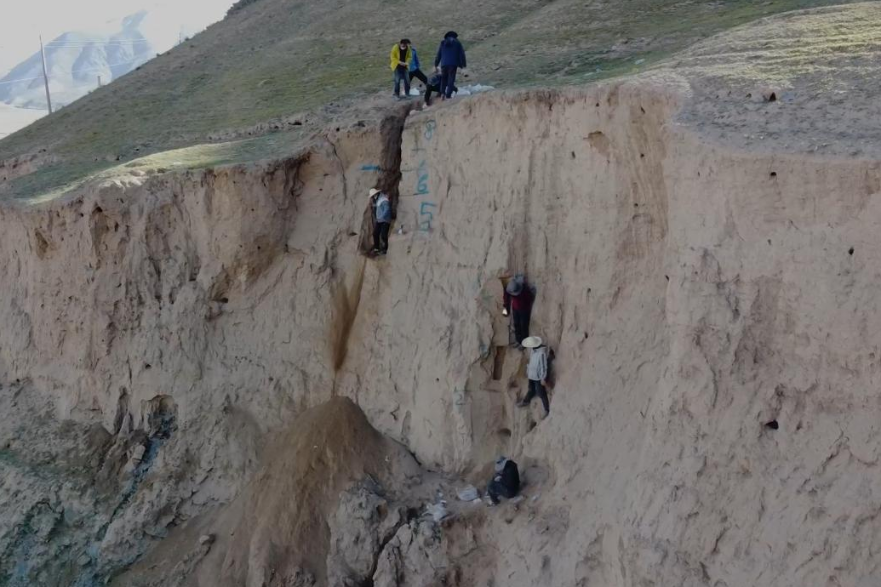
China releases latest findings from second Qinghai-Tibet Plateau scientific expedition
China has officially released the top 10 application achievements from its second Qinghai-Tibet Plateau scientific expedition, marking a significant milestone in ecological, disaster prevention, and resource exploration research. The findings were announced on Wednesday in Lhasa, the capital of the Xizang Autonomous Region, under the leadership of Yao Tandong, a distinguished academician of the Chinese Academy of Sciences. The expedition, which began in August 2017, has involved over 3,000 research teams and 30,000 personnel, conducting extensive surveys across the plateau. Key achievements include scientific support for ecological protection legislation, the creation of an Earth observation and early warning platform, and innovative technologies for disaster prevention in permafrost regions, which are crucial for major infrastructure projects like the Sichuan-Xizang Railway and expressways. The plateau is experiencing a warming, wetting, and ‘greening’ trend, amplifying both regional and global climate impacts. Additionally, the ‘Asian Water Tower’ has shown a significant increase in water supply capacity, with runoff projections indicating a potential 49 percent rise by the end of the century, ensuring water security for billions.
-
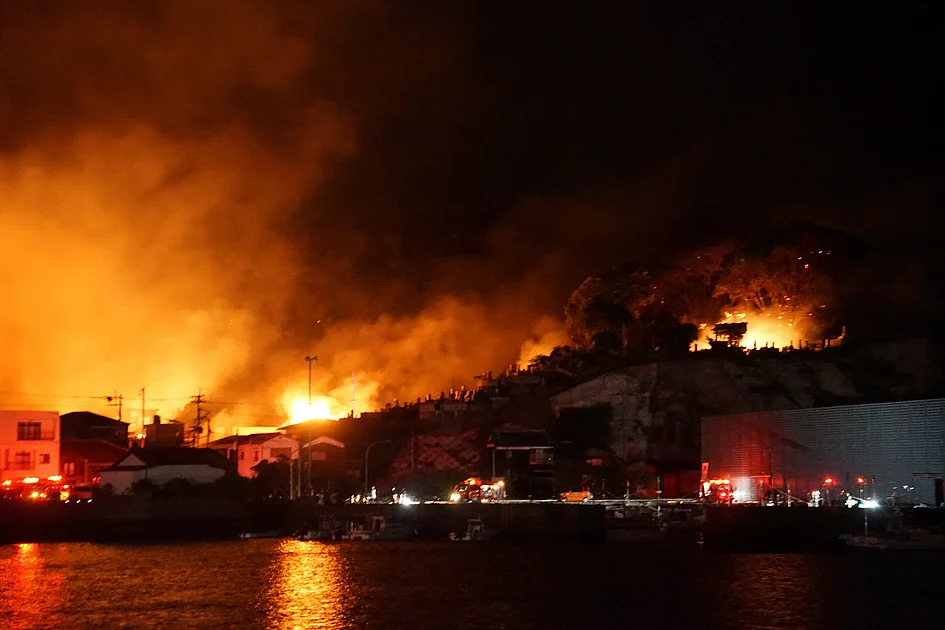
Japan: Major fire engulfs residential area; 300 houses under power blackout
A devastating fire erupted in the southern Japanese city of Oita late Tuesday, engulfing a residential area and spreading to a nearby forested mountain. The blaze, which remains uncontained, has forced the evacuation of 175 residents from 115 households, with one individual still unaccounted for. Firefighters have been battling the ferocious flames throughout the night, as footage captured the inferno turning the sky red and consuming homes. Witnesses described the fire as unprecedented, with strong winds exacerbating its spread. ‘The mountain was burning, the one behind,’ one resident recounted, adding that he only managed to grab his driver’s license and smartphone before fleeing. The fire has affected at least 170 buildings and caused a power blackout in 300 houses. Oita’s governor has sought military assistance to aid in the crisis. Authorities continue to monitor the situation closely as efforts to extinguish the fire persist.
-

Ferry carrying 267 people runs aground in South Korea
A South Korean passenger ferry, the Queen Jenuvia 2, carrying 246 passengers and 21 crew members, ran aground on rocks near Jogdo Island off the country’s south-east coast on Wednesday evening. The incident occurred near Jangsan Island in Sinan County, according to the Coast Guard. Despite the grounding, the vessel remains stable with no immediate risk of sinking or capsizing. Emergency response teams swiftly mobilized to evacuate all passengers and crew to patrol boats, ensuring their safety. Five individuals sustained minor injuries during the incident, but no serious casualties were reported. South Korean Prime Minister Kim Min-seok has directed all available resources to assist in the rescue operation. ‘We have confirmed that there is no flooding, and we are transferring passengers to patrol boats to move them to a safe location,’ a Coast Guard official stated. The Coast Guard plans to refloat the ferry during high tide. The Queen Jenuvia 2 was en route to Mokpo from Jeju Island when the accident occurred. The area is notably close to the site of the 2014 Sewol ferry tragedy, which claimed over 300 lives, predominantly schoolchildren on a field trip. This incident has reignited concerns about maritime safety in South Korea, prompting calls for stricter regulations and enhanced emergency preparedness.
-

Dubai: Gold recovers some losses as 22K trades above Dh450 per gram
Gold prices in Dubai showed signs of recovery on Wednesday, with 22K gold trading above Dh450 per gram, according to the latest market data. The Dubai Jewellery Group reported that 24K gold was priced at Dh491 per gram, up from Dh489.75 the previous day. Other variants, including 21K and 18K, were also trading higher at Dh436 and Dh373.75 per gram, respectively. Globally, spot gold saw a modest increase of 0.28%, reaching $4,077.38 per ounce. Dat Tong, a senior financial markets strategist at Exness, highlighted that gold could face continued pressure due to declining expectations of a Federal Reserve rate cut in December and easing trade tensions, which have reduced safe-haven demand. Tong noted that market sentiment has shifted, with only a 43% probability of a 25-basis-point rate reduction in December, down from 62% a week earlier. Investors are now focusing on upcoming US economic data, including the delayed September non-farm payrolls report, which could influence market volatility and gold’s trajectory. On the geopolitical front, US President Donald Trump’s executive order to exclude certain food products from recent tariff hikes has temporarily eased market concerns. However, rising tensions in Eastern Europe and the Middle East continue to support demand for safe-haven assets like gold.
-
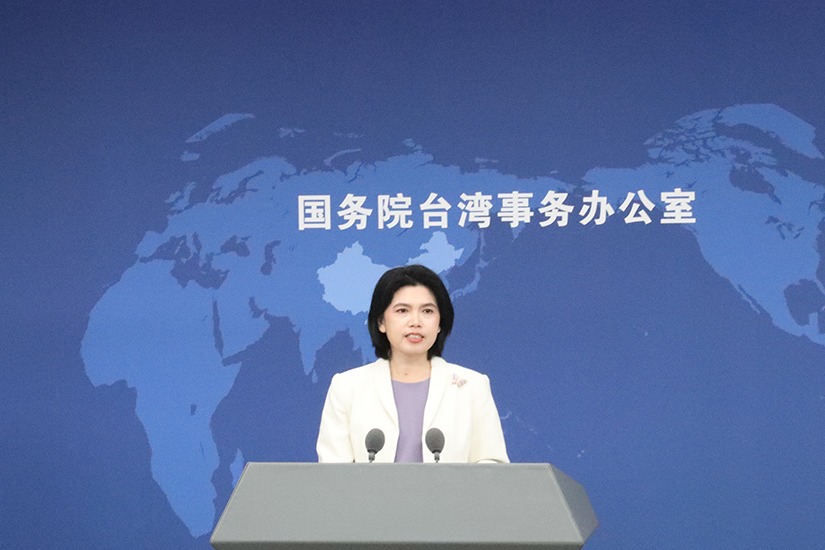
Mainland spokesperson rebukes Japanese PM’s provocative Taiwan-related remarks
In a strong rebuke, a spokesperson for the Chinese mainland has condemned recent remarks by Japanese Prime Minister Sanae Takaichi regarding Taiwan, labeling them as a blatant violation of international justice and a threat to the post-war global order. The comments, made during a regular press conference by Zhu Fenglian of the State Council Taiwan Affairs Office, accused Takaichi of attempting to meddle in the Taiwan Strait situation, undermining the historical outcomes of the Chinese People’s War of Resistance Against Japanese Aggression, and reviving militaristic tendencies. Zhu emphasized that such statements severely damage the already fragile relations between China and Japan. The spokesperson reiterated China’s unwavering stance on Taiwan, asserting that any foreign interference in the region is unacceptable and will be met with resolute opposition. The remarks come amid escalating tensions in the region, with China consistently advocating for peaceful reunification while maintaining a firm position against any form of separatist activities.
-

5 reportedly injured after South Korean ferry with about 270 people runs aground
A South Korean ferry carrying 267 individuals, including 246 passengers and 21 crew members, ran aground on rocks off the country’s southwest coast on Wednesday, according to the coast guard. The vessel was en route from Jeju Island to Mokpo when the incident occurred. Initial reports from the Yonhap news agency indicated that five people sustained minor injuries, but no fatalities or serious casualties have been confirmed. The coast guard swiftly mobilized all available resources to ensure the safety and rescue of those aboard. The exact cause of the grounding remains unclear, and investigations are ongoing. Authorities have emphasized their commitment to addressing the situation promptly and ensuring the well-being of all passengers and crew members.
-
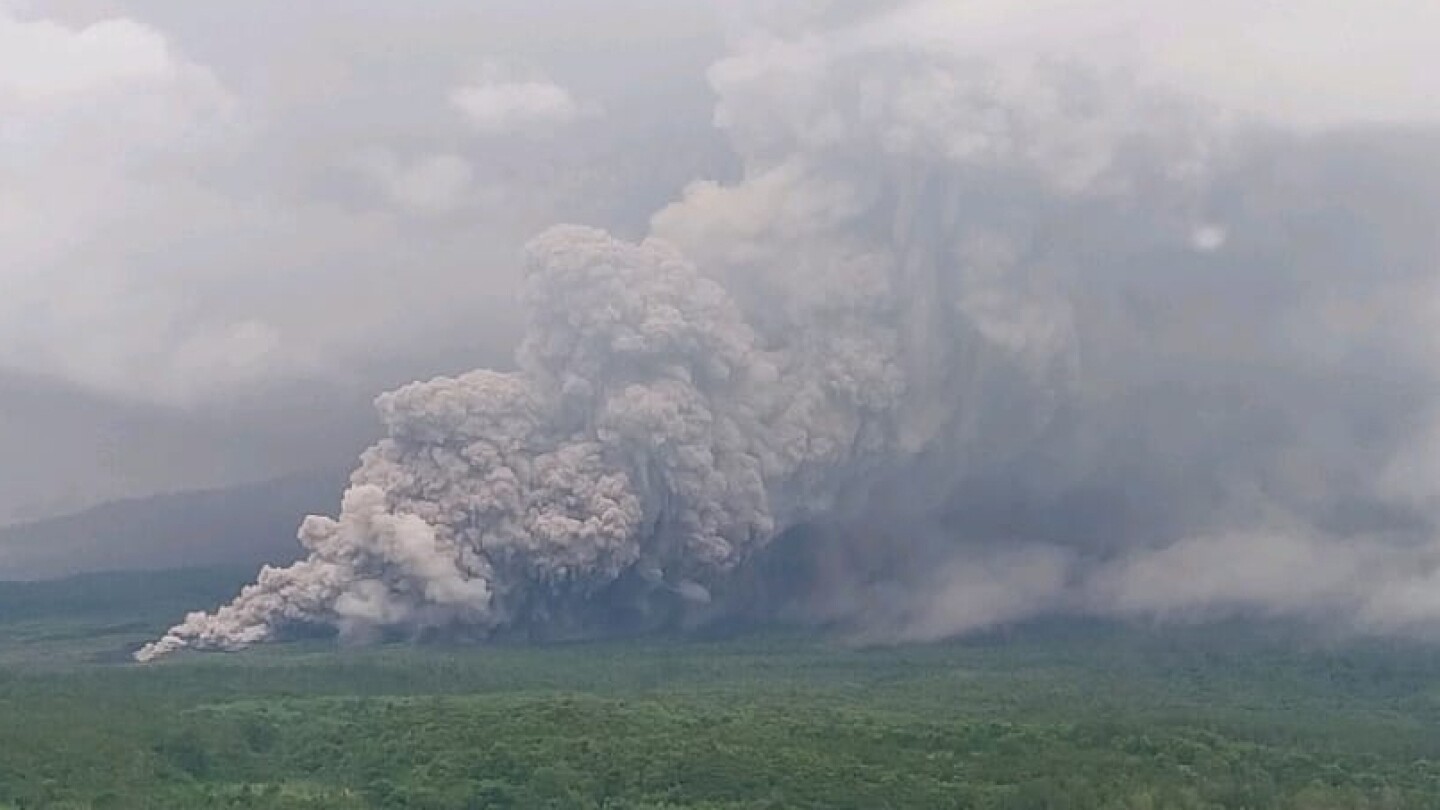
Indonesia raises alert for Mount Semeru volcano to the highest level after a series of eruptions
JAKARTA, Indonesia — Indonesian authorities escalated the alert status for Mount Semeru, the tallest volcano on Java Island, to its highest level on Wednesday following a series of intense eruptions. The volcanic activity, which began midday and continued into the evening, produced avalanches of scorching ash clouds, molten rock, and gas, traveling up to 7 kilometers (4.3 miles) down its slopes. A towering column of hot ash rose 2 kilometers (1.2 miles) into the atmosphere, according to a statement from Indonesia’s Geology Agency. The eruptions blanketed nearby villages with ash, prompting authorities to raise the alert level twice within a single day. No casualties have been reported so far. Over 300 residents from three high-risk villages in Lumajang district were evacuated to government shelters, as confirmed by Abdul Muhari, spokesperson for the National Disaster Mitigation Agency. Mount Semeru, also known as Mahameru, has a history of eruptions spanning over two centuries. Despite the risks, tens of thousands of people continue to inhabit its fertile slopes, a common scenario across Indonesia’s 129 active volcanoes. The nation, home to more than 270 million people, lies along the Pacific ‘Ring of Fire,’ a seismically active region prone to earthquakes and volcanic eruptions.
-
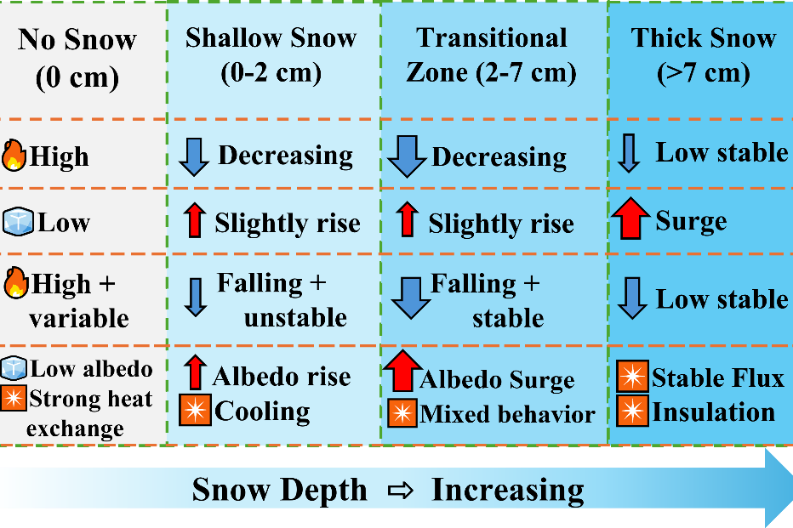
New study reveals snow-ground thermal coupling on Qinghai-Tibet Plateau
A pioneering study conducted by Chinese scientists has uncovered the intricate coupling effects between snow cover and ground thermal dynamics on the Qinghai-Tibet Plateau. Published in the journal *Agricultural and Forest Meteorology*, the research was jointly carried out by the Northwest Institute of Eco-Environment and Resources (NIEER) under the Chinese Academy of Sciences and the Nanjing University of Information Science and Technology (NUIST). The study integrates snow cover processes into land surface and climate models for cold regions, significantly enhancing the accuracy of permafrost evolution predictions and extreme event risk assessments. The Qinghai-Tibet Plateau, home to the world’s largest high-altitude permafrost zone, has experienced accelerated warming due to global climate change. Unlike the Arctic, the plateau’s snow cover is typically thin and short-lived, yet it plays a critical role in influencing ground thermal regimes and surface energy fluxes. Researchers conducted years of in-situ observations at two alpine permafrost sites, located at 5,100 meters and 4,538 meters above sea level, respectively. They analyzed snow cover characteristics, ground surface temperature responses, and energy flux dynamics. The team also proposed a ‘four-interval mechanism framework’ to describe the evolutionary stages of snow-ground coupling. According to Hu Guojie, a researcher at NIEER, this framework provides operational criteria and parametric insights for shallow snow-dominated areas. Professor Zhao Lin from NUIST emphasized that the study quantified the nonlinear thermal effects of shallow snow cover on alpine permafrost, offering observational evidence and conceptual benchmarks for developing threshold-sensitive snow-ground coupling schemes in climate models.