标签: Asia

亚洲

  • US pitches plan to counter China’s dominance of critical mineral supply

    US pitches plan to counter China’s dominance of critical mineral supply

    The United States has initiated a strategic multinational effort to establish a specialized trade zone for critical minerals, aiming to dismantle China’s overwhelming dominance in this vital industrial sector. This high-stakes initiative targets minerals essential for manufacturing everything from advanced smartphones to modern weapon systems.

    On Wednesday, the State Department convened a significant gathering attended by representatives from at least 50 nations, including major economies such as the European Union, Japan, India, South Korea, Australia, and resource-rich Democratic Republic of Congo. The primary focus was addressing global access and availability challenges for minerals crucial to computer chip production and electric vehicle batteries.

    While US government officials including Vice President JD Vance and Secretary of State Marco Rubio avoided direct references to China in their released remarks, Vance pointedly addressed the market distortion caused by ‘foreign supply’ flooding global markets. He emphasized how this dominance has created financing obstacles for other mineral-rich nations seeking to develop their resources. ‘Every single one of us represented in this room has become dependent on arrangements we did not choose, and right now, arrangements that we cannot control,’ Vance stated.

    The US revealed substantial financial commitments to this sector, with Special Assistant David Copley announcing intentions to ‘deploy hundreds of billions of capital into the mining sector to get projects going.’ Investments have already been channeled to key companies including MP Materials, a rare earth magnets manufacturer, and Lithium Americas, which produces essential materials for rechargeable batteries.

    Concurrently, US Trade Representative Jamieson Greer disclosed that the United States, Japan, and the European Commission are developing coordinated trade policies and mechanisms to collectively secure mineral access and avoid potential supply disruptions.

    This development occurred alongside a reportedly ‘very positive’ phone conversation between President Donald Trump and Chinese President Xi Jinping, creating a complex diplomatic backdrop to the minerals initiative. China’s recent tightening of export controls, requiring government approval before shipping minerals abroad, has significantly impacted US industries that depend heavily on these imports. Analysts interpret China’s actions as leveraging its mineral dominance as a strategic bargaining chip in ongoing trade negotiations with Washington.

  • UK: Council reported disabilities drama group to police over Gaza genocide protest

    UK: Council reported disabilities drama group to police over Gaza genocide protest

    A longstanding partnership between Harlow Council and Razed Roof, a drama collective supporting individuals with learning difficulties and disabilities, has been abruptly terminated following a controversial incident during the town’s Holocaust Memorial Day observance. The rupture occurred when performer Joshua Gold referenced Gaza within a recitation enumerating historical genocides, despite prior agreements to omit the mention.

    The Conservative-led council responded by reporting the organization to police, withdrawing all financial support, and prohibiting access to municipal facilities. Council Leader Dan Swords characterized the incident as promoting ‘extremist narratives’ in an official letter, asserting the council’s ‘firm and unwavering position’ against hatred and intimidation. The council further announced intentions to file complaints with the Charity Commission and alert third-party funders, citing violation of the International Holocaust Remembrance Alliance’s definition of antisemitism.

    Contrary to initial reports, Essex Police confirmed after investigation that no criminal offenses were identified in reviewed footage and online material. The performance member maintained his reference to Gaza was part of the original script—not an impromptu political statement—though organizers had requested its removal during final rehearsals.

    The controversy has triggered significant community backlash, with over 1,500 signatures collected on a petition opposing the council’s actions. Supporters emphasize Razed Roof’s two-decade history of providing creative expression and social support for vulnerable populations, warning that the termination jeopardizes a vital community resource. The group has suspended all activities indefinitely amid the funding crisis.

    Notably, Mark Etkind, son of a Holocaust survivor, publicly commended Gold for highlighting Gaza’s situation, stating meaningful Holocaust commemoration requires opposing all genocides. The council has declined further comment despite mounting public criticism and the police finding no legal basis for prosecution.

  • Al Amal prevail as hosts Sharjah impress at AWST 2026

    Al Amal prevail as hosts Sharjah impress at AWST 2026

    The Arab Women’s Sports Tournament (AWST) 2026 witnessed a spectacular display of athletic prowess on Wednesday, with basketball courts and fencing pistes serving as stages for regional competition. The event, which brings together 65 teams from 16 Arab nations competing across nine sports, is set to continue until February 12th.

    On the basketball court, Tunisia’s Al Amal Sports Club delivered a masterclass performance, launching their championship campaign with a resounding 100-54 victory over Bahrain’s Al Hala Club. The Tunisian squad established an insurmountable lead early, concluding the first quarter at 24-11 before executing a devastating 31-5 run in the second period. This offensive surge created a commanding 55-16 halftime advantage. Despite a tied final quarter (24-24), Al Amal’s dominance remained unchallenged throughout the match.

    The day’s second basketball encounter featured Iraq’s Gaz Al Shamal Club overcoming a strong start from the UAE’s Khorfakkan Women’s Sports Club to secure an 81-71 victory. After trailing 21-19 in the opening quarter, the Iraqi team mounted a impressive comeback, outscoring their opponents 26-17 in the second period to claim a halftime lead they would not relinquish.

    Tournament hosts Sharjah Women’s Sports Club reinforced their championship credentials with a convincing 74-49 win against Kuwait’s Al Fatat Sports Club. Demonstrating strategic superiority and athletic precision, Sharjah controlled the tempo across the first three quarters (19-16, 21-7, and 22-12), establishing a foundation that rendered Kuwait’s narrow fourth-quarter advantage (14-12) insignificant.

    Meanwhile, the team fencing competitions concluded with Oman’s Salalah Club emerging as the dominant force. The Omani team topped the medal standings with an impressive haul of seven medals (three gold, two silver, and two bronze) across épée, sabre, and foil disciplines. Saudi Arabia’s Alula Club secured second place with six medals (three gold, two silver, one bronze), while the UAE’s Sharjah Women’s Sports Club claimed third with four medals (one silver, three bronze).

    Basketball action continues Thursday at Al Batayih Cultural & Sports Club with three scheduled matches: Al Fatat Sports Club versus Al Amal Sports Club at 12:00 PM, Al Hala Club against Khorfakkan Women’s Sports Club at 2:00 PM, and a concluding match between Jordan’s Al Fuheis Club and Sharjah Women’s Sports Club at 4:00 PM.

  • Dubai Basketball gear up for Real Madrid with stunning win over Olympiacos

    Dubai Basketball gear up for Real Madrid with stunning win over Olympiacos

    In a spectacular display of resilience and skill, Dubai Basketball secured their 12th EuroLeague victory in a debut season thriller, overcoming Olympiacos 108-98 in overtime before an electrified crowd of 6,500 at Coca-Cola Arena. The Wednesday night showdown showcased Dubai’s emergence as a formidable force in European basketball, setting the stage for their historic first-ever home encounter with legendary club Real Madrid on Thursday.

    The match unfolded with immediate intensity as Dubai established early dominance through aggressive defensive pressure, rapid transition plays, and confident shooting. The home team maintained control throughout regulation play, feeding off the energy of what has become one of Europe’s most challenging home court environments. However, Olympiacos mounted a determined comeback that culminated in a dramatic last-second three-pointer, forcing overtime and momentarily silencing the arena.

    Dubai demonstrated remarkable composure in the extra period, locking down defensively while executing with precision on offense to secure the victory. Center Mfiondu Kabengele delivered a dominant performance with a powerful double-double, supported by crucial contributions from Dwayne Bacon and McKinley Wright during critical moments. Aleksa Avramović set the early tempo on both ends of the court, exemplifying the team’s collective identity of fearlessness and unity under pressure.

    Head Coach Jurica Golemac emphasized the significance of the hard-fought win, stating: ‘This was an extremely intensive game with tremendous physicality and energy. We maintained our passion throughout the momentum shifts and demonstrated championship character to ultimately prevail.’ Golemac specifically highlighted the importance of home court advantage ahead of the upcoming Real Madrid matchup, expressing hope for increased fan support to strengthen the team’s familial atmosphere.

    With the regular season entering its decisive phase, Dubai Basketball continues to establish Coca-Cola Arena as an impenetrable fortress while building momentum in the heated race for EuroLeague postseason positioning. The team’s growing confidence and cohesive identity position them favorably as they prepare to host one of basketball’s most iconic franchises in what promises to be a landmark event for Middle Eastern sports.

  • From Chevron to Saudi Arabia, Syria signs raft of new business deals

    From Chevron to Saudi Arabia, Syria signs raft of new business deals

    A significant geopolitical realignment is unfolding in the Middle East as Syria secures substantial economic agreements with Gulf powers under explicit American endorsement. US energy conglomerate Chevron formalized a preliminary arrangement with Syria and Qatar’s UCC Holding to initiate offshore oil and gas exploration along Syria’s coastline, marking Damascus’s inaugural venture into offshore energy development.

    The Chevron agreement coincides with Saudi Arabia’s announcement of a multi-billion dollar investment package targeting Syria’s transportation infrastructure, including establishment of a private airline company. These developments occur alongside substantial Qatari-led energy infrastructure projects, notably a completed natural gas pipeline supplying Syrian industries with Turkish gas exports.

    US diplomatic presence at the Damascus signing ceremony, through envoy Tom Barrack, signals Washington’s tacit approval of these economic partnerships despite previous tensions regarding President Sharaa’s military campaigns against US-aligned forces. The coordinated investments reveal emerging cooperation between historically opposed regional powers, with Qatar, Turkey, and Saudi Arabia collectively driving Syria’s reconstruction efforts.

    This economic diplomacy extends beyond bilateral agreements, reflecting broader strategic realignments. Saudi Arabia and Turkey have strengthened ties through mutual opposition to Israeli military operations and coordinated support for factions in Sudan’s civil conflict. The convergence of American energy interests through Chevron’s regional presence—from Israel’s Leviathan field to Libyan exploration agreements—further demonstrates Washington’s strategic balancing act in Eastern Mediterranean energy politics.

  • Gen Z toppled an autocrat – but old guard tipped to win Bangladesh vote

    Gen Z toppled an autocrat – but old guard tipped to win Bangladesh vote

    Dhaka’s streets, once vibrant with revolutionary graffiti celebrating Sheikh Hasina’s ousting, now witness a complex political realignment as Bangladesh approaches pivotal elections. The 2024 youth uprising that claimed approximately 1,400 lives according to UN estimates has evolved into a fragmented political landscape, where idealistic student leaders navigate uncomfortable alliances and enduring dynastic politics.

    The movement’s catalyst emerged from police brutality during July 2024 protests, captured in viral footage showing Rahat Hossain desperately dragging his fatally wounded friend Emam Hasan Taim Bhuiyan amid continued gunfire. This visceral moment galvanized nationwide demonstrations that ultimately toppled Hasina’s 15-year administration, which had increasingly employed authoritarian measures despite overseeing economic progress.

    Two years later, the student-led National Citizen Party (NCP) faces severe challenges. Despite initial expectations that uprising leaders would shape Bangladesh’s future, the party has fractured notably through its alliance with Jamaat-e-Islami, an Islamist group historically accused of collaborating with Pakistani forces during the 1971 independence war. This pragmatic coalition has particularly alienated female activists like Shima Akhter, who notes women are being systematically sidelined despite their crucial role in the revolution.

    Jamaat’s political resurgence signals remarkable shifts in Bangladesh’s political consciousness. The party secured control of Dhaka University’s student union for the first time since independence, indicating younger voters increasingly separate the organization from its controversial history. Party leader Shafiqur Rahman emphasizes commitments to end corruption and restore judicial independence, though these promises face skepticism in a nation with entrenched corruption challenges.

    The political vacuum created by Hasina’s exile and the Awami League’s banning primarily benefits the Bangladesh Nationalist Party (BNP), which has rebranded as a liberal democratic force under Tarique Rahman’s leadership. Ironically, this represents a return to dynastic politics—Tarique is son of former Prime Minister Khaleda Zia, who herself assumed power after her presidential husband’s assassination.

    As elections approach, fundamental questions persist about whether the bloodshed produced meaningful change. Hossain reflects near the site where his friend was killed: “One cannot expect mangoes from a tamarind tree,” suggesting true transformation requires elected government reform rather than revolutionary idealism alone. With many awaiting justice for police violence and women demanding equal political representation, Bangladesh’s democratic future remains uncertain amid resurgent establishment forces.

  • Turkish Airlines flight makes emergency landing in India after fire in engine

    Turkish Airlines flight makes emergency landing in India after fire in engine

    A Turkish Airlines aircraft operating from Kathmandu to Istanbul was compelled to execute an emergency landing at Kolkata’s Netaji Subhash Chandra Bose International Airport on Wednesday following an engine fire incident. The Indian Civil Aviation Ministry confirmed the aircraft issued a ‘PAN PAN’ distress signal—a international aviation alert indicating an urgent situation—at approximately 1:38 PM local time. The pilot reported a fire in the right engine and subsequent failure of that engine, necessitating an immediate diversion to the nearest suitable airport. Airport emergency services were placed on full alert as the aircraft approached. The fire was successfully extinguished by ground crews by 1:51 PM, just minutes after the plane touched down. Authorities have confirmed that all passengers and crew aboard the flight emerged unharmed, with no injuries reported. The incident highlights the critical importance of pilot training and emergency response protocols in managing in-flight technical failures, ensuring passenger safety during unforeseen aviation emergencies.

  • ‘Heartbreaking’: Zaheer Abbas on ugly feud between India and Pakistan cricket

    ‘Heartbreaking’: Zaheer Abbas on ugly feud between India and Pakistan cricket

    Pakistani cricket icon Zaheer Abbas, renowned for his elegant batting during the 1970s and early 1980s, has expressed profound disappointment over the escalating tensions between Indian and Pakistani cricket authorities. The former International Cricket Council president described the current state of relations as “heartbreaking” in an exclusive interview with Khaleej Times.

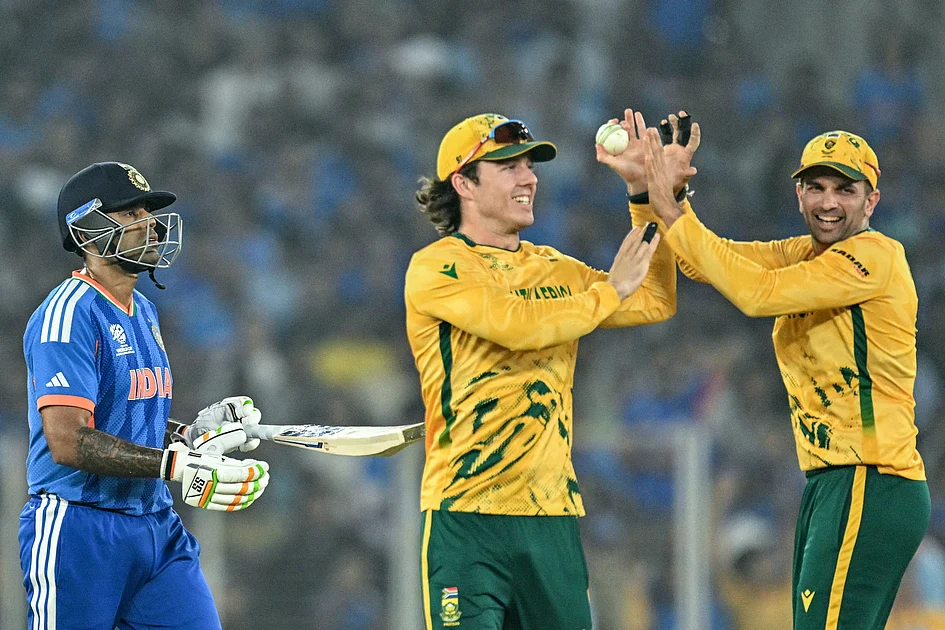
    The deterioration reached new lows with Pakistan’s decision to boycott the T20 World Cup match against India following Bangladesh’s elimination from the tournament. This development follows last year’s Asia Cup controversy where Indian players refused handshakes with Pakistani counterparts, triggering chaotic scenes, mutual allegations, and subsequent boycott threats.

    “I don’t know how to react to everything that has happened between the two countries’ cricket boards,” stated the 78-year-old legend during a phone conversation from Karachi. “It’s heartbreaking that we have reached a stage where all we see is negativity and bitterness.”

    Abbas highlighted specific incidents that violated cricket’s spirit, including the absence of traditional handshakes during the Asia Cup and India’s refusal to accept trophies from PCB chairman Mohsin Naqvi during presentation ceremonies. The cricketing great emphasized that “nobody is bigger than the sport” and condemned the unsportsmanlike behavior displayed by administrators and players from both nations.

    Reflecting on his playing era, Abbas recalled how cricket served as a bridge for cultural exchange despite political tensions between the nuclear-armed neighbors. “I played numerous matches against India and developed lasting friendships with Indian players. Politics never influenced our on-field competitions or off-field relationships,” he reminisced. “Cricket previously united people through positive interactions and mutual respect—what we witness today stands in stark contrast to those values.”

    The cricketing legend urged both nations to prioritize dialogue over confrontation, emphasizing that cricket administrators should focus on progressing the sport rather than damaging it through perpetual conflict.

  • AI, uncertainty, end of fixed roles: Experts in Dubai discuss future work place

    AI, uncertainty, end of fixed roles: Experts in Dubai discuss future work place

    DUBAI – At the World Government Summit, a distinguished panel of global experts delivered a transformative vision for the future of work, emphasizing that artificial intelligence, economic volatility, and demographic shifts are permanently dismantling traditional career structures. The session, moderated by Ted Kemp of Khaleej Times, featured Gilbert Houngbo (International Labour Organization), Robyn Scott (Apolitical), and David Bach (IMD Business School), who collectively argued that adaptation must become humanity’s core competency.

    In a significant departure from conventional workforce planning, Gilbert Houngbo asserted that governments must embrace uncertainty as the new constant. ‘Predicting the labor market’s landscape in five, ten, or twenty years is increasingly challenging,’ he stated, advocating for resilient, flexible institutions instead of rigid long-term plans. He issued a critical warning regarding AI’s productivity paradox: while automation delivers efficiency gains, these benefits are not automatically translating into improved wages or job security. ‘The widening gap between productivity and compensation demands proactive policy intervention to prevent deepening inequalities,’ Houngbo emphasized, noting that continuous skill investment has transitioned from optional to fundamental.

    Robyn Scott presented a compelling case for governmental AI adoption, identifying a staggering $1.75 trillion productivity opportunity within bureaucratic systems. She championed human-AI collaboration where algorithms handle repetitive tasks while humans focus on complex judgment-driven work. ‘The crucial distinction lies in whether humans operate above or below the algorithm,’ Scott cautioned. ‘Surrendering全部 human agency to automated systems creates a zero-sum dynamic that poses profound societal dangers.’ She reframed retraining as an ongoing ‘change management muscle’ rather than a one-time initiative.

    David Bach addressed the psychological dimension of workplace evolution, identifying fear—not technology—as the primary obstacle. Contrasting global optimism levels, he noted significantly higher confidence in the UAE compared to Western nations. ‘Pessimism paralyzes skill investment and stifles experimentation,’ Bach observed. ‘True leadership involves articating optimistic visions that acknowledge risks while mobilizing collective action.’

    All experts concurred that ‘good work’ must be redefined beyond job titles in an era of non-linear careers. Houngbo emphasized AI’s role in reducing hardship while ensuring decent wages and social protections, particularly for women in automation-vulnerable roles. Scott noted the shrinking ‘half-life’ of professions, urging a shift from external job identity to internal meaning. Bach illustrated this with the example of a hospital cleaner deriving profound purpose from supporting cancer patients, demonstrating that meaningful work transcends technological prestige.

    The panel anticipated fundamental organizational redesign, with AI enabling individual contributors to achieve massive impact without becoming managers. Scott advocated replacing role-based thinking with task-oriented workflows, while Bach emphasized creating environments where experimentation and safe failure become institutional norms. As the experts concluded, the future belongs to those who can navigate perpetual transformation with purpose and adaptability.

  • A global craze for Korean culture is making its humblest snacks unaffordable

    A global craze for Korean culture is making its humblest snacks unaffordable

    SEOUL – The humble gim, a crispy dried seaweed staple of Korean cuisine, has transformed into a billion-dollar global commodity, creating both economic opportunity and domestic consumer anxiety as prices reach unprecedented levels.

    For 47 years, vendor Lee Hyang-ran has witnessed the evolution of gim from a local dietary essential to an international sensation. ‘Western visitors once considered this black, paper-like snack peculiar,’ the veteran merchant remarked from her Seoul market stall. ‘Now they seek it out specifically.’

    South Korea dominates the global gim market, exporting $1.13 billion worth of dried seaweed in 2025 according to the Korea Maritime Institute. This remarkable figure represents a steady upward trajectory fueled by the worldwide Korean cultural wave. The product has earned the nickname ‘black semiconductor’ in reference to Korea’s technological dominance, highlighting its economic significance.

    This international appetite comes with domestic consequences. Gim prices have surged approximately 50% within a year, breaking historical records. The standard sheet that cost 100 won ($0.06) in 2024 now exceeds 150 won, with premium products reaching 350 won per sheet.

    Consumers like Kim Jaela, who traditionally purchased in bulk, are reconsidering their buying habits. ‘I noticed the price increase immediately when shopping online,’ she explained. ‘If prices remain elevated, I’ll need to adjust my purchasing patterns significantly.’

    The global fascination stems from cultural phenomena including K-pop and television dramas that showcase Korean cuisine. American supermarket chain Trader Joe’s experienced a viral sensation with their gimbap (seaweed-wrapped rice rolls) in 2023, with products disappearing from shelves nationwide shortly after launch.

    International visitors recognize both the similarities and distinctions between gim and Japanese nori. ‘Gim is lighter, crispier, and typically grilled with sesame oil and salt,’ noted Miki, a Japanese tourist. ‘The flavor profile is distinctly different.’

    Professor Lee Eunhee of Inha University’s consumer studies department observes: ‘Growing global familiarity with gim from Asian to Western markets has increased international demand, which consequently drives up domestic prices.’

    The production side faces its own challenges. Kim Namin, who operates a family-owned processing factory in Wando, acknowledges the supply-demand imbalance. ‘There aren’t enough gim factories to meet rising demand,’ he stated, noting his family’s consideration of operational expansion. He emphasized gim’s price sensitivity in the domestic market, where even minor increases generate consumer resistance.

    Multiple factors contribute to the price surge, including overall inflation, rising labor costs, reduced overseas production, and fundamentally, unprecedented global demand. In response, government agencies and corporations are implementing countermeasures. The Ministry of Oceans and Fisheries is monitoring the situation closely, while companies like Pulmone plan to establish land-based seaweed research centers enabling year-round production.

    Despite domestic concerns, the international market continues to thrive. Lee Hyang-ran reports unprecedented sales: ‘Gim sells like hotcakes, especially varieties for making gimbap. I’m delighted that Korean gim has gained such popularity.’