标签: Asia

亚洲

  • Taiwan-US ties are ‘rock solid,’ the island’s president says after Trump-Xi call

    Taiwan-US ties are ‘rock solid,’ the island’s president says after Trump-Xi call

    TAIPEI, Taiwan — Taiwanese President Lai Ching-te delivered a strong affirmation of the island’s relationship with the United States on Thursday, characterizing the bilateral ties as “rock solid” despite mounting diplomatic pressure from Beijing. The declaration came shortly after U.S. President Donald Trump and Chinese leader Xi Jinping engaged in their first telephone discussion since November, which prominently addressed Taiwan’s geopolitical status.

    President Lai, speaking during an official visit to textile merchants in western Taiwan, emphasized that “all cooperation projects will continue uninterrupted” between Taipei and Washington. This statement represents a deliberate reinforcement of Taiwan’s strategic positioning following the high-level Sino-American dialogue.

    According to China’s Foreign Ministry readout of the call, President Xi explicitly cautioned his American counterpart to exercise “prudence” regarding weapons provisions to Taiwan. Beijing maintains its longstanding position that Taiwan constitutes an inseparable part of Chinese territory, despite the island’s autonomous democratic governance since 1949. China’s foreign policy consistently prohibits nations with which it maintains diplomatic relations—including the United States—from establishing formal governmental connections with Taipei.

    The United States, while refraining from official recognition of Taiwan’s sovereignty, remains the island’s most significant informal ally and primary arms supplier. In December, the U.S. State Department unveiled its most substantial weapons package proposal for Taiwan to date, valued at over $11.1 billion and encompassing advanced missile systems, artillery platforms, and unmanned aerial vehicles. This comprehensive military assistance package awaits congressional approval.

    China responded to the proposed arms transaction with pronounced hostility, executing two days of extensive military exercises encircling Taiwan in late December. These demonstrations involved coordinated deployments of air, naval, and missile units, showcasing Beijing’s military capabilities and strategic resolve.

    Domestically, Taiwan faces political challenges regarding defense expenditure. The opposition Kuomintang (KMT) party, which controls the legislative assembly, has obstructed President Lai’s budgetary initiatives—including a proposed $40 billion special defense allocation—advocating instead for substantially reduced military spending. The administration’s plan to increase defense appropriations to 3.3% of Taiwan’s gross domestic product has encountered resistance from both political opponents and segments of the civilian population.

    President Trump characterized his discussion with President Xi as “excellent” and “thorough” in a social media post, additionally revealing China’s consideration of purchasing 20 million tons of U.S. soybeans during the current season—a significant increase from the previous season’s 12 million tons. The American leader also confirmed plans for an April visit to China, which would mark his first official trip to the country during his current presidential term.

  • Malaysia bans e-waste imports, vows to end illegal dumping

    Malaysia bans e-waste imports, vows to end illegal dumping

    KUALA LUMPUR, Malaysia — In a decisive environmental policy shift, Malaysia has enacted an immediate and comprehensive prohibition on all electronic waste imports, declaring the nation will no longer serve as the world’s refuse repository. The Malaysian Anti-Corruption Commission (MACC) announced Wednesday that e-waste has been reclassified under an “absolute prohibition” category, effectively stripping the Department of Environment of its previous authority to grant import exemptions.

    MACC Chief Commissioner Azam Baki emphasized the finality of the new directive, stating, “E-waste is no longer permitted,” while promising “firm and integrated enforcement action” to combat illegal shipments. The policy transformation follows years of environmental advocacy and mounting evidence of hazardous materials contaminating Malaysian soil and water systems.

    The ban coincides with an expanding corruption investigation within environmental regulatory bodies. Last week, authorities detained the Environment Department’s director-general and his deputy over alleged power abuse and corruption related to e-waste oversight. The probe has resulted in frozen bank accounts and seized assets connected to the case.

    Environmental scientists have long warned that improperly processed e-waste—discarded electronics containing lead, mercury, cadmium and other toxins—poses severe threats to public health and ecological systems. Malaysia has repeatedly intercepted hundreds of suspicious containers at its ports in recent years, often mandating their return to originating countries.

    The Home Ministry reinforced the policy shift through social media channels, asserting that “e-waste is not just garbage but a serious threat to environment, people’s health and national security.” The statement unequivocally declared: “Malaysia is not a dumping ground for the world’s waste.”

  • Why misinformation dominates the crypto conversation

    Why misinformation dominates the crypto conversation

    The cryptocurrency ecosystem continues to grapple with pervasive misinformation that clouds public understanding and distorts mainstream perception of blockchain technology’s transformative potential. Despite significant advancements in digital finance, superficial narratives and fear-based commentary dominate conversations about this rapidly evolving financial system.

    A revealing personal encounter illustrates this communication gap: when discussing cryptocurrency with an intelligent, accomplished individual who unquestioningly accepts mainstream media narratives, the conversation immediately defaulted to stereotypical criticisms—criminal associations, perceived worthlessness, and excessive risk. While risk acknowledgment holds validity, the complete dismissal of blockchain’s integration into global finance demonstrates how deeply entrenched misconceptions persist.

    The fundamental disconnect emerges when comparing micro-level banking conveniences with macro-level financial infrastructure limitations. While domestic transfers between personal accounts occur seamlessly, international payments remain plagued by delays and substantial fees. Business-to-business transactions continue relying on archaic third-party systems and cumbersome reconciliation processes, revealing a global financial architecture that remains slow, inefficient, and surprisingly costly.

    This educational journey through cryptocurrency has revealed several critical learning patterns: Initial enthusiasm often leads to premature discussions with underinformed individuals, while excessive attention to voices spreading IFUD (Ignorance, Fear, Uncertainty, and Doubt) creates unnecessary barriers to understanding. Even financial experts frequently offer contradictory advice, suggesting comprehensive mastery before participation—an approach that would paralyze learning in any other field from parenting to driving.

    Traditional financial advisors have consistently dismissed blockchain as a scam or temporary fad, while major financial institutions publicly expressed skepticism while simultaneously accumulating and developing blockchain solutions privately. The space has been further clouded by paid promoters shilling coins without disclosure, creating exit liquidity scenarios for unsuspecting investors.

    Market commentary has been dominated by panic during corrections, conflicting investment methodologies, and outright rejection from unexpected sources including business-savvy family members. The most persistent challenge has been subtle mockery directed at genuine curiosity about blockchain technology.

    The evolution in understanding comes not from停止 listening, but from developing discernment—recognizing that continuous learning provides the tools to identify credible information amidst the noise. The path forward requires balanced skepticism, recognizing both blockchain’s transformative potential and its legitimate challenges while filtering out unsubstantiated criticism and exaggerated hype alike.

  • Canada eliminates Islamophobia, antisemitism envoys from government

    Canada eliminates Islamophobia, antisemitism envoys from government

    In a significant policy reversal, Canadian Prime Minister Mark Carney’s administration has discontinued the specialized offices combating Islamophobia and antisemitism, despite campaign assurances to maintain these positions. The announcement, delivered by Minister of Canadian Identity and Culture Marc Miller on Wednesday, revealed plans to establish a comprehensive “Rights, Equality and Inclusion” advisory council to address all forms of racism through a unified approach.

    This structural change coincides with the recent commemoration of Canada’s National Day of Remembrance of the Québec City Mosque Attack, which occurred on January 29, 2017, when a gunman killed six worshippers and injured nineteen others. Prime Minister Carney himself recently characterized the tragedy as “a solemn reminder of the pervasiveness of Islamophobia and the devastating consequences of hatred.”

    The antisemitism envoy position had remained vacant for six months following the retirement of diplomat Deborah Lyons, while Islamophobia envoy Amira Elghawaby, appointed by former Prime Minister Justin Trudeau, was abruptly removed from her position. Her term had been scheduled to conclude next year. The government has not clarified whether Ms. Elghawaby will transition to the new advisory council.

    The decision has generated substantial controversy within affected communities. Former Canadian intelligence officer Huda Mukbil expressed surprise at the Liberal Party’s move, noting that Conservative leader Pierre Poilievre had previously pledged to eliminate the position. Ms. Elghawaby had earned broad support through her work, including developing anti-racism strategies for the Royal Canadian Mounted Police and coordinating Canada’s first anti-Islamophobia summit following the 2021 killing of a Muslim family in London, Ontario.

    Her tenure involved confronting escalating anti-Muslim sentiment, particularly after the October 7 Hamas attacks and subsequent Gaza conflict. According to the National Council of Canadian Muslims, where Elghawaby previously worked, Canada has experienced more Muslim fatalities from targeted hate attacks than any other G7 nation. The organization now expresses concern about losing a crucial advocacy voice at the federal level.

  • How Dubai sets global aviation standard with travel tech, airport experience

    How Dubai sets global aviation standard with travel tech, airport experience

    Dubai’s aviation sector has established unprecedented global standards in biometric systems and seamless travel technology, positioning the emirate as the world’s foremost innovator in passenger experience. Emirates Airline President Sir Tim Clark revealed this technological leadership during the World Government Summit, contrasting Dubai’s advanced implementation with the European Union’s delayed adoption of similar digital systems.

    Speaking alongside International Civil Aviation Organisation President Toshiyuki Onuma at a session titled “What is the next destination for Aviation,” Clark detailed Dubai’s successful deployment of frictionless airport technology that eliminates physical interventions. “We’ve been advancing the pace so we can process passengers through Dubai without any kind of physical interdiction at all,” Clark stated, emphasizing that the technology has been operational for years while the EU’s recent digitization efforts remain overdue.

    The aviation leaders identified commercial space launches as a critical challenge facing the industry. Clark highlighted how private space companies, particularly SpaceX, have disrupted civil aviation when launches encounter problems. “Every time one of these things goes wrong, it can completely screw up civil aviation hundreds of thousands of miles,” he noted, despite fortunately avoiding catastrophic losses.

    Onuma acknowledged the need for careful evaluation of emerging technologies, stating that stakeholders often present biased views requiring objective analysis. Both leaders agreed that while commercial space ventures should not be impeded, enhanced coordination is essential as companies like Blue Origin expand low Earth orbit operations.

    Regarding airspace management, Clark praised the Middle East’s “Herculean” progress in modernizing systems compared to other regions. He specifically commended the rapid advancements in Qatar and the United Arab Emirates, while criticizing Europe’s need for fundamental airspace management restructuring to address congestion and efficiency challenges.

    The discussion concluded that the primary obstacles to global aviation modernization are not technological capabilities but rather harmonized ground systems and coordinated international approaches among stakeholders with divergent national agendas.

  • Political row erupts in India over ex-army chief’s unpublished memoir

    Political row erupts in India over ex-army chief’s unpublished memoir

    India’s parliamentary proceedings descended into chaos this week as opposition leader Rahul Gandhi attempted to cite explosive allegations from former Army Chief General MM Naravane’s unpublished memoir, triggering vehement protests from ruling party members and resulting in multiple suspensions.

    The controversy centers on General Naravane’s manuscript ‘Four Stars of Destiny,’ which reportedly contains damning accusations regarding the government’s handling of the 2020 military standoff with China. According to excerpts published by The Caravan magazine and cited by Gandhi, political leadership provided ambiguous directives during critical moments of the Himalayan border crisis, leaving military commanders effectively abandoned.

    During heated parliamentary debates, Gandhi claimed the memoir revealed that as Chinese tanks advanced toward Indian positions in Ladakh’s Galwan Valley, Naravane received instructions simply ‘to do what he deemed appropriate’ rather than clear strategic guidance. The opposition leader further quoted the former army chief as feeling ‘really alone’ and ‘abandoned by the entire establishment’ during the crisis.

    The ruling BJP party immediately condemned Gandhi’s actions, with Defense Minister Rajnath Singh accusing him of violating parliamentary procedures by referencing an unpublished document. Government ministers interrupted proceedings, demanding physical proof of the manuscript’s existence and asserting that no officially published book contained such claims.

    This political confrontation represents the latest chapter in the ongoing controversy surrounding Naravane’s memoir, which has been awaiting government clearance since 2024 under protocols requiring retired security officials to obtain approval before publishing potentially sensitive material. The delayed publication has sparked intense speculation about its contents, particularly regarding the deadly 2020 border clash that claimed twenty Indian and four Chinese soldiers’ lives.

    The parliamentary standoff resulted in the suspension of eight Congress party MPs for disorderly conduct, while both houses faced repeated adjournments. Gandhi later displayed what he claimed was a copy of the unpublished manuscript to reporters outside parliament, challenging the government’s assertions that the book didn’t exist.

    This incident marks another escalation in the ongoing political battles over national security accountability, with the opposition continuing to criticize the government’s handling of border tensions with China despite recent diplomatic progress that has eased military confrontations along the disputed Himalayan frontier.

  • ‘Sorry, papa’: Minor girls leave heartbreaking note before jumping off balcony in Delhi NCR

    ‘Sorry, papa’: Minor girls leave heartbreaking note before jumping off balcony in Delhi NCR

    In a devastating incident that has shocked the community of Ghaziabad, Uttar Pradesh, three minor sisters tragically ended their lives by jumping from the ninth-floor balcony of their residential high-rise. The incident occurred in the early hours of Wednesday, around 2:00 AM, in the Bharat City complex within the Tilamod police station jurisdiction.

    According to law enforcement officials, the deceased have been identified as Nishika (16), Prachi (14), and Pakhi (12), daughters of resident Chetan Kumar. Emergency services transported the sisters to a nearby 50-bed hospital in Loni, where medical professionals pronounced all three deceased upon arrival.

    The investigation has taken a disturbing turn with the discovery of a suicide note that contained a heartbreaking apology to their father. The note, written in both English and Hindi, stated: ‘A true life story. Read everything written in this diary, because it is true. Read now! I am really sorry, sorry papa.’

    Preliminary reports from Indian media sources suggest the adolescents had developed an addiction to a Korean task-based online game that allegedly presented suicide as its ultimate challenge. The diary recovered from the scene reportedly detailed the sisters’ deep engagement with Korean entertainment, culture, and media.

    Assistant Commissioner of Police Atul Kumar Singh confirmed that police received the emergency call at approximately 2:15 AM through the Police Response Vehicle system. Law enforcement authorities are currently conducting thorough investigations, including interviews with family members and comprehensive analysis of the victims’ digital footprints and online activities.

    This tragic event follows similar concerning incidents across India, highlighting growing apprehensions about the impact of online content and gaming challenges on adolescent mental health and wellbeing.

  • Bitcoin plunges up to 8% and South Korea’s Kospi sinks nearly 4% in the latest tech-led sell-off

    Bitcoin plunges up to 8% and South Korea’s Kospi sinks nearly 4% in the latest tech-led sell-off

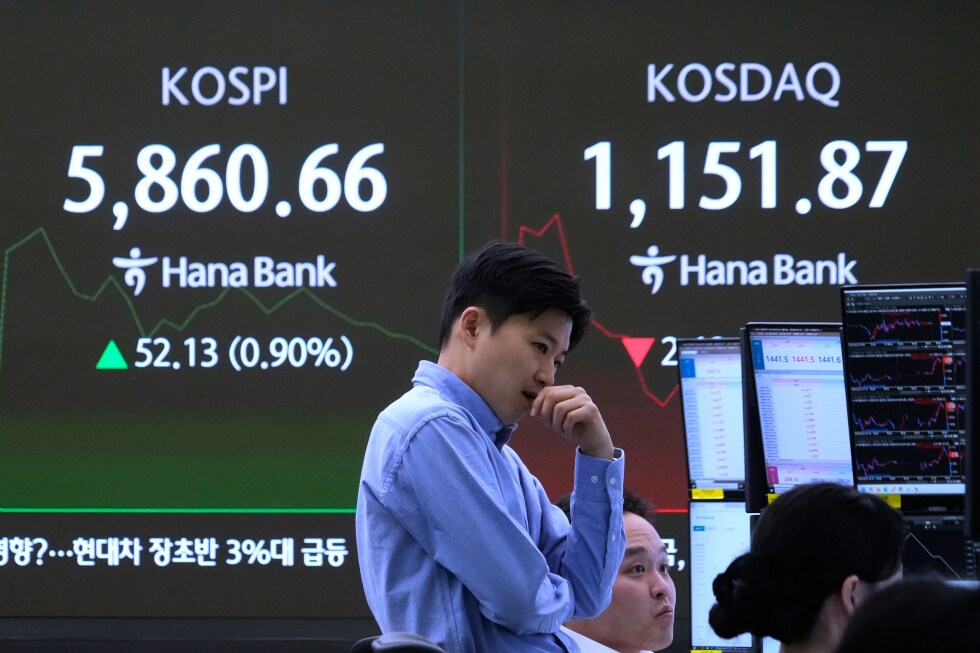
    Asian financial markets experienced significant downward pressure on Thursday as a widespread technology stock selloff triggered substantial losses across major indices. The selling frenzy, driven by renewed investor anxiety over inflated tech valuations, resulted in South Korea’s Kospi plummeting nearly 4% in its most severe single-day decline in recent months.

    Digital assets mirrored the bearish sentiment, with Bitcoin experiencing dramatic volatility. The cryptocurrency plunged approximately 8% during early trading hours, briefly touching $69,000 before stabilizing near $71,000—marking its lowest valuation point since November 2024 according to CoinDesk metrics.

    The technology rout manifested most severely in semiconductor and electronics giants. Samsung Electronics, South Korea’s largest corporation, witnessed its shares collapse by 5.9%, while chip manufacturer SK Hynix faced an even steeper decline of 6.7%. This sector-wide weakness extended throughout the region with Tokyo’s Nikkei 225 declining 0.9% to 53,818.04 and Taiwan’s Taiex dropping 1.5%.

    Chinese markets demonstrated relative resilience though still ended in negative territory. Hong Kong’s Hang Seng retreated 0.3% to 26,761.00, while the Shanghai Composite index surrendered 0.6% to close at 4,079.68. Australia’s S&P/ASX 200 completed the regional downturn with a 0.4% decrease to 8,889.20.

    The Asian session followed Wall Street’s concerning pattern where the S&P 500 registered its fifth decline in six trading sessions, closing Wednesday at 6,882.72 despite most components advancing. The technology-heavy Nasdaq Composite bore the brunt of selling pressure, sinking 1.5% to 22,904.58 as investors continued profit-taking from previously high-flying tech stocks.

    Individual tech performers told a complex story. Advanced Micro Devices crashed 17.3% despite exceeding quarterly profit expectations and providing optimistic revenue guidance—a stark reminder that even strong fundamentals struggle against profit-taking momentum after a 100% twelve-month rally. Uber Technologies compounded the negative sentiment, dropping 5.1% after reporting disappointing quarterly results and underwhelming profit forecasts.

    Not all technology companies faced selling pressure. Super Micro Computer surged 13.8% after reporting exceptional quarterly earnings, demonstrating that AI infrastructure companies continue to garner investor enthusiasm. Walmart achieved a historic milestone by surpassing $1 trillion in market valuation, joining an exclusive club dominated by tech behemoths like Nvidia and Apple.

    Commodity markets exhibited significant volatility with U.S. benchmark crude oil dropping $1.37 to $63.77 per barrel and Brent crude declining $1.47 to $67.99. Precious metals reversed recent gains as silver plummeted 7% and gold declined 0.3%, indicating a broad-based retreat from risk assets across global markets.

  • US to reject changing location of talks with Iran: Axios report

    US to reject changing location of talks with Iran: Axios report

    In a significant diplomatic development, the United States has formally declined Iran’s request to alter the venue for upcoming bilateral talks originally scheduled to take place in Oman this Friday. According to an exclusive Axios report published Wednesday evening, two senior U.S. officials confirmed that Washington will maintain the originally planned location despite Tehran’s insistence on moving the discussions to Turkey.

    The anticipated meeting between U.S. Special Envoy for Iran Robert Witkoff and Iranian Deputy Foreign Minister Abbas Araghchi represents a crucial juncture in ongoing efforts to revive nuclear negotiations. The venue disagreement highlights the complex diplomatic maneuvering characterizing U.S.-Iran relations, where even logistical arrangements carry substantial symbolic weight.

    Regional analysts note that Oman has historically served as a neutral mediating ground for sensitive discussions between Western powers and Iran, particularly during previous nuclear negotiations. Turkey, while maintaining relations with both nations, presents different geopolitical considerations that apparently prompted U.S. officials to maintain the original arrangement.

    The decision comes amid heightened regional tensions and follows reports from regional diplomats indicating Iran’s preference for Omani mediation. This development suggests both nations remain engaged in diplomatic channels despite public disagreements, though the venue dispute potentially indicates broader challenges in reestablishing productive dialogue mechanisms.

    Friday’s meeting, should it proceed as originally planned in Oman, would mark the first direct high-level talks between the parties in several months, representing a critical test of both sides’ willingness to compromise on key issues surrounding Iran’s nuclear program and potential sanctions relief.

  • US pitches plan to counter China’s dominance of critical mineral supply

    US pitches plan to counter China’s dominance of critical mineral supply

    The United States has initiated a strategic multinational effort to establish a specialized trade zone for critical minerals, aiming to dismantle China’s overwhelming dominance in this vital industrial sector. This high-stakes initiative targets minerals essential for manufacturing everything from advanced smartphones to modern weapon systems.

    On Wednesday, the State Department convened a significant gathering attended by representatives from at least 50 nations, including major economies such as the European Union, Japan, India, South Korea, Australia, and resource-rich Democratic Republic of Congo. The primary focus was addressing global access and availability challenges for minerals crucial to computer chip production and electric vehicle batteries.

    While US government officials including Vice President JD Vance and Secretary of State Marco Rubio avoided direct references to China in their released remarks, Vance pointedly addressed the market distortion caused by ‘foreign supply’ flooding global markets. He emphasized how this dominance has created financing obstacles for other mineral-rich nations seeking to develop their resources. ‘Every single one of us represented in this room has become dependent on arrangements we did not choose, and right now, arrangements that we cannot control,’ Vance stated.

    The US revealed substantial financial commitments to this sector, with Special Assistant David Copley announcing intentions to ‘deploy hundreds of billions of capital into the mining sector to get projects going.’ Investments have already been channeled to key companies including MP Materials, a rare earth magnets manufacturer, and Lithium Americas, which produces essential materials for rechargeable batteries.

    Concurrently, US Trade Representative Jamieson Greer disclosed that the United States, Japan, and the European Commission are developing coordinated trade policies and mechanisms to collectively secure mineral access and avoid potential supply disruptions.

    This development occurred alongside a reportedly ‘very positive’ phone conversation between President Donald Trump and Chinese President Xi Jinping, creating a complex diplomatic backdrop to the minerals initiative. China’s recent tightening of export controls, requiring government approval before shipping minerals abroad, has significantly impacted US industries that depend heavily on these imports. Analysts interpret China’s actions as leveraging its mineral dominance as a strategic bargaining chip in ongoing trade negotiations with Washington.