标签: Asia

亚洲

  • Excavations highlight ethnic diversity

    Excavations highlight ethnic diversity

    A series of landmark archaeological discoveries across China in 2025 have fundamentally transformed our understanding of the nation’s historical development as a unified multi-ethnic civilization. These groundbreaking findings, recognized at the Chinese Academy of Social Sciences’ annual forum in Beijing, represent six of the most significant research breakthroughs in filling critical gaps in China’s historical narrative.

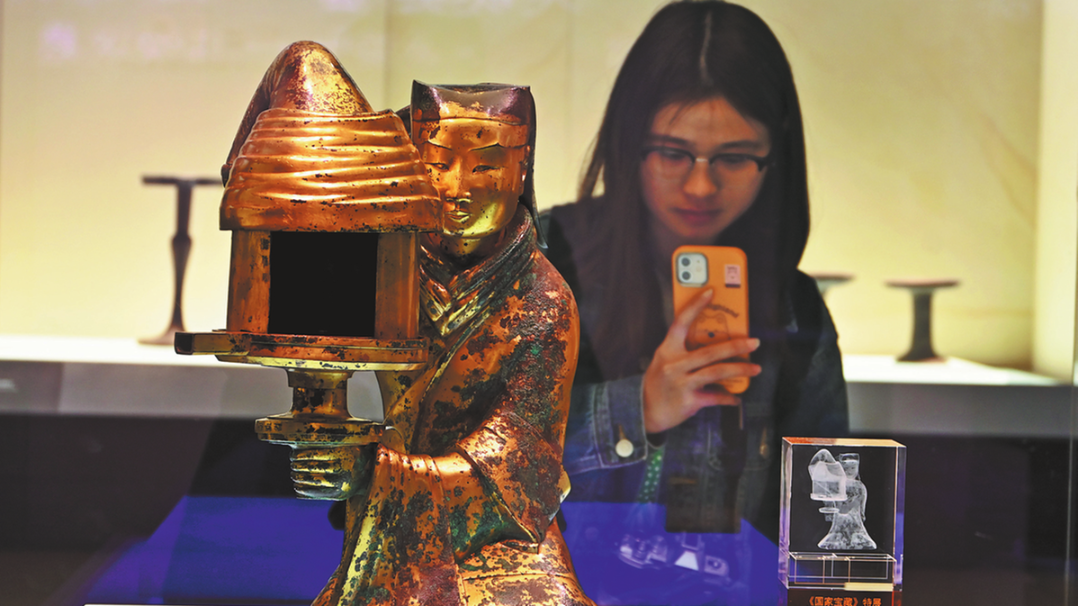
    The Badam east cemetery in Turpan, Xinjiang Uygur Autonomous Region, has emerged as a particularly revealing site, functioning as a miniature ‘Silk Road exposition’ spanning the Jin (265-420) to Tang (618-907) dynasties. The site contains dozens of tombs displaying extraordinary cultural diversity, with artifacts ranging from Central Plains bronze mirrors to Persian silver coins and Central Asian-style jars. Most remarkably, archaeologists uncovered two Tang Dynasty officials’ tombs with intact epitaphs demonstrating continued administrative presence in the western regions even after the An-Shi Rebellion (755-763), challenging traditional historical assumptions about the dynasty’s decline in this period.

    Simultaneously, excavations at Shandong’s Langyatai site confirmed historical records of construction by both Emperor Qinshihuang of the Qin Dynasty (221-206 BC) and Emperor Wu of the Han Dynasty (206 BC-AD 220). According to Bai Yunxiang of the Institute of Archaeology, this monumental complex in what was then a remote coastal area served as a powerful political statement asserting central authority over frontier territories.

    Prehistoric research similarly yielded transformative results. In Yangyuan county, Hebei, archaeologists established a comprehensive Paleolithic cultural sequence spanning approximately 120,000 to 13,000 years ago, shedding light on a crucial period in human evolution. Meanwhile, new discoveries at Henan’s Peiligang site documented the previously elusive transition from late Paleolithic to early Neolithic periods around 8,000-7,000 years ago.

    The Husta Bronze Age site in Xinjiang’s Wenquan county revealed one of the region’s earliest Bronze Age remains (4,800-4,600 years ago), featuring a large burial mound containing layered remains of dozens of individuals that promise valuable genetic insights. Complementary studies at Hebei’s Zhengjiagou site (5,300-4,800 years ago) demonstrated the expanded influence of the Neolithic Hongshan culture during its later developmental stages.

    These collective discoveries provide unprecedented physical evidence of China’s long-standing cultural diversity and exchange, offering profound new perspectives on the nation’s historical development as a unified multi-ethnic state.

  • BFSU celebrates ties with Uruguay

    BFSU celebrates ties with Uruguay

    Uruguayan President Yamandu Orsi reinforced diplomatic bonds during a symbolic visit to Beijing Foreign Studies University on Wednesday, tending to a fir tree originally planted by his predecessor thirteen years earlier. The arboreal ceremony served as a powerful metaphor for the enduring and deepening relationship between China and Uruguay.

    The tree, initially planted in 2013 by former Uruguayan President José “Pepe” Mujica, received ceremonial care from President Orsi during his weeklong state visit to China. Orsi characterized this gesture as representing ongoing nurturing and continuity in bilateral relations between the two nations.

    Addressing students and faculty, Orsi reflected that “the tree has taken strong roots—roots that allow it, like our relationship, to withstand storms,” alluding to current global geopolitical challenges. “In such times,” he emphasized, “the strength of roots is truly tested.”

    The Uruguayan leader highlighted mutual understanding and trust as foundational elements built through sustained dialogue and academic exchange. He described China as an ancient civilization that “knows how to look far ahead” and advocated for expanded people-to-people and educational cooperation between the countries.

    Orsi positioned academic exchanges between China and Uruguay, and more broadly between China and Latin America, as representing one of the most profound forms of international cooperation. “When students cross borders, when researchers share wisdom, when universities open their doors to foreign cultures,” he noted, “we are building something beyond the reach of any trade agreement: mutual trust among peoples.”

    The visit featured a cultural performance by Li Yuelin, a senior Spanish major, who sang “Tu Vestido” by Uruguayan singer Ana Prada. Li explained the song conveys a feminist message about clothing freedom, encouraging women to dress according to their own preferences without external judgment.

    Following her performance, President Orsi facilitated a surprise telephone connection between Li and the Uruguayan singer herself, who expressed delight that her music had reached audiences in China.

    Beijing Foreign Studies University, often called China’s “cradle of diplomats,” maintains longstanding ties with Uruguay. According to Li Hai, the university’s Communist Party secretary, the Spanish program established in 1952 remains a crucial platform for cultural and academic exchanges with Latin America.

    The timing of the visit coincided with Lichun, the traditional Chinese solar term marking the Beginning of Spring, which university officials noted symbolically represents renewal and hope—an appropriate backdrop for reinforcing international friendship.

    Huang Yazhong, China’s ambassador to Uruguay, recalled Uruguay’s historical contributions to global multilateralism and its support for China’s accession to the World Trade Organization decades earlier. He noted that China has been Uruguay’s largest trading partner for fourteen consecutive years, characterizing the relationship as “a model of friendly cooperation between countries with different political systems, economies, and civilizations.”

  • Feeling the pulse of a nation

    Feeling the pulse of a nation

    The year 2025 witnessed profound emotional connections forming between Hong Kong residents and mainland China through a series of historic naval visits that transcended mere military demonstrations. These events evolved into powerful symbols of national unity and collective achievement, creating lasting impressions on both visitors and journalists covering these momentous occasions.

    The centerpiece of this patriotic narrative was the July visit of China’s first domestically built aircraft carrier CNS Shandong to Hong Kong. Aboard the colossal vessel, retired police officer Kong Kin-chung, 70, articulated the sentiment of many Hong Kong compatriots when he described the carrier as “a powerful symbol” representing a definitive statement of national sovereignty. His emotional reflection drew stark contrasts between the current era and the city’s colonial past, particularly noting the courtesy and discipline of People’s Liberation Army soldiers.

    Entrepreneur Lam Tse-shong, who maintains deep connections with the mainland, characterized the experience as an “eye-opener” that crystallized the visit’s central theme: “Secure Country, Sweet Home.” For numerous visitors admiring Victoria Harbour from the carrier’s deck, the Shandong represented not merely military power but a tangible guarantee of Hong Kong’s continued peace and prosperity.

    The patriotic momentum continued in October with the arrivals of training ship Qi Jiguang and landing ship Yimengshan, their timing coinciding with the 80th anniversary commemorations of victory in the Chinese People’s War of Resistance Against Japanese Aggression and the World Anti-Fascist War. Student Wang Mengli highlighted how these vessels—named after historical heroes and significant sites—served as powerful instruments of remembrance, connecting past sacrifices with present-day national strength.

    Young visitors like Lau Tszkiu, adorned with national flag stickers, expressed awe at the disciplined crew members and shared aspirations to contribute to China’s technological advancement. These interactions demonstrated how the naval visits provided not just spectacle but tangible pathways for Hong Kong’s youth to envision their future roles in national development.

    Throughout these exchanges emerged a consistent thread of hopeful optimism—a genuine appreciation for the motherland’s progress coupled with a sincere desire for Hong Kong to actively participate in the nation’s ongoing rejuvenation. Residents perceived these steel hulls as embodiments of collective achievement in which they eagerly sought to share, recognizing that Hong Kong’s stability and unique advantages remain inextricably linked to national prosperity.

  • Prosecutors put heat on telecom fraud

    Prosecutors put heat on telecom fraud

    Chinese judicial authorities have launched an unprecedented offensive against transnational telecommunications fraud syndicates, achieving significant breakthroughs in dismantling criminal networks operating from northern Myanmar. According to the Supreme People’s Procuratorate (SPP), prosecutors charged over 62,000 individuals for telecom fraud-related offenses during the first eleven months of 2025, marking a substantial escalation in China’s battle against organized cybercrime.

    The crackdown yielded particularly stark results in cases involving suspects repatriated from northern Myanmar, where authorities approved arrests of more than 4,300 individuals and prosecuted over 11,000 repatriated persons. Judicial outcomes have been severe, with courts delivering death sentences with immediate execution to 16 defendants across two major criminal syndicates. An additional seven received death sentences with two-year reprieves, while sixteen others were sentenced to life imprisonment, creating what officials characterize as a powerful deterrent against cross-border criminal activities.

    Du Xueyi, head of the SPP’s economic crime prosecution department, emphasized that these cases demonstrate China’s lawful exercise of judicial jurisdiction over serious cross-border crimes, including those orchestrated by foreign nationals. “The cases have effectively upheld China’s rule-of-law authority and delivered positive political, legal, social and international outcomes,” Du stated, highlighting the government’s determination to safeguard citizens’ lives and property.

    Beyond targeting primary fraud operators, prosecutors have systematically dismantled supporting infrastructure, charging more than 29,000 individuals with assisting information network criminal activities between January and November 2025. Asset recovery has emerged as a critical component of the strategy, with authorities intensifying efforts to trace, seize, and recover illicit assets including funds, real estate, vehicles, and precious metals. International law enforcement cooperation has been strengthened to pursue overseas illicit proceeds.

    The multifaceted approach includes encouraging voluntary restitution, applying leniency policies where appropriate, and exploring confiscation procedures for illegal gains to maximize recovery of victims’ losses. Recognizing the evolving nature of telecom fraud, authorities have refined judicial standards, with the SPP issuing updated guidance on conviction and sentencing standards for network crime facilitation.

    Notably, telecom fraud increasingly intersects with money laundering operations. Prosecutors charged 2,684 defendants with money laundering and over 93,000 individuals for concealing criminal proceeds during the same period, with many cases linked to telecom fraud and online gambling. Approximately 94% of money laundering cases connect to upstream offenses in finance, drugs, or corruption, while over 60% of criminal proceeds concealment cases relate directly to telecom fraud schemes.

    Looking ahead to 2026, prosecutorial authorities will prioritize combating sophisticated money laundering schemes, underground banking, virtual currency laundering, and cross-border financial crimes, alongside enhanced international cooperation on asset recovery. China has actively promoted global collaboration through bilateral and multilateral mechanisms, including participation in negotiations for the United Nations Convention against Cybercrime, which it signed in October 2025.

  • Field work gives meaning to China’s rural growth

    Field work gives meaning to China’s rural growth

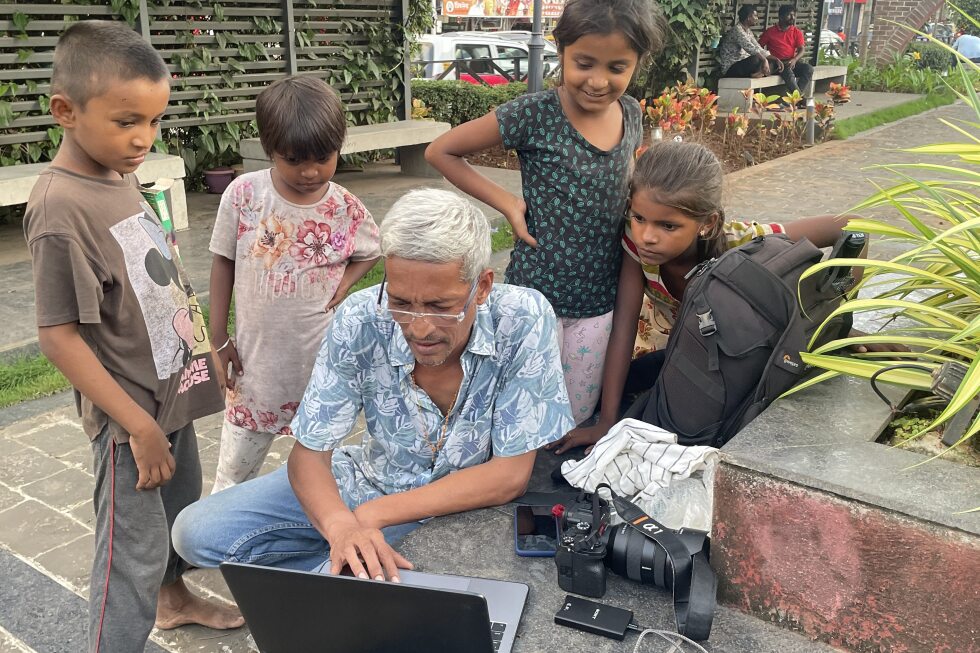
    For urban-born journalists covering China’s agricultural sector, policy terms like “grain output” and “rural vitalization” initially existed as abstract concepts confined to government documents. This perspective fundamentally shifted when reporters began immersive field work across the nation’s countryside, discovering that these policies manifest through tangible human experiences rather than bureaucratic terminology.

    Through extensive travel to previously impoverished regions, journalists have documented remarkable innovations shaping rural China. In Hebei province, international students from Africa collaborate with China Agricultural University to develop practical plant protection solutions applicable in their home countries. Yunnan’s Yiliang county has transformed its economy through gastrodia elata cultivation, a valuable orchid species used in traditional Chinese medicine. Hubei province demonstrates ecological harmony through integrated rice-crayfish farming systems that simultaneously ensure harvest stability and increase farmer incomes.

    The human dimension of this transformation appears most vividly through individual stories: women harvesting roses in Yunnan’s rainfall sustain the province’s flower cake industry; young entrepreneurs returning to Xinjiang operate homestays to promote local tourism; Fujian’s coastal abalone farmers utilize smartphone-monitored aquaculture systems. These narratives collectively form the living tapestry of rural revitalization.

    Yet field reporting also reveals persistent challenges. Northern households struggle with winter heating costs, rural-to-urban migration drains local talent pools, and unequal distribution of education and healthcare resources remains problematic. Some communities face financial pressures from outdated traditional rituals.

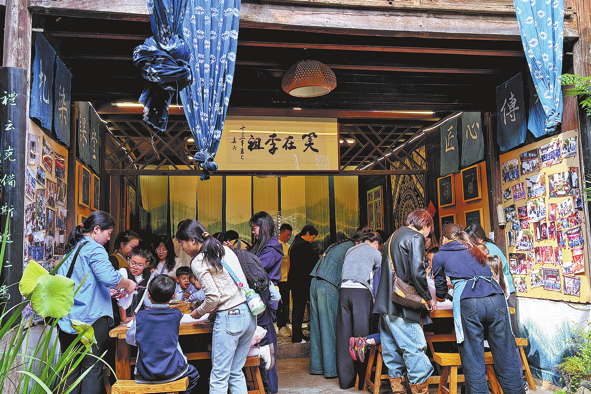
    While organized reporting trips provide valuable glimpses, veteran researchers emphasize that understanding rural complexities requires decades of dedicated study—whether investigating land reform or improving specific crop traits. Journalists recognize their work merely scratches the surface of China’s agricultural transformation, but through continued ground-level reporting, they aim to illuminate the authentic stories unfolding across the nation’s vast rural landscape.

  • Children’s books a tale of new cultural confidence

    Children’s books a tale of new cultural confidence

    A new generation of Chinese authors and illustrators is revolutionizing children’s literature with culturally authentic narratives that are capturing international attention. Among these emerging talents is 28-year-old Hu Yifan, whose minimalist picture book series ‘Breathe In, Breathe Out’ has achieved remarkable success both domestically and abroad.

    The three-volume work features sparse text paired with evocative illustrations that guide readers through breathing exercises—showing activities like blowing out candles or watching fireworks that naturally encourage inhalation and exhalation. Originally published in June 2023 as children’s literature, the series has unexpectedly resonated with adult audiences, demonstrating the universal appeal of its thoughtful design.

    Hu’s work has garnered prestigious accolades including the Best Picture Book honor at the 35th Chen Bochui International Children’s Literature Award and recognition in The Beauty of Books in China design competition. International recognition followed with selection for the dPICTUS 100 Outstanding Picture Books 2023 & 2024 list. The global expansion continues with a Portuguese edition already released in Brazil and English and French versions forthcoming.

    Industry veteran Solene (Fengbei) Xie, with over 18 years in children’s publishing, observes that Chinese creators are producing exceptional original content that deserves broader global exposure. Having left a national publishing house to establish her own agency in Shanghai, Xie launched the Pictures and Words from the East project in 2021 to promote Chinese children’s literature internationally.

    ‘We have so many excellent original works in China, but they don’t get many opportunities to reach a wider audience globally,’ Xie noted. She now manages rights for numerous local titles, including Hu’s acclaimed series, leveraging her industry expertise and connections to bridge cultural divides through literature.

    This movement represents a significant shift in children’s publishing, where Chinese creators are developing distinctive visual and narrative styles that both reflect cultural heritage and appeal to universal human experiences. The success of these works signals growing international appreciation for Chinese creative voices in children’s literature.

  • Women’s development set for high-quality growth in 15th FYP

    Women’s development set for high-quality growth in 15th FYP

    China’s forthcoming 15th Five-Year Plan (2026-2030) has positioned women’s advancement as a central policy priority, signaling a transformative approach to gender equality during the nation’s next development phase. According to exclusive insights from Professor Wang Xiangmei of China Women’s University, this strategic focus will catalyze a new era of women’s development characterized by enhanced quality, broader inclusivity, and improved social balance.

    The blueprint represents a significant evolution in China’s gender policy framework, moving beyond basic equality measures toward comprehensive empowerment strategies. Professor Wang emphasized that the plan will address structural barriers while creating unprecedented opportunities for women across economic, educational, and social domains.

    This policy alignment comes as China navigates complex demographic shifts and economic transformation. The integrated approach recognizes women’s critical role in national development and aims to leverage their potential through targeted interventions. The plan is expected to introduce innovative mechanisms for women’s participation in leadership, entrepreneurship, and technological innovation.

    Implementation will focus on creating enabling environments across urban and rural settings, with particular attention to closing regional development gaps. The initiative reflects China’s commitment to both domestic gender equality objectives and international development goals, potentially establishing new benchmarks for women’s advancement in developing economies.

  • Supply chains and China’s Hormuz imperative

    Supply chains and China’s Hormuz imperative

    While maritime tensions in East Asia frequently dominate energy security discussions, a deeper structural examination reveals that Asia’s economic stability hinges thousands of miles westward in the Persian Gulf. As geopolitical alliances continue evolving through 2026, China’s industrial expansion remains fundamentally tethered to the stability and accessibility of this critical region.

    The emerging ‘Hormuz Imperative’—distinct from the more commonly referenced ‘Malacca Dilemma’—illustrates how the East Asian consumer-West Asian producer relationship has matured into an intricate security complex. Within this framework, external pressures on energy flows don’t merely target suppliers but expose strategic vulnerabilities of the world’s largest energy importer. Market data and energy flow analysis confirm that Strait of Hormuz stability represents not just a regional concern but a macroeconomic necessity for Beijing.

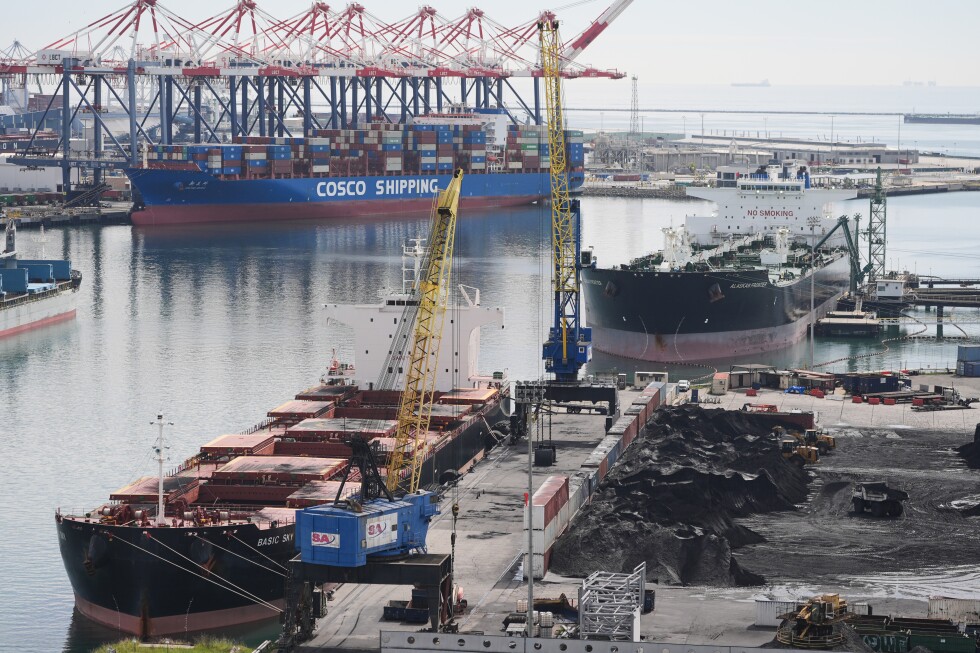
    China’s crude oil imports maintained historic peaks in late 2025, averaging over 13.18 million barrels daily. Despite substantial renewable energy investments, China’s industrial base—particularly petrochemical and heavy transport sectors—retains structural dependence on hydrocarbon imports. Approximately 50% of China’s crude originates from the Persian Gulf, making Hormuz a point of origin rather than merely a transit chokepoint like Malacca.

    This interdependence creates mutual vulnerability: Gulf producers require market access for revenue generation while Chinese consumers require supply security to maintain industrial output. The economic relationship’s critical component centers in Shandong province, where independent refineries (colloquially ‘teapots’) account for roughly one-quarter of China’s refining capacity.

    Western market intelligence firms estimate 1.3-1.4 million barrels daily flowed from Iran to China in 2025, trading at an $8-12 per barrel discount due to sanctions. For Shandong’s refiners, this ‘regulatory discount’ functions as a vital subsidy, lowering production costs for diesel and chemical derivatives while maintaining Chinese manufacturing exports’ global competitiveness.

    Industry analysts describe this trade as supported by a ‘resilient decentralized network’ of maritime logistics involving ship-to-ship transfers in international waters and diverse flagging strategies. This sophisticated parallel logistics system demonstrates how market demand frequently circumvents political barriers.

    Three primary strategic scenarios could disrupt this flow:

    1. Supply Chain Constriction: intensified sanctions enforcement targeting logistical nodes could force refiners to replace discounted barrels with market-rate crude, potentially eroding margins and driving domestic fuel prices higher.

    2. Market Normalization: diplomatic resolution lifting sanctions would eliminate China’s monopsony power, inviting European and Indian competitors back to the market and increasing China’s national energy bill.

    3. Kinetic Deterrence: high-intensity conflict disrupting Hormuz could spike oil prices above $150/barrel. Despite China’s Strategic Petroleum Reserve covering approximately 90 days of imports, prolonged disruption would bypass these buffers.

    Energy disruptions would disproportionately affect southern industrial zones (Guangdong, Fujian, Zhejiang), which rely heavily on imported liquid fuels. Sustained high energy prices could constrain industrial output and complicate China’s transition from property-led growth.

    Beijing’s dual-track mitigation strategy involves aggressive renewable energy expansion and investments in overland pipelines through Pakistan (CPEC) and Russia (ESPO). However, oil remains irreplaceable for heavy industry and maritime transport through the medium term (2025-2030), and pipeline capacity represents only a fraction of Hormuz’s volume.

    The ‘Hormuz Imperative’ reveals not simple dependency but complex interdependence. While external powers retain leverage through financial and maritime architecture control, parallel export networks demonstrate unilateral coercion’s limits. For Beijing, Persian Gulf stability isn’t a foreign policy luxury but a domestic economic necessity—the global supply chain remains secure only while its key nodes stay stable, creating a balance where disruption costs become prohibitively high for any single actor.

  • Jeffrey Epstein was told to keep ‘close eye’ on Saudi Arabia amid Ritz Carlton purge

    Jeffrey Epstein was told to keep ‘close eye’ on Saudi Arabia amid Ritz Carlton purge

    Newly unsealed court documents from the U.S. Department of Justice reveal convicted sex offender Jeffrey Epstein was actively monitoring Saudi Arabia’s 2017 political upheaval, maintaining communications with Gulf elites and allegedly leveraging connections to the highest levels of Saudi leadership.

    The documents contain a November 4, 2017 email exchange where an unidentified correspondent advised Epstein to ‘keep close eye on what is going on in Saudi right now.’ Epstein specifically inquired whether the reference concerned ‘the missile or the anti corruption,’ receiving confirmation it related to the latter. This correspondence occurred immediately preceding Crown Prince Mohammed bin Salman’s unprecedented anti-corruption campaign that detained numerous royals and business figures at Riyadh’s Ritz-Carlton hotel.

    Evidence suggests Epstein cultivated relationships within Saudi leadership circles. In a March 2017 email exchange with former New York Times reporter Thomas Landon Jr., Epstein appeared to reference direct access to the Crown Prince (referred to as ‘bin salman’) while attempting to facilitate connections between Landon and Saudi investment officials. Photographic evidence within the document trove shows Epstein smiling alongside the Saudi leader.

    The documents further reveal Epstein’s brokerage of high-level meetings between Middle Eastern power players, including a previously undisclosed 2018 encounter between former Israeli Prime Minister Ehud Barak and former Qatari Prime Minister Hamad bin Jassim bin Jaber al-Thani.

    Among Gulf figures, Dubai Ports World CEO Sultan Ahmed bin Sulayem appears most frequently in Epstein’s communications. Their exchanges include discussions ranging from religious commentary to disturbing references to ‘a fresh 100% female Russian’ on Sulayem’s yacht.

    Epstein’s communications demonstrate particular interest in Saudi political dynamics. In October 2016, he provided Landon with analysis of Saudi royal family structure, comparing its complexity to U.S. government branches. He controversially asserted that social reforms like women’s driving rights were driven by Western pressure rather than domestic demand, stating ‘It is the americans that are demanding women drive. not the saudis.’

    These revelations emerge amid increased scrutiny of Gulf rivalries, particularly UAE-Saudi competition in the Red Sea region where DP World’s operations have gained strategic importance.

  • New Zealand looks to its batting depth, game-breakers at the T20 World Cup

    New Zealand looks to its batting depth, game-breakers at the T20 World Cup

    WELLINGTON, New Zealand (AP) — As the T20 World Cup approaches, New Zealand confronts the challenge of pursuing its maiden title with a notably depleted bowling arsenal. The Black Caps, historically strong in the shortest format, are strategically pivoting to leverage their profound batting strength and a roster rich with seasoned all-rounders to offset these limitations.

    The team’s campaign follows a sobering T20 series defeat in India, where their bowling unit was decisively overpowered. A particularly stark moment was the fifth match, where India posted a colossal 271-5, featuring a blistering 40-ball century from Ishan Kishan. In another instance, India chased down New Zealand’s total of 153 with eight wickets and a staggering 10 overs to spare, highlighting the pressing concerns within the bowling department.

    Captain Mitchell Santner acknowledged the difficulty, quipping that the only solution might have been to ‘push the boundaries back.’ However, he emphasized the invaluable intelligence gathered from the series, which the team will carry into their World Cup opener against Afghanistan in Chennai.

    The bowling hopes rest significantly on the shoulders of pace bowler Jacob Duffy. The 31-year-old, entering his first World Cup, is coming off a record-shattering 2025 season where he claimed 81 wickets, eclipsing a longstanding national record. He is currently ranked the world’s No. 4 T20 bowler. He is supported by a pace attack including Lockie Ferguson, Matt Henry, and late call-up Kyle Jamieson, who replaces the injured Adam Milne. Potential paternity leaves for Henry and Ferguson could see reserve Ben Sears activated.

    The spin department is led by Santner and Ish Sodhi, with versatile players like Glenn Phillips, Rachin Ravindra, and Michael Bracewell providing additional options. Sodhi noted the batters have undertaken specific training to hone their strategies against spin bowling, a crucial skill for the subcontinent conditions.

    New Zealand’s primary confidence lies in a powerful and deep batting lineup. It features explosive opener Finn Allen, who boasts international and domestic strike rates of 165.45 and 175.23 respectively, alongside Devon Conway, Daryl Mitchell, and wicketkeeper Tim Seifert. The squad’s balance is further enhanced by all-rounders Jimmy Neesham, Bracewell, and Phillips—the latter also being an exceptional fielder with 52 T20I catches.

    Head coach Rob Walter expressed confidence in the team’s composition, stating, ‘World Cups are special and there’s few better places to play one than in India. We have a group which can make New Zealand proud.’ He highlighted the critical balance of power-hitting, adaptable bowling, and the five all-rounders who each offer a unique skill set. This experienced group, many with extensive global franchise exposure, is familiar with the pressures of the subcontinent.

    Drawn into Group D alongside Afghanistan, Canada, South Africa, and the UAE, New Zealand will rely on its proven match-winners and collective experience to finally capture the elusive T20 World Cup trophy.