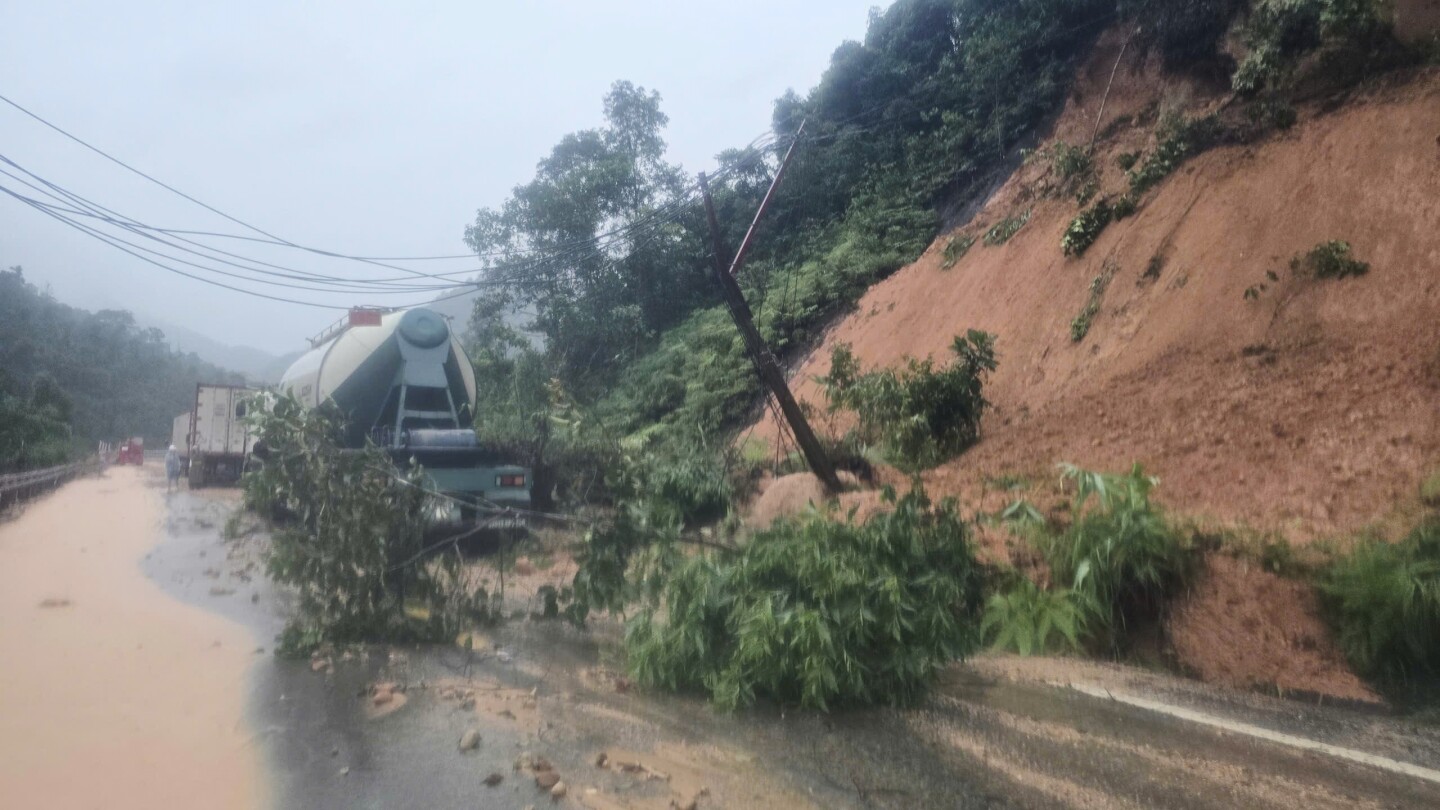
A devastating landslide struck a passenger bus on the perilous Khanh Le pass in Vietnam’s central highlands, resulting in six fatalities and injuring 19 others. The incident occurred late Sunday as the bus, carrying 32 passengers from Ho Chi Minh City, was en route from Da Lat to the coastal city of Nha Trang. The landslide, triggered by heavy rainfall, buried the front of the bus, trapping numerous passengers and complicating rescue efforts. Rescuers faced significant challenges due to additional landslides that blocked access to the area, delaying their arrival until after midnight. Two bodies remain trapped under debris as the treacherous terrain continues to hinder recovery operations. The Khanh Le pass, a 33-kilometer stretch known for its scenic beauty and popularity among tourists, is particularly vulnerable to landslides during the rainy season. Meanwhile, central Vietnam braces for more heavy rain, with forecasts predicting up to 85 centimeters in some areas. This region, already battered by Typhoon Kalmaegi, has seen historic floods this year, exacerbating the country’s vulnerability to natural disasters. Vietnam, one of the world’s most flood-prone nations, faces increasing threats from climate change, which scientists warn is intensifying storms and rainfall across Southeast Asia, leading to more frequent and destructive floods and landslides.
标签: Asia
亚洲
-
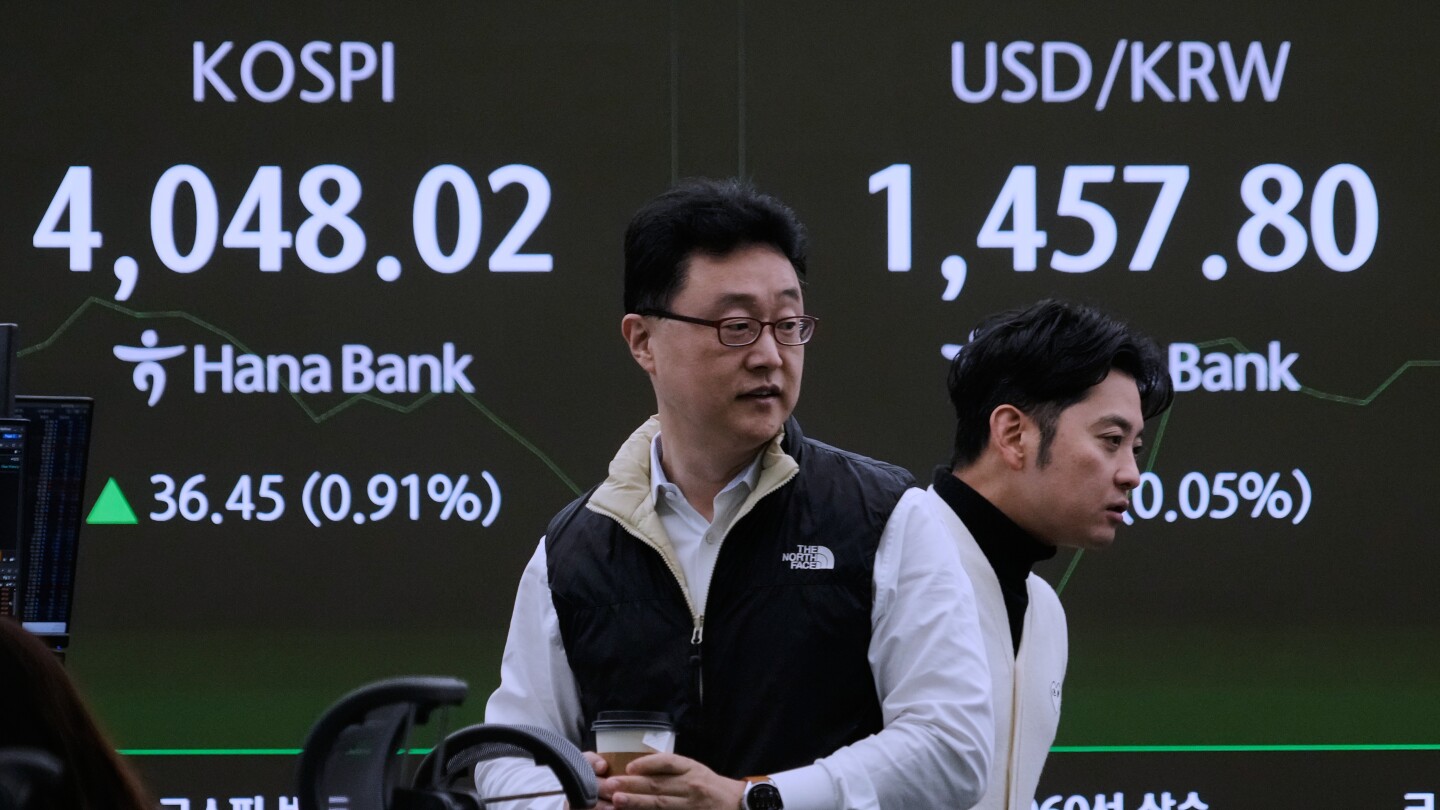
Asian shares are mostly lower after US stocks stumble
Asian markets experienced a mostly downward trend on Monday, with U.S. futures showing modest gains following a lackluster performance on Wall Street last week. Tokyo’s Nikkei 225 index dropped 0.3% to 50,226.67, reflecting concerns over Japan’s economic contraction, which saw a 1.8% annual decline in the July-September quarter. The dollar strengthened against the yen, rising to 154.65 yen from 154.58 yen. Chinese markets also saw declines, with Hong Kong’s Hang Seng index falling 0.8% to 26,359.22 and the Shanghai Composite index slipping 0.4% to 3,973.31. Geopolitical tensions between China and Japan further dampened market sentiment, particularly following Japanese Prime Minister Sanae Takaichi’s remarks suggesting a potential military response to Chinese actions against Taiwan. China, which views Taiwan as part of its territory, has warned its citizens against traveling to or studying in Japan. In South Korea, the Kospi index rose 1.7% to 4,078.39, driven by gains in tech-related shares, particularly computer chip makers collaborating with Nvidia on artificial intelligence projects. Australia’s S&P/ASX 200 edged down less than 0.1% to 8,628.60, while Taiwan’s Taiex and India’s Sensex posted modest gains. U.S. futures indicated a positive outlook, with the S&P 500 up 0.5% and the Dow Jones Industrial Average slightly higher. Despite recent volatility, the S&P 500 remains close to its record high, with investors closely watching Nvidia’s upcoming earnings report for signs of sustained growth. Meanwhile, questions linger over the Federal Reserve’s potential interest rate cuts, as inflation remains above the 2% target. Bitcoin saw a slight increase, while oil prices dipped in early trading.
-
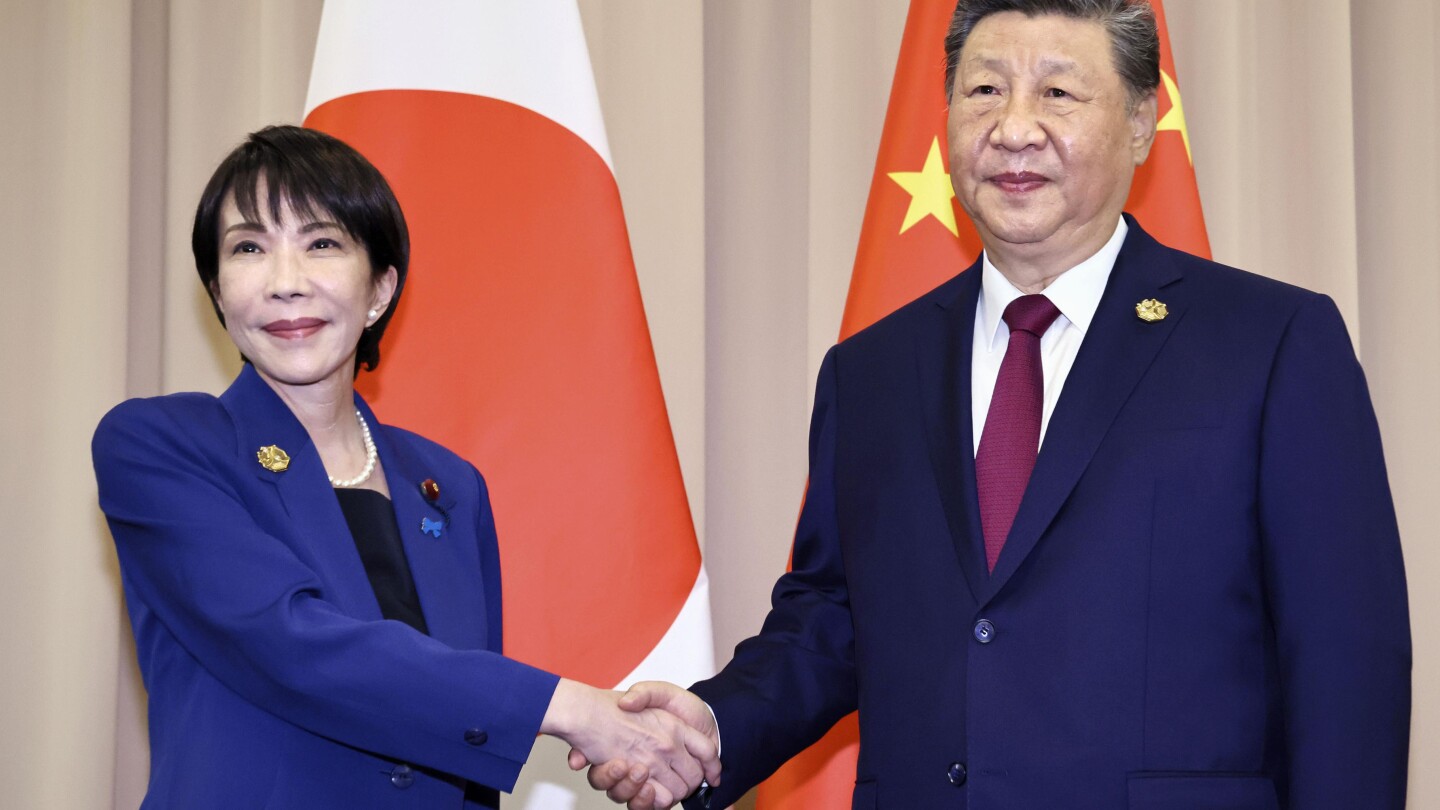
A spat over Taiwan is threatening China-Japan ties
In a bold move that has escalated regional tensions, Japan’s newly appointed Prime Minister Sanae Takaichi has suggested that a Chinese military action against Taiwan could warrant a Japanese military response. This statement, made during a parliamentary committee session on November 7, marks a significant departure from the more cautious rhetoric of her predecessors. While previous Japanese leaders have expressed concerns over China’s aggressive posture toward Taiwan, they have refrained from explicitly outlining potential military responses. Takaichi’s remarks have drawn sharp criticism from Beijing, which views Taiwan as an inalienable part of its territory and considers any foreign intervention a violation of its sovereignty. Despite the backlash, Takaichi has refused to retract her comments, though she has indicated a willingness to avoid discussing specific scenarios in the future. The incident has further strained Japan-China relations, with both countries summoning each other’s ambassadors and issuing stern warnings. China has also taken economic measures, advising against travel to Japan and highlighting safety concerns for Chinese nationals. The situation is further complicated by Japan’s post-World War II constitution, which limits its military actions to self-defense, and its alliance with the United States, which could play a pivotal role in any regional conflict. Analysts warn that Takaichi’s stance could have long-term implications for Japan’s foreign policy and its delicate balancing act in the Indo-Pacific region.
-
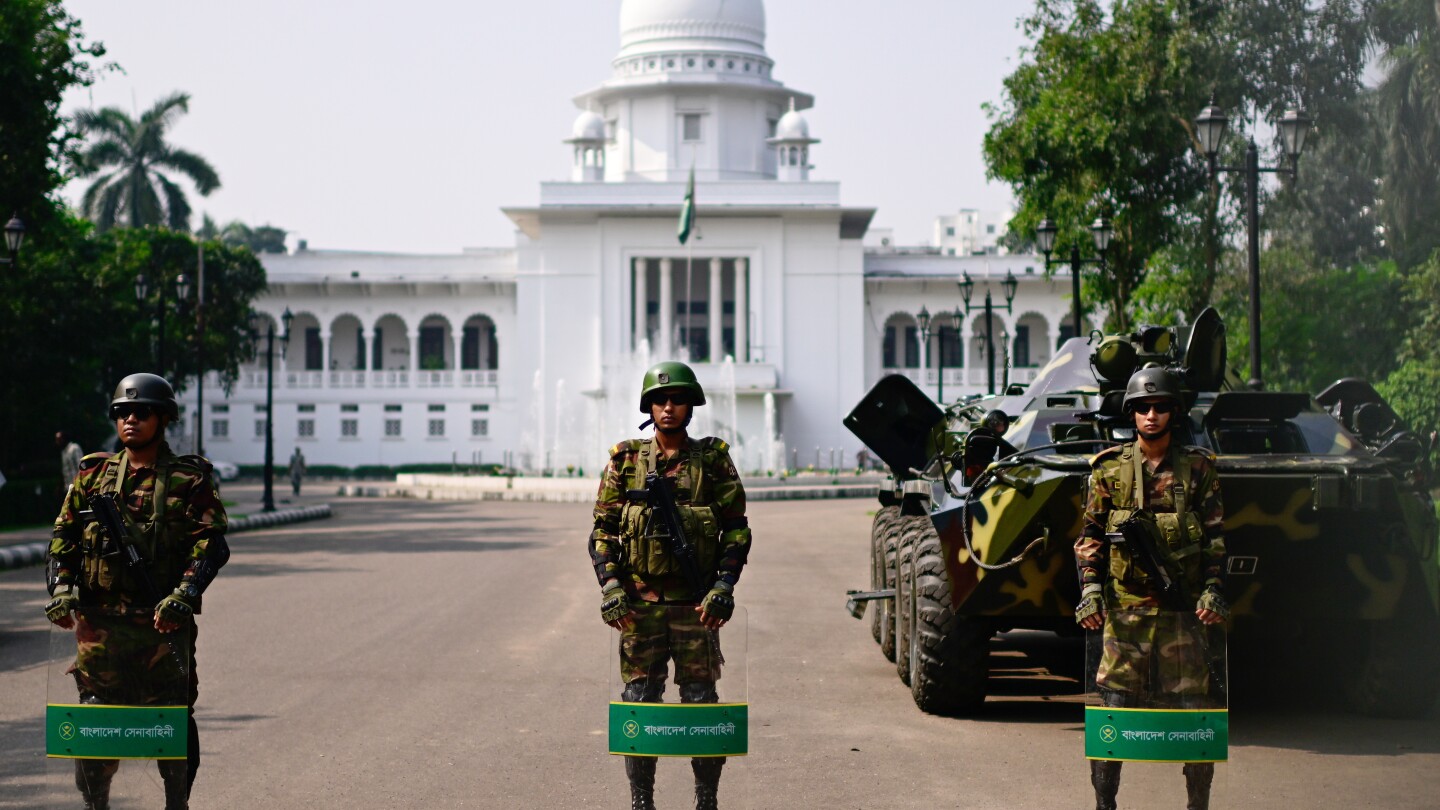
Bangladesh beefs up security ahead of verdict against ousted PM Sheikh Hasina
Bangladesh’s interim government has intensified security measures across the nation, particularly in Dhaka, as the country braces for a highly anticipated verdict against ousted Prime Minister Sheikh Hasina. Hasina, who has been in exile in India, faces charges of crimes against humanity linked to last year’s violent uprising that claimed hundreds of lives and ended her 15-year rule. The Awami League, her political party, has called for a nationwide shutdown to protest the verdict, labeling the tribunal a “kangaroo court.”
The prosecution in the special tribunal has sought the death penalty for Hasina and former Home Minister Asaduzzaman Khan, both of whom are being tried in absentia. A third suspect, a former police chief who turned state witness, is expected to receive no penalty. The tribunal’s verdict, set to be delivered Monday, has already sparked unrest, with reports of crude bomb explosions and arson attacks disrupting daily life.
Paramilitary border guards and police have been deployed nationwide to maintain order. Dhaka’s police chief has issued a “shoot-on-sight” order for anyone attempting arson or bomb attacks, following nearly 50 arson incidents and dozens of explosions in the past week. Authorities have also requested military deployment around the tribunal premises to ensure security.
The violence stems from a student-led uprising in July and August 2024, during which the United Nations estimated up to 1,400 deaths, while Bangladesh’s health adviser reported over 800 fatalities and 14,000 injuries. Hasina, who has survived 19 assassination attempts, urged her supporters in an audio message to remain calm ahead of the verdict.
Meanwhile, Nobel Peace Prize laureate Muhammad Yunus, who heads the interim government, has vowed to hold elections in February, excluding the Awami League from participation. The political climate remains tense, with limited signs of stability as Bangladesh navigates this critical juncture.
-
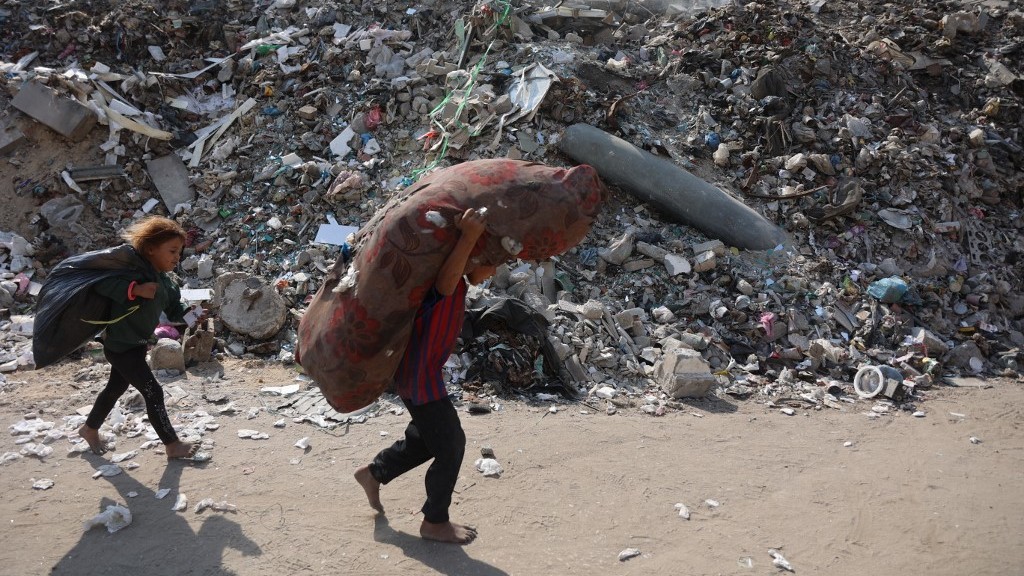
Palestinian coalition rejects US ‘new colonialism’ plan for Gaza
The National Commission for Palestinian Popular Action has issued a strong condemnation of US proposals to establish an externally imposed transitional administration in Gaza, labeling the move as ‘a new colonialism.’ In a statement released on Sunday, the commission argued that such a plan violates the Palestinian people’s right to self-determination and merely repackages old forms of domination under modern terminology. The commission emphasized that decisions regarding Gaza’s future must originate from Palestinians themselves, ensuring the unity of their land, the legitimacy of resistance to Israeli occupation, and the rights to freedom and self-determination as enshrined in international law. A US draft resolution, set to be presented to the UN Security Council on Monday, has drawn sharp criticism from legal experts and Palestinian groups. They argue that the proposal seeks to institutionalize Israel’s actions in Gaza within an international framework. The resolution endorses the Trump Peace Plan, known as the ‘Comprehensive Plan,’ and proposes the creation of two new bodies: the Board of Peace, a civilian transitional administration, and an ‘International Stabilisation Force.’ Critics contend that the Board of Peace would wield extensive powers, including governance oversight, reconstruction, economic recovery, and humanitarian coordination, effectively normalizing foreign control over Gaza. The commission warned that if passed, the resolution would undermine international law and strip Palestinians of their right to self-determination. While acknowledging the potential benefits of a limited international presence to monitor ceasefires and protect civilians, the commission insisted that such a force must not assume administrative or political roles. It called on Palestinian political movements, institutions, and communities worldwide to reject external control and oppose proposals that undermine national decision-making. The statement concluded with a reaffirmation of its commitment to unified action in defense of Palestinian rights and steadfastness until full freedom is achieved. Meanwhile, Israel continues its assault on Gaza, despite a so-called ceasefire, blocking aid convoys, restricting humanitarian access, and conducting daily bombings that result in civilian casualties.
-
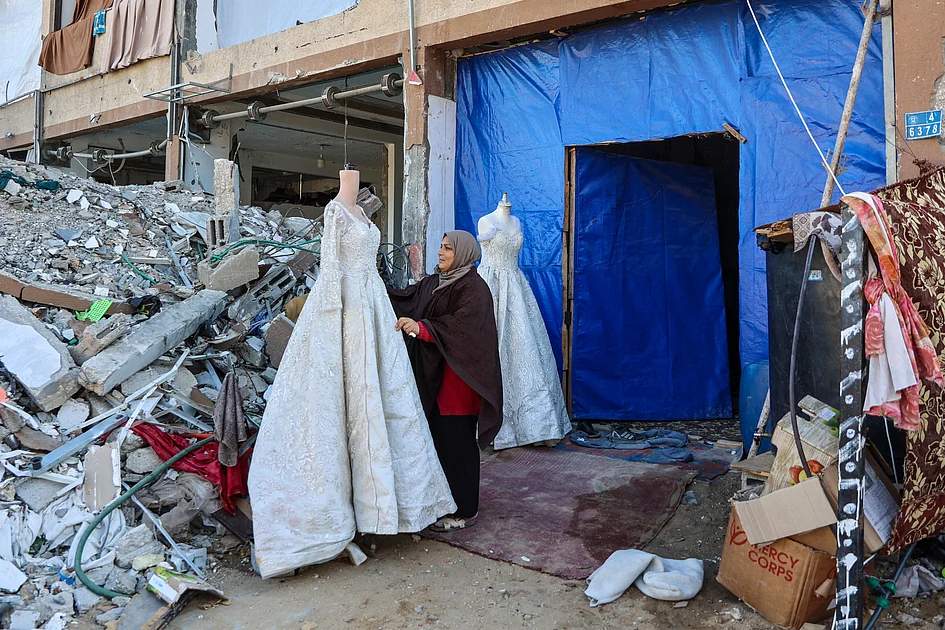
UAE launches mass wedding initiative for Gazans; registrations open
In a heartwarming gesture to mark the UAE’s 54th Union Day, the nation has unveiled a groundbreaking initiative titled ‘The Dress of Joy,’ aimed at supporting mass weddings in the Gaza Strip. The project, launched on November 16, 2025, seeks to alleviate the hardships faced by Gazan families following two years of devastating conflict. By facilitating the weddings of 54 grooms, the initiative not only celebrates love but also underscores the UAE’s commitment to humanitarian aid. The project coincides with the UAE’s 54th Eid Al Etihad, symbolizing unity and hope. To participate, eligible grooms must meet specific criteria, including Palestinian nationality, permanent residency in Gaza, and low-income status. Registrations are open from November 16 to November 19, 2025, through the Operation Chivalrous Knight’s website. This initiative reflects the UAE’s ongoing efforts to support vulnerable communities and foster resilience in times of crisis.
-
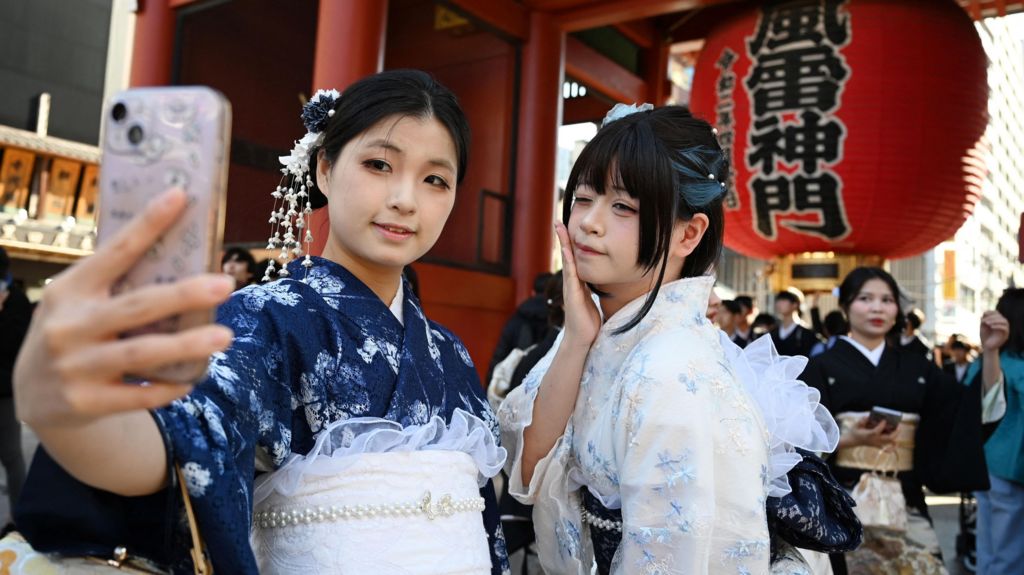
Japan tourism and retail stocks slide after row with China over Taiwan
Japanese tourism and retail sectors faced significant setbacks on Monday as China issued a stark warning to its citizens against traveling to Japan. This advisory comes amidst escalating tensions between Tokyo and Beijing over Taiwan, a contentious issue that has strained bilateral relations. Japanese Prime Minister Sanae Takaichi, known for her critical stance on China’s military maneuvers in the region, recently hinted at potential military intervention should Beijing attempt to seize Taiwan. Her remarks, made in parliament on November 7, referenced Japan’s 2015 security law, which permits military action in ‘survival-threatening situations’—scenarios where an armed attack on allies poses an existential threat to Japan. The fallout was immediate: shares in Shiseido, a leading cosmetics firm, plummeted nearly 10%, while Takashimaya, a prominent department store chain, and Fast Retailing, the parent company of Uniqlo, saw declines exceeding 5%. China, a top contributor to Japan’s tourism industry, further intensified the rift by summoning Japan’s ambassador last week, urging its citizens to avoid travel to the country. Taiwan, located approximately 100 kilometers south of Japan’s nearest island, remains a flashpoint. Beijing views Taiwan as a renegade province destined for reunification, even if by force, while many Taiwanese favor maintaining the current status quo—neither declaring independence nor unifying with China. The ongoing dispute underscores the fragile geopolitical balance in the region, with economic and political ramifications reverberating across markets.
-
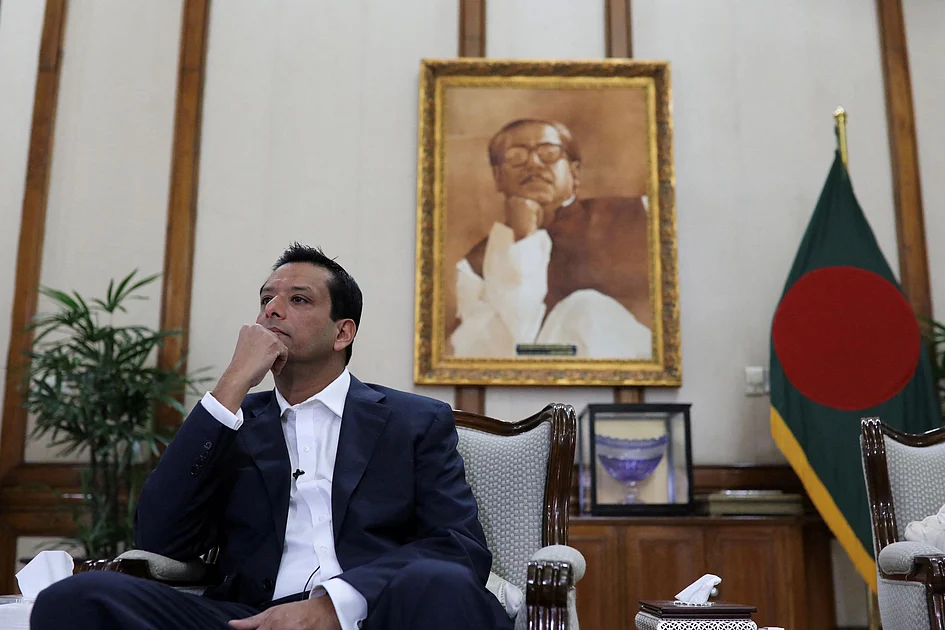
Ahead of Hasina court verdict, son warns of Bangladesh violence if party ban stays
Bangladesh is on the brink of significant political unrest as a Dhaka court prepares to deliver a verdict on ousted Prime Minister Sheikh Hasina, who faces charges of crimes against humanity. The verdict, expected to be televised, could result in a death sentence for Hasina, who has been living in exile in New Delhi since August 2024. Her son, Sajeeb Wazed, has warned that if the ban on her Awami League party is not lifted, supporters will disrupt the upcoming national election in February, potentially escalating into widespread violence. Wazed emphasized that Hasina is safe in India, where she is being treated ‘like a head of state,’ and that the verdict is a ‘foregone conclusion’ due to what he describes as a politically motivated trial. The charges stem from a deadly crackdown on student-led protests in 2024, which a UN report estimated resulted in up to 1,400 deaths and thousands injured. The political climate in Bangladesh has already turned volatile, with multiple crude bomb explosions reported in Dhaka and heightened security measures in place. Wazed has vowed that the Awami League will not allow elections to proceed without their participation, warning of increased protests and potential confrontations. The interim government, led by Nobel laureate Muhammad Yunus, has yet to comment on the situation. Hasina, who has been credited with transforming Bangladesh’s economy but also accused of rights abuses, remains determined to fight back against what she views as an unjust verdict.
-
Japan’s economy contracts as exports get hit by US tariffs
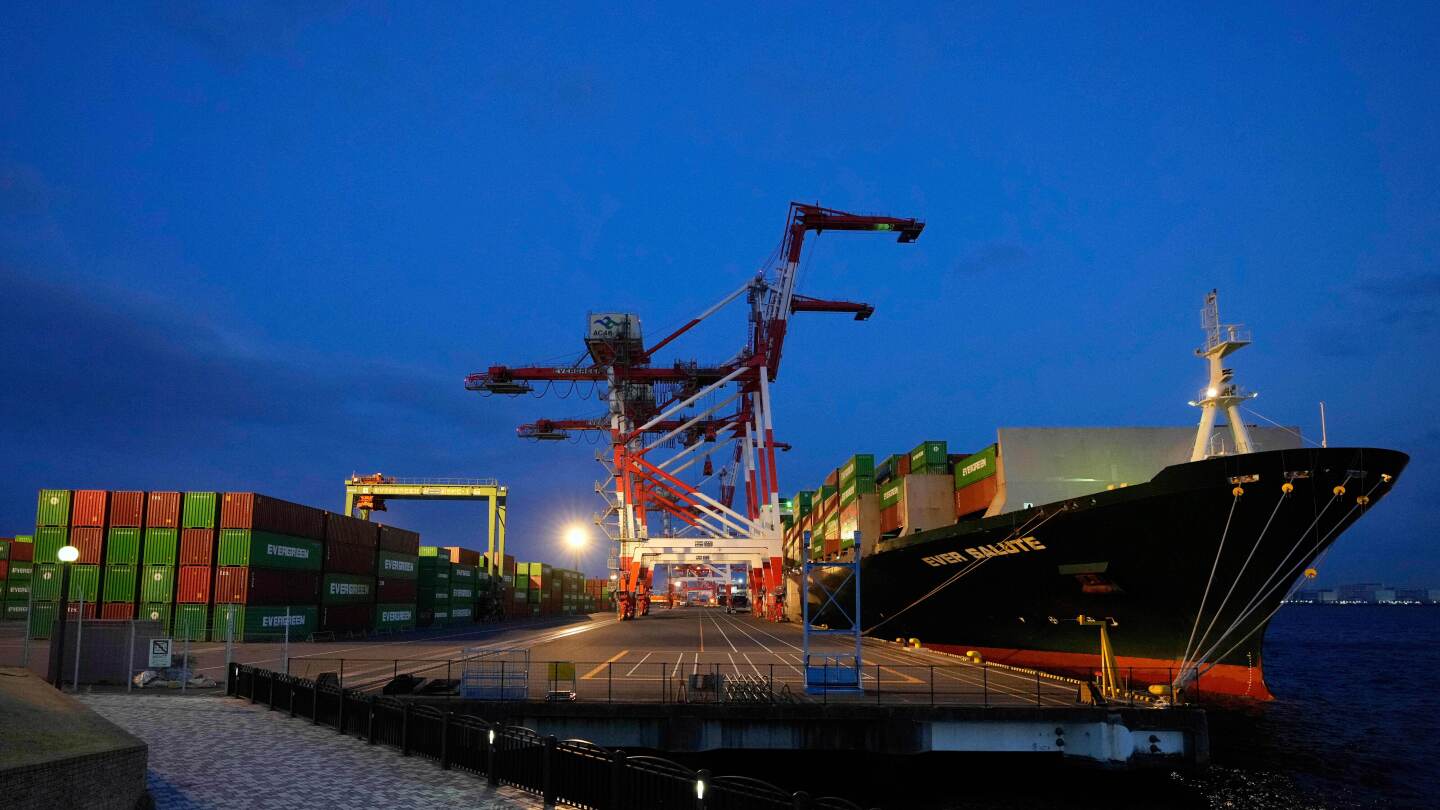
Japan’s economy experienced a notable downturn in the July-September quarter, contracting at an annualized rate of 1.8%, according to government data released on Monday. This marks the first economic contraction in six quarters, with the nation’s gross domestic product (GDP) declining by 0.4% on a quarterly basis. The downturn was primarily driven by a sharp decline in exports, which fell by 1.2% from the previous quarter and by 4.5% on an annualized basis. The slump in exports is largely attributed to the impact of U.S. tariffs, which have posed significant challenges for Japan’s export-reliant economy, particularly for major automakers like Toyota Motor Corp. Despite the contraction, the decline was less severe than the 0.6% drop anticipated by market analysts. Imports for the quarter saw a marginal decrease of 0.1%, while private consumption edged up by 0.1%. The U.S. currently imposes a 15% tariff on nearly all Japanese imports, a reduction from the earlier 25% rate. Japan’s recent political landscape also saw a shift with Sanae Takaichi assuming the role of prime minister in October, adding another layer of complexity to the nation’s economic outlook.
-
Look: India and Pakistan blind cricket female players shake hands defying recent trend
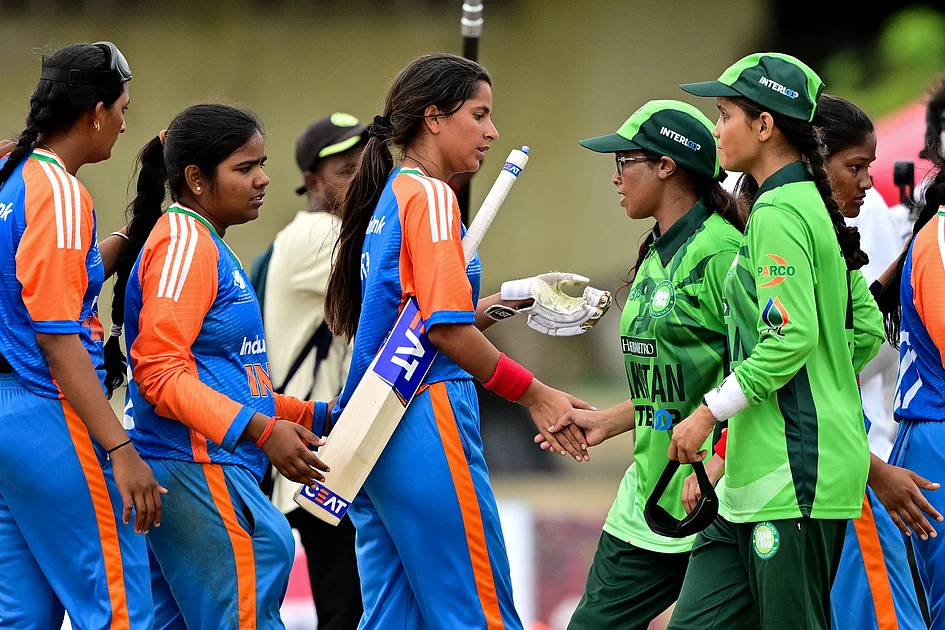
In a heartwarming display of sportsmanship, blind women cricketers from India and Pakistan defied recent political tensions by shaking hands and exchanging compliments during a historic tournament in Sri Lanka. The event, described as the world’s first blind women’s T20 cricket tournament, took place at the Free Trade Zone grounds in Katunayake, 30 kilometers north of Colombo. The players, who traveled together on the same bus, showcased unity and mutual respect, contrasting sharply with the strained relations between their national teams. India secured a decisive victory, winning by eight wickets after restricting Pakistan to 135 runs in their 20 overs. Pakistan’s captain, Nimra Rafique, congratulated India on their win, while India’s captain, T. C. Deepika, praised Pakistan’s performance. The match, broadcast live on Sri Lanka’s national television, Rupavahini, was also followed by blind officials via YouTube commentary. Indian team manager Shika Shetty highlighted the tournament’s significance, calling it a groundbreaking opportunity for visually impaired women to excel in sports and inspire others. Pakistan’s coach, Tahir Mehmood Butt, emphasized the potential for blind cricket to empower young players. The tournament, which began in India and moved to Sri Lanka for its final stages, includes teams from Australia, Nepal, Sri Lanka, and the US, with the final scheduled for next Sunday in Colombo.