标签: Asia

亚洲

  • Chinese researchers decode oriental fruit fly’s egg-laying mystery to curb mango damage

    Chinese researchers decode oriental fruit fly’s egg-laying mystery to curb mango damage

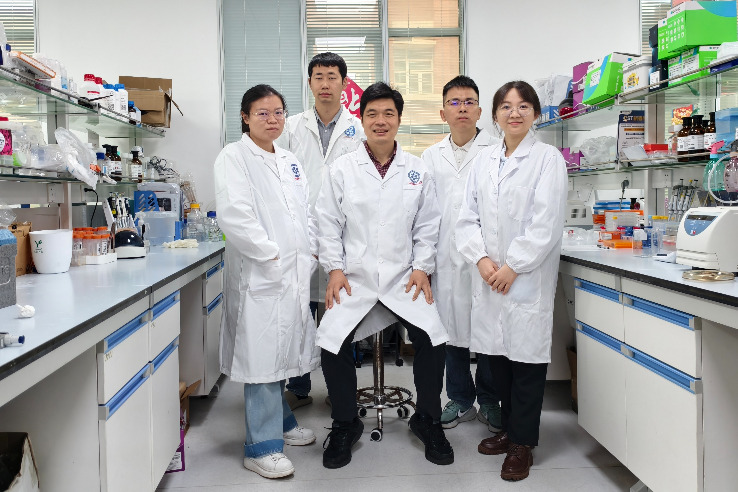
    Researchers at Southwest University in Chongqing have made a groundbreaking discovery that explains why oriental fruit flies target unripe mangoes, potentially revolutionizing pest control methods for one of agriculture’s most damaging insects.

    Led by Professor Wang Jinjun, the scientific team identified that female oriental fruit flies (Bactrocera dorsalis) possess a sophisticated sensory mechanism in their ovipositor—a specialized egg-laying organ—that detects hesperidin, a chemical compound naturally present in maturing mangoes. This finding, published in the prestigious Proceedings of the National Academy of Sciences, reveals the evolutionary adaptation that drives the pest’s destructive behavior.

    The study demonstrates that as mangoes ripen, hesperidin concentrations increase to levels that become toxic to fruit fly offspring. The compound significantly reduces egg hatching rates, suppresses larval development, and decreases adult emergence success. To avoid these detrimental effects, female flies have evolved the ability to ‘taste’ hesperidin levels using sensory receptors located at the tip of their ovipositor, which they use to pierce fruit before egg deposition.

    Professor Jiang Hongbo, a key member of the research team, explained that this discovery enables two innovative approaches to pest management: developing targeted interventions that exploit the fly’s sensory system, and creating early warning systems that monitor chemical changes in fruit to predict infestation risks before damage occurs.

    The oriental fruit fly causes substantial economic losses across tropical and subtropical regions by triggering premature fruit drop before farmers can detect infestations. This research provides the first comprehensive understanding of the biological mechanisms behind the pest’s selective egg-laying behavior, offering hope for more effective and environmentally friendly control strategies.


  • Nearly 100 people evacuated after house fire in Hong Kong

    Nearly 100 people evacuated after house fire in Hong Kong

    A significant emergency response unfolded in Hong Kong’s Tsuen Wan district on Thursday evening as a major fire consumed a tin-sheet structured residence near Lo Wai. Local authorities elevated the alarm designation to Level 3 following the blaze’s rapid intensification around 10 pm.

    The incident gained immediate attention as multiple explosions accompanied the initial outbreak, triggering numerous emergency calls from concerned residents. Firefighting crews implemented large-scale evacuation procedures, successfully relocating approximately 100 individuals from adjacent properties during the critical initial response phase.

    Eyewitnesses reported dramatic scenes with intense flames generating substantial thermal radiation and towering columns of thick, dark smoke visible across considerable distances. The structural characteristics of the tin-sheet construction contributed to both rapid fire spread and challenging containment conditions for emergency personnel.

    As of the latest updates, emergency services have confirmed no casualties resulting from the incident, though damage assessment to the affected structure remains ongoing. The Hong Kong Fire Services Department continues to maintain operational presence at the scene to ensure complete extinguishment and investigate ignition factors.

  • China revises rules to tighten oversight of imported food safety

    China revises rules to tighten oversight of imported food safety

    China’s General Administration of Customs (GAC) has announced comprehensive revisions to its regulatory framework governing overseas food manufacturers, with updated registration requirements taking effect June 1, 2026. The overhaul represents a significant advancement in China’s approach to imported food safety management, introducing dynamic categorization systems and refined risk assessment protocols.

    The enhanced regulatory mechanism will establish three distinct classifications: a catalog of imported food products requiring official recommendation for registration, a list of products ineligible for automatic registration renewal, and a defined scope for overseas food storage facilities mandated to register. These determinations will incorporate multifaceted analysis of raw material sourcing, production methodologies, historical safety records, target consumer demographics, and consumption patterns, while maintaining alignment with international standards.

    Registration validity remains set at five-year intervals with provisions for automatic renewal, except where specified otherwise. The GAC emphasized that these modifications aim to strengthen oversight capabilities while simultaneously facilitating smoother import trade operations. Official Li Jinsong clarified that the updated system maintains continuity with existing registration protocols, ensuring uninterrupted market access for currently registered international enterprises while offering enhanced operational convenience.

    Since the initial implementation of registration requirements in 2022, China’s system has processed registrations from over 96,000 food manufacturers across 178 countries and territories. This framework has successfully introduced diverse specialty products—including Norwegian salmon and New Zealand frozen fruits—to Chinese consumers while supporting substantial trade growth from 1.05 trillion yuan (approximately $152.23 billion) in 2020 to 1.32 trillion yuan in 2025.

  • Philippines blamed for South China Sea dispute

    Philippines blamed for South China Sea dispute

    Maritime security analysts are raising alarms over the Philippines’ escalating actions in the South China Sea, warning that Manila’s recent maneuvers risk destabilizing regional peace and complicating conflict resolution efforts. The situation intensified on March 7th when Philippine Coast Guard aircraft carrying journalists encountered radio warnings from Chinese naval vessels during patrol operations near Huangyan Dao (Scarborough Shoal).

    Manila formally rejected Beijing’s sovereignty claims over the entire South China Sea on Monday, asserting what it describes as “indivisible, incontrovertible, and long-standing sovereignty” over the disputed territory. The Philippine Coast Guard subsequently announced plans to increase patrol operations and counter what it characterizes as Chinese aggression.

    China’s Ministry of National Defense spokesperson Jiang Bin reiterated Beijing’s position on Wednesday, stating China maintains “indisputable sovereignty over Nanhai Zhudao, including Huangyan Dao and their adjacent waters.” Jiang criticized Manila’s media tactics, describing the inclusion of journalists on patrol missions as “a self-directed farce” rather than genuine transparency efforts.

    The geopolitical dimensions expanded significantly as The Diplomat magazine reported enhanced Philippine-Japanese security cooperation aimed at deterring Chinese activities. The Reciprocal Access Agreement (effective September 2025) and Acquisition and Cross-Servicing Agreement (January 2025) facilitate military interoperability between Japanese and Philippine forces. Both nations have expanded joint exercises, including trilateral operations with the United States.

    Professor Chen Hong of East China Normal University’s Asia Pacific Studies Center observed that Manila appears to be deliberately internationalizing the dispute by aligning with Washington’s Indo-Pacific Strategy. “This approach risks drawing the Philippines into the framework of great-power competition, thereby weakening its strategic autonomy,” Chen noted.

    Liu Shuliang, associate researcher at Tianjin Academy of Social Sciences, identified Japan’s dual objectives: expanding military presence in Asia Pacific to ease constitutional constraints while aligning with US efforts to construct a counter-China network. Liu warned that increased military activities elevate risks of unintended encounters and could trigger regional arms races.

    With critical negotiations approaching for the Code of Conduct in the South China Sea, experts emphasize that regional nations must accelerate talks while resisting external interference to preserve peace and stability.

  • Anutin reelected Thai PM amid headwinds

    Anutin reelected Thai PM amid headwinds

    Thailand’s Parliament reaffirmed Anutin Charnvirakul as Prime Minister on Thursday through a decisive parliamentary vote, granting him continued leadership amid mounting economic pressures. The Bhumjaithai Party leader secured 293 votes in the 500-member House of Representatives, comfortably exceeding the required majority and defeating challenger Natthaphong Ruengpanyawut of the opposition People’s Party.

    This political consolidation follows months of transition that began last September when Anutin first assumed office after the Constitutional Court dismissed predecessor Paetongtarn Shinawatra over ethics violations. The newly reelected premier now awaits formal appointment by King Maha Vajiralongkorn before presenting his policy agenda to parliament, officially commencing his renewed mandate.

    The victory culminates a strategic political process initiated by Anutin’s December dissolution of the House, which paved the way for February’s general election. His Bhumjaithai Party emerged dominant with 191 seats, subsequently forming a coalition government with the Pheu Thai Party and nine smaller parties, creating a substantial governing bloc.

    However, significant challenges await the administration. Economic analyst Somkiat Tangkitvanich of the Thailand Development Research Institute identifies multiple headwinds including sluggish economic growth, commodity price inflation, oil supply constraints, and tourism sector vulnerabilities exacerbated by global instability and Middle East tensions. Tangkitvanich further warns that government formation delays might postpone the fiscal 2027 budget by approximately one month, advocating for fiscal restraint over ambitious long-term projects.

    Internationally, Anutin maintains strong Sino-Thai relations, underscored by his Chinese heritage and linguistic capabilities. His recent Chinese New Year address in Mandarin at the Chinese Embassy garnered significant social media attention, highlighting cultural connections. During a February embassy visit with Commerce Minister Suphajee Suthumpun, Anutin emphasized China’s role as both crucial market for Thai agricultural products and strategic investor, describing bilateral relations as familial.

    The two nations continue to enhance comprehensive strategic cooperation, particularly through infrastructure development including high-speed rail projects, with China reaffirming its commitment to remain a primary destination for Thai exports despite global trade uncertainties.

  • Building bright future on snowy slopes

    Building bright future on snowy slopes

    In the snow-covered mountains of Chongli, a remarkable transformation story unfolds through the eyes of Andrea Coatti, an Italian expatriate who has become an integral part of China’s winter sports revolution. The 41-year-old ski resort designer, known locally as Yibu (meaning “one step”), has witnessed firsthand the dramatic evolution of this once-sleepy Hebei province town into an international skiing destination.

    Coatti’s journey began unexpectedly in 2006 when he answered his mentor’s call to help develop ski facilities in an unfamiliar Chinese town. Despite initial reservations upon arriving in the underdeveloped mountain community, the pristine landscapes and welcoming locals convinced him to stay. His vision was simple yet profound: create inclusive skiing environments accessible to all skill levels, from beginners to professionals.

    The pivotal turning point emerged when Coatti partnered with Scottish enthusiast Simon Adams to establish Yibuparks, their terrain park design company. Their expertise eventually earned them the prestigious opportunity to contribute to the 2022 Beijing Winter Olympics, constructing and maintaining the Freestyle Big Air venue at Shougang. This Olympic credential propelled their small company onto the global stage, attracting numerous international and domestic projects.

    Chongli’s metamorphosis extended far beyond ski slopes. Infrastructure developments revolutionized accessibility, with high-speed rail reducing the Beijing-Chongli journey from over four hours to under sixty minutes. This connectivity transformed the town into an international hub where foreign visitors now constitute 10-15% of tourists, according to local authorities.

    The most significant change Coatti observes is the generational shift in participation. Unlike two decades ago when children were absent from the slopes, Chongli now teems with young enthusiasts. The 2022 Winter Olympics catalyzed this growth, multiplying winter camps and introducing free skiing programs for local children. This development has nurtured emerging talents like 11-year-old Chen Songyu, who recently claimed victory at New Zealand’s LAAX Open U11 snowboard competition.

    Having established permanent roots in Chongli with property ownership and deep community connections, Coatti reflects on his circular journey: “The first half of my life was in Italy, the second half in Chongli. I’m basically a local now.” His expertise has come full circle as he currently applies two decades of Chinese experience to help prepare slopes for the Milan-Cortina 2026 Winter Games in his native Italian Alps.

    Through his philosophy of taking things “one step at a time,” Coatti has bridged continents and cultures, leaving an enduring legacy in the snow that connects mountain communities across hemispheres.

  • New research targets Parkinson’s, genetic disorders

    New research targets Parkinson’s, genetic disorders

    A groundbreaking medical advancement emerging from China offers new hope for treating Parkinson’s disease, rare genetic disorders, and age-related degeneration. Researchers have successfully engineered a novel delivery mechanism that safely transplants healthy mitochondria into impaired cells, overcoming a critical barrier in regenerative medicine.

    The innovation, detailed in the prestigious journal Cell, addresses the fundamental challenge of mitochondrial fragility during transplantation procedures. Mitochondria, the microscopic power generators within cells, possess their own distinct DNA and are essential for converting nutrients into life-sustaining energy. When these organelles malfunction due to genetic mutations or aging, they affect approximately 1 in 5,000 people worldwide and contribute to progressive health deterioration.

    Led by Dr. Liu Xingguo at the Chinese Academy of Sciences’ Guangzhou Institutes of Biomedicine and Health, the research team collaborated with Guangzhou Medical University to develop an ingenious solution using red blood cell membranes. These biological materials form protective shells measuring merely one micrometer in diameter—effectively creating microscopic ‘capsules’ that shield mitochondria during delivery.

    This protective suit functions as a biological bypass, enabling the capsule to evade cellular defenses and integrate seamlessly with the cell’s interior. Once inside, the healthy mitochondria begin cooperating with the cell’s existing structures, essentially ‘recharging’ the cellular power system.

    Experimental trials on mouse models demonstrated remarkable outcomes. In Parkinson’s disease simulations, the treatment prevented neuronal death, restored energy production, and nearly normalized motor functions. For mitochondrial DNA depletion syndrome—a condition where the body cannot sustain sufficient mitochondrial DNA—the therapy significantly extended lifespans and prevented multiple organ failure.

    The breakthrough establishes a new paradigm in organelle therapy, which utilizes the cell’s intrinsic components as therapeutic agents rather than relying on conventional chemicals or complex gene editing. While acknowledging the promising results, researchers emphasize that further clinical trials are necessary to validate the safety and efficacy of this approach for human patients.

  • Study paves the way for growing perennial rice

    Study paves the way for growing perennial rice

    Chinese researchers have achieved a groundbreaking advancement in agricultural science by identifying and cloning a crucial “longevity gene” from wild rice varieties. This discovery, published on the cover of the journal Science, represents a significant step toward transforming rice from an annual crop into a perennial plant capable of regrowing year after year without replanting.

    The research team from the Chinese Academy of Sciences’ Center for Excellence in Molecular Plant Sciences spent eight years investigating the genetic mechanisms that distinguish perennial wild rice from domesticated annual varieties. Their research revealed that a mutation in the EBT1 gene during early domestication caused rice to lose its perennial characteristics as humans selectively bred for higher grain production and faster growth cycles.

    Lead scientist Han Bin explained that by reintroducing the EBT1 gene into high-yield cultivated rice, researchers have successfully created a perennial “wild-like rice” that has survived in field conditions for over two years in Hainan province. The plant demonstrates a unique biological capability to reverse its developmental program, transitioning back from the reproductive stage to vegetative growth every three to four months, effectively resetting its physiological age.

    This biological mechanism enables “one planting, multiple harvests”—a feature that could revolutionize rice farming practices. The bred perennial rice shows remarkable productivity, generating approximately 70 secondary tillers compared to the dozen typically produced by wild-type parent plants.

    The development holds profound implications for sustainable agriculture, potentially reducing labor requirements, minimizing soil erosion through eliminated tilling, and contributing to carbon sequestration efforts. Science journal highlighted the environmental benefits, noting that perennial rice could significantly slow soil erosion while ensuring food security through reduced planting cycles.

    Field observations continue as scientists monitor the long-term viability and agricultural performance of this genetically enhanced rice variety, which could fundamentally transform global rice production methods.

  • UN chief urges US, Israel to end war, warns of global consequences

    UN chief urges US, Israel to end war, warns of global consequences

    UNITED NATIONS, March 19, 2026 – In a stark address delivered during the European Council meeting in Brussels, UN Secretary-General Antonio Guterres issued an urgent plea for the immediate cessation of hostilities between the United States, Israel, and Iran, warning of catastrophic global repercussions if diplomatic solutions aren’t prioritized.

    Guterres emphasized that the ongoing military confrontation, initiated on February 28th, has created a dangerous escalation that risks spiraling ‘completely out of control’ while inflicting ‘immense suffering to civilian populations.’ The Secretary-General’s statement came as EU leaders convened to address the Middle East crisis and its profound implications for European energy security and regional stability.

    The conflict has already triggered severe disruptions across global markets, with energy prices experiencing unprecedented volatility. European benchmark gas prices witnessed a dramatic surge of over 30 percent during Thursday’s trading session, reaching €70.7 per megawatt-hour before moderating slightly. This represents a more than doubling of pre-conflict prices that previously stood at approximately €32 per megawatt-hour.

    Simultaneously, international oil markets experienced significant pressure, with Brent crude futures climbing above $116 per barrel – a price level not seen in recent years. Guterres specifically highlighted the disproportionate impact on developing nations, noting that the economic shockwaves ‘threaten to create particularly tragic consequences for the world’s least developed countries.’

    The UN leader’s intervention underscores growing international concern that the military action could evolve into a broader regional conflict with far-reaching implications beyond immediate security concerns. European leaders are now faced with addressing both the humanitarian aspects of the crisis and its destabilizing effect on global economic frameworks.

    Guterres concluded with a powerful appeal for diplomatic resolution: ‘The time has come for dialogue and negotiation to supersede military action. We must choose the path of peace before this conflict generates irreversible damage to global stability.’

  • Henan facility trains robots to excel in different scenarios

    Henan facility trains robots to excel in different scenarios

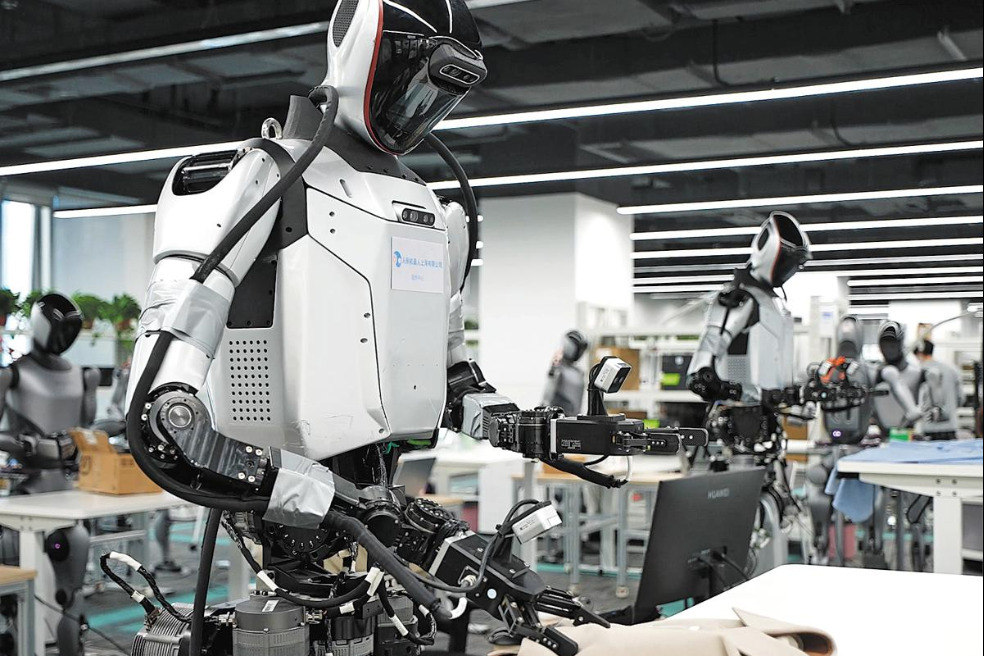
    Central China’s Henan province has emerged as a groundbreaking hub for advanced robotics development with the establishment of the region’s first heterogeneous humanoid robot training facility in Zhengzhou. This state-of-the-art center positions Henan as China’s third major robotics training region alongside Beijing and Shanghai, marking a significant milestone in the nation’s artificial intelligence infrastructure.

    The facility currently deploys 140 cutting-edge robots across six critical sectors including modern agriculture, industrial manufacturing, and healthcare. These machines undergo intensive training in 27 real-world scenarios where they practice complex tasks such as navigation, object manipulation, obstacle avoidance, and human interaction. Each failure becomes a learning opportunity, with robots continuously adjusting their approaches through iterative improvement cycles.

    A team of nearly 70 data specialists works alongside the robots, collecting and labeling approximately 50,000 high-quality data entries daily. This massive data generation fuels the continuous improvement of AI models, creating an unprecedented repository for embodied intelligence development.

    Developed through a collaboration between Henan Investment Group and the National and Local Co-Built Humanoid Robotics Innovation Center, the facility represents a strategic investment in China’s technological future. It employs a unique ‘front store, back factory’ operational model that combines training operations with a commercial robot 4S store, allowing direct customer interaction and feedback integration.

    The training methodology represents a significant advancement over traditional approaches. Rather than relying on image annotation, trainers use hands-on instruction in simulated environments to teach robots perception, decision-making, and execution skills. Each robot receives personalized training from dedicated human instructors, with motion data uploaded to cloud systems in real-time to support model iteration.

    Chen Yang, business manager at Henan Embodied Intelligence Industry Development Company, describes the facility as both a ‘data factory’ and ‘robot training school’ designed to accelerate robots’ transition from novice operators to skilled workers. The center specifically tailors its programs to support Henan’s 12 pillar industries, with plans to expand to over 100 real-world scenarios.

    The training process proves remarkably time-intensive even for simple tasks. Basic flower arrangement requires dozens of hours of data collection, while teaching robots to distinguish between flowers, vases, and positions can take weeks of continuous training. The facility primarily employs Generation Z trainers, who bring innovative thinking and patience to the complex training process.

    According to Wang Hao, a 24-year-old trainer with three years of experience, the current focus has evolved from basic command recognition to precise execution. Robots must accumulate vast amounts of data to perfect even simple actions like holding a glass of water without spillage or breakage.

    The applications extend beyond conventional uses to include high-risk scenarios such as high-temperature welding and hazardous river environments where human safety would be compromised. This expansion demonstrates the facility’s commitment to developing practical solutions for challenging real-world conditions.

    Looking toward the future, Yan Chen, Director of Henan’s Department of Industry and Information Technology, revealed the province’s ambitious goal to develop embodied intelligence-related industries worth over 100 billion yuan ($14.5 billion) by 2030. This investment positions Henan at the forefront of China’s rapidly growing robotics and artificial intelligence sector.