标签: Asia

亚洲

  • A Putin peace gambit to end two wars at once

    A Putin peace gambit to end two wars at once

    In a strategically significant development, U.S. President Donald Trump and Russian President Vladimir Putin held their inaugural telephone discussion this year on Monday. The comprehensive dialogue addressed multiple pressing global issues, with particular emphasis on the ongoing Iran conflict and energy market dynamics.

    Kremlin senior aide Yury Ushakov characterized the exchange as “highly substantive” and “productive,” noting that conversations extended to matters concerning Ukraine, Venezuela, and the global energy landscape. This diplomatic engagement occurred alongside President Putin’s energy market consultations, where he reiterated Russia’s conditional willingness to maintain energy exports to European Union nations.

    President Putin articulated a nuanced position: “Should European entities demonstrate commitment to enduring, apolitical cooperation frameworks, Russia remains prepared to accommodate such partnerships.” This statement signals Moscow’s strategic pivot toward Asian markets while maintaining European export possibilities contingent upon sanction relief.

    The geopolitical calculus suggests potential collaboration between the powers. President Trump indicated openness to sanction modifications, stating post-conversation that imposed restrictions might be temporarily lifted during conflict resolution processes. Notably, the American leader acknowledged Putin’s potential constructive role in mediating the Iran confrontation, despite previously demanding Tehran’s unconditional surrender.

    This diplomatic movement coincides with internal White House deliberations regarding exit strategies from the Iranian engagement. With escalating oil prices and diminishing domestic support for military operations, administration advisors reportedly advocate for conflict de-escalation mechanisms.

    A potential resolution framework involves Russian custody of Iran’s highly enriched uranium stockpiles—a critical non-proliferation measure—in exchange for sanctions relief and peace negotiations in Ukraine. Such arrangement could simultaneously address nuclear concerns while facilitating global energy market stabilization through resumed Russian and Gulf energy exports.

    The proposed settlement would enable conflict resolution before U.S. midterm elections while advancing American strategic interests regarding Iranian energy resources, potentially creating future leverage scenarios in great power competition.

  • Efforts intensify to preserve and promote ethnic cultures in Xizang

    Efforts intensify to preserve and promote ethnic cultures in Xizang

    In China’s Xizang Autonomous Region, a comprehensive cultural preservation initiative is safeguarding the traditions of minority ethnic groups through innovative educational programs and cultural tourism integration. The efforts, highlighted by National People’s Congress deputies during the annual legislative session, demonstrate a multi-faceted approach to protecting vulnerable cultural heritage.

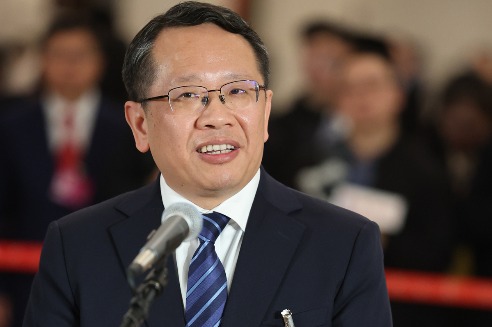
    Tashi Gyaltsen, the sole NPC deputy representing the Lhoba ethnic group, reports significant progress in preserving his community’s traditions. With only 4,300 members nationwide, the Lhoba people face particular challenges as they possess solely an oral language without written form. Local governments have implemented structured language programs including school courses and community night classes where elders serve as instructors, ensuring intergenerational knowledge transfer.

    The Doyu township government has allocated over 8 million yuan ($1.16 million) toward comprehensive cultural protection efforts encompassing language, history, traditional crafts, performing arts, and distinctive architecture. The recently expanded Lhoba Ethnic History Museum now serves as a cultural showcase, featuring exhibits from agricultural traditions to textile craftsmanship. However, authorities emphasize that preservation extends beyond museum walls, actively integrating Lhoba clothing, songs, and dances into educational curricula and daily life.

    Parallel developments are occurring among the Monba ethnic community in Metog county, where cultural commissioner Norbu Yangzom reports successful cultural-tourism integration. The county, home to approximately 8,500 Monba people within its 15,300 residents, has transformed traditional elements into experiential tourism products. Recent initiatives include establishing clothing factories, cultural shops, and culinary standardization programs that have identified eleven distinct Monba dishes for promotion.

    Metog’s transformation from isolation to popular destination exemplifies this cultural-economic synergy. As the last Chinese county connected by paved road (in 2013), the Himalayan region now attracts substantial tourism—hosting over 700,000 visitors in 2025 and generating approximately 470 million yuan in revenue. This development, coupled with rural revitalization policies, has dramatically increased visibility for previously little-known ethnic communities while creating sustainable frameworks for cultural preservation through economic participation.

  • Interwoven communities in China foster cultural unity and development, says national political adviser

    Interwoven communities in China foster cultural unity and development, says national political adviser

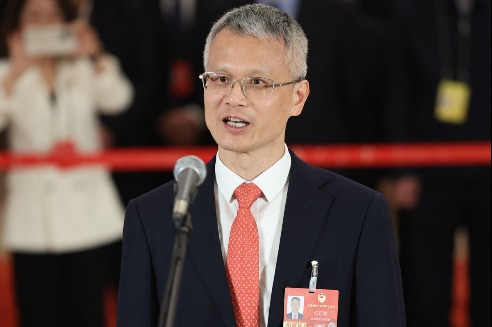
    During the closing proceedings of the 14th Chinese People’s Political Consultative Conference (CPPCC) National Committee session, a compelling narrative of China’s interwoven communities took center stage. Cui Haiyang, a CPPCC National Committee member and vice-president of Guizhou Minzu University, presented compelling evidence of how these ethnically diverse residential areas are transforming both cultural preservation and economic development across the nation.

    As an experienced researcher of ethnic cultures, Cui has extensively documented the social dynamics within Guizhou province’s ethnic regions. His findings reveal that these intentionally designed mixed communities—where Han, Miao, Bouyei, Tujia and other ethnic groups coexist—have evolved beyond mere residential spaces into vibrant hubs of cultural exchange and mutual economic advancement.

    The case study of a Bouyei woman identified as Yang illustrates this transformative impact. Relocated from remote mountainous terrain through poverty alleviation initiatives, Yang’s life has undergone remarkable changes. Where vehicle ownership was once an unattainable dream, car ownership has now become commonplace among community households. More significantly, Yang’s traditional skill in Bouyei eight-tone singing has gained formal recognition, earning her status as an intangible cultural heritage inheritor—a testament to how cultural preservation and modern development intersect within these environments.

    These communities operate on principles of mutual support, with neighbors assisting each other during agricultural seasons and daily life. Modern educational facilities serve children from all ethnic backgrounds, while integrated systems provide equal access to employment opportunities and developmental resources. This structural integration has fostered a collective dream-seeking environment where diverse ethnic groups jointly pursue better livelihoods.

    The underlying philosophy, as articulated by Cui, emphasizes that these communities enable people from different ethnic backgrounds to ‘take root and flourish’ through daily interactions and shared experiences. This approach has transformed basic survival aspirations into confident expressions of cultural identity and regional storytelling. These interwoven communities are increasingly regarded as practical manifestations of the Chinese nation’s shared future concept, demonstrating how cultural diversity can become a driving force for social harmony and economic progress.

  • AI revolutionizes education: from uniformity to personalized learning, says national political adviser

    AI revolutionizes education: from uniformity to personalized learning, says national political adviser

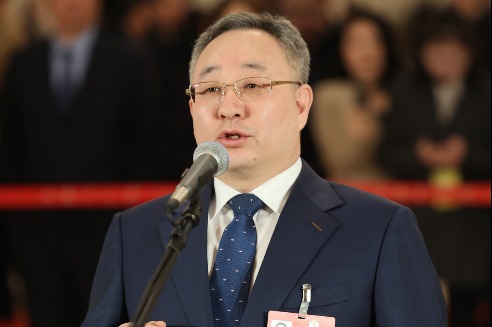
    Artificial intelligence is fundamentally reshaping the educational landscape, accelerating the transition from traditional standardized teaching models toward customized learning experiences tailored to individual student needs. This transformative shift was highlighted by Xu Kun, President of Beijing University of Posts and Telecommunications and member of the National Committee of the Chinese People’s Political Consultative Conference, during the recent parliamentary sessions.

    Speaking at the fourth session of the 14th National People’s Congress, Professor Xu emphasized that AI technology has effectively ‘pressed the fast-forward button’ on educational innovation. Unlike conventional classroom settings where uniform teaching schedules often fail to address individual learning differences, AI-powered systems can monitor student progress in real-time and dynamically adjust both learning pathways and content delivery.

    Beijing University of Posts and Telecommunications has developed an intelligent tutoring platform that exemplifies this educational revolution. Rather than simply providing answers to difficult problems, the system employs sophisticated algorithms to guide students through complex concepts based on their cognitive levels, mirroring the approach of experienced educators who foster independent problem-solving skills.

    The integration of AI also redefines the educator’s role, liberating teachers from repetitive administrative tasks and enabling them to focus on the essential aspects of mentoring and student development. However, Professor Xu cautioned that AI represents a ‘double-edged sword’ in education, emphasizing the critical importance of maintaining ethical standards and preventing over-reliance that could lead to intellectual complacency.

    Looking toward the future, Xu envisions AI creating an open, integrated educational ecosystem that blends virtual and physical learning environments, driven by data analytics and enhanced through human-machine collaboration. This infrastructure will facilitate the distribution of high-quality educational resources across geographical and temporal boundaries, ultimately empowering comprehensive student development in the emerging AI era.

  • Fisheries research base in China’s Chongqing conserves rare fish species

    Fisheries research base in China’s Chongqing conserves rare fish species

    In a significant conservation initiative, the Dazhou fisheries research base in Chongqing’s Wanzhou district has emerged as a critical sanctuary for preserving endangered aquatic species native to the upper Yangtze River basin. This specialized facility functions as a wild acclimation center where rare fish undergo preparatory training before their reintroduction into natural habitats.

    The research station operates an extensive network of 32 net cages spanning approximately 800 square meters, creating controlled environments that simulate natural river conditions. This infrastructure supports the conservation of more than 20 distinct fish species, including both rare genetic populations and commercially valuable varieties. The base’s breeding programs have achieved remarkable productivity, with annual output exceeding 20 million high-quality fry of endangered and premium fish species.

    Recent advancements in conservation methodology have seen the base enhance its wild acclimation protocols, implementing rigorous short-term survival training for juvenile fish prior to their release. This scientific approach has demonstrated measurable success in boosting the reproductive rates and survival capabilities of endangered species once they return to their natural ecosystems. The program represents a sophisticated integration of aquaculture technology and ecological restoration, providing a sustainable model for aquatic biodiversity conservation in one of China’s most vital river systems.

  • Cross-Strait youth exchanges pave the way for a brighter future, says national political adviser

    Cross-Strait youth exchanges pave the way for a brighter future, says national political adviser

    BEIJING – Enhanced interactions between mainland Chinese and Taiwanese youth are creating vital bridges for peaceful development across the Taiwan Strait, according to a prominent political adviser speaking at China’s top political advisory body.

    Dr. Xu Kewei, President of the Guangdong Provincial Federation of Taiwan Compatriots and member of the 14th National Committee of the Chinese People’s Political Consultative Conference (CPPCC), emphasized the transformative power of cross-Strait exchanges during a group interview preceding the closing ceremony of the CPPCC’s fourth session on March 11, 2026.

    As a third-generation Taiwan compatriot who has established roots on the mainland, Dr. Xu brings unique perspective to his dual roles as a medical surgeon and political representative. Through his extensive travels across provinces for surgical procedures, consultations, and academic lectures, he has witnessed firsthand the growing integration of Taiwanese youth into mainland society.

    “Young people from Taiwan are not merely visiting – they are building lives, launching enterprises, and pursuing advanced education throughout the mainland,” Xu observed. He cited compelling examples of this integration: entrepreneurs blending Taiwanese and mainland culinary traditions to create successful beverage franchises, and tech innovators applying artificial intelligence to revolutionize traditional manufacturing sectors.

    The cultural dimension remains equally significant, with young Taiwanese exploring innovative approaches to preserve shared heritage. Xu specifically highlighted renewed interest in Gezai opera, a traditional art form that resonates deeply across both sides of the Strait.

    Statistical evidence underscores this trend, with nearly 4.9 million mainland visits recorded by Taiwan residents in the previous year. Notably, youth constituted over one-third of these exchanges, signaling a generational shift toward deeper engagement.

    “Our shared aspiration must progress from conceptual kinship to tangible coexistence,” Xu asserted. “By fostering these connections, we collectively architect a more prosperous and harmonious future for all Chinese people, regardless of which side of the Strait they call home.”

  • Spring scenery in Kunming, China’s Yunnan

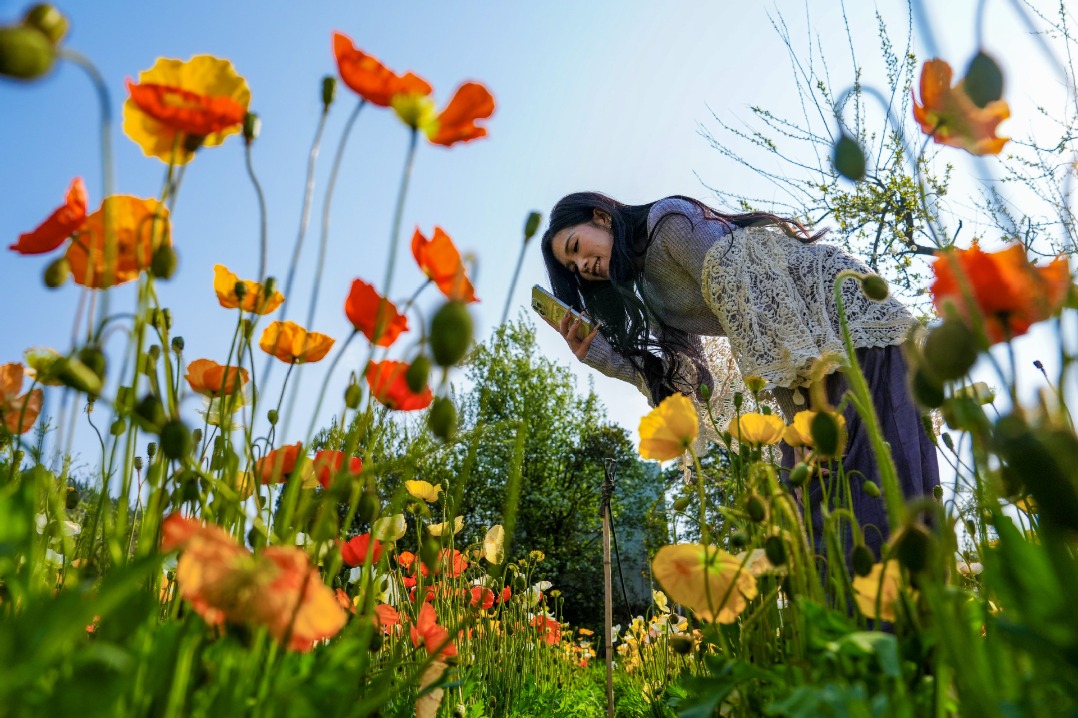
    Spring scenery in Kunming, China’s Yunnan

    China Daily Information Co (CDIC) has established a comprehensive copyright protection framework governing all content published across its digital platforms. The policy explicitly states that all materials—including textual content, photographic images, and multimedia information—remain the exclusive intellectual property of CDIC since 1994.

    The company mandates that republication or utilization of any content in any form requires prior written authorization from CDIC. This protective measure covers the complete spectrum of digital assets hosted on their platforms, reinforcing the organization’s commitment to safeguarding its intellectual property rights.

    Technical recommendations accompany the copyright notice, with the platform suggesting optimal viewing through browsers set at 1024*768 resolution or higher. This specification ensures consumers experience content as intended while maintaining display quality standards.

    The publication operates under formal registration number 130349 and holds multimedia online publishing license 0108263, providing official documentation of its authorized publishing status. These credentials validate the organization’s compliance with national regulatory standards for digital content dissemination.

    Beyond content protection policies, the platform maintains established channels for stakeholder engagement including advertising opportunities, general inquiries, and employment services targeting both domestic and expatriate professionals. These services facilitate organizational transparency and accessibility while supporting sustainable business operations.

  • Chinese scientists propose human-wildlife conflict resolution strategy

    Chinese scientists propose human-wildlife conflict resolution strategy

    Chinese researchers from the Northwest Institute of Plateau Biology (CAS) have pioneered a groundbreaking temporal livestock management approach to address the persistent global challenge of human-wildlife conflicts. Their innovative study, published in Integrative Zoology, offers a scientific framework for balancing biodiversity conservation with sustainable development in agropastoral communities.

    The research team, led by Dr. Lian Xinming, conducted an extensive decade-long field investigation in China’s ecologically critical Sanjiangyuan region—known as the nation’s water tower. Through sophisticated monitoring techniques involving 422 infrared cameras across 2,580 square kilometers, scientists gathered unprecedented data on four large carnivores: snow leopards, wolves, lynxes, and brown bears.

    Employing advanced kernel density estimation methods, the team analyzed diel activity patterns and seasonal variations among these predators. The findings revealed distinct nocturnal behaviors with species-specific peak activity times. Wolves demonstrated particularly notable seasonal variations in their activity patterns compared to other species.

    Crucially, the research identified precise high-risk windows for livestock predation and human encounters. For brown bears, the most dangerous period for home invasions occurs between 20:42 and 02:36, requiring heightened vigilance during these hours. The study recommends strategic interventions including guard dogs and electronic deterrents during identified risk periods.

    Dr. Lian emphasized that integrating spatial utilization zoning with temporally-regulated grazing schedules can significantly reduce human-carnivore encounters. This evidence-based approach represents a paradigm shift from reactive conflict management to proactive, scientifically-informed coexistence strategies that benefit both wildlife conservation and local livelihoods.

  • Pop music’s bias towards English is fading, says Spotify

    Pop music’s bias towards English is fading, says Spotify

    The global music industry is experiencing a profound linguistic transformation as streaming data reveals English’s declining monopoly on popular music. According to Spotify’s latest report, songs in 16 different languages featured in the Global Top 50 chart in the past year—more than double the number recorded in 2020. This diversification includes Spanish, Korean, Portuguese, Turkish, Indonesian, and Arabic compositions.

    Spanish-language superstar Bad Bunny emerged as the world’s most-streamed artist, while Rosalía made history at the Brit Awards by becoming the first artist to win Best International Artist for a predominantly non-English album. Her latest work ‘Lux’ incorporates an impressive 14 different dialects.

    The streaming giant’s data identifies Brazilian Funk as the world’s fastest-growing genre with a 36% audience increase, followed by K-Pop (31% growth) and Trap Latino (29% increase). Each of these genres generated over $100 million in royalties through Spotify alone last year.

    Despite this linguistic diversification, English maintains considerable dominance with 14 of the IFPI’s Top 20 best-selling albums being exclusively English-language productions. However, international acts including South Korea’s Stray Kids, Enhypen, Seventeen, and Japan’s Mrs Green Apple are increasingly breaking into mainstream charts as listeners explore beyond traditional rock and pop paradigms.

    Spotify’s financial impact on the industry remains substantial, with $11 billion paid in royalties last year—making it the world’s highest-paying music retailer. The platform distributed £860 million to UK artists alone, with over 75% generated from international streams. Approximately 150 UK artists earned over £1 million each, while the number earning above £500,000 has doubled since 2018.

    The company’s transparency initiative comes amid ongoing criticism regarding artist compensation rates, which range from £0.002 to £0.0035 per stream. Spotify emphasizes that nearly half of all royalties go to independent artists and labels, with over 13,800 artists earning at least $100,000 annually.

    Recent controversies have emerged regarding Spotify’s corporate connections, particularly CEO Daniel Ek’s chairmanship of German defense technology company Helsing. Several artists including Massive Attack have removed their catalogs in protest, citing ethical concerns about indirectly funding ‘lethal, dystopian technologies’ through streaming revenue. Spotify maintains that it and Helsing are ‘totally separate companies.’

  • Binhai to further strengthen industrial innovation

    Binhai to further strengthen industrial innovation

    Tianjin’s Binhai New Area is strategically positioning itself as the central innovation engine within the Beijing-Tianjin-Hebei regional development corridor, marking a significant transformation in China’s economic landscape. As the district commemorates two decades since its designation as a national-level development zone and enters the initial phase of the 15th Five-Year Plan (2026-2030), it demonstrates remarkable economic momentum with a 5% year-on-year GDP growth in 2025, constituting over 42% of Tianjin’s total economic output.

    Under the leadership of District Head Shan Zefeng, who also serves as a deputy to the 14th National People’s Congress, Binhai is executing an ambitious strategy to convert Beijing’s substantial innovation resources into tangible industrial productivity. The district’s industrial framework continues to evolve strategically, with the tertiary sector now representing more than 55% of the economy and contributing nearly 70% to overall growth.

    The area has achieved a significant milestone by surpassing 5,000 high-tech enterprises, while specialized, refined, and innovative enterprises reached 1,200 last year. Technology contract transactions exceeded 88 billion yuan, demonstrating robust innovation activity.

    Substantial investments are fueling this transformation, with Beijing-origin projects accumulating over 250 billion yuan ($36.2 billion) in committed funding. Major corporate movements include Lenovo’s substantial expansion with its Tianjin Innovation Park in the Tianjin Port Free Trade Zone, which generated 40 billion yuan in revenue last year and will host the company’s artificial intelligence R&D operations. Similarly, FAW Toyota Motor Sales Company relocated its headquarters from Beijing to Tianjin in June.

    Strategic partnerships are accelerating development, notably the collaboration between Tianjin Binhai New Area Construction and Investment Group and China Communications Construction Company’s Beijing-Tianjin-Hebei regional headquarters. This alliance focuses on urban development, infrastructure enhancement, and industrial operations.

    Binhai is specifically targeting cutting-edge technological domains including artificial intelligence, biological manufacturing, and brain-computer interface technologies to cultivate new productive forces. The Tianjin Binhai-Zhongguancun Science Park, established as a flagship collaborative innovation project in 2016, has registered more than 6,500 enterprises to date.

    Looking forward, Binhai aims to leverage its comparative advantages while supporting Beijing’s non-capital function relocation initiatives. The district seeks to contribute ‘Binhai strength’ toward establishing the Beijing-Tianjin-Hebei region as a pioneering demonstration zone for Chinese modernization.