标签: Asia

亚洲

  • Turkey deploys F-16 jets to Somalia as it strengthens economic ties

    Turkey deploys F-16 jets to Somalia as it strengthens economic ties

    In a significant strategic move, Turkey has positioned three F-16 fighter jets at Mogadishu’s international airport, marking a substantial escalation of its military and economic footprint in Somalia. This deployment, confirmed on Wednesday, follows months of construction activity at the airport where Turkish engineers have built new hangars and prepared facilities to host the advanced aircraft.

    According to Somali officials and analysis of satellite imagery, the military buildup has been underway since at least September, supported by numerous Turkish cargo flights suspected of delivering essential spare parts and ammunition. While Turkey’s defense ministry declined specific commentary, ministry sources acknowledged maintaining an active air command presence in Somalia, emphasizing their role in enhancing Somalia’s counterterrorism capabilities through training and advisory support.

    This military expansion directly supports Turkey’s broader economic ambitions in the region. Reliable sources indicate the fighter jet deployment precedes Ankara’s planned dispatch of an oil exploration platform to commence offshore drilling later this year. Concurrently, plans are advancing for a spaceport project in northern Mogadishu, signaling Turkey’s multidimensional investment strategy.

    The timing of Turkey’s enhanced military presence coincides with growing regional tensions following Israel’s recent recognition of breakaway Somaliland. Ankara has explicitly reaffirmed its commitment to Somalia’s territorial integrity through formal statements from its National Security Council, the nation’s top defense oversight body.

    Turkey’s deepening engagement extends beyond military cooperation. The recent appointment of Brigadier General Ibrahim Mohamed Mohamud—a Turkish-educated officer with training at Turkey’s Defence University—as commander of Somalia’s National Army illustrates the extensive institutional ties between the nations.

    This deployment builds upon Turkey’s established military assistance, which previously included armed drones and attack helicopters transferred to Somali forces. The comprehensive defense agreement signed in February 2024 further commits Turkey to assisting Somalia in establishing a naval force, with two utility helicopters already delivered to the Somali navy.

    Since 2011, Turkey has invested heavily in Somalia’s infrastructure and humanitarian needs, constructing the world’s largest embassy in Mogadishu, providing over $1 billion in drought relief, and managing critical infrastructure including the city’s airport and port. The Turksom military base has trained approximately one-third of Somalia’s military personnel, cementing Turkey’s role as a primary security partner in the Horn of Africa.

  • AI governance tops China’s 2025 technology buzzwords list

    AI governance tops China’s 2025 technology buzzwords list

    In a significant development reflecting China’s evolving technological priorities, ‘AI governance’ has emerged as the foremost buzzword in the nation’s 2025 technology lexicon. The Chinese Society for Science and Technology Journalism unveiled this ranking, highlighting a global transition in artificial intelligence from pure technological competition toward establishing comprehensive regulatory frameworks.

    Yin Chuanhong, President of the Science Popularization Times, emphasized during the announcement ceremony that ‘ensuring safe, reliable, and controllable AI development has become the most pressing issue for the global community.’ He noted China’s growing recognition that technological advancement must be complemented by sophisticated governance mechanisms to guarantee sustainable progress.

    The selection process, which integrated big data analytics with expert assessment, also identified nine other pivotal technological terms: embodied intelligence, controlled nuclear fusion, brain-computer interface, commercial space, deep-sea technology, deep-space exploration, silver economy technology, intelligent agents, and Chinese innovation. These concepts reflect China’s strategic focus areas and remarkable breakthroughs during the year.

    China’s leadership in global AI governance gained international recognition, with the prestigious journal Nature acknowledging the country’s pioneering role. This was further demonstrated at the 2025 World Artificial Intelligence Conference, where China proposed establishing a World Artificial Intelligence Cooperation Organization and released the Global AI Governance Action Plan.

    Substantial progress was reported across multiple frontier technologies. Controlled nuclear fusion witnessed a milestone achievement with the International Thermonuclear Experimental Reactor organization completing its massive superconducting electromagnet system. China’s brain-computer interface industry achieved breakthroughs in core technologies and multi-scenario applications, earning designation as one of six priority future industries in the country’s 15th Five-Year Plan.

    The commercial space sector demonstrated remarkable growth, with the Hainan Commercial Space Launch Site and Oriental Spaceport achieving regular launch capabilities. Private rocket companies successfully deployed numerous carrier rockets, while satellite manufacturing facilities established capacity for mass production of hundreds of satellites annually, paving the way for a trillion-yuan market.

    Concurrently, the society released the ‘Top 10 Science and Technology News Events of 2025,’ featuring landmark achievements including DeepSeek’s open-source large models, the Zuchongzhi-3 quantum computing prototype, the world’s first humanoid robot half-marathon, and the commissioning of China’s first electromagnetic catapult aircraft carrier, the CNS Fujian.

  • China-Swiss exhibition on green construction opens

    China-Swiss exhibition on green construction opens

    Beijing witnessed the inauguration of the groundbreaking “Building Type / Climate Zone” exhibition on Thursday, showcasing the remarkable outcomes of the China-Swiss Zero Emission Buildings Project. Held at Langyuan Station, this collaborative initiative represents a significant milestone in sustainable construction technology developed between 2021 and 2025 through the partnership of Switzerland’s Agency for Development and Cooperation and China’s Ministry of Housing and Urban-Rural Development.

    The exhibition comprehensively documents the bilateral effort to combat global climate change through architectural innovation, featuring three distinct thematic sections. Visitors can explore hundreds of research reports curated by Swiss experts and presented through visually engaging infographics, admire professional architectural photography capturing eight zero-emission demonstration buildings, and examine a unique reproduction of China’s ancient architectural treatise “Yingzao Fashi” (Building Standards) printed on solar panels using advanced silk screen technology.

    Swiss Ambassador to China Krystyna Marty Lang emphasized the project’s significance during the opening ceremony, noting that “this collaboration represents the successful fusion of Swiss expertise in sustainable construction with Chinese innovative technologies and futuristic design capabilities.” The initiative has brought together over 100 experts from more than 30 enterprises and academic institutions across both nations, focusing on three primary areas: standardized research, practical demonstration projects, and comprehensive capacity-building programs.

    While acknowledging the project’s completion, Ambassador Lang characterized it as merely the beginning of a broader movement toward zero-emission construction, stating that “the success paves the way for new pilots, deeper standardization work, and investments that bring us closer to a zero-emission future.” The exhibition will remain accessible to the public free of charge from January 29th through February 13th.

  • China says navy, coast guard are peace guardians

    China says navy, coast guard are peace guardians

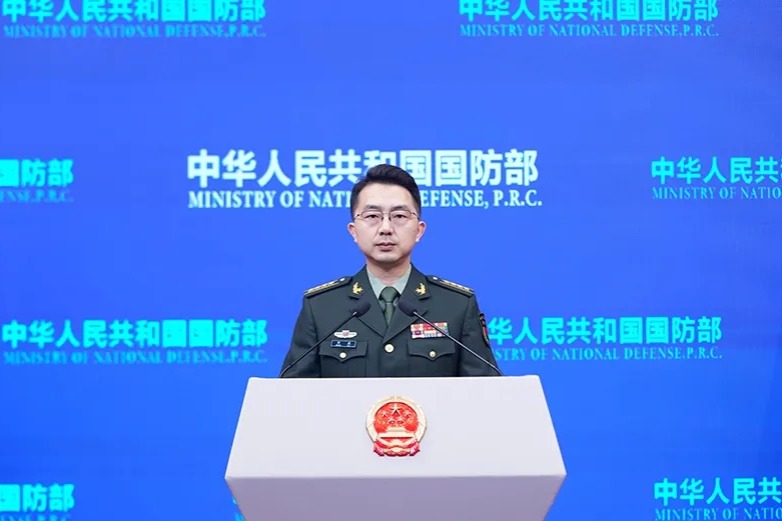
    In a robust defense of its maritime operations, China’s Defense Ministry has characterized its naval and coast guard forces as dual guardians of national sovereignty and regional peace. The statement came during a regular press briefing on Thursday from ministry spokesperson Jiang Bin, addressing recent tensions in the South China Sea.

    The commentary followed a January 22nd incident where vessels from the People’s Liberation Army Navy and China Coast Guard conducted a rescue operation near Huangyan Island (also known as Scarborough Shoal), saving 17 Filipino crew members from distressed waters. The rescued personnel were subsequently transferred to Philippine authorities this past Sunday, completing what China describes as a purely humanitarian mission.

    However, the episode has sparked diplomatic friction. Jiang sharply criticized certain Philippine Coast Guard spokespersons for what he termed the ‘instrumentalization of humanitarian efforts for malicious propaganda purposes,’ labeling such tactics as ‘profoundly dishonorable and contemptible.’

    ‘Human life holds immeasurable value, and compassion recognizes no national boundaries,’ Jiang asserted, emphasizing that China’s maritime forces operate with dual responsibilities. Beyond protecting territorial integrity, he stated they actively contribute to stability and peaceful coexistence in contested waterways.

    The spokesperson reaffirmed China’s commitment to ongoing patrols and protection of its maritime domains while advocating for a ‘maritime community with shared destiny.’ Jiang concluded that China would continue deploying concrete measures aimed at transforming the South China Sea into a zone characterized by peace, friendship, and international cooperation.

  • Eleven more bodies pulled from sea as Philippine ferry toll rises to 29

    Eleven more bodies pulled from sea as Philippine ferry toll rises to 29

    Rescue operations in the southern Philippines have recovered eleven additional victims from the MV Trisha Kerstin 3 ferry sinking, bringing the confirmed death toll to 29. The vessel capsized off the coast of Mindanao in the early hours of Monday, creating a significant maritime disaster that has now entered a critical investigation phase.

    Coast guard officials confirmed the latest casualties were predominantly discovered near Baluk-Baluk Island, adjacent to the sinking location. Local fishermen assisted in the recovery efforts, with verified social media footage showing the harrowing retrieval of victims still wearing life preservers. The discoveries have complicated initial passenger estimates, creating confusion about the actual number of people aboard during the incident.

    The Philippine Coast Guard has acknowledged discrepancies in the missing persons count. Captain Noemie Cayabyab, spokeswoman for the maritime agency, stated that while the official manifest indicated 10 missing individuals, including the ship’s captain and crew members, families have reported additional unaccounted passengers. This discrepancy has prompted authorities to expand their search and verification procedures.

    Specialized dive teams from Manila have joined the recovery mission, deploying unmanned submersible equipment to locate the wreckage resting approximately 76 meters (250 feet) below the surface. Meanwhile, the Philippines’ maritime regulatory body has grounded all vessels operated by Aleson Shipping Lines pending a comprehensive safety investigation.

    Survivor accounts describe chaotic scenes during the sinking, with passengers reportedly receiving no emergency alerts from crew members. Aquino Sajili, a 53-year-old attorney who survived the disaster, indicated potential legal action against the shipping company, citing negligence in safety protocols and emergency response procedures.

  • India should consider age-based curbs on social media, adviser says

    India should consider age-based curbs on social media, adviser says

    India’s Chief Economic Adviser V. Anantha Nageswaran has called for significant restrictions on social media access for younger users, describing platform algorithms as “predatory” in their approach to maximizing user engagement. The recommendation, featured prominently in India’s annual economic survey published Thursday, suggests implementing age-based access limits and holding platforms responsible for age verification measures.

    The proposal aligns India with a growing global movement to protect children from digital addiction. Australia became the first nation to implement a comprehensive ban for children under 16 last year, while France’s National Assembly recently backed legislation prohibiting social media access for those under 15. Britain, Denmark, and Greece are reportedly studying similar measures.

    Nageswaran’s recommendations highlight particular concerns about younger users’ vulnerability to compulsive usage patterns and harmful content. The economic survey specifically notes that algorithms appear targeted at users between 15 and 24 years old, with cheap telecom data plans contributing to widespread adoption—approximately 75% of young smartphone users regularly engage with social media apps.

    The adviser recommended that families implement screen-time limits, device-free hours, and shared offline activities to counter digital addiction’s negative effects on academic performance and workplace productivity, which he attributed to distractions, sleep deprivation, and reduced focus.

    While the recommendations aren’t binding, they carry significant weight in policy discussions within Prime Minister Narendra Modi’s government. Past economic survey recommendations have influenced tax reforms, investment rule changes, and digital infrastructure development.

    The proposal comes as several Indian states are already considering restrictions. The coastal state of Goa and southern state of Andhra Pradesh have both announced they’re studying Australia’s regulatory framework for potential implementation. Andhra Pradesh’s IT minister, Nara Lokesh, stated on social media platform X that “children are slipping into relentless usage, affecting their attention spans and education.”

    Social media platforms face substantial impact in India, their largest user market with approximately 750 million smartphones and one billion internet users. Research firm DataReportal indicates YouTube has 500 million users in India, followed by Instagram with 481 million and Facebook with 403 million users. The country currently doesn’t set a minimum age for social media access.

    Meta, Alphabet (YouTube’s parent company), and X didn’t immediately respond to requests for comment. Meta has previously expressed support for laws enabling parental oversight while cautioning that outright bans might push teenagers toward less regulated, potentially more dangerous platforms.

    Some digital rights activists and technology experts have expressed concerns that age-based restrictions might prove ineffective since children can bypass them using false identification. They instead advocate for measures that help children and parents develop healthier social media usage habits.

  • Strikes to inspire protests, much larger attack: What are Trump’s options on Iran?

    Strikes to inspire protests, much larger attack: What are Trump’s options on Iran?

    The Trump administration is actively contemplating a spectrum of military responses against Iran, ranging from targeted strikes to extensive bombing campaigns, according to multiple anonymous sources familiar with high-level deliberations. These considerations emerge amidst heightened tensions following Tehran’s brutal suppression of nationwide protests that resulted in thousands of civilian casualties.

    Washington’s strategic calculus involves potential attacks on Iranian security forces, military commanders, and critical infrastructure, with the dual objectives of empowering protest movements and crippling Iran’s military capabilities. While President Trump has not finalized any decision regarding military intervention, the recent deployment of a U.S. aircraft carrier group to the region has significantly expanded American offensive options.

    Intelligence assessments and regional analyses suggest air power alone would be insufficient to achieve regime change in Tehran. Israeli officials and Arab diplomats have expressed concerns that military action could actually strengthen the Iranian regime’s position rather than weaken it, potentially triggering broader regional instability. The complex succession dynamics surrounding Supreme Leader Ayatollah Ali Khamenei, who retains ultimate authority despite reduced public visibility, further complicate potential intervention scenarios.

    Regional powers including Saudi Arabia, Qatar, Oman and Egypt have actively lobbied against military action, fearing retaliatory strikes from Iranian-aligned forces across the Middle East. Gulf states particularly worry about missile attacks and drone assaults from Yemen’s Houthi rebels targeting their territories and critical infrastructure.

    The ongoing deliberations reflect the administration’s attempt to balance maximum pressure tactics with diplomatic overtures regarding Iran’s nuclear program. While Tehran has expressed willingness to negotiate based on “mutual respect and interests,” it has simultaneously prepared for potential military confrontation, creating a precarious standoff with global implications.

  • Dubai education fair helps families navigate studying abroad

    Dubai education fair helps families navigate studying abroad

    Dubai is set to host the Glinks Pathfinder Education Fair 2026 this Saturday, January 31st, providing families with direct access to international education opportunities. The event will take place at the Millennium Plaza Downtown Hotel from 5:00 PM to 8:00 PM, offering personalized guidance for students considering overseas studies.

    Unlike digital research alone, this fair facilitates face-to-face interactions with official representatives from over 25 prestigious universities across the United Kingdom, Germany, Australia, and Canada. Participants can explore diverse academic disciplines including artificial intelligence, engineering, medical sciences, business administration, environmental studies, and creative arts.

    The initiative addresses the complex decision-making process surrounding international education, which typically involves evaluating academic compatibility, financial planning, and career prospects. Families will receive comprehensive information on admission criteria, scholarship opportunities, visa procedures, and post-graduate employment pathways.

    Prabhjeet Singh, Founder and CEO of Glinks International, emphasized the fair’s mission to replace uncertainty with concrete educational planning. ‘We designed this event to transform speculative research into actionable insights for families contemplating global education options,’ Singh stated.

    Prospective applicants will benefit from practical advantages including application fee waivers worth $150 for the 2026-2027 academic intake when applying to partner institutions during the event. The complimentary fair encourages early registration to ensure participants maximize their access to expert guidance and institutional comparisons.

    This gathering represents a significant opportunity for both students and parents to collaboratively plan educational journeys with verified information from source representatives, moving beyond digital research to personalized consultation.

  • Hunan scholar donates 104 artifacts documenting Japanese aggression

    Hunan scholar donates 104 artifacts documenting Japanese aggression

    In a significant contribution to historical preservation, Associate Professor Mao Chenghui from Central South University has donated a substantial collection of 104 artifacts documenting Japan’s wartime aggression against China to the Changsha History Museum of the Communist Party of China. The formal accession ceremony took place on Tuesday, marking an important addition to the museum’s historical archives.

    The collection, meticulously gathered by Professor Mao during his academic visits and personal travels overseas, contains historically significant items that provide tangible evidence of Japan’s military actions in China. Among the most notable artifacts is a dinner fork engraved with the inscription ‘Commemorating the Entry into Wuhan City’—a chilling reminder of the Japanese occupation during the Second Sino-Japanese War.

    Professor Mao’s decision to donate his personally acquired collection followed careful consideration of where these historical items would be most appropriately preserved and made accessible to the public. The Changsha History Museum, as an institution dedicated to documenting China’s modern history, provides an ideal repository for these artifacts that serve as material evidence of a crucial period in Sino-Japanese relations.

    The donation represents more than just a transfer of historical objects; it constitutes an important act of historical preservation that ensures future generations will have access to physical evidence documenting this difficult chapter in China’s history. Such artifacts play a vital role in historical education and maintaining collective memory of events that shaped modern China.

  • Indian rupee hits record low, RBI steps in to avert fall past 92 per dollar

    Indian rupee hits record low, RBI steps in to avert fall past 92 per dollar

    The Indian rupee plunged to an unprecedented low against the US dollar on Thursday, January 29, 2026, driven by substantial dollar demand from corporate hedging activities and the maturation of non-deliverable forward positions. The currency closed at 91.9550 per dollar, marking a 0.2% decline from its previous session, after briefly touching 91.9850 during trading hours.

    The Reserve Bank of India (RBI) executed strategic interventions to prevent the rupee from breaching the psychologically critical threshold of 92 per dollar, according to market traders. This defensive action created a complex policy dilemma for the central bank, as its foreign exchange market operations effectively counteract its simultaneous efforts to enhance banking system liquidity.

    The currency’s weakness has generated ripple effects across India’s financial markets. Government bonds experienced downward pressure, while interest rate swaps markets showed significant strain. Overnight index swap rates have climbed to levels that anticipate monetary tightening, despite macroeconomic indicators suggesting no fundamental justification for such policy moves.

    This currency depreciation presents a puzzling contrast to India’s robust economic performance. Official government projections indicate growth between 6.8%-7.2% for the upcoming fiscal year beginning in April, representing only a modest deceleration from the current year’s 7.4% expansion. The government’s annual economic survey noted that the rupee’s valuation fails to accurately reflect the nation’s strong economic fundamentals, while acknowledging that currency depreciation could partially mitigate the impact of elevated US tariffs.

    Foreign investor apprehension continues to weigh heavily on Indian markets. January has witnessed net foreign equity outflows exceeding $4 billion, compounding the record $19 billion withdrawn throughout 2025. Market analysts attribute this capital flight to geopolitical uncertainties and diminished investor confidence. DBS Bank India projects further rupee weakness to 93-94 levels this year as inbound investment flows continue to diminish.

    Financial experts emphasize that a comprehensive trade agreement with the United States would significantly improve market sentiment toward Indian assets. However, the current geopolitical landscape complicates long-term growth projections for Asia’s third-largest economy.