标签: Asia

亚洲

  • LIVE: Deputies to the 14th NPC take passage interview

    LIVE: Deputies to the 14th NPC take passage interview

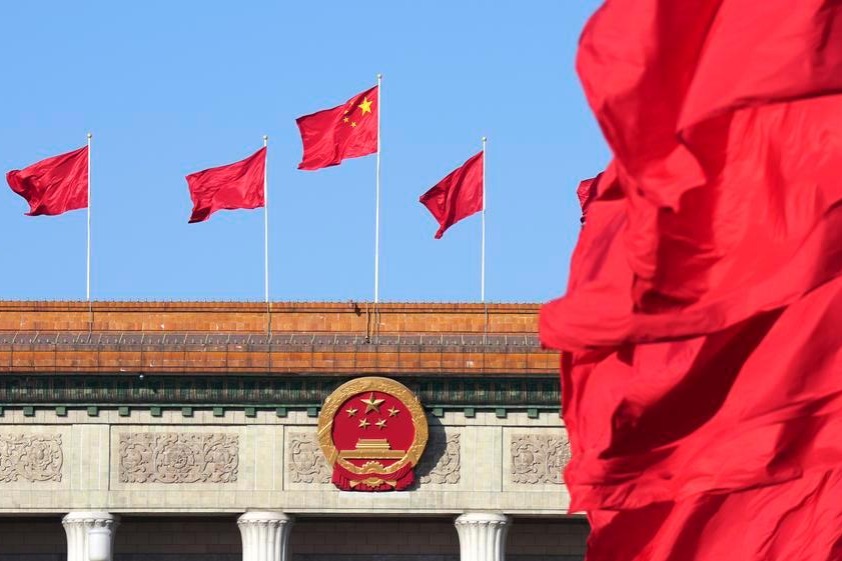
    Beijing witnessed a significant political event on Thursday afternoon as deputies of the 14th National People’s Congress (NPC) participated in scheduled passage interviews at the iconic Great Hall of the People. The event, which commenced at 2:00 PM local time, provided a platform for elected representatives to engage with media and share insights on legislative matters and national development priorities.

    The live broadcast opportunity allowed both domestic and international audiences to witness the proceedings firsthand, highlighting China’s commitment to transparency in its political processes. These interviews occur during the annual legislative sessions where deputies discuss and shape policies that will guide China’s development trajectory.

    Concurrent with this event, several other national developments were reported, including the establishment of four state key laboratories in Macao, China Coast Guard patrols in the South China Sea, and various cultural and scientific activities across the country. These parallel developments demonstrate the multifaceted nature of China’s ongoing progress in political, scientific, and cultural domains.

    The passage interviews represent a crucial communication channel between China’s highest organ of state power and the public, offering insights into the legislative agenda and policy directions that will emerge from the current NPC session.

  • Natural fortress: How geography protects Iran’s regime

    Natural fortress: How geography protects Iran’s regime

    Iran’s formidable geography has long shaped its defensive strategy, with the mountainous Iranian Plateau creating a natural fortress against conventional invasion. The Zagros and Elburz mountain ranges provide exceptional protection, enabling Tehran to disperse military and nuclear infrastructure across vast territories with strategic depth. This topography facilitated the development of Iran’s Anti-Access/Area-Denial (A2/AD) doctrine, mirroring strategies employed by China in the South China Sea.

    Recent military operations have tested Iran’s geographic advantages. Operation Epic Fury (US) and Operation Roaring Lion (Israel), launched on February 28, demonstrated that advanced precision technology could bypass traditional geographic protections. The utilization of B-2 bombers and Black Sparrow air-launched ballistic missiles damaged deeply buried facilities previously considered invulnerable, targeting over 1,000 sites including IRGC command centers and nuclear infrastructure within the first 24 hours.

    Iran has responded with sophisticated maritime control strategies. Through its ‘Smart Control’ doctrine, Tehran maintains influence over the Strait of Hormuz using integrated systems including the Sayyad-3G air defense system, dual-role discriminatory drones, and distributed missile platforms. Despite naval losses, Iran has effectively implemented electronic warfare tactics, with over 1,100 vessels affected by GPS spoofing since March 1, creating economic pressure through targeted shipping disruptions.

    The conflict’s geopolitical dimensions have expanded significantly. The death of Iran’s supreme leader on March 1 triggered succession uncertainties, temporarily fracturing decision-making processes. Meanwhile, the US strategic objective appears to have evolved from degrading nuclear capabilities toward regime change, potentially involving Kurdish opposition groups in coordinated ground operations. This escalation risks broader regional conflict and challenges the strategic interests of Iran’s partners in the Trilateral Strategic Pact with Russia and China, potentially threatening critical infrastructure projects including the International North-South Transport Corridor and Belt and Road Initiative.

  • Ships identify themselves as Chinese around Strait of Hormuz during Iran war to avoid attacks

    Ships identify themselves as Chinese around Strait of Hormuz during Iran war to avoid attacks

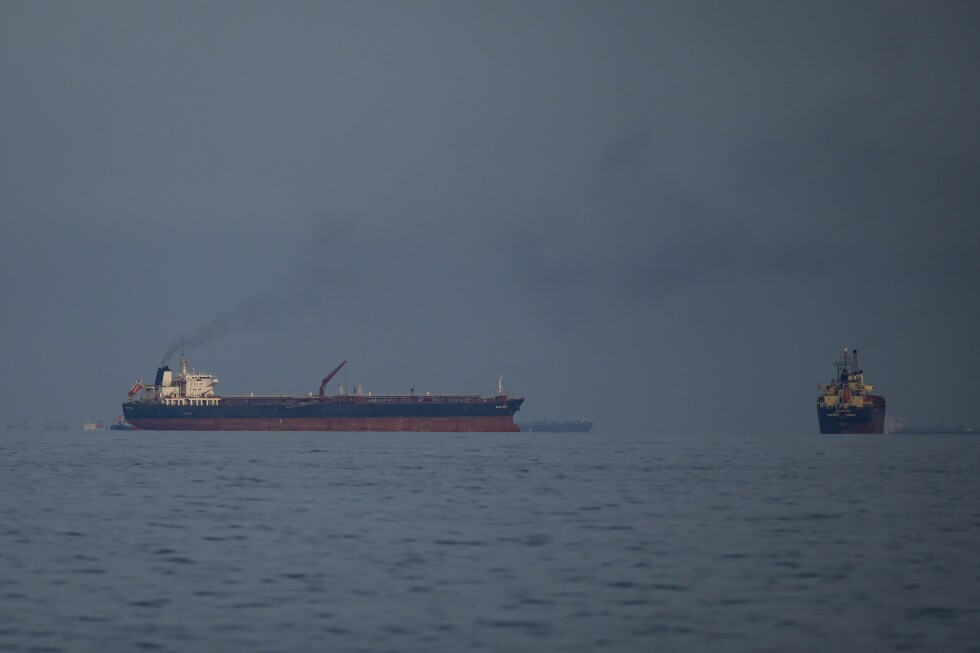
    Multiple commercial vessels navigating the strategic Strait of Hormuz and Persian Gulf waters have begun broadcasting ‘China-linked’ identification signals since the escalation of regional hostilities, according to marine traffic analysis. Shipping data reveals at least eight vessels have modified their destination transponders to display messages including ‘CHINA OWNER’ and ‘CHINA OWNER&CREW’ while traversing these conflict-prone waterways.

    Maritime security experts indicate this emerging practice represents a calculated risk-mitigation strategy rather than a navigational requirement. Ana Subasic, trade risk analyst at data analytics firm Kpler, emphasized that ‘the primary objective of vessels publicly identifying themselves as Chinese during Gulf transits is risk reduction rather than facilitating strait passage.’

    The tactical signaling appears rooted in Iran’s established pattern of avoiding confrontation with Chinese-affiliated entities, reflecting Beijing’s neutral diplomatic stance and substantial economic ties with Tehran. Kun Cao, client director at consulting firm Reddal, characterized the messages as essentially stating: ‘Do not mistake me for the kind of ship you said you would hit.’

    This development occurs against a backdrop of heightened maritime insecurity, with at least 19 commercial vessels damaged in regional hostilities according to recent counts. Notably, most vessels adopting Chinese identifiers were not China-flagged, instead sailing under registrations including Panama and the Marshall Islands—a common practice in global shipping where flags often don’t reflect ownership nationality.

    The effectiveness of this self-declaration strategy remains uncertain despite its growing adoption. Rico Luman, ING senior economist specializing in transport logistics, noted that while many bulk carriers maintain genuine Chinese ownership, operational, and cargo connections, the protective value of such declarations is unproven.

    Technically, destination signals represent manually entered transponder messages typically used for navigational safety and port planning. Subasic explained that as these signals lack real-time verification, vessels occasionally repurpose them to broadcast ownership or nationality information—a practice previously observed during Houthi attacks in the Red Sea when ships similarly emphasized Chinese affiliations to deter Iranian-backed forces.

  • War in Iran squeezing China’s oil lifeline

    War in Iran squeezing China’s oil lifeline

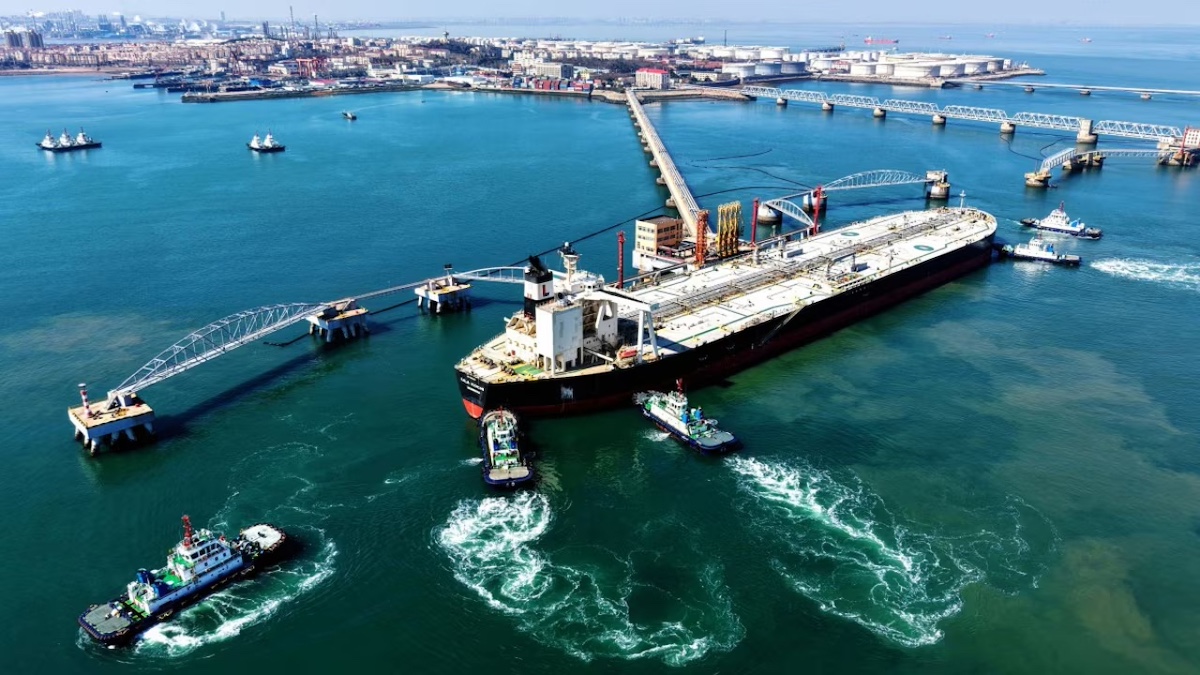
    China’s energy security framework faces its most significant challenge in 2026 as geopolitical disruptions threaten global oil markets. The detention of Venezuelan leader Nicolás Maduro in January, followed by coordinated US-Israeli military operations against Iran beginning in late February, has severely impacted two crucial sources of China’s oil imports.

    The escalating Middle Eastern conflict has damaged critical energy infrastructure, causing oil prices to surge above $100 per barrel when markets opened on March 9. Although prices subsequently retreated from this peak, they remain substantially elevated from the $60 baseline recorded at the beginning of the year.

    Despite assertions from US President Donald Trump predicting a swift resolution, the crisis shows no signs of abatement. Attacks have targeted Iranian oil facilities and those of US-aligned Gulf States, while tanker traffic through the strategically vital Strait of Hormuz—a critical global oil artery—has experienced significant reduction. Approximately one-fifth of global oil trade normally transits this waterway, and its current vulnerability has prompted numerous nations to implement emergency measures addressing the energy shortage.

    For China, the world’s largest energy consumer accounting for 27% of global energy consumption in 2024, these developments present particular concerns. The nation’s technologically advanced, expanding economy and population exceeding 1.4 billion require immense energy resources to sustain growth. China’s electricity usage in 2025 more than doubled that of the United States, while Iran alone provides 13% of China’s crude oil imports, with Venezuela supplying an additional 4%.

    China maintains strategic petroleum reserves estimated to provide approximately 120 days of supply, slightly less than the US Strategic Petroleum Reserve established following the 1970s Arab oil embargo. The International Energy Agency member nations decided on March 11 to release stockpiled oil to address acute market disruptions caused by the conflict.

    China’s vulnerability stems from its substantial external dependence, importing roughly 70% of its oil primarily via maritime routes. According to the Georgetown Journal of International Affairs, 90% of Chinese trade and 80% of oil imports travel by sea, highlighting the strategic significance of securing vital ‘sea lines of communication’ often discussed as the ‘Malacca Dilemma.’

    Chinese strategists frequently note that critical maritime chokepoints including the Strait of Malacca, Strait of Hormuz, and Suez and Panama canals handle 60-80% of China’s imported oil and liquefied natural gas. Qatar’s shutdown of several gas facilities has eliminated 20% of global LNG exports, particularly impactful for China, the world’s largest LNG importer that sourced approximately one-quarter of its LNG from Qatar in 2025.

    Russia emerges as a crucial alternative supplier insulated from maritime disruptions, with energy infrastructure connecting the two nations across their vast land border. Moscow’s increased dependence on Chinese markets following Western sanctions related to the Ukraine war has strengthened Beijing’s bargaining position in energy negotiations.

    China’s demographic trends, including population decline since 2022, are expected to reduce energy demand over the next decade, potentially bringing peak oil consumption before 2030. Domestically, coal continues to provide approximately 60% of China’s energy consumption and electricity generation, offering important energy security despite environmental costs.

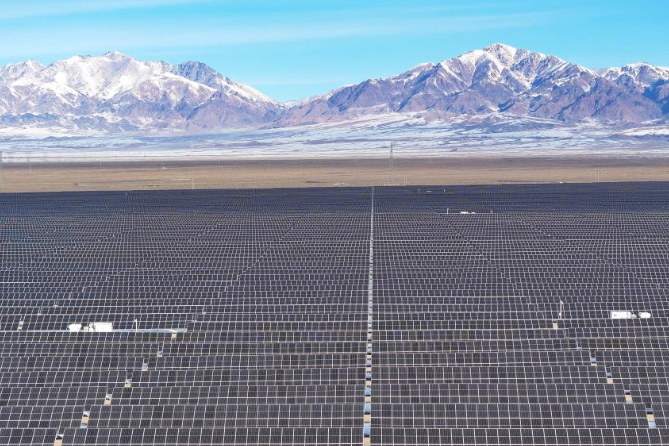
    Substantial investments in renewable energy have improved China’s position, with the nation now manufacturing 60% of global wind turbines and 80% of solar panels according to Yale School of Environment data. Electric vehicle adoption continues to accelerate, with EVs outselling conventional cars in China since 2025, reducing transportation sector oil consumption.

    Despite these advances, fossil fuels will remain essential for decades according to China National Petroleum Corporation research, particularly for petrochemicals and heavy industry. Unlike the Soviet Union during the Cold War, China’s reliance on imported fuel and limited power projection capabilities leave it vulnerable as it positions itself as a geopolitical rival to the US.

    Beijing is expanding military capabilities to protect energy routes, increasing naval presence in the Indian Ocean and Gulf region while modernizing its fleet with plans to operate six additional aircraft carriers by 2035. China also holds significant leverage in critical minerals, controlling substantial global processing capacity for rare earths, lithium, and gallium essential for batteries, solar panels, and advanced electronics.

    The ongoing conflict will keep Chinese planners alert as energy shocks ripple through the global economy. China’s combination of massive demand, foreign supply reliance, and ambitious geopolitical goals makes it particularly sensitive to current disruptions. How effectively Beijing manages this crisis could shape regional and global calculations regarding China’s strategic position and resilience.

  • Macao establishes 4 state key laboratories: national political adviser

    Macao establishes 4 state key laboratories: national political adviser

    Macao has significantly advanced its scientific capabilities with the establishment of four state key laboratories, marking a transformative development in the special administrative region’s research landscape. The newly inaugurated facilities specialize in cutting-edge domains including traditional Chinese medicine, microelectronics, smart-city Internet of Things, and lunar and planetary sciences.

    Chen Ji-min, vice-chairperson of the council of Macao University of Science and Technology and a national political adviser, revealed these developments during the fourth session of the 14th National Committee of the Chinese People’s Political Consultative Conference in Beijing. According to Chen, these laboratories represent a strategic investment in Macao’s research infrastructure that has already yielded substantial returns in talent development and international collaboration.

    Since Macao’s return to Chinese sovereignty in 1999, the region has dramatically prioritized scientific research and technological innovation within its higher education system. This commitment is reflected in staggering growth metrics: university enrollment has skyrocketed from 8,000 to over 62,000 students, while research staff has expanded from merely 13 to 1,773 professionals—representing a 136-fold increase. Currently, more than 9,000 undergraduate and postgraduate students are pursuing science and technology disciplines.

    ‘The convergence of academic institutions and state key laboratories, coupled with participation in major national initiatives, has enabled Macao to cultivate a new generation of young scientists while attracting world-renowned researchers to the Guangdong-Hong Kong-Macao Greater Bay Area,’ Chen stated. She further emphasized that ‘Macao is positioning itself as an international hub for elite talent that aggregates global expertise and bridges domestic and international collaborative innovation.’

  • Metronome and navigator: How China’s five-year plans steer unprecedented modernization

    Metronome and navigator: How China’s five-year plans steer unprecedented modernization

    BEIJING – From an agrarian society with negligible industrial capacity in 1953 to an emerging spacefaring nation by 2030, China’s transformative journey has been orchestrated through a unique governance mechanism: the Five-Year Plan system. As the 15th iteration (2026-2030) takes shape during China’s annual legislative sessions, this strategic framework continues to steer the world’s most ambitious modernization project.

    The fundamental question underlying these blueprints is how a nation sustains developmental progress across generations on a scale never before attempted. The answer lies in what experts describe as a “cascading architecture” of governance – where overarching national strategies translate into sector-specific and regional implementations, creating synchronized progress toward common objectives.

    Unlike conventional growth models focused solely on economic metrics, China’s 15th Five-Year Plan demonstrates multidimensional development priorities. While maintaining economic expansion within an “appropriate range” (with 2026 targets set at 4.5-5%), the plan emphasizes qualitative transformation across strategic sectors including artificial intelligence, quantum technology, nuclear fusion, and 6G communications. Notably, over one-third of key indicators address quality-of-life improvements, including raising average life expectancy to 80 years.

    Three visual metaphors in the policy document encapsulate China’s modernization ethos: pristine ecological landscapes, rich cultural heritage preservation, and clean energy transformation. Together, they represent a development paradigm prioritizing shared prosperity over polarization, material and cultural advancement over lopsided growth, and ecological harmony over environmental degradation.

    The institutional continuity of this planning system distinguishes China’s approach from other nations. “China is not the first country to formulate five-year plans, but it is the only one to have sustained the practice and achieved the twin miracles of rapid economic development and long-term social stability,” noted Yang Yongheng, director of Tsinghua University’s China Institute for Development Planning.

    For global investors, these plans provide unprecedented predictability amid mounting international uncertainties. Business leaders describe the system as both “metronome” and “navigator” – translating long-term vision into phased implementation while signaling future economic directions. “The five-year plan transforms investment decisions from probabilistic bets to calculated strategic positioning,” observed Simon Smith of Taikoo Engine Services.

    Multinational corporations have learned to synchronize their China strategies with this planning rhythm. “It provides a consistent cadence for synchronizing priorities between our global headquarters and China organization,” explained Liliana Lucioni, President of Coach China.

    The current plan’s emphasis on emerging industries is already reshaping global investment perspectives. “Chinese assets are no longer just a portfolio option. They are a strategic must-have,” stated Janice Hu of UBS Securities, noting dynamic innovation in AI, semiconductors, and renewable energy that is transforming international perceptions of Chinese technological capabilities.

  • China’s new five-year plan charts world’s largest modernization by population

    China’s new five-year plan charts world’s largest modernization by population

    China has embarked on an unprecedented modernization campaign targeting its entire population of 1.4 billion people, as outlined in the draft 15th Five-Year Plan (2026-2030) currently under review during the national legislative session. This ambitious blueprint represents the largest-scale modernization effort in human history, aiming to fundamentally transform the world’s most populous nation by 2035.

    The comprehensive plan sets forth concrete economic targets, including doubling the 2020 per capita GDP to exceed $20,000—a benchmark for moderately developed nations. Beyond economic metrics, the vision encompasses strengthening China’s scientific technological capabilities, national defense systems, composite national strength, and global influence while enhancing living standards and happiness for its citizens.

    Demographic challenges present significant hurdles, with China’s massive population base creating resource constraints that place per capita arable land, water resources, and crude oil holdings substantially below global averages. Additionally, declining birth rates and rapid population aging compound the complexity of this modernization endeavor.

    The strategy emphasizes high-quality development centered on innovation, coordination, green development, openness, and shared growth. Specific targets include increasing R&D spending by over 7% annually, raising the digital economy’s contribution to 12.5% of GDP, reducing carbon intensity by 17% from 2025 levels, and achieving 25% non-fossil fuel energy consumption by 2030.

    Social development objectives feature raising average life expectancy to 80 years, increasing practicing physicians to 3.7 per 1,000 people, and improving permanent urbanization rates to 71%. The plan also addresses food security through targeted grain production capacity of 725 million tonnes and urban renewal programs to enhance housing conditions.

    Experts note that China’s distinctive approach rejects Western modernization paradigms in favor of tailored policies addressing unique national conditions. The massive population, while presenting challenges, also offers advantages including an enormous talent pool, abundant technology application scenarios, and a vibrant domestic market that can foster balanced trade and coordinated development.

    Internationally, China’s successful modernization would more than double the proportion of humanity achieving developed status—from approximately one-seventh to one-third of the global population. The expansion of China’s middle-income group and super-large domestic market is expected to generate sustained momentum for the global economy, with foreign companies already signaling strong commitment to the Chinese market.

    For developing nations, China’s modernization path offers an alternative development model demonstrating that progress need not follow a single template, but can instead adapt to specific national conditions, priorities, and developmental stages.

  • Conflicts push up fuel costs in Australia

    Conflicts push up fuel costs in Australia

    Escalating military tensions in the Middle East are generating significant economic headwinds for Australia, with analysts warning of sustained pressure on consumer prices and broader economic stability through disrupted global supply chains.

    Economic experts indicate that joint US-Israeli military operations against Iran and subsequent regional instability are creating ripple effects that will impact the Australian economy through multiple channels. While Australia sources most refined fuel from Asian refineries, the global nature of oil pricing means domestic consumers remain vulnerable to international price fluctuations.

    Harry Murphy Cruise, Head of Economic Research and Global Trade at Oxford Economics Australia, explained: “The primary transmission mechanism is undoubtedly petroleum products. Even crude processed in Asian facilities often originates from the Gulf region, leaving Australian motorists exposed to price spikes that could exacerbate existing inflationary pressures.”

    Current data reveals concerning trends at fuel stations nationwide. New South Wales government monitoring indicates premium 95 gasoline reached A$2.29 per liter across NSW and the Australian Capital Territory this week, substantially higher than the A$2.12 recorded on March 4.

    The economic implications extend beyond pump prices. Commonwealth Bank analysis confirms automotive fuel price volatility significantly influences Australia’s Consumer Price Index, the primary inflation gauge. Higher transportation costs potentially create a dual impact: directly elevating certain prices while simultaneously reducing household disposable income for other expenditures.

    Shane Oliver, Chief Economist at AMP Financial Services, quantified the relationship: “Roughly each $1 per barrel increase in oil prices translates to approximately one cent per liter increase at Australian petrol stations. These increases impart a dampening effect on economic growth by forcing household budget adjustments.”

    In response to growing consumer concerns, the Australian Competition and Consumer Commission (ACCC) has intensified market surveillance. Commissioner Anna Brakey issued explicit warnings to fuel retailers: “Making false or misleading statements regarding price increases would violate Australian Consumer Law. We’ve communicated expectations to major fuel companies regarding pricing practices during these international developments.”

    Despite these challenges, Australia maintains certain economic buffers. Prime Minister Anthony Albanese noted the nation’s strengthened position with “the largest fuel reserves in 15 years,” while Cruise highlighted potential benefits for Australia’s liquefied natural gas export sector from elevated global gas prices.

  • China Coast Guard vessel Sandu conducts patrols in South China Sea

    China Coast Guard vessel Sandu conducts patrols in South China Sea

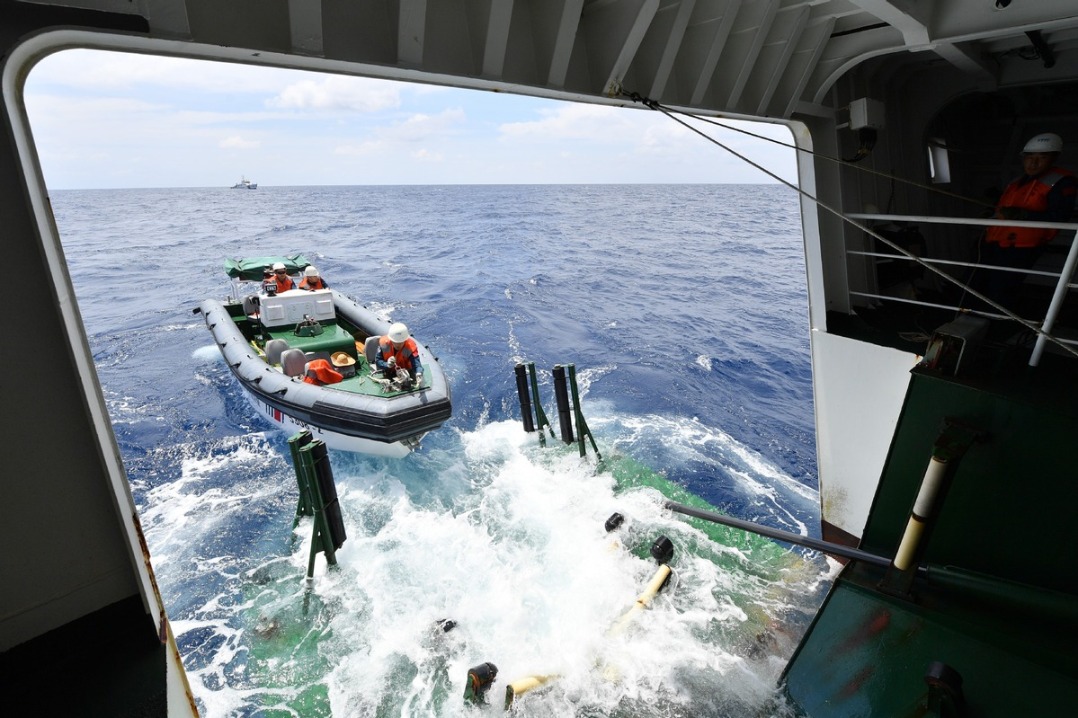
    The China Coast Guard vessel Sandu has executed strategic patrol operations throughout the South China Sea, reinforcing Beijing’s maritime claims in the contested region. According to official reports from March 12, 2026, the patrols represent China’s ongoing commitment to protecting what it considers its sovereign territories and maritime interests.

    The Sandu, a key asset in China’s maritime enforcement fleet, conducted comprehensive formation collaboration training during these missions. Photographic evidence released by state media depicts law enforcement personnel actively engaged in operational exercises aboard the vessel on February 28, 2026, demonstrating China’s continued investment in maritime security capabilities.

    These patrols occur against the backdrop of persistent territorial disputes in the South China Sea, where multiple nations maintain overlapping claims. China’s coast guard operations have increasingly become the primary instrument for asserting Beijing’s claims in these strategically vital waterways, through which trillions in global trade passes annually.

    The deployment reflects China’s broader strategy of maintaining a constant presence in disputed areas, employing coast guard vessels rather than military ships to assert claims while minimizing overt military escalation. This approach has become a hallmark of China’s maritime strategy under President Xi Jinping’s administration.

    Analysts note that such patrols serve both practical enforcement purposes and symbolic functions, demonstrating China’s capability to maintain continuous operations far from its mainland shores. The South China Sea remains one of Asia’s most potential flashpoints, with competing claims involving Vietnam, the Philippines, Malaysia, Brunei, and Taiwan.

  • China’s green push a boost for Asia-Pacific

    China’s green push a boost for Asia-Pacific

    China’s ambitious decarbonization strategy is positioned to significantly influence energy transformation pathways across the Asia-Pacific region, according to energy analysts and regional experts. The comprehensive green development blueprint, formally presented in China’s government work report during the March 5 legislative session, establishes aggressive environmental targets including a 17 percent reduction in carbon intensity between 2026 and 2030.

    The policy framework outlines multi-faceted approaches to sustainable development, including the establishment of zero-carbon industrial complexes, creation of a national low-carbon transition fund, and strategic promotion of emerging green technologies including hydrogen power and sustainable fuel alternatives. The plan simultaneously implements stringent regulatory controls on high-emission industrial projects while accelerating nationwide green transition initiatives.

    Energy specialists highlight that China’s scale and manufacturing capabilities create unique demonstration value for developing economies throughout Asia. Yang Muyi, senior analyst at global energy think tank Ember, notes that “China’s transition can act as a ladder for progress across the Asia-Pacific, especially for developing economies” by demonstrating how to balance rapid systemic change with energy security requirements.

    The decarbonization agenda aligns strategically with recently upgraded regional trade frameworks. Peter TC Chang, formerly of the University of Malaya’s Institute of China Studies, observes that China’s 15th Five-Year Plan coordinates with the enhanced China-ASEAN Free Trade Agreement (CAFTA 3.0), which expanded cooperation into nine sectors including green economy initiatives during the October 2025 summit in Malaysia.

    This policy synchronization creates substantial opportunities for renewable energy collaboration, carbon trading mechanisms, and circular economy development between China and ASEAN members. Countries including Indonesia, Malaysia and Vietnam—with their considerable renewable resources and manufacturing capabilities—are particularly well-positioned to integrate into China’s expanding green value chains.

    Financial commitments underscore China’s leadership position in clean energy investment, with Ember reporting $625 billion allocated to renewable technologies in 2024 alone—the highest global investment volume. Chinese manufacturers currently produce approximately 60 percent of global wind turbines and 80 percent of solar panels, creating what analysts term a “ladder of affordability” that reduces clean technology costs for developing Asian economies.

    The urgency of energy transition has been amplified by geopolitical instability and fossil fuel price volatility, according to Joanna Santa Isabel, Asia network coordinator for environmental organization 350.org. She emphasizes that shifting toward affordable renewable alternatives has evolved from optional strategy to fundamental necessity, driven equally by climate imperatives and economic practicality.