标签: Asia

亚洲

  • Shandong sees sustained progress in afforestation and urban greening

    Shandong sees sustained progress in afforestation and urban greening

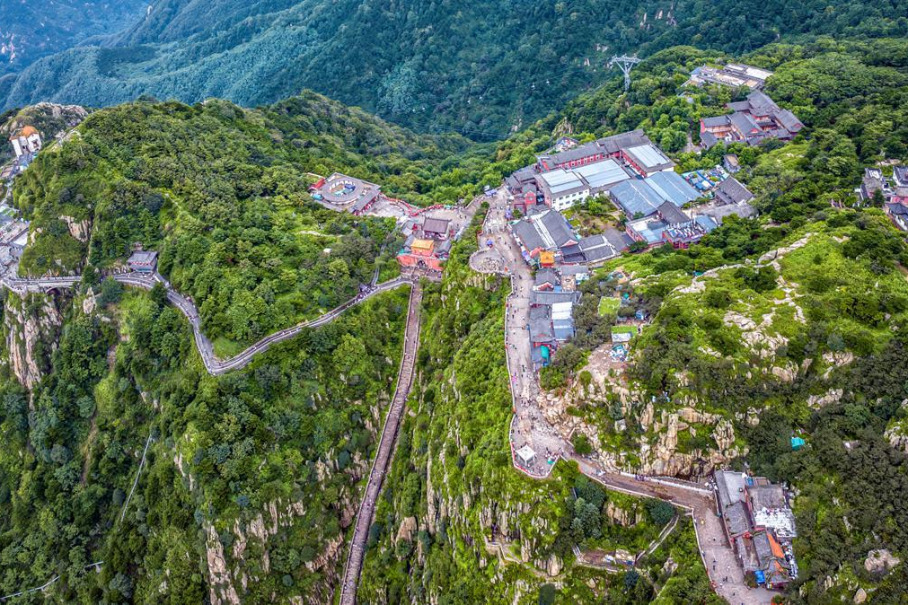
    As China commemorated its 48th National Tree Planting Day on March 12, 2026, Shandong Province unveiled remarkable achievements in its comprehensive environmental conservation programs. Under the leadership of Zhao Xiaohui, Director of the Shandong Provincial Department of Natural Resources, the eastern Chinese province has demonstrated significant progress in expanding forest coverage and integrating ecological considerations into urban development strategies.

    According to official statistics released during a press conference, Shandong’s forested areas now encompass approximately 3 million hectares, with national and provincial-level public welfare forests constituting roughly 25% of this total. The province has established nine specialized national forest tree breeding centers dedicated to sustainable forestry practices, with particular emphasis on cultivating key species including poplar, black locust, and black pine varieties.

    A distinctive characteristic of Shandong’s environmental approach involves the seamless incorporation of green space expansion within urban planning frameworks. Since the initiation of the 14th Five-Year Plan period (2021-2025), provincial authorities have created more than 450 major urban parks and established over 3,900 kilometers of interconnected urban greenways. These developments have elevated per capita park green space to 18.66 square meters, significantly enhancing urban livability standards.

    Beyond ecological improvements, Shandong’s forestry initiatives have generated substantial economic benefits for local communities. The programs have facilitated the cultivation of high-value traditional crops including chestnuts and persimmons across various regions. These agricultural activities are increasingly combined with forest wellness tourism and ecotourism ventures, creating diversified income streams for rural populations.

    The province has developed numerous nationally recognized geographical indication products, including Yantai apples, Laiyang pears, Zhanhua winter jujubes, Pingyin roses, and Heze peonies. Additionally, Shandong has established four national-level forest wellness bases, further strengthening the integration of ecological conservation with economic development.

    Director Zhao emphasized that emerging sectors combining environmental protection with agricultural and tourism activities have experienced continuous expansion in both operational scale and financial returns. The province has simultaneously maintained stable forest coverage rates while progressively reducing areas affected by desertification and sandy land degradation, demonstrating the effectiveness of its comprehensive environmental management strategies.
  • Sichuan’s peach, plum blossom festival drives rural income growth

    Sichuan’s peach, plum blossom festival drives rural income growth

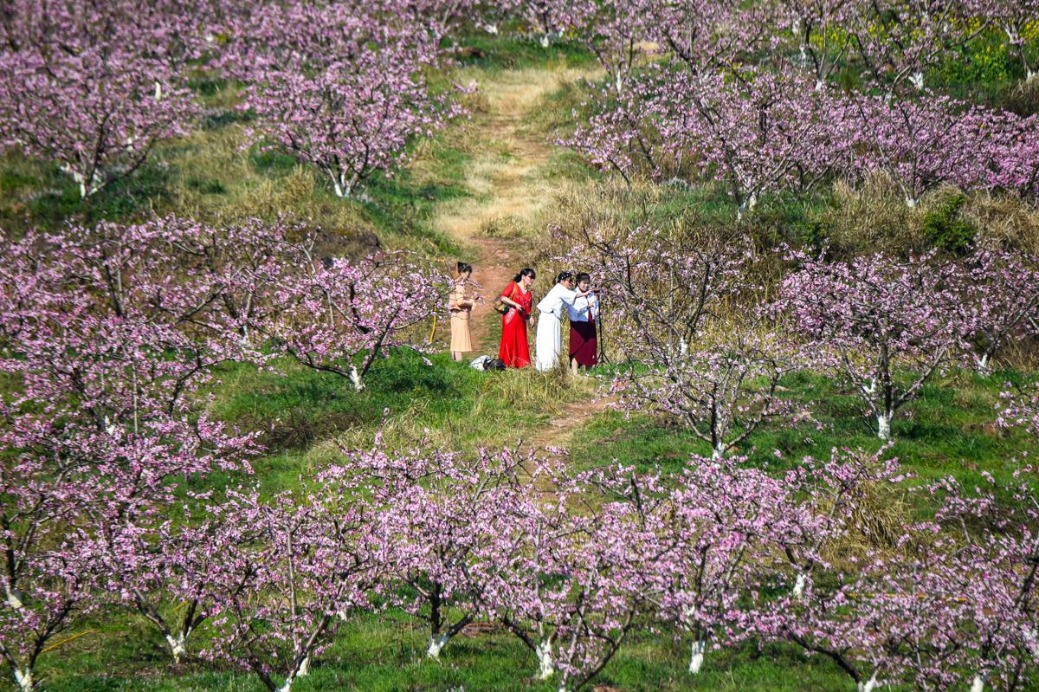
    The hillsides of Xinyuan township in Peng’an county, Sichuan province, have transformed into a vibrant tapestry of peach and plum blossoms, signaling not just the arrival of spring but a remarkable economic revival for local communities. The inaugural day of the 16-day Peach and Plum Blossom Festival on Tuesday attracted substantial visitor numbers, creating new pathways for rural income generation and regional development.

    Against the backdrop of warming spring temperatures, the festival offers visitors a multifaceted experience combining natural beauty with cultural immersion. Attendees can wander through picturesque flower-lined pathways, capture the breathtaking spring scenery through photography, sample authentic local cuisine, and purchase freshly harvested agricultural products directly from farmers.

    This year’s edition introduces innovative digital components including an online photography competition, a dedicated Douyin (China’s TikTok equivalent) hashtag challenge, and live-streamed virtual tours conducted by social media influencers. These technological integrations represent a strategic enhancement to the festival’s traditional offerings, simultaneously boosting its cultural appeal while expanding the commercial reach of local agricultural products.

    The blossom-themed economy has emerged as a significant driver of rural vitalization in the region, demonstrating how agricultural tourism can effectively supplement farmers’ incomes while promoting regional specialty products. The festival model successfully merges ecological beauty with economic opportunity, creating sustainable development patterns that extend beyond traditional farming activities.

    Local authorities have positioned the event as a cornerstone of their rural development strategy, leveraging the region’s natural assets to create lasting economic benefits. The combination of physical tourism and digital engagement strategies represents a comprehensive approach to rural development in the digital age, potentially serving as a replicable model for other agricultural regions across China.

  • China to speed up revisions of food safety standards

    China to speed up revisions of food safety standards

    China is embarking on a comprehensive revision of its national food safety standards, prioritizing premade dishes, pesticide residue testing, and cold-chain transportation protocols. The State Council’s Food Safety Office announced this accelerated regulatory modernization effort on March 12, 2026, as part of a broader update to the country’s food safety legislation.

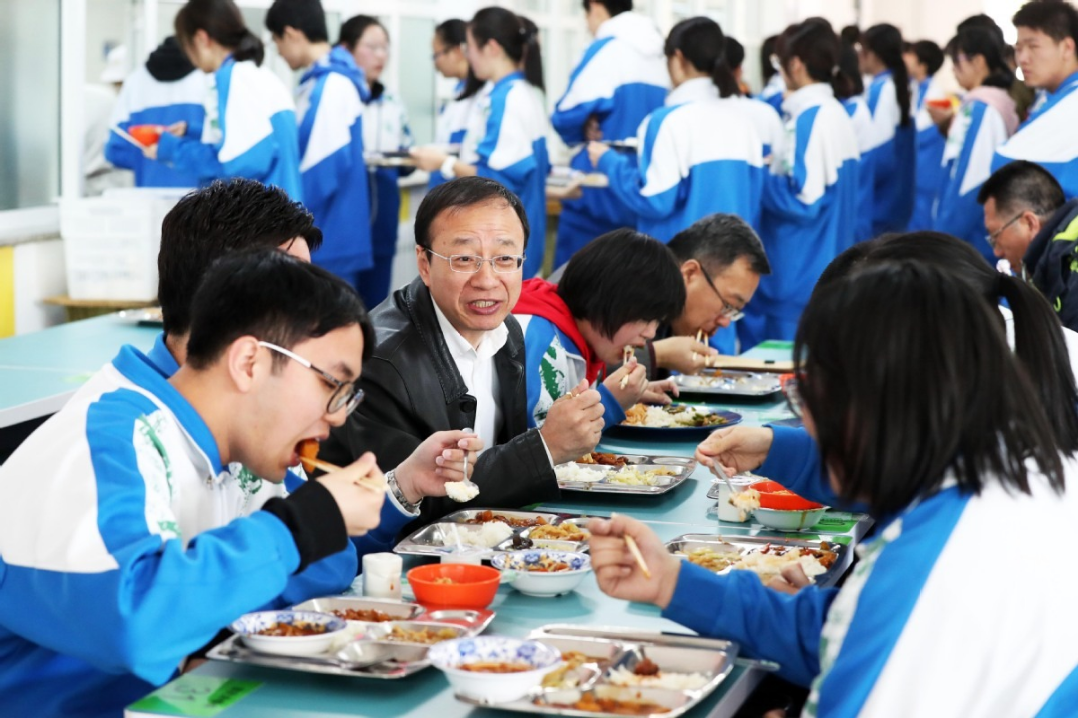
    The initiative establishes enhanced cross-departmental coordination mechanisms to facilitate joint inspections and enforcement operations. Key focus areas include school cafeteria safety, food delivery service compliance, and preventing unauthorized food additive usage. The office will implement both regular and targeted crackdowns to address persistent public concerns regarding food safety violations.

    Regulatory scrutiny will intensify across critical sectors including agricultural production, storage logistics, e-commerce food sales, and import controls. Authorities will enforce a zero-tolerance policy toward violations, applying stringent penalties for non-compliance. This approach aims to create robust regulatory frameworks grounded in comprehensively updated safety standards.

    Addressing particular concerns about school nutrition, the program will expand technological integration through kitchen livestreaming systems to increase transparency in food preparation areas. Additional measures include strengthening collective procurement systems for school food supplies and implementing regular joint inspections to prevent substandard ingredients from entering educational institutions.

    The regulatory enhancement strategy also involves improving inspection precision and proactively identifying potential risks before they escalate into public health concerns. This preemptive approach represents a shift toward more sophisticated food safety management systems.

    This initiative follows the National Health Commission’s February release of draft national standards specifically addressing the rapidly expanding premade food industry, indicating coordinated efforts across government agencies to modernize China’s food safety ecosystem.

  • NPC deputy calls for national policy to integrate sports and tourism

    NPC deputy calls for national policy to integrate sports and tourism

    Li Chu, Party Secretary of Guilin and deputy to China’s 14th National People’s Congress, has formally advocated for enhanced national policies to accelerate the integrated development of sports, tourism, and rural revitalization initiatives. The proposal draws upon Guilin’s demonstrated success in leveraging its distinctive karst topography to create a synergistic model combining athletic activities with tourism infrastructure.

    Speaking at the ongoing NPC sessions, Deputy Li highlighted how Guangxi’s premier tourist destination has strategically positioned sports as a central catalyst for comprehensive development. The city has constructed over 14,000 specialized sports facilities while innovatively transforming its natural landscapes into competition venues and recreational spaces.

    The integrated approach generates substantial economic benefits through approximately 400 annual public participation events and nearly 30 major international competitions biennially. This sports-tourism nexus has effectively connected urban attractions with countryside resources, stimulating growth in rural homestays, agricultural product sales, and local service industries.

    Li’s policy recommendations include issuing national-level implementation guidelines, establishing dedicated funding mechanisms for outdoor sports infrastructure, and streamlining land use approval processes. These measures would enable regions with comparable geographical advantages to pursue differentiated development strategies while supporting national rural revitalization objectives.

  • Ancient observatory in Xizang marks spring sowing season with rituals

    Ancient observatory in Xizang marks spring sowing season with rituals

    In the highlands of Tibet, an ancient astronomical tradition marking the agricultural new year resumed with ceremonial grandeur at the historic Dakpo Observatory in Maldrogungkar county. On Thursday, corresponding to the 21st day of the first Tibetan month, local farmers and herders gathered at this centuries-old site to witness the precise celestial alignment that traditionally inaugurates the spring sowing season.

    Dressed in vibrant traditional attire, participants brought ritual offerings including butter tea and chemar—a ceremonial vessel filled with grains symbolizing prosperity and abundance. The pivotal moment occurred as the first beam of sunlight penetrated through a specially designed aperture in the observatory structure, striking a calibrated measuring stone with exact precision. This photometric event, meticulously calculated through ancestral astronomical knowledge, serves as Tibet’s official natural signal for initiating spring planting and irrigation activities across the region’s central agricultural zones.

    Dorje, assistant researcher at the Xizang Institute of Astronomy and Calendrical Calculation and secretary-general of the Xizang Astronomy and Calendar Society, emphasized the site’s unique cultural significance. “The Dakpo platform represents the only operational astronomy observatory of its kind in the region, maintaining an uninterrupted 300-year legacy,” he stated. “It functions as a comprehensive system integrating celestial observation, mathematical calculation, and temporal guidance—a cornerstone of Tibet’s distinctive astronomical traditions.”

    Beyond its agricultural scheduling function, the observatory’s sophisticated methodology enables calculation of solar terms, seasonal pattern monitoring, and even weather prediction capabilities. The ritual celebration incorporated educational components including scientific lectures, cultural performances, and community services such as free medical consultations, blending ancient wisdom with contemporary community engagement. This enduring practice demonstrates the sophisticated integration of astronomical science with agricultural practicality, preserving a living cultural heritage that continues to guide Tibet’s farming communities in harmonious synchronization with natural cycles.

  • Rapper-politician Balendra Shah’s party wins Nepal election

    Rapper-politician Balendra Shah’s party wins Nepal election

    Nepal’s political landscape has undergone a dramatic transformation with the Rastriya Swatantra Party (RSP) achieving an unprecedented electoral victory that positions 35-year-old rapper-turned-politician Balendra Shah to become the country’s next prime minister.

    The recently concluded parliamentary elections, the first since youth-led protests toppled the previous government in 2022, resulted in the RSP securing 182 seats in the lower house. While falling just two seats short of a supermajority, this represents the most substantial mandate for any single party in Nepal in decades. The established political forces—Nepali Congress with 38 seats and Communist Party of Nepal UML with 25—trailed significantly behind the newcomer party.

    This electoral outcome is particularly remarkable given Nepal’s mixed political system, which combines first-past-the-post and proportional representation methodologies specifically designed to prevent single-party dominance. The RSP’s ascent is nothing short of extraordinary for a party founded merely in 2022, when it placed fourth in that year’s election.

    Shah, whose political experience is limited to his current role as Kathmandu mayor, represents a seismic shift in Nepalese politics. His victory was underscored by a decisive win against former Prime Minister KP Sharma Oli in the Jhapa 5 constituency, traditionally considered Oli’s stronghold. In another symbolic defeat, Gagan Thapa, leader of the historically dominant Nepali Congress, lost his seat to an RSP candidate.

    The election, which saw approximately 60% turnout among Nepal’s 19 million eligible voters, reflects widespread demand for change following last year’s protests that began against social media restrictions but escalated into broader demonstrations against political stagnation, unemployment, economic inequality, and nepotism. Tragically, 77 protesters died during the unrest, with a BBC investigation revealing that police were authorized to use lethal force against unarmed demonstrators.

    Government formation is expected to take at least one week as the RSP navigates coalition building, marking the beginning of a new political era in Nepal led by a generation demanding substantive reform.

  • International passenger train service links China, DPRK

    International passenger train service links China, DPRK

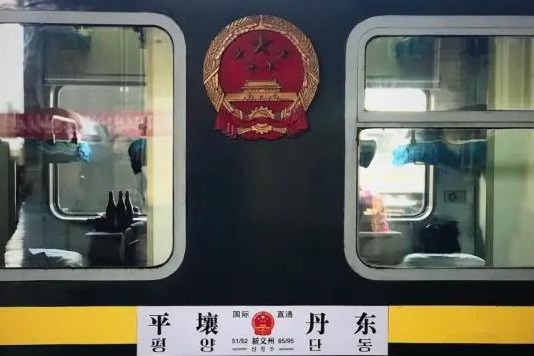
    A new chapter in Sino-Korean transportation commenced on Thursday as international passenger rail service officially resumed between Dandong, China and Pyongyang, North Korea. The inaugural departure marked a significant milestone in cross-border connectivity between the neighboring nations.

    The five-carriage train embarked on its maiden journey at 10:00 AM Beijing Time from the border city of Dandong, with scheduled arrival in the North Korean capital at 6:07 PM local time. The service establishes a reliable daily transportation link, with return trips from Pyongyang departing at 10:26 AM local time and reaching Dandong by 4:23 PM Beijing Time.

    Dandong Railway Station has undergone comprehensive preparations to accommodate international travelers. The facility now features bilingual displays in both Korean and Chinese throughout the international departure hall, including train schedules, electronic information screens, and service counters.

    Passenger excitement was palpable during the inaugural run. One North Korean traveler expressed enthusiasm about returning home via rail, having purchased her ticket immediately upon learning about the resumed service the previous day.

    Border authorities implemented streamlined procedures to ensure efficient operations. Song Ping, a representative from Dandong Exit-Entry Frontier Inspection Station, confirmed that specialized measures have reduced the entire train’s inspection process to under 30 minutes, significantly enhancing travel convenience.

    An executive from China State Railway Group’s international department emphasized the service’s broader significance, noting that this railway connection will function as both a crucial transit corridor for cross-border movement and a symbolic bridge reinforcing bilateral relations between China and North Korea.

  • China plans 2026 pioneer satellite launch for low-latitude remote sensing constellation

    China plans 2026 pioneer satellite launch for low-latitude remote sensing constellation

    China is advancing its space technology capabilities with the development of the Wuyang Constellation, the nation’s first integrated remote sensing and communication satellite network specifically designed for low-latitude regions. According to the Institute of Aerospace Remote Sensing Innovations at Guangzhou University, the project will initiate its preliminary phase with the deployment of three pioneer satellites around 2026, with the inaugural launch scheduled for this year to test critical technologies and operational frameworks.

    The ambitious initiative, a collaborative effort between Guangzhou University, the Guangzhou Municipal People’s Government, and the State Information Center, targets comprehensive coverage between 35 degrees north and south latitude. This strategic positioning aligns with China’s Greater Bay Area development objectives while serving regions including Southeast Asia, Africa, and South America.

    Between 2026 and 2028, developers plan to expand the constellation with 25 application satellites capable of delivering daily full coverage of low-latitude zones with emergency response times under 30 minutes. The project’s ultimate vision involves establishing a commercial network of 1,008 satellites by approximately 2035, creating a real-time remote sensing system for global low-latitude monitoring.

    Professor Gu Xingfa, Chairman of the Chinese National Committee for Remote Sensing, revealed that the Wuyang Constellation will feature advanced high-resolution, wide-swath full-spectrum payloads. This technological sophistication will enable the creation of a ‘material fingerprint’ spectral database, essentially upgrading remote sensing capabilities from basic imagery to sophisticated physical measurement and analysis.

    The constellation’s deployment will occur in phases, gradually covering 15 southern Chinese provinces and 99 low-latitude countries and territories worldwide. The system promises to deliver ‘sense-while-you-send, use-while-you-get’ intelligent services specifically designed for disaster prevention, ecological monitoring, agricultural management, and resource conservation.

    Commercial participation is already underway, with over 20 core enterprises signing agreements to contribute to satellite development and data services. The project has established a dedicated commercial space innovation center to integrate research, incubation, application development, and investment opportunities. By 2030, organizers anticipate achieving more than 95% real-time remote sensing coverage in target regions while stimulating industrial investment exceeding 10 billion yuan (approximately $1.45 billion).

  • China’s forest, grass coverage rate surpasses 56%: report

    China’s forest, grass coverage rate surpasses 56%: report

    China has achieved a remarkable environmental milestone with its combined forest and grassland coverage rate now exceeding 56%, according to an official report released by the National Greening Commission on March 12, 2026. The announcement coincided with the country’s 48th National Tree Planting Day, highlighting decades of sustained afforestation efforts.

    The comprehensive report reveals that China’s ambitious greening initiatives resulted in the planting of over 3.56 million hectares of new forests during 2025 alone. Simultaneously, the nation successfully restored approximately 4.93 million hectares of degraded grassland, demonstrating a balanced approach to ecosystem rehabilitation.

    Detailed metrics show China’s forest coverage rate has reached 25.09%, with total forest stock volume climbing to nearly 20.99 billion cubic meters. These ecological achievements have translated into significant economic benefits, with the forestry and grassland industry generating an output value approaching 11 trillion yuan (approximately $1.6 trillion) last year.

    The environmental revival has also fueled a surge in ecotourism, which recorded more than 3 billion visitor trips throughout 2025. This substantial public engagement with natural areas underscores the growing appreciation for China’s restored landscapes and biodiversity.

    These findings emerge as part of China’s broader environmental strategy, which has increasingly focused on sustainable development and ecological civilization construction. The report provides concrete evidence of how coordinated government policies, combined with widespread public participation in tree-planting initiatives, have collectively transformed the country’s natural environment over nearly five decades of consistent effort.

  • How Iran war laid bare the world’s reliance on Gulf oil and gas

    How Iran war laid bare the world’s reliance on Gulf oil and gas

    The escalating military conflict between the US-Israel alliance and Iran has triggered a severe global energy crisis, with Asia experiencing the most acute impacts due to its profound dependence on Gulf petroleum exports. Crude oil prices have surged beyond $100 per barrel—representing a staggering 33% increase—following aerial assaults on energy infrastructure and the effective closure of the Strait of Hormuz, a critical maritime channel handling 20% of worldwide oil shipments.

    Asian economies face particularly severe disruptions, as approximately 90% of hydrocarbons transiting the Strait of Hormuz were destined for the region last year. This dependency affects every level of society, from household electricity generation and transportation to industrial manufacturing. Even historically oil-producing nations like Malaysia and Indonesia have become increasingly import-reliant over the past decade, heightening regional vulnerability.

    The crisis exposes structural dependencies in Asia’s energy infrastructure. Refineries throughout Southeast Asia are specifically calibrated to process Middle Eastern ‘heavy sour’ crude varieties, making rapid supplier diversification practically impossible. “Substantial capital investment would be required to modify refinery specifications,” explains Jane Nakano of the Center for Strategic and International Studies, highlighting the technical constraints preventing swift adaptation.

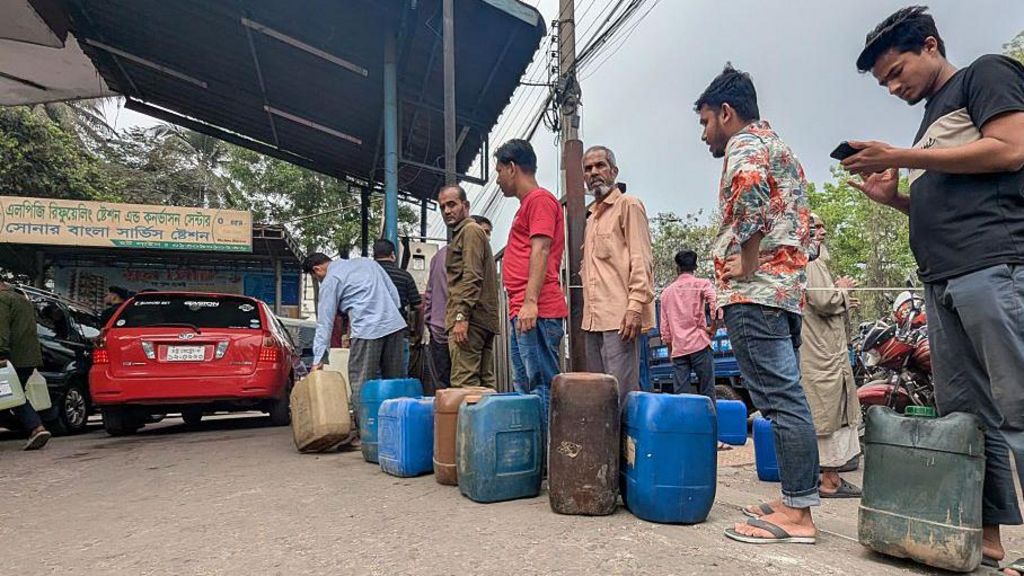
    Governments across Asia are implementing emergency measures to mitigate the crisis. The Philippines—which sources 95% of its crude from the Middle East—has instituted a four-day workweek for public employees. Thailand has mandated elevated air conditioning temperatures in government buildings, while Vietnam and Bangladesh have witnessed panic-buying queues at fuel stations amid 60% diesel price increases. Regional authorities are aggressively promoting remote work arrangements and fuel conservation protocols.

    The energy shock has cascaded into food security concerns, with transportation cost inflation affecting agricultural imports. Singapore’s 90% food import dependency and Indonesia’s complete reliance on foreign wheat illustrate the region’s vulnerability to logistics disruptions. Jet fuel prices have skyrocketed by nearly 60%, compounding supply chain pressures.

    Policy responses vary globally: South Korea implemented fuel price caps, Japan introduced wholesaler subsidies, and European nations like France saw energy corporations voluntarily limiting prices. China remains comparatively insulated through massive strategic petroleum reserves and continued Iranian oil imports despite US sanctions. With electric vehicles comprising one-third of new car sales and coal-dominated power generation, China experiences reduced consumer impact from petroleum price fluctuations.

    While European nations have diversified gas supplies since the Ukraine conflict—now primarily sourcing from Norway and the US—analysts note they remain indirectly affected. David Oxley of Capital Economics observes that “Asian customers displaced from Qatari supplies are competing for alternative resources, driving global price increases.” The United States, having expanded domestic fracking operations, demonstrates greatest resilience to the supply shock, though limited export infrastructure constrains its ability to offset global shortages.