标签: Asia

亚洲

  • Nike’s 2026 After Dark Tour to kick off in Shanghai

    Nike’s 2026 After Dark Tour to kick off in Shanghai

    Nike has announced that its 2026 After Dark Tour, a global women’s running series, will commence in Shanghai on April 25th. The event will feature a 10-kilometer race as the inaugural leg of a seven-city international circuit. Following the Shanghai launch, the tour will proceed to Sydney, Mexico City, London, Los Angeles, Manila, and Mumbai, with each host city offering either a 10km run or a half-marathon distance.

    The initiative, first introduced in 2025, successfully attracted approximately 50,000 female participants worldwide in its debut year, with a remarkable one-third of runners competing in their first official race. The program is designed to create a global community of female athletes, emphasizing camaraderie, personal expression, and the fundamental enjoyment of running.

    The Shanghai event will provide participants with a comprehensive experiential journey, including pre-race warm-up sessions, strategically placed energy stations throughout the course, and celebratory post-race activities. A notable innovation for the 2026 edition is the introduction of a ‘Sister Partner’ registration option, enabling participants to form teams and share the experience collaboratively.

    Registration for the Shanghai event opens this Friday, with detailed information and updates accessible through Nike’s official WeChat mini-program. The After Dark Tour represents Nike’s continued commitment to promoting women’s athletics and fostering international sporting communities through accessible, large-scale participation events.

  • High court rules in favour of journalist Owen Jones in Raffi Berg libel case

    High court rules in favour of journalist Owen Jones in Raffi Berg libel case

    In a significant legal development, the High Court has issued a ruling favoring journalist Owen Jones in a defamation lawsuit initiated by Raffi Berg, the BBC News Online’s Middle East Editor. The case centers on an article authored by Jones and published by Drop Site News, which alleged that Berg fostered a culture of institutional bias favoring Israel within the BBC.

    The court’s decision rejected the core argument presented by Berg’s legal team, which contended that Jones’s reporting depicted him as “a rogue journalist and editor who deliberately disregards and breaches the duties of accuracy and impartiality.” Instead, the justices determined that the article in question constituted an expression of opinion, for which Jones had provided a basis by citing specific examples of Berg’s journalistic and editorial work.

    This preliminary ruling is pivotal as it establishes the framework for whether the libel claim can proceed. The judgment now places the burden of proof on Berg, who must demonstrate either that Jones did not genuinely hold the expressed opinion or that no honest person could have formed such a view based on the facts available at the time of publication.

    Following the verdict, Jones affirmed his stance on social media, stating, “I stand by my journalism and, if Mr. Berg decides to continue the libel claim, I look forward to defending my article in court.” His original piece quoted anonymous BBC colleagues who accused Berg of systematically reshaping headlines, narrative text, and imagery to foreground the Israeli military perspective while diminishing Palestinian humanity.

    The article further asserted that Berg exercised a “crucial role” in conduct that jeopardizes the BBC’s integrity. In response, Berg’s legal counsel argued last year that the publication had severely damaged his professional reputation and triggered an “onslaught of hatred, intimidation and threats,” including death threats.

    Financial disclosures reveal that Drop Site News has already incurred approximately $40,000 in legal expenses related to the case but successfully raised over $100,000 through a public fundraising appeal within just over 24 hours.

    Background context includes Berg’s 2020 authorship of ‘Red Sea Spies,’ a book detailing a covert Mossad operation to transport Ethiopian Jews to Israel in the 1980s. Berg previously described it as “wonderful” to be in a “circle of trust” with current and former Mossad agents while researching the book, which was later pictured on Israeli Prime Minister Benjamin Netanyahu’s bookshelf.

  • UK government’s new counter-extremism measures called ‘Prevent on steroids’

    UK government’s new counter-extremism measures called ‘Prevent on steroids’

    The newly elected Labour government has ignited a firestorm of controversy by formally adopting an expansive definition of extremism originally proposed by former Conservative minister Michael Gove in March 2024. This move forms part of the broader ‘Protecting What Matters’ policy initiative, which also introduced a separate definition for anti-Muslim hostility earlier this week.

    The adopted definition characterizes extremism as “the promotion or advancement of an ideology based on violence, hatred or intolerance” that aims to either destroy fundamental rights of others, undermine UK parliamentary democracy, or create a permissive environment for others to achieve these objectives. This sweeping conceptualization extends beyond direct advocacy of violence to include ideologies deemed conducive to undermining democratic institutions.

    Government documents indicate the definition will be “embedded across government” to guide decisions regarding which organizations receive funding or official engagement. The policy further pledges to strengthen Charity Commission powers to shutter organizations deemed extremist and introduces enhanced monitoring of university campuses for Prevent compliance issues.

    The announcement has drawn sharp criticism from Muslim organizations and civil liberties advocates. The Muslim Council of Britain described the measures as “undemocratic, divisive, and potentially illegal,” while British Muslim think tank Equi expressed concern about disproportionate scrutiny of Muslim charities. Academic experts like Professor John Holmwood of the University of Nottingham accuse the government of embracing authoritarian measures without substantive policy innovation.

    This development occurs against the backdrop of recent counter-terrorism reviews questioning the effectiveness of existing Prevent programs. November 2024 data revealed that 90% of the 58,000 individuals referred to Prevent since 2015 were ultimately deemed non-threatening, raising questions about the potential expansion of such programs under the new definition.

  • UN Security Council condemns Iran attacks on Gulf without mentioning US and Israel

    UN Security Council condemns Iran attacks on Gulf without mentioning US and Israel

    The United Nations Security Council has approved a resolution demanding an immediate cessation of Iranian military operations against Gulf nations, sparking intense diplomatic controversy. The measure, introduced by Bahrain and co-sponsored by 135 member states, specifically calls for Iran to halt all attacks targeting Bahrain, Kuwait, Oman, Qatar, Saudi Arabia, the United Arab Emirates, and Jordan.

    The resolution further condemns Iranian actions that threaten international navigation through the strategically vital Strait of Hormuz. The document passed with 13 votes in favor, while Russia and China abstained from voting. Notably absent from the resolution was any mention of U.S. or Israeli military actions against Iran, a deliberate omission that drew sharp criticism from Tehran’s diplomatic delegation.

    Bahrain’s UN envoy, Jamal Fares Alrowaiei, emphasized the global economic significance of regional security, stating that stability in the Gulf represents an international responsibility directly linked to worldwide energy security and economic stability.

    In response, Iranian Ambassador Amir Saeid Iravani denounced the resolution as a ‘blatant misuse’ of Security Council authority that leaves ‘a lasting stain on its record.’ He characterized the measure as a ‘manifest injustice’ against Iran, which he described as the primary victim of aggression.

    The diplomatic confrontation follows escalating hostilities that began on February 28th when U.S. and Israeli strikes targeted Iranian leadership and infrastructure. Iran subsequently launched drone and missile attacks against Israel and throughout the Gulf region.

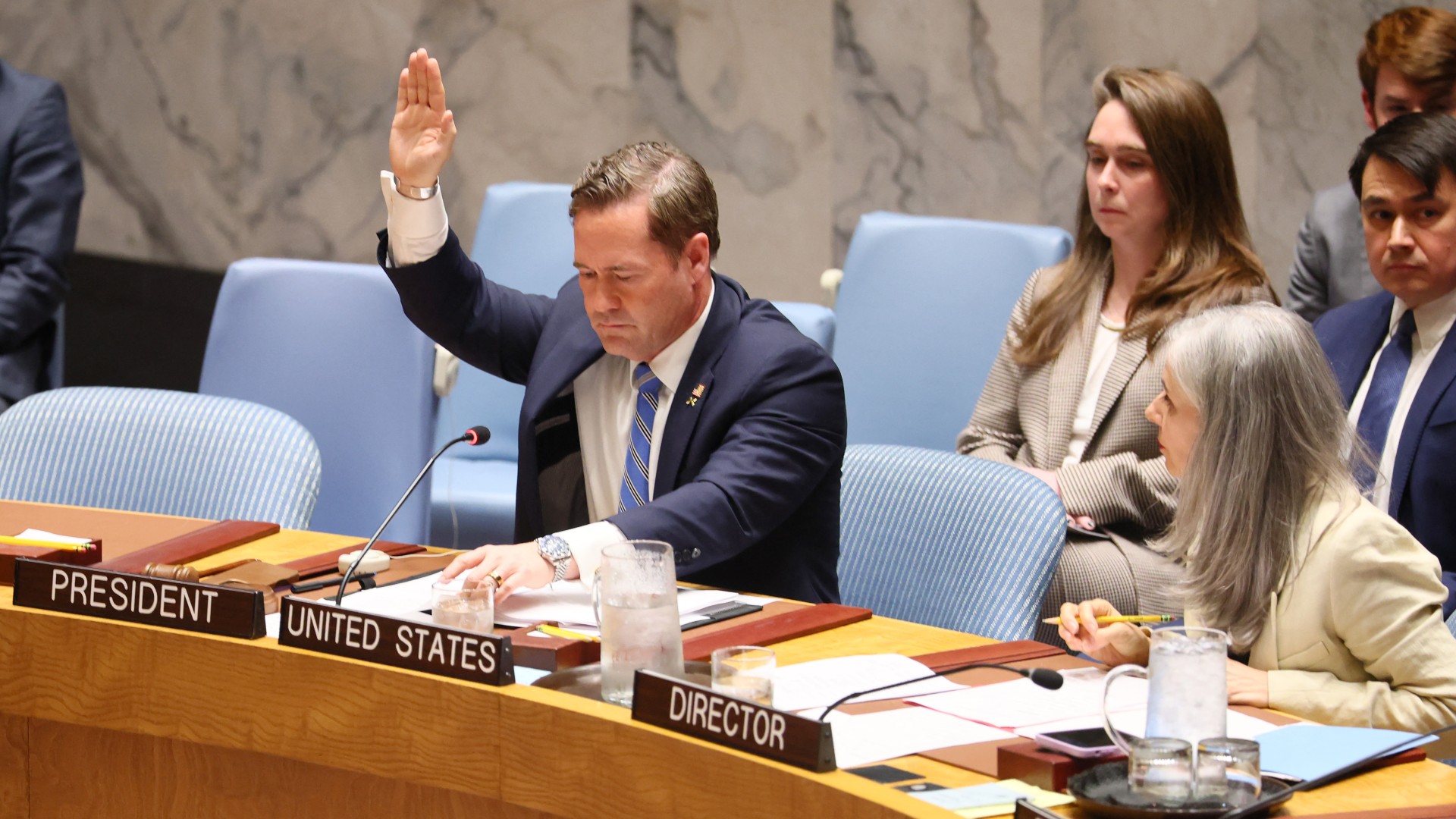
    U.S. Ambassador Mike Waltz declared that Iran’s strategy of regional destabilization had backfired, as demonstrated by the Council’s vote. Meanwhile, China’s representative Fu Cong acknowledged the importance of Gulf security but criticized the resolution for failing to present a balanced perspective on the conflict’s root causes.

    Russia’s Vasily Nebenzya condemned the resolution as ‘biased and one-sided,’ warning that it could encourage further aggression against Iran. Moscow proposed an alternative draft calling for comprehensive de-escalation without naming specific parties, but this measure was rejected with only four votes in favor.

  • Iran ‘not in danger of collapse’, say US intelligence sources

    Iran ‘not in danger of collapse’, say US intelligence sources

    Recent US intelligence analyses conclude that Iran’s leadership continues to maintain firm control over the nation despite two weeks of concerted US-Israeli military operations. Multiple sources familiar with the assessments indicate that the regime faces no imminent threat of collapse and retains effective command over the Iranian population.

    The intelligence findings, which include a multitude of reports culminating in recent days, present a significant challenge to the Trump administration’s military campaign. This development coincides with President Trump’s announcement to CBS that operations would conclude “soon, very soon,” potentially signaling a costly strategic setback for Washington.

    Democratic senators who received confidential briefings from administration officials reported that the United States lacks a coherent plan for Iran. They revealed that earlier CIA assessments had warned that eliminating Iran’s leadership could precipitate the rise of an even more radical governing faction.

    The military intervention, designated Operation Epic Fury, has thus far resulted in at least seven American military fatalities and 140 injuries, generating substantial criticism from segments of the President’s political base. The operation was justified variously as self-defense against Iran’s nuclear program and as an effort to liberate the Iranian people.

    Compounding strategic challenges, Iran’s blockade of the Strait of Hormuz—a critical transit route for 20% of global oil shipments—has triggered significant price surges. Failure to dismantle the Islamic Republic administration would likely intensify pressure on the White House.

    Israeli officials similarly expressed skepticism regarding prospects for a public uprising or governmental collapse following the appointment of new Supreme Leader Mojtaba Khamenei. While some sources indicated Israel’s ultimate objective remains the complete elimination of the Iranian government, they acknowledged this would necessitate ground forces, an option the US has not excluded.

    The administration has conveyed conflicting messages regarding future intentions. One day prior to President Trump’s declaration of an imminent withdrawal, Defense Secretary Pete Hegseth told CBS that “This is only just the beginning,” creating ambiguity about US strategic objectives.

  • Beijing to launch pilot initiatives to support childbearing and childcare

    Beijing to launch pilot initiatives to support childbearing and childcare

    Beijing has announced a sweeping package of measures to establish itself as a fertility-friendly metropolis, allocating substantial financial resources to address declining birth rates. The municipal government revealed plans to implement pilot programs across designated communities, marking one of China’s most comprehensive responses to demographic challenges.

    According to Liu Juncai, Director of the Beijing Health Commission and member of the National Committee of the Chinese People’s Political Consultative Conference, the city disbursed approximately 1 billion yuan ($145.4 million) in childcare subsidies during the previous fiscal year. This funding supported 328,000 newborns from infancy through three years of age, providing each child with 3,600 yuan annually throughout this critical developmental period.

    The childcare subsidy program represents just one component of 67 distinct policies and measures recently enacted by municipal authorities. These initiatives aim to create a more supportive environment for families considering childbirth while significantly elevating childcare standards throughout the capital.

    In a parallel development, Beijing’s healthcare infrastructure is undergoing substantial transformation. Fifteen medical facilities have been designated for conversion into specialized fertility-friendly institutions, while community-based hospitals will be integrated with leading medical centers to enhance pediatric diagnostic and treatment capabilities. This integration strategy specifically targets improved healthcare accessibility at grassroots levels.

    The city is also advancing comprehensive plans to strengthen prevention and treatment protocols for pregnancy complications and birth defects, ensuring enhanced service quality throughout the entire childbirth process.

    Technological innovations are playing a crucial role in Beijing’s childcare enhancement strategy. Since January 31st, premier medical institutions including Beijing Children’s Hospital and the Capital Institute of Pediatrics have launched specialized online consultation services. These digital platforms provide expert guidance on child growth development, pediatric nutrition, and dermatological concerns, complemented by structured follow-up mechanisms after initial medical interventions.

    Director Liu emphasized that this integrated approach has already demonstrated significant benefits, particularly for patients traveling from outside Beijing. The initiative has effectively reduced medical costs while receiving positive feedback from communities, with preliminary outcomes indicating promising results for broader implementation.

  • Lawmakers urge stronger support for rural elderly

    Lawmakers urge stronger support for rural elderly

    During China’s pivotal Two Sessions political gatherings, national lawmakers have issued urgent appeals for strengthened policy and financial mechanisms to address the growing elderly care crisis in rural regions. With approximately 120 million seniors constituting nearly a quarter of rural populations, representatives emphasize that current support systems require substantial improvement to meet demographic demands.

    National People’s Congress deputy Ma Jinlian from Shanxi province highlighted the particular vulnerabilities facing rural elders, noting their limited pension resources and dependence on children who often migrate to urban centers for employment. “The remaining family members frequently struggle with low-wage agricultural work, making professional care services financially inaccessible,” Ma explained, drawing from her oversight experience with three elderly care institutions in Lyuliang city.

    While acknowledging recent governmental efforts to enhance rural care infrastructure, Ma pointed to significant implementation gaps preventing policies from delivering tangible benefits. She specifically referenced a joint civil affairs and finance ministry initiative providing monthly subsidies of up to 800 yuan ($116) to seniors with moderate or severe disabilities, but noted technological barriers undermine its effectiveness.

    “Many elderly residents lack smartphone proficiency or hesitate to entrust devices to others, creating cumbersome redemption processes,” Ma observed. She proposed simplifying distribution through direct cash transfers or institutional cost offsets to alleviate burdens on both seniors and care facility staff.

    Fellow NPC deputy Xu Lianhong, operating a medical-care integrated nursing home in Zhongyang county, reinforced the necessity of collaborative approaches involving government, institutions, families, and society. Her county’s innovative assistance project, launched in 2023 with annual funding of 10 million yuan, supports public services and operational subsidies across more than 100 facilities including nursing homes, community dining centers, and daycare facilities.

    These institutions currently serve nearly 5,000 vulnerable elders with comprehensive support ranging from meal provision to medical assistance. Xu’s 200-bed facility charges between 2,000-4,000 yuan monthly based on care requirements, with government support covering bed subsidies and rental costs. While currently operating at break-even, Xu anticipates long-term profitability through reputation building and increased occupancy.

    Both legislators emphasized elderly care as a long-term social commitment rather than immediate revenue generator. Xu additionally advocated for eliminating occupational stigma surrounding care work and developing professional talent pipelines to ensure seniors can experience their later years with “dignity, warmth, and happiness.”

  • Exploring ancient China: How procuratorates protect IPR of cultural heritage

    Exploring ancient China: How procuratorates protect IPR of cultural heritage

    China’s procuratorial organs are spearheading a specialized judicial campaign to protect the intellectual property rights of cultural heritage publications, with the ancient Dunhuang murals becoming a focal point of these enforcement efforts. These exquisite 1,600-year-old frescoes, which draw millions of visitors annually to their Gansu Province location, have become vulnerable to sophisticated intellectual property theft despite authorized anthologies being legally available to the public.

    The initiative emerged in response to a growing market for pirated copies of official Dunhuang publications. Unauthorized producers have flooded markets with inferior quality reproductions that undermine both the artistic integrity of the cultural treasures and the economic viability of legitimate publishers. These counterfeit editions, often marketed deceptively as authentic, compromise the visual fidelity and historical accuracy that characterize authorized publications.

    Procuratorial authorities have implemented a multi-faceted legal strategy that combines criminal prosecution with civil public interest litigation. Through specialized intellectual property divisions within prosecutor’s offices, authorities are conducting systematic reviews of copyright compliance across the cultural heritage sector. This judicial oversight extends to online marketplaces where digital reproductions of the murals are frequently traded without proper authorization.

    The enforcement mechanism operates through close coordination between cultural heritage experts, copyright specialists, and digital forensics teams. This collaborative approach enables investigators to trace distribution networks, identify production sources, and quantify the economic damage caused by copyright infringement. The procuratorates’ intervention has resulted in numerous successful prosecutions and the establishment of legal precedents for cultural IP protection.

    Beyond immediate enforcement, the initiative includes public education components designed to increase awareness about cultural IP rights. Museums and cultural institutions are receiving guidance on implementing stronger copyright protection measures for their collections and publications. The comprehensive approach represents a significant advancement in how China balances cultural preservation with intellectual property enforcement in the digital age.

  • Former rapper’s fledgling political party sweeps Nepal’s first post-revolt election

    Former rapper’s fledgling political party sweeps Nepal’s first post-revolt election

    KATHMANDU, Nepal — Nepal’s political establishment has been dramatically upended by the stunning electoral triumph of the Rastriya Swatantra Party (RSP), a four-year-old political movement led by former rapper Balendra Shah. Official results released Thursday by Nepal’s electoral commission confirm the party’s overwhelming victory in the nation’s first parliamentary elections since last year’s youth-led uprising.

    The RSP secured a commanding majority in the 275-seat House of Representatives, capturing 125 directly elected seats and an additional 57 through proportional representation. This gives the party a total of 182 seats, far exceeding the 138 needed for a simple majority. The previously dominant Nepali Congress party trailed distantly with just 38 seats.

    Nepal’s electoral system combines direct voting for 165 parliamentary seats with proportional representation allocating the remaining 110 seats based on party vote share. The electoral commission will now formally request party nominations to fill proportional representation seats before presenting the final composition to the president.

    This procedural phase, expected to require several days, will culminate in the convening of the new parliament and the election of a prime minister. With nearly two-thirds of parliamentary seats, RSP leader Balendra Shah—the party’s prime ministerial candidate and 2022 Kathmandu mayor—is positioned to assume leadership.

    The RSP’s remarkable ascent represents a direct challenge to Nepal’s traditional political powers, particularly the Nepali Congress and Communist Party of Nepal (Unified Marxist–Leninist). The party capitalized on widespread discontent with corruption and governance failures that sparked last year’s protests, which began as opposition to social media restrictions before escalating into full-scale antigovernment demonstrations. The unrest resulted in dozens of fatalities and hundreds of injuries amid clashes between protesters and security forces.

    Shah emerged as a prominent figure during the 2025 uprising that ultimately toppled former Prime Minister Khadga Prasad Oli’s government. His transition from musical artist to political revolutionary has now culminated in an unprecedented electoral mandate that signals a profound transformation in Nepal’s political paradigm.

  • Shandong sees sustained progress in afforestation and urban greening

    Shandong sees sustained progress in afforestation and urban greening

    As China commemorated its 48th National Tree Planting Day on March 12, 2026, Shandong Province unveiled remarkable achievements in its comprehensive environmental conservation programs. Under the leadership of Zhao Xiaohui, Director of the Shandong Provincial Department of Natural Resources, the eastern Chinese province has demonstrated significant progress in expanding forest coverage and integrating ecological considerations into urban development strategies.

    According to official statistics released during a press conference, Shandong’s forested areas now encompass approximately 3 million hectares, with national and provincial-level public welfare forests constituting roughly 25% of this total. The province has established nine specialized national forest tree breeding centers dedicated to sustainable forestry practices, with particular emphasis on cultivating key species including poplar, black locust, and black pine varieties.

    A distinctive characteristic of Shandong’s environmental approach involves the seamless incorporation of green space expansion within urban planning frameworks. Since the initiation of the 14th Five-Year Plan period (2021-2025), provincial authorities have created more than 450 major urban parks and established over 3,900 kilometers of interconnected urban greenways. These developments have elevated per capita park green space to 18.66 square meters, significantly enhancing urban livability standards.

    Beyond ecological improvements, Shandong’s forestry initiatives have generated substantial economic benefits for local communities. The programs have facilitated the cultivation of high-value traditional crops including chestnuts and persimmons across various regions. These agricultural activities are increasingly combined with forest wellness tourism and ecotourism ventures, creating diversified income streams for rural populations.

    The province has developed numerous nationally recognized geographical indication products, including Yantai apples, Laiyang pears, Zhanhua winter jujubes, Pingyin roses, and Heze peonies. Additionally, Shandong has established four national-level forest wellness bases, further strengthening the integration of ecological conservation with economic development.

    Director Zhao emphasized that emerging sectors combining environmental protection with agricultural and tourism activities have experienced continuous expansion in both operational scale and financial returns. The province has simultaneously maintained stable forest coverage rates while progressively reducing areas affected by desertification and sandy land degradation, demonstrating the effectiveness of its comprehensive environmental management strategies.