标签: Asia

亚洲

  • APEC Symposium and Informal Senior Officials’ Meeting held in Shenzhen

    APEC Symposium and Informal Senior Officials’ Meeting held in Shenzhen

    Shenzhen inaugurated the Asia-Pacific Economic Cooperation (APEC) Symposium and Informal Senior Officials’ Meeting (ISOM) on Thursday, December 11, 2025, marking China’s formal commencement of its host responsibilities for the 2026 APEC Economic Leaders’ Meeting. The two-day gathering at Shenzhen Bay Culture Square represents the inaugural event of what officials are calling the APEC ‘China Year,’ setting the stage for China’s leadership role in shaping regional economic cooperation throughout the coming year.

    The symposium brings together senior officials from APEC’s 21 member economies to establish preliminary dialogues on key regional priorities. While specific agenda items remain undisclosed, the meeting is expected to lay groundwork for addressing pressing economic challenges, enhancing trade facilitation, and promoting sustainable development initiatives across the Asia-Pacific region.

    Shenzhen, China’s technology and innovation hub, provides a symbolic backdrop for discussions on digital transformation and economic modernization. The selection of this southern Chinese metropolis underscores China’s emphasis on technological advancement as a cornerstone of regional economic strategy. The proceedings will likely establish foundational frameworks for more substantive negotiations throughout China’s host year, culminating in the major Economic Leaders’ Meeting scheduled for 2026.

    This preliminary gathering serves as a crucial diplomatic platform for China to demonstrate its commitment to multilateral economic cooperation and establish priorities for its APEC presidency. The outcomes of these initial discussions will shape the agenda for subsequent ministerial meetings and working groups throughout the coming months.

  • Triple liftoff: Long March rockets set a record

    Triple liftoff: Long March rockets set a record

    China’s space program made history on Tuesday by successfully executing three separate orbital launches within a single day, setting a new national record for space mission frequency. The unprecedented achievement demonstrates remarkable coordination capabilities within China’s aerospace industry.

    The day’s space operations commenced at 6:11 AM with the launch of a Long March 6A rocket from the Taiyuan Satellite Launch Center in Shanxi province. This medium-lift vehicle deployed multiple internet satellites destined to join China’s expanding mega-constellation network, which already comprised over 110 operational satellites prior to this deployment.

    Approximately five and a half hours later, a Long March 4B rocket ascended from the Jiuquan Satellite Launch Center in Inner Mongolia, carrying the Yaogan 47 satellite into orbit. This Earth observation satellite will perform critical functions including land resource surveys, urban mapping, agricultural monitoring, and environmental protection support.

    The day’s final launch occurred at 11:08 PM from the Xichang Satellite Launch Center in Sichuan province, where a Long March 3B rocket delivered the Communication Technology Demonstrator 22 satellite to orbit. This experimental communications satellite will conduct signal transmission tests, data relay operations, and television program broadcasting experiments.

    Space technology expert Pang Zhihao emphasized the extraordinary coordination required for such an achievement, noting that successful rocket launches depend on extensive ground support infrastructure including tracking stations, telemetry facilities, and satellite control centers spread across the country. The simultaneous operation of multiple launch facilities demonstrates China’s advanced capabilities in mission planning and execution within its state-run space program.

    All three rocket models were developed by subsidiaries of the China Aerospace Science and Technology Corporation (CASC), the nation’s primary state-owned space contractor, highlighting the organization’s technical proficiency and operational capacity.

  • Researcher finds home for the soul in Xizang

    Researcher finds home for the soul in Xizang

    For over two decades, Wuhan Textile University professor Niu Xue has embarked on an annual pilgrimage to document the evolving cultural landscape of Tibet. The 48-year-old innovation and design scholar has dedicated approximately 600 days across 21 years to capturing the region’s authentic moments through his lens, despite battling recurring altitude sickness during his extended stays.

    Niu’s photographic archive reveals a rich tapestry of Tibetan life—from farmers transporting goods on traditional wooden carts to the emerging cycling culture along Highway 318, and newlyweds celebrating before the iconic Potala Palace. His work transcends mere academic interest, representing what he describes as a profound spiritual connection to the land and its people.

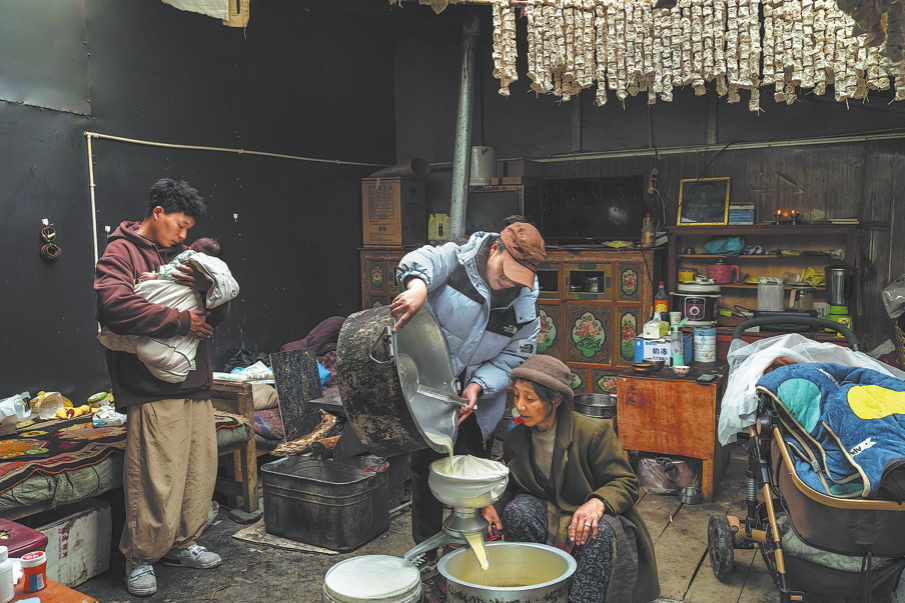
    Among his most compelling subjects is Drolkar, a resident of Yumai township whose family has safeguarded remote border areas through pastoral traditions for 32 years. Niu first documented Drolkar in 2018, capturing her crafting butter and cheese with her daughter in their summer pasture dwelling. Subsequent visits in 2023 and 2025 revealed both the passage of time and continuity of tradition, as he photographed her using slingshots to manage livestock and recorded multi-generational family activities.

    The professor recently involved his students in this documentary project, believing that visual elements—specific frames, colors, and contextual details—combine to create emotional narratives that communicate deeper cultural understandings. Through his ongoing work, Niu bridges the geographical and cultural distance between central China and Tibet, bringing authentic Tibetan experiences into his Wuhan classroom while preserving vanishing aspects of traditional life.

  • Four French men accused of A$10m Australia jewellery heist

    Four French men accused of A$10m Australia jewellery heist

    Australian authorities have apprehended four French nationals in connection with an audacious cross-continental burglary operation targeting high-value luxury items. The suspects, aged between 28 and 37, allegedly traveled specifically from France to Australia in October to execute a meticulously planned heist that netted over 70 luxury items from a property in Canberra.

    The stolen collection included an exceptionally rare Richard Mille ‘Smiley’ timepiece valued at approximately A$5 million (US$3.3 million), distinguished by its yellow gold smiley face motif and pink flamingo design. Additional items taken comprised luxury handbags, high-end jewelry, and other premium watches from renowned luxury houses.

    According to police reports, the operation unfolded with cinematic precision. Just four days following the burglary, Australian law enforcement located and arrested the quartet at a Sydney KFC outlet. Subsequent raids on a rented Sydney property yielded recovery of several stolen items, including multiple Hermès handbags.

    Detective Acting Inspector Battye expressed astonishment at the international scale of the criminal operation, noting: ‘I’ve been in the job for a long time. I’ve never seen a burglary of this magnitude… and with people flying over from the other side of the world.’

    In a coordinated international effort, French authorities have recovered additional items that were allegedly stolen during a separate burglary in Sydney’s affluent Vaucluse suburb and subsequently shipped to France.

    Despite these recoveries, several exceptional pieces remain missing, including two Hermès diamond double rings, a Van Cleef & Arpels necklace featuring signature four-leaf clover designs, and two Patek Philippe watches. Police have characterized these missing items as particularly distinctive and valuable, noting they would be difficult to dispose of on conventional markets.

    The four accused appeared in court on Thursday and are scheduled to return for further proceedings in January. Australian police maintain that the incidents represent a targeted operation by individuals who specifically traveled to Australia to commit these offenses.

  • More than 30 dead after Myanmar military air strike hits hospital

    More than 30 dead after Myanmar military air strike hits hospital

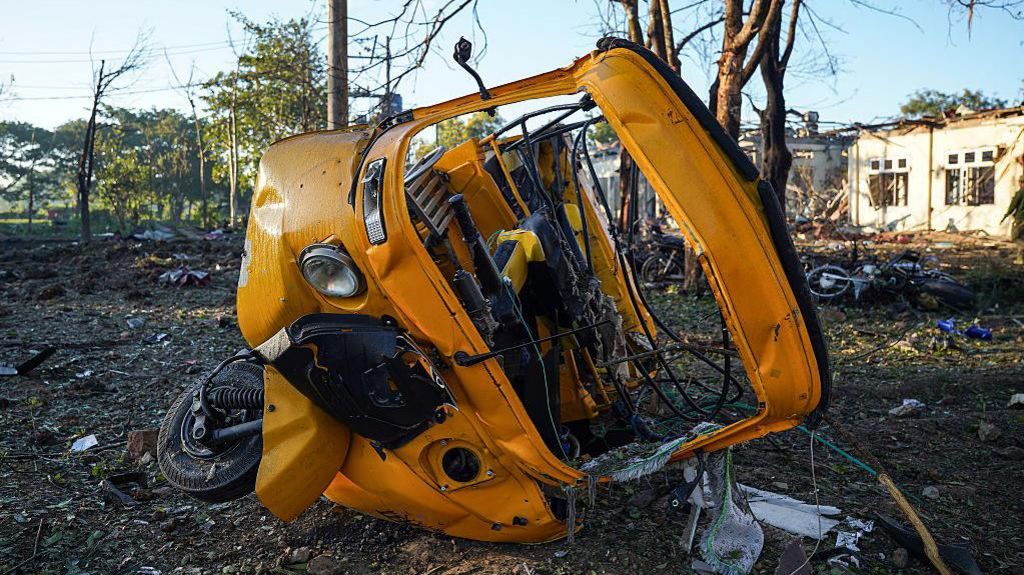
    In a severe escalation of violence, Myanmar’s military junta conducted an aerial bombardment that struck a hospital in Mrauk-U town, Rakhine State, on Wednesday night, resulting in a significant civilian death toll. Local sources confirm at least 34 fatalities, with dozens more injured, many of whom were patients receiving medical care.

    The targeted facility lies within a region controlled by the Arakan Army, a prominent ethnic armed organization engaged in prolonged conflict against the military regime. The attack, occurring at approximately 21:00 local time, inflicted extensive damage, photos from the scene reveal collapsed structures, shattered medical equipment, and debris scattered across the compound.

    This incident underscores the junta’s intensified reliance on aerial assaults and unconventional tactics, including bomb-dropping paragliders, to reclaim territories lost to ethnic militias. Analysts attribute recent military gains to enhanced technological and equipment support from international allies such as China and Russia.

    The regime has refrained from commenting on the hospital strike, which coincides with preparations for the nation’s first general election since the 2021 coup. Pro-military channels on Telegram deny deliberately targeting civilians, asserting operations aim at militant strongholds.

    However, Khaing Thukha, spokesperson for the Arakan Army, condemned the act as a ‘vicious attack by the terrorist military,’ emphasizing the victims’ non-combatant status and demanding accountability.

    Amid the turmoil, the scheduled December 28 election faces widespread skepticism. United Nations human rights expert Tom Andrews labels it a ‘sham election,’ intended to fabricate legitimacy for the junta. Reports indicate arrests of political dissidents and anti-election activists, while ethnic armies and opposition groups boycott the polls, further destabilizing the prospect of peaceful resolution.

  • Chinese scientists use allergy-like immune response for cancer therapy

    Chinese scientists use allergy-like immune response for cancer therapy

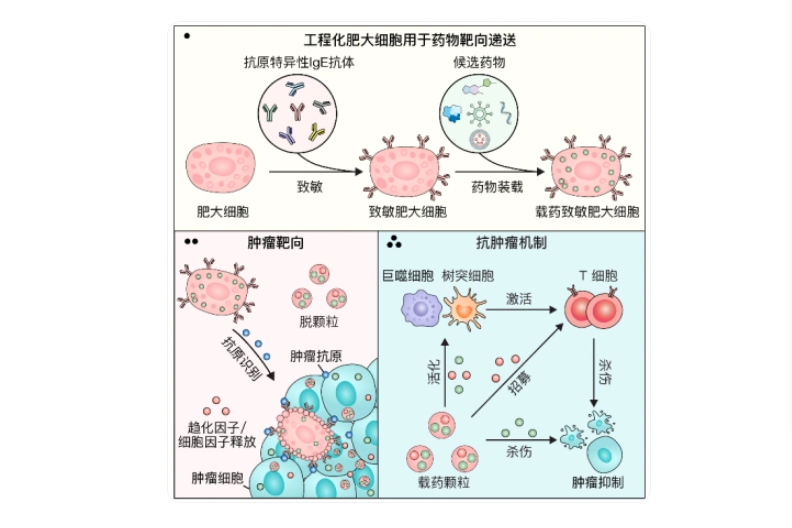
    In a groundbreaking development published in the journal Cell, Chinese researchers have successfully engineered one of the body’s most rapid immune mechanisms into a potent weapon against cancer. The innovative approach leverages mast cells—typically associated with allergic reactions like sneezing and hives—to trigger targeted inflammatory attacks within tumors.

    The collaborative research effort between Zhejiang University and the First Hospital of China Medical University focused on reprogramming these immune cells to recognize and assault cancer tissue. Professor Gu Zhen from Zhejiang University’s School of Pharmacy explained that the team drew inspiration from the extreme responsiveness of allergic reactions to overcome tumor immunosuppression.

    Through sophisticated bioengineering, scientists equipped mast cells with tumor-specific IgE antibodies that function as precision guidance systems. When administered intravenously, these modified cells migrate directly to cancerous growths and discharge their inflammatory payload upon contact with target cells.

    This deliberately induced allergy-like reaction within the tumor microenvironment transforms immunologically ‘cold’ tumors—those typically invisible to immune detection—into ‘hot’ tumors that become vulnerable to attack by cancer-killing T-cells. The strategy demonstrated significant efficacy across multiple mouse models including melanoma, breast cancer, and lung metastases.

    The research team further enhanced the platform by utilizing mast cells as biological delivery vehicles for oncolytic viruses. By concealing these tumor-destroying viruses within protective cellular vesicles, the system ensures safe transport through the bloodstream until activation at the cancer site.

    Notably, the technology proved effective in human-derived tumor models using mast cells targeted against the HER2 cancer marker. This success indicates potential for personalized cancer treatment through matching IgE antibodies to patient-specific tumor markers.

    Beyond viral delivery, the mast cell platform demonstrates versatility in transporting diverse therapeutic agents including conventional drugs, proteins, antibodies, and nanomedicines. Researchers envision a future where multiple treatment modalities could be integrated within a single cellular therapy system.

    The research team is now developing workflows for patient-specific antibody selection, scaling manufacturing processes for therapeutic mast cells, and exploring combinations with existing immunotherapies to accelerate clinical application.

  • Marine ecology off South China’s Hainan Island remains favorable, report says

    Marine ecology off South China’s Hainan Island remains favorable, report says

    The coastal ecosystems surrounding China’s Hainan Island continue to demonstrate remarkable environmental resilience, according to a comprehensive scientific report released by the South China Sea Bureau of the Ministry of Natural Resources. The findings reveal consistently high seawater quality metrics that rank among the nation’s best, coupled with well-preserved marine biodiversity across the region’s diverse habitats.

    The detailed assessment, titled ‘Report on Marine Ecological Conservation and Sustainable Development of the Hainan Free Trade Port,’ was unveiled during the 6th Symposium on Global Maritime Cooperation and Ocean Governance in Sanya. This gathering attracted over 300 distinguished participants from more than 30 countries and regions, including prominent experts, scholars, government officials, diplomats, and international organization representatives.

    Scientific monitoring conducted between 2020 and 2024 provided the foundational data for the report, which systematically analyzed water quality parameters, marine sediment composition, and biodiversity indicators. Researchers particularly focused on seven distinct marine ecosystem types, examining their conditions within key distribution areas to obtain a holistic understanding of the region’s ecological status.

    The report’s release coincides with significant regional developments, as the Hainan Free Trade Port prepares to implement island-wide special customs operations commencing December 18. This economic initiative appears to be progressing alongside, rather than at the expense of, environmental conservation efforts.

    Symposium attendees are engaged in intensive dialogues addressing critical ocean governance challenges, including the establishment of a stable and sustainable global management framework, resolution mechanisms for maritime disputes, and promotion of peaceful cooperation in the South China Sea region. The two-day conference serves as an international platform for sharing expertise and developing collaborative strategies for ocean stewardship.

  • Fire-hit homeowners to get HK$100,000 subsidy

    Fire-hit homeowners to get HK$100,000 subsidy

    The Hong Kong Special Administrative Region government has unveiled substantial financial support measures for homeowners affected by the devastating Wang Fuk Court fire in Tai Po district. Deputy Chief Secretary for Administration Warner Cheuk Wing-hing confirmed on Wednesday that each qualifying household will receive a one-time subsidy of HK$100,000 (approximately $12,851) to address urgent financial needs arising from the tragedy.

    The financial assistance program comes as the dedicated Support Fund for Wang Fuk Court reaches HK$3.4 billion, combining both government allocation and substantial public donations. According to official figures, the fund has received an extraordinary HK$3.1 billion in public contributions since its establishment on November 27, supplemented by an initial government injection of HK$300 million.

    Mr. Cheuk emphasized that the subsidy addresses multiple financial pressures facing homeowners, including lost rental income, previous renovation investments, and current cash flow challenges. The distribution mechanism will proportionally allocate funds among multiple owners where applicable.

    The fundraising effort has demonstrated remarkable community solidarity, with over 263,000 individual donations recorded. Notably, 170 significant contributions of HK$5 million or more account for approximately half of the total public donations received. The Inland Revenue Department has implemented special arrangements to facilitate tax deductions for donors contributing HK$50,000 or less.

    Beyond homeowner support, the comprehensive assistance package includes HK$200,000 solidarity payments to families of deceased victims, HK$50,000 for funeral expenses, and injury compensation ranging from HK$50,000 to HK$100,000. Additional support has been extended to foreign domestic helpers, students, and workers affected by the fire.

    The November 26 blaze, which claimed 160 lives and damaged seven of eight residential blocks, represents one of Hong Kong’s most severe residential fire disasters in recent history. With six individuals still unaccounted for, all injured survivors have reportedly stabilized medically. The government will begin processing donation receipts from next week, ensuring transparent fund allocation for long-term recovery efforts.

  • Brain-computer interface gives hope to paralyzed people

    Brain-computer interface gives hope to paralyzed people

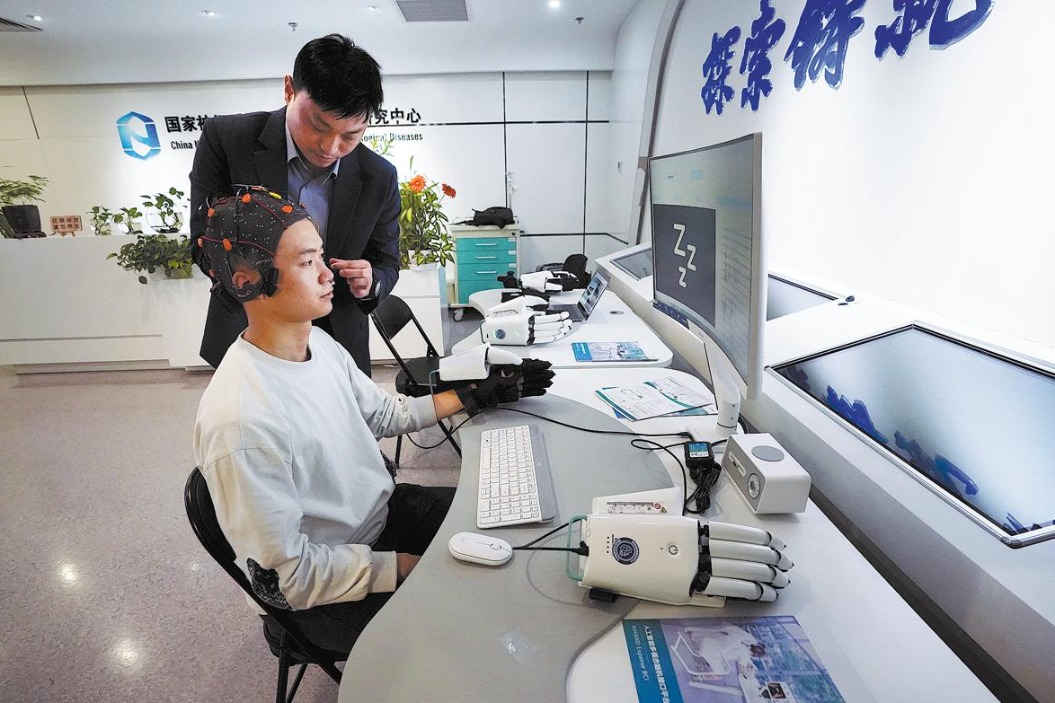
    In a remarkable demonstration of medical innovation, brain-computer interface (BCI) technology is offering new hope to individuals suffering from paralysis and neurodegenerative conditions. At the forefront of this revolution, Chinese medical researchers are achieving significant milestones in clinical applications that restore movement and communication capabilities.

    At a Langfang nursing home in Hebei province, ALS patient Wang Ming represents thousands awaiting transformative BCI treatments. With minimal muscle control after six years of battling amyotrophic lateral sclerosis, Wang’s simple aspiration to operate his phone independently exemplifies the life-changing potential of this technology. He is among over 500 patients registered for ongoing clinical trials across China.

    Professor Qu Yan, Director of Neurosurgery at Tangdu Hospital in Xi’an, explains the technology’s mechanism: “BCI functions as a digital bridge for the nervous system. When conditions like ALS or spinal cord injuries disrupt neural pathways, our systems bypass damaged areas by capturing brain signals directly, decoding them, and converting them into commands for external devices or muscle stimulation.”

    The technology translates cognitive intentions into physical actions. As Professor Qu illustrates: “When a patient sees a flame and wishes to move away, that intention is captured by implanted chips and transformed into movement commands.”

    While Western nations pioneered early BCI research, China has emerged as a formidable innovator in the field. A July 2025 Nature report highlighted China’s rapid ascendance, noting that certain Chinese-developed devices now surpass even Elon Musk’s Neuralink project in specific performance metrics. Professor Qu attributes this accelerated progress to China’s extensive medical infrastructure and substantial population base, which provides unparalleled opportunities for clinical testing and refinement.

    This convergence of neurological science and digital technology represents one of the most promising frontiers in medical rehabilitation, potentially restoring independence to those with severe motor impairments.

  • Experts look to establish guidelines for safe, ethical trials

    Experts look to establish guidelines for safe, ethical trials

    Chinese medical experts are spearheading the development of groundbreaking clinical guidelines for implantable brain-computer interface (BCI) technology, responding to the nation’s rapidly expanding role in neural research. With China accounting for approximately 40% of global BCI clinical trials since 2020, these standards aim to establish uniform protocols for patient selection, ethical implementation, and safety monitoring.

    The comprehensive framework addresses technological requirements, patient evaluation methodologies, informed consent procedures, and treatment management protocols. According to draft consensus documents, prospective candidates must meet stringent criteria including age parameters (typically 18-60 years, extendable to 65 for medically stable patients), cognitive clarity, and demonstrated capacity for rehabilitation training. Patients must maintain stable physical conditions for at least six months prior to consideration.

    Condition-specific specifications further refine eligibility. Spinal cord injury patients, for instance, require injuries sustained at least six months prior with precise vertebral location requirements.

    “Standardization is fundamental for clinical trial design, medical accessibility, and insurance reimbursement structures,” noted a BCI specialist involved in the consensus development. Current trials cover surgical and device expenses, yet families face substantial ongoing financial burdens.

    Patient advocates highlight the persistent economic challenges despite technological advances. Full-time caregivers in major urban centers command monthly salaries ranging from 6,000 to over 9,000 yuan ($846-$1,269), frequently exceeding annual household incomes. Medication costs for conditions like amyotrophic lateral sclerosis (ALS) reach 50,000-80,000 yuan annually after insurance reimbursement, with auxiliary equipment including electric wheelchairs (2,000-6,000 yuan), ventilators (3,000+ yuan), and cough-assist machines (approximately 20,000 yuan) creating cumulative financial pressure.

    As one caregiver expressed: “While BCI technology offers communication hope, the reality of ongoing care costs continues to consume families’ financial resources at an alarming rate.”