标签: Asia

亚洲

  • Night view of Central Street in Harbin

    Night view of Central Street in Harbin

    Harbin’s iconic Central Street has emerged as a spectacular nighttime destination during the city’s current winter tourism surge. Captured through aerial drone photography on January 12, 2026, the historic boulevard dazzles visitors with its brilliant light displays and diverse European architectural styles that create a mesmerizing atmosphere after dark.

    The pedestrian thoroughfare, recognized as one of Heilongjiang province’s premier attractions, showcases an extraordinary collection of architectural influences including Baroque, Byzantine, and eclectic European designs that reflect Harbin’s unique cultural heritage. These historic structures provide a stunning backdrop for the elaborate lighting installations that have become a major draw for tourists.

    This winter season has witnessed unprecedented visitor numbers to Central Street, with the illuminated nightscape becoming a particularly popular attraction. The colorful lighting scheme enhances the architectural details while creating a warm ambiance against Harbin’s cold winter environment. Tourism officials note that the nighttime economy along Central Street has significantly contributed to the city’s seasonal tourism boom, with extended shopping hours and special evening events catering to the influx of visitors.

    The phenomenon represents part of a broader trend in northern Chinese tourism where winter destinations are leveraging unique cultural assets and creative lighting to extend visitor hours and boost local economies. Central Street’s combination of historical architecture and modern light technology has established it as a model for successful urban tourism development in cold climate regions.

  • UAE-based Palestinian athlete to run from Dubai to Doha in 2 weeks

    UAE-based Palestinian athlete to run from Dubai to Doha in 2 weeks

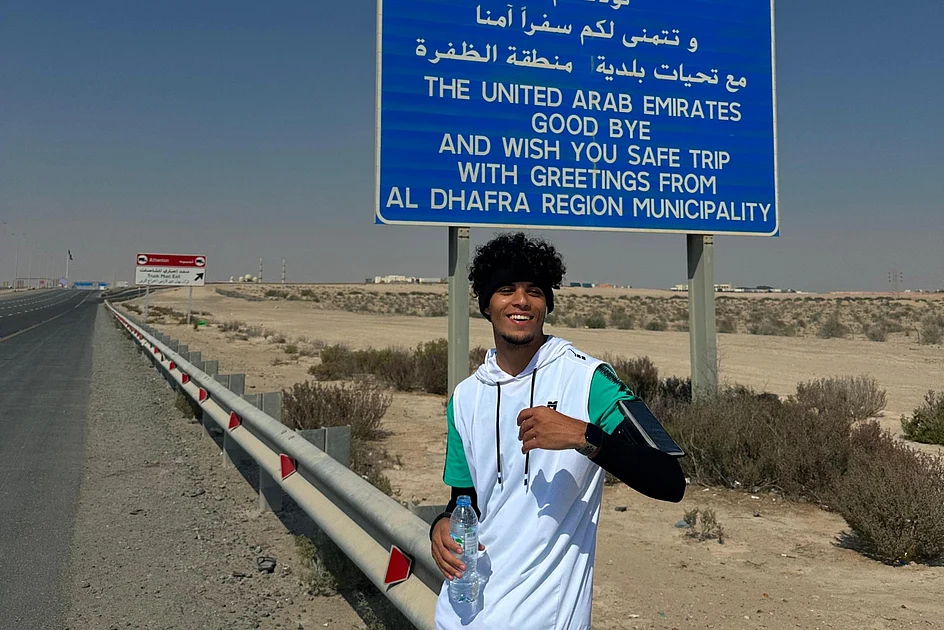
    In an extraordinary display of human endurance and meticulous planning, 24-year-old Palestinian-Canadian athlete Yousef Hussein is preparing to undertake a monumental two-week running journey from Dubai to Doha starting January 14th. The UAE-based long-distance runner aims to cover approximately 42 kilometers daily, with an anticipated arrival in Qatar’s capital on January 28th.

    Hussein’s approach transcends conventional athletic motivation, emphasizing instead the critical role of discipline and structured routine. “This run isn’t about motivation. Motivation comes and goes. Discipline is what stays,” he stated, highlighting his philosophy that sustained commitment outweighs temporary inspiration.

    The logistical framework for this 600-kilometer endeavor demonstrates remarkable precision. Hussein has divided the route into 14 designated checkpoints, planning to conclude each day’s run at a hotel before returning exactly to his stopping point the following morning. He has incorporated an additional buffer day to accommodate potential injuries or fatigue, applying lessons from his previous long-distance experience to Saudi Arabia in 2024 that resulted in a hairline fracture.

    Training intensively throughout the past month, Hussein has incorporated daily half-marathons and two full marathons into his regimen. He has specifically addressed previous weaknesses through barefoot running sessions to enhance foot strength. Practical support will come from his best friend during the initial week and his brother in the final segment, though they will provide logistical rather than running assistance.

    The athlete’s choice of destination aligns with Qatar’s Match for Hope charity football event, which he intends to attend as personal reward upon completion. While companies including Adnoc and New Balance have provided support, Hussein clarified these arrangements do not constitute formal sponsorships.

    Nutritionally, Hussein maintained a carb-loading diet during training but will adopt a flexible approach during the actual run, consuming whatever provisions are available along the route due to budget constraints. Beyond personal achievement, Hussein views his journey as embodying a universal message about perseverance through life’s inevitable challenges and the power of consistent discipline over fleeting motivation.

  • In ‘big trouble’? The factors determining Iran’s future

    In ‘big trouble’? The factors determining Iran’s future

    Iran’s theocratic leadership confronts its most formidable challenge in years as nationwide demonstrations evolve from economic discontent into explicit demands for systemic political change. The protest movement, which initiated with strikes at Tehran’s bazaar in late December, has rapidly escalated into mass rallies challenging the clerical establishment that has governed since the 1979 revolution.

    According to international rights organizations, the government’s aggressive crackdown has resulted in hundreds of casualties, though the authority of 86-year-old Supreme Leader Ayatollah Ali Khamenei remains ostensibly intact. Analysts note that while the scale and political nature of these protests represent a significant threat to the Islamic Republic, predicting its immediate collapse would be premature.

    Professor Nicole Grajewski of Sciences Po Centre for International Studies in Paris observed, “These protests arguably represent the most serious challenge to the Islamic republic in years, both in scale and in their increasingly explicit political demands.” She emphasized the resilience of Iran’s repressive apparatus as a critical factor in the regime’s stability.

    Several key elements will determine the outcome of this crisis. The sustainability and growth of protests remain crucial, though current demonstrations haven’t reached the critical mass necessary for irreversible change. The cohesion within Iran’s political and military elite shows no significant fractures thus far, with all major institutions including the Revolutionary Guards maintaining allegiance to Khamenei.

    International dimensions complicate the situation, with former US President Donald Trump implementing economic measures and not excluding military options. Any direct foreign intervention would fundamentally alter the crisis trajectory, according to analysts. Meanwhile, the opposition movement struggles with internal divisions and lacks cohesive leadership capable of unifying various factions.

    The health and succession planning for Khamenei introduce additional uncertainty, with potential scenarios ranging from his son Mojtaba assuming power to a collective leadership structure or even a takeover by the Revolutionary Guards. The regime’s vulnerability appears heightened both domestically and geopolitically, reaching levels not seen since the Iran-Iraq war of 1980-1988.

  • Pocket power: How mobile photography changed the lives of these Middle East creators

    Pocket power: How mobile photography changed the lives of these Middle East creators

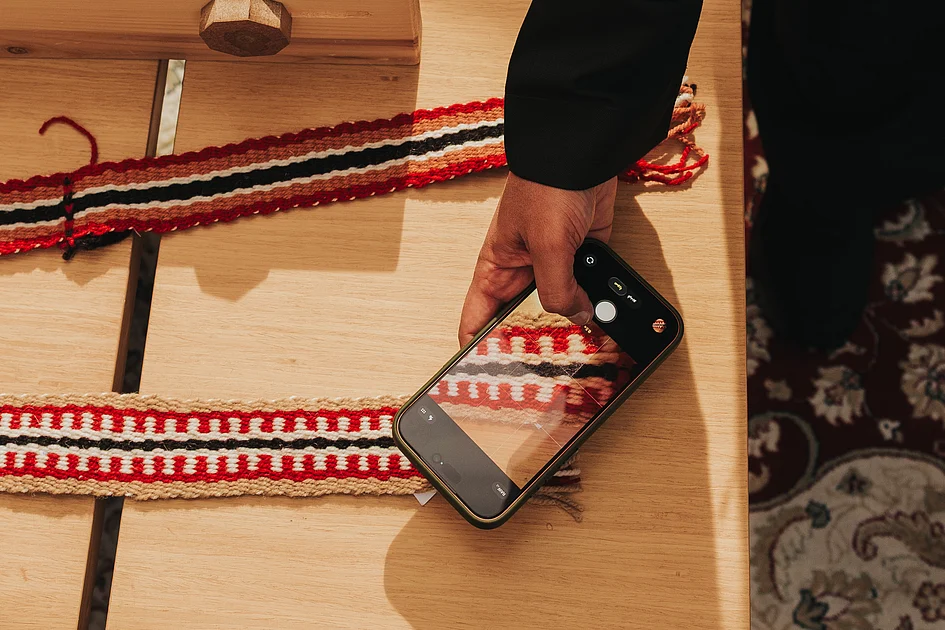
    DUBAI – The recent 1 Billion Followers Summit in Dubai became a showcase for mobile photography’s dramatic evolution from casual pastime to professional storytelling medium. Saudi visual storyteller Rashed Alsubaie and Kuwaiti photographer Abdulaziz Alsorayai demonstrated how the iPhone 17 Pro has fundamentally transformed creative workflows during a live Al Sadu weaving performance workshop.

    Both creators represent a new generation of Middle Eastern digital artists who have built substantial careers around mobile technology. Alsorayai, previously focused on commercial projects including brand films and documentaries, discovered an unexpected demand for educational content about gear and techniques. ‘What made me take content creation seriously was realizing how in-demand it became and how many people genuinely want guidance,’ Alsorayai told Khaleej Times.

    The transition to mobile dominance emerged organically through experimentation rather than strategic planning. ‘When people respond to what you share,’ Alsorayai noted, ‘you start to understand what you’re truly known for and what value you’re adding.’ Despite operating in a region known for rapidly shifting creative trends, both artists have consciously avoided chasing viral content, instead focusing on establishing distinctive creative identities.

    The technological advantages of modern smartphones have made traditional camera equipment increasingly obsolete for many professional applications. Alsorayai emphasized the critical importance of immediacy: ‘It’s always with me. I can shoot and publish quickly without slowing the moment down.’ Alsubaie highlighted the technical maturation of mobile devices: ‘The iPhone has reached a level of potential that is professional enough for documenting daily life. It’s not heavy. There are no lenses to carry.’

    Interestingly, both creators believe mobile technology actually elevates creative expectations. ‘It raises the bar,’ Alsorayai asserted. ‘If you truly understand the tool, you can get results that beat bigger gear by a long margin.’ They particularly praised the iPhone 17 Pro’s professional-grade features including ProRes video capabilities and the equivalent of eight lenses across three cameras, from 8x zoom to Ultra Wide capabilities.

    The fourth edition of the 1 Billion Followers Summit, concluded January 9, 2026, featured over 500 speakers representing a combined audience of 3.5 billion followers, alongside 150 CEOs and global experts participating in various sessions dedicated to shaping the future of content creation.

  • Pingtan to pioneer cross-Strait ‘common market’ during 15th Five-Year Plan period

    Pingtan to pioneer cross-Strait ‘common market’ during 15th Five-Year Plan period

    The Pingtan Comprehensive Pilot Zone in Fujian province is positioned to spearhead groundbreaking economic integration between mainland China and Taiwan during China’s 15th Five-Year Plan period (2026-2030). Building upon substantial growth achieved in previous years, this strategic initiative aims to transform Pingtan into a central hub for cross-Strait commerce, standard alignment, and goods circulation.

    According to official statements, the zone will implement unprecedented market access liberalization for Taiwanese capital across key sectors including trade, investment, and information services. Wen Xuelin, deputy secretary of the zone’s Party Working Committee, emphasized the commitment to “maximize the relaxation of access restrictions” to facilitate deeper economic cooperation.

    The comprehensive plan includes expanding mutual recognition mechanisms for professional qualifications, enterprise credentials, and product certifications. This standardization effort particularly targets agricultural and construction industries, aiming to create parallel regulatory frameworks that ease business operations across the Strait.

    Pingtan officials plan significant upgrades to the region’s small-commodity trading market, enabling broader variety of Taiwanese products to enter mainland markets through what they describe as “the most convenient and preferred channel” for Taiwan goods.

    The initiative follows a period of remarkable trade growth during the 14th Five-Year Plan period (2021-2025), which saw cross-Strait trade increase at an average annual rate of 21.7%. Total trade volume surged from 9.1 billion yuan ($1.3 billion) in 2020 to approximately 15 billion yuan in 2025.

    Huang Jianbo, director of the Pingtan Management Committee, noted the zone has already emerged as one of mainland China’s primary entry points for Taiwan’s agricultural and fishery products, with cross-border e-commerce volumes ranking among the nation’s highest.

    Beyond commercial dimensions, Pingtan is developing comprehensive social integration mechanisms. The Cross-Strait Professional Qualification Integrated Service Center has issued nearly 6,000 certificates recognized across multiple provinces. Additional innovations include mutual recognition of Taiwan resident permits and travel documents, plus the establishment of mainland China’s exclusive cross-Strait arbitration center. These measures collectively aim to facilitate Taiwanese compatriots’ integration into local life and social governance structures.

  • India has told Pakistan to control ‘drone intrusions’, Indian army chief says

    India has told Pakistan to control ‘drone intrusions’, Indian army chief says

    India has formally escalated diplomatic pressure on Pakistan regarding unauthorized aerial surveillance activities along their contested border. General Manoj Pande, India’s Chief of Army Staff, confirmed on Tuesday that his nation’s military leadership has directly contacted Pakistan’s Director General of Military Operations regarding repeated drone intrusions originating from Pakistani territory.

    According to Indian defense sources, the most recent incident occurred on Sunday evening when five separate drone incursions were detected along the sensitive frontier in the Jammu sector of Indian-administered Kashmir. This strategically significant region has long been a focal point of territorial disputes between the nuclear-armed neighbors.

    The formal military communication represents a significant escalation in how India is addressing border security concerns. Rather than handling the matter through lower-level channels, the involvement of both nations’ top military operational commanders indicates the seriousness with which New Delhi is treating these aerial violations.

    These developments occur amid ongoing regional tensions and reflect the continuing technological evolution of border surveillance and potential security threats. Drones have increasingly become tools of modern military intelligence gathering and potential provocations in conflict zones worldwide.

    The Jammu and Kashmir region has witnessed numerous border skirmishes and diplomatic standoffs between India and Pakistan over decades. The latest drone incidents add a technological dimension to these longstanding territorial disputes, challenging traditional border security protocols and requiring updated defense responses.

  • Frozen waterfalls bring winter magic to Jinan

    Frozen waterfalls bring winter magic to Jinan

    The Jiuru Mountain region in Jinan, Shandong province, has undergone a breathtaking metamorphosis into an icy paradise, captivating visitors with its stunning winter phenomena. As temperatures plunged dramatically across eastern China, nature’s artistry emerged across the mountain’s cliff faces where cascading waterfalls have transformed into magnificent frozen sculptures.

    The geological formations provide a perfect canvas for winter’s touch, with layered ice structures creating transparent, intricate patterns against the rugged rock backgrounds. This dramatic interplay between solid stone and crystalline ice produces visual contrasts that define Jiuru Mountain’s unique winter appeal. The natural spectacle has established the destination as a premier cold-weather attraction, drawing photographers, nature enthusiasts, and winter sightseers to witness the seasonal transformation.

    Local tourism authorities note that the frozen waterfall phenomenon occurs under specific meteorological conditions when temperatures remain consistently below freezing while moisture continues to flow from mountain springs. The resulting ice formations vary daily depending on temperature fluctuations and water volume, creating an ever-changing natural exhibition throughout the winter months.

    The mountain’s accessibility and proximity to Jinan’s urban center make it an ideal destination for day trips, offering city dwellers an opportunity to experience dramatic winter landscapes without extensive travel. Visitors are advised to wear appropriate footwear for icy conditions and time their visits for optimal lighting conditions when sunlight illuminates the translucent ice formations.

  • Chinese company tests ‘power bank in sky’ high-altitude wind system

    Chinese company tests ‘power bank in sky’ high-altitude wind system

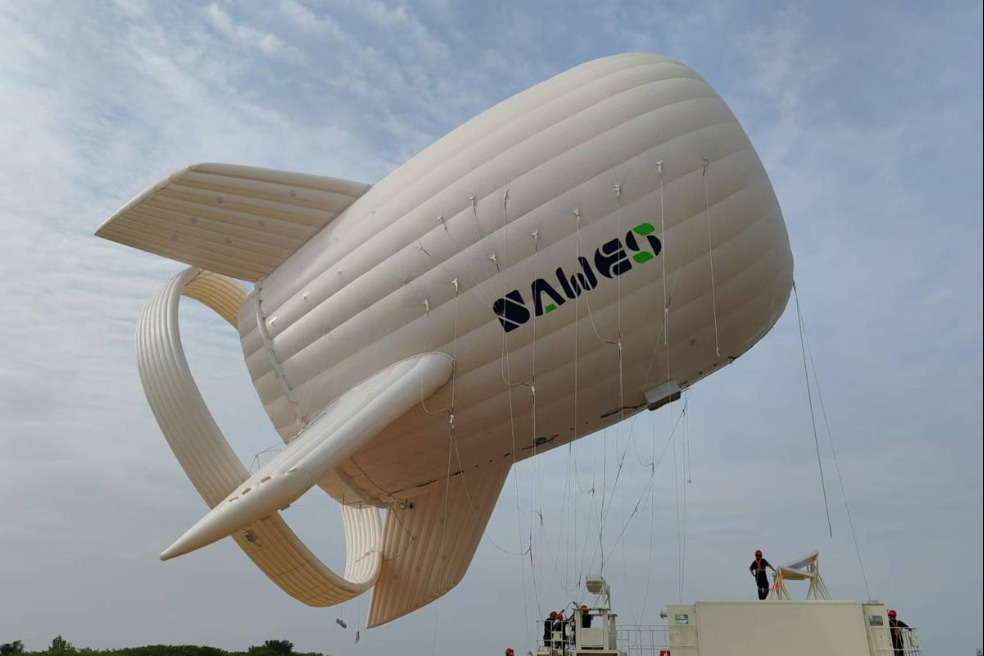
    In a groundbreaking advancement for renewable energy technology, a Chinese energy enterprise has successfully trialed its innovative megawatt-capacity high-altitude wind power generation system. The pioneering Stratosphere Airborne Wind Energy System (SAWES) achieved a significant milestone by ascending to 500 meters altitude and generating electricity during tests conducted in the Zhanghe area of Jingmen city, Hubei province on October 11, 2024.

    This revolutionary system represents the first high-altitude wind power technology specifically engineered for urban environments, offering a transformative approach to sustainable energy generation. The technology’s significance was underscored by Chinese Foreign Ministry spokesperson Mao Ning, who publicly endorsed the invention as a ‘power bank in the sky’ through her social media channels on January 11, 2026.

    The SAWES platform operates by harnessing consistent wind currents available at higher altitudes, where wind patterns are more stable and powerful than at ground level. This aerial energy generation method potentially offers greater efficiency than traditional terrestrial wind turbines while requiring significantly less surface infrastructure. The system’s design focuses on addressing urban energy demands while minimizing spatial requirements, making it particularly suitable for densely populated areas where land availability remains constrained.

    This technological breakthrough demonstrates China’s continuing advancements in renewable energy innovation and represents a substantial contribution to global efforts in developing sustainable power solutions. The successful test marks a critical step toward practical implementation of high-altitude wind energy systems that could potentially reshape urban energy infrastructure worldwide.

  • BTS stand to make $1bn as they announce mammoth comeback tour

    BTS stand to make $1bn as they announce mammoth comeback tour

    Global music phenomenon BTS has officially unveiled plans for an extensive 79-date world tour, marking their highly anticipated return to live performances following a four-year hiatus. The groundbreaking tour will commence on April 9, 2026, at Goyang Stadium in South Korea with three consecutive shows before spanning across Asia, Europe, and the Americas.

    The tour’s innovative 360-degree in-the-round stage design will maximize audience capacity at each venue, including major stops in London (July 6-7, 2026), Tokyo, Munich, Sydney, and Los Angeles. Additional dates in Japan, the Middle East, and other regions are scheduled for 2027, with ticket sales opening to fan club members on January 22, 2026, and general public availability two days later.

    Industry analysts project the reunion tour could generate over $1 billion in revenue through concert performances, merchandise, licensing agreements, and streaming content. This forecast comes after Hybe Corporation, BTS’s record label, experienced a 37.5% operating profit decline during the group’s hiatus, partially attributed to the band’s temporary break from collective activities.

    The septet’s return follows the completion of mandatory military service by all members, with songwriter Suga being the last to conclude his duty in June 2024. Their comeback album, recorded over six months in Los Angeles, is set for release on March 26, 2026, though the title remains undisclosed.

    Band leader RM acknowledged the adjustment period after military service, describing the reunion as a ‘strange experience’ while emphasizing their commitment to creating new music together. The group’s handwritten letters to their ARMY fanbase expressed heartfelt gratitude and excitement for the upcoming reunion, with member Jimin noting ‘the year we’ve been waiting for has finally arrived.’

    The tour represents the first opportunity for many fans to experience BTS live since 2019, with anticipation reaching unprecedented levels. The band’s Weverse platform crashed on New Year’s Day 2026 when they cleared social media profiles to announce the new album release, demonstrating the enduring global demand for their music.

  • Indonesian doctors gain hands-on cardiology training in Lanzhou

    Indonesian doctors gain hands-on cardiology training in Lanzhou

    In a significant bilateral health initiative, nine Indonesian medical professionals are currently immersed in an intensive one-year advanced training program in interventional cardiology at Lanzhou University First Hospital. This collaborative effort between the Chinese and Indonesian health ministries represents a growing partnership in medical education and specialized healthcare development.

    The program, initiated to address developmental gaps in Indonesia’s interventional cardiology sector, provides Indonesian clinicians with unprecedented access to China’s advanced medical technologies and extensive clinical resources. Participants work directly alongside experienced Chinese mentors, gaining practical experience through approximately 400-500 interventional procedures per trainee during the program duration.

    Muhammad Insani Ilman, who commenced training in March 2025, emphasized the transformative potential of this educational exchange. “The technological sophistication here exceeds anything available in Indonesia,” he noted. “The expertise we’re acquiring will significantly enhance our capacity to treat complex cardiac cases upon our return.”

    Fellow participant Juang Zehua highlighted both the professional rigor and supportive environment characterizing the program. “While the clinical workload is substantial, each patient interaction delivers valuable learning opportunities,” Zehua explained. “The medical staff has created an exceptionally welcoming atmosphere, making us feel like part of their professional family.”

    According to Dr. Bai Ming, Vice-President of Lanzhou University First Hospital, this initiative represents a mutually beneficial exchange that simultaneously elevates clinical capabilities while fostering international cooperation in cardiovascular care. “This program demonstrates how shared medical knowledge can transcend borders to improve global health outcomes,” Bai stated.

    The hospital administration has announced plans to expand this successful model, establishing similar cooperative programs with additional nations to further advance worldwide cardiovascular treatment standards.