标签: Asia

亚洲

  • Experts urge prioritizing sleep amid rising stress, screen time

    Experts urge prioritizing sleep amid rising stress, screen time

    Medical authorities in China are sounding alarms over a growing sleep deprivation epidemic affecting approximately 300 million citizens, with nearly half requiring professional medical intervention. The alarming statistics emerged as the nation observed World Sleep Day on March 21st, highlighting what healthcare professionals describe as a critical public health challenge.

    According to a comprehensive March report released by the China Sleep Research Society, modern lifestyle factors including excessive work hours, occupational stress, and digital overstimulation are creating a perfect storm against quality rest. Cultural analyst Xi Rui identified career anxiety combined with excessive consumption of stimulants like coffee and milk tea, alongside smartphone dependency, as primary culprits significantly eroding sleep duration nationwide.

    Neurology experts emphasize the physiological necessity of proper sleep. Dr. Sun Fenghui, Director of Neurology at Beijing Youan Hospital, Capital Medical University, explained that quality sleep serves essential functions in bodily restoration, hormonal regulation, immune system enhancement, and cerebral waste clearance. “Sleep maintains an irreplaceable position in human health infrastructure,” Dr. Sun stated.

    The consequences prove particularly severe for chronic disease populations. Dr. Zhang Tong, Director of Infectious Diseases at the same institution, warned that sleep disorders dramatically elevate cardiovascular risks and impair cognitive capabilities, potentially manifesting as irritability, diminished mental processing speed, and even accelerated dementia progression.

    HIV-positive individuals face compounded challenges, as Dr. Zhang noted: “Sleep disturbances occur more frequently among this demographic. Certain antiretroviral treatments induce substantial central nervous system side effects that disrupt sleep architecture.” This creates a dangerous cycle where sleep deprivation reduces medication adherence, potentially leading to treatment failure.

    Medical recommendations advocate for consistent sleep schedules and reduced pre-bedtime screen exposure to improve sleep quality. Chronic illness patients experiencing persistent sleep issues are advised to consult healthcare providers about potential treatment adjustments alongside implementing behavioral modifications.


  • Tianjin debuts 3-month cultural program with intl student exchange

    Tianjin debuts 3-month cultural program with intl student exchange

    The northern Chinese metropolis of Tianjin has inaugurated an ambitious three-month cultural and tourism initiative designed to strengthen international ties through student exchange. The program, which commenced over the weekend, brings together scholars from diverse nations including Russia, Vietnam, and South Korea for an immersive cultural experience.

    The opening events featured a vibrant array of activities that transformed the city into a global village. International students engaged local residents through culinary demonstrations, traditional cultural presentations, and an expansive multicultural marketplace. Participants showcased their national heritage through authentic cuisine, traditional arts, and cultural artifacts, creating a dynamic two-way exchange of traditions and customs.

    A particularly engaging component involved hands-on workshops where both international participants and local citizens experienced traditional Chinese printing techniques. These interactive sessions allowed for practical cultural immersion, bridging linguistic barriers through shared creative expression.

    The comprehensive program represents Tianjin’s strategic investment in soft diplomacy and educational tourism, positioning the city as a hub for international cultural exchange. Organizers designed the three-month itinerary to foster lasting connections between Chinese communities and international students, promoting mutual understanding and global citizenship.

    This initiative aligns with broader efforts to enhance people-to-people exchanges through cultural diplomacy, creating platforms for genuine intercultural dialogue beyond formal academic settings. The program’s extended duration allows for deeper engagement than typical one-day cultural events, potentially establishing long-term international relationships and cultural appreciation.

  • China’s flying eye hospital takes first voyage to Hainan

    China’s flying eye hospital takes first voyage to Hainan

    China’s pioneering airborne ophthalmology facility has commenced its maiden humanitarian operation in Hainan Province, marking a significant advancement in accessible eye care services. The converted C909 aircraft, functioning as a fully-equipped flying hospital, conducted its inaugural public welfare mission on March 20 during a ceremony in Boao town, Qionghai.

    The launch event simultaneously celebrated three major initiatives: the inauguration of the Hainan Free Trade Port vision care outreach program led by Zhongshan Ophthalmic Center of Sun Yat-sen University, the introduction of Hainan’s international ophthalmic medical services, and the Hainan segment of the nationwide “Vision Care for Hundreds of Cities, Reaching Millions of Families” campaign.

    This innovative aerial medical platform represents a breakthrough in delivering specialized ophthalmological services to remote regions. The flying hospital is engineered to provide comprehensive eye examinations, diagnostic procedures, and surgical interventions while functioning as a mobile training center for local medical professionals.

    The initiative establishes a sophisticated international cooperation platform for ophthalmic care, facilitating knowledge exchange between Chinese specialists and global experts. Health authorities indicate that the service will soon extend its reach across Southeast Asia, offering advanced eye care solutions to international patients through this unique airborne medical facility.

  • First Tibetan tap dance drama to debut in Beijing

    First Tibetan tap dance drama to debut in Beijing

    In a groundbreaking cultural fusion, China’s first full-length Tibetan tap dance drama is set to premiere in Beijing on March 28, coinciding with Serfs’ Emancipation Day in Xizang. Titled ‘Tashi Shabdro’ (meaning ‘auspicious dance’), the production represents a significant milestone in bringing traditional Tibetan performing arts to the national stage.

    The innovative performance will run from March 28-29 at the prestigious China National Opera House, blending the rhythmic Lhaze Doishey folk dance—recognized as national intangible cultural heritage—with contemporary theatrical elements. The production features a cross-generational narrative that explores themes of national solidarity, cultural devotion, and heritage preservation through the story of an aid doctor, his daughter, and a Tibetan family.

    This ambitious project is the result of a collaborative effort between multiple cultural institutions, including the China Federation of Literary and Art Circles, regional publicity authorities, the China Dancers Association, a Xizang-based cultural investment group, and a Beijing aid program office. The development process presented substantial artistic challenges, requiring three years of dedicated work by multiple choreographic teams who overcame the practical difficulties of high-altitude rehearsals.

    Huang Doudou, vice-chair of the China Dancers Association, emphasized the production’s cultural significance, noting that adapting traditional Tibetan tap dance into a full-length dramatic format while preserving its authentic roots and distinctive artistic style required innovative approaches. The production marks the beginning of a new chapter for Tibetan performing arts, potentially paving the way for broader recognition and preservation of the region’s cultural traditions.

  • Iran launches retaliatory strikes on Israeli nuclear facility

    Iran launches retaliatory strikes on Israeli nuclear facility

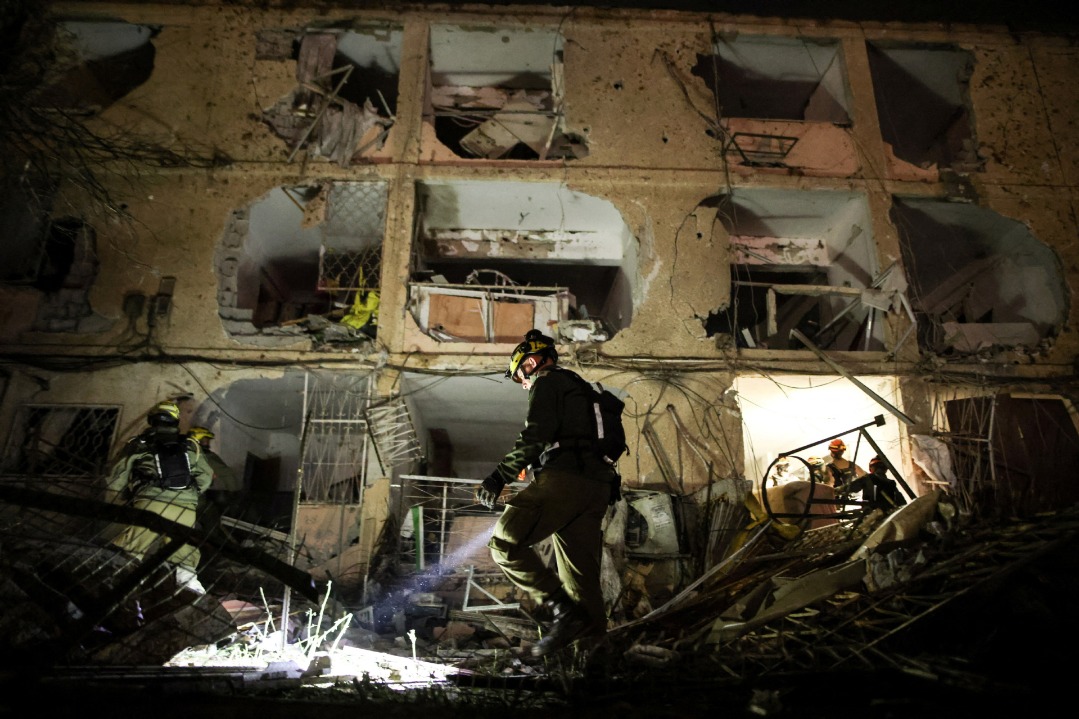
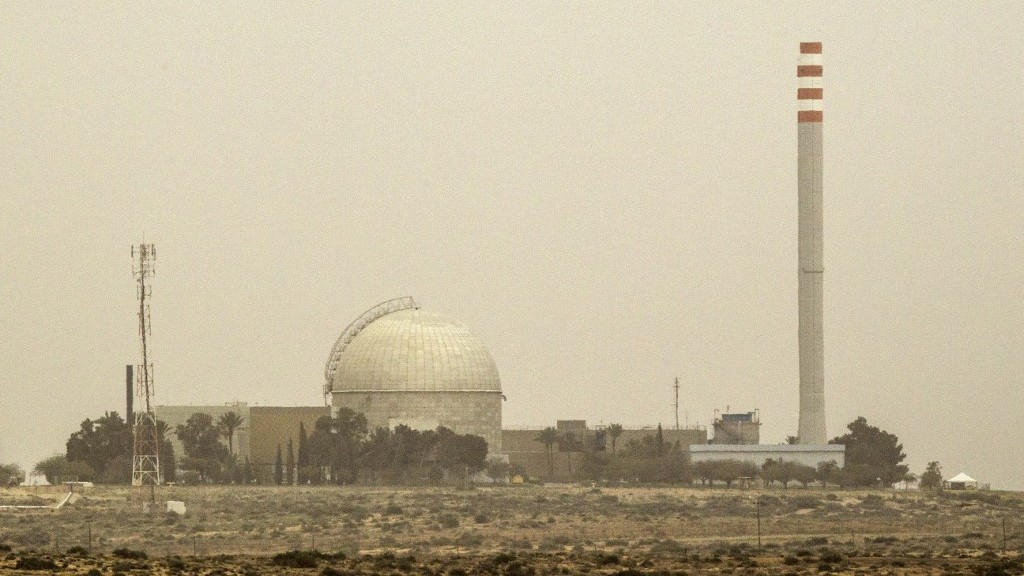
    In a significant escalation of Middle Eastern hostilities, Iran has launched a targeted missile strike against the Dimona nuclear facility in southern Israel. The retaliatory operation, confirmed by Iranian international affairs expert Morteza Simiari in a state television broadcast, comes in direct response to an Israeli attack on Iran’s Natanz atomic facility less than 24 hours earlier.

    Simiari articulated Iran’s newly adopted ‘eye for an eye’ military doctrine, emphasizing that Tehran will deliver reciprocal responses with heightened intensity to any Israeli military actions. According to initial reports from Israeli medical authorities, the assault resulted in more than 30 casualties, though the precise nature of injuries remains unclear.

    The International Atomic Energy Agency (IAEA) has subsequently reported no detectable damage to Israel’s Negev nuclear research center following the attack. In an official statement released via social media platforms, the nuclear watchdog agency confirmed that regional monitoring stations had detected no abnormal radiation levels following the incident.

    IAEA Director General Rafael Grossi has issued urgent appeals for maximum military restraint, particularly in the vicinity of nuclear installations across the region. This exchange of attacks represents the latest chapter in an escalating conflict that began on February 28, when joint Israeli-American operations struck multiple Iranian cities, resulting in the death of Supreme Leader Ali Khamenei alongside military personnel and civilians. Iran responded with coordinated missile and drone strikes targeting Israeli positions and American assets throughout the Middle East, setting the stage for the current dangerous escalation.

  • How a medieval English abbey became a Chinese wedding destination

    How a medieval English abbey became a Chinese wedding destination

    Nestled in the heart of North Yorkshire’s market town, the historic Selby Abbey has undergone a remarkable transformation into a premier international wedding destination, a phenomenon directly attributed to a single celebrity event from 2015. The medieval church, which witnessed the union of Taiwanese pop megastar Jay Chou and Australian model Hannah Quinlivan nearly a decade ago, now experiences a sustained influx of Chinese couples seeking to replicate the fairytale backdrop.

    The enduring impact of this cultural moment is quantifiable. The Reverend Canon John Weetman, vicar at the abbey, confirms ‘quite a demand’ from Chinese nationals, with over 30 weddings already booked for this year alone—a number that represents just a fraction of the total interest. The demand so significantly exceeds availability that the abbey has implemented a strict policy of limiting ceremonies to no more than one per week, forcing staff to turn away numerous hopeful couples.

    This pilgrimage to Selby began immediately following Chou’s widely publicized blessing ceremony (the couple opted for a service not governed by marital law). Video footage of their lavish celebration, viewed millions of times online, continues to serve as a powerful marketing tool. Visitors like Isobel from Beijing explicitly state their motivation: ‘We came here because we are fans of Jay Chou and their wedding was so splendid.’

    For many, the journey is both sentimental and logistical. Bride Qing Li, who flew from China specifically to marry at the abbey, cited her love for York and the powerful personal connection established by the celebrity wedding. The abbey’s management capitalizes on this unique appeal by offering two distinct services: traditional weddings requiring specific parish criteria and the more accessible ‘blessing’ ceremonies, which carry no qualifying restrictions and have become the preferred choice for international visitors.

    The abbey’s newfound status has also boosted local tourism, with Chinese students and holidaymakers regularly making detours from York to experience the site firsthand. This ongoing trend demonstrates the potent, long-term economic and cultural influence of celebrity culture on global travel patterns and niche tourism.

  • China releases global high-quality journal list for medicine, life sciences

    China releases global high-quality journal list for medicine, life sciences

    China has introduced a groundbreaking academic evaluation framework with the release of its independently compiled Global High-Quality Journal List for medicine and life sciences. The comprehensive catalog, jointly developed by Dongbi Technology Data Co Ltd in partnership with the Chinese Academy of Medical Sciences and Shanghai Jiao Tong University, presents a distinctive Chinese perspective on scholarly journal assessment.

    The newly published inventory encompasses 4,027 medical journals and 3,064 life sciences publications worldwide, systematically organized into a four-tier pyramidal structure. Tier A represents the pinnacle of academic excellence, while Tiers B and C form the core academic foundation. Tier D incorporates emerging and specialized publications, creating a holistic representation of global research output.

    This innovative evaluation system was developed through rigorous analysis of global citation big data spanning from 2023 to 2025, utilizing authoritative seed journals as its foundation. The initiative aims to provide Chinese researchers with enhanced guidance for publication decisions while offering academic institutions and research management authorities a refined framework for journal assessment and tier optimization.

    Qiu Xiaochun, Deputy Director of the Medical Committee of the Library Society of China, emphasized the significance of this development, noting that it represents a substantial advancement in establishing China’s independent voice within international research evaluation systems. The project reflects China’s growing influence in global academic circles and its commitment to shaping scholarly communication standards in critical scientific domains.

  • The Datong Code EP.5 | Intangible cultural heritage micro-drama series

    The Datong Code EP.5 | Intangible cultural heritage micro-drama series

    The captivating micro-drama series ‘The Datong Code’ reaches its profound conclusion in Episode 5, transforming from a treasure hunt into a philosophical exploration of China’s intangible cultural heritage. The narrative culminates with protagonist Kai’s final encounter with traditional knotting artisan Yang Xuefei, which reveals an unexpected truth: the missing element isn’t a physical object to collect but rather an immersive experience to embrace.

    As the series approaches its climax, intangible cultural heritage inheritors gather for a symbolic Chinese New Year’s Eve dinner under the night sky, creating a powerful backdrop for Kai’s ultimate realization about his journey’s true meaning. The episode masterfully intertwines cultural preservation themes with personal transformation, challenging viewers to reconsider their relationship with traditional practices.

    Produced in association with Peking University and released on March 22, 2026, this innovative series has pioneered a new format for cultural education through digital storytelling. The finale leaves audiences contemplating whether Kai will return to reality or remain captivated by the rich tapestry of China’s living heritage, emphasizing that true cultural understanding comes not from acquisition but from participation and emotional connection.

  • South Africa wins the toss and bats in the fourth T20 against New Zealand

    South Africa wins the toss and bats in the fourth T20 against New Zealand

    WELLINGTON, New Zealand — In a crucial series decider at Wellington’s stadium, South African skipper Keshav Maharaj won the toss and elected to field first in the fourth Twenty20 international against New Zealand on Sunday. The strategic decision comes as New Zealand holds a narrow 2-1 advantage in the fiercely contested series following a pattern of low-scoring encounters.

    The hosts face significant leadership challenges with regular captain Mitchell Santner joining multiple key players on the sidelines. Wicketkeeper-batter Tom Latham, whose impressive 63-run performance secured victory in Friday’s third match, has been ruled out with a thumb injury. The squad also misses the services of opener Devon Conway and pace bowler Lockie Ferguson for the final two matches of the series.

    New Zealand’s reshuffled lineup features wicketkeeper Dane Cleaver, returning to international cricket for the first time since 2023, alongside debutant batter Katene Clarke. Josh Clarkson makes his return to the squad while all-rounder Jimmy Neesham assumes captaincy duties in this unexpected leadership reshuffle.

    South Africa responded with strategic adjustments of their own, handing off-spinner Prenelan Subrayen his international debut while recalling pace bowler Ottneil Baartman. The Proteas have opted to rest seamers Nqobani Mokoena and Lutho Sipamla following the physically demanding series.

    The series has showcased dramatic momentum shifts, with South Africa claiming the opening match by seven wickets before New Zealand responded with commanding victories—a 68-run triumph in the second encounter followed by an eight-wicket win in the third match.

    Starting Lineups:
    New Zealand: Tim Robinson, Katene Clarke, Dane Cleaver, Nick Kelly, Bevon Jacobs, Jimmy Neesham (captain), Josh Clarkson, Cole McConchie, Zak Foulkes, Kyle Jamieson, Ben Sears.
    South Africa: Wiaan Mulder, Tony de Zorzi, Connor Esterhuizen, Rubin Hermann, Jason Smith, Dian Forrester, George Linde, Gerald Coetzee, Keshav Maharaj (captain), Prenelan Subrayen, Ottneil Baartman.

  • Iran attacks Israel’s Dimona nuclear site in retaliation, dozens wounded

    Iran attacks Israel’s Dimona nuclear site in retaliation, dozens wounded

    A significant escalation in Middle Eastern tensions has occurred following reciprocal missile strikes targeting nuclear facilities in Iran and Israel. Iranian state television has officially claimed responsibility for a missile attack on Dimona in southern Israel, describing it as a direct retaliation for an earlier assault on its Natanz nuclear enrichment complex.

    According to Iran’s atomic energy organization, the Natanz facility was targeted earlier in the day, though they reported no leakage of radioactive materials from the site. The Israeli military confirmed through AFP reports that an Iranian missile directly impacted a building in Dimona that houses nuclear research facilities. Initial media reports indicate at least 39 casualties, though official breakdowns remain pending.

    The Dimona location holds particular significance due to its proximity to the Shimon Peres Negev Nuclear Research Center, long associated with Israel’s undeclared nuclear weapons program. Israel maintains a policy of nuclear ambiguity, neither confirming nor denying its arsenal while operating one of the region’s most heavily fortified sites in the Naqab desert.

    The exchange represents a dangerous escalation in the shadow conflict between the two nations. Iran condemned the initial strike on Natanz as criminal attacks that violate international law and nuclear agreements, including the Non-Proliferation Treaty. The International Atomic Energy Agency has confirmed the Natanz attack while reporting no elevated radiation levels, launching an investigation and calling for restraint.

    This development follows previous Iranian warnings that Dimona could become a target if Israel continued striking nuclear sites. A military source speaking to Tasnim News Agency revealed that Iran has shifted its strategic approach, moving beyond proportional retaliation to impose greater costs for future attacks. The source indicated Tehran’s new policy would involve responding to single infrastructure attacks with strikes on multiple facilities, significantly raising the stakes for military aggression in the region.