标签: Asia

亚洲

  • Prosecutors investigating Epstein files after claims Turkish girls were trafficked

    Prosecutors investigating Epstein files after claims Turkish girls were trafficked

    Turkish judicial authorities have launched a comprehensive examination of millions of newly released documents concerning convicted sex offender Jeffrey Epstein, focusing specifically on potential connections to child trafficking operations within Turkey. The Ankara Public Prosecutor’s Office initiated this formal investigation in December following parliamentary inquiries from opposition lawmakers.

    The probe gained significant momentum after the U.S. Department of Justice released approximately three million documents last Friday, providing Turkish prosecutors with substantial new evidence to review. This development comes amid growing political pressure for an extensive parliamentary investigation into whether Turkish children were among Epstein’s victims.

    Bugra Kavuncu, spokesperson for the opposition Iyi Party, emphasized the urgency of establishing a special parliamentary commission. “We propose the urgent establishment of a parliamentary commission to investigate whether there are any Turkish children who were victims in the Epstein case,” Kavuncu stated, adding that such matters transcend political considerations and represent fundamental humanitarian concerns.

    The investigation has drawn attention to alarming domestic statistics cited by Dogan Bekin, a parliamentarian from the right-wing Yeniden Refah party. Official data from the Turkish Statistical Institute indicates that between 2008 and 2016, some 104,531 children were reported missing nationwide, with young girls constituting the majority of these cases.

    Bekin has submitted formal inquiries to multiple government ministries, demanding clarification on whether any children were victimized by Epstein’s criminal network and what inspection measures have been implemented in schools and orphanages to identify potential victims. The lawmaker also questioned whether Epstein had established contacts with Turkish politicians, administrators, or high-ranking officials.

    The document release has revealed several connections between Epstein and Turkish political figures, though no evidence suggests involvement in wrongdoing. Emails from American businessman Tom Pritzker indicate he facilitated communication between Epstein and then-Foreign Minister Ahmet Davutoglu in 2010. However, representatives from Davutoglu’s Future Party have denied any substantive relationship, characterizing the interaction as a brief encounter related to diplomatic affairs.

    Additional correspondence shows Epstein mentioning potential contact with President Recep Tayyip Erdogan in 2011, though other emails reveal the financier’s critical views of the Turkish leader, leaving the seriousness of this reference uncertain.

    The unfolding investigation represents Turkey’s response to the global repercussions of the Epstein document release, which has triggered political turmoil and resignations internationally as numerous public figures face scrutiny over their associations with the convicted sex offender.

  • Turkey says location of Iran-US meeting still unknown

    Turkey says location of Iran-US meeting still unknown

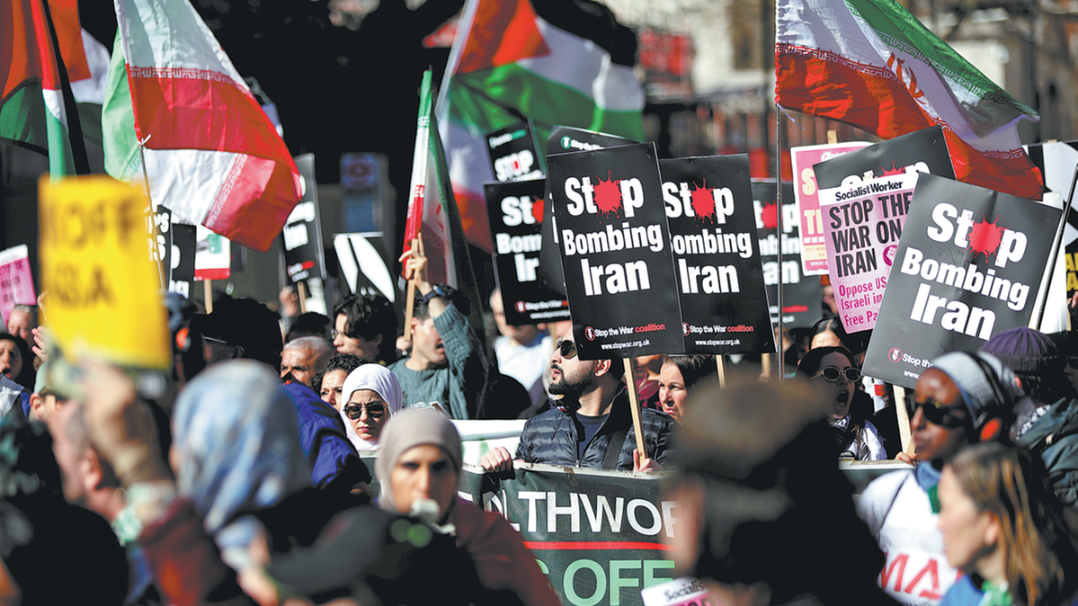
    A highly anticipated diplomatic meeting between Iranian Foreign Minister Abbas Araghchi and US negotiators Jared Kushner and Steve Witkoff faces uncertainty as Turkish officials indicate the venue may relocate from Istanbul. While initially planned for Friday in the Turkish metropolis, Ankara government sources now suggest alternative locations are under consideration.

    The potential shift follows cautious statements from Iranian officials who maintain a guarded stance toward the prospective negotiations. An Iranian diplomatic source characterized Tehran’s position as “neither optimistic nor pessimistic,” emphasizing that the meeting would demonstrate whether Washington intends to engage in “serious and result-orientated” discussions.

    Iranian President Masoud Pezeshkian confirmed his authorization for negotiations via social media, but established clear preconditions requiring “a suitable environment free from threats and unreasonable expectations.” The president emphasized that any talks must operate within Iran’s national interests framework, following requests from regional allies.

    The diplomatic engagement occurs against a backdrop of heightened military tensions. US President Donald Trump recently referenced a “massive armada” deployed toward Iran, warning of potential military action unless Tehran agrees to nuclear negotiations. Iranian officials responded by placing forces at “maximum defensive readiness” while Supreme Leader Ayatollah Ali Khamenei cautioned that any US strike would trigger regional conflict.

    Regional mediators including Qatar, Turkey, and Egypt have facilitated the diplomatic efforts to prevent open warfare between the US and Iran. The United Arab Emirates’ diplomatic adviser Anwar Gargash echoed the regional consensus that “the region does not need an Iran-US war,” while simultaneously urging Iran to pursue a negotiated settlement.

    The prospective talks would represent the first direct engagement since US airstrikes targeted Iranian nuclear facilities last summer, following Israel’s surprise attack on Iran in June 2025. Previous indirect nuclear negotiations between the parties occurred in April and May of 2025 before the military escalation.

  • Reform UK’s treasurer dined with Epstein associate, contacted Ghislaine Maxwell

    Reform UK’s treasurer dined with Epstein associate, contacted Ghislaine Maxwell

    Newly unsealed court documents have revealed connections between Reform UK’s honorary treasurer, billionaire property developer Nick Candy, and associates of the convicted sex offender Jeffrey Epstein. The records detail communications from 2004, showing Candy had contact with both Sarah Kellen, a named Epstein associate, and Ghislaine Maxwell, who is currently serving a 20-year sentence for child sex trafficking.

    The correspondence occurred years before Epstein’s 2008 conviction for child sex offenses and Maxwell’s 2021 conviction for recruiting and grooming underage girls. The documents include email exchanges where Candy discussed social plans with Kellen, who identified herself as Maxwell’s friend. In one message, Kellen expressed Maxwell’s disappointment that Candy hadn’t informed them of his travel plans.

    Candy, a former Conservative Party donor who joined Nigel Farage’s Reform UK party before the July 2024 election and contributed £1 million, inquired about Maxwell’s contact information during these exchanges. The emails show discussions about meeting in New York and reference social activities, including Kellen’s mention of time spent on Epstein’s private island.

    The documents reveal no allegations of wrongdoing by Candy. Middle East Eye, which published the findings, has reached out to both Reform UK and Candy for comment. The revelations emerge as Reform UK seeks to establish itself as a significant political force following the recent general election.

    These documents form part of the latest release of materials related to the Epstein case, continuing to shed light on the social networks connected to the financier before his criminal activities became public knowledge.

  • Tearful Gazans finally reunite after limited Rafah reopening

    Tearful Gazans finally reunite after limited Rafah reopening

    A limited reopening of the Rafah border crossing between Egypt and Gaza facilitated emotional, long-awaited reunions for a small number of Palestinians on Monday, February 3rd, 2026. The crossing, which serves as Gaza’s sole access point to the outside world not controlled by Israel, had been effectively sealed since Israeli military forces assumed control in May 2024 during the ongoing conflict with Hamas.

    Jubilant yet tearful scenes unfolded at Nasser Hospital in Khan Yunis as returnees arrived late Monday. AFP footage captured crowds gathering around a bus, with individuals filming the poignant moments on their phones. The emotional weight was palpable as women wept upon embracing family members and a man held a young child up to a window to greet arrivals.

    However, the return was marred by hardship and stringent Israeli inspections. Rotana Al-Riqib, a Palestinian woman in her thirties returning from Egypt, described the experience as a ‘humiliating journey,’ detailing interrogations and the confiscation of all belongings, including her children’s possessions, leaving them with only some clothes.

    The reopening fell drastically short of initial expectations. While Egyptian officials had anticipated around 200 people to transit, sources on both sides reported only approximately two dozen movements in total. Gaza’s Hamas-operated Interior Ministry confirmed merely 12 individuals—nine women and three children—were permitted to return from Egypt, with only eight departing. An Egyptian source cited 12 admissions from Gaza, comprising five injured patients and seven companions.

    Ali Shaath, head of a Palestinian technocratic committee for Gaza’s governance, termed the reopening a ‘window of hope’ for a territory shattered by two years of war. For many, particularly the estimated 20,000 patients in urgent need of medical care, the crossing represents a critical lifeline. The reopening is a component of a U.S.-backed truce plan, long demanded by the UN and aid agencies. Yet, Israeli coordination bodies have not indicated any plans to facilitate the long-awaited surge of humanitarian aid into the besieged territory, leaving dire conditions largely unaddressed.

  • Remittances from UAE to Pakistan will remain steady amid global uncertainty: Official

    Remittances from UAE to Pakistan will remain steady amid global uncertainty: Official

    Despite prevailing global economic headwinds, financial transfers from the United Arab Emirates to Pakistan are projected to maintain their steady trajectory, according to recent official statements. Pakistan’s Bureau of Emigration and Overseas Employment has reported that remittance inflows from the UAE exceeded $4 billion during the initial six months of the current fiscal year.

    Finance officials emphasized the remarkable stability of these financial transfers, noting that Pakistani expatriates consistently send funds to support families back home. This pattern has demonstrated remarkable resilience even during periods of international market volatility.

    The stability comes as Pakistan continues its economic recovery following a near-default crisis in 2023. The country’s macroeconomic stabilization efforts, supported by a $3 billion International Monetary Fund Stand-By Arrangement, have contributed to rebuilding foreign exchange reserves and maintaining relatively stable exchange rates.

    Government representatives highlighted that sustained exchange rate stability over recent years has created favorable conditions for continued remittance flows. This financial lifeline remains crucial for Pakistan’s economy, providing substantial foreign currency inflows that support the nation’s balance of payments and contribute to economic growth prospects.

  • Tunisian opposition leader Rached Ghannouchi handed longer sentence

    Tunisian opposition leader Rached Ghannouchi handed longer sentence

    In a significant escalation of Tunisia’s political crackdown, an appeals court has increased the prison sentence of prominent opposition leader Rached Ghannouchi to 20 years. The verdict, delivered Tuesday, centers on allegations of “conspiracy against the internal security of the state” in what authorities term the “Conspiracy 2” case targeting President Kais Saied’s opponents.

    Ghannouchi, who has been incarcerated since 2023, initially received a 14-year sentence. This latest judicial decision brings his cumulative prison term to over four decades. According to legal representatives, the 81-year-old intellectual has opted against appealing to the supreme court, citing profound concerns about judicial impartiality and what he characterizes as politically motivated proceedings.

    The case forms part of a broader pattern of suppression since President Saied’s consolidation of executive powers in July 2021. Approximately twenty individuals face similar charges, including Saied’s former chief of staff Nadia Akacha and ex-Prime Minister Youssef Chahed, who currently resides abroad. These defendants stand accused of establishing a “secret security apparatus” allegedly operating through Ghannouchi’s Ennahda party.

    Parallel sentencing developments include retired military officer Kamel Bedoui, whose punishment similarly increased from 14 to 20 years. Absentee defendants Akacha and Rafik Abdessalem (Ghannouchi’s son-in-law) received upheld sentences of 35 years imprisonment.

    This ruling follows a previous major conspiracy trial concluded in November, which resulted in prison terms ranging from 5 to 45 years for 34 political opponents. Until Saied’s power consolidation, Ghannouchi’s Ennahda movement—which emerged victorious following Tunisia’s 2011 revolution—played a dominant role in the nation’s political landscape. The former parliament speaker saw his institution dissolved when Saied dismissed the prime minister and suspended legislative operations.

    International and local human rights organizations have consistently condemned these proceedings as lacking due process guarantees, warning of significant democratic backsliding and erosion of civil liberties in the North African nation.

  • Russia says India has not said it will halt oil purchases

    Russia says India has not said it will halt oil purchases

    The Kremlin has officially stated that it has received no communication from the Indian government regarding any intention to cease purchasing Russian crude oil, directly contradicting claims made by former US President Donald Trump about a bilateral trade agreement.

    Kremlin spokesman Dmitry Peskov addressed reporters on Tuesday, emphasizing that Moscow had not been notified of any changes to the energy partnership between Russia and India. This statement came in response to Trump’s assertion on social media that he had negotiated a trade deal with Indian Prime Minister Narendra Modi that included tariff reductions and a commitment from India to stop buying Russian oil due to the ongoing conflict in Ukraine.

    Trump announced he had reduced tariffs on Indian goods from 25% to 18%, reversing previous reciprocal tariffs imposed specifically in response to India’s continued purchases of Russian energy. While Prime Minister Modi publicly thanked Trump for the ‘wonderful’ phone conversation and tariff relief, he notably omitted any reference to halting oil imports from Russia in his official statements.

    The energy relationship between Moscow and New Delhi has expanded dramatically since Western sanctions reshaped global oil markets following Russia’s 2022 military operations in Ukraine. India emerged as a major purchaser of discounted Russian crude, with imports reaching approximately 1.8 million barrels per day in 2024, representing nearly 36% of India’s total crude imports.

    Despite the strong energy ties, bilateral trade remains heavily imbalanced at $68.7 billion for the 2024-25 period, with Russian energy exports dominating while Indian exports to Russia accounted for less than $5 billion. The partnership has continued to strengthen, with Russian President Vladimir Putin personally assuring ‘uninterrupted shipments’ during his late 2025 visit to New Delhi.

    Market analysts note that Trump’s previous tariff imposition had already impacted energy flows, with Indian media reporting a 38% monthly decline in Russian oil imports following the implementation of reciprocal tariffs, according to Commerce Ministry data.

  • Hunan achieves record grain output in 2025

    Hunan achieves record grain output in 2025

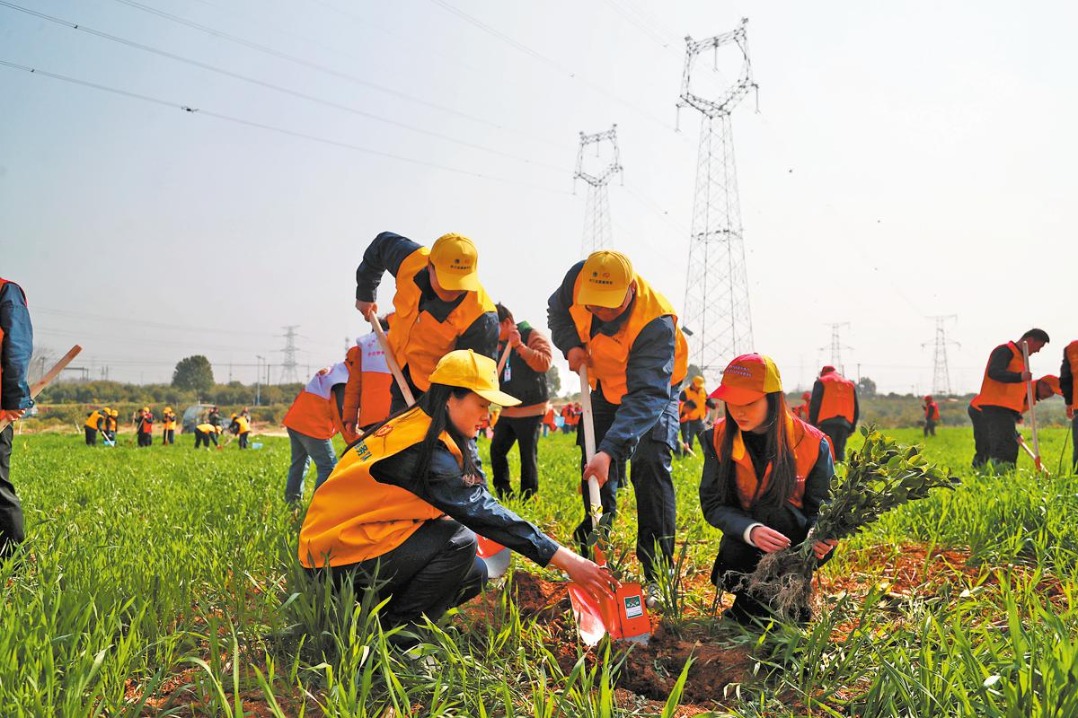
    Central China’s Hunan Province has achieved an unprecedented agricultural milestone, reporting a record-breaking grain harvest of 31 million tons for the 2025 growing season. The announcement came from Provincial Governor Mao Weiming during the delivery of the annual government work report at the provincial legislative session in Changsha on Tuesday.

    Throughout the 14th Five-Year Plan period (2021-2025), Hunan maintained exceptional agricultural stability with over 4.73 million hectares of cultivated grain land. The province solidified its national leadership position in both rice and oil-tea camellia production during this period.

    Looking toward the forthcoming five-year plan commencing in 2026, Hunan has established ambitious agricultural targets. The province plans to maintain approximately 4.77 million hectares under grain cultivation while simultaneously strengthening food security measures and advancing agricultural technological capabilities.

    The provincial strategy emphasizes achieving breakthroughs in critical agricultural technologies and enhancing rural industrial development momentum. This comprehensive approach aims to create a more resilient and technologically advanced agricultural sector.

    Duan Zhao, head of a professional rice planting cooperative in Yiyang and provincial congress deputy, provided concrete evidence of this technological transformation. His cooperative has significantly improved profitability through mechanization and technological implementation.

    By adopting innovative cultivation techniques including simplified rice farming methodologies and integrated pest management systems, the cooperative has successfully reduced production costs while increasing local farmer incomes. The operation now utilizes a fleet exceeding 70 specialized machines, enabling fully automated processes from seedling transplantation to precision fertilization and pesticide application, culminating in an automated drying system.

    “The synergistic combination of advanced machinery and cutting-edge agricultural technology has reduced rice planting costs by 100 to 150 yuan per mu (0.067 hectares),” Duan confirmed, demonstrating the tangible economic benefits of Hunan’s agricultural modernization efforts.

  • Israel’s Shin Bet ‘downgrades settler assault from terror attacks to serious incidents’

    Israel’s Shin Bet ‘downgrades settler assault from terror attacks to serious incidents’

    Israel’s domestic intelligence agency Shin Bet has systematically reclassified violent acts committed by settlers against Palestinians, downgrading numerous incidents from “terror attacks” to “serious incidents” according to reports from Israel’s Kan 11 public broadcaster. This policy shift, implemented approximately one year ago, has significantly altered how security forces prioritize cases and allocate investigative resources.

    Under the revised classification framework, only attacks demonstrating “clear intent to kill” Palestinians now qualify as terrorism according to the Shin Bet’s Jewish Division. Common violent acts including arson attacks against buildings and unmanned vehicles—frequent occurrences across the occupied West Bank—now typically receive the lower classification of “serious incidents.”

    Statistical evidence reveals the practical impact of this policy: of ten documented arson attacks by masked settlers during the past month, only three were designated as terror attacks while the remaining seven were recorded as serious incidents. This reclassification occurs alongside a documented surge in settler violence throughout the West Bank.

    Critics highlight concerning patterns of impunity, noting that perpetrators are rarely detained or questioned by Israeli security forces. Numerous reports document instances where soldiers either actively participated in assaults or remained passive observers during attacks on Palestinian communities.

    One recent incident in Masafer Yatta, south of Hebron, saw dozens of settlers attacking Palestinian communities while Israeli forces reportedly stood by. Witness accounts describe soldiers encouraging settlers during acts that included setting livestock on fire and stealing property.

    Official data indicates a 25% increase in what the Israeli army terms “Israeli-Jewish terror attacks” in 2025 compared to the previous year, with 845 documented attacks resulting in four fatalities and approximately 200 injuries. Israeli rights organization B’Tselem reported in November that settlers killed at least 21 Palestinians in the two years following the October 2023 attacks, with no documented cases resulting in accountability for the perpetrators.

  • Rafah crossing receives 2nd group of Palestinians returning from Egypt to Gaza

    Rafah crossing receives 2nd group of Palestinians returning from Egypt to Gaza

    The Rafah border crossing has witnessed the return of a second contingent of Palestinian civilians to the Gaza Strip from Egypt, marking a significant humanitarian development in the ongoing ceasefire between Israel and Hamas. According to Egypt’s state-affiliated Al-Qahera News TV, these individuals—comprising war-wounded patients and their accompanying relatives—completed entry procedures on the Egyptian side before transiting back into Gaza on Tuesday.

    This repatriation follows the crossing’s official reactivation on Monday, its first operational resumption since May 2024. The movement is part of the second phase implementation of the ceasefire agreement brokered between the conflicting parties. Palestinian media confirmed that an initial group of 12 returnees arrived via bus at Khan Younis’ Nasser Medical Complex on Monday evening.

    The returning Palestinians had previously received critical medical treatment and healthcare services in Egyptian hospitals. Gaza’s health authorities emphasize the staggering scale of medical need within the enclave, reporting approximately 22,000 Palestinians requiring urgent external medical treatment, including over 400 cases classified as immediately life-threatening.

    In preparation for continued medical transfers, Egypt’s Ministry of Health has mobilized substantial medical resources, placing approximately 12,000 doctors across 150 hospitals on high alert to receive additional wounded Palestinians and patients.

    The current fragile ceasefire took effect on October 10, 2025, concluding two years of devastating conflict that Gaza health authorities report resulted in at least 71,800 Palestinian fatalities and 171,500 injuries.