标签: Asia

亚洲

  • Millie Bobby Brown vanishes on the world’s fastest roller coaster, leaving husband Jake Bongiovi stunned on Yas Island Abu Dhabi

    Millie Bobby Brown vanishes on the world’s fastest roller coaster, leaving husband Jake Bongiovi stunned on Yas Island Abu Dhabi

    Yas Island Abu Dhabi has released a surreal new promotional video featuring Stranger Things star Millie Bobby Brown that blurs the lines between reality and supernatural fiction. The footage documents Brown’s experience on the island’s record-breaking attractions alongside husband Jake Bongiovi, with bizarre occurrences echoing her Netflix series’ supernatural themes.

    The adventure begins at Formula Rossa, the world’s fastest roller coaster capable of reaching 240 km/h. As the ride launches, Brown mysteriously vanishes from her seat, replaced by an unidentified young girl, leaving Bongiovi visibly astonished. The supernatural phenomena continue throughout the day—lights flicker erratically, service staff momentarily transform into characters from the show’s Scoops Ahoy ice cream parlor, and the iconic Stranger Things theme music emerges unexpectedly throughout the park.

    Even Brown’s brave facade proves vulnerable. Despite joking about her experience battling Demogorgons and Vecna, she unleashes unprecedented screams during the Turbo Track launch. The carefully orchestrated campaign cleverly integrates elements from the popular series, creating an immersive narrative that suggests the Upside Down might have infiltrated Ferrari World Abu Dhabi.

    The production serves as both entertainment content and promotional material for Yas Island’s newly launched Stranger Things experience packages. The complete episode is available on the destination’s official social media channels, offering fans an extended look at the supernatural-themed attractions.
  • Saudi Arabia ‘sets new death penalty record in a year’

    Saudi Arabia ‘sets new death penalty record in a year’

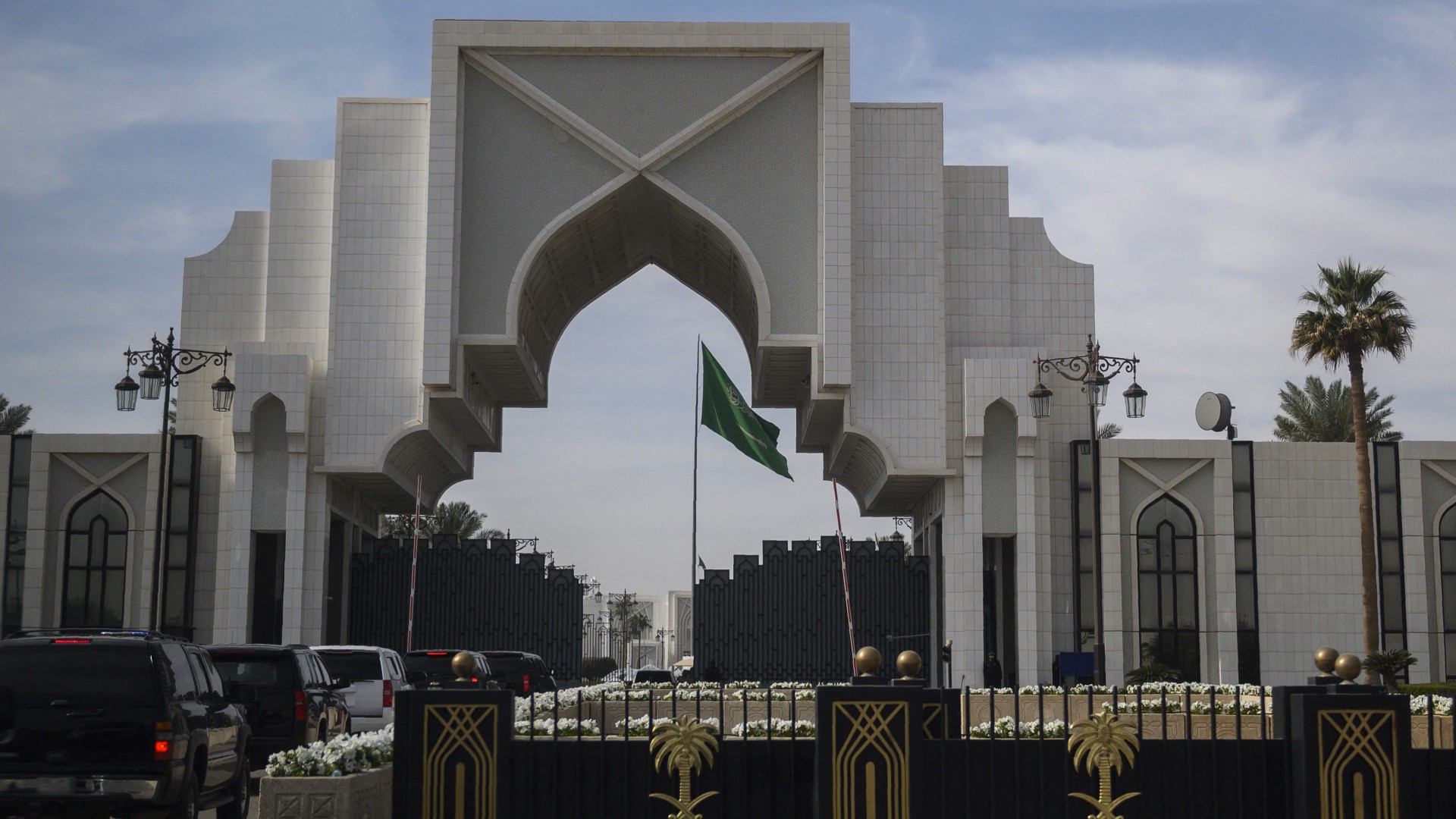
    Saudi Arabia has established a grim new benchmark in its use of capital punishment, with official records confirming 340 executions carried out during 2024. This figure surpasses the previous record of 338 executions documented in the same year, according to data compiled by AFP. The latest statistics follow Monday’s execution of three individuals in Mecca convicted of murder charges.

    Human rights organizations including Alqst, Amnesty International, and Reprieve have reported slightly higher numbers, documenting 345 executions during this period. The majority of these executions (232 cases) involved drug-related offenses, while others were conducted under terrorism charges—a broadly defined category within Saudi jurisprudence.

    Nadyeen Abdulaziz of UK-based Alqst told Middle East Eye: “Saudi authorities’ willingness to exceed last year’s execution toll demonstrates a disturbing disregard for fundamental human rights and repeated appeals from UN experts and civil society.”

    Significant concerns have emerged regarding judicial processes, with numerous cases involving confessions allegedly obtained through torture and the execution of individuals who were minors at the time of their alleged offenses. This practice directly violates international human rights law, particularly the UN Convention on the Rights of the Child, to which Saudi Arabia is a signatory.

    Despite a 2020 royal order prohibiting capital punishment for juvenile offenders and global scrutiny, the kingdom has continued to execute individuals who committed crimes as minors. Alqst has identified five additional child offenders currently facing imminent execution.

    International law strictly limits capital punishment to cases involving intentional killing, raising questions about the legality of drug-related executions. The resumption of death penalties for drug offenses in late 2022, following a three-year suspension, has particularly affected foreign nationals, who comprise a substantial portion of those executed.

    According to Amnesty International, Saudi Arabia maintained its position as having the world’s third-highest execution rate in 2022, 2023, and 2024, trailing only China and Iran in its use of capital punishment.

  • UK and South Korea strike trade deal

    UK and South Korea strike trade deal

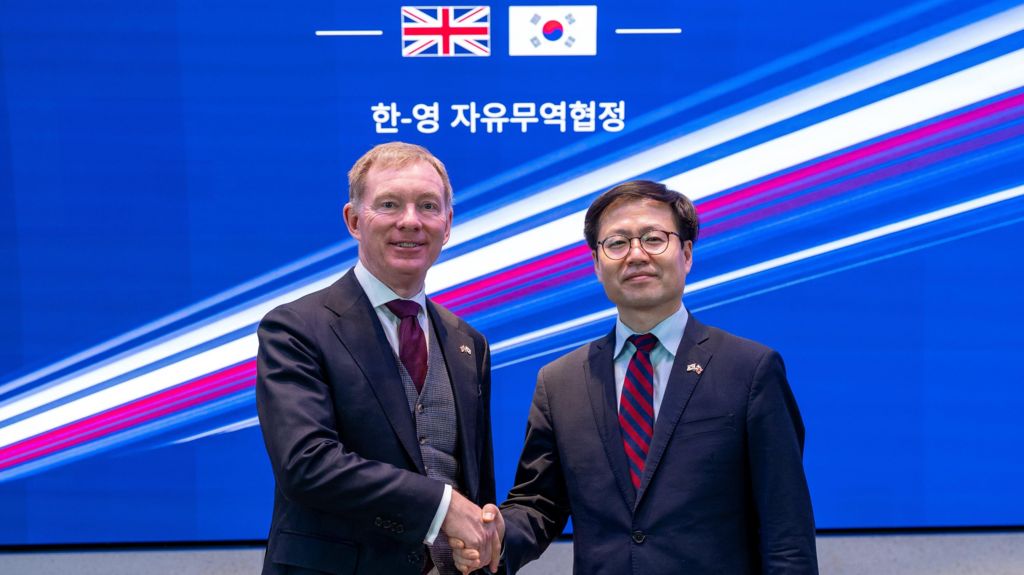
    The United Kingdom and South Korea have formally cemented a comprehensive trade agreement designed to fortify economic relations between the two nations. Announced at Samsung’s flagship London store by UK Trade Minister Chris Bryant and his South Korean counterpart, Yeo Han-koo, the pact ensures that 98% of bilateral trade will remain tariff-free, mirroring the terms previously established between South Korea and the European Union.

    This agreement, which supersedes a previous deal set to expire in January 2026, safeguards approximately £2 billion worth of annual UK exports from potential tariff increases. Key British industries positioned to benefit include automotive manufacturing (with prominent supporters like Bentley Motors and Jaguar Land Rover), pharmaceuticals, financial services, and alcohol producers including Diageo, owner of Guinness.

    Beyond tariff preservation, the agreement focuses on reducing non-tariff barriers through streamlined regulations on product origins and enhanced digital and investment protections. South Korean Trade Minister Yeo Han-koo emphasized the complementary nature of the two economies, noting that Britain can serve as South Korea’s gateway to European markets while South Korea provides UK businesses with enhanced access to Asian markets.

    Prime Minister Keir Starmer hailed the agreement as “a huge win for British business” that will stimulate job creation and economic growth nationwide. The Department for Business and Trade identifies South Korea as the UK’s 25th largest trading partner, accounting for 0.8% of total UK trade in the year ending June 2025, though official figures show bilateral trade declined approximately 14% during this period.

    This agreement represents the fourth major trade deal secured by the current UK government following agreements with the EU, US, and India. While government assessments project minimal GDP impact from these agreements (the India deal estimated at 0.11-0.14% GDP growth), officials maintain that collective trade deals will generate economic expansion through job creation and reduced regulatory barriers for small businesses.

  • Israel diverts Palestinian citizens’ development funds to police

    Israel diverts Palestinian citizens’ development funds to police

    In a controversial budgetary shift, Israel’s government has authorized the reallocation of approximately 220 million shekels ($68.6 million) from civil development programs for Palestinian citizens to police and internal security services. The Sunday decision, proposed by National Security Minister Itamar Ben Gvir and Social Equality Minister May Golan, will redirect funds originally designated for social programs addressing economic disparities within the Arab-Israeli community.

    The transferred budget will now enhance law enforcement capabilities, intelligence operations, and security activities in Palestinian communities across Israel. This move occurs against a backdrop of escalating violent crime, with local media reporting 245 crime-related fatalities in 2025 alone—surpassing last year’s total of approximately 230 deaths.

    Government officials defended the reallocation as necessary for addressing urgent security concerns. Minister Golan characterized cultural and sports facilities as ineffective solutions, stating the funds would instead support a “groundbreaking programme” against criminal elements. Minister Ben Gvir framed the measure as implementing “zero tolerance towards criminals.”

    However, the decision has faced substantial criticism from community leaders and rights organizations. Talal al-Qrinawi, mayor of Rahat, denounced the move as “purely political and unjustified,” noting that security agencies already possess adequate budgets if properly utilized. Human rights attorney Abeer Baker warned that reducing long-term social investments would undermine crime prevention efforts, emphasizing that “crime cannot be addressed solely through immediate deterrence.”

    The Abraham Initiatives, a joint Jewish-Arab advocacy organization, condemned the budgetary transfer as logically bereft and potentially devastating to addressing root causes of violence. The group announced potential legal action through Israel’s High Court of Justice, arguing the cuts would severely harm developmental programs specifically designed to combat crime through education, youth initiatives, and local authority development.

  • Japan business mood hits 4-year high, keeps alive BoJ rate-hike view

    Japan business mood hits 4-year high, keeps alive BoJ rate-hike view

    Japanese corporate sentiment reached its highest level in four years during the December quarter, according to the Bank of Japan’s closely monitored Tankan survey released Monday. The report revealed major manufacturers’ business confidence index climbed to +15, marking the third consecutive quarter of improvement and matching market forecasts.

    The survey’s findings reinforce widespread market anticipation that the central bank will proceed with interest rate increases this week. Large corporations projected substantial capital expenditure growth of 12.6% for the fiscal year ending March 2026, exceeding median market expectations of a 12% increase.

    Despite current optimism, companies expressed caution about the coming quarter, anticipating worsening business conditions due to concerns about higher U.S. tariffs and softening consumer spending. The non-manufacturers’ sentiment index remained robust at +34, nearly aligning with market projections of +35.

    Labor market conditions emerged as particularly significant, with companies reporting the tightest job market since 1991’s asset bubble era. This severe labor shortage, while potentially constraining growth in Japan’s aging economy, supports sustained wage growth—a critical factor for the BOJ’s rate hike considerations.

    Inflation expectations remained anchored around the central bank’s 2% target, with companies projecting 2.4% inflation across one, three, and five-year horizons. Separate BOJ research indicated regional branches expect 2026 wage increases to mirror those of 2025, supporting the bank’s assessment of continued price-wage momentum.

    Although Japan’s economy contracted in the third quarter due to export declines from U.S. tariffs, analysts anticipate recovery in the current quarter as exports and manufacturing output show signs of rebound. With inflation consistently above the 2% target for over three years, BOJ officials increasingly signal readiness to normalize monetary policy to avoid falling behind the curve on inflation management.

  • UAE weather tomorrow: Heavy rain, strong winds, temperatures to drop to 15ºC

    UAE weather tomorrow: Heavy rain, strong winds, temperatures to drop to 15ºC

    The United Arab Emirates is preparing for significant meteorological disruptions as the National Centre of Meteorology (NCM) forecasts unstable weather conditions across the region. According to the latest advisory issued on December 15, 2025, residents should anticipate partly to fully cloudy skies with convective cloud formations expected to deliver heavy rainfall particularly affecting eastern and northern coastal areas.

    Temperature fluctuations will present a notable contrast, with daytime highs reaching up to 31°C in some regions while overnight lows are predicted to drop dramatically to 15°C in internal territories. Urban centers will experience milder conditions, with Abu Dhabi ranging between 19-29°C and Dubai between 22-30°C.

    Wind patterns will intensify throughout the period, with moderate to fresh southeasterly to northeasterly winds occasionally strengthening significantly. These gusts, reaching speeds of 45 km/h, are expected to stir substantial dust and sand particles, resulting in reduced horizontal visibility across affected areas.

    Maritime conditions mirror the atmospheric instability, with the Arabian Gulf forecast to experience moderate to rough seas while the Oman Sea faces moderate conditions that may periodically intensify. Humidity levels will vary considerably, ranging from 25-65% in Abu Dhabi and 30-55% in Dubai.

    The NCM has emphasized precautionary measures for the public during this period of meteorological volatility, advising residents to stay informed through official channels and exercise caution particularly during reduced visibility conditions and rainfall events.

  • China’s economy stalls in November as calls grow for reform

    China’s economy stalls in November as calls grow for reform

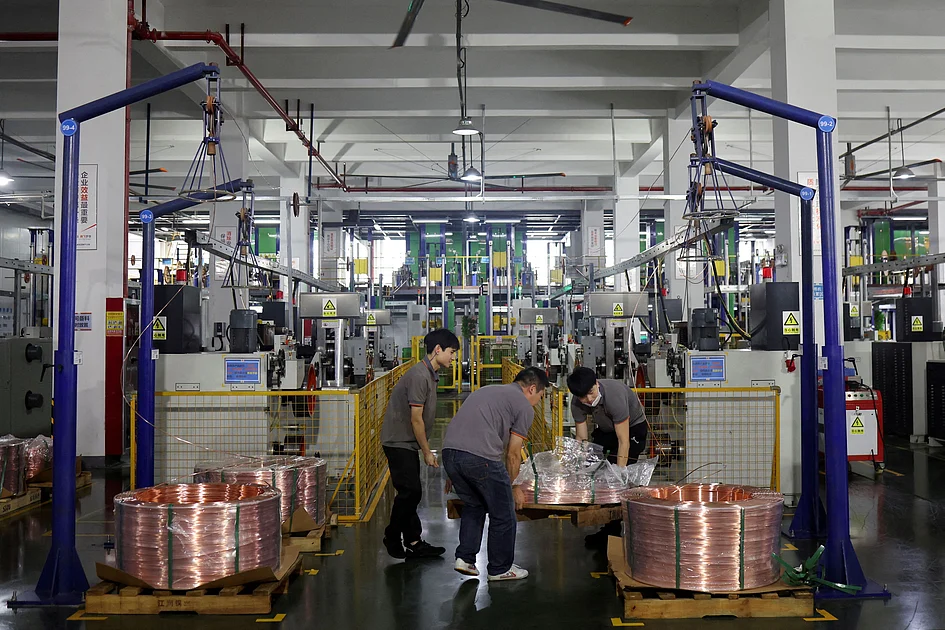
    China’s economic indicators revealed significant softening in November 2025, with both industrial production and retail sales expanding at their most sluggish rates in over a year. According to data released by the National Bureau of Statistics on December 15th, factory output increased by merely 4.8% year-on-year—the weakest performance since August 2024—while retail sales growth plummeted to 1.3%, representing the poorest showing since the abrupt termination of zero-COVID restrictions in December 2022.

    The disappointing figures underscore profound challenges within the world’s second-largest economy, including fading consumer trade-in subsidies, a protracted property crisis dampening household expenditure, and industrial investment confronting deflationary pressures. With domestic demand remaining persistently weak, authorities have increasingly relied on export-oriented strategies to sustain growth. However, this approach faces mounting sustainability concerns as China’s record $1 trillion trade surplus provokes international backlash, with trading partners implementing protective tariff measures.

    Property sector distress continues to weigh heavily on economic prospects. New home prices declined further in November, while property investment plummeted 15.9% during the January-November period. The situation has become particularly acute for developers like state-backed China Vanke, which is urgently negotiating with bondholders to avert default after investors rejected a proposed one-year repayment delay.

    Economists note that the economy may have surpassed the threshold where conventional stimulus measures yield effective results. The International Monetary Fund estimates that resolving property sector challenges within three years could cost approximately 5% of GDP. Despite policymakers pledging proactive fiscal measures to stimulate consumption and investment at recent economic planning meetings, analysts express concerns that Beijing remains hesitant to transition from production-driven economic models toward consumer-led growth frameworks.

    With both the IMF and World Bank projecting more conservative growth trajectories for China, economic observers anticipate sustained challenges throughout 2026 despite potential partial recovery in coming months.

  • Anupam Kher’s IndiGo flight cancelled on trip to Khajuraho International Film Festival

    Anupam Kher’s IndiGo flight cancelled on trip to Khajuraho International Film Festival

    Prominent Indian actor Anupam Kher found himself among the thousands of travelers affected by IndiGo’s massive flight cancellation crisis in early December 2025. The veteran Bollywood star’s journey to the Khajuraho International Film Festival was abruptly interrupted when his connecting flight from Varanasi to Khajuraho was unexpectedly canceled.

    Kher took to Instagram to voice his frustration with the travel disruption, revealing that he might now need to resort to train travel to reach the festival venue. The actor is scheduled to present his film ‘Tanvi The Great’ at the prestigious week-long event running from December 16-22, 2025.

    The incident occurred amidst India’s largest airline’s operational meltdown that saw hundreds of flights canceled nationwide, creating chaos at airports and leaving passengers stranded. IndiGo subsequently issued multiple apologies, provided refunds, and offered travel vouchers to affected customers.

    The airline described December 5 as a “reboot” day with the highest number of cancellations, after which operations gradually stabilized. By December 13, the carrier had restored its network with over 2,000 scheduled flights and resumed its standard on-time performance levels according to official statements.

  • Goumbook drives regenerative agriculture forward to strengthen food security in the MENAT Region

    Goumbook drives regenerative agriculture forward to strengthen food security in the MENAT Region

    In response to mounting environmental pressures threatening food security across the Middle East, North Africa, and Türkiye (MENAT), social enterprise Goumbook is spearheading a transformative shift toward regenerative agricultural practices. Founded in 2009, the organization has established itself as a pivotal force in sustainability innovation, addressing critical challenges posed by climate change, severe water scarcity, and progressive land degradation through cross-sector collaboration.

    The region’s unique combination of ancient agricultural heritage and extreme environmental conditions necessitates tailored solutions. Goumbook’s strategy focuses on developing locally adapted regenerative techniques that restore soil vitality, enhance water efficiency, and strengthen climate resilience. Their approach brings together governmental bodies, private sector entities, academic institutions, and civil society to create an enabling ecosystem for sustainable food systems.

    Central to this mission is the MENAT Regenerative Agriculture Venture Programme, now entering its second year. This initiative has demonstrated remarkable reach, attracting 510 registrations from 65 countries and engaging over 80 academic and research institutions. The program identifies and nurtures early-stage, research-driven innovations addressing the region’s most pressing agricultural challenges.

    Shortlisted innovations encompass diverse solutions including organic bio-fertilizers, synthetic pesticide alternatives, soil regeneration technologies, crop diversification methods, and advanced agricultural technologies. These innovations collectively target drought resistance, soil degradation reversal, salinity management, biodiversity conservation, and desertification mitigation while supporting sustainable rural economies.

    The program provides comprehensive support through structured bootcamps, expert mentorship, specialized training, financial grants, and incubation opportunities. This enables participants to develop entrepreneurial skills, refine scalable business models, and access essential networks for implementation and growth.

    Beyond innovation development, Goumbook actively engages policymakers and private sector leaders to promote supportive regulatory frameworks, investment mechanisms, and market demand for regenerative practices. This multi-stakeholder approach was prominently showcased at the inaugural MENAT Regenerative Agriculture Summit in Riyadh on May 15, held under the patronage of Saudi Arabia’s Ministry of Environment, Water & Agriculture. The summit convened regional and international stakeholders to advance partnerships and scale regenerative solutions across food systems.

    According to Samantha Kayruz, Strategy & Sustainability Impact Director at Goumbook, ‘With the right enabling ecosystem, the region has the potential to become a center of excellence for climate-resilient and desert agriculture, with solutions that are both regionally grounded and globally relevant.’

  • Israeli army to demolish 25 residential buildings in West Bank refugee camp: Local authorities

    Israeli army to demolish 25 residential buildings in West Bank refugee camp: Local authorities

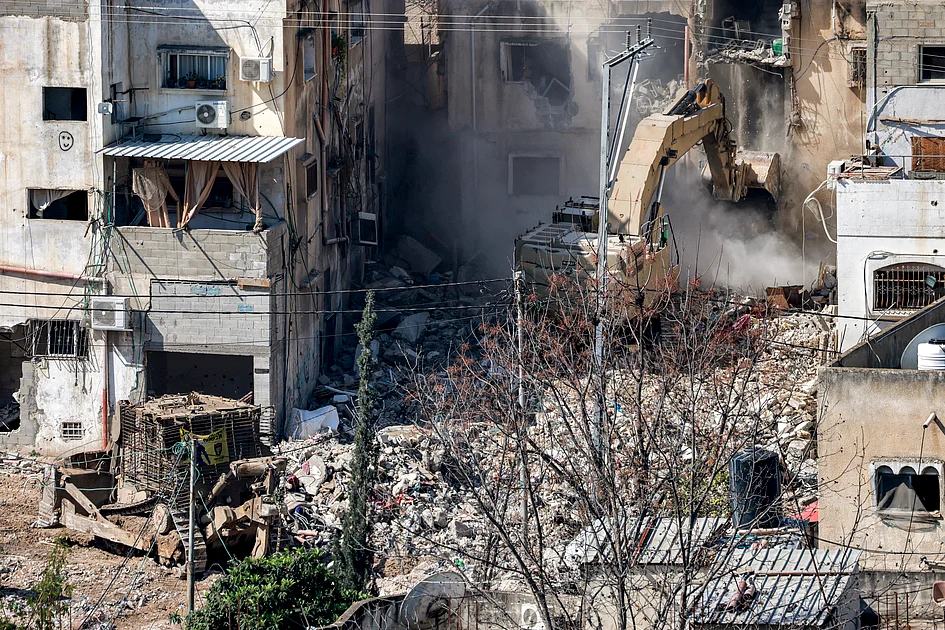
    The Israeli military has issued demolition orders for 25 residential buildings in the Nur Shams refugee camp located in the northern West Bank, according to statements from local authorities on Monday. The planned destruction, scheduled for December 18, 2025, is expected to impact approximately 100 family dwellings within the camp.

    Abdallah Kamil, Governor of Tulkarem governorate where Nur Shams is situated, confirmed receiving official notification from COGAT (Coordinator of Government Activities in the Territories), the Israeli defense ministry body responsible for civilian coordination in occupied Palestinian territories. Faisal Salama, head of the popular committee for the nearby Tulkarem camp, provided additional details regarding the scale and timing of the planned demolition operation.

    This development occurs within the context of an extensive Israeli military operation initiated in early 2025 that remains ongoing. The operation, described by Israeli authorities as targeting Palestinian armed groups, has focused on refugee camps throughout the northern West Bank region, including Nur Shams, Tulkarem, and Jenin camps.

    The military campaign has already resulted in significant displacement, with over 30,000 residents unable to return to their homes since the operation began. Israeli forces have systematically destroyed hundreds of houses within the camps’ dense alleyway networks to facilitate troop movement and military access.

    Nur Shams refugee camp, like similar camps throughout the West Bank, originated following the establishment of Israel in 1948, which precipitated the displacement of hundreds of thousands of Palestinians. These camps have evolved into densely populated neighborhoods that maintain distinct administrative status separate from adjacent cities, with refugee status perpetuated across generations.

    The Israeli military declined to provide immediate comment when contacted by news agencies regarding the demolition orders.