标签: Asia

亚洲

  • iBLOXX secures Dh20 million funding for StrayShot launch

    iBLOXX secures Dh20 million funding for StrayShot launch

    DUBAI, UAE – iBLOXX Studios DMCC, a prominent game development company operating within Dubai’s DMCC free zone, has successfully secured Dh20 million (approximately $5.4 million) in strategic funding to finalize development and launch operations for its upcoming mobile-first third-person shooter, StrayShot.

    The substantial investment will be strategically allocated across multiple critical areas including advanced game development, comprehensive marketing initiatives, multi-platform distribution, and live operations management. Additionally, the funding will support the planned expansion of StrayShot to console platforms following its mobile release.

    StrayShot represents a technically innovative approach to mobile gaming, specifically optimized for performance on lower-end devices while maintaining high-quality visuals and gameplay. The game features multiple engaging modes including Battle Royale, Team Deathmatch, and Extraction scenarios, all set within the fictional conflict zone of Sierra Verde. Players assume the roles of mercenaries competing against both rival players and the dangerous El Fuego cartel.

    A distinctive aspect of StrayShot’s design incorporates blockchain integration, enabling true ownership and trading of in-game assets through blockchain technology. The game is currently undergoing closed testing phases with select participants.

    iBLOXX Studios maintains significant strategic positioning within Dubai’s growing gaming ecosystem. The company operates as part of the DMCC Gaming Centre and actively participates in the Dubai Program for Gaming 2033 (DPG33), a government initiative aimed at establishing Dubai as a global gaming hub. The studio has established partnerships with the Dubai Future Foundation, Xsolla payment solutions, and the Dubai Culture & Arts Authority, previously receiving sponsorship to represent Dubai at Gamescom, the world’s largest gaming event.

    Domenik Maier, CEO of iBLOXX Studios, emphasized the significance of the funding: “This capital infusion enables us to bring StrayShot to market with the level of quality and operational readiness that modern players expect and deserve. This investment validates our approach to creating accessible yet technologically advanced gaming experiences.”

    The successful funding round demonstrates growing investor confidence in Dubai’s emerging gaming industry and the Middle East’s rapidly expanding mobile gaming market, which represents one of the fastest-growing segments in the global gaming industry.

  • Sharjah Police warns of Emirates Road accident causing nearly 30-minute delay

    Sharjah Police warns of Emirates Road accident causing nearly 30-minute delay

    Sharjah Police authorities have issued an urgent traffic advisory following a significant collision on Emirates Road (E611) that has resulted in substantial delays for commuters. The incident occurred near Bridge number 7 in the direction toward Badaa Bridge, creating major obstructions along this critical transportation artery.

    Real-time data from Google Maps indicates severe congestion throughout the affected sector, with extensive portions of the roadway displayed in red, signaling heavily compromised traffic flow. Current estimates suggest motorists are experiencing delays of approximately 29 minutes due to the accident’s impact on traffic patterns.

    Law enforcement officials have actively encouraged drivers to exercise extreme caution when approaching the vicinity and strongly recommend utilizing alternative routes to circumvent the affected area. This proactive advisory aims to minimize further congestion and ensure public safety while emergency services manage the situation.

    The traffic disruption highlights the vulnerability of key transportation infrastructure to single incidents and demonstrates the importance of coordinated emergency response systems. Such events significantly impact daily commutes and commercial transportation throughout the region, emphasizing the need for robust traffic management protocols.

  • Ex-Israeli defence minister likens ‘Jewish supremacy’ in the country to Nazism

    Ex-Israeli defence minister likens ‘Jewish supremacy’ in the country to Nazism

    In a striking condemnation from within Israel’s political establishment, former Defense Minister Moshe Ya’alon has issued a severe critique of his nation’s current trajectory. The ex-military chief, who once infamously characterized Palestinians as a ‘cancer-like threat,’ now accuses the Israeli government of embracing an ideology bearing disturbing resemblance to Nazi racial theory.

    Ya’alon’s explosive statements emerged in response to recent settler violence near Hebron in the occupied West Bank, where what he termed ‘Jewish pogromists’ attacked Palestinians, stole livestock, and destroyed property. The former minister detailed how ‘Jewish terrorists’ obstructed emergency medical services from reaching wounded Palestinians during the assault.

    The veteran security official placed direct blame on specific government figures, alleging that National Security Minister Itamar Ben Gvir—a convicted criminal and adherent of the extremist Kahanist movement—exercises control over police inaction. Furthermore, Ya’alon asserted that Shin Bet, Israel’s internal security agency, now operates under the leadership of David Zini, whom he identified as a representative of ‘Jewish supremacy.’ Zini, a religious Zionist and former major general, has previously described Palestinians as a ‘divine existential threat.’

    Ya’alon specifically criticized Defense Minister Yoav Gallant for refusing to employ administrative detention against Jewish extremists and Finance Minister Bezalel Smotrich for allegedly encouraging illegal outposts and providing resources to make Palestinian lives ‘unbearable’—actions Ya’alon characterized as intended to dispossess Palestinians of their land.

    The former defense minister, who participated in multiple military campaigns including the 2014 Gaza war, warned that the prevailing ideology of ‘Jewish supremacy’ threatens Israel’s very existence. He demanded the replacement of what he called ‘the government of lies and betrayal, the government of messianists, draft dodgers and the corrupt’ before it brings ruin upon the state.

    This criticism emerges against the backdrop of devastating violence in the region, with over 71,800 Palestinians killed in Gaza since October 2023 and nearly 90% of the territory’s infrastructure destroyed. In the West Bank, more than 1,000 Palestinians have been killed by Israeli forces and settlers during the same period.

  • India withdraws President’s Rule from Manipur ‘with immediate effect’

    India withdraws President’s Rule from Manipur ‘with immediate effect’

    In a significant constitutional move, Indian President Droupadi Murmu has formally revoked Presidential Rule in the northeastern state of Manipur effective February 4, 2026. The presidential proclamation, published in an extraordinary gazette notification, terminates the emergency governance imposed exactly one year earlier on February 13, 2025.

    The restoration of state governance follows the Bharatiya Janata Party’s designation of two-time MLA Yumnam Khemchand Singh as Manipur’s next chief minister. The 62-year-old engineer from the Meitei community, who previously served as Municipal Administration Minister, will lead a coalition government featuring unprecedented representation. In a historic power-sharing arrangement, Singh will be assisted by two deputy chief ministers—one from the Kuki-Zo community and another from the Naga community.

    Kangpokpi MLA Nemcha Kipgen has already been appointed as the Kuki-Zo deputy chief minister, while the Naga People’s Front is expected to nominate their representative shortly. This tripartite leadership structure aims to address the complex ethnic tensions that have plagued the state.

    The original imposition of Presidential Rule occurred following the resignation of former Chief Minister N. Biren Singh on February 9, 2025, amid escalating ethnic violence and complete breakdown of constitutional governance. Manipur has endured severe civil unrest since May 2023, with violent clashes between the majority Meitei community and minority Kuki-Zomi tribes resulting in hundreds of fatalities and approximately 60,000 displaced persons.

    The conflicts primarily stemmed from disputes over economic benefits, job reservation quotas, and land rights. Governor Ajay Kumar Bhalla, appointed on January 3, 2026, has been conducting extensive consultations with community stakeholders to restore normalcy in the strategically important northeastern state.

    The swearing-in ceremony for the new coalition government is scheduled to occur imminently, marking a critical transition from central rule to democratically elected state administration.

  • Palestine Action defendants acquitted of aggravated burglary

    Palestine Action defendants acquitted of aggravated burglary

    In a landmark legal decision, six Palestine Action activists have been cleared of aggravated burglary charges stemming from their raid on an Israeli-owned arms manufacturing facility. The Woolwich Crown Court jury delivered not guilty verdicts for Leona Kamio (30), Samuel Corner (23), Fatema Rajwani (21), Zoe Rogers (22), Jordan Devlin (31), and Charlotte Head following extensive deliberations exceeding 36 hours.

    The August 2024 incident at Elbit Systems’ Bristol-area plant involved defendants using sledgehammers to damage property, though they consistently maintained these tools were never intended as weapons against security personnel. While five defendants admitted to destroying military equipment, the jury failed to reach consensus on criminal damage charges and couldn’t deliver verdicts regarding Corner’s alleged grievous bodily harm against a police officer.

    The trial revealed significant evidentiary complexities, including missing CCTV footage from critical areas where altercations occurred. Police CCTV recovery officer PC Sarah Grant testified that two cameras showed no movement due to low frame rates, though bodycam evidence presented showed security guard Angelo Volante allegedly striking Devlin with a sledgehammer and brandishing a whip.

    Judicial oversight played a crucial role throughout proceedings. Mr Justice Johnson repeatedly instructed jurors to disregard both the defendants’ moral justifications and their personal views on the Israel-Gaza conflict, emphasizing that verdicts must be based solely on legal evidence. This directive sparked controversy when a juror reported concerns about posters near the court promoting jury equity principles.

    The Crown Prosecution Service now faces a seven-day deadline to determine whether to pursue retrials on undecided charges. The acquittals represent a significant outcome for activist groups challenging arms exports to conflict zones, highlighting the complex intersection of property destruction claims and perceived life-saving motivations in contemporary protest movements.

  • New travel rules in India: Duty-free allowance, gold cap, cash limit explained

    New travel rules in India: Duty-free allowance, gold cap, cash limit explained

    In a significant policy shift aimed at modernizing its customs framework, the Indian government has implemented sweeping revisions to its baggage rules, substantially increasing duty-free allowances for international passengers. Effective February 2, 2026, the new regulations raise the customs duty exemption threshold from ₹50,000 to ₹75,000 for the majority of air and sea passengers arriving in India.

    The comprehensive overhaul, developed after extensive consultations with ministry officials, airport operators, and passenger feedback, aligns with contemporary economic conditions and the exponential growth in international travel. Under the revised structure, any amount exceeding the ₹75,000 allowance will be subject to a reduced customs duty rate of 10%, plus a 10% surcharge, a substantial reduction from the previous 20% levy.

    A notable amendment permits passengers to import one laptop or notebook computer completely duty-free, separate from the main allowance—a provision expected to benefit travelers acquiring electronics abroad, particularly from markets like the United States where devices such as iPhones are often priced lower than in India.

    The reforms introduce a streamlined, weight-based system for jewelry concessions, eliminating previous value caps. Female passengers may now carry up to 40 grams of duty-free jewelry, while other eligible travelers are permitted 20 grams, applicable to Indian residents and origin tourists who have resided overseas for over one year.

    For individuals permanently relocating to India, the Transfer of Residence (TR) scheme has been enhanced with simplified, tiered entitlements based on duration abroad: ₹150,000 for stays up to one year, ₹300,000 for 1-2 years, and ₹750,000 for periods exceeding two years.

    Foreign tourists retain a ₹25,000 allowance, while airline crew members have a ₹2,500 exemption. These calibrated measures reflect India’s adaptive approach to balancing revenue considerations with passenger convenience in an increasingly globalized travel landscape.

  • Rent or buy? First-time buyers push UAE property market towards ownership

    Rent or buy? First-time buyers push UAE property market towards ownership

    The United Arab Emirates is experiencing a fundamental transformation in its residential property landscape as growing numbers of renters transition to homeowners, marking a significant shift in housing preferences. According to comprehensive data from Property Finder, the market is witnessing sustained buyer momentum across both Abu Dhabi and Dubai, with platform activity throughout 2025 indicating a decisive move toward property ownership over traditional leasing arrangements.

    The digital real estate portal’s bi-monthly consumer sentiment survey reveals that approximately 70% of Dubai respondents intend to purchase property within the next six months. This substantial buyer interest continues to outpace rental demand, with sales listing impressions accounting for 49% of all platform activity. Abu Dhabi has similarly demonstrated a pronounced year-on-year increase in sales-focused searches, indicating parallel trends in the capital emirate.

    Multiple factors are driving this paradigm shift. Long-term residency policies, ownership-linked visa programs, and targeted initiatives such as the First-Time Home Buyer Programme have collectively enabled thousands of residents to enter the property market within the past year. First-time purchasers have emerged as crucial demand drivers, while existing homeowners are increasingly upgrading to larger, higher-quality properties as confidence in permanent settlement strengthens.

    This growing confidence is quantitatively reflected in buyer financial behavior. Home-seekers are now allocating 31% of their income toward mortgage payments in 2025, a significant increase from 23% recorded in 2024. Market preferences show a clear inclination toward premium, spacious residences despite higher financial commitments.

    While apartments continue to dominate transaction volumes due to broader availability and affordability considerations, villas—constrained by limited inventory—have demonstrated stronger price appreciation. In Abu Dhabi, apartments remain the most sought-after residential format, accounting for most transactions amid healthy supply across various locations and price segments. However, the villa market shows distinct upscaling trends, with larger family homes representing a growing transaction share.

    Established communities including Downtown Dubai, Dubai Marina, Palm Jumeirah, Business Bay, JVC, JBR, and Dubai Hills Estate maintained popularity throughout 2025. Off-plan developments such as Dubai Islands and Maritime City attracted substantial interest, particularly for luxury and waterfront properties.

    Industry experts identify the 25-35 age demographic as the next growth engine for the market. Yogesh Bulchandani, CEO & Founder of Sunrise Capital, noted: “We are witnessing a significant influx of young buyers. Dubai’s upcoming phase of real estate growth will hinge on affordability and accessibility.” Ismail Al Hammadi, Founder & CEO of IAH Group, added that property ownership has become integrated into younger generations’ long-term financial planning strategies.

    This collective data indicates the maturation of the UAE’s residential market, where property ownership is increasingly perceived as a comprehensive lifestyle decision rather than purely financial investment.

  • The deadly landmine legacy of Syria’s war

    The deadly landmine legacy of Syria’s war

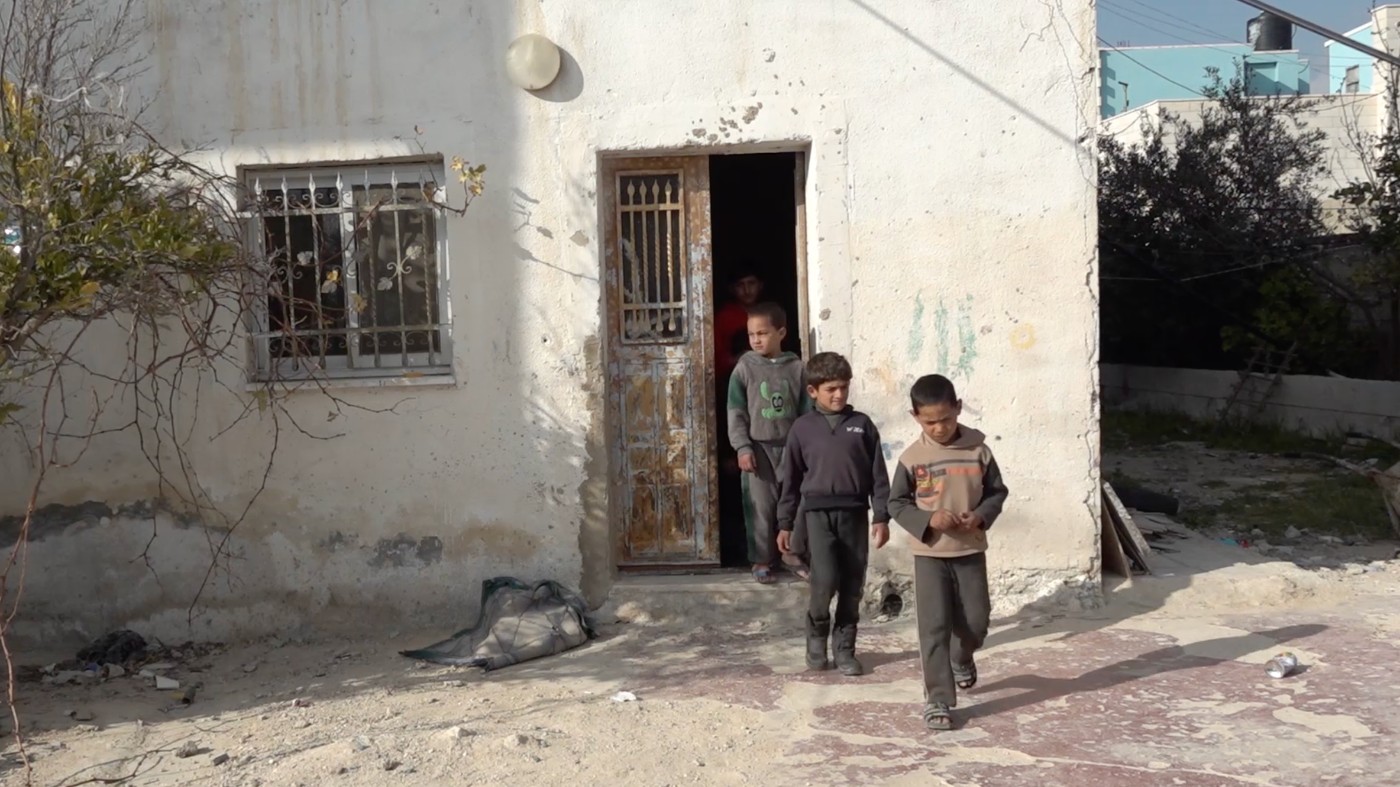
    The enduring legacy of Syria’s civil conflict continues to claim innocent lives through hidden explosives, transforming returning communities into perilous landscapes. A tragic incident in Khan Shaykhun, Idlib province, exemplifies this ongoing crisis: ten-year-old Mohammed discovered what appeared to be a toy buried in the earth, only to trigger an anti-personnel mine that proved fatal for him and severely injured his younger brothers.

    This family’s tragedy reflects a broader national emergency. Approximately 2.6 million Syrians have returned to their homes over the past fourteen months, many to former frontline areas where an estimated 300,000 active explosive devices remain concealed beneath soil and rubble. According to the International NGO Safety Organisation, these remnants of war have killed or maimed over 1,600 individuals since the ousting of long-time president Bashar al-Assad in December 2024.

    Idlib province represents one of the most heavily contaminated regions, having witnessed intense clashes between government forces and opposition groups. Both regime and rebel fighters employed extensive mining tactics, leaving behind anti-personnel mines, improvised explosive devices, and booby traps in residential areas, vehicles, and public buildings.

    Humanitarian organizations face monumental challenges in addressing this crisis. The Halo Trust, operating in Syria since 2017 with 250 personnel, conducts meticulous clearance operations along a several hundred-kilometer frontline from southern Idlib to northern Aleppo. Their teams perform controlled detonations of cluster munitions, artillery shells, rockets, and grenades—yet the scale of contamination overwhelms current resources.

    Syria’s decimated healthcare infrastructure compounds the tragedy. Specialized facilities like Idlib Surgical Specialized Hospital struggle with inadequate medical supplies and equipment. Medical professionals report performing approximately four emergency procedures daily for mine victims, often resorting to amputations due to infection risks and limited surgical capabilities.

    Prevention efforts have intensified through organizations like the Mines Advisory Group (MAG), which expanded mine-risk education programs across Syria and refugee-hosting countries. Through community outreach and digital campaigns targeting displaced populations considering return, these initiatives aim to reduce casualties by teaching explosive recognition and avoidance strategies.

    For families like Mustafa al-Azraq’s, who returned to their home after five years in displacement camps only to lose a child to unexploded ordnance, the conflict’s end has brought renewed tragedy rather than security. Their story underscores the urgent need for comprehensive demining operations and international support to make Syria’s landscape truly safe for returning populations.

  • What is the Ibrahimi Mosque and why does it matter?

    What is the Ibrahimi Mosque and why does it matter?

    The Ibrahimi Mosque in Hebron, a revered holy site for Islam, Judaism, and Christianity, has become the epicenter of escalating tensions in the occupied West Bank. This medieval structure, built above ancient tombs believed to hold biblical patriarch Abraham and his family, has been administered by Palestinians as a mosque for over 1,400 years. Recent Israeli actions, however, have fundamentally altered the status quo at one of the region’s most contested religious sites.

    In January, Israeli authorities barred the mosque’s Palestinian directors and seized planning rights over portions of the complex, violating longstanding arrangements that had governed the site for decades. This move represents the latest in a series of access restrictions and settler attacks against Palestinian holy sites that have intensified since October 2023, affecting including Al-Aqsa Mosque in Jerusalem and Joseph’s Tomb in Nablus.

    The historical significance of the Ibrahimi Mosque (known to Jews as the Cave of the Patriarchs and to Christians as the Cave of Machpelah) spans millennia. The current structure incorporates a 12th-century Romanesque Christian church constructed atop an earlier mosque destroyed during the Crusades. After conversion back to a mosque by the Muslim Ayubbid dynasty, the site remained exclusively accessible to Muslims throughout Mamluk and Ottoman rule until the British Mandate period.

    Modern tensions escalated significantly after Israel’s occupation of the West Bank in 1967. The establishment of the Kiryat Arba settlement on confiscated Palestinian land brought thousands of settlers to Hebron’s outskirts, creating a segregated enclave adjacent to 200,000 Palestinians. The conflict reached a horrific climax in 1994 when American-Israeli settler Baruch Goldstein massacred 29 Palestinian worshippers during Ramadan prayers. This tragedy led to the formal partition of the prayer hall, with two-thirds reserved for Jewish worship and one-third for Muslims.

    The current situation reflects intensified Israeli control measures. The Civil Administration, Israel’s governing body in the West Bank, unilaterally seized municipal control of the mosque’s central courtyard in December, enabling construction projects opposed by Palestinian authorities. Israeli settlers have increasingly stormed the mosque, hosting weddings and music festivals in violation of prayer arrangements, while far-right ministers Bezalel Smotrich and Itamar Ben Gvir (a Kiryat Arba resident) have made provocative visits with large security details.

    The Palestinian Authority has condemned these actions as part of Israel’s ‘Judaization projects’ in the West Bank, stating they constitute ‘flagrant violations of international resolutions and law.’ Hamas similarly criticized the moves as undermining the mosque’s Islamic identity. While Qatar, Turkey, and the UAE have issued diplomatic condemnations, the international community has taken limited concrete action.

    Palestinian lawyers are now petitioning Israel’s Supreme Court, citing UNESCO’s 2017 designation of the site as an endangered World Heritage Site belonging to Palestine. They argue that Israeli decisions regarding the mosque were made ‘without authority’ and represent ‘systematic and unlawful violation of the status quo.’ As legal battles continue, the Ibrahimi Mosque remains both a sacred space and a symbol of the broader Israeli-Palestinian conflict.

  • Xizang’s remote villages gain access to express delivery services

    Xizang’s remote villages gain access to express delivery services

    In a significant infrastructure achievement, the Xizang Autonomous Region has successfully transformed 2,410 village-level postal and logistics service stations through comprehensive upgrades completed by the end of 2025. This expansion has effectively integrated remote highland communities into China’s national express delivery network, marking a milestone in regional connectivity.

    The development emerged as a central discussion point during Xizang’s recent ‘two sessions’ – the region’s premier legislative and political advisory gatherings. Official data reveals impressive growth metrics: the postal sector generated 1.35 billion yuan ($195 million) in revenue during 2025, representing a 12.1% year-on-year increase, while handling 207 million parcels – a 2.3% growth from previous figures.

    Express delivery services demonstrated particularly robust performance, with revenues reaching 920 million yuan (13.3% growth) and 38 million packages delivered (23.2% increase). Li Fengwei, People’s Congress deputy and deputy general manager of YTO Express in Nyingchi, confirmed that delivery stations now operate in all county seats, with services extending to previously isolated villages.

    ‘Our expansion beyond county towns has reached even the most remote settlements,’ Li stated, citing Geling village in Metog county as an example of this connectivity revolution. The initiative has effectively eliminated traditional challenges of extensive travel distances and package collection inconveniences that long plagued mountainous regions.

    The enhanced logistics network has transformed consumption patterns, enabling diverse online shopping experiences for rural residents. From essential infant products to regionally distinctive fresh fruits, e-commerce goods now flow directly to village doorsteps, fundamentally altering economic and lifestyle dynamics across the Tibetan Plateau.