标签: Asia

亚洲

  • Trump administration reviewing Israel’s ‘military edge’ as it eyes Gulf arms deals, sources say

    Trump administration reviewing Israel’s ‘military edge’ as it eyes Gulf arms deals, sources say

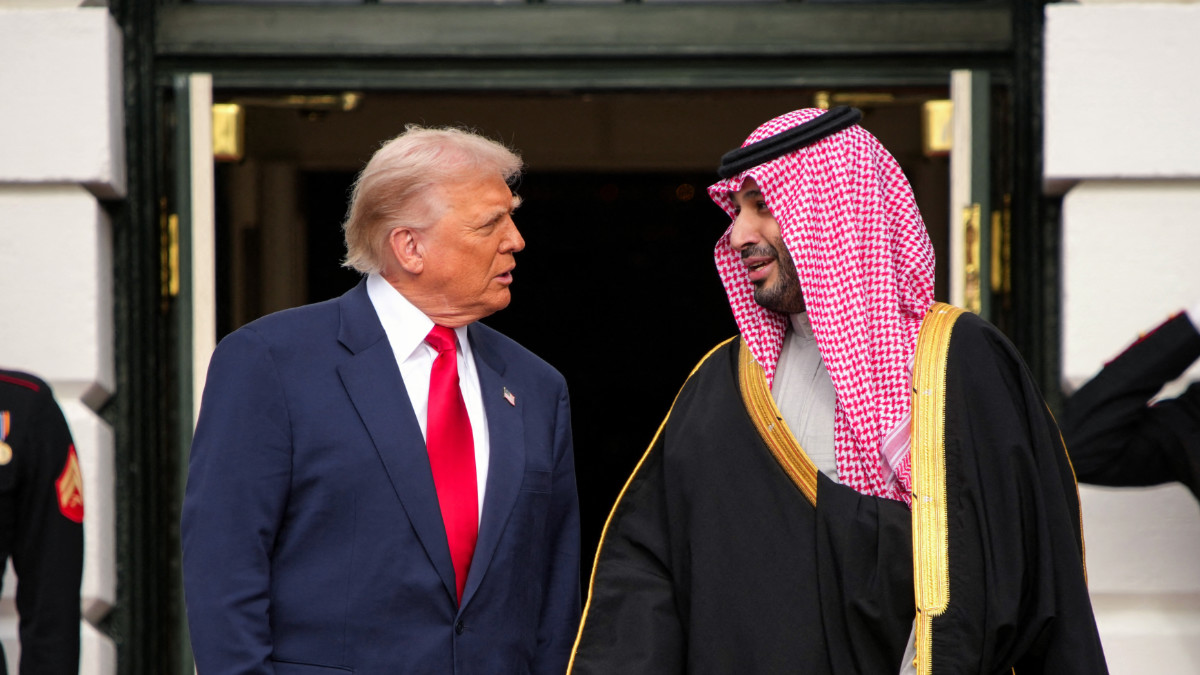
    The Trump administration has initiated a comprehensive review of Israel’s Qualitative Military Edge (QME) as it contemplates major defense deals with Saudi Arabia and Qatar, according to sources familiar with the discussions. This strategic reassessment comes amid Israeli concerns that advanced weapons transfers to Gulf nations could fundamentally alter the regional military balance.

    Multiple high-level meetings have taken place on Capitol Hill in recent weeks, involving senior U.S. military officials and members of key congressional committees including the Senate Foreign Affairs Committee and House Armed Services Committee. The discussions, described as closely guarded, center on potential arms packages that could include advanced F-35 fighter jets for both Saudi Arabia and Qatar.

    A senior State Department official recently visited Israel specifically to address Jerusalem’s security concerns regarding these potential sales. This diplomatic engagement occurs ahead of an anticipated meeting between Israeli Prime Minister Benjamin Netanyahu and President Donald Trump in late December.

    The administration’s consultation with lawmakers marks a notable departure from its typical approach to foreign policy decision-making, which has often bypassed congressional input. This shift appears calculated to secure necessary legislative support for any future arms agreements, as committee leadership can effectively block sales through informal holds.

    President Trump has previously expressed support for providing “top of the line” military equipment to both Israel and Saudi Arabia, despite Israeli lobbying for less advanced versions for Gulf partners. The potential sales have raised particular concern in Israel, which has uniquely modified its F-35I Adir aircraft for extended-range missions, including demonstrated capabilities to reach Iran without refueling.

    The QME concept, formally codified into U.S. law in 2008, mandates periodic assessment of arms sales to Arab states to ensure Israel maintains technological superiority. This policy framework originated from Cold War-era agreements and was strengthened through decades of U.S.-Israel defense cooperation.

    Netanyahu has publicly reiterated his opposition to advanced weapons sales to Saudi Arabia while acknowledging discussions with U.S. officials about preserving Israel’s military advantage. The administration’s current review represents a critical test of how Washington balances its strategic relationships with multiple Middle Eastern allies amid evolving regional dynamics.

  • UAE President receives banking delegation supporting Emirati debt relief initiative

    UAE President receives banking delegation supporting Emirati debt relief initiative

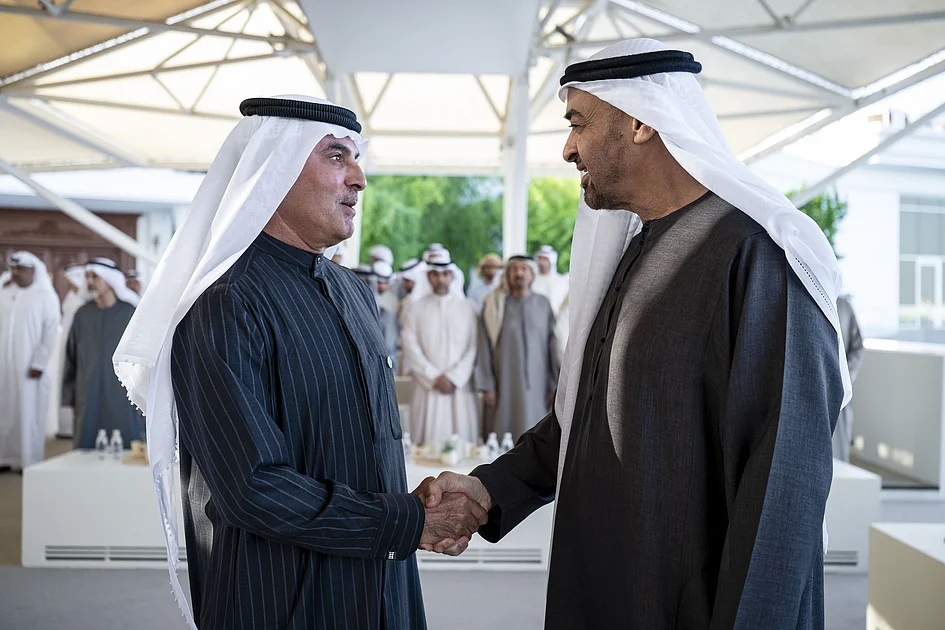
    In a significant demonstration of public-private partnership, UAE President Sheikh Mohamed bin Zayed Al Nahyan hosted senior banking representatives on Tuesday at Qasr Al Bahr in Abu Dhabi to acknowledge their pivotal role in a nationwide debt relief program for financially struggling Emirati citizens.

    The presidential reception honored financial institutions collaborating with the Defaulted Debts Settlement Fund, a comprehensive initiative designed to alleviate financial burdens for UAE nationals facing economic challenges. The meeting underscored the deepening culture of corporate social responsibility within the Emirates’ financial sector.

    President Sheikh Mohamed characterized the debt waiver program as instrumental in restoring hope to numerous families while contributing substantially to national social stability objectives. He emphasized that such collaborative efforts between government entities and private institutions form the cornerstone of successful developmental models observed globally.

    ‘When institutions actively fulfill their societal roles, they significantly advance the UAE’s comprehensive development vision,’ Sheikh Mohamed stated during the engagement. He further noted that strengthened social responsibility mechanisms directly correlate with enhanced national resilience and societal cohesion.

    Banking delegates reaffirmed their commitment to supporting national initiatives that promote familial and social stability. Representatives expressed ongoing dedication to the leadership’s efforts in reducing citizens’ financial pressures while simultaneously improving quality of life indicators for Emirati households.

    The dialogue highlighted the evolving paradigm of cooperative governance in the UAE, where economic development and social welfare objectives are increasingly achieved through synergistic partnerships between governmental bodies and private sector organizations.

  • Rivalries and rumours: How the new order of the Murdoch dynasty is playing out

    Rivalries and rumours: How the new order of the Murdoch dynasty is playing out

    The Murdoch media dynasty, long considered one of the world’s most powerful family empires, has reached a watershed moment in its corporate history. Following a contentious closed-court battle in Nevada, three of Rupert Murdoch’s children—Elisabeth, James, and Prudence Murdoch—have been permanently excluded from the family business, receiving substantial financial settlements in exchange for relinquishing their stakes in Fox Corp and News Corp.

    The settlement, which emerged from a legal challenge to a 1999 trust agreement established during Rupert’s divorce from second wife Anna Murdoch, represents a dramatic restructuring of the media conglomerate’s leadership future. Lachlan Murdoch, Rupert’s eldest son from his second marriage, now stands as the unequivocal successor to the 94-year-old media magnate’s empire.

    This familial schism reflects deeper ideological divisions within the family. James Murdoch, who publicly characterized his father as a ‘misogynist’ during the proceedings, expressed feeling betrayed by Rupert’s decision to force the separation. The move was reportedly motivated by Rupert’s concerns that his more liberal-leaning children might steer the companies in a different political direction after his death.

    Despite Lachlan’s successful tenure as CEO of Fox Corp—during which the company’s share price doubled and streaming service Tubi reached profitability—the resolution came at significant financial cost. The company’s improved performance under Lachlan’s leadership increased the valuation of the siblings’ shares, resulting in a substantially larger payout requirement.

    Media analysts characterize this development as potentially permanent, with biographer Claire Atkinson describing it as ‘a sad ending’ for children who had grown up within the business. The Murdoch saga continues to draw comparisons to the acclaimed television drama ‘Succession,’ though reality has proven more complex and enduring than fiction.

    While Elisabeth and Prudence are said to be focusing on moving forward and potentially reconciling with their aging father, James’s relationship with both Rupert and Lachlan appears irreparably damaged. The settlement includes provisions preventing the excluded siblings from purchasing equity in the family companies in perpetuity.

    As Lachlan Murdoch consolidates control, industry observers note his distinct leadership style—more focused on business fundamentals and digital expansion than political kingmaking. However, the substantial debt incurred through the settlement may pressure the company to maintain profitable but politically divisive programming strategies that have characterized Fox News’s success.

  • ‘Retract or resign’: Cair slams US intelligence chief for talk of Muslim threat

    ‘Retract or resign’: Cair slams US intelligence chief for talk of Muslim threat

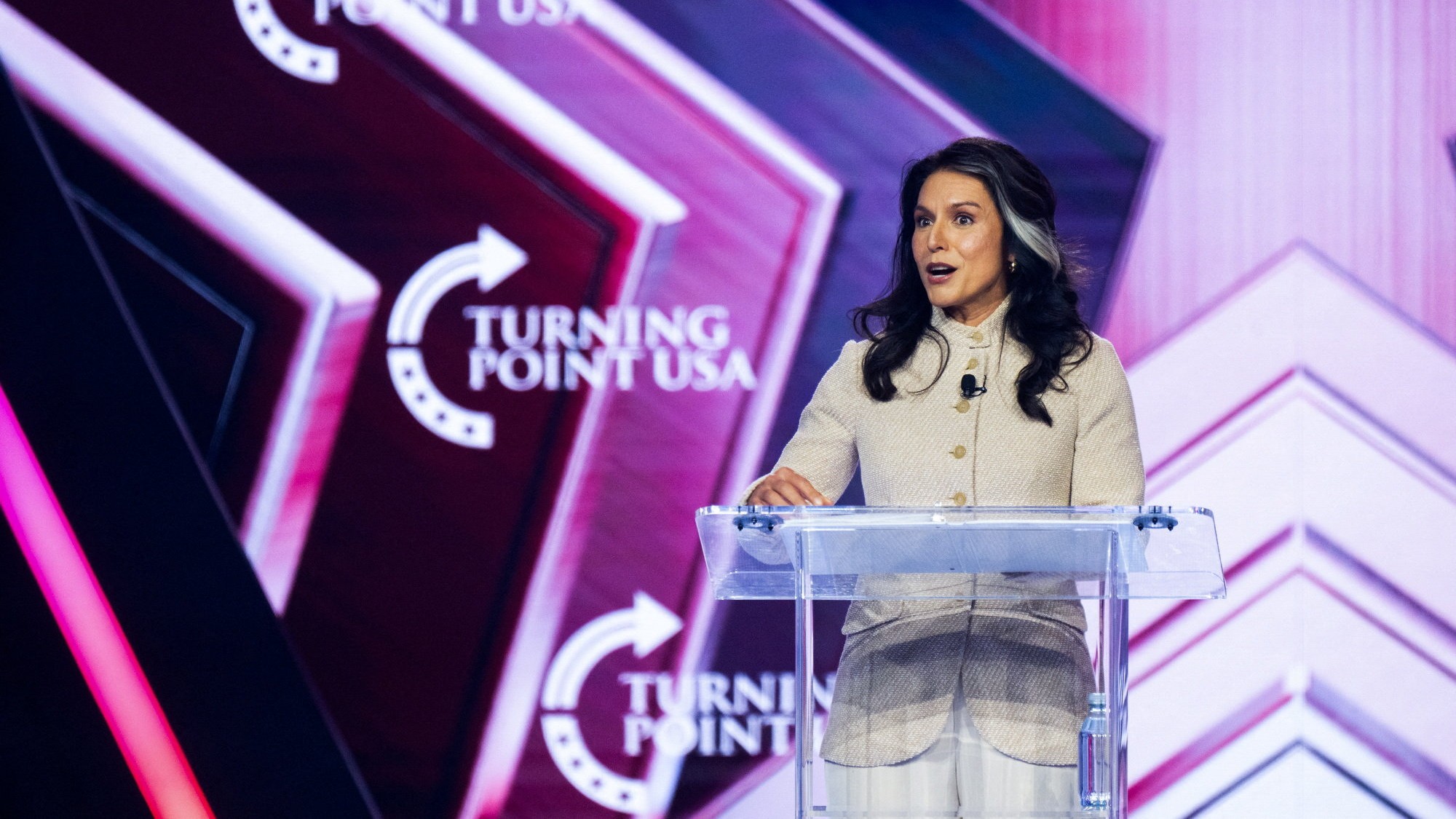
    America’s foremost Muslim civil rights organization has demanded the resignation of National Intelligence Director Tulsi Gabbard following her controversial characterization of Sharia law as the nation’s paramount security threat. The Council on American-Islamic Relations (CAIR) condemned Gabbard’s weekend remarks as “delusional and disqualifying” for an intelligence official tasked with objective analysis.

    Speaking at the conservative Turning Point USA’s AmericaFest summit, Gabbard asserted that “Islamist ideology” represents the most significant near and long-term danger to American freedoms and security. She claimed this ideology fundamentally contradicts constitutional principles and seeks to establish a global caliphate that would govern Americans. Her comments received enthusiastic applause from thousands of attendees despite growing concerns within conservative circles about anti-Muslim rhetoric.

    The controversy intersects with broader geopolitical dynamics. Earlier this year, an Israeli government-commissioned study suggested rehabilitating Israel’s image by emphasizing fears of “radical Islam” and “jihadism” following Gaza conflict criticisms. CAIR’s Monday statement emphasized that Gabbard’s role requires factual, apolitical intelligence assessment rather than spreading what they termed “bigoted conspiracy theories.”

    Gabbard specifically singled out Muslim-majority communities in Dearborn, Michigan; Minneapolis, Minnesota; and Paterson, New Jersey, alleging Islamist clerics were actively radicalizing youth. She further accused CAIR of advocating for Sharia law implementation through American legal systems—a claim immediately denied by the organization’s Washington headquarters.

    Local Muslim leaders expressed frustration with what they perceive as systematic vilification. Selaedin Maksut, executive director of CAIR’s Paterson office, described community numbness to ongoing harassment and noted the irony of being characterized as threatening while engaging in standard civil rights advocacy.

    The remarks drew sharp rebukes from New Jersey’s Democratic leadership. Senator Cory Booker, despite his pro-Israel stance, condemned Gabbard’s comments as “dishonest, cruel and un-American” on social media platform X, warning they endangered entire communities. Senator Andy Kim similarly criticized the divisive rhetoric, asserting Muslim Americans’ integral role in society.

  • Israel extends authority to ban foreign media considered ‘harmful to security’ for two more years

    Israel extends authority to ban foreign media considered ‘harmful to security’ for two more years

    Israel’s parliament has enacted a significant legislative amendment permitting the continued restriction of foreign media outlets deemed threatening to national security, extending this authority for an additional two years despite terminating the official state of emergency. The Knesset approved the measure overnight, ensuring that powers initially linked to the Hamas conflict emergency declaration will remain effective until December 31, 2027.

    Originally implemented in April 2024 during heightened hostilities, this legislation notably targeted Qatari broadcaster Al Jazeera, which Israeli officials have consistently characterized as a propaganda vehicle for Palestinian militants. The new provision operates independently of emergency statutes, creating a permanent framework for media regulation based on security concerns.

    Under the amended law, the Prime Minister retains authority to identify foreign media entities perceived as endangering national security. Following this determination, the Communications Minister may execute comprehensive restrictions including broadcast termination, office closures, equipment confiscation, and website blocking. The legislation mandates consultation with security agencies prior to implementation, though only a single favorable security assessment is required to authorize actions without judicial oversight.

    Communications Minister Shlomo Karhi emphasized the legislation’s significance, stating: ‘Terrorist channels are out of bounds, in normal times as well as under a state of emergency. After voting for this law several times during the war to stop Al Jazeera’s broadcasts in Israel, we have now finalized it independently of the emergency status.’

    This development occurs against a backdrop of declining press freedoms in Israel. Reporters Without Borders’ 2025 global index documented an 11-position drop in Israel’s press freedom ranking, descending from 101st to 112th place among 180 evaluated nations since the Gaza conflict’s inception.

  • Egypt’s grand museum begins live restoration of ancient boat

    Egypt’s grand museum begins live restoration of ancient boat

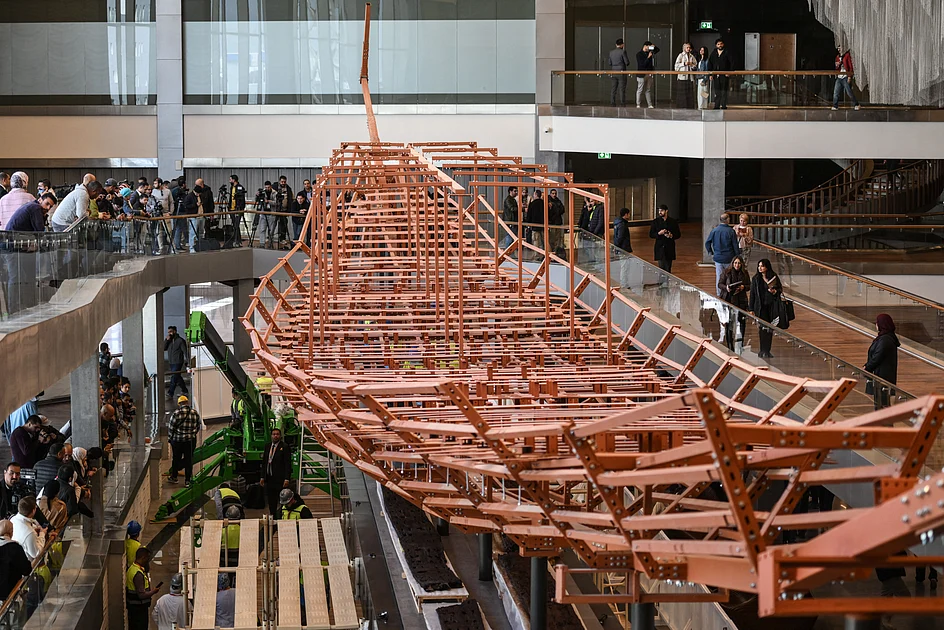
    In an unprecedented archaeological undertaking, Egypt has launched a publicly visible restoration of Pharaoh Khufu’s 4,600-year-old solar boat at the Grand Egyptian Museum. The ceremonial vessel, dating back to the Old Kingdom ruler who commissioned the Great Pyramid of Giza, represents one of history’s most significant maritime artifacts.

    Conservation specialists commenced work Tuesday by delicately elevating a deteriorated wooden plank using precision crane technology—the initial component among 1,650 fragile pieces requiring meticulous reassembly. Egyptian Tourism Minister Sherif Fathy characterized the project as “among the most vital restoration initiatives of the 21st century,” emphasizing its global cultural significance.

    The four-year conservation process, funded through a $3.5 million grant from Japan International Cooperation Agency (JICA), features collaborative expertise between Egyptian and Japanese archaeologists. Project lead Eissa Zidan explained that previous archaeological teams had avoided the undertaking due to the wood’s advanced thermal degradation and fragile state.

    Advanced organic compounds including nano-cellulose and Klucel E are being employed in accordance with international preservation standards to stabilize the ancient materials. The museum simultaneously exhibits a second solar boat from the same period, discovered in superior condition near the Giza pyramids.

    Since its November inauguration, the Grand Egyptian Museum has attracted between 15,000-27,000 daily visitors. Egyptian authorities anticipate this cultural landmark will significantly boost tourism—a sector comprising 9% of national GDP and employing approximately two million citizens. Following pandemic-related challenges and political instability, the government projects a 7% tourism increase for 2026, targeting expansion from 19 million annual visitors.

  • Pakistani firm wins auction with $482 million bid for state airline PIA

    Pakistani firm wins auction with $482 million bid for state airline PIA

    In a landmark transaction for Pakistan’s privatization efforts, the Arif Habib investment consortium has prevailed in a competitive auction to acquire a controlling 75% stake in Pakistan International Airlines (PIA) with a bid of 135 billion rupees ($482 million). The high-stakes bidding process, broadcast live on state television on Tuesday, featured three domestic contenders vying for the national carrier.

    The transparent auction procedure saw the Arif Habib group outperform rival bids from a Lucky Cement-led consortium offering 134 billion rupees and private carrier Air Blue’s substantially lower 26.5 billion rupee proposal. The successful bidder retains an option to purchase the remaining 25% government stake within coming months.

    Prime Minister Shehbaz Sharif characterized the event as historically significant, emphasizing the government’s commitment to transparency in what represents Pakistan’s largest corporate transaction to date. The acquisition marks a critical turning point for the financially troubled airline, which reported a $437 million net loss on $854 million revenue in 2022 before being delisted from the stock exchange.

    This successful divestiture follows last year’s failed privatization attempt when a solitary $36 million bid fell dramatically short of the government’s $300 million valuation expectations. PIA’s operational challenges have included substantial financial losses, safety concerns that resulted in extended flight bans to Western destinations, and ongoing management issues that required repeated government bailouts.

    The transaction serves as a crucial test case for Pakistan’s broader commitment to privatizing dozens of state-owned enterprises across multiple sectors by 2029, a key condition of the nation’s $7 billion International Monetary Fund loan program. Founded in 1955 as a symbol of national prestige with designer uniforms by Pierre Cardin, PIA’s decline exemplifies the challenges facing many government-owned entities struggling with inefficiency and financial sustainability.

  • ‘We are ghosts’: Britain’s migrant night shift workers

    ‘We are ghosts’: Britain’s migrant night shift workers

    Britain’s nocturnal economy, sustained by a workforce of nine million, has become increasingly dependent on migrant labor as UK-born night shift workers decline dramatically over the past decade. This invisible army powers the nation’s 24-hour society while facing health challenges, policy changes, and societal recognition issues.

    At a south London market, Leandro Cristovao from Angola describes night workers as “ghosts”—essential yet unseen. This phenomenon reflects a broader trend where migrants are twice as likely to work overnight compared to UK-born citizens, particularly dominating sectors like healthcare where they constitute over one-third of night staff.

    Research by University College Cork sociology professor Julius-Cezar Macarie reveals this workforce maintains Britain’s round-the-clock society despite being unfairly categorized as “low-skilled.” His “Nightwork Footprint” project highlights the systemic invisibility of these essential workers.

    The human stories behind the statistics reveal profound challenges. Roxana Panozo Alba, a 46-year-old Bolivian-born office cleaner in central London, works overnight to care for her children during daylight hours. “Working at night damages your health,” she explains. “You try to sleep but the slightest noise wakes you.”

    In healthcare, Omatule Ameh from Nigeria works overnight with children having learning disabilities, then cares for his own children during the day on just three hours of sleep. “It takes a gradual toll on you emotionally and mentally,” says the minimum-wage worker.

    Similarly, Judith Munyonga from Zimbabwe monitors spinal injury patients through 12-hour night shifts, using music to stay awake in darkness. Both caregivers express concern about recent policy changes eliminating care worker visas and family reunification provisions.

    The hospitality sector relies heavily on migrants like Sandeep, a 21-year-old Nepali computer science graduate working nights as a chef after failing to find technology employment. Facing visa expiration due to increased salary requirements, he questions: “They gave me hope… now what’s the point of telling me to go back?”

    Business owners acknowledge their dependence on migrant night workers. Martin Dykes of Nature’s Choice warns that without them, “restaurants wouldn’t survive” following post-Brexit labor shortages.

    Despite challenges, these workers demonstrate remarkable resilience. As Cristovao states defiantly while gesturing toward sleeping residential towers: “While they are sleeping, we are here.”

  • Iraqis left without power after Iran ‘entirely’ halts gas exports

    Iraqis left without power after Iran ‘entirely’ halts gas exports

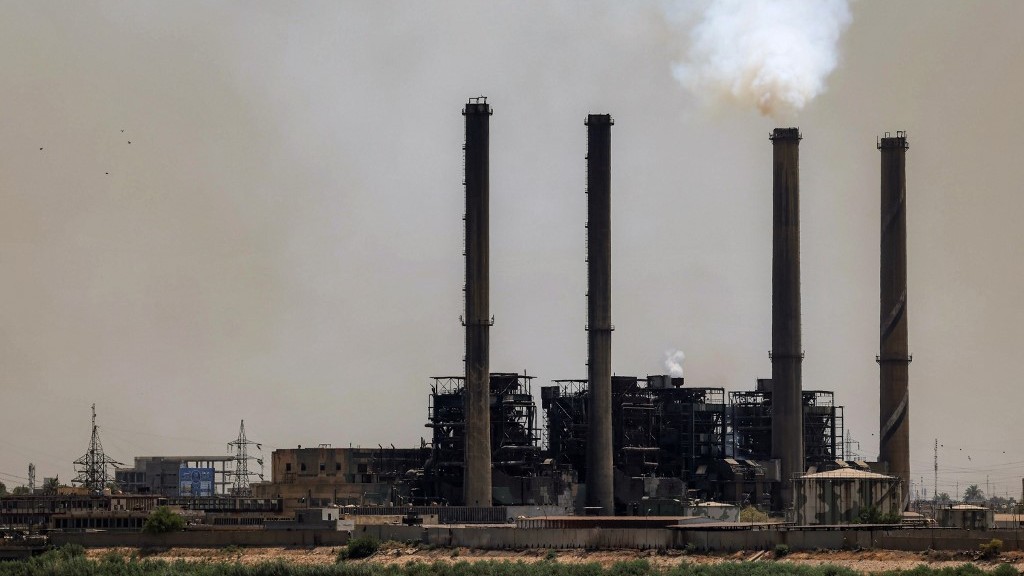
    Iraq encountered a severe energy crisis on Tuesday as Iran unexpectedly terminated all natural gas exports to its neighboring nation. The sudden cessation resulted in a massive reduction of approximately 4,000-4,500 megawatts from Iraq’s national power grid, according to an official statement from the Iraqi Ministry of Electricity.

    The ministry confirmed it received formal notification from Iranian authorities citing ‘unforeseen circumstances’ as the reason for the complete gas supply disruption. This development poses significant challenges for Iraq, which historically depends on Iranian energy imports for up to 40% of its electricity generation requirements.

    Ahmed Moussa, official spokesperson for the Electricity Ministry, disclosed that multiple power generation facilities were forced to cease operations due to the gas supply suspension, directly impacting daily electricity allocation across the country. “The complete halt in Iranian gas pumping has resulted in the substantial loss of generating capacity within our electrical system,” Moussa stated.

    The ministry has implemented emergency measures by coordinating with the Ministry of Oil to utilize alternative local fuel sources for power plants. Moussa emphasized that “production remains under control, and generating facilities continue operational despite some units being affected by the gas shortage.”

    This incident highlights Iraq’s persistent vulnerability stemming from its substantial energy dependence on Iran—a longstanding point of both domestic political contention and international diplomatic concern. The Trump administration previously intensified pressure on this arrangement by revoking in March a crucial waiver that had permitted Iraq to continue payments for Iranian electricity imports.

    Regional trade data indicates Iranian gas exports to Iraq had already declined by approximately 40% between April and August this year. Iraq’s chronic electricity shortages, particularly during extreme summer temperatures, are compounded by systemic infrastructure deficiencies, widespread corruption, and unreliable energy imports that frequently face abrupt interruptions.

  • Crisis in India-Bangladesh relations spirals amid violent protests

    Crisis in India-Bangladesh relations spirals amid violent protests

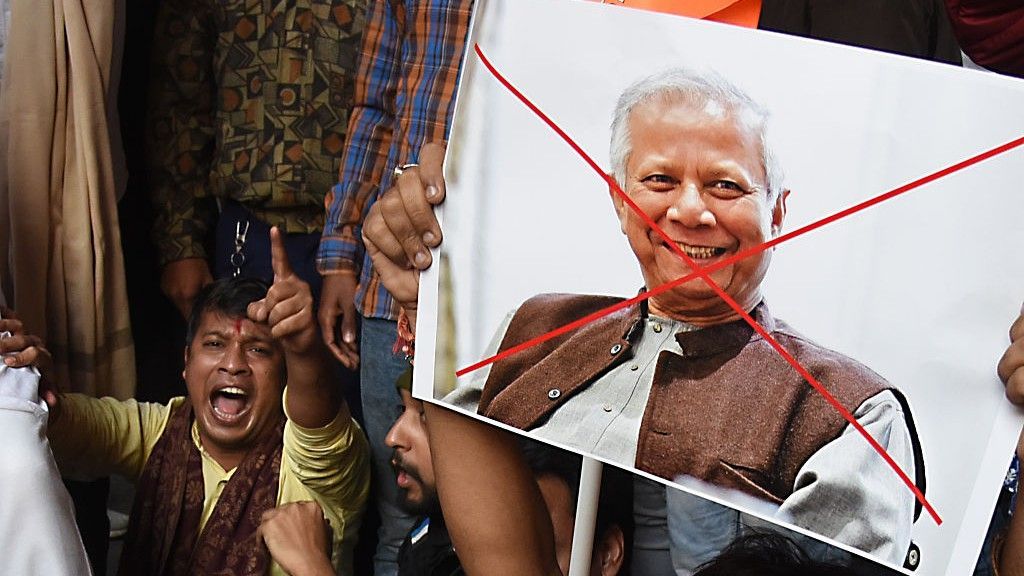
    A brutal mob killing has ignited dangerous tensions between South Asian neighbors India and Bangladesh, testing their historically close relationship. The crisis began when Dipu Chandra Das, a 27-year-old Hindu garment worker from Bangladesh’s minority community, was lynched in Mymensingh following blasphemy accusations. His death occurred amid violent protests over the separate killing of prominent student leader Sharif Osman Hadi in Dhaka.

    The incident has triggered reciprocal diplomatic actions, including visa service suspensions and security concerns over diplomatic missions. Both nations have summoned each other’s high commissioners as relations deteriorate to their lowest point in decades.

    Compounding the tension, Hadi’s supporters allege the primary suspect—reportedly linked to deposed Prime Minister Sheikh Hasina’s Awami League—fled to India, fueling anti-India sentiment in Muslim-majority Bangladesh. Although Bangladeshi police haven’t confirmed this claim, it has amplified existing resentment toward India’s perceived influence.

    The situation reveals deeper structural problems. Bangladesh’s interim government under Nobel laureate Muhammad Yunus faces criticism for failing to control rising religious extremism. Since Hasina’s ouster last year, radical elements have targeted minorities, desecrated Sufi shrines, and attacked cultural institutions accused of being pro-India.

    Analysts warn that hardline factions are exploiting anti-India sentiment for political gain, with both sides’ media potentially exacerbating tensions. The crisis has raised fundamental questions about minority safety and pluralism in Bangladesh while challenging India’s regional security calculations.

    With Bangladesh scheduled to hold elections on February 12th, and Hasina’s party banned from participating, experts caution that bilateral relations may deteriorate further unless diplomatic channels are restored and street anger contained.