标签: Asia

亚洲

  • Video: Bomb threats sent to 9 Delhi schools; probe underway

    Video: Bomb threats sent to 9 Delhi schools; probe underway

    A coordinated wave of bomb threats struck nine educational institutions across India’s capital on Monday morning, triggering massive security responses and widespread alarm. Between 8:30 AM and 9:00 AM local time, multiple schools in Delhi received threatening emails, prompting immediate deployment of Delhi Police, fire department teams, and specialized bomb disposal squads to all affected locations.

    The targeted institutions spanned various districts of the capital, including three schools in South Delhi—Air Force School on Lodhi Road, KR Mangalam School, and The Indian School in Sadiq Nagar. Additional schools receiving threats were identified as Loreto Convent School in Delhi Cantt, Cambridge School in Srinivasanpuri, Venkateshwar School in Rohini, Cambridge School in New Friends Colony, CM School in Rohini, DTA School in INA, and Bal Bharati School in Rohini.

    Security personnel conducted thorough sweeps of all premises while authorities maintained high alert status. This incident follows a similar pattern of threats that occurred on January 28 in the Union Territory of Chandigarh, where 30 schools received bomb threat emails. In that previous case, comprehensive inspections revealed no suspicious materials, but authorities implemented enhanced security measures and filed formal charges under the Bharatiya Nyaya Sanhita and Information Technology Act.

    The recurrence of such threats within weeks has raised serious concerns about the security of educational institutions and the potential psychological impact on students and staff. Investigations are ongoing to determine the origin and credibility of the threats, with authorities working to identify those responsible for disrupting educational activities and causing public safety concerns.

  • 2 killed as South Korean military helicopter crashes during training

    2 killed as South Korean military helicopter crashes during training

    A South Korean Army AH-1S Cobra attack helicopter crashed during a training exercise in Gapyeong on Monday morning, resulting in the tragic deaths of both crew members aboard. The incident occurred shortly after 11:00 AM local time (0200 GMT) under circumstances that remain undetermined.

    Military authorities confirmed that despite immediate medical evacuation to nearby facilities, both personnel succumbed to their injuries. The training mission involved practicing emergency landing procedures with engines operational at the time of the accident.

    In response to the tragedy, the South Korean military has implemented an immediate operational suspension of its entire AH-1S Cobra helicopter fleet. An emergency investigative team has been convened to determine the precise cause of the crash, examining all potential factors including mechanical failure, human error, and environmental conditions.

    The Gapyeong region, located northeast of Seoul, hosts significant military training operations. This incident marks another sobering moment for South Korea’s military aviation community, which maintains high alert status along the heavily fortified border with North Korea.

  • Lebanon building collapse toll rises to 9, civil defence says

    Lebanon building collapse toll rises to 9, civil defence says

    TRIPOLI, LEBANON – The death toll from Sunday’s building collapse in northern Lebanon’s impoverished city of Tripoli has escalated to nine fatalities, according to civil defense officials, marking the second such structural failure within weeks. The tragic incident occurred in the Bab al-Tabbaneh neighborhood, recognized as the city’s most destitute area, where rescue teams continue their desperate search for potential survivors beneath the rubble.

    Civil Defence Director General Imad Khreish confirmed to local media that six individuals were successfully extracted from the debris and transported to nearby medical facilities for treatment. The collapsed structure comprised two separate blocks containing six apartments each, with preliminary estimates suggesting approximately 22 residents were present during the catastrophic event.

    Mayor Abdel Hamid Karimeh declared Tripoli a disaster-stricken city during a press conference, citing the pervasive threat posed by thousands of unsafe buildings throughout the municipality. “Thousands of our people in Tripoli are threatened due to years of neglect,” Karimeh stated, emphasizing that “the situation is beyond the capabilities of the Tripoli municipality.”

    The disaster has triggered civil unrest, with reports of angry demonstrators vandalizing property near political offices. This incident follows another deadly building collapse in late January, highlighting systemic urban safety failures.

    According to January statistics from Tripoli’s municipal authorities, 105 buildings required immediate evacuation notices. Notably, Sunday’s collapsed structure was not included on the official list of imminently dangerous buildings, raising questions about assessment protocols.

    Prime Minister Nawaf Salam denounced the situation as a “humanitarian catastrophe” resulting from “long years of accumulated neglect” while announcing government readiness to provide housing allowances to displaced residents. Justice Minister Adel Nassar has ordered an immediate investigation into the collapse through the northern public prosecutor’s office.

    Urban planning experts attribute the recurring tragedies to unregulated construction practices, particularly during Lebanon’s 1975-1990 civil war, when numerous buildings were erected without proper permits or safety standards. The country’s prolonged economic crisis has further exacerbated the situation, leaving residents unable to afford necessary repairs or alternative housing options.

    This tragedy echoes concerns raised by Amnesty International in 2024 regarding thousands of Tripoli residents continuing to inhabit structurally compromised buildings more than a year after the devastating Turkey-Syria earthquake further weakened already precarious structures.

  • Pakistan says Afghanistan has created conditions ‘similar to or worse than’ pre-9/11 attacks

    Pakistan says Afghanistan has created conditions ‘similar to or worse than’ pre-9/11 attacks

    ISLAMABAD — Pakistani President Asif Ali Zardari has issued a grave warning that Afghanistan’s Taliban-led government has established security conditions mirroring or exceeding the perilous environment that preceded the September 11, 2001 terrorist attacks. This declaration signals escalating diplomatic tensions following last week’s devastating mosque bombing in Islamabad that killed 31 worshippers and injured 169.

    In strongly worded statements delivered Sunday, President Zardari asserted that terrorist organizations now pose renewed threats to global peace under the Taliban’s governance. While expressing gratitude for international condemnation of the attack claimed by Islamic State, Zardari pointedly accused Pakistan’s eastern neighbor India of ‘assisting the Taliban regime and threatening not only Pakistan but regional and global peace.’

    The presidential remarks represent a significant escalation in rhetoric likely to provoke responses from both Kabul and New Delhi. Both nations have previously denied involvement in the suicide bombing and rejected similar allegations from Pakistani officials.

    This diplomatic confrontation revives historical tensions reminiscent of the period between 1996-2001 when the previous Taliban administration sheltered al-Qaeda leader Osama bin Laden and permitted terrorist training camps despite international objections. Although bin Laden was ultimately eliminated by U.S. forces in Pakistan in 2011, current leadership contends that similar patterns are reemerging under the resurrected Taliban regime that regained power in August 2021.

    Interior Minister Mohsin Naqvi revealed that security forces have apprehended four suspects connected to the mosque attack, including an Afghan national allegedly linked to the militant group who helped mastermind the operation. Detainees include the bomber’s mother and brother-in-law, though Pakistani authorities haven’t disclosed full details regarding familial involvement.

    Analysts interpret Zardari’s statements as reflecting growing frustration with perceived external support for militant groups. Asif Durrani, Pakistan’s former special representative for Afghanistan, characterized the warning as ‘unambiguous: terrorism thrives where it is tolerated, facilitated, or used as a proxy.’

    The security situation remains volatile as Pakistan experiences a resurgence of militant violence attributed to Baloch separatist groups and Tehrik-e-Taliban Pakistan (TTP), which maintains separate but allied relations with Afghanistan’s Taliban leadership. Meanwhile, Islamic State’s regional affiliate continues to operate as a major Taliban rival, conducting attacks throughout Afghanistan.

  • Jimmy Lai sentenced to 20 years in prison

    Jimmy Lai sentenced to 20 years in prison

    Hong Kong’s High Court has delivered a landmark ruling, sentencing former media magnate Jimmy Lai Chee-ying to 20 years imprisonment under the city’s National Security Law. The verdict concludes one of the most significant legal proceedings since the legislation’s implementation.

    A three-judge national security panel comprising Esther Toh Lye-ping, D’Almada Remedios, and Alex Lee Wan-tang determined the sentence following Lai’s December conviction on two counts of conspiracy to collude with foreign forces and one count of conspiracy to publish seditious materials. The court emphasized the serious nature of offenses involving foreign entities endangering national security, stating such actions warrant severe penalties according to legislative intent.

    The judicial panel addressed multiple considerations in their sentencing rationale. Notably, the court ruled that 18 years of the national security sentence will run consecutively with Lai’s previous 5-year, 9-month fraud conviction from December 2022, which involved unrelated matters of a completely different nature.

    Regarding health considerations, the court acknowledged Lai had received appropriate medical attention during detention but declined to reduce his sentence on medical grounds, noting such considerations rarely justify sentence reduction in cases involving grave offenses. The judgment reinforces the judiciary’s firm stance on upholding national security legislation while maintaining procedural rigor throughout the legal process.

  • Bangladesh votes in world’s first Gen Z-inspired election

    Bangladesh votes in world’s first Gen Z-inspired election

    Bangladesh stands at a historic political crossroads as citizens prepare for Thursday’s parliamentary elections, marking the nation’s first genuinely competitive electoral contest since 2009. This watershed moment follows the 2024 uprising that ousted former Prime Minister Sheikh Hasina after her 15-year administration, with her Awami League party now banned from participation.

    The political landscape has undergone a dramatic reversal from previous elections where opposition voices were systematically suppressed through boycotts and mass arrests. Now, campaign materials from multiple parties adorn streets across the country, creating an unprecedented visual tapestry of democratic engagement.

    The Bangladesh Nationalist Party (BNP), contesting 292 of the 300 parliamentary seats, emerges as the frontrunner according to most analysts. Party leader Tarique Rahman expressed confidence in securing sufficient seats to form a government. However, the BNP faces substantial challenge from a coalition led by Jamaat-e-Islami, which has aligned with a new Generation Z activist party that previously spearheaded anti-Hasina street mobilizations.

    This election carries profound implications for regional geopolitics, potentially reshaping the influence of rival powers China and India. Beijing has gained standing since Hasina’s perceived pro-India stance culminated in her fleeing to New Delhi after her ouster. A Jamaat-led government might tilt closer to Pakistan, while the BNP is viewed as more amenable to Indian interests.

    With 175 million citizens seeking stability after months of post-uprising unrest that disrupted major industries including the vital garment sector, analysts emphasize the critical need for a decisive electoral outcome. Approximately one-quarter of the electorate belongs to Generation Z, whose voting preferences could substantially influence the final results.

    The election occurs against a backdrop of severe economic challenges, including high inflation, dwindling reserves, and slowed investment that has compelled Bangladesh to seek large-scale international financing. Voter surveys identify corruption as the primary concern, followed by economic pressures, with many citizens expressing hope for restored democratic freedoms regardless of which party prevails.

  • Trump says Bad Bunny’s Super Bowl halftime was ‘absolutely terrible’

    Trump says Bad Bunny’s Super Bowl halftime was ‘absolutely terrible’

    Former US President Donald Trump has launched a scathing critique of Bad Bunny’s Super Bowl LX halftime performance, labeling it “absolutely terrible” in a social media post on Sunday. The Puerto Rican superstar, born Benito Antonio Martínez Ocasio, made history as the first reggaeton artist to headline the iconic halftime show in Santa Clara, California, delivering a performance entirely in Spanish that blended Caribbean rhythms with contemporary urban sounds.

    The political undertones of this cultural clash run deep. Bad Bunny, whose Grammy-winning album “Debí Tirar Más Fotos” earned him Album of the Year honors, has been an outspoken critic of Trump’s immigration policies and publicly endorsed Kamala Harris during the 2024 presidential campaign. This animosity predates the Super Bowl, with Trump previously calling the selection of the Puerto Rican artist as halftime performer “absolutely ridiculous” weeks before the event.

    In his Truth Social post following the performance, Trump escalated his criticism: “The Super Bowl Halftime Show is absolutely terrible, one of the worst, EVER! It makes no sense, is an affront to the Greatness of America, and doesn’t represent our standards of Success, Creativity, or Excellence.”

    The cultural divide manifested physically through an alternative programming initiative by conservative group Turning Point USA, which produced an “All-American Halftime Show” featuring Kid Rock and other artists. The organization, founded by slain activist and Trump ally Charlie Kirk, received promotional support from Trump-aligned figures including Secretary of Defense Pete Hegseth, who announced his family would be watching the alternative broadcast.

    This incident represents the latest chapter in the ongoing tension between Trump and the entertainment industry, following recent conflicts with comedians and television hosts over political commentary and personal attacks.

  • Japan’s ruling coalition secures majority in lower house election

    Japan’s ruling coalition secures majority in lower house election

    In a landmark electoral outcome, Japan’s ruling Liberal Democratic Party (LDP) has achieved an unprecedented parliamentary supermajority following Sunday’s House of Representatives election. Official results confirm the LDP captured 316 seats in the 465-member lower house, surpassing the critical two-thirds threshold of 310 seats for the first time in Japan’s postwar history.

    The ruling coalition, which includes the Japan Innovation Party (JIP) as junior partner, collectively secured 352 seats. The JIP contributed 36 seats to this total, marking significant gains from their pre-election standing of 34 seats. This decisive victory provides Prime Minister Sanae Takaichi with substantial political capital to advance her policy agenda.

    The electoral outcome carries profound constitutional implications, enabling the LDP to pursue constitutional amendments and enact legislation even if rejected by the upper chamber, where the coalition remains in the minority. This supermajority potentially opens the door to revisions of Japan’s pacifist constitution, a long-standing LDP objective.

    Opposition parties faced substantial setbacks, with the newly formed Centrist Reform Alliance—an amalgamation of the Constitutional Democratic Party and Komeito—managing to secure only 49 seats. Smaller parties including the Democratic Party for the People (28 seats), Sanseito (15 seats), emerging Future Team (11 seats), and Japanese Communist Party (4 seats) rounded out the parliamentary representation.

    Voter participation showed modest improvement at approximately 55.68%, compared to 53.85% in the previous 2024 general election. A total of 1,284 candidates competed for parliamentary positions through both single-seat constituencies and proportional representation across 11 regional blocs.

    Financial markets responded positively to the political stability signaled by the election results. Japanese equities surged approximately 5% during Monday morning trading, while the yen weakened against major currencies. Analysts anticipate Prime Minister Takaichi will now advance her “responsible and proactive fiscal policy” agenda, focusing on addressing cost-of-living pressures while promoting strategic investment initiatives.

  • Hong Kong media tycoon Jimmy Lai sentenced to 20 years jail in national security trial

    Hong Kong media tycoon Jimmy Lai sentenced to 20 years jail in national security trial

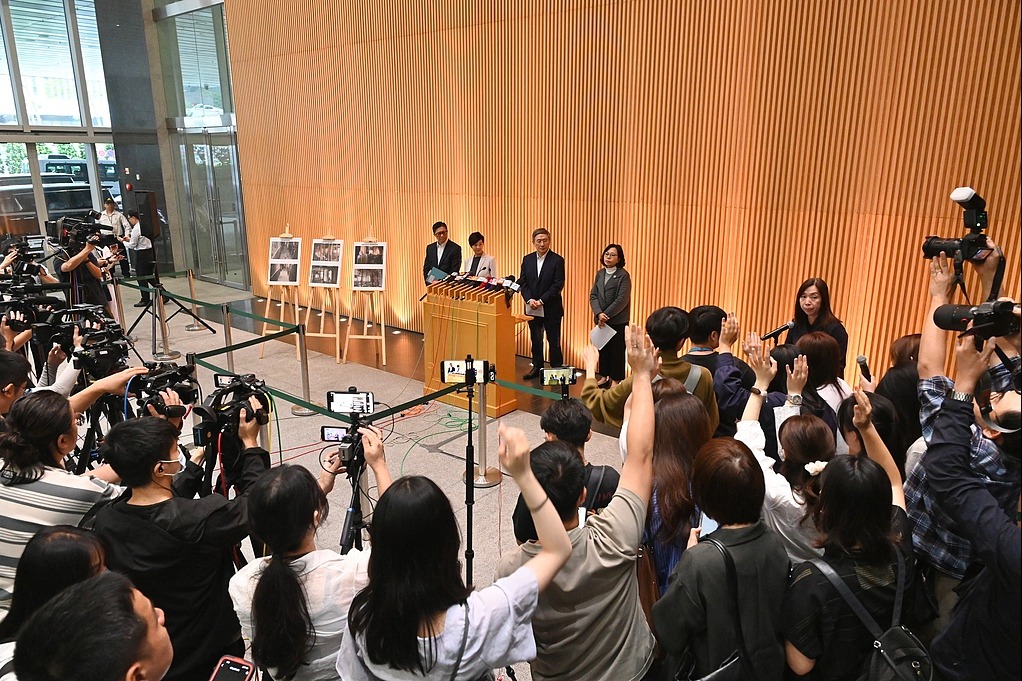
    In a landmark ruling that concludes Hong Kong’s most prominent national security case, media magnate Jimmy Lai has been sentenced to 20 years imprisonment. The 78-year-old British citizen, founder of the shuttered Apple Daily newspaper, received the verdict on Monday following convictions on two counts of conspiracy to collude with foreign forces and one count of publishing seditious materials.

    The court determined Lai’s sentence fell within the most severe penalty category for offenses of “grave nature,” which carries a range from 10 years to life imprisonment. Judicial authorities emphasized that Lai’s role as the “mastermind” and primary instigator behind foreign collusion conspiracies warranted enhanced sentencing.

    Lai, who maintains his innocence and describes himself as a “political prisoner” facing Beijing-directed persecution, was first arrested in August 2020. His legal saga has spanned nearly five years, drawing international scrutiny and condemnation from Western leaders including U.S. President Donald Trump and British Prime Minister Keir Starmer.

    The case has intensified focus on Hong Kong’s national security crackdown implemented following mass pro-democracy protests in 2019. Dozens of supporters queued for days outside the courthouse, with one describing Lai as “the conscience of Hong Kong” who spoke for both Hong Kong citizens and mainland Chinese facing wrongful cases.

    International diplomatic efforts have intensified, with Starmer raising Lai’s case directly with Chinese leader Xi Jinping during recent talks in Beijing’s Great Hall of the People. The British leader subsequently confirmed to Parliament that he had called for Lai’s release.

    Concerns mount over Lai’s health conditions, including heart palpitations and high blood pressure, with family and supporters warning he could potentially die in prison. Alongside Lai, six former Apple Daily executives, an activist, and a paralegal await sentencing in related cases.

    Press freedom advocates have condemned the proceedings, with the Committee to Protect Journalists labeling the trial “a charade” that demonstrates contempt for Hong Kong’s legal protections. Chinese authorities maintain that Lai received a fair trial and that the national security law has been essential in restoring order to the financial hub.

  • Beautiful Hebei episode 11: Discover red tourism destinations

    Beautiful Hebei episode 11: Discover red tourism destinations

    The Hebei Photographers Association has concluded its acclaimed ‘Beautiful Hebei’ series with a compelling eleventh installment focusing on the province’s revolutionary heritage sites. This final chapter showcases 198 meticulously curated photographs drawn from the association’s extensive archives, special submissions, and collaborative collections with cultural organizations.

    The visual journey highlights historically significant locations that played pivotal roles in China’s revolutionary history, offering both educational value and tourism appeal. The project represents a comprehensive effort to document and promote Hebei’s cultural legacy through professional photography.

    Under the guidance of the association’s curatorial team, the series has systematically presented Hebei’s diverse cultural and historical attractions across all eleven episodes. This final installation specifically emphasizes ‘red tourism’ destinations that commemorate revolutionary struggles and achievements.

    Contributing photographer Sun Ke noted the importance of preserving these historical narratives through visual storytelling. The project serves as both an archival effort and a promotional initiative to boost cultural tourism in the region during the winter season.