
A senior Japanese academic and Sino-Japanese friendship leader is pressing the Japanese government to issue a formal public apology to Beijing over a deeply alarming breach of diplomatic protocol that took place in late March. Hisashi Inoue, honorary professor at Surugadai University and chairman of the Japan-China Friendship Association, has labeled the March 24 incident — where an active officer of the Japan Self-Defense Forces forced entry into the Chinese Embassy in Japan while armed with a knife — an extraordinarily severe violation of long-established international diplomatic norms. Inoue emphasized that the incident, which shocked diplomatic circles on both sides, constitutes a clear and grave breach of the 1961 Vienna Convention on Diplomatic Relations, a foundational international treaty that guarantees the inviolability of diplomatic mission premises and the safety of diplomatic staff. As of the report’s update on April 1, 2026, the Japanese government has not extended a formal apology to China over the intrusion, only issuing a vague expression of regret over the event. Inoue argues that this mild, indirect response is wholly insufficient to address the severity of the incident and the risks it poses to bilateral ties. The long-time advocate for friendly Japan-China relations is calling on Japan’s top elected leader, the prime minister, and the country’s defense minister to deliver a formal, public apology to the Chinese government over the unacceptable incursion.
标签: Asia
亚洲
-

Macron calls for ceasefire in Mideast during visit to Japan
During an official state visit to Tokyo on Wednesday, French President Emmanuel Macron publicly called for an immediate ceasefire to end escalating conflict in the Middle East, alongside joint commitments with Japanese Prime Minister Sanae Takaichi to deepen cross-sector bilateral cooperation spanning defense, critical resources, nuclear energy and space exploration.
Following closed-door bilateral talks, the two leaders outlined shared foundational principles during a joint press conference held at Tokyo’s Akasaka Palace. Macron emphasized that both Paris and Tokyo are united in their commitment to upholding international law, a rules-based global order, and shared democratic values. “This is why … we both advocate for a return to peace, a ceasefire, calm, and free passage through the Strait of Hormuz,” Macron stated. Takaichi echoed this position, noting the two leaders reached consensus on the urgent need to de-escalate regional tensions, guarantee unimpeded access through the strategically critical waterway, and protect global supply chain stability. Amid growing geopolitical uncertainty across the globe, Takaichi noted that strengthening ties and collaboration between Japan and France carries particular strategic weight.
Beyond regional diplomacy, the summit delivered concrete progress on multiple long-standing bilateral cooperation initiatives. A day prior to the leaders’ meeting, Japanese Defense Minister Shinjiro Koizumi and his French counterpart Catherine Vautmir signed a formal road map outlining expanded defense cooperation through 2030, centered on increasing joint military exercises and personnel exchanges across the Indo-Pacific. In a separate signing ceremony, the two nations’ trade ministers formalized an agreement to collaborate on joint rare earths development projects. Rare earth elements are critical components for high-performance heat-resistant magnets used in defense systems and electric vehicle batteries, a market currently dominated by Chinese production. The two leaders also confirmed a new partnership to advance fast reactor technology and nuclear fuel recycling, an area where Japan has faced repeated technical and regulatory setbacks in recent years.
The bilateral summit comes amid a shifting geopolitical landscape in the Indo-Pacific, where Japan and France have steadily ramped up defense cooperation over the past decade. France maintains permanent military forces, civilian populations and economic assets across its Indo-Pacific overseas territories, and has positioned itself as a key security partner for regional democracies seeking to counter balance growing Chinese influence across the region.
Macron’s visit to Japan also unfolded hours after U.S. President Donald Trump made controversial remarks shifting responsibility for security of the Strait of Hormuz to regional consumer nations. “That’s not for us. That’ll be for France and whoever’s using the strait,” Trump stated overnight. The U.S. president has publicly criticized European allies for what he frames as insufficient support for U.S.-backed Israeli military operations, and specifically called out France for being “very unhelpful” in the conflict. Macron did not address Trump’s comments during his prepared remarks at Wednesday’s press conference, where reporters were not given the opportunity to ask questions.
Looking ahead to the final day of Macron’s Tokyo visit on Thursday, he and Takaichi are scheduled to tour a Japanese private firm specializing in innovative space debris removal technology, a reflection of the two nations’ expanding collaboration in the space sector. Following the site visit, Macron will hold a formal courtesy meeting with Japan’s Emperor Naruhito and attend an official palace luncheon, before departing for South Korea to continue his East Asian diplomatic tour.
-

Pond skimming marks end of snow season in Xinjiang’s Altay
As spring temperatures rise and winter snowpack begins to melt across northern Xinjiang, the 2025-2026 snow season came to a festive close this weekend at Altay’s Jiangjunshan International Ski Resort, where hundreds of skiing enthusiasts gathered for the beloved annual tradition of pond skimming. A thrilling celebration of the season’s final days, the event invited participants of all skill levels to test their balance and courage gliding across an open pool of meltwater at the base of the resort’s slopes.
Event organizers carved out two separate courses to accommodate attendees of varying experience: a full 35-meter main track for seasoned thrill-seekers, and a shorter, gently sloped mini-track built specifically for first-time participants and beginners. On the main course, skiers pushed off from the top of the snow-covered slope, building speed as they descended before launching onto the surface of the pool, sending up plumes of water as they attempted to skim all the way across to the opposite bank. While some skilled skiers managed to glide the full distance without falling, many challengers lost their footing mid-crossing and plunged into the chilly water, emerging soaked, grinning, and eager to share photos of their playful mishaps with fellow attendees.
Mao Xiaoshuai, a visitor who traveled from the southwestern city of Chengdu, Sichuan province to join the event, described the experience as unforgettable. “Combining the speed of downhill skiing with the playful fun of splashing through water makes for a totally unique rush,” he explained in an interview on Sunday. “You get the best of both winter and early spring all in one run, and it’s the perfect way to let go of all the stress that’s built up over months of work.”
Over on the beginner track, organizers intentionally designed a gentler gradient to lower the barrier to entry, ensuring that even first-time skiers and families with young children could join in the fun without feeling intimidated. The welcoming atmosphere drew crowds of spectators who cheered on every participant, regardless of whether they made it across the pool or took an unexpected dip.
Jiangjunshan International Ski Resort will officially close its 2025-2026 snow season this coming Wednesday. Beyond the festive closing event, the resort celebrated a standout winter: official data shows the facility welcomed 1.3 million total visits over the past four months, marking a 46 percent jump compared to the previous winter season. The number of dedicated ski visits specifically rose even more sharply, hitting 870,000 — a 66 percent year-on-year increase that highlights Altay’s growing reputation as one of China’s top winter sports destinations.
-
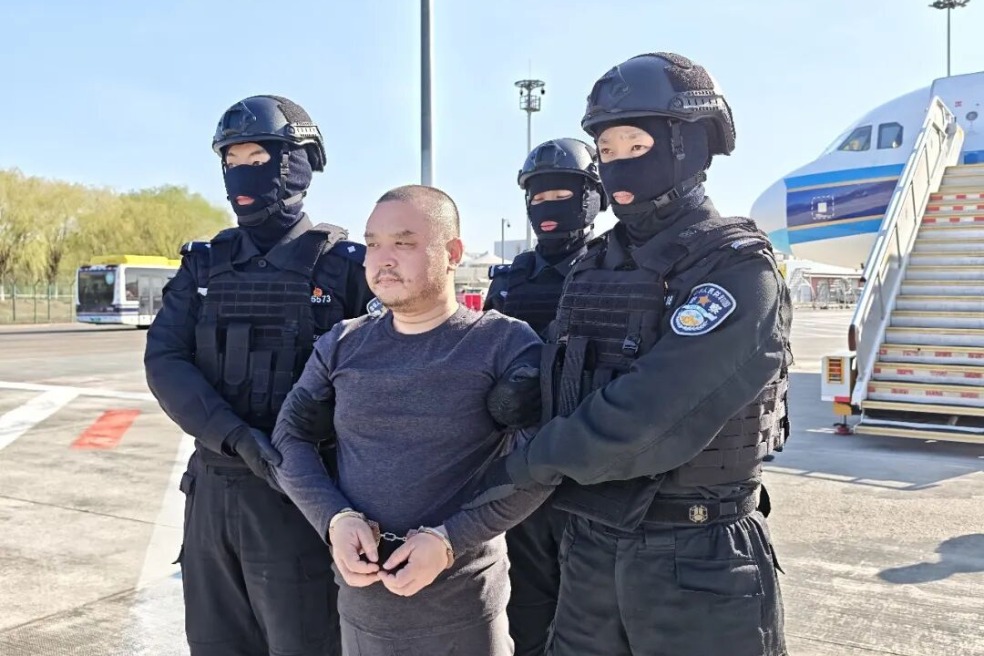
Key suspect in cross-border gambling, fraud syndicate repatriated from Cambodia to China
China’s Ministry of Public Security confirmed on Wednesday that a high-profile key figure connected to a large transnational criminal network focused on illegal gambling and telecom fraud has been successfully sent back to Chinese territory from Cambodia. The suspect, identified as Li Xiong, is considered a core member of the operation that victimized countless individuals through illegal financial scams and unregulated gambling activities, according to official statements.
This repatriation marks a significant milestone in China’s ongoing coordinated crackdown on cross-border organized crime, which has increasingly targeted criminal syndicates that operate across international borders to avoid domestic law enforcement. Criminal networks involved in transnational fraud and illegal gambling have long posed major threats to public safety and financial stability both in China and neighboring Southeast Asian nations, prompting bilateral law enforcement cooperation to dismantle these operations and bring fugitive suspects to justice.
The handover of Li Xiong underscores the growing collaborative relationship between Chinese and Cambodian law enforcement agencies in addressing shared transnational security challenges. For years, these criminal syndicates have exploited gaps in cross-border regulation to run large-scale scams that steal billions of yuan from Chinese residents and global victims annually, making coordinated repatriation efforts a critical component of regional anti-crime initiatives.
This operation aligns with China’s broader national strategy to combat transnational telecommunications fraud, online gambling, and other cross-border criminal activities that harm public interests. Chinese law enforcement officials have repeatedly emphasized that the country will continue to work with international partners to track down fugitive criminal suspects operating overseas, ensuring that no offenders can evade justice by fleeing beyond national borders.
-
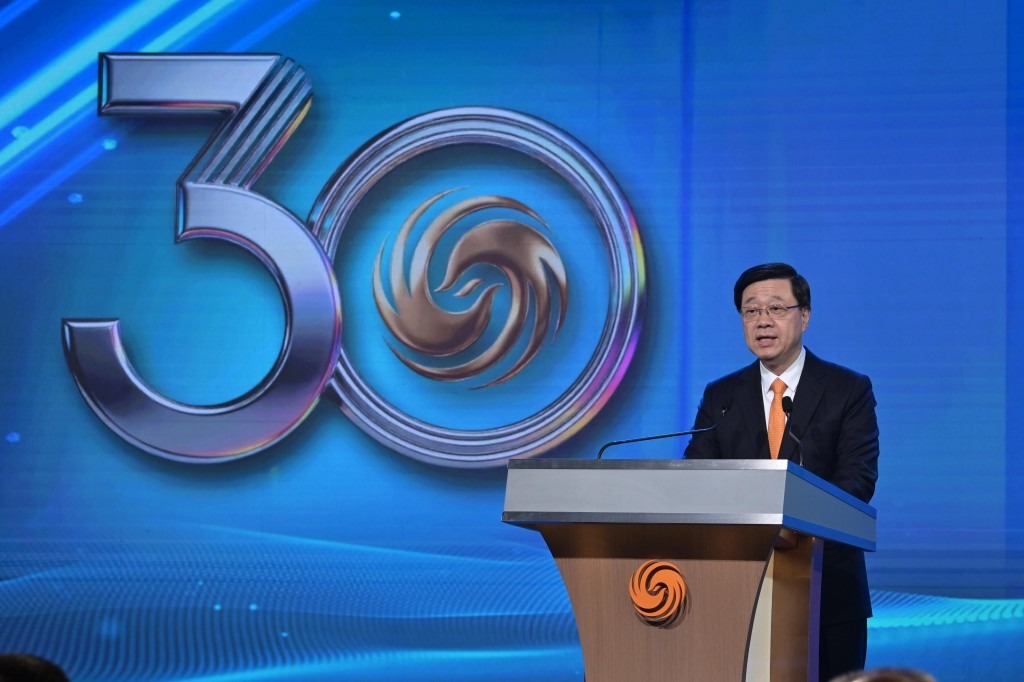
Phoenix TV of Hong Kong marks 30th anniversary, eyes wider global reach
HONG KONG – On March 31, 2026, Hong Kong-based international broadcaster Phoenix Television gathered industry leaders, government officials, and media partners for a milestone celebration marking three decades of operation since its founding in 1996. At the anniversary ceremony held in the city, John Lee Ka-chiu, Chief Executive of the Hong Kong Special Administrative Region (HKSAR), delivered a keynote address that framed the 30-year mark as both a moment to reflect on past accomplishments and a jumping-off point for a new chapter of growth.
Lee emphasized that Phoenix TV has carved out a unique, influential role in global media over its 30-year history, thanks to its strategic positioning in Hong Kong and long-standing strengths in cross-border communication. He urged the network to continue building on these advantages to share nuanced, authentic stories about China with audiences across the world, reinforcing its role as a bridge between different regions and cultural communities.
Xu Wei, Phoenix TV’s Chairman of the Board and Chief Executive Officer, reflected on the network’s three-decade evolution, noting that adaptive innovation and a willingness to embrace shifting industry landscapes have been the core driving forces behind the broadcaster’s sustained development. Looking forward, Xu outlined Phoenix TV’s new strategic vision: the network aims to extend the global reach of Chinese culture, connect with broader international audiences, and solidify its position as a foundational platform for constructive cross-cultural dialogue and global exchange.
Since its launch 30 years ago, Phoenix TV has built out an extensive global infrastructure that supports its international mission. It currently operates 63 news bureaus across six continents, runs six distinct television channels, and delivers its signal to audiences in 190 countries and regions worldwide. In recent years, the broadcaster has also recorded consistent growth in its follower and user bases across major international digital and social media platforms, positioning it well for the next phase of global expansion.
-

Cross-border travel surge expected during Qingming Holiday
China is set to experience a sharp uptick in cross-border travel during the upcoming Qingming Festival holiday, running from April 4 to 6, according to official projections released Wednesday by the National Immigration Administration. The agency forecasts that average daily cross-border trips will exceed 2.3 million, representing an 11.1 percent increase compared to the same holiday period in 2025.
Beyond its deep cultural roots as a time for ancestral tomb sweeping and honoring family predecessors, the Qingming Festival has evolved into one of China’s most popular windows for spring leisure travel. This year’s anticipated travel boom has been amplified by two key complementary factors: multiple local regions have rolled out dedicated spring break arrangements for primary and secondary school students, expanding the pool of potential travelers, and the special administrative regions of Hong Kong and Macao are scheduled to observe a five-day holiday for the occasion, creating extended opportunities for cross-border movement.
Official projections show that major international hubs across the country, including Shanghai Pudong International Airport, Beijing Capital International Airport, Chengdu Tianfu International Airport, Guangzhou Baiyun International Airport and Shenzhen Bao’an International Airport, will all see modest growth in passenger volumes compared to previous years. By contrast, land ports connecting the Chinese mainland with Hong Kong and Macao are on track to record far more robust growth, driven by two overlapping demand streams: rising numbers of Hong Kong, Macao and Taiwan residents returning to their ancestral hometowns for traditional rites, and growing inbound travel from overseas Chinese and international tourists.
Among the busiest border crossings, Shenzhen’s key checkpoints are projected to see heavy daily traffic: Luohu is expected to handle roughly 250,000 crossings per day, followed by Futian at 230,000, Shenzhen Bay at 190,000, West Kowloon High-Speed Rail Station at 120,000, and Liantang at 110,000. In Zhuhai, which serves as the main mainland gateway to Macao, the Gongbei checkpoint alone is forecast to register 375,000 daily crossings, while the Hong Kong-Zhuhai-Macao Bridge checkpoint will see 152,000 daily trips, and both Qingmao and Hengqin checkpoints are projected to handle 113,000 daily cross-border trips each.
The projected surge in cross-border travel comes as regional tourism and cross-border family ties continue to recover following years of restricted movement, with the combination of cultural tradition and extended holiday timelines creating ideal conditions for increased mobility across China’s borders this spring.
-
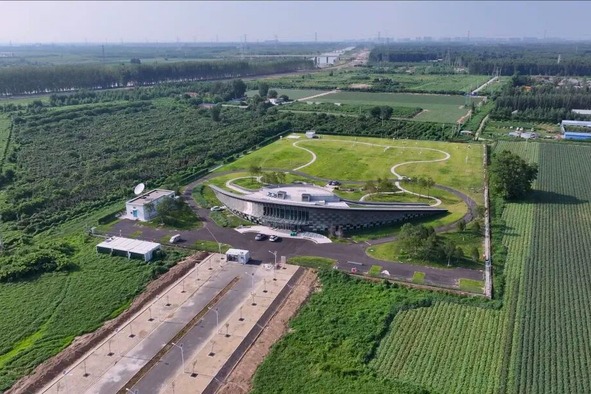
Xiong’an national observatory officially inaugurated
BEIJING – On Wednesday, China formally launched its 27th national climate observatory in the Xiong’an New Area, a strategically planned modern development zone located in Hebei Province, northern China. The inauguration marks a key milestone in strengthening the country’s national climate monitoring network and advancing meteorological research for one of China’s most ambitious urban development projects.
Officials from the China Meteorological Administration confirmed that the new observatory features a structured network of one central main monitoring station and eight regional auxiliary stations. This distribution allows the facility to capture comprehensive climate data across four distinct major ecosystem types that exist within the Xiong’an region, including dense urban development zones, natural forest landscapes, protected wetland reserves, and large-scale agricultural farmland areas.
Unlike traditional static observation facilities, all meteorological data collected across the Xiong’an network is transmitted instantly in real time to a cloud-hosted big data platform. This digital integration dramatically boosts local and national capabilities in continuous climate monitoring, rapid extreme weather early warning, and customized meteorological services tailored to the needs of different economic and public service sectors.
Located approximately one hour’s drive southwest of central Beijing, Xiong’an New Area was first established by Chinese authorities in 2017. Widely referred to as China’s “city of the future,” the development is a core component of the national strategy to relocate non-essential capital functions from Beijing to ease urban overcrowding pressure, while driving coordinated economic and social development across the Beijing-Tianjin-Hebei region. As the new city continues its phased construction and population growth, robust meteorological infrastructure has become an urgent priority to support sustainable urban planning and daily operation.
Following its official inauguration, the Xiong’an National Climate Observatory will take on dual roles beyond basic climate data collection. In addition to fulfilling routine long-term climate observation tasks, the facility will also conduct targeted cutting-edge research in multiple key climate-related fields. The data and research output from the observatory will provide more robust, reliable technical support for national efforts including climate resource assessment, long-term climate change tracking and impact analysis, and early identification of meteorological disaster risks across the region and beyond.
Over the past several years, local meteorological authorities in Xiong’an have already made significant progress in building out smart meteorological infrastructure, establishing a preliminary integrated regional monitoring network that covers the entire new area.
“Moving forward, our team will continue to strengthen core capabilities across three key areas: meteorological disaster risk monitoring and early warning, ecological meteorological support for environmental protection and restoration, and high-quality meteorological services that support stable urban operation,” said Guo Yitao, deputy director of the newly inaugurated Xiong’an observatory.
-

Trump underestimated Iran’s resilience, gutting his exit options
One month into the military conflict launched by the United States and Israel against Iran, the two nations have yet to articulate a clear, coherent justification for their offensive, outline measurable strategic objectives, or lay out a viable exit strategy—even as they continue to claim steady military progress on the battlefield. What was supposed to be a quick, decisive campaign has instead dragged the entire Middle East into an avoidable, open-ended confrontation, after Iran mounted a far stronger coordinated response than Washington and Tel Aviv ever anticipated.
When former U.S. President Donald Trump and Israeli Prime Minister Benjamin Netanyahu greenlit the offensive, they fundamentally misjudged both the ideological cohesion of Iran’s ruling system and its decades-built defensive capacity. They never expected Tehran to respond with a level of preparedness unmatched in the regime’s modern history: launching coordinated strikes against U.S. military installations across the Persian Gulf, dealing heavy blows to Israeli civilian and military infrastructure, and partially or fully closing the Strait of Hormuz—triggering global oil and gas shortages that have already sent shockwaves through the world economy.
Driven by an overreliance on overwhelming military superiority, the U.S. and Israeli leadership bet that air and sea power would force Iran’s Islamic government to surrender quickly, clearing the way for a pro-Western regime change led by the Iranian people. That outcome has not materialized, and now a clear military victory grows more out of reach by the day. For Trump, the only viable path forward is a sharp pivot to diplomacy—and pressure on Netanyahu to follow suit.
### The Roots of Iran’s Unexpected Resilience
Before the outbreak of war, Iran’s ruling regime faced steep headwinds: intense domestic pressure and widespread international condemnation following its violent crackdown on mass public protests that left thousands of Iranians dead. It was also reeling from Israel’s systematic weakening of its key regional proxies, particularly Hamas and Hezbollah, and the collapse of Bashar al-Assad’s long-standing allied regime in Syria.
Even as Tehran remained distrustful of Trump’s administration, it had agreed to re-enter negotiations over its contentious nuclear program, with a widely reported breakthrough on the horizon. Omani mediators announced in late February that a final deal was within reach, before the U.S.-Israeli offensive derailed the process. Far from crippling the regime, the unprovoked invasion gave Iran’s government an opening to showcase the defensive resilience it had spent 40 years building.
Iran’s governing, security, and command structures were explicitly designed to withstand the loss of top leaders and commanders. The regime proved this endurance during the 1980s, when it survived internal dissent, an eight-year full-scale war with Iraq, decades of U.S. containment, and open hostility from most of its regional neighbors. It has outlasted widespread public discontent, theocratic governance frictions, and repeated policy failures, thanks to three core structural strengths: deep ideological commitment to revolutionary Islamism among Iran’s large Shia population, a rare combination of ideological rigidity and pragmatic policy flexibility, and a deeply entrenched, dedicated security, intelligence, and administrative bureaucracy whose own survival is tied directly to the regime’s survival.
While many Iranians have long pushed for political change at home, the vast majority remain deeply proud of their nation’s millennia-old cultural and civilizational heritage, and uniformly reject foreign aggression, occupation, and humiliation of their country. This nationalist sentiment is what has driven widespread popular rallying around the regime, a pattern that repeats throughout Iranian history when the nation faces external attack.
### A War of Attrition No Side Can Win Quickly
Fully aware it cannot match the conventional firepower of the U.S. and Israeli militaries, Iran has deployed a creative, asymmetrical “mosaic defense” strategy tailored to exploit the weaknesses of its adversaries. This approach includes targeting vulnerable U.S. bases across the Persian Gulf with precision drones and missiles, and decentralizing command structures to ensure leadership can be quickly replaced if top officials are killed in strikes.
Tehran has also received critical external support: Russia and China have supplied dual-use technologies and maintained oil import revenues to keep Iran’s economy functioning, and multiple intelligence reports confirm Russia has shared real-time intelligence on the location of U.S. assets in the region. Even with their capabilities degraded, Iran’s regional proxies remain active and capable of opening new fronts: Hezbollah has launched sustained attacks on northern Israel, while Yemeni Houthis have joined the conflict and are preparing to disrupt commercial shipping through the Red Sea.
Taken together, these factors add up to a clear reality: the Iranian government is committed to denying the U.S. and Israel any form of victory, at any cost. What began as a planned quick strike has devolved into a prolonged war of endurance with no clear military end in sight.
### Negotiated Settlement is the Only Path Forward
It remains impossible to predict how long all three parties will sustain the conflict, but current conditions have drastically narrowed the window for a diplomatic resolution. Iran has shown no willingness to surrender core demands, and the U.S. and Israel remain deeply divided over their end goals for the war.
For Trump, domestic political pressure may force a shift toward compromise: with war mounting economic and human costs, and his poll numbers sliding ahead of critical midterm elections, he may well settle for a deal that freezes Iran’s nuclear program and reopens the Strait of Hormuz to global shipping. Netanyahu, by contrast, remains unflinching in his maximalist goals: he is determined to destroy the Islamic government and permanently cripple Iran’s status as a regional power.
What has become increasingly clear after a month of fighting is that a military conclusion to the conflict is effectively impossible. The only sustainable path forward is a negotiated settlement. The responsibility to force Netanyahu into line and lead diplomatic efforts will fall to Trump, and many analysts already agree that no matter how the war ultimately ends, Iran has already emerged as the de facto winner in the conflict.
-
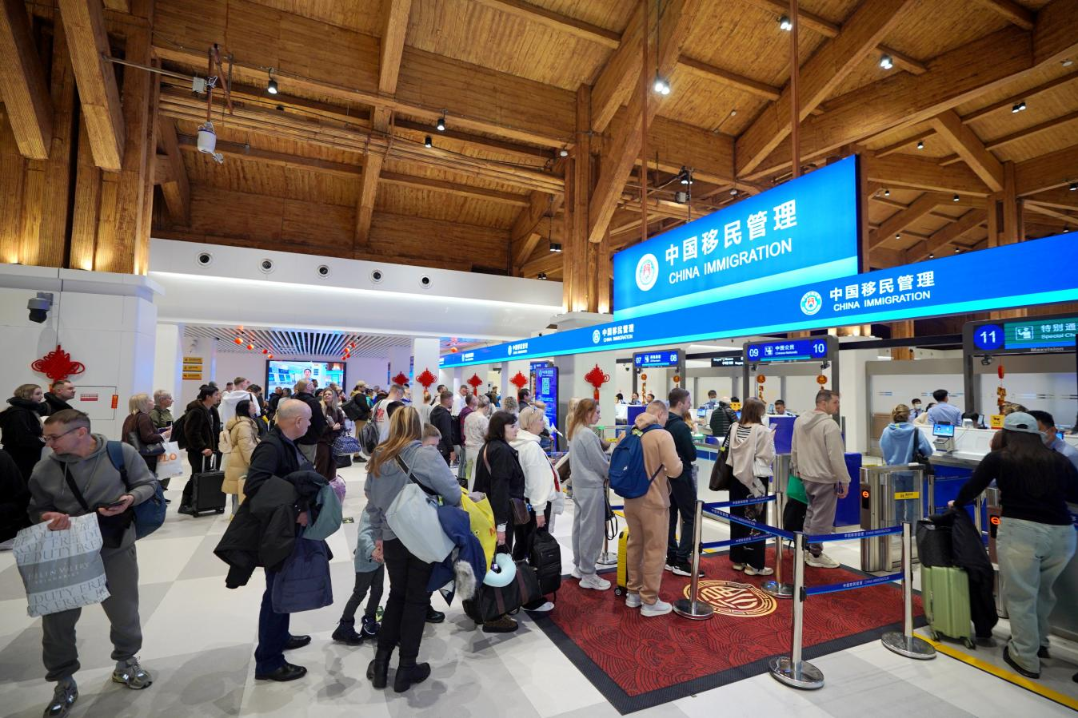
China braces for cross-border travel surge during Qingming holiday
As China prepares for the annual three-day Qingming Festival holiday starting April 4, national immigration officials are projecting a notable uptick in cross-border passenger movement across the country’s ports of entry and exit. New data released by the National Immigration Administration this Wednesday forecasts that daily cross-border traveler volumes will climb above 2.3 million on average throughout the holiday, marking an 11.1% year-on-year increase compared to the 2025 Qingming break. The Qingming Festival, a traditional Chinese holiday centered on ancestor veneration, tomb sweeping, and spring outings, has increasingly become a popular window for international and cross-border leisure and family travel in recent years. This projected growth reflects a steady rebound in global mobility and sustained demand for cross-border trips among Chinese residents and international visitors alike. The busiest cross-border hubs are concentrated among major international airports across China’s largest economic centers, including Beijing, Shanghai, Guangzhou, Chengdu, and Shenzhen. All of these facilities are anticipating a steady rise in passenger throughput compared to ordinary non-holiday periods. Leading the pack is Shanghai Pudong International Airport, China’s busiest aviation gateway for international travel, which is expected to process an average of roughly 95,000 inbound and outbound passenger trips each day over the holiday period. Immigration authorities have announced pre-emptive adjustments to operational arrangements to accommodate the surge, including adding extra inspection lanes, optimizing passenger clearance processes, and deploying additional staff to reduce wait times and avoid congestion at major ports. The projected growth in cross-border travel aligns with broader trends of rising domestic and international mobility in China, as more travelers take advantage of long holiday weekends to plan overseas trips, reunite with family members living abroad, or welcome international visitors to China.
-
Inclusive run brings together SEN students from Shanghai, HK, Macao
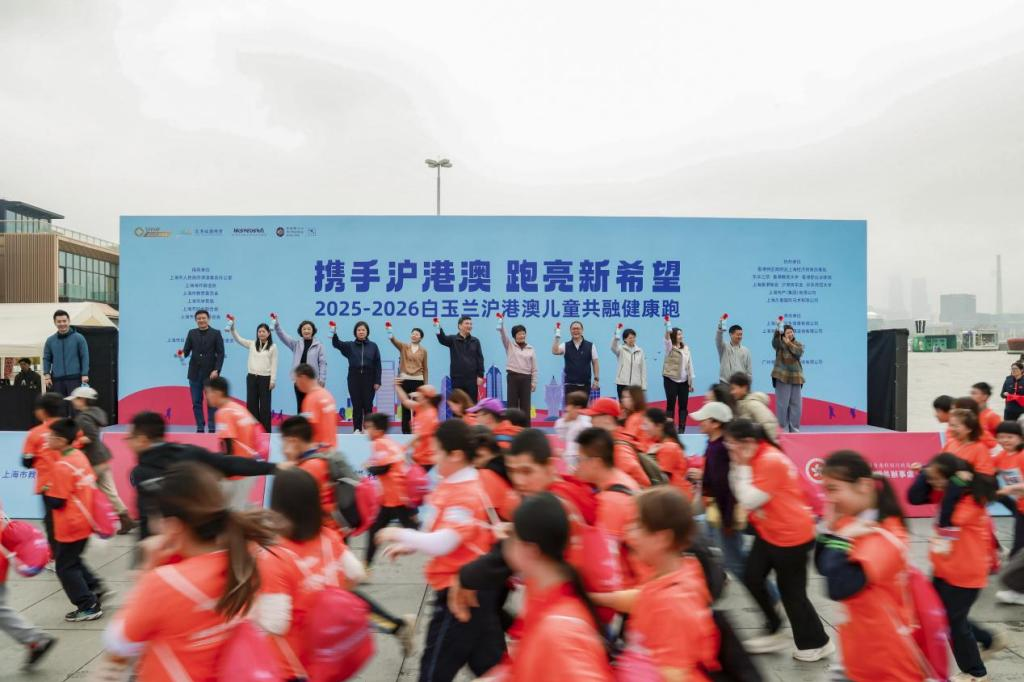
On March 30, a landmark inclusive sporting event brought together 150 students with special educational needs (SEN) from Shanghai, Hong Kong, and Macao, marking the first time Macao has joined this cross-regional initiative. Accompanied by 300 supporting teachers and volunteers, the participants completed a 3.5-kilometer route through the scenic green spaces of Shanghai Expo Culture Park, crossing the finish line to cheers from crowds of attendees.
The event was co-organized by three regional institutions: the Hong Kong and Macao Affairs Office of the Shanghai Municipal People’s Government, the Federation of Hong Kong-Shanghai Association, and the Hong Kong Special Education School Heads Association, with financial support from the Hong Kong Jockey Club. Built on the foundation of Shanghai Marathon charity programs held in 2023 and 2024, the gathering was designed to advance three core goals: deepen cross-regional cooperation in special education, support the social integration of SEN students, and strengthen youth exchanges across the three regions through the shared language of sport.
Leung Wing-hung, founding chairman of the Hong Kong Special Education School Heads Association, emphasized that events like this run play a transformative role in shifting public perceptions of special needs young people. “They help people in Shanghai, Hong Kong, and Macao really see the potential of our special needs children and give them opportunities for growth and development in various fields,” Leung said. Looking ahead to future collaboration, he noted that Shanghai and Hong Kong share strong complementary strengths in special education, with significant untapped potential for closer cooperation in adaptive sports development to create more engagement opportunities for SEN students. Beyond sport, he added, regions can work together to improve teaching practices and career support, connecting Hong Kong SEN students with professional opportunities at Shanghai-based businesses and organizations.
After the run concluded, participants gathered for an inclusive awards ceremony followed by a cross-regional carnival that offered a range of accessible activities. Attendees could join Special Olympics-themed games, interact with trained equine animals in a guided equestrian experience, and enjoy live performances by fellow SEN participants. A highlight of the post-race event was the world premiere of *You Make The World Shine*, an animated short film entirely created by SEN students using artificial intelligence tools. The project represents an innovative new approach to empowering special needs young people to express their own voices and build meaningful connections with the broader public through technology.
Derek Anderson, a learning support teacher at Wellington College International Shanghai who accompanied students to the event, praised the gathering’s powerful core message of inclusion. “It is very important for students coming to Shanghai today who have taken part in the run to see that everybody is all the same and we can all do things,” Anderson explained. He added that accessible, community-focused events like this run are critical to raising public awareness of the needs of disabled people, helping the general public recognize that many people require additional support, accessible infrastructure, and tailored accommodations to fully participate in community life.
For many participating students, the event offered a rare chance to build new cross-regional friendships and experience the joy of sport in a supportive environment. Kirsty Gu, an SEN student from Wellington College International Shanghai, shared that she greatly enjoyed the day, particularly the opportunity to meet new people and run alongside a new partner she connected with just before the event.
Organizers noted that the first-time inclusion of Macao participants marks an important step forward in building a connected, inclusive support network for SEN students across all three regions, with plans to expand cross-regional collaboration in the coming years.