标签: Asia

亚洲

  • Journalist Bilal Abdul Kareem arrested in Syria

    Journalist Bilal Abdul Kareem arrested in Syria

    Syrian authorities have arrested American journalist Bilal Abdul Kareem following his vocal criticism of President Ahmed al-Sharaa’s administration, according to sources speaking with Reuters. The detention occurred Monday in al-Bab, located in northern Aleppo province, though official confirmation from Damascus remains pending.

    Abdul Kareem, who previously contributed to Middle East Eye and has resided in Syria since 2012, transitioned from stand-up comedy to become a significant voice within Syrian opposition circles. His recent commentaries have sharply criticized President al-Sharaa, the former rebel leader who overthrew Bashar al-Assad in December 2024. The journalist particularly condemned what he perceived as excessive moderation of Islamic principles to gain international favor and denounced the government’s refusal to grant citizenship to foreign opposition fighters.

    In his final social media post before detention, Abdul Kareem explicitly opposed Syria’s participation in the US-led coalition against Islamic State. The video, published shortly after a suspected IS attack killed two American soldiers and a civilian interpreter, contained statements describing the United States as ‘the enemy of the Syrian people’ and questioning the legitimacy of US military presence in the region.

    The journalist brings extensive experience working with major international networks including CNN, BBC, Sky News, and Channel 4. This incident marks his second significant detention in recent years, following a six-month imprisonment in 2020 by Hay’at Tahrir al-Sham (HTS) for allegedly inciting against the rebel group. Although previously maintaining positive relations with HTS—the organization instrumental in overthrowing Assad and formerly led by al-Sharaa—tensions escalated following Abdul Kareem’s reports about torture within HTS detention facilities.

    Abdul Kareem has additionally claimed being placed on a US ‘kill list’ and surviving five assassination attempts, though legal proceedings have thus far failed to substantiate these allegations.
  • Sharjah Desert Police Park allows entry for only govt employees on weekends until Jan 5

    Sharjah Desert Police Park allows entry for only govt employees on weekends until Jan 5

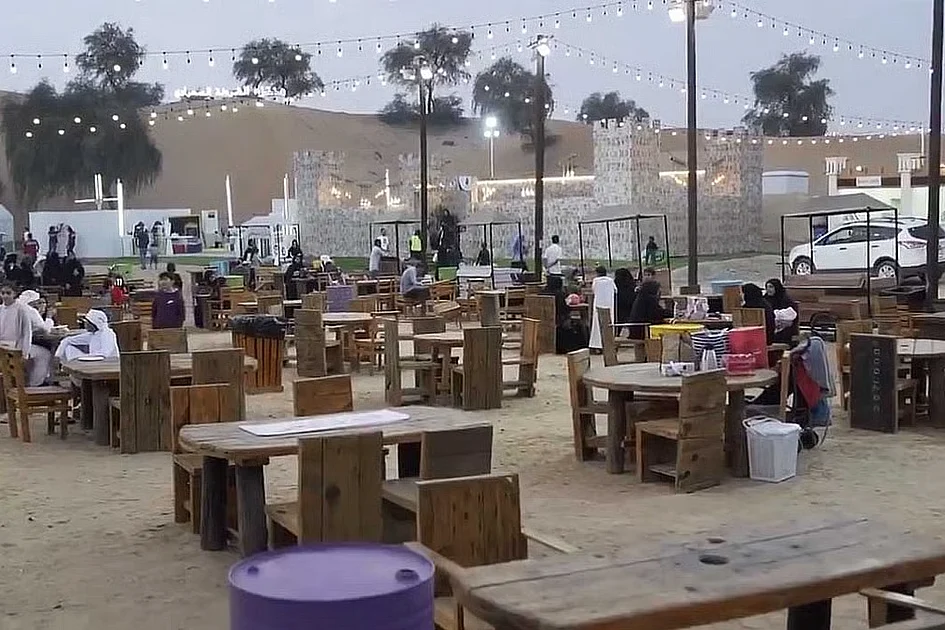
    Sharjah’s Desert Police Park has instituted a temporary access policy reserving weekend admissions exclusively for government employees and their immediate families. This measure, effective immediately through January 5, 2026, responds to unprecedented visitor turnout during peak periods.

    The park administration announced on December 24, 2025, that Fridays and Saturdays will be designated for public sector workers seeking recreational opportunities. This strategic allocation aims to manage crowd density while recognizing the contributions of government personnel.

    Regular public access continues uninterrupted from Monday through Thursday, maintaining the facility’s availability for general community use during weekdays. The temporary weekend restrictions represent a seasonal adjustment rather than a permanent policy change.

    The timing coincides with increased regional tourism activity during the holiday period, when recreational destinations typically experience heightened demand. Park authorities emphasized this as a capacity management solution rather than an exclusionary measure.

    Government employees must present valid identification confirming their employment status for weekend entry. Family members accompanying eligible personnel will be admitted under the same provisions.

    The Desert Police Park remains committed to serving all community segments while implementing practical solutions for optimal visitor experience and safety standards.

  • Festive lights, security tight for Christmas in Damascus

    Festive lights, security tight for Christmas in Damascus

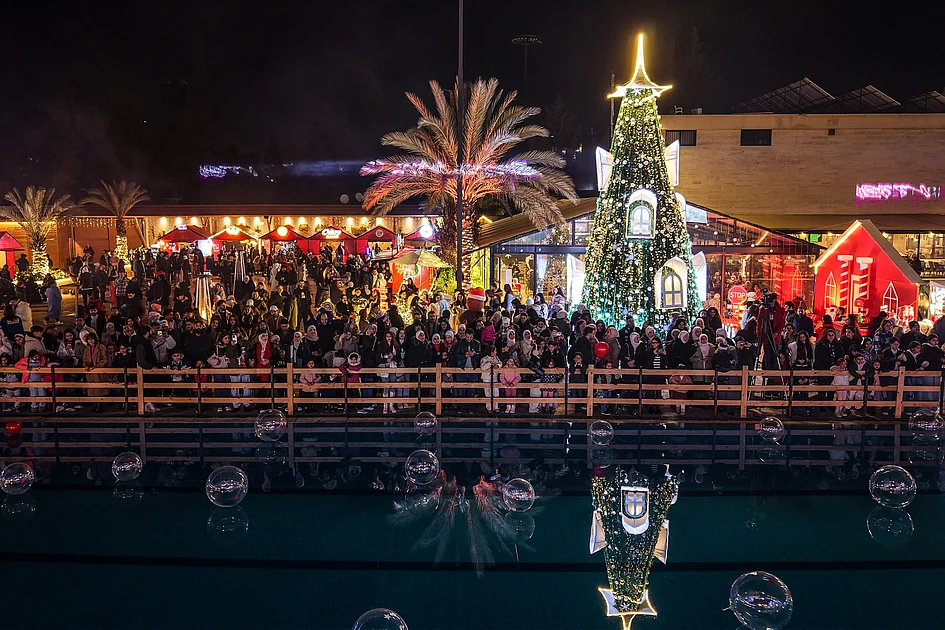
    The ancient streets of Damascus’s Old City present a study in contrasts this Christmas season, where festive illuminations and holiday decorations coexist with heightened security patrols and pervasive anxiety. This uneasy atmosphere follows a devastating June attack on the Saint Elias church that claimed 25 lives and injured dozens, leaving Syria’s Christian community grappling with trauma while attempting to maintain traditional celebrations.

    The newly established government has publicly recommitted to protecting religious coexistence and involving all sects in Syria’s transitional process. However, these assurances ring hollow for many citizens who have witnessed recent sectarian violence in Alawite regions and major clashes in Druze-majority southern territories.

    Security measures have been substantially intensified throughout the capital, with Interior Ministry forces conducting pedestrian searches, stopping motorcycles, and establishing coordinated security perimeters around churches. An anonymous security official detailed the comprehensive protection strategy: “We’ve implemented a multi-district security plan to ensure safety for all citizens. Protecting both Christian and Muslim communities remains the state’s fundamental duty, particularly during religious observances.”

    Complementing government efforts, civilian-led neighborhood committees comprising local Christians provide additional protective services through coordinated patrols using communication devices. These community-based security initiatives have reportedly increased some residents’ comfort levels regarding public celebrations.

    Demographic shifts underscore the challenges facing Syria’s religious minorities. The Christian population has dramatically declined from approximately one million before the conflict began in 2011 to roughly 300,000 today, with many seeking refuge abroad despite the government’s proclaimed protection stance.

    Amid the security concerns, symbolic acts of remembrance continue. At the site of June’s attack, mourners illuminated a memorial tree adorned with stars bearing victims’ images. Hanaa Masoud, who lost her husband and relatives in the attack, articulated the community’s anguish: “If we cannot find safety in our places of worship, where can we feel secure?”

    Despite these tensions, some younger Syrians like university student Loris Aasaf maintain hope for cross-sectarian celebration and national rebuilding, asserting that “Syria deserves joy and the promise of a new future.”

  • Guizhou gives a new lease of life to idle land

    Guizhou gives a new lease of life to idle land

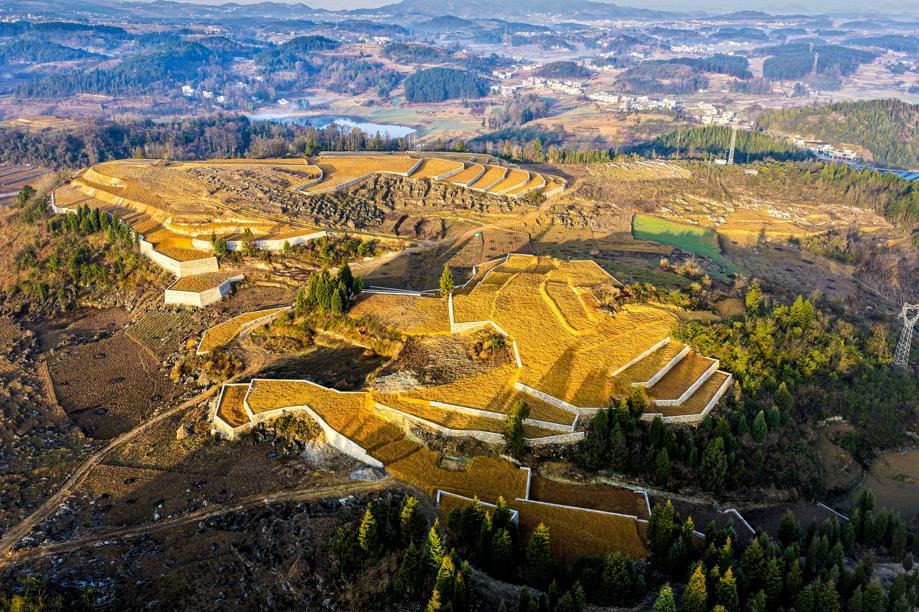
    In a remarkable environmental transformation, China’s southwestern Guizhou province has successfully revitalized previously unproductive mountainous terrain through comprehensive land rehabilitation initiatives. Aerial photography from Qianxi county reveals the striking metamorphosis of fragmented, erosion-prone fields into neatly organized agricultural plots following systematic conservation efforts.

    The challenging topography of this mountainous region had long suffered from severe runoff issues that consistently washed away vital water resources, nutrient-rich topsoil, and fertilizers, rendering extensive land areas practically unusable for cultivation. This persistent environmental degradation created significant agricultural limitations for local communities.

    In response, regional authorities implemented an integrated approach to watershed management that has yielded dramatic results. The multi-faceted program included constructing engineered stone terraces to prevent soil displacement, establishing specialized forestry systems specifically designed for soil and water conservation, and implementing strategic land-closure measures to facilitate natural recovery processes.

    These coordinated interventions have effectively reversed years of ecological decline, breathing new life into landscapes that had remained dormant and unproductive for extended periods. The successful regeneration represents a significant achievement in sustainable land management practices, demonstrating how targeted environmental policies can transform ecological challenges into agricultural opportunities.

    The project’s success offers valuable insights into addressing similar land degradation issues in mountainous regions worldwide, showcasing practical solutions that balance ecological restoration with agricultural productivity. This transformation stands as a testament to the potential of coordinated conservation efforts to create sustainable farming environments where previously only barren slopes existed.

  • From predator to plate: Japan bear crisis sparks culinary craze

    From predator to plate: Japan bear crisis sparks culinary craze

    Japan is confronting an unprecedented bear crisis through an unexpected culinary transformation, as record-breaking bear attacks drive both ecological concerns and gastronomic innovation. With 13 fatal maulings recorded this year—doubling previous records—authorities have implemented aggressive culling measures while simultaneously promoting bear meat consumption as a sustainable solution.

    The phenomenon represents a complex intersection of wildlife management and rural economic development. Scientists attribute the surge in bear-human conflicts to multiple factors: rapidly expanding bear populations, declining rural human demographics, and poor acorn harvests that drive bears into human settlements seeking sustenance.

    In response, the government has deployed military personnel for trapping operations and even tasked riot police with shooting bears. The scale of intervention is substantial—over 9,100 bears were culled in the first half of this fiscal year, already surpassing the total for all of 2023-2024.

    This ecological challenge has sparked a remarkable culinary movement. Restaurants across northern Japan report unprecedented demand for bear meat dishes. Koji Suzuki, a 71-year-old restaurateur and hunter in Chichibu, notes, ‘With increasing bear-related news coverage, customer interest in consuming the meat has dramatically increased.’ His establishment serves bear prepared on stone slates or in traditional hot pots alongside vegetables.

    The government actively supports this trend, allocating $118 million in subsidies for bear population control and promoting sustainable consumption. ‘Transforming nuisance wildlife into positive resources is crucial,’ stated agriculture ministry officials earlier this month.

    From fine dining establishments in Sapporo serving bear consommé to village-owned restaurants in Aomori prefecture, bear meat has become an unexpected tourism draw. Chef Kiyoshi Fujimoto incorporates locally sourced brown bear into French cuisine, while Katsuhiko Kakuta’s restaurant developed its own processing facility to supply nearby hotels.

    Despite growing popularity, logistical challenges remain. A shortage of government-approved processing facilities means much culled bear meat still goes to waste. Only 826 game factories exist nationwide, with limited capacity in the most affected northern regions.

    The situation represents a pragmatic approach to wildlife management—addressing safety concerns while creating economic opportunities from what would otherwise be buried as waste. As restaurant owner Kakuta observes, ‘Bear meat has become a tourism resource for us, utilizing what would otherwise be discarded.’

  • China-led livestock project in Mauritania wins poverty reduction award

    China-led livestock project in Mauritania wins poverty reduction award

    A groundbreaking livestock technology initiative spearheaded by China in Mauritania has received international acclaim, being honored as one of the world’s most effective poverty alleviation programs. The recognition came during the 2025 International Seminar on Global Poverty Reduction Partnerships held in Beijing on December 10.

    The award-winning project, operating through the Animal Husbandry Technology Demonstration Center in Mauritania, represents the second consecutive year that initiatives from China’s Ningxia Hui Autonomous Region have been selected for the Global Solicitation on Best Poverty Reduction Practices. This prestigious recognition highlights the growing international appreciation for South-South cooperation models in addressing global development challenges.

    The seminar was jointly convened by the International Poverty Reduction Center in China alongside multiple United Nations agencies, including the Food and Agriculture Organization (FAO). This collaborative framework underscores the importance of multilateral partnerships in tackling poverty worldwide.

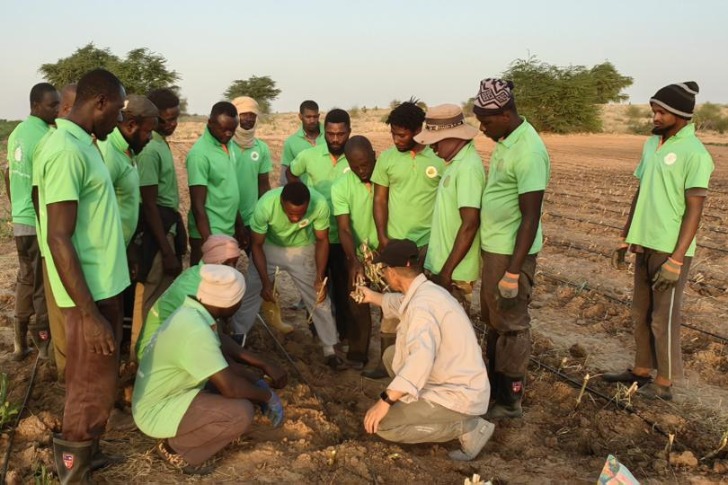
    Under the leadership of expert Zhang Hong’en, the Mauritania project has introduced advanced juncao cultivation techniques and modern animal husbandry practices to local communities. These innovations have demonstrated significant potential in enhancing food security, creating sustainable livelihoods, and building resilience against climate-related challenges in the West African nation.

    The recognition comes as global attention focuses on practical solutions that can deliver measurable results in poverty reduction, particularly in developing regions where agricultural development remains crucial to economic stability and food independence.

  • ‘There is nothing to celebrate’: Gaza’s Christians mark sombre Christmas amid fragile truce

    ‘There is nothing to celebrate’: Gaza’s Christians mark sombre Christmas amid fragile truce

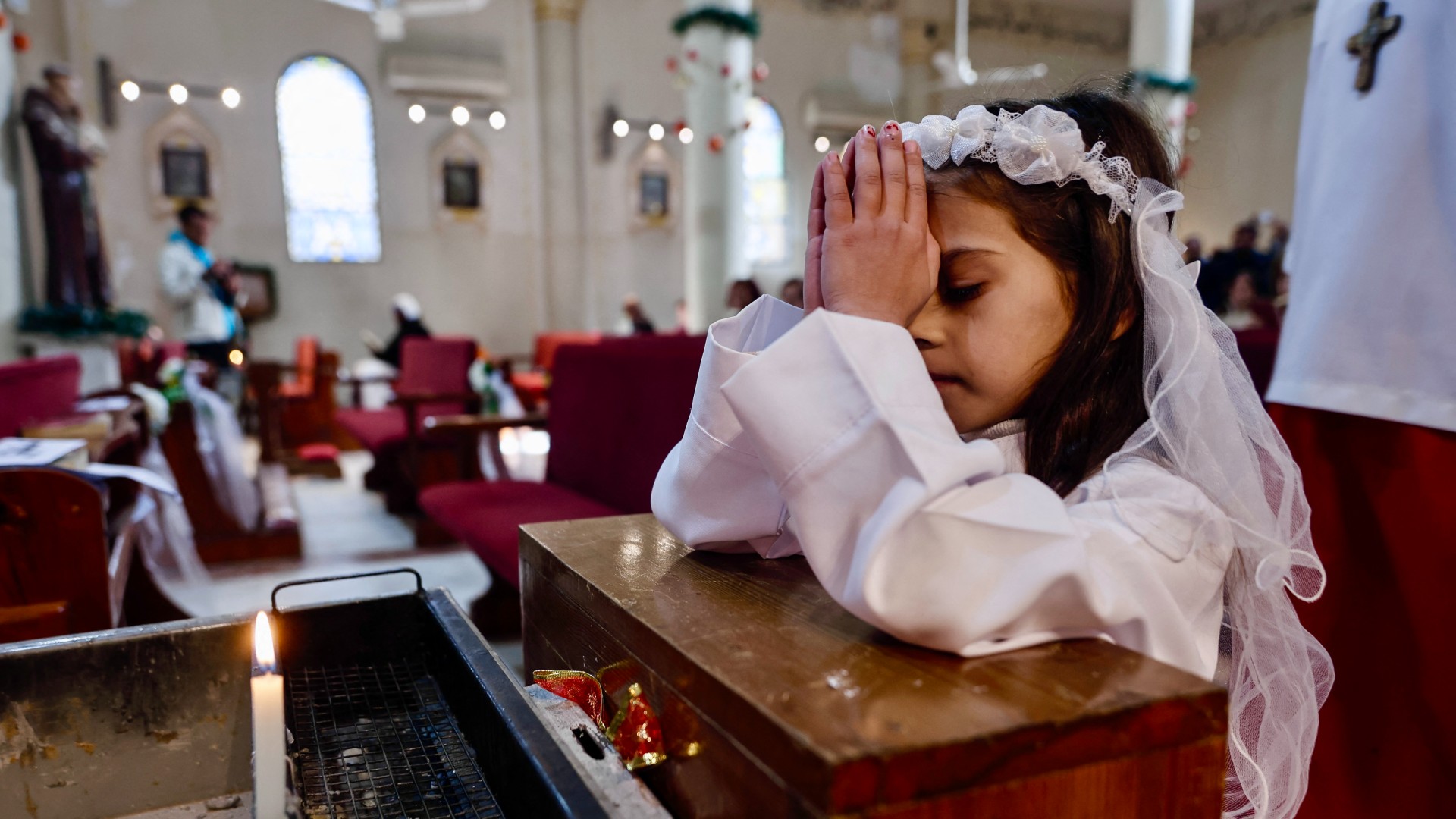
    The Christian community in Gaza has announced the cancellation of public Christmas festivities for the third consecutive year, marking a solemn holiday season amidst ongoing conflict and humanitarian crisis. Youssef Tarazi, a 31-year-old Palestinian Christian, confirmed that the traditional giant Christmas tree in Gaza City will remain unlit this year, symbolizing the community’s collective mourning.

    Church authorities have suspended all external celebrations, limiting observances to private prayers and indoor nativity scenes within church buildings. This decision reflects the profound grief shared across religious lines, with both Christians and Muslims experiencing devastating losses during the ongoing conflict.

    George Anton, director of operations at the Latin patriarchate in Gaza, emphasized the impossibility of celebration while the community continues to suffer. ‘We cannot celebrate while Christians and Muslims alike are mourning devastating losses caused by the war,’ Anton stated. ‘For us, the war has not ended.’

    The physical landscape of celebration has been fundamentally altered, with many homes and streets that once hosted festive gatherings now destroyed. Since October 2023, Israeli military operations have damaged or destroyed numerous Christian institutions, including three historic churches: the Church of Saint Porphyrius, the Holy Family Church, and the Gaza Baptist Church.

    The human toll has been equally devastating, with at least 53 Christians killed directly or indirectly during the conflict. Many casualties resulted from airstrikes, while others died due to inaccessible medical care and medicine shortages, particularly affecting elderly community members with chronic illnesses.

    Gaza’s Christian population has dwindled to approximately 580 people across 220 families—the smallest community in decades. Over 400 Christians have fled during the war, fearing for their safety after losing relatives and friends. Those remaining face deteriorating humanitarian conditions that may force additional families to seek medical care and stability elsewhere.

    The community, comprising approximately 70% Greek Orthodox and 30% Latin Catholics, emphasizes their shared fate with Gaza’s Muslim majority. ‘We are part of this society,’ Anton noted, ‘and what happens to Gaza happens to us.’

    Recent attacks on religious institutions have compounded the trauma, including an October 2023 strike on the ancient Church of Saint Porphyrius that killed 16 refugees and a July attack on Gaza’s only Catholic church that killed two women and injured several others.

    As Gaza’s Christians prepare for a holiday season without traditional celebrations, they emphasize that their spiritual observance continues through prayer, even as their joy remains incomplete amid the ongoing humanitarian crisis and collective grief.

  • Human activity on Qinghai-Tibet Plateau dates back 100,000 years

    Human activity on Qinghai-Tibet Plateau dates back 100,000 years

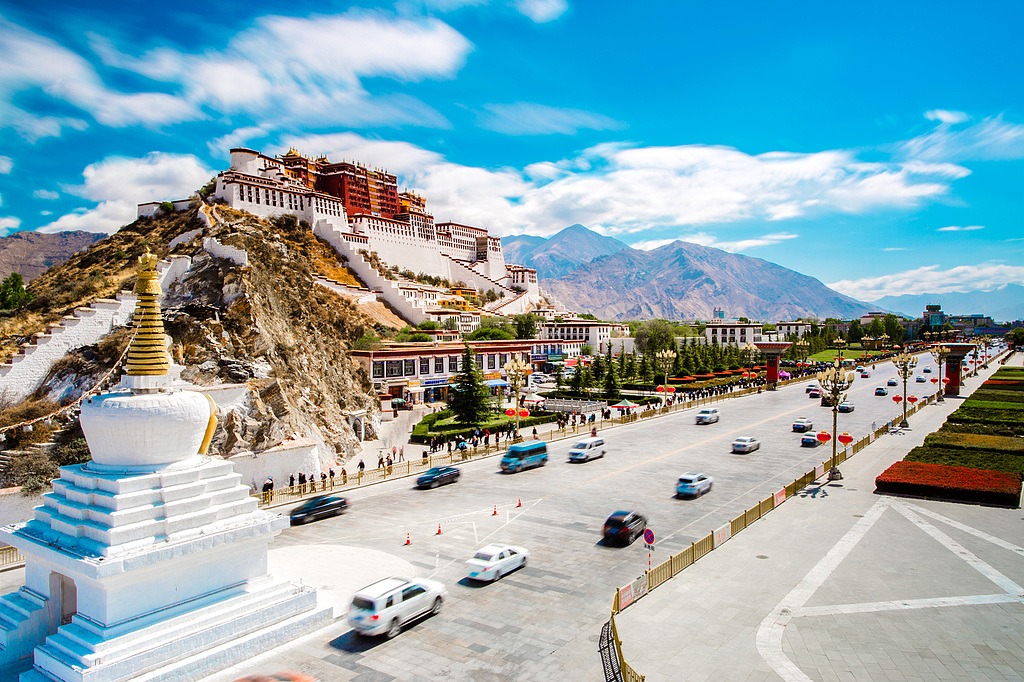
    Groundbreaking archaeological research has fundamentally reshaped our understanding of human habitation on the Qinghai-Tibet Plateau, with new evidence pushing the timeline of human activity back to approximately 100,000 years ago. This revelation emerged from comprehensive findings presented by the Xizang Autonomous Region’s cultural heritage authorities during a recent press briefing in Lhasa.

    The discoveries form part of the ongoing national ‘Archaeological China’ initiative, which has conducted extensive fieldwork across the region since 2021. Archaeologists have executed 42 systematic excavations spanning 19 distinct locations, covering approximately 8,100 square meters of investigation. This methodological approach has enabled researchers to construct a continuous chronological narrative of human occupation across diverse geographical areas.

    The archaeological record now demonstrates eight significant Paleolithic sites, four Neolithic locations, six early metal age sites with burial complexes, and one major Tubo period settlement. Particularly noteworthy is the emergence of advanced blade technology in northern Xizang approximately 40,000 years ago, followed by the proliferation of microlithic tools around 10,000 years ago.

    Cultural development milestones indicate the region’s transition to Neolithic practices around 5,000 years ago, with copper implements appearing roughly 3,800 years ago and iron technology developing about 2,800 years ago. The rise of the Tubo Kingdom around 1,400 years ago represents the region’s entry into documented historical periods.

    Concurrently, Xizang has completed its fourth national cultural relics survey, revealing unprecedented growth in archaeological site identification. By May 31, researchers had re-examined over 4,200 previously recorded sites while adding 3,346 newly discovered locations. This brings the region’s total documented cultural heritage sites to 7,623, with particularly significant concentrations in Shigatse, Lhokha, and Ngari prefecture—each contributing over 500 new sites.

    According to Xu Shaoguo, deputy director of the regional cultural heritage bureau, Xizang now ranks among China’s most rapidly expanding regions for archaeological discovery while maintaining exceptionally low rates of cultural relic loss. The comprehensive survey has yielded new findings across all county-level administrative units, demonstrating the region’s extraordinary archaeological richness and preservation.

  • Dubai Ruler announces Great Arab Minds winner in medicine, hails research in heart health

    Dubai Ruler announces Great Arab Minds winner in medicine, hails research in heart health

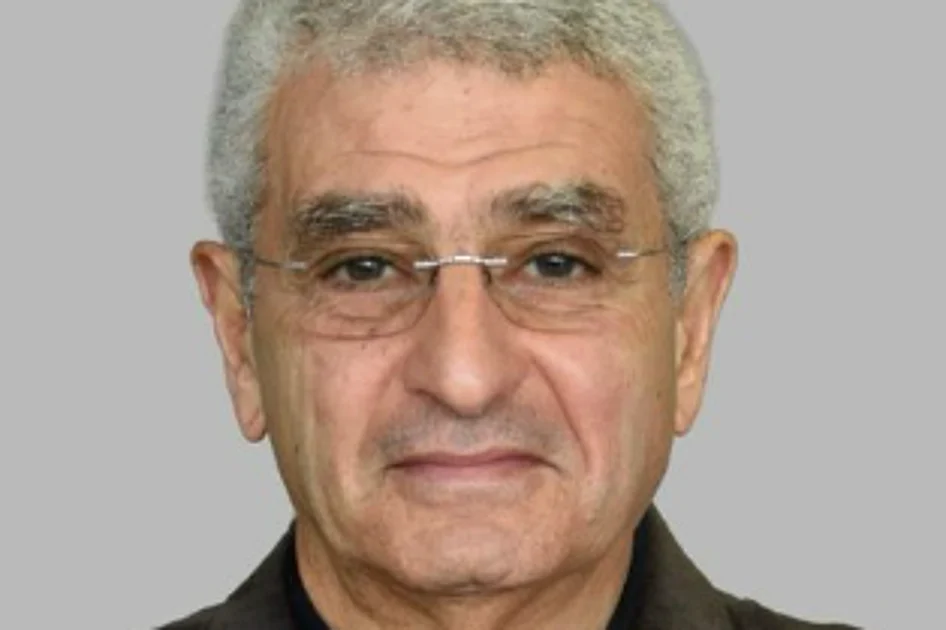
    In a prestigious ceremony recognizing Arab intellectual achievement, His Highness Sheikh Mohammed bin Rashid Al Maktoum, Vice President and Prime Minister of the UAE and Ruler of Dubai, has announced Dr. Nabil Seidah as the 2025 Great Arab Minds laureate in medicine. The Egyptian-Canadian scientist, who serves as Director of the Neuroendocrine Research Unit at the Montreal Clinical Research Institute, received this honor for his groundbreaking work in cardiovascular health and cholesterol metabolism.

    Dr. Seidah’s pioneering research has fundamentally advanced our understanding of biological processes regulating cholesterol and fat metabolism within the human body. His decades of scientific investigation have directly contributed to the development of an entirely new class of cholesterol-lowering medications now widely prescribed globally to combat heart disease and reduce cardiovascular risks.

    The scope of Dr. Seidah’s scientific contribution is evidenced by his publication of over 820 research papers, which have garnered more than 71,000 citations within the scientific community—a testament to the significant impact of his work on medical science.

    Sheikh Mohammed emphasized the importance of recognizing Arab intellectual achievement, stating: ‘Medicine represents a humanitarian mission, and our region has historically played a profound role in developing medical sciences, practices, and research tools. The Great Arab Minds Award reorients the compass to its proper direction, celebrating the contributions of Arab individuals and presenting them as role models for future generations.’

    Now in its third edition, the Great Arab Minds initiative has established itself as the most prestigious recognition of intellectual achievement in the Arab world, often referred to as the ‘Arab Nobel.’ The program’s credibility received substantial validation when the 2024 award recipient in the same category, Professor Omar Yaghi, subsequently won the 2025 Nobel Prize in Chemistry.

  • China launches scientific-computing agent for supercomputing network

    China launches scientific-computing agent for supercomputing network

    China has achieved a significant breakthrough in computational science with the official launch of an advanced scientific-computing intelligent agent for its national supercomputing network. The unveiling took place in Tianjin on December 24, 2025, marking a transformative development in research methodology.

    This sophisticated AI system represents a paradigm shift in scientific computation, capable of interpreting natural language instructions to autonomously execute complex research workflows. The intelligent agent demonstrates remarkable capabilities including task decomposition, computational resource allocation, simulation package invocation, result analysis, and comprehensive report generation.

    The technological advancement delivers extraordinary efficiency improvements, compressing research processes that traditionally required full-day computations into approximately one hour. Currently, the system supports nearly 100 high-frequency scientific computing applications across diverse research domains.

    Supported by an extensive AI community and repository infrastructure, the platform integrates over 120 specialized knowledge bases spanning seven critical scenarios: artificial intelligence, scientific intelligence, industrial simulation, materials science, and additional research fields. This integration significantly lowers the technical barrier for scientific computing while dramatically accelerating research productivity.

    Academician Qian Depei of the Chinese Academy of Sciences emphasized the historical significance of this development, noting that scientific research is undergoing a fundamental transition from computational science to intelligent science. He explained that the emergence of scientific-computing agents represents a convergence of previously fragmented computational resources, toolchains, and knowledge assets, providing researchers with unprecedented accessibility and innovation support.