标签: Asia

亚洲

  • Healing with horses: Inside Dubai’s new wellness trend

    Healing with horses: Inside Dubai’s new wellness trend

    Dubai’s wellness landscape has welcomed an innovative therapeutic approach at Crystalline Equine, the city’s first boutique sanctuary specializing in equine-facilitated healing. Nestled within JSR Equestrian Centre on the city’s outskirts, this sanctuary offers a stark contrast to Dubai’s fast-paced environment, creating a tranquil space where horses serve as intuitive partners in emotional and physical restoration.

    Founded by Joy Desmond, a former British Airways executive who discovered the therapeutic power of horses during her volunteer work with London-based organization Strength and Learning Through Horses, the center represents a radical career transformation. Desmond’s personal observations of horses helping foster children, neurodivergent youth, and even adult prisoners inspired her vision of combining equine therapy with crystalline energy healing.

    The science behind equine-assisted therapy reveals why these interactions prove so transformative. Horses possess biological sensitivity that makes them exceptional healing partners—their hearts generate electromagnetic fields five times stronger than humans’, and their innate herd dynamics enable them to read human energy and intention with remarkable accuracy. This biological compatibility facilitates co-regulation, where human nervous systems naturally synchronize with equine rhythms, resulting in lowered heart rates, deeper breathing, and muscular release.

    Crystalline Equine’s methodology integrates ground-based interactions with mindfulness practices, somatic awareness, breathwork, and crystal bowl sound healing. Two specially selected horses—Atoll, a retired grand prix jumper providing grounded stability, and Crystalline, an Arabian-Lipizzaner cross embodying elegant presence—move freely throughout sessions, participating according to their intuitive assessment of participants’ needs.

    The therapeutic outcomes observed at the center have been profound. Participants experiencing anxiety, burnout, or trauma—including those with equine-related fears—have demonstrated significant breakthroughs. One notable case involved a woman overcoming decades-long riding accident trauma through gradual exposure, eventually progressing to feeding horses and contemplating riding again.

    Desmond emphasizes the non-directive philosophy underlying their approach: ‘Horses respond to authenticity, not control.’ This principle informs all activities at the sanctuary, where upcoming expansions include Reiki integration allowing horses to intuitively identify areas of emotional density in participants.

    Operating seasonally to honor natural rhythms, Crystalline Equine represents a growing recognition of interspecies healing modalities. Desmond envisions the center evolving into a collaborative hub for horse-assisted practitioners while maintaining its boutique, intentionally holistic approach to wellness that reconnects humans with ancient healing partnerships.

  • Ramadan Festival to kick off across Abu Dhabi with performances, food and night markets

    Ramadan Festival to kick off across Abu Dhabi with performances, food and night markets

    Abu Dhabi is set to inaugurate its first unified Ramadan Festival across three major regions, launching a month-long celebration of cultural heritage, community spirit, and family entertainment. Organized by Experience Abu Dhabi, the festival will run from February 20 through March 8, 2026, with staggered dates across Abu Dhabi City, Al Ain, and Al Dhafra.

    The festival represents a significant expansion of the emirate’s Ramadan programming, marking the first time the destination brand has created a coordinated multi-location celebration. The initiative aims to activate public spaces during the holy month while creating inclusive experiences for both residents and visitors.

    Operating daily from 8:00 PM to 2:00 AM to align with post-iftar social hours, the festival will feature purpose-built ‘Ramadan neighbourhoods’ at each venue. These specially designed spaces will recreate the traditional communal atmosphere associated with Ramadan through lantern-lit walkways, cultural performances, and curated market experiences.

    Cultural programming forms the core of the festival, with scheduled performances including traditional Emirati folk dances such as Al Ayala and Al Harbiyah, poetry evenings, Arabic calligraphy demonstrations, and storytelling sessions for children. The event will also feature musical performances and theatrical shows across all three locations.

    A dedicated Ramadan souq will showcase local handicrafts, handmade goods, and Ramadan-themed gifts, with organizers emphasizing support for small retailers and distinctive products rather than large-scale commercial vendors. Food offerings will include a curated selection of food and beverage trucks serving traditional Ramadan drinks, suhoor options, and casual bites.

    Family-oriented programming includes interactive workshops, puppet shows, creative activities, and games designed to cater to children and families. The festival schedule is strategically staggered to ensure accessibility across the emirate: Al Ain and Al Dhafra will host the event from February 20 to March 1, while Abu Dhabi Corniche will welcome visitors from February 27 to March 8.

    Entry will require tickets available through Platinumlist, though pricing details have not yet been announced. The festival complements Abu Dhabi’s broader strategy to position Ramadan as both a period of religious significance and an opportunity for community gathering, arts programming, and domestic tourism.

  • Australian police crack down on protests during Israeli president’s visit

    Australian police crack down on protests during Israeli president’s visit

    Sydney became the epicenter of intense political demonstrations and confrontations as Australian police arrested dozens of pro-Palestinian protesters during Israeli President Isaac Herzog’s official visit. The unrest unfolded as thousands gathered at Sydney Town Hall, where authorities established restricted security zones around the president’s movements.

    Police employed pepper spray and physical force against demonstrators who attempted to breach security barricades near the New South Wales Parliament. At least 27 individuals were taken into custody as tensions escalated, with protesters chanting demands to march and beating drums in defiance of police orders to disperse.

    The controversy surrounding Herzog’s visit stems from his October 2023 statement regarding the Palestinian population in Gaza, which the United Nations Independent International Commission of Inquiry later condemned as constituting incitement to genocide. Herzog had asserted that ‘it’s an entire nation out there that is responsible’ following Hamas attacks on southern Israel.

    Anthony D’Adam, a Labor member of parliament who witnessed the confrontations, described police actions as ‘totally over-the-top,’ reporting instances of officers punching demonstrators, throwing one person to the ground, and pushing a bicycle into a woman causing injury.

    The protests occurred despite legal challenges to the security restrictions. A Sydney court rejected an attempt by the Palestine Action Group to overturn protest limitations, while authorities invoked the Major Events Act to arrest a protester who shouted ‘shame’ as Herzog departed Bondi Pavilion.

    The Israeli president’s itinerary included a wreath-laying ceremony at a memorial for the December attack that killed 15 people during a Hanukkah celebration at Bondi Beach. His visit continues to Melbourne and Canberra amid heightened security measures involving thousands of police officers.

    The demonstrations reflect deepening global divisions over the ongoing conflict in Gaza, where Israeli military operations have resulted in significant Palestinian casualties since October 2023. The visit has also drawn criticism from within Australia’s Jewish community, with over 1,000 academics and community leaders signing an open letter urging Prime Minister Anthony Albanese to withdraw Herzog’s invitation, arguing it undermines Australia’s commitment to international law and human rights.

  • India’s migratory beekeepers and their hives follow the flowers to make the honey flow

    India’s migratory beekeepers and their hives follow the flowers to make the honey flow

    In the vibrant mustard fields of Assam, migratory beekeepers from distant regions begin their days before sunrise, embarking on a demanding seasonal occupation that sustains their families. These apiarists transport their wooden bee boxes across India, following floral blooms to support agricultural pollination while harvesting golden honeycombs destined for international markets.

    The practice represents a growing economic opportunity in northeastern India, where both local and migratory beekeepers are responding to increasing global honey demand. However, their livelihood faces mounting pressures from climate disruptions—intensifying monsoons, extreme heatwaves, and unpredictable rainfall patterns that directly impact bee behavior and nectar availability.

    Scientific research from Assam Agricultural University reveals concerning trends: the region now experiences over 20 additional heat-wave days annually compared to a decade ago, with average temperatures rising approximately 2°C. These changes have significantly reduced honey production, forcing bees to remain sheltered during excessive heat or rainfall.

    The ecological challenges extend beyond weather patterns. Native bee species face habitat destruction from infrastructure development, while the introduction of Western honeybees by migratory keepers creates potential competition with indigenous species. Despite these pressures, conservation programs promote sustainable beekeeping practices, particularly among small-scale farmers below the poverty line.

    Organizations like Under the Mango Tree Society provide training in climate-resilient beekeeping techniques, helping farmers diversify income through honey production while enhancing crop pollination. Government subsidies for beekeeping equipment further support the industry’s adaptation to changing environmental conditions.

    Experts cautiously optimistic about the future of beekeeping in Assam acknowledge the challenges but emphasize the sector’s resilience. As one researcher noted, while production may fluctuate, the symbiotic relationship between beekeepers, their colonies, and agricultural systems will likely endure despite climate uncertainties.

  • Egypt’s El-Sisi visits UAE, tours Mohamed bin Zayed University of Artificial Intelligence

    Egypt’s El-Sisi visits UAE, tours Mohamed bin Zayed University of Artificial Intelligence

    In a significant diplomatic engagement, UAE President Sheikh Mohamed bin Zayed Al Nahyan hosted Egyptian President Abdel Fattah El-Sisi for high-level talks in Abu Dhabi on February 9, 2026. The meeting underscored the deepening fraternal relations between the two Arab nations and their shared commitment to regional stability.

    The leaders conducted comprehensive discussions covering bilateral cooperation across multiple sectors, with particular emphasis on development initiatives aligning with both nations’ strategic ambitions. The dialogue extended to critical regional concerns, especially the ongoing situation in the Middle East.

    Both leaders emphasized the urgent implementation of ceasefire agreements in Gaza and stressed the necessity of ensuring unimpeded humanitarian aid delivery to alleviate civilian suffering. They reiterated their firm support for a two-state solution as the foundation for achieving comprehensive and just peace in the region.

    A highlight of President El-Sisi’s visit included an extensive tour of the Mohamed bin Zayed University of Artificial Intelligence, where he received detailed briefings on the institution’s cutting-edge facilities and academic programs. The Egyptian leader examined how the university’s advancements in AI and advanced technology contribute to the UAE’s long-term development vision.

    The summit concluded with mutual reaffirmations of continued consultation and close coordination between the two nations to promote regional peace, stability, and prosperity. President El-Sisi departed from Abu Dhabi’s Presidential Airport following ceremonial farewell proceedings hosted by the UAE leadership.

  • US held secret meeting between Algeria, Morocco and Mauritania over Western Sahara

    US held secret meeting between Algeria, Morocco and Mauritania over Western Sahara

    In a significant diplomatic development, the United States convened clandestine negotiations between key stakeholders in the long-standing Western Sahara conflict at its embassy in Madrid. High-level delegations from Morocco, Mauritania, Algeria, and the Polisario Front gathered under American supervision on Sunday, marking a notable escalation of U.S. involvement in the regional dispute.

    The discussions, facilitated by Donald Trump’s African affairs adviser Massad Boulos and UN Ambassador Michael Waltz, focused on Morocco’s autonomy proposal for Western Sahara – a plan previously endorsed by the UN Security Council but rejected by the Sahrawi independence movement. The Polisario Front maintains its demand for a self-determination referendum as outlined in historical UN resolutions, while the U.S. administration has explicitly ruled out independence options.

    This meeting represents the second phase of negotiations initiated in Washington during late January, with proceedings intended to remain confidential until revealed by investigative journalist Ignacio Cembrero. According to reports, American diplomats requested substantial revisions to Morocco’s initial autonomy proposal, resulting in an expanded 40-page document forming the basis for current discussions.

    The geopolitical context surrounding these talks reveals complex international dynamics. Morocco stands as Africa’s primary purchaser of American military equipment with $8.5 billion in contracts anticipated for 2025, while the U.S. previously recognized Moroccan sovereignty over Western Sahara in exchange for Morocco establishing formal diplomatic relations with Israel. European powers including Spain and France have subsequently endorsed Morocco’s autonomy plan, further isolating the Polisario position.

    Human rights concerns persist in the background, with reports of repression against Sahrawi activists in Moroccan-controlled territories and challenging living conditions for refugees in Algerian camps. The territory remains listed by the UN as Non-Self-Governing, often described as Africa’s last colony due to its unresolved status since the 1975 invasion following Spain’s withdrawal.

    Algeria’s participation in these U.S.-brokered talks signals potential diplomatic shifts, as the nation has historically supported the Polisario Front. This development, combined with increased American engagement described as an ‘absolute priority’ by U.S. officials, suggests potential movement toward resolving one of Africa’s most protracted territorial disputes.

  • Kokomo Murase wins gold in women’s big air, extending Japan’s snowboarding success at the Olympics

    Kokomo Murase wins gold in women’s big air, extending Japan’s snowboarding success at the Olympics

    LIVIGNO, Italy — Japanese snowboarder Kokomo Murase captured Olympic gold in a spectacular women’s big air final on Monday, demonstrating Japan’s growing dominance in snowboarding sports. The victory came just two days after Japanese athletes secured gold and silver in the men’s event.

    Murase had already guaranteed herself at least a bronze medal at the Milan Cortina Games when she executed a daring final jump that propelled her to the top of the standings. This gold medal adds to her bronze from the same event at the 2022 Beijing Olympics, marking significant career progression for the young athlete.

    New Zealand’s Zoi Sadowski-Synnott claimed silver, repeating her performance from the previous Winter Games. She had been positioned to take gold until Murase’s impressive penultimate jump shifted the competition dynamics. South Korea’s eighteen-year-old Seung-eun Yu secured bronze despite falling on her final landing attempt.

    Japan’s snowboarding prowess was further highlighted by their qualification of four riders in both the men’s and women’s 12-person finals—more than any other nation. Additional medals may be forthcoming for Japan with Murase set to compete in snowboarding slopestyle and Ayumu Hirano defending his men’s halfpipe gold.

    The competition also marked the end of an era as two-time defending champion Anna Gasser of Austria finished eighth, failing in her bid to become the first snowboarder to win three consecutive Olympic gold medals. The 34-year-old acknowledged the sport’s rapid progression, noting that tricks which earned gold in 2022 would now barely qualify for finals.

    The event showcased extraordinary athletic advancement with Murase, Sadowski-Synnott, and Yu all performing jumps featuring 1440 degrees of rotation. Gasser reflected on the sport’s evolution, stating: ‘Women’s snowboarding has been progressing every year. If you stop progressing, you’re gone.’

    Following the awards ceremony, Sadowski-Synnott received a traditional haka tribute from her New Zealand team. The silver medal represents her third Olympic medal in big air, adding to her historic achievement as New Zealand’s first Winter Games gold medalist in 2022.

  • Hundreds dead in RSF-run prison in Sudan’s North Darfur

    Hundreds dead in RSF-run prison in Sudan’s North Darfur

    A humanitarian catastrophe is unfolding within a Sudanese prison controlled by the Rapid Support Forces (RSF) paramilitary group, where over 300 detainees have perished in just two months due to severe neglect and brutal conditions. The Shala prison, located southwest of el-Fasher in North Darfur, has become a focal point of alleged war crimes and human rights violations.

    According to local monitoring groups, the deaths resulted from rapidly deteriorating health conditions and the systematic denial of basic medical treatment. The facility, which came under RSF control in late October, currently holds approximately 9,000 civilians in what witnesses describe as inhumane conditions.

    The crisis has been exacerbated by a major cholera outbreak within the prison walls, claiming up to ten lives weekly. The volunteer-run Popular Resistance group in Sudan reports that inadequate medical care has led to severe infection outbreaks, particularly among civilians already injured by shelling attacks.

    Disturbing practices include leaving deceased prisoners’ bodies in cells alongside living detainees for extended periods. These alleged abuses form part of a broader pattern of severe human rights violations attributed to RSF forces.

    The situation in el-Fasher itself remains dire since the RSF overran the city in October following a 550-day siege. Medical charity Doctors Without Borders reported earlier this month that the city was ‘largely destroyed’ with ‘few civilians remaining.’ Eyewitness accounts describe widespread executions, rape, and looting by RSF fighters against civilian populations.

    Additional atrocities include targeted violence against people with disabilities and the trapping of large groups in trenches before opening fire. Before the RSF takeover, el-Fasher hosted approximately 260,000 residents. The UN’s World Food Programme now estimates only 70,000-100,000 civilians remain trapped within the devastated city.

  • Visually impaired student’s rail journey goes viral

    Visually impaired student’s rail journey goes viral

    A profoundly moving display of human compassion has captured national attention after a visually impaired university student’s railway journey home became a viral sensation. The story of Li Yijin’s trip from Guangzhou to Wuhan has inspired millions with its demonstration of collective kindness during China’s massive Spring Festival travel period.

    Li’s meticulously coordinated journey began on January 26th at Guangzhou Baiyun Station, where she had pre-arranged special assistance services. The chain of compassion started when her taxi driver, recognizing her mobility challenges, proactively contacted station police upon arrival. This initiated what would become a remarkable relay of care involving more than ten individuals including law enforcement officers and railway staff.

    The surveillance footage that subsequently went viral shows station staff member Bi Yujia waiting at the real-name verification area to receive Li from the police officer. Multiple employees then assisted her through security checks and boarding procedures in a seamless operation. In one particularly touching moment captured on video, Bi gently placed Li’s hand on the train conductor’s shoulder with instructions to ensure her continued care during the journey.

    Throughout the approximately four-hour trip aboard the G416 high-speed train, Li received additional support from fellow passengers and railway employees. Her consistent gratitude became a notable feature of the journey, with attentive viewers counting 97 expressions of thanks from the appreciative student.

    The story reached its emotional climax when Li safely arrived at Wuhan Station at 7:44 PM, completing her journey home. She later shared a three-minute video compilation of her experience on social media, where it quickly amassed widespread praise and positive engagement.

    This incident highlights the extensive special needs assistance programs operating during China’s Spring Festival travel rush. Guangzhou Baiyun Station alone has provided support to over 1,900 passengers requiring special assistance since the beginning of the travel period, demonstrating the scale of these compassionate services.

  • How this robotic glove offers hope for UAE stroke survivors, kids with cerebral palsy

    How this robotic glove offers hope for UAE stroke survivors, kids with cerebral palsy

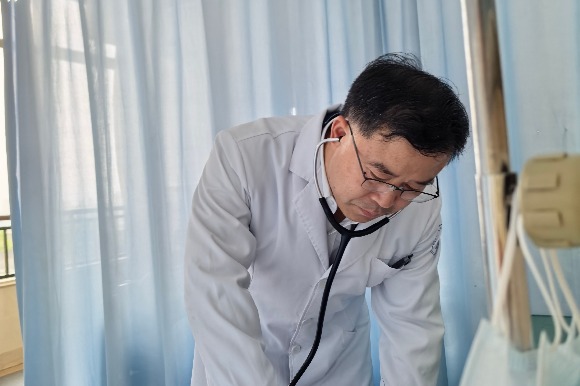
    A groundbreaking soft robotic glove, weighing approximately 300 grams—equivalent to three eggs—is transforming rehabilitation for neurological patients across the UAE. The HandTasker Rehabilitation Hand, originally developed in Hong Kong, represents a significant advancement in neurorehabilitation technology for both adult stroke survivors and children with cerebral palsy.

    This innovative device operates by detecting and amplifying faint brainwaves and muscle signals, translating them into physical movement through its robotic mechanism. Professor Raymond KY Tong, founding chairman of the Department of Biomedical Engineering, explained during the World Health Expo in Expo City that the technology essentially retrains neural pathways. “For patients who have lost movement ability due to stroke, this device helps retrain the brain and restore motor function,” he stated.

    The rehabilitation process involves repeated sessions where the glove assists patients in performing hand movements. After approximately ten sessions, the brain begins forming new neural pathways that bypass damaged tissue, ultimately enabling regained hand function. This neuroplasticity-based approach offers particular significance in the UAE, where families frequently seek advanced rehabilitation options for neurological conditions.

    The developers have created a specialized pediatric version featuring smaller sizing, softer joints, and additional padding for comfort. This adaptation has already been implemented in Asian special schools, with children as young as three years old successfully using the technology. For younger patients, the device incorporates gamification elements, allowing children to practice gripping objects, writing, or holding toys while making therapy engaging and enjoyable.

    The glove’s practical design enables quick setup—approximately one minute for fitting and another minute for software calibration—allowing immediate commencement of therapy sessions. Its waterproof, soft material ensures both hygiene and comfort during regular use.

    Unlike permanent medical devices, HandTasker functions primarily as a training tool, with most patients requiring it for only one to two months. This temporary usage reduces long-term costs and increases accessibility through rehabilitation centers rather than individual purchases.

    Clinical trials in Hong Kong have demonstrated promising outcomes, with over 40 hospitals and centers currently utilizing the technology. Studies indicate approximately 80% of patients show measurable improvement in hand function following the rehabilitation program. The UAE introduction marks a significant expansion of this technology into Middle Eastern healthcare markets, potentially benefiting thousands of patients across the region.