标签: Asia

亚洲

  • Resolution expected after ICC, PCB, BCB meeting on India-Pakistan T20 World Cup match in Lahore

    Resolution expected after ICC, PCB, BCB meeting on India-Pakistan T20 World Cup match in Lahore

    A significant breakthrough appears imminent in the high-stakes cricketing standoff between India and Pakistan following crucial diplomatic negotiations in Lahore. High-ranking officials from the International Cricket Council (ICC), Pakistan Cricket Board (PCB), and Bangladesh Cricket Board (BCB) convened an emergency meeting Sunday to address Pakistan’s threatened boycott of their scheduled February 15 match against India in Colombo.

    The high-level delegation, comprising ICC Deputy Chairman Imran Khwaja, PCB Chairman Mohsin Naqvi, and BCB President Aminul Islam, engaged in extensive discussions regarding the political and sporting implications of Pakistan’s proposed withdrawal. According to multiple Pakistani media outlets, the lengthy negotiations have concluded with a positive framework for resolution established between the parties.

    Geo TV reported that the PCB will now seek final guidance from the Pakistani government before making an official announcement. The media consensus suggests the dispute will be fully resolved through mutual consultation within the next 24 hours, potentially preserving one of cricket’s most anticipated rivalries.

    The scheduled Group B encounter represents a critical fixture in the ICC Men’s T20 World Cup 2026, with both teams having qualified for the tournament’s second round. The match carries significant commercial and sporting importance for global cricket authorities, given the massive television audiences and sponsorship revenues traditionally associated with India-Pakistan encounters.

    The involvement of Bangladesh Cricket Board officials suggests regional cricket diplomacy playing a crucial role in mediating the high-tension situation. The outcome of these negotiations could set important precedents for handling political tensions within international sporting events moving forward.

  • UAE, 7 other nations condemn Israel’s ‘illegal’ settlement expansion in West Bank

    UAE, 7 other nations condemn Israel’s ‘illegal’ settlement expansion in West Bank

    In a significant diplomatic move, eight nations have issued a forceful condemnation of Israel’s settlement policies in the occupied West Bank. The foreign ministers of the United Arab Emirates, Jordan, Indonesia, Pakistan, Turkey, Saudi Arabia, Qatar, and Egypt released a joint statement characterizing Israel’s recent measures as unlawful attempts to impose sovereignty and accelerate the illegal annexation of Palestinian territories.

    The ministers declared that Israel possesses no legitimate sovereignty over the occupied Palestinian territory, emphasizing that these expansionist policies exacerbate regional violence and conflict. They expressed their categorical rejection of what they described as blatant violations of international law, particularly noting how these actions undermine the two-state solution framework.

    The coalition specifically referenced UN Security Council Resolution 2334, which condemns Israeli measures aimed at altering the demographic composition of Palestinian territories occupied since 1967, including East Jerusalem. Additionally, they invoked the 2024 advisory opinion of the International Court of Justice, which found Israel’s occupation and policies in Palestinian territories illegal and called for their termination.

    The ministers renewed their appeal for the international community to fulfill its legal and moral obligations by compelling Israel to halt its escalation in the West Bank. They reiterated that the realization of Palestinian self-determination and statehood, based on the two-state solution and the Arab Peace Initiative, represents the only viable path toward achieving comprehensive regional peace and stability.

  • Foreign diplomats join Chongqing’s New Year market event

    Foreign diplomats join Chongqing’s New Year market event

    Chongqing’s Yuzhong district became a vibrant hub of international cultural exchange during a special Spring Festival market event held over the weekend. The “Galloping into Prosperity — Year of the Horse” celebration transformed the Chongqing International Friendship City Food Street into a multicultural gathering space that attracted foreign diplomats and local residents alike.

    The carefully curated event brought together consular representatives, culinary vendors, and cultural organizations with the explicit purpose of strengthening ties between Chongqing and its global partners. Eight nations established distinctive stalls showcasing their unique national identities through food, beverages, and traditional handicrafts. Participating countries included Australia, the Philippines, Italy, Vietnam, Uruguay, Pakistan, Myanmar, and Belarus.

    Diplomatic officials from several consulates attended the festivities, engaging directly with visitors and sharing insights about their cultural traditions. Chaudhary Talha, Pakistan’s Vice-Consul General based in Chengdu, expressed particular enthusiasm about the event, noting that the experience highlighted “close unity, friendship, and historical values” between participating nations.

    The market celebration served as both a cultural showcase and diplomatic platform, creating organic opportunities for cross-cultural dialogue against the backdrop of Spring Festival preparations. By integrating international elements with traditional Chinese New Year celebrations, the event demonstrated Chongqing’s growing role as a global city committed to fostering international understanding and cooperation through cultural diplomacy.

  • Algeria accuses the UAE of interference in elections

    Algeria accuses the UAE of interference in elections

    Algerian President Abdelmadjid Tebboune has launched a scathing diplomatic offensive against the United Arab Emirates, accusing the Gulf nation of systematic interference in Algeria’s electoral processes and regional destabilization efforts. The allegations emerged during a state-media broadcast interview on Saturday where Tebboune conspicuously avoided direct naming of the UAE while clearly referencing their activities.

    The president characterized relations with most Gulf states as “more than fraternal,” specifically praising Saudi Arabia and Kuwait’s leadership. However, his tone shifted dramatically when addressing the UAE, which he dismissed as “a state, not to say a mini-state, that is just posturing.”

    This diplomatic rupture coincides with Algeria’s formal termination of the 2013 air services agreement between the nations. State media announced the cancellation without explicit justification, noting that proper procedures through diplomatic channels and ICAO notification would follow. The Emirati Civil Aviation Authority responded that flight operations remain unaffected during the mandated notice period.

    The current tensions reflect years of growing antagonism. During Algeria’s 2019 Hirak movement that ousted President Bouteflika, protesters frequently targeted the UAE as a reactionary force opposing democratic reforms. Demonstrators carried signs proclaiming “No to the UAE on the land of the martyrs,” referencing Algeria’s liberation struggle against France.

    Official Algerian circles have repeatedly accused UAE diplomats of “suspicious moves” and alleged the ambassador was “on a mission to destabilise” the country. President Tebboune further suggested the UAE threatens international arbitration over investments, to which he defiantly responded: “Let them go to arbitration.”

    Algerian media reports indicate the crisis may deepen further. Newspaper El-Khabar, known for government proximity, suggested the UAE might be supporting the Movement for the Autonomy of Kabylia (MAK)—a separatist group designated as terrorist organization by Algeria. The publication stated that “the question of whether Algeria will sever its diplomatic relations with Abu Dhabi is being raised with increasing urgency,” describing UAE actions as “hostile” and contrary to “Arab brotherhood.”

    Africa Intelligence previously reported that Algeria is systematically reducing diplomatic ties with the UAE, with President Tebboune deciding to minimize Algeria’s diplomatic representation to bare essentials. The El-Khabar report additionally indicated that the UAE ambassador has effectively become persona non grata, with Algerian entities ceasing engagement with the diplomatic mission.

  • ‘Arrest Herzog’: Protests erupt across Australia against Israeli president’s visit

    ‘Arrest Herzog’: Protests erupt across Australia against Israeli president’s visit

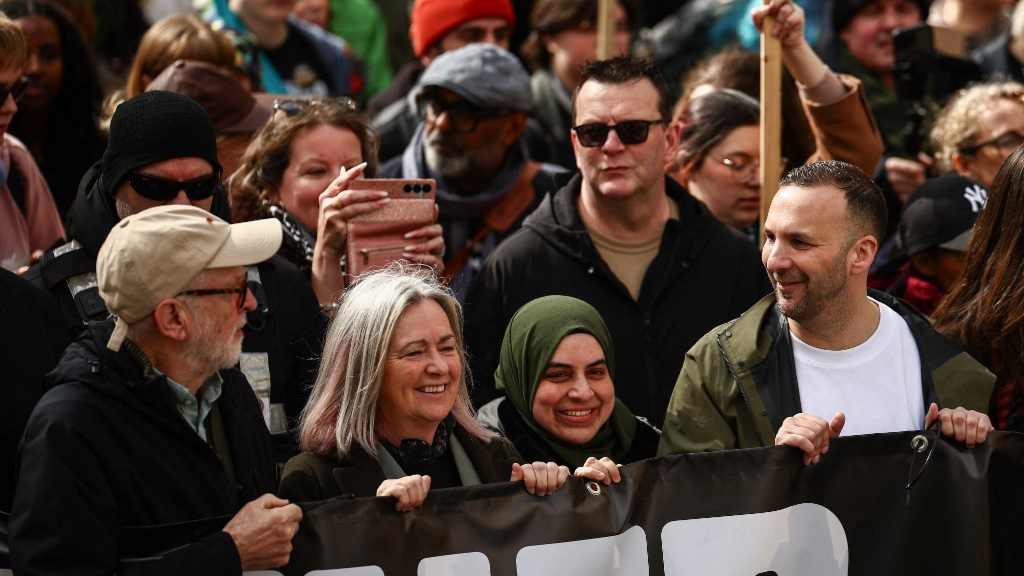
    Australian cities witnessed massive demonstrations on Monday as Israeli President Isaac Herzog commenced a four-day official visit, triggering nationwide protests over Israel’s military operations in Gaza. Thousands gathered in Sydney, Melbourne, and Brisbane, chanting pro-Palestinian slogans and demanding accountability for actions in the conflict.

    Herzog’s visit, intended to express solidarity with Australia’s Jewish community following December’s Bondi Beach shooting that killed 15 people, instead became a focal point for activists condemning Israel’s warfare in Gaza. Protesters carried signs reading ‘#ArrestHerzog’ and ‘#HerzogNotWelcome,’ directly challenging the Israeli leader’s presence.

    The controversy intensified as the Australian government invoked special security measures, designating the visit a ‘major event’ that granted police extraordinary powers to restrict access to areas and order people to leave. The Palestine Action Group contested these measures, arguing they were improperly used to suppress legitimate protest.

    Tensions escalated visibly in Sydney where footage circulated showing police detaining protesters and using pepper spray. Particularly controversial videos depicted officers confronting Muslim participants praying near Town Hall, drawing widespread criticism of police conduct on social media platforms.

    The Jewish Council of Australia criticized Prime Minister Anthony Albanese’s administration, accusing it of using ‘Jewish grief as a political prop’ by inviting a leader implicated in what international bodies have described as potential genocide. Amnesty International Australia echoed concerns, urging the government to honor its international legal obligations to hold perpetrators accountable.

    Herzog, who maintains that all Palestinians bear responsibility for Hamas’s October 2023 attack, faces serious international scrutiny. A United Nations commission of inquiry previously found Herzog, along with Prime Minister Benjamin Netanyahu and then-Defense Minister Yoav Gallant, ‘liable to prosecution for incitement to genocide’—a statement cited by the International Court of Justice in its assessment of Gaza conflict allegations.

  • Secretary of Iran’s top security body says to visit Oman on Feb 10

    Secretary of Iran’s top security body says to visit Oman on Feb 10

    In a significant diplomatic development, Ali Larijani, Secretary of Iran’s Supreme National Security Council, announced plans to lead a high-level delegation to Oman on February 10th. The visit comes amid ongoing mediation efforts by the Gulf sultanate between Tehran and Washington regarding nuclear negotiations.

    According to an official statement released through Larijani’s Telegram channel on Monday, the Iranian delegation will engage in comprehensive discussions with Omani senior officials covering the latest regional and international developments alongside bilateral cooperation across multiple domains. This diplomatic initiative follows the recent resumption of US-Iran dialogue in Oman last Friday—the first such engagement since the 12-day military confrontation between Iran and Israel in June last year, which saw limited participation from American forces.

    The timing of Larijani’s visit underscores Oman’s continuing role as a crucial diplomatic intermediary in one of the world’s most volatile geopolitical relationships. The Gulf state has historically facilitated backchannel communications between Tehran and Western powers, particularly regarding Iran’s nuclear program and regional security concerns.

    This diplomatic movement occurs against a backdrop of heightened regional tensions and reflects ongoing efforts to establish frameworks for de-escalation and mutual understanding. The agenda is expected to address not only bilateral cooperation but also broader security architecture in the Middle East, where both nations maintain significant strategic interests.

  • Bangladesh poll rivals rally on final day of campaign

    Bangladesh poll rivals rally on final day of campaign

    With Bangladesh’s parliamentary elections scheduled for February 12, the nation’s political landscape has reached a fever pitch as rival parties concluded their final day of campaigning on Monday. The electoral contest marks a historic turning point for the South Asian nation, occurring just eighteen months after the mass uprising of August 2024 that ended Sheikh Hasina’s 15-year autocratic rule.

    Tens of thousands of enthusiastic supporters flooded the streets of Dhaka throughout the campaign period, waving party flags and chanting revolutionary slogans that echoed the sentiments of the 2024 pro-democracy movement. The electoral competition has centered around competing interpretations of the uprising’s legacy and divergent visions for the future of this nation of 170 million people.

    The Bangladesh Nationalist Party (BNP), led by Tarique Rahman who returned from 17 years of exile in December, has emerged as a frontrunner in the parliamentary race. The 60-year-old leader, widely known as Tarique Zia, assumed control of the party following the December passing of his mother, former Prime Minister Khaleda Zia. At a Sunday rally in Dhaka’s Mirpur neighborhood, Rahman urged supporters to back local BNP candidate Shafiqul Islam Milton, promising representation that would genuinely serve constituents’ interests.

    Meanwhile, Jamaat-e-Islami chief Shafiqur Rahman addressed packed crowds in the Dhaka-11 constituency, a significant flashpoint during the 2024 uprising. Leading a coalition of Islamist parties under the symbol of weighing scales, Rahman accused the former ruling party of systematic repression while warning that new forms of abuse had emerged following its ouster. “A section of the oppressed turned into oppressors just a day after August 5,” he asserted, alleging widespread extortion and corruption by returning political figures.

    Jamaat-e-Islami, ideologically aligned with the Muslim Brotherhood, has formed an alliance with the National Citizen Party (NCP) founded by student leaders who spearheaded the 2024 uprising. NCP leader Nahid Islam accused major political parties of covertly sharing what he described as “businesses of extortion and crime” for decades.

    The electoral atmosphere has been charged with revolutionary fervor, with supporters repeatedly chanting “Long live the revolution!” and engaging in call-and-response cries of “Slavery or freedom?” answered by thunderous shouts of “Freedom, freedom!”

    Voters expressed diverse motivations for their electoral choices. Mohammed Harun, 65, revealed he hadn’t voted in 17 years but would support the Jamaat-led alliance hoping for a “just, corruption and violence-free country.” First-time voter Abdullah-al-Rahat, a 21-year-old Dhaka University student who participated in the 2024 uprising, expressed preference for a unity government should no party secure a majority.

    The Awami League, former Prime Minister Sheikh Hasina’s party, has been banned from participating in the elections by the interim government—a move criticized by various human rights organizations. Hasina, now 78, was sentenced to death in absentia last November for crimes against humanity related to her government’s deadly crackdown on protesters during her final bid to maintain power. She remains in hiding in India.

    The election represents not merely a political transition but a profound test of Bangladesh’s democratic institutions and its ability to channel revolutionary energy into sustainable governance structures.

  • Indian priest arrested for cultivating marijuana worth Rs7 million within temple

    Indian priest arrested for cultivating marijuana worth Rs7 million within temple

    In a startling breach of religious sanctity, authorities in India’s Telangana state have uncovered a sophisticated marijuana cultivation operation operating within a temple’s sacred grounds. Avuti Nagaiah, a 48-year-old priest serving at Panchagam village temple, has been taken into custody following a coordinated raid by local police and excise officials.

    The investigation revealed that Nagaiah had transformed the temple garden into an elaborate camouflage for illicit activities. Among legitimate marigold plants—chosen specifically for their visual and olfactory similarity to cannabis—the priest cultivated nearly 700 marijuana plants with an estimated street value of Rs7 million (approximately Dh285,000).

    The discovery has sent shockwaves through the local community, with villagers expressing profound dismay at the exploitation of their place of worship. Law enforcement officials are now conducting an expanded investigation to identify potential accomplices and determine the distribution network that supported this operation.

    This incident coincides with heightened drug enforcement activities across Telangana, where police recently apprehended three additional suspects and confiscated over 16 kilograms of cannabis in operations throughout Hyderabad, the state capital. The case highlights growing concerns about innovative drug cultivation methods being employed in unexpected locations across India.

  • Yunnan researchers reveal Cambrian vertebrates may have had ‘four eyes’

    Yunnan researchers reveal Cambrian vertebrates may have had ‘four eyes’

    Paleontologists from Yunnan University have made a groundbreaking discovery that challenges conventional understanding of early vertebrate evolution. Their research indicates that the earliest known vertebrates from the Cambrian Period, approximately 518 million years ago, may have possessed not two but four camera-type eyes.

    The study, published in the prestigious journal Nature, examines jawless vertebrates known as myllokunmingids that inhabited Earth’s oceans during a critical evolutionary period. Led by Academician Xu Xing from the School of Life Sciences and Researcher Cong Peiyun from the Institute of Paleontology, the team analyzed exceptionally preserved fossil specimens from the Chengjiang biota in Yunnan province.

    These fossils reveal a remarkable anatomical feature: a smaller pair of round, dark structures positioned between the conventional lateral eyes. Through meticulous analysis, researchers determined these structures were preserved as organic carbon films containing melanin-bearing melanosomes—characteristics that closely match the retinal pigment epithelium found in modern vertebrates.

    The most significant finding emerged when researchers identified traces of lenses within these additional ocular structures. The precise positioning and proportional size of these lenses relative to the retinal tissues mirror the anatomical relationship observed in functional camera-type eyes, strongly suggesting these organs possessed image-forming capabilities.

    This extraordinary dorsal pineal complex, located atop the animals’ heads, represents a previously unknown visual system configuration in early vertebrates. The discovery provides unprecedented insights into how these ancient creatures perceived their environment and enhances our understanding of sensory evolution during the Cambrian explosion—a period of rapid biological diversification.

    The research not only expands scientific knowledge of vertebrate visual system origins but also offers fresh perspectives on the survival strategies employed by animals during one of Earth’s most biologically creative eras.

  • Bhavana returns to Malayalam cinema with thriller ‘Anomie’

    Bhavana returns to Malayalam cinema with thriller ‘Anomie’

    South Indian cinema icon Bhavana Menon has made a powerful return to Malayalam films with the suspense thriller ‘Anomie: The Equation of Death,’ marking both her debut in the genre within the Malayalam industry and her first venture as a film producer. The acclaimed actress, whose career spans over two decades across multiple South Indian film industries, portrays Zaara Philip, a forensic analyst whose life descends into chaos when her brother mysteriously disappears.

    The film represents a significant career evolution for Menon, who has established herself through emotionally resonant performances and strong female characters throughout her 23-year career. Following a five-year hiatus from cinema after a highly publicized 2017 abduction case that prompted industry-wide safety reforms for women, Menon has gradually returned to acting, with her previous appearance in the Tamil horror film ‘The Door’ in March 2025.

    ‘Anomie’ features an ensemble cast including veteran actor Rahman alongside Shebin Benson, Vishnu Agasthya, Binu Pappu, and Arjun Lal. Director Riyas Marath, making his directorial debut after co-writing ‘Sapthamasree Thaskaraha,’ revealed the production journey spanned from 2023 to 2025 with extensive filming across Kochi, Kodaikanal, Mumbai, and Pollachi.

    In a recent Dubai promotional event, Menon shared insights about her dual role as both lead actress and co-producer through her newly established banner, Bhavana Film Productions. ‘I didn’t initially approach the project as a producer,’ she explained. ‘After witnessing the quality of work during the first schedule, I felt compelled to contribute financially to ensure the film’s completion.’

    Reflecting on her selective approach to roles, Menon emphasized her consistent standards throughout her career: ‘I have never accepted a character I didn’t genuinely connect with. While scheduling conflicts have caused me to miss certain opportunities, I believe in destiny—those roles ultimately found their intended performers.’

    The actress also addressed the transformation of the Malayalam film industry over her career, noting the shift from formulaic narratives to more realistic storytelling and audience acceptance of complex plots. Her personal definition of success has similarly evolved, with Menon stating that current fulfillment comes from ‘happiness and contentment’ rather than professional achievements alone.