标签: Asia

亚洲

  • China’s Lunar New Year travel rush begins with record 9.5 billion trips expected

    China’s Lunar New Year travel rush begins with record 9.5 billion trips expected

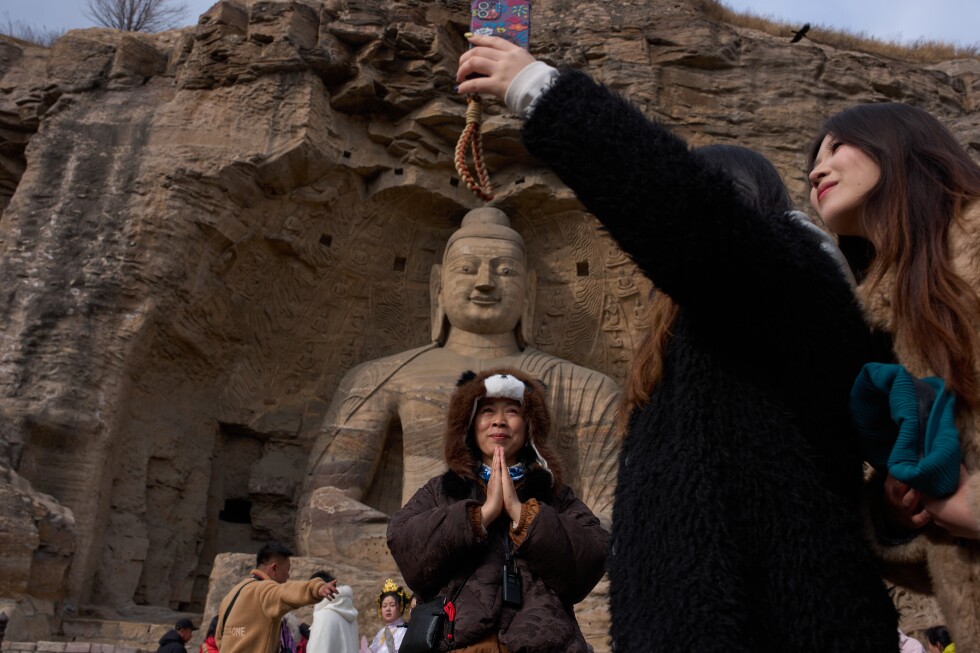
    China has embarked on its monumental annual migration period known as ‘chunyun,’ with government projections indicating an unprecedented 9.5 billion trips will occur during the 40-day travel window surrounding the Lunar New Year. This massive human movement, recognized as the world’s largest periodic migration, demonstrates both the enduring cultural significance of family reunions and the economic realities facing millions of Chinese workers.

    At Beijing’s railway stations, travelers laden with oversized luggage and suitcases crowded waiting areas, many sustaining themselves with instant noodles between journeys. The stations provide complimentary hot water, facilitating this traditional travel sustenance for the millions undertaking long-distance trips.

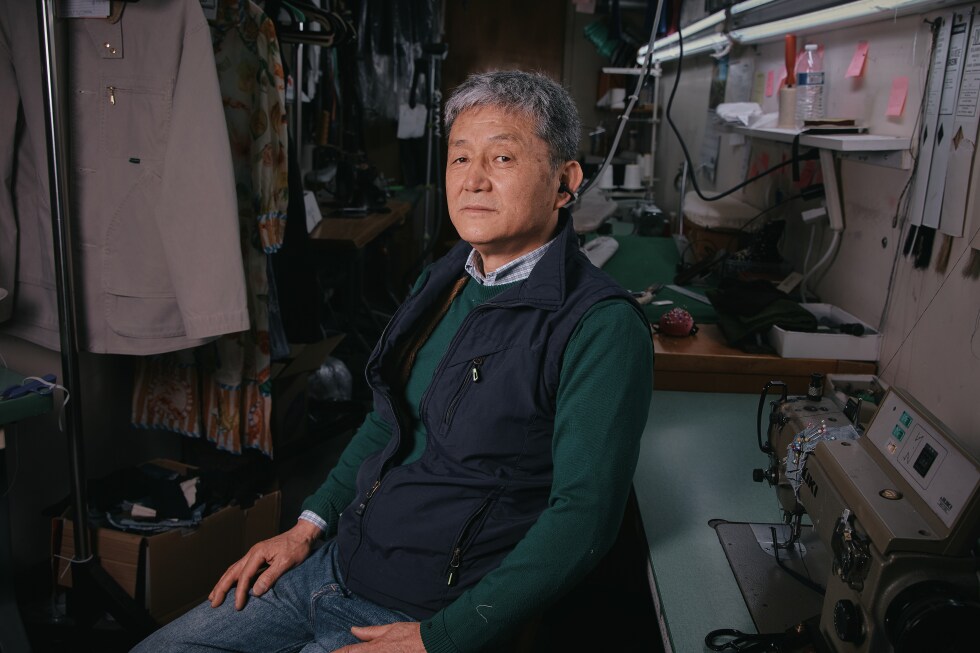
    Liu Zhiquan, a construction worker, exemplifies the economic pressures affecting travel decisions. Opting for a 30-hour conventional train journey to Chengdu instead of the 9-hour high-speed alternative, Liu explained: ‘The economic situation feels more challenging this year. Making money has become increasingly difficult.’ His choice to endure the extended travel time reflects the financial calculations many workers must make to afford the traditional homecoming.

    Despite these economic concerns, the cultural pull remains powerful. Tian Yunxia, a breakfast stall operator from Henan province, emphasized: ‘The new year represents the ultimate festival. Without returning home, we cannot experience the authentic holiday atmosphere. I need to reunite with my children, grandchildren, and husband.’

    Young professionals like Tian Duofu, who recently entered Beijing’s workforce, recognize the diminishing opportunities for family gatherings. ‘After beginning my career, I’ve realized such extended holidays are rare occurrences. The decreasing frequency of in-person meetings makes the Spring Festival increasingly meaningful,’ she noted.

    The travel distribution reveals fascinating patterns: approximately 540 million journeys will occur via rail, 95 million by air, with the remainder utilizing road transportation. This migration phenomenon highlights the unique Chinese workplace culture where extended hours and limited annual leave make the Lunar New Year break a precious opportunity for family reconnection across vast distances.

  • Japan urged to adhere to a peaceful path

    Japan urged to adhere to a peaceful path

    China has called upon Japan to maintain its commitment to peaceful development following a decisive electoral victory by the nation’s ruling coalition. Foreign Ministry spokesman Lin Jian emphasized the necessity for Japan to honor the four foundational political documents that underpin Sino-Japanese relations during a press briefing on Monday.

    The statement came in response to Japan’s parliamentary elections, where the ruling Liberal Democratic Party and its coalition partner secured a supermajority of 352 seats in the lower house. This outcome grants the coalition the crucial two-thirds majority required to initiate constitutional amendments—a development that has raised international concerns about Japan’s political direction.

    Lin articulated that while the election represents Japan’s internal affair, it reveals ‘profound issues and trends warranting serious reflection.’ He explicitly urged Japanese authorities to ‘address, rather than disregard, international apprehensions’ and to ‘follow the path of peaceful development instead of reverting to militarism.’

    Academic experts warn that the electoral results could accelerate Japan’s rightward political shift. Professor Hiroshi Shiratori of Hosei University noted that the coalition’s strengthened position might facilitate revisions to Japan’s security framework, potentially enabling more assertive military posturing and overseas operations. Of particular concern is the possible amendment of Article 9—the constitutional provision that renounces war and prohibits maintaining offensive military capabilities.

    Professor Jin Yongming of Ocean University of China cautioned that Prime Minister Sanae Takaichi’s administration might pursue significant policy changes, including revising security documents, relaxing arms export restrictions, and expanding military capabilities. These moves would represent a substantial departure from Japan’s postwar pacifist trajectory.

    The Chinese government maintains that its Japan policy remains consistent and unaffected by individual elections. However, Lin reiterated calls for Japan to retract previous statements suggesting potential military involvement in the Taiwan Strait and to demonstrate genuine commitment to bilateral relations through concrete actions.

    Economic implications also loom large, as heightened Sino-Japanese tensions could adversely affect trade relations, potentially undermining Japan’s manufacturing sector and broader economic growth while impeding regional cooperation efforts.

  • The taekwondo teacher tasked with healing India’s troubled state

    The taekwondo teacher tasked with healing India’s troubled state

    Yumnam Khemchand Singh, a fifth-dan black belt practitioner of taekwondo, has assumed office as Chief Minister of Manipur, marking the end of a year of direct federal rule imposed following devastating ethnic violence. The 62-year-old BJP leader takes charge of a state still reeling from clashes between the majority Meitei and minority Kuki-Zo communities that claimed over 260 lives in 2023.

    Singh brings a unique profile to the role—a seasoned politician with deep ties to the RSS (the BJP’s ideological parent organization) who only entered electoral politics in 2017, previously serving as assembly speaker and state minister overseeing education and rural development. His cabinet composition reflects attempted ethnic balancing, with three ministers including one deputy chief minister from the Kuki-Zo community.

    The new administration faces immediate challenges: ongoing segregation between communities with thousands displaced from their homes, fresh tensions between Kuki-Zo and Naga tribal groups, and persistent demands for separate administrative arrangements. Hours after Singh’s oath-taking ceremony on February 4, protests erupted in Churachandpur district, with Kuki-Zo civil society groups condemning their legislators’ participation in the government as a ‘betrayal.’

    Opinion remains sharply divided on Singh’s prospects for success. Supporters point to his cross-community relationships and unusual December 2025 visit to a Kuki-Zo relief camp—seen as a significant outreach gesture. Critics argue that peace requires more than administrative management, demanding concrete roadmaps for conflict resolution, security assurances, and addressing core political demands.

    Analysts suggest the coming weeks will be crucial in determining whether Singh’s leadership can transition Manipur from mere absence of violence toward genuine peace built on trust, justice, and political sincerity. The state’s history of armed resistance, controversial military powers in ‘disturbed areas,’ and complex ethnic diversity present formidable obstacles to reconciliation.

  • Various sectors voice support for court’s verdict

    Various sectors voice support for court’s verdict

    Hong Kong’s political establishment and civil society organizations have expressed resolute endorsement of the High Court’s sentencing of former media magnate Jimmy Lai Chee-ying to 20 years imprisonment under the Hong Kong Special Administrative Region National Security Law. The verdict, delivered by a three-judge national security panel on Monday, concludes a landmark case that has drawn international attention.

    Prominent political figures characterized the sentence as proportionate to Lai’s crimes. Leung Chun-ying, Vice-Chairman of the Chinese People’s Political Consultative Conference National Committee and former HKSAR Chief Executive, stated the punishment was “well-deserved,” rejecting Western media portrayals of Lai as a democracy advocate. Executive Council Convener Regina Ip Lau Suk-yee described the judgment as “fair and reasonable,” noting the court had thoroughly considered both the severity of Lai’s actions and claimed mitigating circumstances.

    Legislative Council President Starry Lee Wai-king emphasized that extensive evidence demonstrated Lai had systematically exploited media platforms to incite social discord and solicit foreign intervention against Hong Kong and national officials. She highlighted the court’s comprehensive 855-page reasoning document as evidence of the judicial rigor applied throughout the proceedings.

    Legal expert Wong Yuk-shan, Vice-Chairman of the Hong Kong Basic Law Committee, affirmed that the judicial process had ensured a fair trial, stating the outcome “fully embodies Hong Kong’s commitment to the rule of law.”

    The Hong Kong Federation of Trade Unions, the territory’s largest labor organization, issued a statement asserting the verdict reinforces Hong Kong’s determination to safeguard national security while preserving its core legal values. Meanwhile, the Democratic Alliance for the Betterment and Progress of Hong Kong cited economic indicators showing recovery under the National Security Law’s protection, with GDP growth projected at 3.5% for 2025.

    The Hong Kong Coalition, an NGO comprising business and political leaders, condemned Western politicians for attempting to influence judicial proceedings through sanctions, characterizing such actions as “double standards that distort black and white” and violations of international legal norms.

  • Central govt lauds Lai sentencing

    Central govt lauds Lai sentencing

    The Central Government has expressed resolute support for the Hong Kong judiciary’s sentencing of media figure Jimmy Lai Chee-ying, characterizing the ruling as a demonstration of judicial integrity and the Special Administrative Region’s commitment to national security preservation.

    On Monday, the Hong Kong High Court delivered a verdict sentencing Lai to 20 years imprisonment on convictions of conspiracy to collude with foreign forces and conspiracy to publish seditious materials. Three national security judges—Esther Toh Lyeping, Susana Maria D’Almada Remedios, and Alex Lee Wan-tang—presided over the case. Eight co-defendants received prison terms ranging from six years and three months to ten years.

    At a regular press briefing, Foreign Ministry spokesman Lin Jian identified Lai as the principal architect behind systematic anti-China activities that severely compromised the ‘one country, two systems’ principle and threatened national security. Lin emphasized that these actions substantially damaged Hong Kong’s prosperity, stability, and resident welfare.

    The Central Government affirmed its unwavering support for the HKSAR’s lawful protection of national security interests, maintaining that the case represents an internal matter of the SAR. Lin urged foreign nations to respect China’s sovereignty and Hong Kong’s legal processes, stating that enhanced implementation of the National Security Law corresponds directly with increased social stability and protection of residents’ rights.

    An editorial published under the pseudonym Gang Aoping on the Hong Kong and Macao Affairs Office’s official social media account asserted that the sentencing reflects collective societal condemnation of actors seeking to undermine China’s stability. The commentary praised the judicial decision as demonstrating that violations of national security legislation would incur severe consequences.

    Representatives from the Liaison Office of the Central People’s Government in the HKSAR characterized the verdict as exemplifying judicial impartiality and legal authority. The 855-page judgment identified Lai as the mastermind behind anti-China groups, describing the evidence as incontrovertible and the offenses serious.

    The Office for Safeguarding National Security of the Central People’s Government in the HKSAR issued a separate statement emphasizing that upholding national sovereignty constitutes the fundamental principle under ‘one country, two systems,’ noting that punishing national security offenses represents a universal jurisdictional responsibility.

    The Commissioner’s Office of China’s Foreign Ministry in the HKSAR circulated correspondence to foreign media organizations affirming that proceedings were conducted without external influence, adhered to rigorous fairness standards, and resulted in a legally sound verdict based on substantiated evidence. The communication urged foreign journalists to respect judicial independence and maintain professional reporting standards without politicizing legal matters.

  • Jimmy Lai sentenced to 20 years in prison

    Jimmy Lai sentenced to 20 years in prison

    In a landmark ruling that concludes a protracted legal proceeding, Hong Kong’s judiciary has sentenced former media proprietor Jimmy Lai Chee-ying to two decades of imprisonment under the Special Administrative Region’s National Security legislation. The 78-year-old founder of the defunct Apple Daily publication received his sentence on February 9, 2026, from a three-judge national security panel at the West Kowloon Law Courts Building.

    The judicial panel, comprising Judges Esther Toh Lye-ping, Susana Maria D’Almada Remedios, and Alex Lee Wan-tang, delivered their verdict following Lai’s December conviction on three distinct charges. The court found Lai guilty on two counts of conspiracy to collude with external forces and one count of conspiracy to disseminate seditious content through his media operations.

    In their comprehensive 47-page judgment, the magistrates emphasized that “the legislative intent mandates that endangering national security through foreign engagement constitutes an offense of grave seriousness, warranting substantial penalty.” The court established a sentencing baseline of 15 years imprisonment for each foreign collusion charge and 21 months for the seditious publications offense.

    The judiciary addressed several mitigation factors presented by Lai’s defense team, including his advanced age and health conditions. The court documented that Lai had received appropriate medical attention during detention and declined to reduce his sentence on medical grounds, noting such considerations are uncommon for severe national security offenses. Regarding Lai’s solitary confinement arrangement, the bench clarified this was implemented at the defendant’s own request due to concerns about potential harassment from other inmates.

    After evaluating all circumstances, the court applied modest reductions—trimming one month from the sedition sentence and one year from each foreign collusion charge. The judges further ruled that 18 years of Lai’s 20-year term will run consecutively with his previous five-year, nine-month fraud sentence from December 2022, noting the completely separate nature of that financial crime.

    Concurrent with Lai’s sentencing, three corporations associated with his media empire—Apple Daily, Apple Daily Printing, and Apple Daily Internet—each received fines of HK$3,004,500 (approximately $384,275). Eight co-defendants, including core members of ‘Stand with Hong Kong’ and former Next Digital employees who previously pleaded guilty to conspiracy charges, received prison terms ranging from six years three months to ten years.

    Hong Kong Chief Executive John Lee Ka-chiu issued a statement characterizing Lai’s actions as “heinous crimes” met with appropriate justice. Lee asserted that the conviction, supported by substantial evidence, demonstrates Lai’s role as the mastermind behind systematic anti-China activities, describing his conduct as “despicable and shameless.” The HKSAR administration maintains that this ruling reinforces the rule of law and delivers societal justice.

  • Women and children face abuse in Syria’s al-Roj camp amid chaotic handover

    Women and children face abuse in Syria’s al-Roj camp amid chaotic handover

    Disturbing testimonies from detainees within Syria’s al-Roj prison camp reveal a climate of escalating terror and systematic abuse against women and children with suspected Islamic State affiliations. This humanitarian crisis unfolds amidst a contentious transfer of control from Kurdish-led forces to the Syrian government, creating a dangerous power vacuum.

    Multiple female detainees from European nations provided harrowing accounts to Middle East Eye of nightly raids conducted by security personnel. These operations allegedly involve forced removal from tents, beatings leading to unconsciousness, dousing with water in freezing conditions, and threats of sexual violence. Detainees report living in perpetual fear after dark, with the sound of approaching vehicles triggering widespread panic.

    A particularly alarming practice involves the separation of children from their mothers, with camp authorities reportedly demanding $2,000 for each child’s return. Additional reports describe extensive looting of personal belongings and violent attacks, including one incident where guards allegedly broke a young girl’s jaw with an iron bar to extort money and phones from her mother.

    The deteriorating situation follows recent announcements by US Central Command regarding prisoner transfers to Iraq and statements from Damascus about plans to permanently close both al-Roj and al-Hol camps. However, rights organizations indicate confusion persists regarding actual authority on the ground, with multiple military and administrative entities potentially exercising control.

    Beatrice Eriksson, spokesperson for Swedish rights organization Repatriate the Children, confirmed these patterns reflect a broader security collapse. ‘What is unfolding in Roj is not accidental,’ Eriksson stated. ‘It is the predictable result of prolonged abandonment and failure to resolve responsibility.’

    The organization advocates for coordinated international repatriation efforts, arguing that leaving vulnerable populations in these conditions risks further radicalization and perpetuates cycles of violence. Similar concerns were echoed by Yasmina from Families in Belgium, who reported receiving consistent accounts of curfews, humiliating treatment of young boys, and worsening conditions within camp prisons.

  • Jimmy Lai severely sentenced despite Trump calling for his release

    Jimmy Lai severely sentenced despite Trump calling for his release

    Hong Kong’s High Court has delivered a landmark 20-year prison sentence to media entrepreneur and pro-democracy activist Jimmy Lai Chee-ying, marking one of the most significant applications of the territory’s National Security Law since its implementation in 2020. The 78-year-old founder of the defunct Apple Daily was convicted on charges of conspiring with foreign forces and publishing seditious materials, primarily stemming from his 2019 appeals to Washington for support of Hong Kong protesters and pressure on Beijing during trade negotiations.

    The sentencing decision, handed down by three judges on Monday, concludes a lengthy legal process that began with Lai’s initial detention in December 2020. In addition to Lai’s substantial term, six former Apple Daily executives and two activists received prison sentences ranging from six years and three months to ten years for related national security violations.

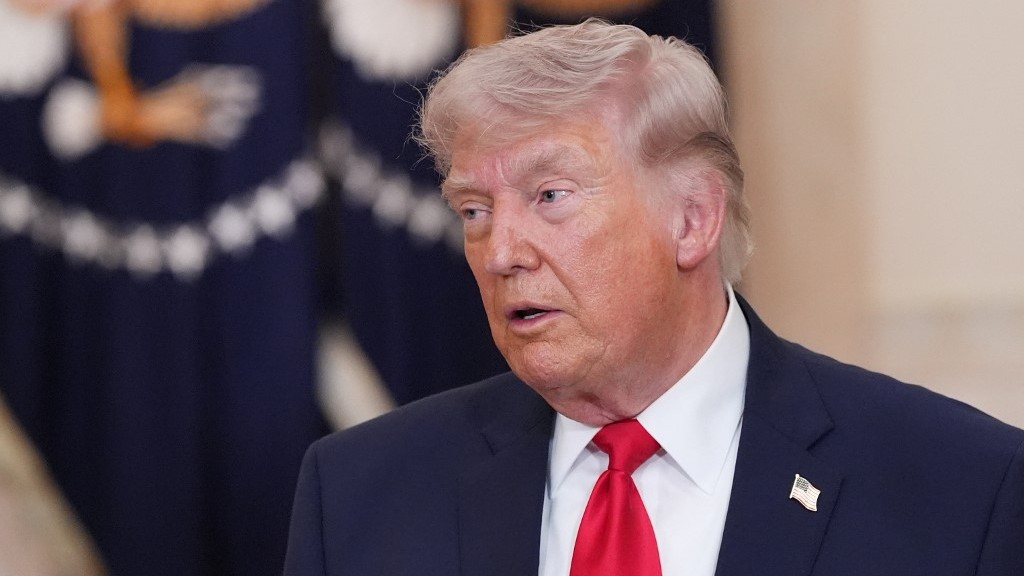
    The case has drawn significant international attention, with former U.S. President Donald Trump reportedly raising Lai’s situation directly with Chinese President Xi Jinping during an October meeting in South Korea. Trump suggested that Lai’s release could potentially stabilize Sino-American relations and improve China’s global standing. The former president has previously vowed to secure Lai’s freedom if re-elected.

    Chinese authorities have maintained a firm stance regarding the judicial proceedings. Foreign Ministry spokesperson Lin Jian emphasized that Lai’s case represents an internal matter for Hong Kong, describing the activist as “the principal mastermind and perpetrator behind the series of riots that shook Hong Kong.” Lin further urged foreign nations to respect China’s sovereignty and refrain from interfering in Hong Kong’s judicial independence.

    The prosecution built its case around Lai’s alleged coordination with foreign officials, including meetings with former U.S. Secretary of State Mike Pompeo, and his newspaper’s coverage of the 2019 protests. Controversially, pro-Beijing media outlets reported that Lai had encouraged the United States to deploy “nuclear weapons” against China, though contextual evidence indicates the businessman was employing metaphorical language regarding America’s “moral authority” in international relations.

    Complicating the diplomatic dimension, British officials have explored potential transfer arrangements under the still-active Transfer of Sentenced Persons Agreement between the UK and Hong Kong. However, Hong Kong’s Security Bureau has clarified that such mechanisms do not apply to Chinese nationals, noting that China does not recognize dual citizenship despite Lai’s British naturalization in 1994.

    The sentencing occurs against a backdrop of ongoing geopolitical tensions, with Trump scheduled to meet Xi in Beijing this April and critical midterm elections approaching in the United States. The outcome of these diplomatic engagements may influence the future of Sino-American relations, including the expiration of a current trade truce between the nations in November.

  • Philippine top court says same-sex couples can co-own property

    Philippine top court says same-sex couples can co-own property

    In a groundbreaking judicial decision, the Philippine Supreme Court has extended property co-ownership rights to same-sex couples for the first time in the nation’s history. The ruling, made public on Tuesday, represents a significant shift in the legal landscape of the predominantly Catholic country where same-sex unions remain prohibited.

    The case centered on a dispute between two former partners who had jointly acquired a house and lot in suburban Manila. When one woman refused to honor their agreement to sell the property, the other filed a legal claim seeking division of their assets. Both lower courts and the Court of Appeals had previously denied the claim, but the Supreme Court reversed these decisions on February 5th.

    The court’s landmark interpretation applied Article 148 of the Family Code, which governs property relations between unmarried cohabiting partners. Despite the property being registered under only one partner’s name for administrative convenience, the court recognized documentary evidence showing both women had contributed equally to purchase and renovation costs.

    Associate Justice Marvic Leonen emphasized that Article 148 must apply without gender discrimination, stating that failure to do so would ‘render legally invisible some forms of legitimate intimate relationships.’ Associate Justice Amy Lazaro Javier further noted that the provision must not be limited to heterosexual couples given ‘prevailing values in modern society’ and ‘unjustified difference in treatment.’

    Supreme Court spokesperson Camille Ting confirmed to the BBC that this marks the first application of Article 148 to same-sex property rights cases. While stopping short of legalizing same-sex unions, the court explicitly called on government and legislative bodies to address the broader needs of LGBT couples regarding property, finance, and healthcare protections.

    The decision acknowledges the unique legal challenges facing same-sex couples in the Philippines—the only country worldwide outside the Vatican that prohibits divorce, leaving LGBT partners without essential legal safeguards.

  • Saudi Arabia in talks with US company for AI-powered drones, sources say

    Saudi Arabia in talks with US company for AI-powered drones, sources say

    Saudi Arabia is currently engaged in advanced negotiations with American artificial intelligence defense contractor Shield AI for the potential procurement of advanced drone systems, according to sources briefed on the matter. The discussions emerge as the Trump administration actively promotes arms sales throughout the resource-abundant Gulf region.

    The San Diego-based technology startup specializes in AI-powered autonomous systems, particularly its innovative ‘hivemind’ software that enables drone operations without GPS, human pilots, or external communications. The primary model under consideration, the V-Bat, is designed for extended intelligence, surveillance, and reconnaissance missions, capable of launching from naval vessels and maintaining flight for up to thirteen hours.

    This potential acquisition aligns with Saudi Arabia’s intensified security focus across multiple regional hotspots, including Yemen and Sudan, and particularly in the strategically vital Red Sea and Arabian Sea corridors. Recent regional tensions were highlighted in December when Saudi forces targeted an Emirati weapons shipment at Yemen’s Mukalla port.

    The kingdom has simultaneously pursued broader security partnerships, finalizing a military cooperation agreement with Somalia and exploring enhanced security ties with Eritrea, facilitated by Egyptian support.

    While the V-Bat system has already demonstrated operational capability in Ukraine’s conflict zones, Shield AI’s more advanced X-Bat model represents a technological leap. This vertical take-off and landing capable fighter drone, unveiled in October 2025 but not yet operational, offers compact deployment advantages with three units occupying the space of a single traditional fighter aircraft.

    The prospective deal, though modest compared to Saudi Arabia’s potential acquisition of F-35 warplanes, would constitute a significant achievement for the startup, whose investors include prominent entities like Palantir, Airbus, and venture capitalist Steven Cohen.

    This development follows the substantial acceleration of US-Saudi military sales ties during Crown Prince Mohammed bin Salman’s November visit to the White House, which established a defense partnership framework to fast-track arms transfers. Recent briefings to US lawmakers have addressed concerns regarding how such sales might affect Israel’s qualitative military edge in the region.

    The negotiations coincide with Saudi Arabia’s renewed emphasis on defense co-production and content localization, as articulated by Saudi defense analyst Hesham Alghannam, reflecting the kingdom’s strategic shift toward technological sovereignty in its military capabilities.