标签: Asia

亚洲

  • Putting in the prep

    Putting in the prep

    As the New Year approaches, railway maintenance teams in Chongqing are executing comprehensive safety protocols to ensure seamless operations during the anticipated travel peak. Technical staff from the Chongqing Passenger Transport Section, operating under China Railway Chengdu Bureau Group Co Ltd, have accelerated inspection routines and maintenance procedures on critical rail infrastructure.

    The preparatory measures include meticulous examinations of CR200J bullet trains, China’s advanced high-speed rail units. Maintenance personnel are conducting thorough system checks, mechanical assessments, and functionality verifications across all operational components. These proactive interventions aim to identify potential technical issues before they can impact passenger services during high-density travel periods.

    Photographic documentation from maintenance facilities shows technicians performing detailed inspections on train undercarriages, braking systems, and electrical connections. The intensified maintenance regime reflects China Railway’s commitment to safety-first transportation principles, particularly during periods of significantly increased passenger volume.

    The preparation strategy incorporates lessons learned from previous holiday travel rushes, with railway authorities implementing optimized inspection protocols and resource allocation. Maintenance teams are working extended shifts to ensure the entire fleet meets stringent safety standards before the travel surge begins.

    This systematic approach to pre-holiday preparation demonstrates how China’s railway network manages the complex logistics of mass transportation during peak demand periods. The comprehensive safety checks cover both rolling stock and fixed infrastructure, creating a multi-layered safety net for the millions of passengers expected to utilize rail services during the holiday period.

  • Why the IMF thinks China has a zombie problem

    Why the IMF thinks China has a zombie problem

    International Monetary Fund Managing Director Kristalina Georgieva has issued a stark warning to Chinese leadership during her Beijing visit, drawing direct parallels between China’s current economic challenges and Japan’s prolonged period of economic stagnation. Georgieva emphasized the urgent need for President Xi Jinping’s administration to make “brave choices” in accelerating structural reforms to transition China toward a consumption-driven economic model.

    The IMF chief highlighted two critical challenges: addressing the ongoing property crisis that fuels deflationary pressures and eliminating so-called “zombie firms” – unviable property developers that continue to operate through bank loan rollovers. “China is simply too big to generate much more growth from exports, and continuing to depend on export-led growth risks furthering global trade tensions,” Georgieva stated regarding the world’s second-largest economy.

    While acknowledging differences between China’s situation and Japan’s decades-long deflation battle, Georgieva noted concerning similarities in the accumulation of bad loans and policy responses. China’s deflationary period is now entering its fourth year, with November credit expansion remaining subdued at just 392 billion yuan ($55.7 billion), well below expectations.

    The core problem lies in China’s household behavior, where approximately 70% of household wealth is tied to real estate. With property values declining and household loans contracting for two consecutive months – the first such occurrence since records began in 2005 – consumers are hesitant to spend their $22 trillion in savings.

    Economists from the Federal Reserve Bank of Dallas have identified mounting evidence of “zombie lending” in China, where banks continue extending credit to unprofitable firms rather than recognizing losses. This practice mirrors Japan’s experience in the 1980s and 1990s, which led to inefficient capital allocation and decreased productivity.

    The solution, according to IMF China economist Sonali Jain-Chandra, requires rebalancing demand toward consumption and further opening the service sector, which represents an “underexploited driver of growth.” However, as Rhodium Group economist Camille Boullenois notes, Beijing’s main policy tools – directed use of the financial system and large-scale fiscal support – are becoming less effective and “close to exhausted.”

    Without comprehensive structural reforms that alter incentives, increase competitiveness, and level playing fields, monetary easing alone cannot reverse China’s deflationary trajectory or address the growing zombie firm problem as 2025 concludes.

  • Plant scientist has life’s work honored

    Plant scientist has life’s work honored

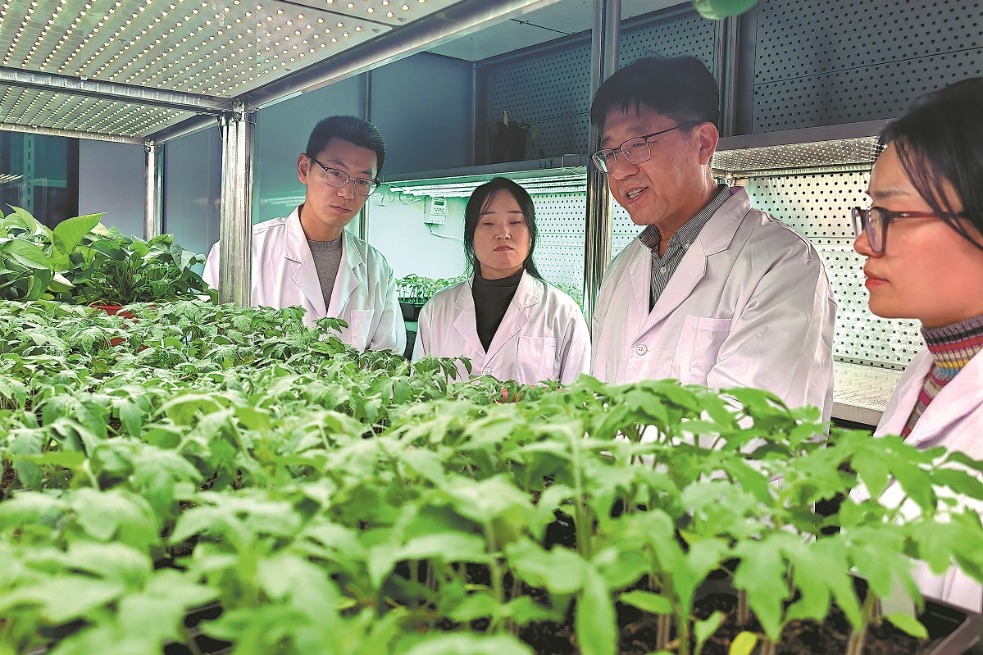
    Professor Li Chuanyou, a distinguished plant molecular biologist from Shandong Agricultural University, has been honored with the prestigious Humboldt Research Award in recognition of his lifetime contributions to understanding plant defense and regeneration mechanisms. The award celebrates his four decades of pioneering research that has fundamentally changed our understanding of how plants communicate, defend against threats, and repair damage.

    Growing up in China’s agricultural heartland of Shandong province, Li developed an early fascination with plant growth that would shape his entire career. After obtaining his master’s degree in crop genetics and breeding from Shandong Agricultural University in 1994, he began his academic journey as both teacher and researcher at the same institution.

    Li’s most significant breakthrough came during his postdoctoral research at Michigan State University (1999-2003), where he challenged existing scientific consensus about plant defense signaling. While scientists had believed since the 1970s that a substance called systemin served as the primary alarm signal when plants were injured, Li demonstrated that jasmonic acid actually functioned as the long-distance mobile alarm signal, with systemin acting merely as an ‘alarm amplifier’ at the injury site.

    This discovery, hailed by the journal Science in 2002 as a major breakthrough in plant and microbe signal transduction, represented just the beginning of Li’s contributions. He subsequently led a decade-long investigation into how plants achieve tissue regeneration without the ability to escape harm. Through meticulous examination of tens of thousands of mutant tomato variants, his team identified a key gene capable of activating stem cells to facilitate damaged tissue regrowth—findings published in the journal Cell last year.

    Beyond his fundamental research, Li has spearheaded international collaborative efforts, working with over 300 scientists from 14 countries to sequence the complete genome of both cultivated tomatoes and their wild ancestors. This genomic mapping has provided crucial insights controlling plant growth, ripening, flavor, and firmness while enabling the development of disease-resistant varieties.

    As dean of the College of Life Sciences, Li has translated his research into practical applications, developing more than 30 high-end tomato varieties that offer domestic alternatives to imported seeds. Through the Taishan Academy of Tomato Innovation—established in 2023 through a partnership between Shandong Agricultural University and Tai’an city—Li’s team continues to bridge fundamental research with molecular breeding and variety promotion.

    Throughout his career, Li has maintained that research must ultimately ‘return to the land,’ serving farmers and bringing better food to people—a philosophy that has guided his work from laboratory discoveries to tangible agricultural improvements.

  • Lifesaving surgery for girl, 5, gives 2nd chance

    Lifesaving surgery for girl, 5, gives 2nd chance

    In a groundbreaking medical achievement, a five-year-old Chinese girl has been given a second chance at life following an unprecedented series of cardiac procedures. Xiaoni, weighing merely 12.2 kilograms and diagnosed with restrictive cardiomyopathy—an exceptionally rare heart condition representing just 2% of cardiomyopathy cases—has successfully recovered after 110 days of intensive treatment involving two high-risk surgeries.

    The medical breakthrough occurred when a collaborative team led by Professor Liu Xiaocheng from TEDA International Cardiovascular Hospital in Tianjin and Professor Mo Xuming from Nanjing Children’s Hospital determined that conventional treatment options were exhausted. Facing end-stage heart failure without available donor hearts, the medical professionals pioneered a dual artificial heart implantation strategy—a procedure never before attempted on a patient of such low body weight.

    Xiaoni’s condition presented extraordinary challenges: her cardiac chambers were significantly undersized even for her age, and she suffered from simultaneous biventricular heart failure requiring biventricular assist device (BiVAD) support. Within a remarkable 13-day timeframe, engineers from Rocor Medical Technology Co collaborated with the medical team to modify their second-generation ‘Rocket Heart’ technology, creating fully magnetically levitated ventricular assist devices specifically tailored to Xiaoni’s anatomical requirements. Each pump weighed a mere 69 grams, with the sewing ring’s outer diameter reduced from 29 millimeters to 22.4 millimeters and its weight dramatically decreased from 6.4 grams to just 1.17 grams.

    Professor Liu highlighted the significance of this achievement, noting that pediatric heart failure devices in developed countries typically rely on bulky extracorporeal pneumatic systems that severely restrict mobility and carry elevated risks of infection and thrombosis. The successful implantation of these miniaturized devices marks China’s entry into the forefront of pediatric artificial heart research and development.

    Following forty days of BiVAD support, Xiaoni received a matching donor heart, enabling a successful transplant that completed her extraordinary medical journey. The achievement has attracted international attention, with several top cardiac centers in the United States, Canada, and Germany expressing interest in clinical collaboration for the innovative technology.

    This medical milestone not only saved a young life but has potentially created new therapeutic avenues for children worldwide suffering from end-stage heart failure, demonstrating how targeted innovation can overcome seemingly insurmountable medical challenges.

  • Guizhou’s sour soup makes taste buds zing

    Guizhou’s sour soup makes taste buds zing

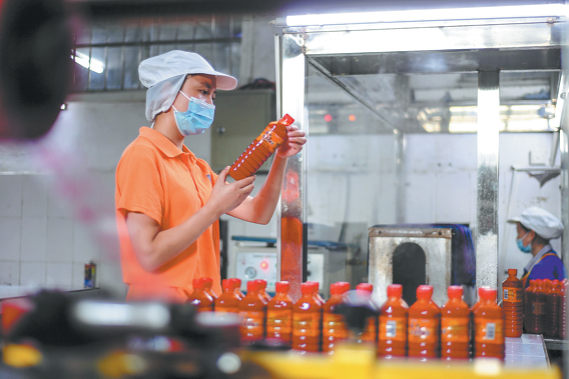
    In the culinary landscape of Chinese hotpot traditions, a distinctive sour flavor profile from Guizhou province is capturing national attention and taste buds. Unlike the familiar numbing spiciness of Sichuan hotpot, Guizhou’s signature sour soup hotpot offers a uniquely tangy fermentation-based broth that has evolved from regional specialty to national phenomenon.

    The fermentation process begins in massive earthen jars at production facilities like those operated by Yumeng Group in Kaili, where the traditional preparation methods meet modern demand. This sour soup base has achieved remarkable commercial success, ranking first in both positive reviews and repurchase rates on Tmall’s e-commerce platform as of December 1st.

    Social media platforms, particularly Douyin (China’s version of TikTok), have played a pivotal role in the dish’s popularity explosion. The hashtag “Guizhou sour soup” has amassed over 300 million views, with users sharing restaurant experiences across China and homemade recipe attempts from those seeking to recreate the distinctive flavor after visiting Guizhou.

    The epicenter of this culinary movement remains Kaili, located in the Qiandongnan Miao and Dong autonomous prefecture, where the aroma of fermentation permeates the air and sour soup establishments range from street stalls to full-service restaurants. The region’s cultural heritage intertwines with its culinary traditions, creating a food experience that transcends mere sustenance to become a cultural ambassador for Guizhou province.

    This growing national appreciation represents how regional Chinese cuisines are gaining wider recognition through digital platforms, transforming local specialties into national trends while maintaining their cultural authenticity and traditional preparation methods.

  • Turkiye, Hamas discuss 2nd phase of Gaza truce deal

    Turkiye, Hamas discuss 2nd phase of Gaza truce deal

    Turkish Foreign Minister Hakan Fidan convened with senior Hamas political bureau representatives in Ankara on Wednesday to advance discussions regarding the implementation of the second phase of the Gaza ceasefire agreement. According to a source within Turkey’s Foreign Ministry, the dialogue focused on overcoming obstacles preventing the transition to subsequent stages of the truce.

    The Hamas delegation asserted to Minister Fidan that they had fully complied with their obligations under the current ceasefire framework. They contended that Israel’s persistent military operations in Gaza represent a deliberate strategy to obstruct progress toward the agreement’s next phase. The officials further emphasized the critical insufficiency of humanitarian assistance reaching Gaza, highlighting urgent needs for medical supplies, construction materials for shelter, and fuel.

    Simultaneously, Israeli Defense Minister Israel Katz sparked international controversy with statements concerning Gaza’s future. During an address in the West Bank, Katz declared that Israeli military forces would maintain a permanent presence in Gaza, specifically referencing the deployment of Nahal units—military formations historically involved in establishing Israeli communities. Following immediate backlash and interpretation as advocating resettlement, Katz issued a clarifying statement: “The government has no intention of establishing settlements in the Gaza Strip.”

    Hamas spokesman Hazem Qassem condemned Katz’s initial remarks as a “clear violation of the ceasefire agreement” and fundamentally contradictory to the US-supported peace proposal. The Palestinian Foreign Ministry separately denounced Israel’s approval of 19 new settlements in the occupied West Bank as a “dangerous step” intensifying control over Palestinian territories. The ministry characterized this expansion as extending “apartheid policies,” eroding Palestinian rights, and systematically destroying prospects for stability and Palestinian statehood.

  • DPRK conducts test-fire of new-type anti-air missiles – official news agency

    DPRK conducts test-fire of new-type anti-air missiles – official news agency

    PYONGYANG – North Korea has successfully test-fired a newly developed high-altitude, long-range anti-aircraft missile system, according to an official report published Thursday by the state-run Korean Central News Agency (KCNA). The military exercise took place Wednesday in the East Sea (also known as the Sea of Japan) and was personally observed by North Korean leader Kim Jong-un.

    The test marks the inaugural operational assessment of the advanced anti-air missile system, designed to evaluate its tactical performance and technical specifications. KCNA stated that the launched missiles successfully struck their intended mock targets with precision, indicating a successful validation of the weapon’s guidance and interception capabilities.

    Officials characterized the launch as part of routine research and development activities conducted by the North Korean Missile Administration and its affiliated defense research institutes. The primary objective, as reported, is the ‘technical optimization’ of national air defense capabilities, suggesting an ongoing effort to modernize the country’s defensive military infrastructure.

    Kim Jong-un, who serves as both General Secretary of the Workers’ Party of Korea and President of State Affairs, monitored the test launch, underscoring the strategic importance Pyongyang places on advancing its missile and air defense technology. The development aligns with the country’s broader efforts to enhance its military readiness amid ongoing regional security concerns.

  • 8 killed as van carrying kids plunges into pond

    8 killed as van carrying kids plunges into pond

    A devastating vehicle accident in East China’s Jiangxi province resulted in eight fatalities on Tuesday afternoon, according to local authorities. The tragedy occurred when a van carrying children veered off a rural roadway and plunged into a pond in Pengze county, Jiujiang city.

    Initial reports from the Pengze County Public Security Bureau indicate the accident took place approximately at 4:00 PM along a rural thoroughfare in Xiangshui village, located within Dingshan township. Emergency response teams including police, fire rescue personnel, and medical services immediately deployed to the scene upon notification, conducting extensive search and recovery operations.

    Investigation findings reveal the vehicle was operated by a 49-year-old local resident identified only by her surname Luo. Preliminary evidence suggests the van unexpectedly departed from the road surface and entered an adjacent pond. All eight occupants, including the driver, succumbed to the incident despite rescue efforts.

    According to documentation from Shanghai-based Jiemian News, which cited local resident Tao, Luo served as the director of a privately-operated kindergarten in Dingshan town. The vehicle reportedly transported six children alongside an additional driver at the time of the catastrophic event.

    Authorities have initiated comprehensive investigations to determine the precise causation factors behind the accident while coordinating subsequent procedures and family notifications. The community has begun mourning the tragic loss that has deeply affected this rural region.

  • New energy needs amended law

    New energy needs amended law

    A senior Chinese legislator has urged comprehensive amendments to the nation’s Energy Conservation Law, arguing that current regulations fail to address the transformative shifts caused by rapid renewable energy expansion and digital economic growth. Xiao Jie, Vice-Chairman of the National People’s Congress Standing Committee, delivered this assessment during the legislature’s ongoing session, highlighting both significant achievements and persistent challenges in China’s energy efficiency journey.

    The legislative push follows extensive inspections conducted jointly by the national committee and provincial-level congresses across 12 regions, evaluating the law’s implementation since its 1998 enactment and 2007 revision. China has demonstrated remarkable progress, with national energy consumption per 10,000 yuan of GDP plunging approximately 43% from 2007 to 2024—equivalent to saving 2.3 billion metric tons of standard coal. Particularly since the 18th CPC National Congress in 2012, energy intensity has dropped 27.2%, positioning China among global leaders in efficiency improvement while maintaining 6.1% average annual economic growth against 3.3% energy consumption growth.

    Despite these achievements, Xiao identified critical gaps in the current legal framework. The existing law lacks specific provisions for emerging energy-intensive sectors including information technology, computing infrastructure, and energy storage systems. This regulatory vacuum results in insufficient legal authority and enforceable mandatory measures for these rapidly expanding domains. Additionally, the law fails to adequately cover renewable energy integration challenges, where installed capacity frequently exceeds grid absorption capabilities.

    The digital economy—now ranking second globally—presents particular urgency, with computing infrastructure electricity consumption growing nearly 20% annually during the 14th Five-Year Plan period, exceeding 250 billion kilowatt-hours yearly. Xiao emphasized that some regions continue struggling with controlling high-energy-consumption projects due to investment impulsivity, weak oversight, and redundant construction. He called for accelerated revisions through thorough research on implementation challenges and careful consideration of suggestions from law enforcement inspections, urging collective wisdom to achieve high-quality legislative updates that support China’s sustainable development goals.

  • Ban on mercury thermometers to take effect soon

    Ban on mercury thermometers to take effect soon

    China will enforce a comprehensive prohibition on mercury-containing thermometers and blood pressure monitoring devices effective January 1, 2026, marking a significant milestone in the nation’s environmental and public health protection efforts. The ban implements a 2017 interagency directive designed to fulfill China’s commitments under the Minamata Convention on Mercury, an international treaty ratified to safeguard human health and ecosystems from mercury’s detrimental effects.

    For generations, mercury thermometers have been ubiquitous in Chinese households due to their cost-effectiveness, operational simplicity, and reliable performance across diverse environmental conditions. However, each device contains approximately one gram of mercury—a potent neurotoxin classified by the World Health Organization among the top ten chemicals of major public health concern. The fragile glass construction of these instruments creates substantial spill risks, with evaporated mercury vapor posing severe threats to neurological, digestive, and immune systems through inhalation or dermal exposure.

    Health authorities emphasize that proper spill management can mitigate immediate dangers. Recommended protocols include immediate ventilation of affected areas, careful collection of mercury beads using stiff paper or cardboard, and proper disposal at designated hazardous waste facilities. Crucially, vacuum cleaners or brooms should never be employed as they disperse toxic particles and amplify exposure risks.

    Medical experts affirm that advanced alternatives offer safer and equally effective solutions. Dr. Li Tongzeng of Beijing Youan Hospital’s infectious disease department confirms that infrared forehead thermometers and tympanic (ear) thermometers provide accurate readings when used according to manufacturer guidelines. For traditional measurement preferences, mercury-free devices utilizing gallium-indium-tin alloys deliver precise temperature assessment without toxic hazards.

    This regulatory shift represents China’s proactive approach to transforming environmental challenges into public health opportunities, aligning global treaty obligations with domestic health protection initiatives while promoting technological innovation in medical devices.