标签: Asia

亚洲

  • Prime minister hopeful Tarique Rahman arrives in Bangladesh

    Prime minister hopeful Tarique Rahman arrives in Bangladesh

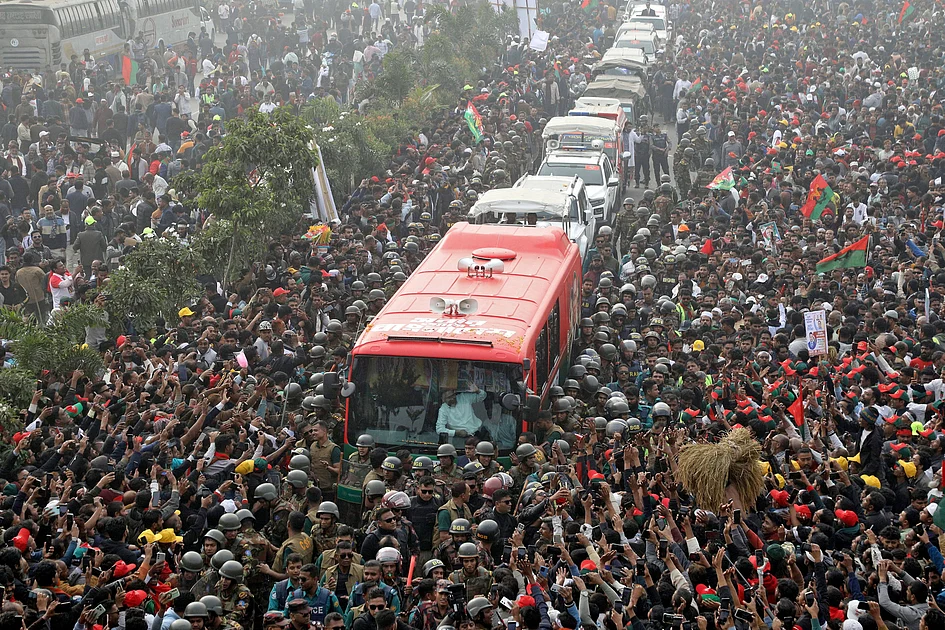
    In a watershed moment for Bangladeshi politics, Tarique Rahman, the exiled opposition leader and heir apparent to the Bangladesh Nationalist Party (BNP), made a dramatic return to Dhaka on Thursday after 17 years of self-imposed exile. The politically charged homecoming attracted massive crowds of enthusiastic supporters who had been gathering since early morning, transforming the capital’s streets into a sea of banners and festoons bearing Rahman’s image.

    The emotional significance of the occasion was palpable as Rahman, accompanied by his wife and daughter, performed a symbolic gesture upon arrival—removing his shoes to touch and collect soil from his homeland in a display of reverence. The BNP’s acting chairman, who had resided in London since 2008 citing political persecution, was greeted by senior party leaders at Hazrat Shahjalal International Airport before departing under tight security.

    Rahman’s return occurs against a backdrop of profound political upheaval following the ouster of former Prime Minister Sheikh Hasina, whose 15-year autocratic rule ended with a student-led uprising last year. The upcoming February 12 general election represents the first electoral contest since Hasina’s departure, with Rahman positioned as the BNP’s prime ministerial candidate should the party secure a majority.

    The political landscape has been further complicated by recent unrest triggered by the assassination of student leader Sharif Osman Hadi, a prominent critic of India, whose death sparked violent protests including attacks on media outlets perceived as pro-Indian and the Indian High Commission in Chattogram. These events have strained diplomatic relations with India, historically Bangladesh’s ally, which is currently considering extradition requests for the exiled Hasina, convicted in absentia for her administration’s crackdown on protesters.

    Adding to the tensions, religious divisions surfaced recently when a Hindu garment worker was lynched by a mob over blasphemy allegations on December 18, reigniting anti-India sentiments in the predominantly Muslim nation.

    Rahman’s legal standing has shifted significantly since Hasina’s fall from power, with courts acquitting him of the most serious charge—a life sentence connected to a 2004 grenade attack on a political rally, which he consistently denied. His return symbolizes hope for many supporters like former BNP lawmaker Jahan Panna, who described him as ‘the symbol of hope for this country’ capable of ending the current ‘cycle of anarchy.’

    The BNP’s main rival, Hasina’s Awami League party, has been barred from contesting the upcoming elections, potentially clearing the path for a BNP victory. Meanwhile, Rahman’s ailing mother, former Prime Minister Khaleda Zia, remains hospitalized in Dhaka after being admitted to intensive care shortly after vowing to campaign in November.

    During his exile, Rahman maintained political engagement through social media and significant meetings, including a June discussion in London with Nobel Peace Prize laureate Muhammad Yunus, who leads the interim government until the February elections.


  • New beetle discovered in Potala Palace structures

    New beetle discovered in Potala Palace structures

    Scientists have made a significant entomological discovery within the ancient wooden structures of Tibet’s Potala Palace, identifying a previously unknown genus and species of beetle. The finding, detailed in an international zoological taxonomy journal, represents a major advancement in Coleoptera research with important implications for cultural heritage preservation.

    The insect, named Lhasella potala, measures between 4.8 to 6.9 millimeters and exhibits a distinctive reddish-brown coloration. Research team member Zhou Xuan, a PhD student, confirmed the species’ unique taxonomic status through comprehensive morphological analysis, anatomical examination, and DNA barcoding techniques.

    This discovery has revealed potential conservation challenges, as the beetle’s wood-boring larvae may pose structural risks to the UNESCO World Heritage site. Subsequent investigations have detected the species in multiple historical locations throughout Lhasa, indicating a broader distribution than initially presumed.

    Kunga Tashi, deputy director of the Potala Palace Management Office, emphasized the critical importance of integrating ecological research with cultural conservation methodologies. This interdisciplinary approach aims to simultaneously protect both biodiversity and invaluable heritage structures.

    The research collaboration brought together experts from Peking University, the Xizang Plateau Institute of Biology, and the Potala Palace Management Office. Scientists now plan to conduct further studies on the beetle’s biology and behavior to develop more effective management strategies for historical preservation sites across the region.

  • Dubai motorist jailed for drunk driving, injuring 2 in car crash

    Dubai motorist jailed for drunk driving, injuring 2 in car crash

    Dubai’s judicial authorities have sentenced an Asian motorist to imprisonment following a serious traffic incident involving alcohol impairment and signal violation that resulted in two casualties. The Public Prosecution disclosed on December 25, 2025, that the convicted individual operated a vehicle while intoxicated, proceeding through a red traffic signal before colliding with another car, causing physical injuries to two persons and property damage.

    The prosecution brought multiple charges against the driver, including alcohol consumption, driving under the influence of intoxicants, inflicting bodily harm, and property destruction due to traffic signal disobedience. Pending comprehensive investigation, authorities have ordered the defendant’s detention with intentions to apply maximum penalties under the United Arab Emirates’ stringent traffic regulations.

    Recent legislative amendments in the UAE have substantially elevated penalties for impaired driving offenses. Current statutes mandate fines reaching AED 200,000 for operating vehicles under the influence of narcotics or psychotropic substances. The judicial system employs escalating consequences for recidivists, beginning with imprisonment and minimum AED 30,000 fines for initial offenses alongside six-month license suspensions. Second violations trigger one-year license cancellations, while third offenses result in permanent license revocation accompanied by substantial financial penalties.

    This case aligns with Dubai’s pattern of strict enforcement, exemplified by last year’s sentencing of a motorist to two years imprisonment with AED 100,000 in fines for combined drug impairment and traffic violations. In another precedent, an Arab woman received conviction earlier this year for causing a fatal alcohol-impaired accident in Dubai’s Al Qudra area, resulting in AED 10,000 fines and AED 200,000 blood money payments to victims’ families following a multi-vehicle collision.

  • Investigators dismantle 200 professional criminal gangs, uncovering $4b illegal funds

    Investigators dismantle 200 professional criminal gangs, uncovering $4b illegal funds

    Chinese authorities have delivered a massive blow to organized financial crime networks, announcing the dismantling of over 200 professional criminal gangs and the uncovering of nearly 30 billion yuan ($4.27 billion) in illicit funds. The sweeping nationwide operation, revealed at a Ministry of Public Security press conference on Thursday, represents one of the most significant financial crime crackdowns in recent years.

    The six-month coordinated campaign, jointly initiated by the Ministry of Public Security and the National Financial Regulatory Administration, targeted 17 key provinces and municipalities across China. Investigators filed more than 1,500 cases as part of a comprehensive effort to purify the country’s financial market ecosystem from illegal and quasi-illegal financial activities.

    Hua Liebing, Director of the ministry’s Economic Crime Investigation Bureau, detailed the sophisticated nature of these criminal operations. ‘Prominent financial consumption disputes in recent years have fueled the proliferation of illegal intermediary chaos,’ Hua stated. ‘These operations have evolved into well-established industrial chains that severely infringe on the legitimate rights and interests of financial consumers.’

    The criminal networks demonstrated alarming levels of organization, featuring complete chains covering false advertising, regulatory evasion tutorials, standardized script customization, forgery of counterfeit certificates, and professional negotiation representation services. The schemes have attracted increasingly professional participants, including lawyers and collection agency professionals who have joined criminal groups driven by profit motives.

    Criminal methodologies have grown notably more covert, with offenders leveraging advanced technologies and AI-generated tools to evade detection. Hua emphasized that as regulatory pressure intensifies, these financial crimes are expected to become even more hidden with increasingly sophisticated and variable modus operandi.

    The Ministry has pledged to strengthen collaboration with financial regulators, maintain regular crackdowns and deterrence measures, participate in rectifying illegal financial intermediaries, and contribute to the high-quality development of China’s financial industry.

  • Algeria passes law declaring French colonisation a crime

    Algeria passes law declaring French colonisation a crime

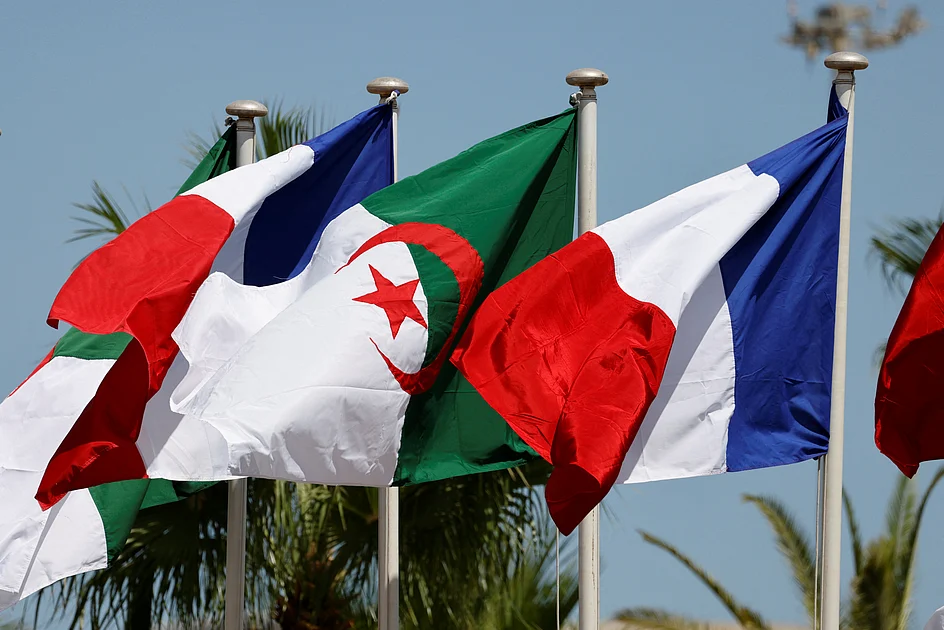
    In a historic parliamentary session, Algerian lawmakers have unanimously enacted legislation formally classifying France’s colonial occupation as criminal acts. The move represents a significant escalation in ongoing diplomatic tensions between the two Mediterranean nations.

    During the emotionally charged vote, legislators adorned in national colors chanted patriotic slogans while approving measures that declare France bears ‘legal responsibility for its colonial past in Algeria and the tragedies it caused.’ The comprehensive legislation specifically enumerates colonial-era violations including nuclear testing programs, extrajudicial executions, systematic torture practices, and large-scale resource exploitation.

    Parliament Speaker Brahim Boughali characterized the legislation as reinforcing that ‘Algeria’s national memory is neither erasable nor negotiable’ in statements to the state-run APS news agency. The law formally establishes that ‘full and fair compensation for all material and moral damages’ constitutes an inherent right of the Algerian nation.

    The French Foreign Ministry immediately condemned the legislative action as counterproductive to bilateral relations. An official spokesperson indicated that while France refrains from commenting on Algerian domestic politics, the move contradicts ongoing efforts to facilitate historical reconciliation through academic channels, referencing President Emmanuel Macron’s establishment of a historian commission to examine the colonial period.

    Historical context underscores the sensitivity of these developments. France maintained colonial control over Algeria from 1830 until the conclusion of the bloody independence war in 1962. The conflict’s casualty estimates remain disputed, with Algerian officials citing 1.5 million fatalities while French historians generally acknowledge approximately 500,000 deaths.

    Academic observers note that while the legislation lacks international enforceability, it carries substantial symbolic importance. University of Exeter colonial history researcher Hosni Kitouni observed that the move ‘marks a rupture in the relationship with France in terms of memory,’ reflecting deteriorating diplomatic relations that began with France’s endorsement of Moroccan sovereignty over Western Sahara, where Algeria supports independence movements.

    The legislative action occurs alongside other bilateral tensions, including the recent imprisonment and subsequent pardon of French-Algerian writer Boualem Sansal following German diplomatic intervention.

  • In pictures: How Dubai is celebrating Christmas this year

    In pictures: How Dubai is celebrating Christmas this year

    Dubai has transformed into a winter wonderland, showcasing its multicultural character through vibrant Christmas festivities observed on December 25th, 2025. The emirate, known for its cultural diversity and religious tolerance, has embraced the holiday season with remarkable displays of festive spirit.

    Major shopping malls including Dubai Mall and Mall of the Emirates have installed spectacular Christmas decorations, featuring towering Christmas trees adorned with thousands of lights and ornaments. Luxury hotels along Sheikh Zayed Road have created elaborate gingerbread houses and Christmas-themed afternoon teas, attracting both residents and tourists seeking seasonal experiences.

    Community events have flourished across the city, with Christmas markets offering handmade crafts and traditional holiday treats. Various churches in Dubai have held special midnight masses and Christmas Day services, accommodating the city’s significant Christian population and visitors. Restaurants throughout Dubai have introduced special Christmas menus, blending traditional Western holiday dishes with local culinary influences.

    The festive atmosphere extends to Dubai’s famous landmarks, with Burj Khalifa featuring special Christmas-themed light shows and the Dubai Fountain performing choreographed routines to classic holiday music. Public parks and communities have organized Christmas-themed activities for children, including visits from Santa Claus and holiday workshops.

    This celebration demonstrates Dubai’s commitment to cultural inclusivity while maintaining respect for local traditions and customs. The city’s approach to Christmas celebrations reflects its position as a global hub where diverse cultures coexist and celebrate their traditions harmoniously.

  • Australia: Car with Hanukkah sign set ablaze in Melbourne

    Australia: Car with Hanukkah sign set ablaze in Melbourne

    Australian authorities have launched a criminal investigation into a suspected antisemitic arson attack targeting a vehicle displaying Hanukkah decorations in Melbourne. The incident occurred during the early hours of Thursday morning in the residential neighborhood of St Kilda East, where an unoccupied car bearing a “Happy Chanukah” sign on its roof was intentionally set ablaze while parked in a private driveway.

    Victoria Police confirmed the fire displayed suspicious characteristics consistent with targeted hate crime. Security footage and eyewitness accounts are being analyzed as detectives pursue an individual believed to possess critical information regarding the incident. Residents of the adjacent property were temporarily evacuated as a precautionary measure, though no physical injuries were reported.

    This event occurs amidst heightened tensions following the December 14 mass shooting at a Hanukkah celebration on Bondi Beach that resulted in 15 fatalities. In response to these escalating incidents, Australian legislative bodies are actively reviewing stricter hate crime legislation with enhanced penalties.

    Rabbi Effy Block of the local Chabad of St Kilda community characterized the attack as part of a disturbing pattern of antisemitic violence. “While we are grateful no physical harm came to individuals, this represents a continuing escalation that makes our community feel unsafe in their own homes and country,” he stated. The investigation remains ongoing with forensic teams examining the scene for additional evidence.

  • Fuel shortage forces Gaza hospital to halt services as Israeli siege deepens

    Fuel shortage forces Gaza hospital to halt services as Israeli siege deepens

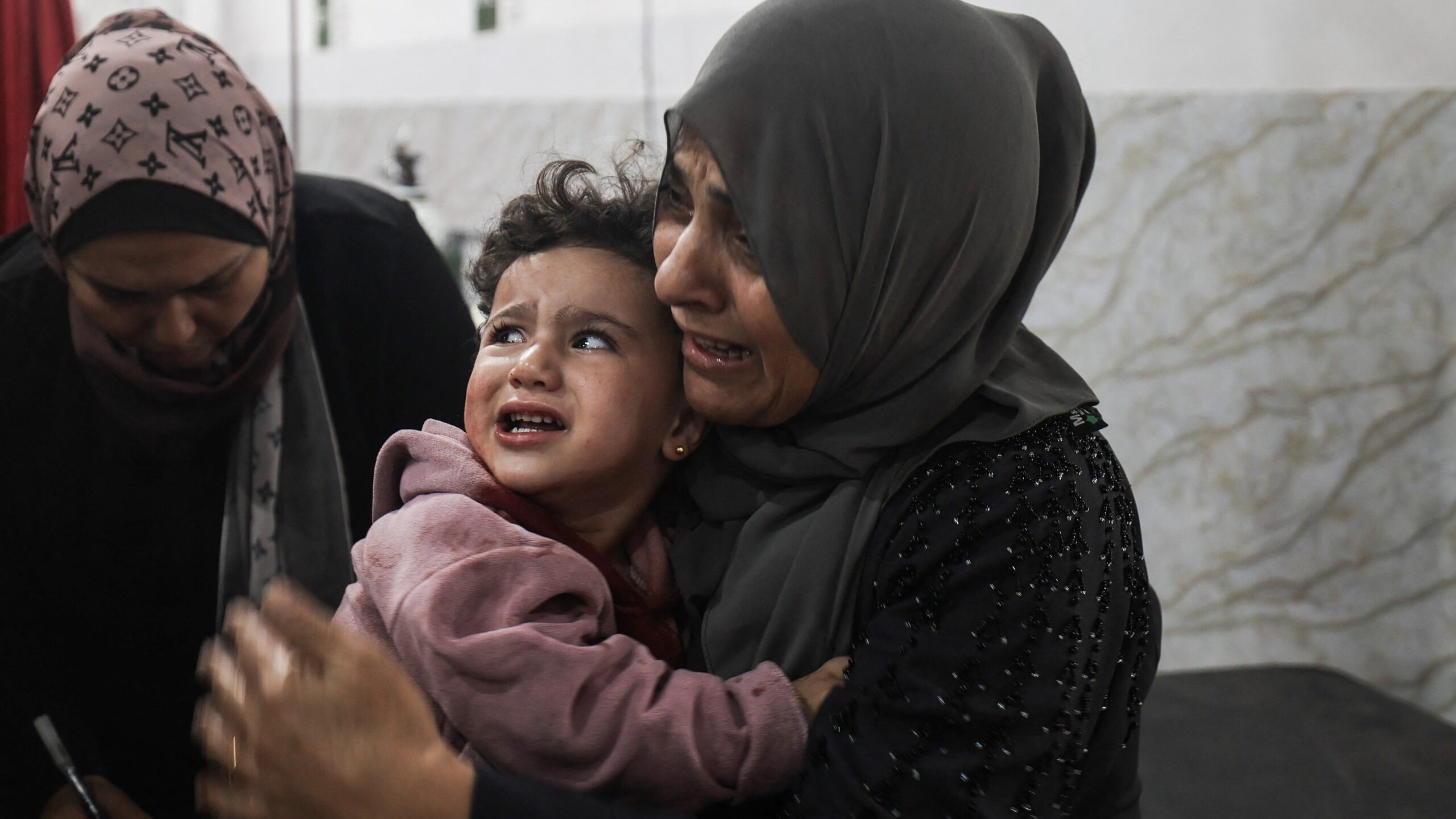
    A critical medical facility in the Gaza Strip has been compelled to halt most operations due to severe fuel shortages, exacerbating the humanitarian crisis in the conflict-ravaged territory. Al-Awda Hospital, situated in the Nuseirat refugee camp, announced the suspension of services on Thursday despite a ceasefire agreement intended to facilitate aid delivery.

    Hospital director Ahmed Muhanna conveyed to Al Jazeera Mubasher that staff made the decision ‘with a heavy heart’ as dwindling fuel supplies rendered normal operations impossible. The institution, which typically handles approximately 1,500 births monthly—representing nearly 30% of all deliveries in Gaza—has been a lifeline for maternal healthcare and malnutrition treatment.

    The suspension affects all but the most critical emergency and maternity cases, with at least 30 malnourished children requiring transfer to other medical facilities. Muhanna warned that complete cessation of services would trigger ‘a real crisis,’ appealing for international intervention to address the fuel shortage.

    This development occurs despite the October ceasefire agreement that obligated Israel to permit 600 aid trucks—including 50 fuel trucks—into Gaza daily. However, the Gaza-based Government Media Office reports only about 10% of the agreed fuel supply has reached the territory since the truce began. The resulting shortages have paralyzed hospitals, bakeries, and water treatment plants across the Strip.

    Concurrently, violence has persisted despite the ceasefire, with Israeli forces reportedly killing a Palestinian man in Beit Lahia on Thursday. Prime Minister Benjamin Netanyahu had previously threatened escalated attacks, accusing Hamas of violating the ceasefire and a proposed peace plan. Hamas denied involvement in an incident that wounded an Israeli soldier, suggesting it resulted from explosive remnants left by Israeli forces.

  • China sets a world record in maglev technology

    China sets a world record in maglev technology

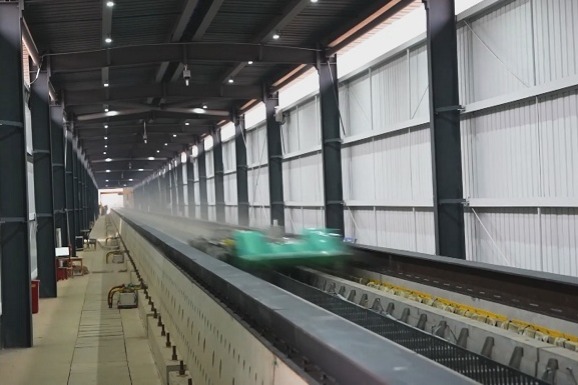
    China has established a new global benchmark in magnetic levitation technology by successfully accelerating a ton-scale maglev vehicle to 700 kilometers per hour within a remarkable two-second timeframe. This groundbreaking achievement, reported by China Central Television, represents the world’s fastest performance by a superconductive electric maglev system.

    The historic test was conducted on a 400-meter specialized track where researchers from the National University of Defense Technology demonstrated unprecedented capabilities in ultra-high-speed transportation. The team not only achieved the record-breaking velocity with substantial payload capacity but also ensured complete operational safety through controlled deceleration and precise stopping mechanisms.

    This technological milestone culminates a decade of dedicated research and development efforts focused on overcoming critical engineering challenges. The research team has made significant advancements in multiple core areas including ultra-high-speed electromagnetic propulsion systems, electric suspension guidance technology, transient high-power energy storage inverters, and high-field superconducting magnets.

    The breakthrough positions China at the forefront of ultra-high-speed maglev technology worldwide, creating new possibilities for future vacuum tube transportation systems. Beyond terrestrial transport applications, the technology offers innovative solutions for aerospace boost launch mechanisms and advanced experimental testing methodologies.

    Industry experts anticipate that subsequent technological iterations and industrial applications derived from this achievement will generate substantial momentum for China’s aerospace and rail transit sectors, potentially revolutionizing high-speed transportation paradigms globally.

  • China’s highest geological science prize awarded to 15 scholars

    China’s highest geological science prize awarded to 15 scholars

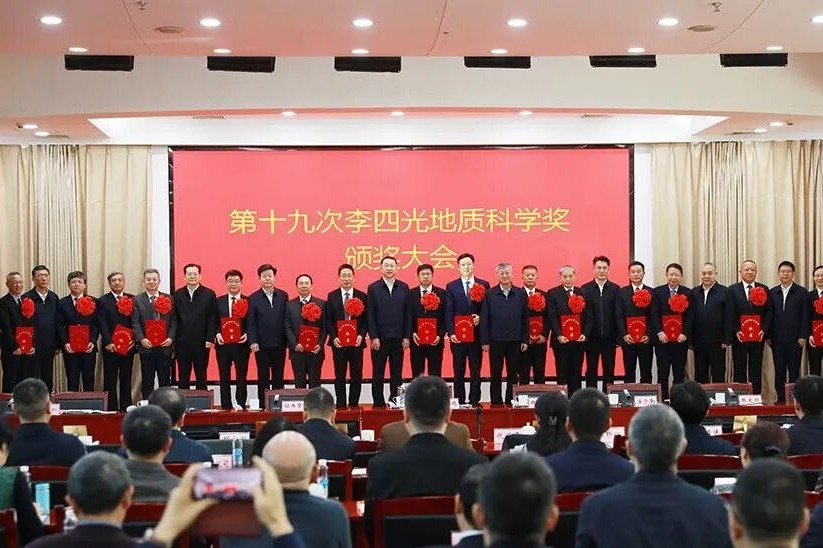
    Fifteen distinguished geoscientists have received China’s most prestigious geological honor, the Li Siguang Geological Science Award, in a ceremony held recently in Beijing. The awards recognize exceptional contributions to both field research and technological advancements within the geological sciences.

    The 19th edition of this biennial award distinguished eight recipients with the Field Work Award and seven scholars with the Research Award. The ceremony highlighted the critical role of geological work in China’s current development phase, particularly in ensuring national energy security and achieving scientific self-reliance.

    Natural Resources Minister Guan Zhiou congratulated the awardees and emphasized the evolving nature of modern geology. “Contemporary geology has transformed beyond a singular discipline into an integrated field combining artificial intelligence, big data, and advanced manufacturing technologies,” Minister Guan stated. He particularly stressed the importance of challenging conventional theories in deep-earth exploration projects to foster groundbreaking discoveries.

    The minister called upon geological professionals to embody the patriotic spirit and innovative mindset of Li Siguang, the renowned Chinese geologist commemorated by this award. He described innovation as “the primary driving force” advancing geological endeavors.

    Among the honorees, Chinese Academy of Sciences academician Dai Shifeng expressed gratitude for the national research system’s support and the foundational work of previous generations. Professor Dai committed to pursuing more systematic research on metallogenic mechanisms of key minerals within coal series and their practical applications. He also emphasized mentoring young scientific talent to ensure the continuation of Li Siguang’s legacy among new generations of geologists.

    Established to honor the scientific spirit of Li Siguang, this prestigious award serves as both recognition of exceptional achievement and inspiration for continued innovation in China’s geological community.