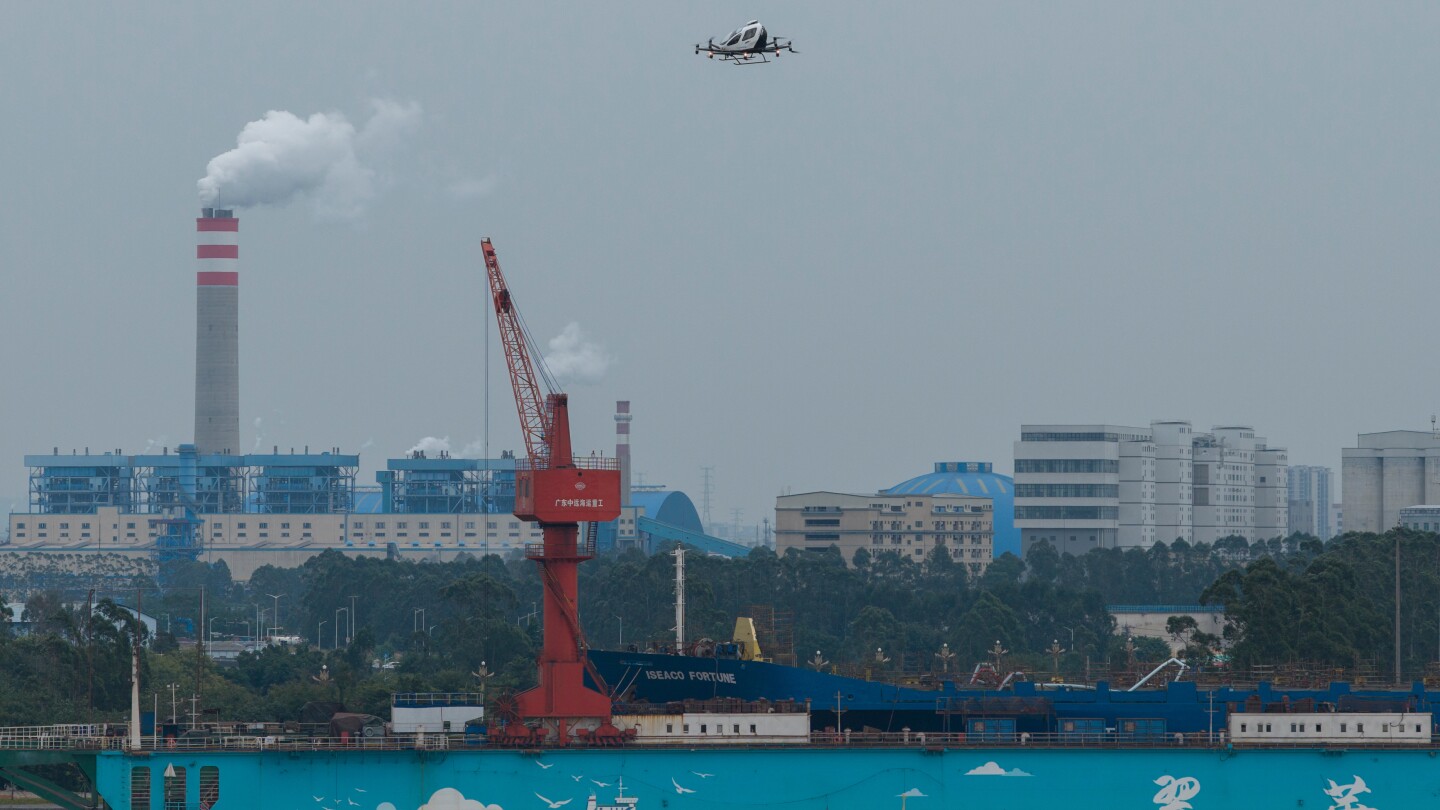
In the bustling innovation zones of Guangzhou and Shenzhen, China’s technological prowess is taking to the skies. EHang, a leading flying taxi manufacturer, recently showcased its unmanned, oval-shaped craft hovering over a riverside area, resembling a scene straight out of a sci-fi movie. Meanwhile, in Shenzhen, food-delivery drones have become a daily convenience and a tourist attraction, despite their higher costs. Polish tourist Karolina Trzciańska marveled at the novelty of receiving her bubble tea via drone, calling it a ‘super fun’ experience.
标签: Asia
亚洲
-

Israeli military says killed Hezbollah chief of staff in Beirut strike
In a significant escalation of tensions, the Israeli military announced the successful elimination of Hezbollah’s chief of general staff, Haitham Ali Tabatabai, in a targeted strike on a residential building in Beirut. The operation, conducted on Sunday, November 23, 2025, occurred despite an ongoing ceasefire. According to the Israeli military’s official statement, the strike was aimed at neutralizing a high-ranking terrorist figure, marking a bold move in the region’s volatile security landscape. The Lebanese health ministry reported that the attack resulted in at least five fatalities and 28 injuries, underscoring the human cost of the operation. This incident has raised concerns about the potential for renewed hostilities between Israel and Hezbollah, a powerful Lebanese militant group. The strike in Beirut, a city already grappling with political and economic instability, has further heightened tensions in the Middle East. Analysts suggest that this targeted killing could have far-reaching implications for regional security and diplomatic relations, particularly in the context of the fragile ceasefire. The international community is closely monitoring the situation, with calls for restraint and de-escalation from various global leaders. The incident also highlights the ongoing complexities of the Israel-Lebanon conflict, which has seen periodic flare-ups despite attempts at peacekeeping and mediation.
-

Ajman Titans outplay Royal Champs in Abu Dhabi T10
In a thrilling display of cricketing prowess, the Ajman Titans secured a commanding seven-wicket victory over the Royal Champs in the 2025 Abu Dhabi T10 tournament. The Titans, led by Rilee Rossouw’s explosive 37 runs off 20 balls, chased down a target of 110 runs in just 8.2 overs, marking their second consecutive win after two initial setbacks. Meanwhile, the Royal Champs suffered their fourth straight defeat in the competition. The Titans’ chase was bolstered by a flying start from Aneurin Donald, who smashed two fours and a six in the opening over before being dismissed by Daniel Sams. Alex Hales (21 off 10) and Rossouw maintained the momentum, with Rossouw top-scoring with four boundaries and two sixes. Moeen Ali sealed the victory in style, finishing unbeaten with 29 runs off 10 deliveries, including two sixes and three fours. Earlier, the Royal Champs posted a competitive total of 109/5, thanks to a strong 80-run partnership between Jason Roy (42 off 25) and Brandon McMullen (43 off 26). However, Wasim Akram’s exceptional bowling (2/7) and Chris Green’s late strikes restricted their innings. In another match, Quetta Qavalry edged past Aspin Stallions by eight runs, defending their total of 100/7.
-

Israel targets Hezbollah chief of staff in deadly Beirut strike
In a significant escalation of tensions, Israel conducted a targeted air strike in Beirut on Sunday, aiming at Hezbollah’s chief of staff. The attack, which occurred in the densely populated Haret Hreik area of Beirut’s southern suburbs, resulted in five fatalities and 28 injuries, according to Lebanon’s health ministry. Hezbollah confirmed that a senior commander was targeted, though the Israeli government has not disclosed the identity of the individual. The strike hit the third and fourth floors of a nine-story building, leaving debris scattered across the street and causing significant damage to nearby vehicles. Rescue workers swiftly evacuated a wounded woman on a stretcher, while Lebanese soldiers secured the site. The Israeli Prime Minister’s office stated that the operation was aimed at disrupting Hezbollah’s rearmament efforts, emphasizing Israel’s commitment to acting decisively against threats. Hezbollah officials condemned the attack, labeling it as crossing a ‘new red line.’ This incident marks the first strike on Beirut’s southern suburbs since June 5, when Israel targeted a Hezbollah drone factory. The ongoing conflict has placed Lebanon under increasing pressure to disarm Hezbollah, a demand the group has consistently rejected. Lebanese President Joseph Aoun has called for international intervention to halt Israeli attacks on the country.
-

Bangladesh presses India on ousted leader Sheikh Hasina’s extradition
Bangladesh has formally requested India to extradite former Prime Minister Sheikh Hasina, who has been in hiding in India since her autocratic regime was overthrown in August 2024. The 78-year-old leader was recently sentenced to death for crimes against humanity related to a deadly crackdown on a student-led uprising during her tenure. The Bangladeshi government, led by interim Foreign Affairs Minister Touhid Hossain, sent its third official extradition request on Friday, urging India to comply under a bilateral treaty. India’s foreign ministry acknowledged the court verdict but has yet to respond to the latest request. The political landscape in Bangladesh remains unstable, with violence escalating ahead of the 2026 elections. The United Nations estimates that up to 1,400 people were killed in the crackdowns that defined Hasina’s trial. India’s historical support for Hasina has strained relations between the two nations, though recent diplomatic engagements, including a meeting between their national security advisers, suggest a slight easing of tensions.
-

Chinese land, US radar and ties to Taiwan: The geopolitics rattling a tiny Pacific nation
Nestled in the western Pacific, Palau’s serene waters and vibrant marine life once drew throngs of tourists, particularly from China. However, the tourism boom that peaked between 2015 and 2017 has since collapsed, leaving local businesses struggling. The decline, according to Palauan officials, was no accident but a calculated move by Beijing to pressure Palau into severing ties with Taiwan. China, which views Taiwan as a breakaway province, has long sought to isolate the island diplomatically. Palau remains one of the few nations recognizing Taiwan, a stance that has placed it at the center of a geopolitical tug-of-war involving China, Taiwan, and the United States.
-

Philippines deports 23 Chinese nationals over illegal gaming operations, cyberfraud
In a significant move against illegal activities, the Philippines’ Bureau of Immigration (BI) deported 23 Chinese nationals on November 21, 2025, for their involvement in illegal Philippine Offshore Gaming Operations (POGO) and cyberfraud. The individuals were found to have violated multiple immigration laws, including participation in POGO-related activities, running fraudulent schemes, and being wanted criminals in their home country. The deportees were sent on a Philippine Airlines flight from Ninoy Aquino International Airport to Shanghai Pudong International Airport. Immigration Commissioner Joel Viado emphasized that additional arrests and deportations are anticipated as authorities intensify efforts to dismantle illegal online gaming facilities and scam operations. This crackdown aligns with President Ferdinand Marcos Jr.’s 2024 State of the Nation Address, where he announced a nationwide ban on POGOs due to their association with human trafficking, money laundering, and organized crime. The ban was formalized on October 29, 2025, with the signing of Republic Act No. 12312, also known as the Anti-Pogo Act of 2025, which prohibits all offshore gaming operations and revokes existing visas and work permits of foreign POGO employees.
-
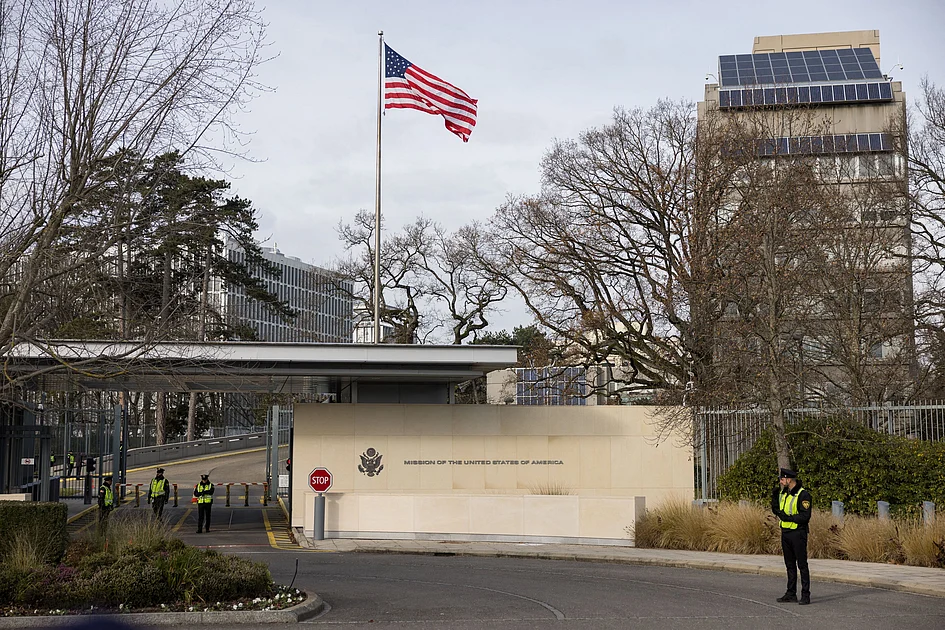
Trump blasts Ukraine for ‘zero gratitude’ to US as talks start
US President Donald Trump has once again lashed out at Ukraine, accusing its leadership of showing ‘zero gratitude’ for Washington’s support in its conflict with Russia. This criticism came as top US and Ukrainian officials convened in Geneva to discuss a potential peace proposal aimed at ending the ongoing war. Trump voiced his frustrations on his Truth Social platform, labeling the conflict a ‘human catastrophe’ and taking aim at his predecessor, Joe Biden, while notably refraining from directly condemning Moscow. Trump’s remarks underscore his longstanding dissatisfaction with the war, which erupted in 2022 when Russia launched a full-scale invasion of Ukraine, resulting in significant territorial losses and widespread destruction. During his presidential campaign last year, Trump had promised to broker peace within 24 hours, but his sporadic diplomatic efforts have yielded little progress. He now faces criticism from within his own party over a 28-point plan being discussed in Geneva, which some argue could favor Russia’s war objectives. While Trump has expressed disappointment in Russian President Vladimir Putin, he has rarely criticized him directly, instead focusing his ire on Ukrainian President Volodymyr Zelensky. In his recent social media post, Trump also criticized European nations for continuing to purchase Russian oil and derided Biden as ‘crooked Joe’ for providing Ukraine with military aid. Zelensky, however, has consistently expressed gratitude for the substantial US military support, which has been crucial in Ukraine’s ongoing defense against Russian forces.
-

Japan’s high-stakes gamble to turn island of flowers into global chip hub
Hokkaido, Japan’s northernmost island, has long been celebrated for its agricultural prowess and tourism appeal. However, the region is now poised to become a global epicenter for advanced semiconductor production, thanks to a multi-billion-dollar investment by the Japanese government and key industry players. Spearheading this ambitious transformation is Rapidus, a government-backed company supported by corporate giants like Toyota, Softbank, and Sony. Rapidus aims to establish Japan’s first cutting-edge chip foundry in decades, with a $12 billion semiconductor factory under construction in Chitose, Hokkaido. The company has already achieved a significant milestone by successfully producing prototype 2-nanometer (2nm) transistors, a feat matched only by industry leaders TSMC and Samsung. This breakthrough positions Rapidus as a potential contender in the $600 billion global semiconductor market. The selection of Chitose was strategic, leveraging its robust infrastructure, natural beauty, and lower earthquake risk. Rapidus CEO Atsuyoshi Koike emphasized the importance of partnerships, particularly with IBM, in achieving this technological leap. The company is on track to mass-produce 2nm chips by 2027, though challenges remain in achieving the necessary yield and quality to compete with established players. Japan’s broader economic challenges, including a shrinking population and a shortage of semiconductor engineers, add complexity to this endeavor. However, the government’s commitment to revitalizing the semiconductor industry is evident, with $27 billion invested between 2020 and early 2024, and a $65 billion package unveiled in late 2024 to support AI and semiconductor development. This initiative is part of Japan’s strategy to reduce reliance on foreign suppliers and regain its former dominance in the global semiconductor market. The success of Rapidus could not only transform Hokkaido’s economy but also position Japan as a formidable player in the high-stakes semiconductor race.
-

UAE women leaders back AI as key to gender equality amid regional push for inclusion
Women leaders in the United Arab Emirates (UAE) are increasingly viewing artificial intelligence (AI) as a pivotal force in advancing gender equality within the technology sector. Despite persistent structural challenges, a recent survey by Cloudera reveals that 91% of female IT leaders in the UAE anticipate achieving gender parity in AI leadership within the next five years. This optimism underscores the transformative potential of AI in fostering a more inclusive tech landscape. The survey highlights that 88% of respondents believe AI will play a crucial role in promoting gender balance, while an equal percentage are confident that women will significantly influence future AI strategies and governance. However, concerns remain. Nearly half (46%) of the respondents expressed worries about the scarcity of women in senior AI roles, and 44% fear that underrepresentation could lead to biases being embedded into AI systems. Additionally, 52% identified limited opportunities at the top as a major hurdle, and 84% emphasized the need for organizations to provide targeted AI training for women. Eman Gammoh, Head of AI at Arab Bank, remarked, ‘Women are not only participating; we are key drivers, fundamentally shaping the future of AI strategy and governance.’ Manasi Vartek, Chief AI Architect at Cloudera, stressed the importance of a unified data foundation and targeted training for women to ensure trustworthy AI. The UAE’s efforts align with broader regional initiatives. The UAE Gender Balance Council has achieved significant milestones, with women constituting 70% of university graduates and 56% of STEM graduates at public universities. Saudi Arabia has also surpassed its Vision 2030 target for female labor force participation, reaching 36.3% in early 2025. Corporate strategies are evolving, with 78% of Middle Eastern women business leaders expressing confidence in growth, though nearly half seek clearer AI and ESG strategies. Programs like She Leads 2025 are equipping women entrepreneurs across the Middle East and North Africa (MENA) with AI skills and leadership training, fostering a regional network for inclusive innovation. Despite these advancements, two-thirds of respondents believe gender equality is often treated as a ‘tick-box exercise,’ and 64% cite limited access to upskilling as a critical bottleneck. The Middle East’s tech ambitions are clear, with women increasingly at the forefront of this transformation. However, as AI reshapes industries, the question remains whether structural reforms will keep pace with technological advancements.