标签: Asia

亚洲

  • Will Donroe Doctrine really cut China’s Western Hemisphere clout?

    Will Donroe Doctrine really cut China’s Western Hemisphere clout?

    The Trump administration’s newly unveiled National Security Strategy contains a potentially transformative policy shift that extends beyond its anticipated Asia-focused provisions. While the document’s Asia section reiterates familiar calls for rebalancing trade relations and reducing mutual economic dependence with China, the Western Hemisphere segment introduces what analysts have termed the “Donroe Doctrine”—a more immediate strategic concern for Beijing.

    This doctrine explicitly commits to denying “non-Hemispheric competitors” the ability to position forces, control strategic assets, or maintain threatening capabilities within the Western Hemisphere. Most significantly, it pledges to “make every effort to push out foreign companies that build infrastructure in the region”—a clear reference to China’s substantial investments despite avoiding direct naming.

    China has invested approximately $300 billion in Latin American infrastructure projects, including critical energy assets. Chinese companies currently provide electricity to Lima, Peru, and distribute two-thirds of Chile’s electrical power. The state-owned COSCO’s multi-billion dollar port project in Chancay, Peru—proximate to a U.S.-funded naval base upgrade—represents particularly strategic infrastructure that enhances Brazilian agricultural exports while raising U.S. military intelligence concerns.

    The administration demonstrates seriousness through recent actions, including Panama’s Supreme Court voiding a Hong Kong company’s contract to operate ports at both ends of the Panama Canal following U.S. pressure. The document explicitly references enforcing a modernized Monroe Doctrine to restore American hemispheric preeminence, suggesting willingness to employ force as demonstrated in Venezuela.

    Beijing now faces critical calculations regarding how extensively the U.S. might pursue Chinese divestment from hemispheric infrastructure, and what countermeasures might prove effective against this emerging doctrine that echoes historical imperial prerogatives.

  • Former senior US diplomat urges Congress to keep US troops in Syria

    Former senior US diplomat urges Congress to keep US troops in Syria

    In a significant congressional testimony on Tuesday, former US Ambassador James Jeffrey issued a compelling appeal to lawmakers to sustain American military presence in Syria until the mission against Islamic State (IS) reaches definitive resolution. This development emerges amid serious deliberations within the Trump administration regarding complete troop withdrawal following Syria’s political transformation under new President Ahmed al-Sharaa.

    Jeffrey, who served as Special Representative for Syria Engagement and Presidential Envoy for the Global Coalition to Counter IS, emphasized the strategic necessity of maintaining approximately 800-1,000 US troops alongside diplomatic personnel who could operate flexibly within Syria. His expert testimony before the House Committee on Foreign Affairs highlighted concerns about the potential collapse of US-backed Syrian Democratic Forces (SDF) and the unresolved status of IS detainees.

    The geopolitical landscape has shifted substantially since December 2024, when al-Sharaa’s Hay’at Tahrir al-Sham (HTS) faction assumed control after former president Bashar al-Assad fled to Moscow. This transition has prompted unprecedented diplomatic engagement, including three direct meetings between al-Sharaa and President Trump, who has publicly praised the Syrian leader as “highly respected” and “a tough cookie.”

    Complicating the strategic calculus, US Central Command has initiated transfers of 150 IS-affiliated prisoners from Syrian camps to secure facilities in Iraq, with plans to relocate all detainees ultimately. Meanwhile, Washington is actively mediating security arrangements between Syria and Israel, though negotiations face obstacles regarding Israeli troops stationed on Mount Hermon, which Israel considers a “red line” issue.

    Jeffrey’s testimony revealed previously undisclosed cooperation between US agencies and al-Sharaa dating to 2016, noting that despite HTS’s terrorist designation, the group had effectively collaborated against IS forces and assisted in managing humanitarian crises along the Turkish border. This complex history underscores the diplomatic challenges as the administration reevaluates its Middle East strategy amid Syria’s remarkable political transformation.

  • Indonesia plans to send up to 8,000 troops to Gaza in support of Trump’s Board of Peace

    Indonesia plans to send up to 8,000 troops to Gaza in support of Trump’s Board of Peace

    In a significant development for international peacekeeping efforts, Indonesia is contemplating the deployment of up to 8,000 military personnel to Gaza. This potential move would position the world’s largest Muslim-majority nation as the inaugural contributor to the proposed international stabilization force (ISF) tasked with executing the second phase of former US President Donald Trump’s peace framework.

    General Maruli Simanjuntak, Chief of Staff of the Indonesian Army, emphasized that the plan remains provisional, with final numbers yet to be determined. The announcement’s timing carries substantial diplomatic significance, following closely after Indonesian President Prabowo Subianto received an invitation to attend the inaugural leadership summit for the Gaza ‘Board of Peace’ in the United States on February 19. The upcoming visit also presents opportunities for enhanced bilateral relations, including the potential signing of a trade agreement between Indonesia and the US.

    The Board of Peace, which counts Indonesia and Vietnam as its sole Southeast Asian members, is designed to provide strategic supervision and coordinate international resources for Gaza’s stabilization. According to General Maruli, the contemplated deployment would consist of approximately one brigade-sized force, with personnel primarily dedicated to humanitarian assistance and reconstruction initiatives rather than combat operations.

    Despite the ambitious planning, implementation challenges persist. A United Nations Security Council resolution adopted in November authorized the creation of the Board of Peace and its associated stabilization force. However, the ceasefire initiated in October has stagnated in its initial phase, with subsequent stages facing significant obstacles. Both Israeli and Hamas representatives remain deeply divided on critical aspects of the proposed next phase, with mutual accusations of violations continuing to undermine progress.

    While the intensity of hostilities has diminished since the ceasefire’s implementation, daily aerial bombardments persist. United Nations assessments depict increasingly dire living conditions for Gaza’s population, with over 80% of essential infrastructure reportedly destroyed, complicating both immediate humanitarian response and long-term reconstruction planning.

  • Iran security chief meets Oman ruler after US talks

    Iran security chief meets Oman ruler after US talks

    Iran’s Supreme National Security Council Secretary Ali Larijani conducted high-level meetings with Omani leadership in Muscat on Tuesday, marking a significant diplomatic movement following the resumption of indirect negotiations between Tehran and Washington. The discussions with Sultan Haitham bin Tariq focused on recent developments in Iranian-American relations, with both parties emphasizing the critical importance of sustained dialogue to achieve a balanced and mutually acceptable agreement.

    The Oman News Agency confirmed the diplomatic engagement, noting that the conversations explored pathways toward constructive negotiations. Larijani additionally met with Omani Foreign Minister Badr Albusaidi, who facilitated Friday’s groundbreaking talks—the first direct engagement between the two nations since the brief Iran-Israel conflict in June 2025 that involved US military participation.

    In a parallel development, Larijani held discussions with Mohammad Abdulsalam, spokesperson for Yemen’s Houthi rebels, who maintain close ties with Tehran. This multifaceted diplomatic mission continues as Larijani prepares to travel to Qatar, according to statements from Iran’s foreign ministry spokesperson Esmaeil Baqaei.

    The United Arab Emirates has publicly expressed support for these diplomatic efforts, hoping they yield positive regional outcomes. The renewed dialogue represents a potential thaw in longstanding tensions, with Oman continuing its traditional role as mediator in complex Middle Eastern geopolitics.

  • India look forward to Pakistan ‘challenge’ after T20 World Cup U-turn

    India look forward to Pakistan ‘challenge’ after T20 World Cup U-turn

    In a dramatic reversal that has electrified the cricketing world, Pakistan’s government has rescinded its boycott order for the highly anticipated T20 World Cup match against arch-rivals India, scheduled for February 15th in Colombo. The decision ends a week-long standoff that had threatened to cancel what is widely considered the most lucrative and passionately followed contest in international cricket.

    The breakthrough came following intensive diplomatic efforts involving multiple cricket boards and governments. International Cricket Council officials and Bangladesh Cricket Board representatives engaged in urgent talks with the Pakistan Cricket Board in Lahore on Sunday. This was complemented by formal appeals from both the Bangladeshi and Sri Lankan governments urging Pakistan to reconsider its position.

    India’s coaching staff expressed measured enthusiasm about the development. Assistant coach Ryan Ten Doeschate acknowledged the competitive challenge, noting: ‘We are delighted to have another opportunity to face a quality side in the tournament’s initial phase. Our preparation remained consistent throughout the uncertainty, though the quick turnaround presents a logistical challenge as we complete our match against Namibia in New Delhi before traveling to Sri Lanka.’

    The geopolitical dimensions of the decision were acknowledged by the Islamabad government, which cited ‘multilateral discussions and requests from friendly nations’ as factors in their reversal. Their official statement emphasized protecting ‘the spirit of cricket’ as a central motivation.

    Cricket legends and analysts universally welcomed the resolution. Former Indian cricketer Madan Lal described it as ‘beneficial for cricket’s global appeal,’ while veteran journalist Pradeep Magazine noted that ‘sound judgment ultimately prevailed on all sides.’ Financial considerations undoubtedly played a role, as the India-Pakistan match generates hundreds of millions in broadcasting rights, advertising revenue, sponsorship deals, and tourism income that would have been lost to all ICC member nations.

    The tournament has been shadowed by political tensions since Bangladesh withdrew citing security concerns, being replaced by Scotland. Pakistan’s initial boycott order was positioned as a protest gesture, though forfeiture would have cost them two critical points in Group A standings.

    Indian captain Suryakumar Yadav had previously maintained his team’s readiness to travel to Colombo regardless of the outcome, demonstrating the squad’s commitment to the competition structure. With the match now confirmed, fans worldwide can anticipate the spectacle that defines cricket’s most intense rivalry.

  • Palestinian citizens of Israel rally against state inaction as crime surges

    Palestinian citizens of Israel rally against state inaction as crime surges

    Thousands of Israeli citizens of Palestinian descent converged on Jerusalem in a motorized procession this Sunday, staging one of the largest demonstrations in recent history to protest escalating violent crime and perceived state indifference toward their communities. The protest marks the culmination of weeks of nationwide activism that began last month in Sakhnin and Tamra before gaining momentum across the country. Last week’s gathering in Tel Aviv drew approximately 100,000 participants—an unprecedented mobilization highlighting the community’s growing desperation.

    The crisis has reached alarming proportions with at least 36 Palestinian citizens of Israel killed in crime-related incidents since January, maintaining a near-daily fatality rate. This disturbing trend follows 2025’s record violence that claimed 252 lives across 218 separate incidents according to monitoring by the Abraham Initiatives NGO. Criminologist Dr. Walid Haddad notes that fatalities have quadrupled over the past decade, with 2016 recording approximately 50 victims compared to projections exceeding 300 this year.

    Protesters and experts alike accuse Israeli authorities of systematic neglect and discriminatory enforcement. They argue that law enforcement agencies respond decisively to criminal networks in Jewish communities while demonstrating ineffective interventions in Palestinian areas. National Security Minister Itamar Ben Gvir—previously convicted of inciting racism against Arabs—has overseen continued violence since assuming office in 2023. The community also recalls former police commissioner Kobi Shabtai’s controversial 2023 statement suggesting crime in Arab communities was “in their nature.”

    Beyond organized crime, many perceive the violence as part of broader systemic discrimination. Palestinian citizens of Israel—descendants of those who remained after the 1948 Nakba—constitute approximately 20% of Israel’s population yet face decades of discriminatory practices. During Israel’s recent military operations in Gaza, expressions of solidarity were heavily restricted, and historical precedents show violent state responses to Palestinian protests.

    Human rights advocate Ahmed Khalifa describes the situation as “deliberate negligence” aimed at internally dismantling the community. Rawyah Handaqlu, founder of the Center for Advancing Security in Arab Society, warns that the crisis threatens to displace families seeking safety, potentially creating lasting social fragmentation. As armed gangs operate with impunity and illegal weapons proliferate, many neighborhoods have transformed into virtual battlefields, forcing citizens to confront both criminal elements and what they perceive as institutional complicity.

  • Dubai introduces region’s first system for 15-minute health inspections for ships

    Dubai introduces region’s first system for 15-minute health inspections for ships

    Dubai has pioneered a groundbreaking maritime health inspection system that dramatically reduces vessel clearance times from two hours to just 15 minutes. The Health Inspection Management Application (HIMA), unveiled at the World Health Expo, represents the region’s first integrated digital solution for combating cross-border health threats through advanced automation and data analytics.

    The innovative system operates through pre-arrival digital integration, where ship tracking technologies provide comprehensive data including the vessel’s last ten ports of call and medical logs before docking. According to Ali Thani Al Mehairi, Consultant at Dubai Health Authority’s Public Health Protection Department, this preemptive data collection enables inspectors to conduct risk assessments prior to physical arrival, transforming the inspection process into a verification procedure rather than a discovery mission.

    HIMA’s intelligent alert system automatically flags vessels with medical incidents exceeding 3% of personnel, prioritizing high-risk ships while expediting clearance for others. The completely digitized workflow eliminates traditional paperwork, allowing ship agents to submit requests and receive approvals through a seamless online platform.

    The phased implementation commenced immediately at Port Rashid and Al Shindagha Port, with comprehensive coverage across all Dubai maritime ports scheduled by late 2026. Authorities confirmed expansion plans for land border crossings by 2027 and are exploring adaptations for air travel security.

    Dr. Alawi Alsheikh-Ali, Director General of DHA, characterized HIMA as “a qualitative leap in the emirate’s public health framework” that reinforces Dubai’s leadership in deploying digital solutions for community safety. The system’s Arabic namesake, meaning “securing your borders,” reflects its core mission of strengthening public health defenses while ensuring uninterrupted commercial operations through smart data utilization and automated risk management.

  • Iconic P-pop legends SB Girls to bring world tour to Abu Dhabi; tickets now on sale

    Iconic P-pop legends SB Girls to bring world tour to Abu Dhabi; tickets now on sale

    The iconic Filipino pop ensemble SexBomb Girls, widely recognized as SB Girls or SBG, has officially confirmed Abu Dhabi as a destination on their highly anticipated worldwide reunion tour. The legendary group, which dominated Asian music charts throughout the 2000s, will perform at 321 Sports, Al Hudayriyat open grounds on March 28, 2026.

    Tickets for the historic concert became available on February 8 through organizer ProXperts UAE, with pricing structured across three tiers: General Admission at AED 299, Golden Circle at AED 499, and VIP experiences at AED 899. The premium VIP package guarantees front-stage proximity, while Golden Circle offers placement within the high-energy audience section nearest the performance area.

    Founded in 1999 by choreographer Joy Cancio, SexBomb Girls initially gained prominence as featured dancers on the popular variety program ‘Eat Bulaga!’ before transitioning into recording artists. The collective achieved extraordinary commercial success with four multi-platinum studio albums, establishing themselves as the Philippines’ preeminent girl group years before K-pop’s international breakthrough.

    The group’s signature performance style, characterized by infectious choreography and their legendary ‘Get Get Aww’ catchphrase, remains deeply embedded in Filipino popular culture. While rumors suggest potential additional performances in Dubai, no official dates have been confirmed through authorized ticketing platforms.

    For the substantial Filipino expatriate community residing in the UAE, particularly millennials who grew up with the group’s music, this concert represents a profound nostalgic experience. The international tour provides overseas fans with a rare opportunity to reconnect with a foundational element of their youth culture.

    Ticket registration and purchases are being processed exclusively through the Festival AccessPass portal at https://festival.accesspass.ae/, where registered users receive direct purchase links.

  • Ramadan 2026: How UAE schools adjust timetables to support fasting students

    Ramadan 2026: How UAE schools adjust timetables to support fasting students

    Educational institutions across the United Arab Emirates are implementing comprehensive adjustments to academic schedules and activities in preparation for Ramadan 2026, anticipated to commence around February 19 subject to moon sighting confirmation. These strategic modifications prioritize the physical and emotional wellbeing of fasting students while maintaining educational continuity.

    In Dubai, numerous schools have established a framework limiting instructional hours to approximately five per day. Credence High School CEO-Principal Deepika Thapar Singh emphasized the institution’s adherence to KHDA guidelines, noting that while academic lessons continue through engaging classroom activities, fasting students receive exemptions from physical education. These students instead participate in supervised alternatives including library sessions, reflective activities, and light academic support.

    Abu Dhabi institutions are adopting similarly flexible approaches. GEMS World Academy – Abu Dhabi offers families multiple timetable options to accommodate individual health requirements, sleep patterns, and family circumstances. Principal Shahina Ahmad OBE clarified that while daily duration is reduced, the exact cap remains fluid and aligned with official guidance. Notably, the school maintains physical education participation through adapted programming focusing on theoretical components and non-strenuous activities rather than complete exemption.

    Dewvale School has implemented a condensed schedule from 7:30 AM to 12:30 PM, with Principal Seema Umar emphasizing the balance between academic rigor and student welfare. The institution will maintain in-person learning on Fridays throughout Ramadan, with Abu Dhabi schools potentially reducing Friday schedules to approximately four hours to accommodate family routines and declining energy levels late in the week.

    Beyond schedule adjustments, schools are creating dedicated quiet spaces for rest and reflection, while enhancing communication with families through workshops, newsletters, and circulars. These resources provide practical guidance for supporting first-time fasters, including nutritional advice, sleep management strategies, and emotional reassurance techniques. Institutions like Diyafah International School offer exempt students alternative activities including quiet reading, academic assignments, and supervised study sessions in designated calm environments.

    The comprehensive approach demonstrates the UAE education sector’s commitment to cultural sensitivity, student welfare, and academic continuity during the holy month, fostering environments of empathy and inclusivity for all students regardless of their fasting status.

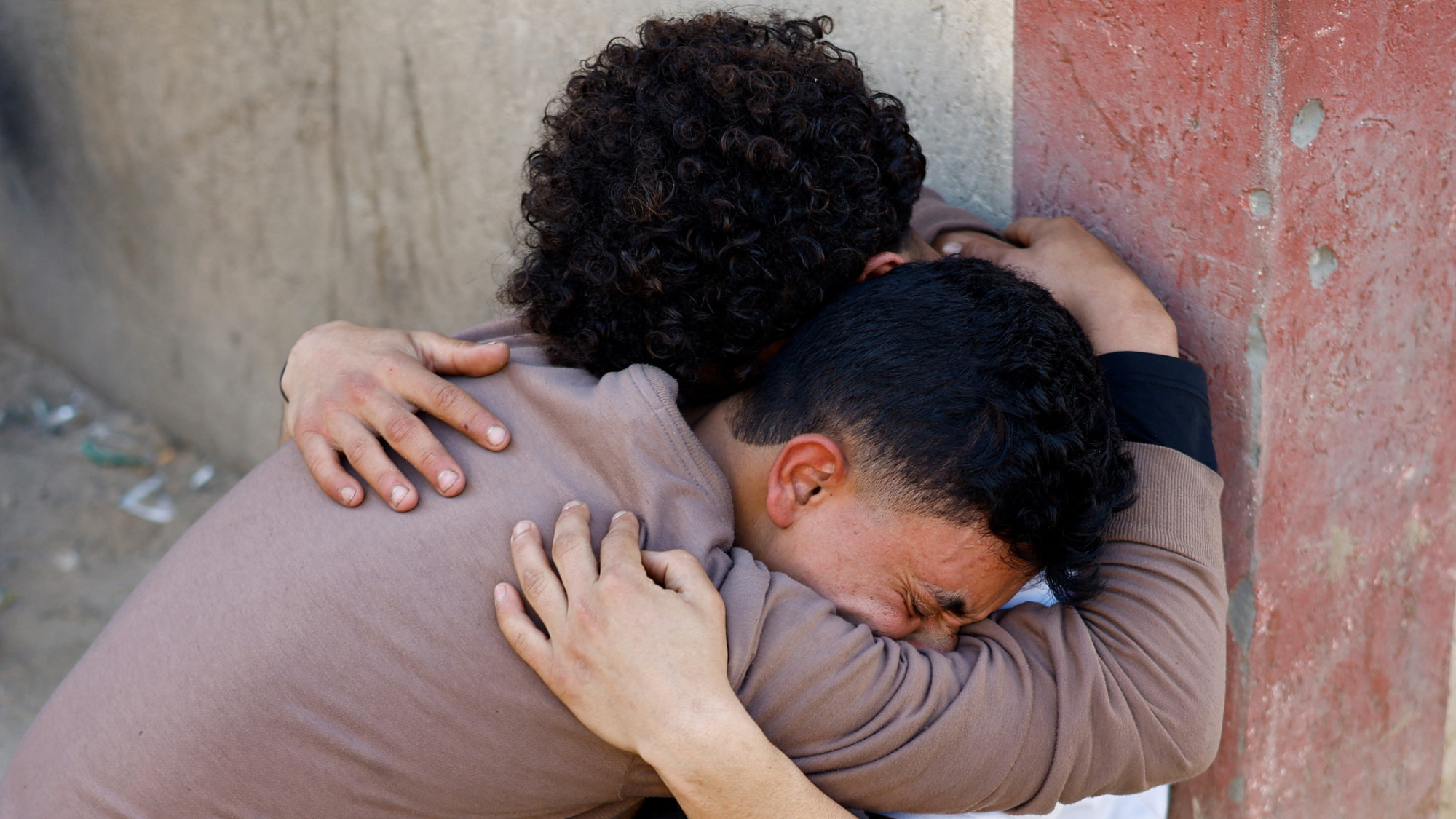
  • Israeli weapons ‘evaporate’ thousands of Palestinians in Gaza: Investigation

    Israeli weapons ‘evaporate’ thousands of Palestinians in Gaza: Investigation

    An in-depth investigation by Al Jazeera has uncovered disturbing evidence that Israeli forces are deploying internationally prohibited thermal and thermobaric weapons in Gaza, resulting in the complete vaporization of thousands of Palestinian bodies. The findings reveal a systematic pattern of destruction that extends beyond conventional warfare tactics.

    According to documentation from Gaza’s civil defense teams, over 2,800 cases of Palestinians have been recorded as vanished since the beginning of the conflict in October 2023. The Al Jazeera Arabic programme ‘The Rest of the Story’ reported that these individuals have effectively evaporated, leaving behind only minimal biological traces—fragments of flesh, blood specks on walls, or mere ash.

    The scale of destruction in Gaza is unprecedented, with approximately 90% of the territory’s infrastructure reduced to rubble. Israeli combat engineers have methodically demolished countless homes through controlled explosions, while armored bulldozers have systematically leveled entire neighborhoods, including schools, businesses, and medical facilities.

    Weapons experts and ground testimonies attribute the phenomenon of human vaporization to Israel’s deployment of US-supplied thermal munitions, commonly referred to as vacuum or aerosol bombs. These weapons generate extreme temperatures exceeding 3,500 degrees Celsius (6,332 degrees Fahrenheit)—far beyond water’s boiling point of 100 degrees Celsius. The intense heat is produced by tritonal, a mixture of TNT and aluminum powder used in American-made bombs.

    Civil defense spokesperson Mahmoud Basal explained the meticulous verification process: ‘When a family reports five people were inside a structure, and we recover only three intact bodies, we classify the remaining two as evaporated only after exhaustive searches yield nothing but biological evidence.’

    Munir al-Bursh, Director General of Gaza’s Palestinian Ministry of Health, confirmed the scientific plausibility of vaporization, noting that human bodies—composed of 80% water—would inevitably turn to ash when exposed to such extreme temperatures.

    The investigation identified specific US-manufactured munitions deployed in Gaza, including the MK-84 ‘Hammer’, BLU-109 bunker buster, and GBU-39 small diameter bomb. Notably, the BLU-109 was reportedly used in an attack on al-Mawasi—an area Israel had previously designated as a ‘safe zone’—resulting in the vaporization of 22 Palestinians in September 2024.

    In late November, Hamas called for an international committee to investigate Israel’s use of prohibited weapons, citing horrific testimonies from citizens and doctors in northern Gaza. The Palestinian movement accused Israel’s ‘terrorist occupation army’ of deploying internationally banned munitions that cause bodily vaporization.

    The human cost continues to mount, with current figures indicating over 72,037 fatalities and nearly complete destruction of Gaza’s infrastructure, creating one of the most severe humanitarian crises in modern conflict.