标签: Asia

亚洲

  • Xiangchao concludes with Yongzhou claiming championship

    Xiangchao concludes with Yongzhou claiming championship

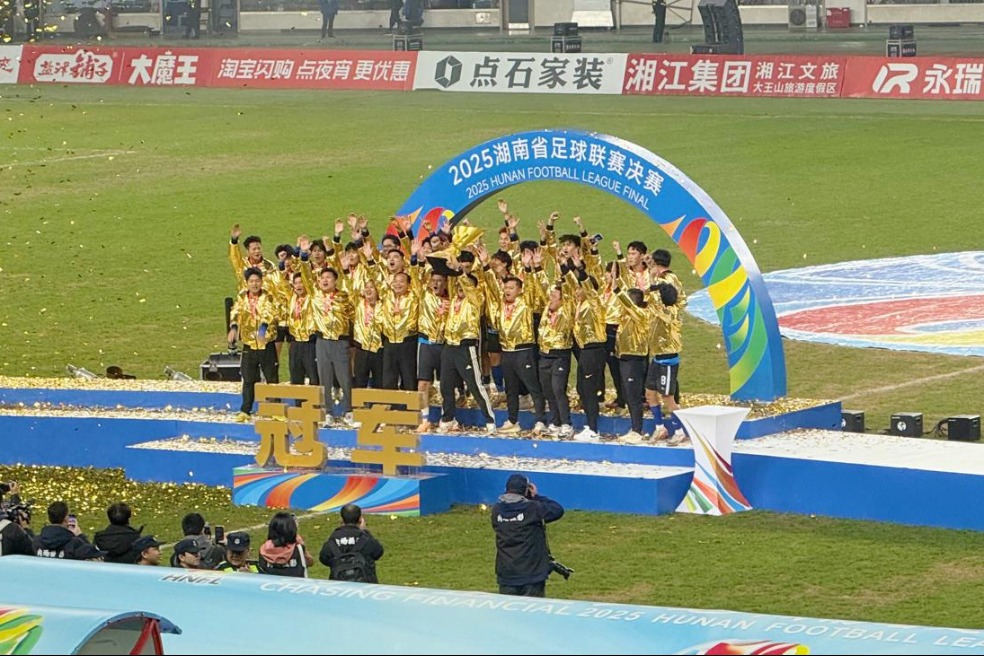
    In a climactic finale to the 2025 Hunan City Soccer League, the Yongzhou team emerged victorious with a narrow 1-0 triumph over the Changde team on December 27th. The championship match, held at Changsha’s Helong Sports Center, drew an impressive crowd of 43,695 spectators who witnessed a tightly contested battle between the two regional rivals.

    The tournament, affectionately known as ‘Xiangchao’ throughout the province, reached its dramatic conclusion when Yongzhou’s number 46, Gu Wenjie, broke the deadlock in the 58th minute with what would become the championship-winning goal. The strategic play demonstrated both teams’ technical prowess and determination throughout the competition.

    Yongzhou’s path to victory carried particular significance as the team began their journey at what local supporters refer to as the ‘wild pitch’ – the city’s aging, decades-old stadium. This grassroots origin story added emotional depth to their ultimate championship achievement.

    The 2025 Xiangchao tournament has been widely celebrated not only for its sporting excellence but also for its substantial economic impact across Hunan province. The league has successfully fostered community engagement and promoted athletic participation at the regional level, strengthening the cultural significance of soccer throughout central China.

  • Last call to start 2026 with Big Ticket’s Dh30 million grand prize

    Last call to start 2026 with Big Ticket’s Dh30 million grand prize

    As 2025 concludes, the United Arab Emirates’ premier raffle draw is building unprecedented excitement for its season finale. Big Ticket Abu Dhabi has announced its January 3, 2026 live draw will feature the largest cash prize of the year—a life-changing Dh30 million (approximately $8.17 million) grand award. The spectacular event will also crown five additional winners with Dh50,000 consolation prizes each, ensuring multiple fortunes are made as the new year dawns.

    December has already proven lucrative for participants through the weekly E-draw series. Three preliminary electronic draws have each produced five Dh100,000 winners, with one final E-draw scheduled for January 1, 2026. This preliminary event will be broadcast live at 11:00 AM via the Big Ticket YouTube channel, offering participants additional winning opportunities before the main event.

    The Big Win Contest, which attracted substantial participation throughout December, has now closed entries. Four fortunate winners will be announced on January 1 through Big Ticket’s official website. These selected participants will receive exclusive invitations to attend the live January 3 draw, where each is guaranteed to win cash prizes ranging from Dh50,000 to Dh150,000.

    Beyond the monumental cash prizes, Big Ticket’s Dream Car Series continues into 2026 with luxury vehicle giveaways. The January 3 draw will feature a BMW 430i, while the February 3 event will award a BMW X5, with tickets remaining accessible at Dh150 each.

    Ticket purchases are available through Big Ticket’s official website (www.bigticket.ae) or at physical counters in Zayed International Airport and Al Ain Airport. The raffle represents one of the region’s most anticipated annual events, offering participants the opportunity to begin 2026 with extraordinary financial transformation.

  • UAE residents feel tremors as minor earthquake hits Musandam region

    UAE residents feel tremors as minor earthquake hits Musandam region

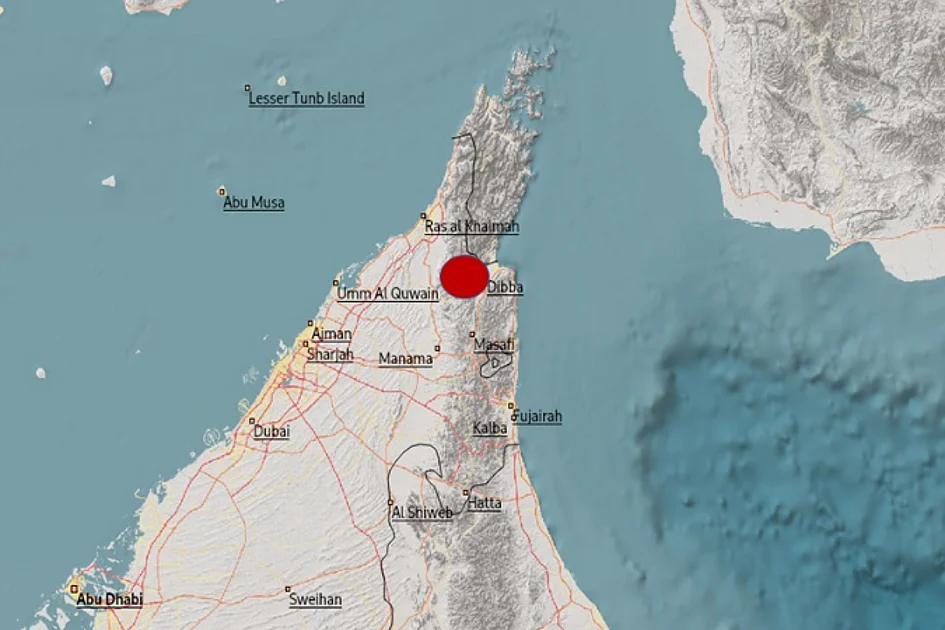
    A minor seismic event measuring 2.9 magnitude struck southern Musandam in the early hours of Sunday, December 28, 2025, according to official reports from the National Centre of Meteorology’s Seismic Network. The tremor occurred at precisely 4:44 AM UAE local time at a shallow depth of approximately 5 kilometers.

    The earthquake generated subtle vibrations that were faintly perceptible to residents across certain parts of the United Arab Emirates, though the National Centre of Meteorology confirmed the event produced no measurable impact within the country’s territory. This incident represents the latest in a series of minor seismic activities affecting the strategically significant Musandam region.

    Geographically positioned south of the critical Strait of Hormuz, the Musandam peninsula exists under a unique jurisdictional arrangement. While predominantly administered by Oman as the Musandam Governorate, certain segments fall under UAE authority, including areas within Ras Al Khaimah and sections of Dibba.

    Seismological experts attribute the occasional tremors felt in the UAE to the nation’s proximity to the Zagros mountain range—recognized globally as one of the most seismically active zones. This geological feature, extending through Iran and Iraq, frequently generates seismic events that sometimes produce detectable vibrations hundreds of kilometers away, particularly in the Northern Emirates.

    The recent Musandam event follows multiple similar occurrences throughout the region in recent months. On November 4, 2025, a 4.6 magnitude quake struck southern Musandam, with tremors similarly detected in the Emirates. Additional seismic activity was recorded in Saudi Arabia (December 17, magnitude 4.3), Bahrain (December 1, magnitude 3.3), and Iraq (November 22, magnitude 5.0), though none produced impacts within the UAE.

    According to Mohamed Alhassani, acting head of the Seismic Monitoring Section at the National Centre of Meteorology, while the UAE itself doesn’t sit within a major earthquake zone, its geographical positioning makes it susceptible to feeling distant seismic events originating from the active Zagros region.

  • Israeli siege intensifies in West Bank after reported shooting; Gaza death toll tops 71,000

    Israeli siege intensifies in West Bank after reported shooting; Gaza death toll tops 71,000

    Israeli military forces have escalated security operations across the West Bank following a reported shooting incident, imposing severe movement restrictions on Palestinian communities while Gaza health authorities report the conflict’s devastating human cost has exceeded 71,000 fatalities.

    In the central West Bank region, Israeli defense units sealed access points to multiple villages surrounding Ramallah, including Ni’lin, Bil’in and Kharbatha Bani Harith. The closures came after unconfirmed weapons fire was detected near a military checkpoint, according to Palestinian security officials. The blockade has effectively paralyzed normal life for residents across thirteen communities, severely limiting access to essential services and transportation routes.

    Initial Israeli military reports indicated an alleged shooting incident near the Hashmonaim checkpoint, though subsequent statements characterized the event as potentially related to hunting activity. Search operations continue to locate individuals involved and recover any weapons.

    Northern West Bank territories remain under intensified military presence, with Qabatiya enduring its second consecutive day of comprehensive siege conditions. Municipal authorities report widespread infrastructure damage, enforced curfews, and repeated home incursions by Israeli forces.

    This security crackdown follows Friday’s coordinated attack in northern Israel that resulted in two fatalities and one critical injury. Israeli security agencies described the incident as a ‘rolling terror attack’ originating in Beit Shean and concluding near Afula, where security forces neutralized the perpetrator identified as a Palestinian who had reportedly entered Israeli territory days earlier.

    According to Palestinian statistical records, violence in the West Bank and East Jerusalem has claimed over 1,080 Palestinian lives since October 2023.

    Meanwhile, Gaza health officials released updated casualty figures indicating 71,266 confirmed fatalities and 171,219 injuries since the conflict’s inception. Notably, 414 Palestinians have been killed and 1,142 wounded since the most recent ceasefire implementation began on October 10th, despite the truce agreement.

    Palestinian sources additionally reported renewed Israeli aerial, artillery, and naval strikes across Gaza territories, though no immediate casualty reports accompanied these latest bombardments. Israeli military representatives have not issued statements regarding these specific operations.

  • Thai and Cambodian top diplomats meet in China to solidify ceasefire

    Thai and Cambodian top diplomats meet in China to solidify ceasefire

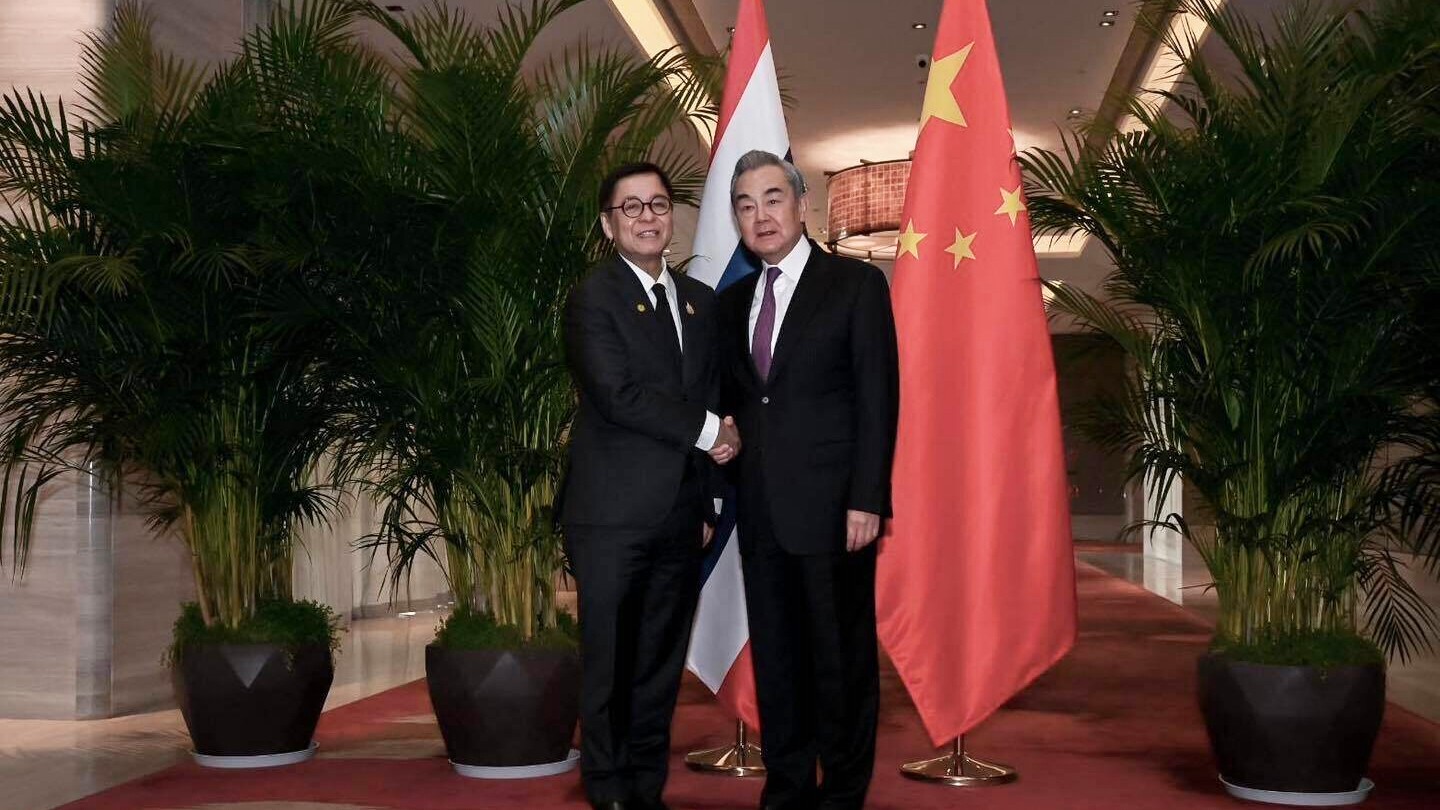
    BEIJING — Top diplomats from Thailand and Cambodia commenced crucial negotiations in China’s Yunnan province on Sunday, marking a significant development in the ongoing border conflict between the Southeast Asian neighbors. The talks, mediated by Chinese Foreign Minister Wang Yi, followed the signing of a new ceasefire agreement designed to halt weeks of deadly clashes that have resulted in over 100 casualties and displaced more than 500,000 civilians from both nations.

    The diplomatic engagement represents Beijing’s strategic effort to strengthen its role as a regional peacemaker, positioning itself alongside the United States and Malaysia in mediation efforts. The ceasefire agreement includes a 72-hour observation period and stipulates that Thailand will repatriate 18 Cambodian soldiers held since previous fighting in July—a key demand from Cambodian authorities.

    Chinese Foreign Ministry statements emphasized Beijing’s commitment to “providing the platform and creating conditions” for continued dialogue between the conflicting parties. China simultaneously announced 20 million yuan ($2.8 million) in emergency humanitarian assistance for Cambodia, with initial shipments of food, tents, and blankets arriving Sunday.

    While the Chinese mediation progressed, U.S. President Donald Trump asserted American influence in the conflict resolution from his Mar-a-Lago estate in Florida. In social media posts, Trump claimed the fighting “will stop momentarily” and boasted about U.S. effectiveness, suggesting America had “become the REAL United Nations” through his administration’s involvement.

    Thai Foreign Minister Sihasak Phuangketkeow articulated expectations that China would not only support the ceasefire but also discourage Cambodia from reigniting hostilities. “Thailand does not see China merely as a mediator in our conflict with Cambodia,” Sihasak stated, “but wants China to play a constructive role in ensuring a sustainable ceasefire.”

    Cambodian Foreign Minister Prak Sokhonn expressed appreciation for China’s “vital role” in facilitating the truce. The diplomatic meetings will continue with bilateral discussions and a trilateral talk scheduled for Monday, aiming to establish mechanisms for lasting peace along the contested border region.

  • Thailand’s political parties name prime minister candidates for February election

    Thailand’s political parties name prime minister candidates for February election

    BANGKOK — Thailand’s political arena intensified on Sunday as parties formally registered their prime ministerial candidates, signaling the commencement of unofficial campaigning for the February 8 general election. The electoral landscape emerges following Prime Minister Anutin Charnvirakul’s dissolution of Parliament this month, a strategic maneuver to consolidate his Bhumjaithai Party’s parliamentary strength amid mounting opposition pressure.

    The upcoming election presents a triangular contest between Anutin’s conservative faction, the progressive People’s Party, and the populist Pheu Thai Party backed by incarcerated former premier Thaksin Shinawatra. Simultaneously, voters will participate in a constitutional referendum championed by progressive forces seeking to diminish the influence of unelected bureaucratic bodies.

    Anutin’s brief three-month tenure witnessed declining popularity due to catastrophic southern flooding and high-profile corruption scandals. However, his administration may have regained nationalist support through heightened military engagements with Cambodia regarding persistent border disputes.

    The Electoral Commission reported 68 prime ministerial candidates from 32 parties, alongside 1,502 party-list nominees from 52 organizations. Additionally, 3,092 constituency candidates will compete for direct electoral mandates. Bhumjaithai strategically nominated only two candidates—Anutin himself and Foreign Minister Sihasak Phuangketkeow as secondary option.

    A significant development involves the dissolution of the temporary alliance between Anutin’s party and the People’s Party. Their September power-sharing arrangement—where progressive lawmakers supported Anutin’s premiership in exchange for constitutional referendum commitments—has collapsed amid accusations of bad faith. People’s Party leader Natthaphong Ruengpanyawut has unequivocally declared that no party legislators will endorse either Anutin or Sihasak for premiership.

    The progressive faction continues advocating controversial reforms, including amnesty for political detainees imprisoned under Thailand’s stringent lèse-majesté laws. This stance positions them directly against the nation’s powerful royalist establishment. Meanwhile, Pheu Thai has nominated 46-year-old Yodchanan Wongsawat as their primary candidate, maintaining Thaksin’s influence despite his imprisonment for corruption and power abuse convictions.

  • Ethiopian coffee trading center unveiled in Zhuzhou

    Ethiopian coffee trading center unveiled in Zhuzhou

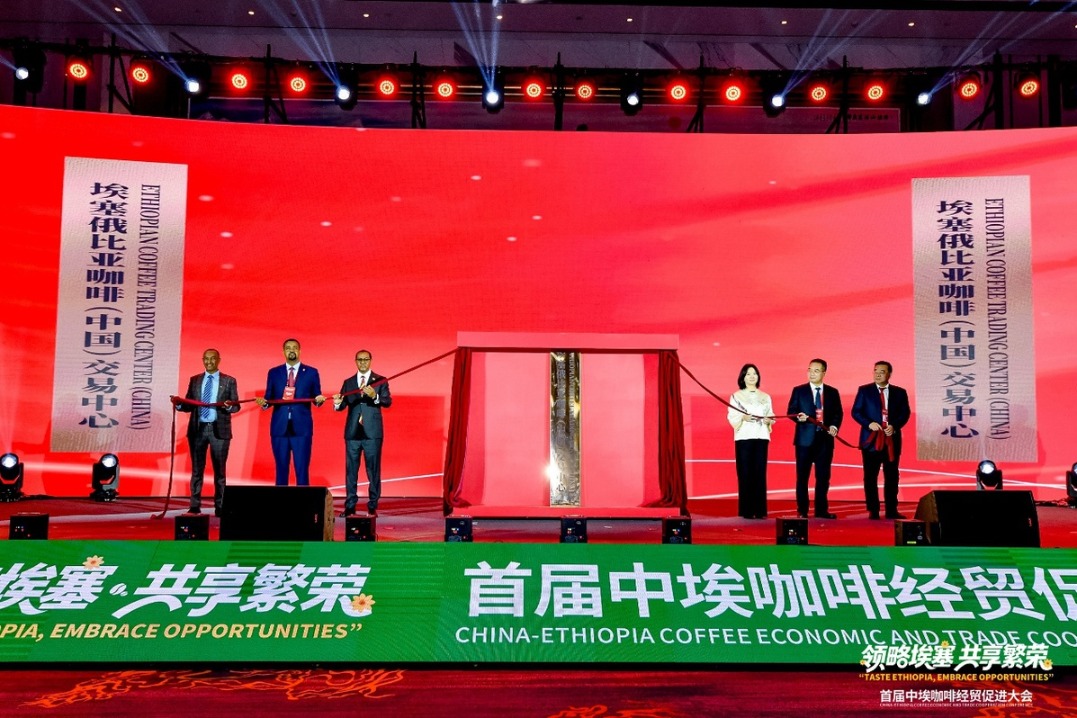
    In a significant development for Sino-African trade relations, Ethiopia has inaugurated a specialized coffee trading center in Zhuzhou, Hunan Province, on December 27, 2025. The facility serves as a comprehensive platform for product exhibition, commercial transactions, and cultural promotion, strategically designed to enhance Ethiopian coffee’s penetration into the Chinese consumer market.

    The unveiling ceremony occurred during the China-Ethiopia Coffee Economic and Trade Cooperation Conference, which gathered approximately 300 participants including government officials, industry experts, organizational delegates, and business executives from both nations. Ethiopia, globally acknowledged as coffee’s geographical origin and a premier producer of premium beans, has identified China as its fourth-largest export market. Official Ethiopian data reveals substantial trade volumes, with 16,300 metric tons valued at $113 million exported to China within the past five months alone.

    Hu Xusheng, Vice-Chairman of the Hunan Provincial People’s Congress Standing Committee, emphasized the province’s role as permanent host of the China-Africa Economic and Trade Expo in fostering robust cooperative platforms. “This conference represents a concrete implementation of Forum on China-Africa Cooperation outcomes and a strengthened commitment to bilateral economic collaboration,” Hu stated during his address.

    Ethiopian Coffee and Tea Authority Director-General Adugna Debela Bote highlighted the center’s strategic advantages, noting how leveraging Zhuzhou’s Cross-Border E-Commerce Pilot Zones would establish direct sales channels, improve market efficiency, and enhance accessibility. Bote particularly stressed the importance of cultural immersion, explaining that authentic Ethiopian coffee experiences in Zhuzhou’s commercial districts would cultivate dedicated consumer loyalty in ways traditional advertising cannot achieve.

    The conference also facilitated the signing of multiple bilateral cooperation agreements between Ethiopian and Chinese enterprises, covering innovative barter trade platforms, coffee industry development, and new energy projects.

  • Mouse births pups after space mission, paving way for future research

    Mouse births pups after space mission, paving way for future research

    In a groundbreaking achievement for space biology, Chinese scientists have announced the successful birth of healthy mouse pups following a mammalian reproduction experiment aboard China’s space station. The breakthrough results from a carefully orchestrated mission involving four mice launched aboard the Shenzhou-21 crewed spacecraft on October 31.

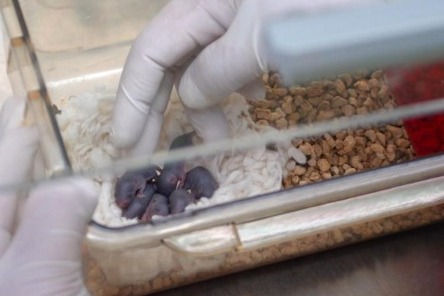
    The rodents spent approximately two weeks in orbit within a specialized habitat module on China’s Tiangong space station before returning to Earth on November 14. Remarkably, one female mouse conceived after her return to terrestrial conditions and delivered nine offspring on December 10. Six of the newborns have survived—a survival rate researchers consider normal for laboratory conditions—with both mother and pups exhibiting healthy development and normal nursing behavior.

    Dr. Wang Hongmei, a researcher at the Institute of Zoology of the Chinese Academy of Sciences, emphasized the significance of these findings: ‘This mission demonstrated that short-term space travel does not impair the reproductive capability of mice. It provides invaluable biological samples for investigating how the space environment influences early developmental stages in mammals.’

    The mission encountered unexpected challenges when schedule changes for the Shenzhou-20 spacecraft created a critical food shortage for the orbital rodents. Ground teams implemented emergency protocols, with astronauts aboard the space station providing water through dedicated habitat ports. After evaluating various alternatives from the astronauts’ food supplies, scientists determined soybean milk could serve as a nutritionally adequate temporary substitute following ground-based verification tests.

    Throughout the mission, an artificial intelligence monitoring system continuously tracked the mice’s behavioral patterns—including movement, feeding, and sleep cycles—providing essential data to support real-time decision-making during the contingency operation.

    This achievement represents China’s first complete mammalian space experiment cycle, encompassing pre-launch preparations, in-orbit operations, and successful sample recovery. The pioneering research establishes a crucial foundation for more complex biological studies in space, potentially informing future human reproduction considerations for long-duration spaceflight and extraterrestrial colonization.

    Scientists will continue monitoring the postnatal development of the space-travel-derived mouse pups, observing their growth patterns and physiological changes. Subsequent research may investigate whether these offspring can reproduce normally, potentially revealing multigenerational effects of space exposure on mammalian biology.

  • Autumn grain purchases exceed 200m tons in China

    Autumn grain purchases exceed 200m tons in China

    China has achieved a remarkable milestone in its agricultural sector with autumn grain procurement volumes exceeding 200 million tons, according to Saturday’s official data release. The National Food and Strategic Reserves Administration reported this represents a substantial 32-million-ton increase compared to the previous year, marking the highest procurement level for the comparative period in recent years.

    This year’s autumn grain entered markets earlier than usual with superior quality characteristics, creating ideal conditions for accelerated procurement activities. Farmers demonstrated enthusiastic participation in grain sales while processing enterprises intensified their purchasing efforts, resulting in a significantly faster procurement pace throughout the peak season.

    The Northeast region witnessed notable price increases across key grain varieties. Japonica rice prices rose approximately 2 percent year-on-year, while soybeans and corn experienced more substantial gains of 5 percent and 10 percent respectively. These favorable market conditions have substantially improved planting returns for agricultural producers, providing enhanced economic incentives for grain cultivation.

    With the approaching New Year and Spring Festival holidays, authorities anticipate further acceleration in grain trading activities. The administration has committed to coordinating supply chain operations to ensure adequate stockpiles and maintain price stability for both grain and cooking oil products during the upcoming holiday period. This strategic approach aims to balance market dynamics while safeguarding food security during periods of heightened consumption demand.

  • Public chooses names for China’s space-traveled mice

    Public chooses names for China’s space-traveled mice

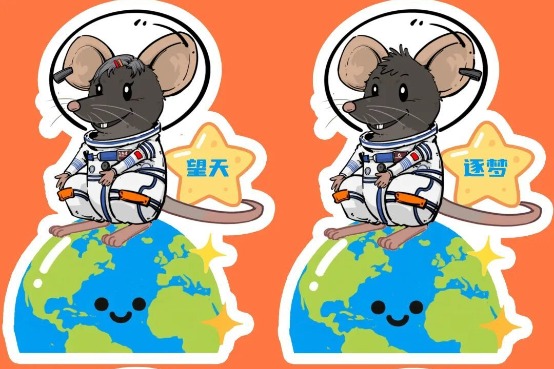
    In a remarkable fusion of public engagement and space science, China has officially named four pioneering mice that recently completed an orbital mission aboard the nation’s space station. The Chinese Academy of Sciences revealed the selected names—Wangtian (gaze at the sky), Lanyue (reach for the moon), Zhuiyun (chase the clouds), and Zhumeng (follow the dream)—during a special public science event on Saturday.

    The naming initiative formed part of an innovative public outreach campaign orchestrated by Xinhua News Agency, which invited citizens to propose and vote on names for the rodent astronauts. The four selected mice, originally identified as numbers 6, 98, 154, and 186, were chosen from a pool of 48 candidates for their historic space voyage.

    Launched aboard the Shenzhou XXI crewed spacecraft on October 31, the mice spent approximately two weeks in microgravity conditions before returning safely to Earth with the Shenzhou XX crew on November 14. The mission represents China’s continuing advancement in space biological research, particularly in understanding how space environments affect mammalian physiology.

    Dr. Li Tianda, an expert at the Institute of Zoology of the Chinese Academy of Sciences, explained the scientific significance: ‘We have initiated comprehensive studies on these mice following their return to Earth. Our research aims to uncover how the space environment affects mammalian physiology and behavior, with particular focus on stress response mechanisms and adaptation processes.’

    To celebrate this achievement and engage the public further, a special month-long ‘Flying Mice’ exhibition has been inaugurated at the National Zoological Museum of China. The event, jointly organized by the Technology and Engineering Center for Space Utilization and the Institute of Zoology, features detailed information about the mission, cartoon illustrations of the named mice, and insights into the cutting-edge biological experiments being conducted as part of China’s space program.