标签: Asia

亚洲

  • Zeiss top exec: Learn from China speed

    Zeiss top exec: Learn from China speed

    German optical systems giant Zeiss has officially inaugurated its Greater China Headquarters Campus in Shanghai’s Waigaoqiao Free Trade Zone, representing the company’s most substantial infrastructure investment in China to date. The February 7th launch ceremony marked a significant milestone in Zeiss’s strategic expansion within the Chinese market.

    In an exclusive interview with China Daily, Martin Fischer, President and CEO of Zeiss Greater China, expressed extraordinary confidence in China’s economic landscape and development pace. Fischer emphasized that Zeiss aims to embrace what he termed ‘China speed’ – the remarkable rapidity of development and implementation characteristic of China’s business environment.

    ‘We are not hesitating to invest in our future here,’ Fischer stated, highlighting the company’s long-term commitment to the Chinese market. The new campus signifies more than just physical infrastructure; it represents Zeiss’s dedication to integrating more deeply within China’s innovation ecosystem and manufacturing capabilities.

    The investment comes at a time when many multinational corporations are reevaluating their China strategies amid evolving global supply chains. Zeiss’s substantial commitment demonstrates a contrasting approach, betting on continued growth and technological advancement within the Chinese market. The headquarters will serve as a central hub for Zeiss’s operations across Greater China, coordinating research, development, and commercial activities throughout the region.

  • Red Sea crisis: What do Israel and the UAE want from Somaliland?

    Red Sea crisis: What do Israel and the UAE want from Somaliland?

    The strategically positioned but impoverished Somaliland has become the epicenter of an international geopolitical confrontation following Israel’s groundbreaking recognition of its sovereignty in December 2025. This unilateral move has triggered a complex regional power struggle involving Middle Eastern rivals and global powers, fundamentally altering the political dynamics in the Horn of Africa.

    Somaliland, which declared independence from Somalia in 1991 following a brutal genocide that claimed approximately 200,000 lives under Siad Barre’s dictatorship, maintains its own government, currency, and military despite lacking widespread international recognition. The territory’s strategic location adjacent to the Bab al-Mandab Strait—a critical maritime chokepoint handling 30% of global oil shipments—has made it a focal point for regional ambitions.

    Israel’s recognition, the first by any UN member state, came with Somaliland’s commitment to join the Abraham Accords, normalizing relations despite ongoing protests against Israel’s actions in Gaza. The agreement potentially grants Israel commercial and military advantages, including port access and possible military bases to counter Houthi threats in the Red Sea.

    The move has ignited fierce opposition from multiple quarters. Somalia’s President Hassan Sheikh Mohamud condemned it as an “existential threat” to Somali sovereignty, while the Arab League, African Union, and Gulf Cooperation Council unanimously rejected the recognition. Saudi Arabia emerged as a leading critic, reaffirming support for Somalia’s territorial integrity and signing new defense agreements with Mogadishu.

    Meanwhile, the UAE and Saudi Arabia have engaged in proxy conflict over Somaliland, reflecting their broader competition in Yemen and Sudan. The UAE’s established presence through DP World’s operation of Berbera port and previous military bases has faced challenges after Saudi accusations of Emirati involvement in transporting a Yemeni separatist leader through Somaliland territory.

    International responses remain divided. While the US maintains cautious neutrality with President Trump stating they would “study” recognition, European powers and China have reaffirmed support for Somalia’s territorial integrity. Turkey has deepened its military cooperation with Somalia, deploying F-16 jets and strengthening economic ties.

    The situation continues evolving as Somaliland seeks additional international partnerships and economic opportunities while navigating complex regional alliances and heightened tensions that threaten to reshape the geopolitical landscape of the Horn of Africa and beyond.

  • Ancient tomb cluster in Changsha offers a glimpse into millennia of history

    Ancient tomb cluster in Changsha offers a glimpse into millennia of history

    Archaeologists in Changsha, Hunan province, have made a groundbreaking discovery that sheds new light on ancient Chinese civilization. A comprehensive four-month excavation project has revealed an extensive burial complex containing 214 ancient tombs with over 560 cultural artifacts, providing an unprecedented window into regional life spanning more than two thousand years.

    The Changsha Institute of Cultural Heritage and Archaeology conducted the meticulous survey across a 160,000-square-meter area in Wangcheng district prior to logistics park construction. What they uncovered represents one of the most significant archaeological finds in recent years, with burial sites dating consecutively from the Western Zhou Dynasty (approximately 11th century-771 BC) through the Qin (221-206 BC) and Han (206 BC-AD 220) periods.

    Among the extraordinary findings are bronze weaponry including ceremonial swords and dagger-axes, exquisitely patterned pottery vessels, jade rings of spiritual significance, and early ironware. These artifacts collectively illustrate the sophisticated craftsmanship, material culture, ritual practices, and military traditions that flourished in the region.

    This discovery gains additional importance from its connection to previous tomb groups identified along the same mountain range in 2017 and 2024. Together, they establish this area as a persistent burial ground that served a stable, growing community for over a millennium. The continuous chronological sequence offers researchers unparalleled opportunities to study demographic shifts, settlement evolution, and social organization patterns.

    Beyond local significance, the findings contribute substantially to understanding how regional cultures in the Yangtze River basin developed and interacted with other ancient Chinese civilizations across different historical periods. The preservation quality and historical range of these tombs make them particularly valuable for archaeological research and cultural heritage studies.

  • Israel’s attorney general backs ‘de facto West Bank annexation’ measures, report says

    Israel’s attorney general backs ‘de facto West Bank annexation’ measures, report says

    In a significant development regarding Israeli policy in the occupied West Bank, Attorney General Gali Baharav-Miara has endorsed the government’s recent move to extend civil control over the territory. This endorsement, reported by i24News, represents a notable shift given her past clashes with Finance Minister Bezalel Smotrich, the architect of the controversial measures.

    The cabinet approved the sweeping changes on Sunday, which effectively expand Israel’s civil authority in Areas A and B of the West Bank—regions that have been under Palestinian Authority jurisdiction since the 1993 Oslo Accords. During the meeting, Smotrich acknowledged potential international objections but asserted the measures’ compliance with international law as interpreted by Israel’s Ministry of Justice.

    Baharav-Miara reinforced Smotrich’s position, confirming to ministers that his assessment was “correct” and that all approved measures aligned with this legal interpretation. She added that prepared responses were available for any foreign criticism.

    The attorney general’s support surprised many cabinet members, considering her status as a controversial figure within Prime Minister Benjamin Netanyahu’s government. Previously, the cabinet had voted unanimously to dismiss Baharav-Miara in August, but Israel’s Supreme Court immediately blocked this decision.

    The policy changes include facilitating land ownership for Jewish Israelis in the West Bank by removing restrictions on selling Palestinian-owned land, easing sales regulations, and making land registration records public. Critics warn these measures could accelerate settlement expansion and potentially enable document forgery in land purchases.

    International response has been swift and critical. Multiple nations, including the UK and United States, have condemned the move and warned against annexation of occupied territories, which violates international law. The European Union, United Nations, and eight Muslim-majority countries—Egypt, Indonesia, Jordan, Pakistan, Qatar, Saudi Arabia, Turkey, and the United Arab Emirates—have denounced the measures as imposing “unlawful Israeli sovereignty” in the West Bank. Analysts suggest these changes may effectively cement de facto annexation and signal the end of the Oslo Accords framework.

  • Stephen Chow deepfakes spark legal, ethical concerns in China

    Stephen Chow deepfakes spark legal, ethical concerns in China

    China is confronting a mounting legal and ethical crisis surrounding the proliferation of unauthorized AI-generated deepfakes, with iconic film star Stephen Chow emerging as a primary victim. The sophisticated manipulation of digital likenesses has ignited urgent calls for enhanced platform governance and stricter enforcement of digital identity rights across the nation.

    The controversy gained significant traction when Stephen Chow’s agent, Chen Zhenyu, publicly challenged the legality of these synthetic media creations through a Weibo post this Monday. Chen questioned the platforms’ regulatory failures while suggesting creators were likely monetizing these unauthorized representations without consent.

    This technological dilemma has become particularly pronounced during the Spring Festival period, with AI-generated greeting videos featuring celebrities like comedians Feng Gong and Cai Ming alongside Hong Kong superstar Andy Lau appearing unexpectedly in users’ social media feeds. These fabricated clips show celebrities casually making dumplings in homes and delivering personalized holiday wishes, blurring the boundaries between reality and simulation.

    Legal experts are sounding alarms about the fundamental rights violations inherent in such practices. Professor Zhang Linghan, Director of the Institute of AI Law and Governance at the China University of Political Science and Law, emphasized that facial and vocal data constitute sensitive personal information with distinct biometric functions. Their unauthorized commercial exploitation represents a clear infringement of individual rights.

    China’s existing legal framework, including provisions within the Civil Code and specific regulations governing deep synthesis technologies, explicitly classifies faces and voices as protected personal data. The legislation establishes that unauthorized creation or distribution of such content violates portrait and voice rights, with liabilities extending even to non-commercial applications. The alarming realism of contemporary synthetic media poses substantial risks for misinformation campaigns and fraudulent activities, potentially undermining the integrity of digital ecosystems.

  • Gunman holds students and teachers hostage at Thai school; number unknown

    Gunman holds students and teachers hostage at Thai school; number unknown

    A severe security emergency erupted in southern Thailand on Wednesday when an armed assailant stormed a school in Songkhla province, taking an undisclosed number of students and educators hostage. Provincial authorities confirmed the ongoing crisis through official social media channels, indicating that negotiations were underway.

    Initial reports from law enforcement revealed that at least three individuals sustained injuries during the initial shooting incident that preceded the hostage situation. The precise condition of the wounded victims remains unclear as emergency responders established a security perimeter around the educational facility.

    The incident, which occurred on February 11, 2026, represents one of the most serious school security breaches in recent Thai history. Local police and special forces units have been deployed to the scene, though officials have maintained tight control over information disclosure to ensure operational security during the critical response phase.

    Educational institutions throughout the region have been placed on heightened alert as authorities work to resolve the situation without further casualties. The identity of the perpetrator and their specific motivations remain unknown at this developing stage of the investigation.

  • Turkey weighs repatriation of 2,000 IS suspects for trial at home

    Turkey weighs repatriation of 2,000 IS suspects for trial at home

    Turkish authorities are actively engaged in diplomatic negotiations to secure the transfer of their citizens currently imprisoned in northern Syria over alleged affiliations with the Islamic State (IS) group. According to reports from local news outlet Kisa Dalga, Ankara is coordinating with both Iraqi and American officials to facilitate the repatriation of more than 2,000 prisoners. The initiative aims to ensure that all convicted IS members, regardless of nationality, face charges for crimes against humanity and genocide within Turkey’s judicial system.

    This development follows the United States’ recent announcement on January 21 regarding the transfer of IS prisoners to Iraq, signaling an operational shift away from the Syrian Democratic Forces (SDF) who previously managed detention facilities in northeastern Syria. Under a new agreement with the Syrian government, the SDF is scheduled to integrate into the national army structure.

    Iraq has consented to temporarily host these foreign prisoners but emphasizes the urgency for their countries of origin to assume responsibility promptly. The Iraqi Supreme Judicial Council is preparing to launch a comprehensive investigation into IS atrocities, utilizing evidence gathered from conflict zones, archival documents, and visual materials. Both Turkey and the United States are expected to contribute informational and documentary support to these proceedings.

    Among the high-profile detainees Turkey seeks to repatriate is Ilyas Aydin, also known by his operational alias Abu Ubayda, who served as IS’s Istanbul chief. Aydin remains a fugitive suspect in the October 2015 Ankara bombing case that resulted in 109 fatalities and is currently subject to an Interpol red notice. At least 15 other significant suspects from this case are believed to be dispersed across Syrian detention centers.

    However, the repatriation process faces substantial challenges regarding prisoner identification. Many detainees reportedly lack proper documentation or have not declared their citizenship, with some potentially providing false information under instruction—particularly those fluent in multiple languages. Turkish authorities have begun collecting fingerprints and statements from individuals claiming Turkish citizenship as part of verification efforts.

    The legal framework for upcoming trials will incorporate international treaties and judicial rulings based on compiled evidence, establishing procedures for addressing these complex cases of transnational terrorism.

  • Nigel Farage makes outlandish claim of Islamists ’embedded’ within UK establishment

    Nigel Farage makes outlandish claim of Islamists ’embedded’ within UK establishment

    Reform UK leader Nigel Farage has escalated his inflammatory rhetoric by alleging that Islamist groups have deeply penetrated Britain’s core institutions. During a Tuesday speech launching his party’s Jewish Alliance group, Farage claimed unnamed ‘senior intelligence sources’ informed him the Muslim Brotherhood had infiltrated Britain’s political system, education establishments, and police forces.

    The right-wing politician, whose party currently dominates in polls, described what he perceived as ‘knowing nods’ from audience members who might have received similar briefings. Without providing specific evidence or details about the alleged infiltration, Farage broadly asserted that Britain faces ‘rife and rampant sectarianism’ that he finds ‘terrifying.’

    His comments faced immediate opposition from within the audience. Multiple Jewish activists heckled the Reform leader, with one woman shouting: ‘My mother didn’t fight the Mosley fascists in Cable Street for this!’ Another protester declared that ‘an attack on one minority is an attack on all,’ though Farage did not respond to these challenges.

    The speech reflects Farage’s recent alignment with United Arab Emirates’ policies regarding political Islam. In late January, Farage was recorded praising UAE officials at a private Dubai party for banning the Muslim Brotherhood, stating ‘We have a lot to learn from you, my dear sirs.’ This alignment comes despite the Muslim Brotherhood’s long-standing position as a peaceful organization seeking democratic political participation.

    The UAE has recently designated eight British organizations as terror groups over alleged Muslim Brotherhood links, though none have violated British laws. In 2023, revelations emerged that the UAE paid a private intelligence firm to smear Britain’s largest Muslim charity by attempting to link it to the Brotherhood and extremists.

  • Drone network speeds accident response on Guangdong expressways

    Drone network speeds accident response on Guangdong expressways

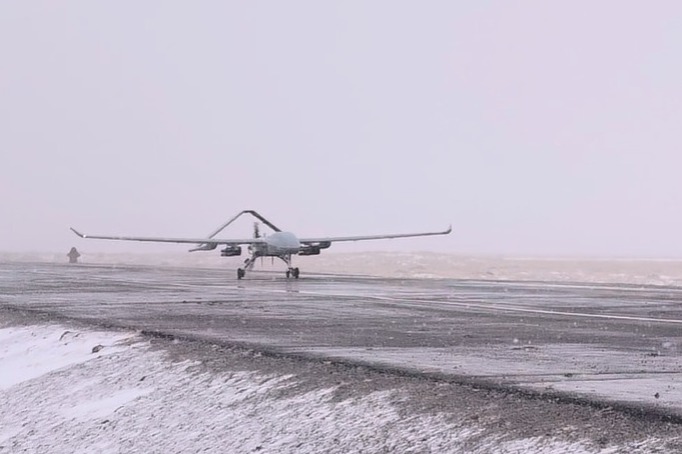
    Guangdong province has pioneered a revolutionary approach to traffic management during the Spring Festival travel rush through an advanced drone network that dramatically accelerates emergency response times on expressways. The system, which represents China’s first dedicated drone squadron for highway operations, has transformed how authorities handle accidents on some of the world’s busiest roadways.

    The cutting-edge network demonstrated its capabilities on February 2nd when a drone deployed from Shatian drone airport in Dongguan reached an accident scene on Nansha Bridge in just one minute and forty seconds. The unmanned aerial vehicle immediately transmitted high-definition imagery and passenger safety assessments to monitoring centers in near real-time, enabling operators to provide immediate vocal instructions through onboard loudspeakers directing vehicles to safety.

    This rapid intervention facilitated the swift restoration of normal traffic flow on the critical transportation artery. The operation exemplifies routine procedures implemented during this year’s Spring Festival travel period, when millions of Chinese citizens journey home for family reunions.

    The technological infrastructure behind this breakthrough includes 12 fixed drone airports and one mobile unit strategically positioned along the bridge corridor. Since establishing its inaugural drone facility in 2023, Guangdong has expanded its aerial response team to 27 specialized operators capable of launching automated missions upon alert reception, with average response times between 150-180 seconds.

    Provincial transportation authorities have designated the drone task force as an elite frontline unit for maintaining smooth traffic operations across Guangdong’s extensive expressway network. The system represents a significant advancement in intelligent transportation management, combining rapid deployment capabilities with real-time data transmission to address incidents before they escalate into major congestion events.

  • Iran’s missile capability is red line, non-negotiable: supreme leader’s senior advisor

    Iran’s missile capability is red line, non-negotiable: supreme leader’s senior advisor

    CAIRO – In a definitive statement addressing international security concerns, Ali Shamkhani, senior advisor to Iranian Supreme Leader Ali Khamenei, declared on Wednesday that the nation’s missile capabilities constitute an absolute red line not subject to negotiation. The pronouncement, reported by Iran’s Nour News agency, establishes Tehran’s firm stance on its military sovereignty amid ongoing geopolitical tensions.

    Shamkhani articulated that any military incursion against Iranian territory, regardless of scale or limited nature, would be interpreted as an initiation of open conflict. This unambiguous warning represents a significant escalation in rhetoric and reinforces Iran’s defensive posture against potential foreign intervention.

    This declaration emerges within a complex international context where Iran’s ballistic missile program has frequently been scrutinized by global powers and regional adversaries. The advisor’s statement serves as both a domestic reassurance of national strength and an external message to the international community regarding Iran’s strategic autonomy.

    The terminology of ‘red line’ diplomacy carries substantial weight in international relations, typically indicating issues a nation considers fundamental to its security interests. By employing this framework, Iran positions its missile capabilities alongside other core national security priorities that remain outside diplomatic bargaining.

    Military analysts suggest this statement may reflect Iran’s response to recent developments in regional security dynamics and potential pressure campaigns aimed at curtailing its weapons programs. The explicit connection between limited attacks and full-scale war represents a calculated deterrence strategy designed to raise the perceived costs of military engagement against Iranian interests.