标签: Asia

亚洲

  • Polls open for Bangladesh’s first election since the 2024 uprising that ousted Hasina

    Polls open for Bangladesh’s first election since the 2024 uprising that ousted Hasina

    DHAKA, Bangladesh — Bangladesh commenced a landmark parliamentary election on Thursday, marking the nation’s first electoral test since the dramatic collapse of Sheikh Hasina’s government following widespread protests in 2024. With over 127 million eligible voters, this electoral process represents a critical juncture for South Asia’s eighth-most populous nation.

    The political landscape has undergone significant transformation since Hasina’s departure into exile in India and the subsequent banning of her party from participation. The electoral contest features Tarique Rahman of the Bangladesh Nationalist Party (BNP) as a prominent contender. Having returned from 17 years of self-exile in London, Rahman—son of former Prime Minister Khaleda Zia—has committed to democratic restoration, institutional rebuilding, and economic revitalization.

    A significant development emerges from the resurgence of Jamaat-e-Islami, the country’s largest Islamist party previously banned under Hasina’s administration. Now leading an 11-party alliance, the conservative religious group’s growing influence has raised concerns among women and minority communities about potential restrictions on social freedoms should they achieve power.

    The interim government, headed by Nobel Peace Prize laureate Muhammad Yunus, has emphasized its commitment to electoral transparency. International oversight includes approximately 500 observers and journalists, with delegations from the European Union and Commonwealth monitoring proceedings.

    Notably, this election incorporates a referendum on political reforms addressing prime ministerial term limits, enhanced checks on executive power, and safeguards against parliamentary power consolidation. Young voters, including 5 million first-time participants who played instrumental roles in the 2024 uprising, are positioned to significantly influence the outcome.

    Bangladesh’s complex political history since its 1971 independence from Pakistan—characterized by military coups, entrenched party politics, and electoral integrity questions—provides the backdrop for this democratic test. The 350-seat parliament includes 300 directly elected members and 50 seats reserved for women, with lawmakers serving five-year terms.

  • Trump ‘insisted’ Iran talks continue in meeting with Netanyahu

    Trump ‘insisted’ Iran talks continue in meeting with Netanyahu

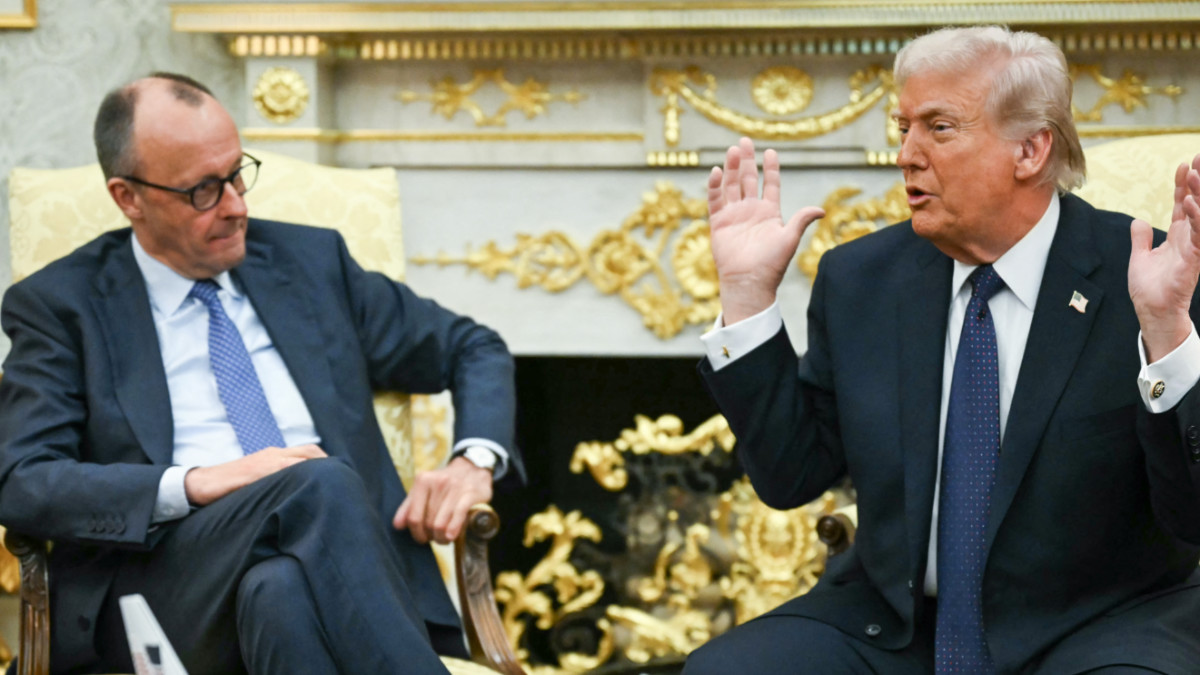
    In a significant White House meeting lasting nearly three hours, U.S. President Donald Trump and Israeli Prime Minister Benjamin Netanyahu convened to address critical regional issues, with Iran’s nuclear program dominating discussions. President Trump explicitly communicated his preference for continued diplomatic engagement with Iran, while simultaneously acknowledging military preparedness through the deployment of a second aircraft carrier strike group to the Middle East.

    The leaders emerged from their extended dialogue with agreements on enhanced coordination mechanisms between their administrations. Netanyahu’s office confirmed via social media that the Prime Minister emphasized Israel’s fundamental security requirements within the context of ongoing negotiations. This meeting occurred against the backdrop of substantial U.S. military reinforcement in the region since protests emerged in Iran from December through mid-January.

    A notable development occurred as Netanyahu formally endorsed Trump’s ‘Board of Peace’ initiative during his Washington visit. The ceremonial signing took place at Blair House with U.S. Secretary of State Marco Rubio, though the document appeared backdated to January 19. This affiliation has drawn sharp criticism from Israeli political experts, including former National Security Council deputy Eran Etzion, who condemned the move as undemocratic and dictatorial without Knesset approval.

    The Board of Peace, established under UN Security Council Resolution 2803, has generated international skepticism. Several NATO members, including Canada, the UK, and Germany, have expressed reservations about joining an entity that includes leaders facing international arrest warrants. Meanwhile, 25 American organizations have petitioned lawmakers to restrain administration war posturing, emphasizing constitutional requirements for military authorization and rejecting military solutions to Iranian challenges.

  • Three issues that matter to voters in the Bangladesh election

    Three issues that matter to voters in the Bangladesh election

    Bangladesh stands at a historic crossroads as it prepares for its first national election following the seismic 2024 Gen Z uprising that precipitated the fall of Prime Minister Sheikh Hasina’s enduring administration. This watershed political moment has fundamentally reshaped the nation’s democratic trajectory, creating an unprecedented opportunity for genuine political transformation.

    The electoral process unfolds against a backdrop of heightened public engagement, with citizens demonstrating remarkable political awareness following the youth-led movement that captured global attention. Three critical issues have emerged as dominant concerns among the electorate that will likely determine the election’s outcome.

    First, economic revitalization dominates voter concerns, with particular emphasis on employment generation for the massive youth demographic and controlling the spiraling inflation that has eroded household purchasing power. The new administration will face immense pressure to deliver immediate economic improvements.

    Second, institutional reform represents a core demand, particularly regarding the restoration of electoral integrity and judicial independence. The protest movement highlighted deep-seated public frustration with perceived systemic corruption and governance deficiencies that characterized the previous era.

    Third, climate resilience and environmental sustainability have emerged as unexpected priority issues in this delta nation increasingly vulnerable to ecological challenges. Coastal communities and agricultural sectors are demanding concrete policy solutions to address environmental degradation and climate-induced displacement.

    This election marks a dramatic departure from Bangladesh’s recent political history, offering the potential for substantial democratic renewal. International observers are monitoring the proceedings closely, recognizing that Bangladesh’s political evolution could significantly influence regional stability and democratic development patterns across South Asia.

  • Five Pakistani police officers killed in militant attack; no claim of responsibility

    Five Pakistani police officers killed in militant attack; no claim of responsibility

    In a devastating security incident in Pakistan’s volatile northwest region, five police officers were fatally attacked by militants on Wednesday. The assault occurred as officers returned from a counter-terrorism operation on the outskirts of Dera Ismail Khan, a city bordering the lawless Waziristan district near Afghanistan.

    According to official police statements, concealed militants stationed within forested terrain initiated sudden gunfire on the returning police patrols. The security forces responded with retaliatory action, resulting in the elimination of four assailants during the exchange. No militant organization has yet claimed responsibility for the coordinated attack.

    This violence occurs against a backdrop of deteriorating security conditions throughout Pakistan, particularly following the Tehreek-e-Taliban Pakistan’s (TTP) termination of its ceasefire agreement with the government in late 2022. The region has long served as a stronghold for Islamist militant groups, including both local Taliban factions and other extremist organizations.

    The recent attack compounds an already grave security situation, coming just days after a separate suicide bombing at an Islamabad mosque claimed over 30 lives last Friday. These consecutive incidents highlight the mounting challenges facing Pakistani security forces as they combat resurgent militant activities across the nation’s border regions.

  • The biggest crypto investing mistakes and how to avoid them

    The biggest crypto investing mistakes and how to avoid them

    In the volatile world of cryptocurrency investing, even experienced traders can fall prey to common pitfalls that undermine financial success. Drawing from hard-earned experience, investment experts reveal nine critical mistakes that plague crypto enthusiasts and strategies to circumvent them.

    The first major error involves seeking guidance from uninformed sources. Well-intentioned but crypto-illiterate acquaintances often dismiss digital assets without understanding blockchain technology or monetary evolution. This lack of mainstream comprehension means investors frequently operate without external validation or support systems.

    Isolation represents another significant barrier to success. Unlike traditional investments, cryptocurrency thrives on community knowledge sharing. Those who engage with informed, forward-thinking groups rather than operating independently position themselves for substantially better outcomes.

    Influencer dependency poses particular dangers in the crypto space. Many content creators promote coins through undisclosed paid partnerships, prioritizing engagement over investor protection. Following such recommendations without understanding underlying utility transforms investment into mere gambling.

    Meme coins present unique psychological challenges beyond their notorious volatility. The extreme price fluctuations associated with these assets can overwhelm investors’ nervous systems, creating stress incompatible with sound financial decision-making.

    Risk management failures manifest in several forms: chasing low-cap cryptocurrencies without strategic planning, investing substantial sums too rapidly, and neglecting to secure profits during market peaks. These behaviors often stem from FOMO (fear of missing out) rather than calculated risk assessment.

    Psychological factors frequently undermine crypto success. Deep-seated financial anxieties—sometimes inherited as generational trauma—require conscious effort to overcome through practices like breathwork, therapy, and financial mindfulness training.

    Finally, establishing clear purposes for cryptocurrency holdings proves essential. Without defined objectives, funds easily dissipate through impulsive spending, poor decisions, or inflation erosion. Viewing money as energy requiring direction helps maintain strategic focus.

    As cryptocurrency continues evolving toward mainstream adoption, avoiding these common mistakes separates successful long-term investors from those who learn through costly experience.

  • Ramadan 2026: UAE announces reduced working hours for public sector employees

    Ramadan 2026: UAE announces reduced working hours for public sector employees

    The United Arab Emirates has formally announced adjusted working schedules for federal government employees in anticipation of Ramadan 2026. According to the Federal Authority for Government Human Resources, standard operational hours from Monday through Thursday will be shortened to 9:00 AM until 2:30 PM. Fridays will feature an even more condensed schedule, running from 9:00 AM until 12:00 PM. These provisions include allowances for personnel whose roles necessitate alternative arrangements.

    Furthermore, federal ministries and entities have been granted optionality in their implementation strategies. They may either adhere to pre-established flexible work regulations throughout the workdays of Ramadan or authorize remote working arrangements for up to 70% of their staff on Fridays, contingent upon compliance with approved regulatory controls.

    Astronomical projections from the Abu Dhabi-based International Astronomical Centre suggest the holy month is anticipated to commence on February 19, 2026. Engineer Muhammad Shawkat Odeh, Director of the Centre, indicated that crescent moon sighting on February 17th is deemed virtually impossible across the Islamic world. Nonetheless, the official commencement date remains subject to confirmation by moon-sighting committees, which will convene on the 29th day of Shaban for a definitive proclamation.

    This announcement aligns with the UAE’s standardized four-and-a-half-day public sector workweek, which was instituted in January 2022, designating Saturday and Sunday as the official weekend. It is noteworthy that the emirate of Sharjah maintains a distinct public sector schedule, operating on a four-day week with a three-day weekend (Friday-Sunday).

  • Lebanese imposter pretends to be Saudi prince, dupes politicians

    Lebanese imposter pretends to be Saudi prince, dupes politicians

    Lebanese judicial authorities have uncovered an audacious deception operation in which a car mechanic successfully impersonated a Saudi prince to extort prominent politicians, including a former prime minister. The elaborate scheme, facilitated by a religious figure, has exposed systemic vulnerabilities within the country’s political landscape.

    According to an official judicial statement released Wednesday, Mustapha Al Hasian—a mechanic with remarkable linguistic abilities—masterfully adopted the persona of “Abu Omar,” a fictitious royal court prince from Saudi Arabia. Speaking in flawless Saudi dialect, Hasian issued political directives to Lebanese officials while promising Riyadh’s support for their ascension to power positions in exchange for financial compensation.

    The operation unraveled when authorities arrested Hasian and his accomplice, Sheikh Khaldun Oraymet, in late 2025. Investigations indicate Oraymet provided the imposter with direct contacts and confidential information about various politicians, enabling the sophisticated extortion plot. The judicial official confirmed the investigation is nearing completion, with no evidence suggesting foreign agency involvement.

    Multiple politicians contacted by the fraudulent prince have provided witness testimonies, though they maintain any financial transactions were framed as charitable contributions to social and health assistance programs rather than explicit payments for political favors. The scandal has highlighted profound corruption issues within Lebanese institutions, demonstrating how easily influential figures can be manipulated through promises of external political support.

  • Gaza: Palestinians living along the ‘Yellow Line’ endure daily Israeli attacks

    Gaza: Palestinians living along the ‘Yellow Line’ endure daily Israeli attacks

    Along the Israeli-imposed demarcation zone in Gaza known as the ‘Yellow Line,’ nocturnal existence has become a terrifying ordeal for Palestinian residents. Hamed, a 25-year-old from Khan Younis who requested anonymity for security reasons, describes sleeping patterns routinely shattered by explosive detonations and sustained gunfire that commences each evening and continues until dawn.

    The Yellow Line, established as a temporary withdrawal boundary under October’s ceasefire agreement, now represents a constantly shifting frontier where Israeli military presence controls approximately 58% of Gaza territory. What began as a security buffer has progressively encroached deeper into Palestinian domains, shrinking from nearly two kilometers to less than one kilometer from residential areas in recent weeks.

    This geographical compression has been accompanied by escalating military activity. ‘We now visually identify tanks as they approach, open fire, and subsequently retreat. The experience is utterly terrifying,’ Hamed reported to Middle East Eye. The psychological warfare compounds physical dangers, with multiple neighbors having sustained injuries from gunfire while inside their homes.

    The humanitarian impact extends across Gaza’s regions. In al-Bureij, central Gaza, Khaled (also using pseudonym for safety) described indiscriminate shooting forcing his uncles to abandon their property adjacent to the boundary. Meanwhile, in al-Maghazi refugee camp, mother of six Houida Salim articulated the perpetual anxiety: ‘The war never finished. Whenever we hear tank movements, we feel imprisoned within our homes.’

    International human rights organizations have condemned Israel’s operations along the Yellow Line. The Euro-Med Human Rights Monitor characterizes these actions as ‘illegal seizure and systematic plundering of resources’ in occupied territory, violating established international law.

    According to Palestinian health authorities, at least 591 fatalities have occurred since the truce began four months ago, predominantly near the Yellow Line. The shifting boundary has triggered repeated displacements, restricted access to agricultural lands, and created generations traumatized by relentless military presence with no viable refuge remaining for countless families.

  • UAE to impose up to Dh100,000 fine for retailers hiking prices during Ramadan

    UAE to impose up to Dh100,000 fine for retailers hiking prices during Ramadan

    In a landmark initiative to celebrate altruism in healthcare, Mediclinic City Hospital has inaugurated the United Arab Emirates’ first ‘Tree of Life’ sculpture. This permanent artistic installation serves as a profound tribute to individuals who have made the courageous decision to donate their organs, ultimately saving and transforming countless lives.

    The unveiling ceremony represents a significant milestone in the UAE’s ongoing efforts to foster a robust culture of organ donation. The tree symbolizes growth, life, and interconnectedness, acting as a powerful visual metaphor for the enduring impact of a single donor’s gift. By honoring these heroes, the hospital aims to elevate public awareness about the critical importance of organ donation and to inspire more community members to consider registering as donors.

    This initiative is strategically aligned with the UAE’s wider national health objectives and its commitment to advancing medical excellence and compassionate care. Hospital officials emphasized that the Tree of Life will stand as a constant, dignified reminder of the extraordinary generosity that occurs within the healthcare system, often during times of profound grief. It is envisioned not merely as a monument, but as a beacon of hope and a catalyst for conversation, encouraging families to discuss and normalize this life-saving act.

    The project underscores Mediclinic’s dedication to holistic patient care that extends beyond medical treatment to encompass community education and the celebration of humanitarian values. This effort is expected to have a ripple effect, potentially strengthening the national organ donation registry and providing a renewed sense of purpose and recognition for donor families.

  • In Cambodia, thousands flood out of ‘scam compounds’ and find increasingly little help

    In Cambodia, thousands flood out of ‘scam compounds’ and find increasingly little help

    BANGKOK — A humanitarian crisis is unfolding in Cambodia as the nation’s only dedicated shelter for victims escaping fraudulent scam compounds faces catastrophic resource shortages amid an unprecedented exodus of workers. The Caritas shelter, previously funded by the United States, now operates with merely one-third of its original staff and a fraction of its previous budget while confronting a surge of desperate survivors.

    The facility has been compelled to reject over 300 individuals requiring immediate assistance, forcing many to sleep on streets or return to their exploitative workplaces. Currently housing approximately 150 people, the shelter struggles to provide basic necessities, with many occupants lacking pillows, blankets, or any possessions beyond the clothes they wear.

    This crisis follows Cambodia’s extradition of a suspected scam kingpin to China in January, which triggered mass releases from compounds housing an estimated 100,000 workers in 2023 alone. These facilities operated sophisticated fraudulent operations featuring soundproofed phone booths, multilingual scripts, and even replica police stations of various countries.

    Despite Prime Minister Hun Manet’s declaration that combating cyberfraud constitutes a ‘deliberate political priority,’ activists accuse the government of ignoring the resulting humanitarian emergency. Amnesty International’s regional research director Montse Ferrer described ‘thousands of traumatized survivors being left to fend for themselves with no state support’ amid ‘chaotic and dangerous’ departure conditions.

    The Cambodian government maintains it screens all individuals to separate victims from perpetrators, providing protection, shelter, and assistance for safe return. However, rescue workers report systemic failures, with embassies and international organizations engaging in responsibility-shifting that creates ‘a closed loop with no exit.’

    Compounding the crisis, U.S. funding suspension led to the dismantling of USAID in early 2025, eliminating the shelter’s anticipated $1.4 million funding through 2026. The International Organization for Migration, another key funder primarily supported by U.S. contributions, has also faced significant budget reductions.

    In Cambodia’s increasingly repressive environment—where independent media has shuttered and journalists reporting on scam compounds face arrest—Caritas remains the only organization willing to accept these victims. Many who cannot secure shelter space risk immigration detention, extortion attempts, or returning to the compounds simply to avoid homelessness.

    For victims like Youga, an African man from the persecuted Banyamulenge ethnic group, options are severely limited. Having escaped beatings and exploitation, he now represents countless survivors seeking merely ‘to rebuild my life with dignity’ amid systemic breakdown and international indifference.