标签: Asia

亚洲

  • Real Madrid, Bayern Munich to play in Dubai Intercontinental U13 Cup

    Real Madrid, Bayern Munich to play in Dubai Intercontinental U13 Cup

    Dubai elevates its status as a premier destination for youth sports development with the commencement of the ninth Dubai Intercontinental Cup for Under-13 Football on Thursday. The tournament, backed by the Dubai Sports Council, showcases an unprecedented gathering of 32 international and domestic teams competing across eight groups from February 12-15.

    European football giants Real Madrid and Bayern Munich headline a stellar participant list that includes Arsenal, Chelsea, AC Milan, Ajax, and Brazil’s Flamengo, alongside leading Emirati clubs. The competition format mirrors a ‘mini World Cup,’ providing young athletes with elite competitive exposure.

    At the official press conference held at Emirates Towers, Khalfan Belhoul, Vice Chairman of the Dubai Sports Council, emphasized the event’s strategic importance: ‘This tournament embodies our leadership’s directive to invest in youth development. It serves as a technical laboratory where Emirati talent can benchmark against global football academies, essential for measuring progress and refining development pathways.’

    The tournament has evolved into a recognized brand that extends beyond football, offering participants valuable life experiences through cultural exchange and discipline, as noted by former Spanish international Michel Salgado. Real Madrid’s sporting director Santiago Solari highlighted the critical importance of tactical education at this formative age level.

    Complementing the competition, organizers conducted a specialized workshop focusing on talent recruitment methodologies, selection criteria, and sustainable development frameworks, reinforcing the event’s institutional commitment to structured youth development.

    Group stage analysis reveals compelling matchups: Ajax heads Group A with UAE’s Al Nasr, Bulgaria’s CSKA Sofia, and Dribbles SC. Group B features Spain’s Celta Vigo alongside Iris Sports, Bulgaria’s Levski Sofia, and Fursan Hispania (B). Flamengo anchors Group C with Inglesia FC, Mondial FA, and Italy’s Levante Azzurro. Bayern Munich leads Group D with Latvia’s Riga FC, Elite SS, and Shabab Al Ahli Dubai.

    Chelsea commands Group E with Italy’s Lombardero, Netherlands’ VV Baronie, and UAE’s Al Wasl. Real Madrid tops Group F alongside Russia’s Rodina Moscow, Al Wahda, and the specially assembled Dubai TC under-12 selection team. AC Milan dominates Group G with United FC, Romania’s Universitatea Craiova, and Sharjah. Group H showcases Argentina’s Racing Club, Spain’s Fursan Hispania, Ajman, and Ultimate Integral FC.

  • Oman announces Ramadan start date as per astronomical calculations

    Oman announces Ramadan start date as per astronomical calculations

    The Sultanate of Oman has officially determined the commencement date for Ramadan 1447 through advanced astronomical calculations, establishing February 19, 2026, as the first day of the holy month. This announcement comes several days before the traditional global moon sighting event scheduled for February 17.

    The nation’s Main Committee for Moon Sighting provided scientific justification for their decision, explaining that on February 17 (corresponding to Shaban 29, 1447), the moon will set before or simultaneously with sunset across all Omani governorates. This celestial alignment makes visual detection of the crescent moon astronomically impossible throughout the Sultanate.

    Citing established principles that prioritize scientific certainty over contradictory reports, the Committee confirmed Wednesday, February 18 will mark the final day of Shaban, with Ramadan commencing the following day. This methodology aligns with neighboring UAE findings, where Sharjah’s Academy for Astronomy, Space Sciences and Technology similarly concluded that crescent sighting on February 17 would be impossible even using advanced telescopic equipment across most Islamic regions.

    The coordinated scientific approach between Gulf nations demonstrates a growing trend toward harmonizing religious observance with astronomical precision, ensuring unified regional observance of Islam’s holiest month while maintaining respect for traditional moon sighting practices elsewhere in the Muslim world.

  • Deyaar profit before tax rises 26% in 2025 on positive investor sentiment and ambitious pipeline

    Deyaar profit before tax rises 26% in 2025 on positive investor sentiment and ambitious pipeline

    Dubai’s prominent real estate developer Deyaar Development PJSC has announced exceptional financial results for the full year 2025, demonstrating significant growth across key performance indicators. The company reported a substantial 26% increase in pre-tax profits, reaching Dh637.9 million compared to Dh505.4 million in the previous year. Revenue performance was equally impressive, climbing 30% to Dh1,972.1 million from Dh1,512.8 million in 2024.

    The company’s financial strength is further evidenced by a 17% expansion in total assets, which grew to Dh8,027.6 million as of December 31, 2025, up from Dh6,832.9 million a year earlier. This asset growth reflects Deyaar’s strategic investments and ongoing enhancements to its property portfolio quality.

    Deyaar maintains a robust development pipeline valued at approximately Dh7 billion, positioning the company for sustained future revenue generation and the continued delivery of high-quality real estate projects. In recognition of this strong financial performance, the Board of Directors has proposed a 5% dividend distribution, subject to approval at the upcoming General Assembly.

    Board Chairman Abdulla Ali Obaid Al Hamli attributed the company’s success to favorable market fundamentals within the UAE’s real estate sector, supported by long-term national strategies that have cultivated one of the world’s most resilient property markets. He highlighted sustained demand, rising population growth, and exceptional market liquidity across both off-plan and ready property segments as key drivers of the sector’s strength.

    CEO Saeed Mohammed Al Qatami emphasized Deyaar’s strategic alignment with Dubai’s D33 economic agenda and the Dubai 2040 Urban Master Plan, initiatives that are driving population growth, infrastructure expansion, and sustained housing demand. He noted that Dubai’s record-breaking Dh917 billion in real estate transactions during 2025 demonstrates the emirate’s unwavering commitment to excellence in property development.

    The company is advancing several landmark projects, including Downtown Residences, launched in June 2025 as one of the UAE’s tallest vertical residential communities, representing Deyaar’s strategic entry into the high-rise ultra-luxury segment. Additionally, the final phase of the Park Five community at Dubai Production City was launched in September 2025, with completion targeted for December 2027.

  • China’s grip slips as Trump squeezes Latin America

    China’s grip slips as Trump squeezes Latin America

    In a landmark decision with significant geopolitical implications, Panama’s Supreme Court has nullified the operating contract of Hong Kong-based CK Hutchison subsidiary Panama Ports Company, effectively ending its 27-year management of two strategic ports along the Panama Canal. The late January ruling declared the original 1997 authorization laws unconstitutional, marking a pivotal moment in the ongoing power competition between the United States and China in Latin America.

    The court’s decision arrives precisely one year after former US President Donald Trump threatened direct intervention to limit Chinese influence over the critical waterway. Beijing responded with unusually strong language, denouncing the judgment as “absurd, shameful and pathetic” while warning Panama would face “heavy political and economic price” for the eviction.

    This development represents the latest indicator that China’s regional ambitions are facing headwinds in what has traditionally been considered America’s backyard. Since the 1823 Monroe Doctrine declared the Western Hemisphere closed to European colonization, the US maintained predominant influence until the post-Cold War era created opportunities for emerging superpowers.

    China has since become South America’s top trading partner and a major source of foreign direct investment, often providing loans with fewer conditions than international financial institutions but requiring commodity-backed repayment guarantees. However, Chinese investments have frequently been criticized for lower environmental and labor standards, with a 2023 UN analysis identifying patterns of serious rights abuses across 14 major projects.

    The port ruling follows Panama’s February 2025 withdrawal from China’s Belt and Road Initiative, a decision made after meetings with US Secretary of State Marco Rubio. Panamanian President Jose Raul Mulino publicly questioned what the initiative had actually brought to his country.

    Simultaneously, China appears to be deprioritizing Latin American investments due to mediocre growth and repayment delays, reducing sovereign lending since 2020. The US capture of Venezuelan leader Nicolas Maduro further demonstrates Washington’s willingness to reshape the regional political environment, potentially jeopardizing China’s ability to collect on approximately $10 billion in Venezuelan debt that could be challenged as “odious debt” by the new government.

    Panama Ports Company has announced international arbitration proceedings that may continue for years, leaving the future ownership of the critical infrastructure uncertain. This convergence of events suggests the zenith of Chinese economic domination in Latin America may have passed, signaling a new chapter in hemispheric power dynamics.

  • Zeiss top exec: Learn from China speed

    Zeiss top exec: Learn from China speed

    German optical systems giant Zeiss has officially inaugurated its Greater China Headquarters Campus in Shanghai’s Waigaoqiao Free Trade Zone, representing the company’s most substantial infrastructure investment in China to date. The February 7th launch ceremony marked a significant milestone in Zeiss’s strategic expansion within the Chinese market.

    In an exclusive interview with China Daily, Martin Fischer, President and CEO of Zeiss Greater China, expressed extraordinary confidence in China’s economic landscape and development pace. Fischer emphasized that Zeiss aims to embrace what he termed ‘China speed’ – the remarkable rapidity of development and implementation characteristic of China’s business environment.

    ‘We are not hesitating to invest in our future here,’ Fischer stated, highlighting the company’s long-term commitment to the Chinese market. The new campus signifies more than just physical infrastructure; it represents Zeiss’s dedication to integrating more deeply within China’s innovation ecosystem and manufacturing capabilities.

    The investment comes at a time when many multinational corporations are reevaluating their China strategies amid evolving global supply chains. Zeiss’s substantial commitment demonstrates a contrasting approach, betting on continued growth and technological advancement within the Chinese market. The headquarters will serve as a central hub for Zeiss’s operations across Greater China, coordinating research, development, and commercial activities throughout the region.

  • Red Sea crisis: What do Israel and the UAE want from Somaliland?

    Red Sea crisis: What do Israel and the UAE want from Somaliland?

    The strategically positioned but impoverished Somaliland has become the epicenter of an international geopolitical confrontation following Israel’s groundbreaking recognition of its sovereignty in December 2025. This unilateral move has triggered a complex regional power struggle involving Middle Eastern rivals and global powers, fundamentally altering the political dynamics in the Horn of Africa.

    Somaliland, which declared independence from Somalia in 1991 following a brutal genocide that claimed approximately 200,000 lives under Siad Barre’s dictatorship, maintains its own government, currency, and military despite lacking widespread international recognition. The territory’s strategic location adjacent to the Bab al-Mandab Strait—a critical maritime chokepoint handling 30% of global oil shipments—has made it a focal point for regional ambitions.

    Israel’s recognition, the first by any UN member state, came with Somaliland’s commitment to join the Abraham Accords, normalizing relations despite ongoing protests against Israel’s actions in Gaza. The agreement potentially grants Israel commercial and military advantages, including port access and possible military bases to counter Houthi threats in the Red Sea.

    The move has ignited fierce opposition from multiple quarters. Somalia’s President Hassan Sheikh Mohamud condemned it as an “existential threat” to Somali sovereignty, while the Arab League, African Union, and Gulf Cooperation Council unanimously rejected the recognition. Saudi Arabia emerged as a leading critic, reaffirming support for Somalia’s territorial integrity and signing new defense agreements with Mogadishu.

    Meanwhile, the UAE and Saudi Arabia have engaged in proxy conflict over Somaliland, reflecting their broader competition in Yemen and Sudan. The UAE’s established presence through DP World’s operation of Berbera port and previous military bases has faced challenges after Saudi accusations of Emirati involvement in transporting a Yemeni separatist leader through Somaliland territory.

    International responses remain divided. While the US maintains cautious neutrality with President Trump stating they would “study” recognition, European powers and China have reaffirmed support for Somalia’s territorial integrity. Turkey has deepened its military cooperation with Somalia, deploying F-16 jets and strengthening economic ties.

    The situation continues evolving as Somaliland seeks additional international partnerships and economic opportunities while navigating complex regional alliances and heightened tensions that threaten to reshape the geopolitical landscape of the Horn of Africa and beyond.

  • Ancient tomb cluster in Changsha offers a glimpse into millennia of history

    Ancient tomb cluster in Changsha offers a glimpse into millennia of history

    Archaeologists in Changsha, Hunan province, have made a groundbreaking discovery that sheds new light on ancient Chinese civilization. A comprehensive four-month excavation project has revealed an extensive burial complex containing 214 ancient tombs with over 560 cultural artifacts, providing an unprecedented window into regional life spanning more than two thousand years.

    The Changsha Institute of Cultural Heritage and Archaeology conducted the meticulous survey across a 160,000-square-meter area in Wangcheng district prior to logistics park construction. What they uncovered represents one of the most significant archaeological finds in recent years, with burial sites dating consecutively from the Western Zhou Dynasty (approximately 11th century-771 BC) through the Qin (221-206 BC) and Han (206 BC-AD 220) periods.

    Among the extraordinary findings are bronze weaponry including ceremonial swords and dagger-axes, exquisitely patterned pottery vessels, jade rings of spiritual significance, and early ironware. These artifacts collectively illustrate the sophisticated craftsmanship, material culture, ritual practices, and military traditions that flourished in the region.

    This discovery gains additional importance from its connection to previous tomb groups identified along the same mountain range in 2017 and 2024. Together, they establish this area as a persistent burial ground that served a stable, growing community for over a millennium. The continuous chronological sequence offers researchers unparalleled opportunities to study demographic shifts, settlement evolution, and social organization patterns.

    Beyond local significance, the findings contribute substantially to understanding how regional cultures in the Yangtze River basin developed and interacted with other ancient Chinese civilizations across different historical periods. The preservation quality and historical range of these tombs make them particularly valuable for archaeological research and cultural heritage studies.

  • Israel’s attorney general backs ‘de facto West Bank annexation’ measures, report says

    Israel’s attorney general backs ‘de facto West Bank annexation’ measures, report says

    In a significant development regarding Israeli policy in the occupied West Bank, Attorney General Gali Baharav-Miara has endorsed the government’s recent move to extend civil control over the territory. This endorsement, reported by i24News, represents a notable shift given her past clashes with Finance Minister Bezalel Smotrich, the architect of the controversial measures.

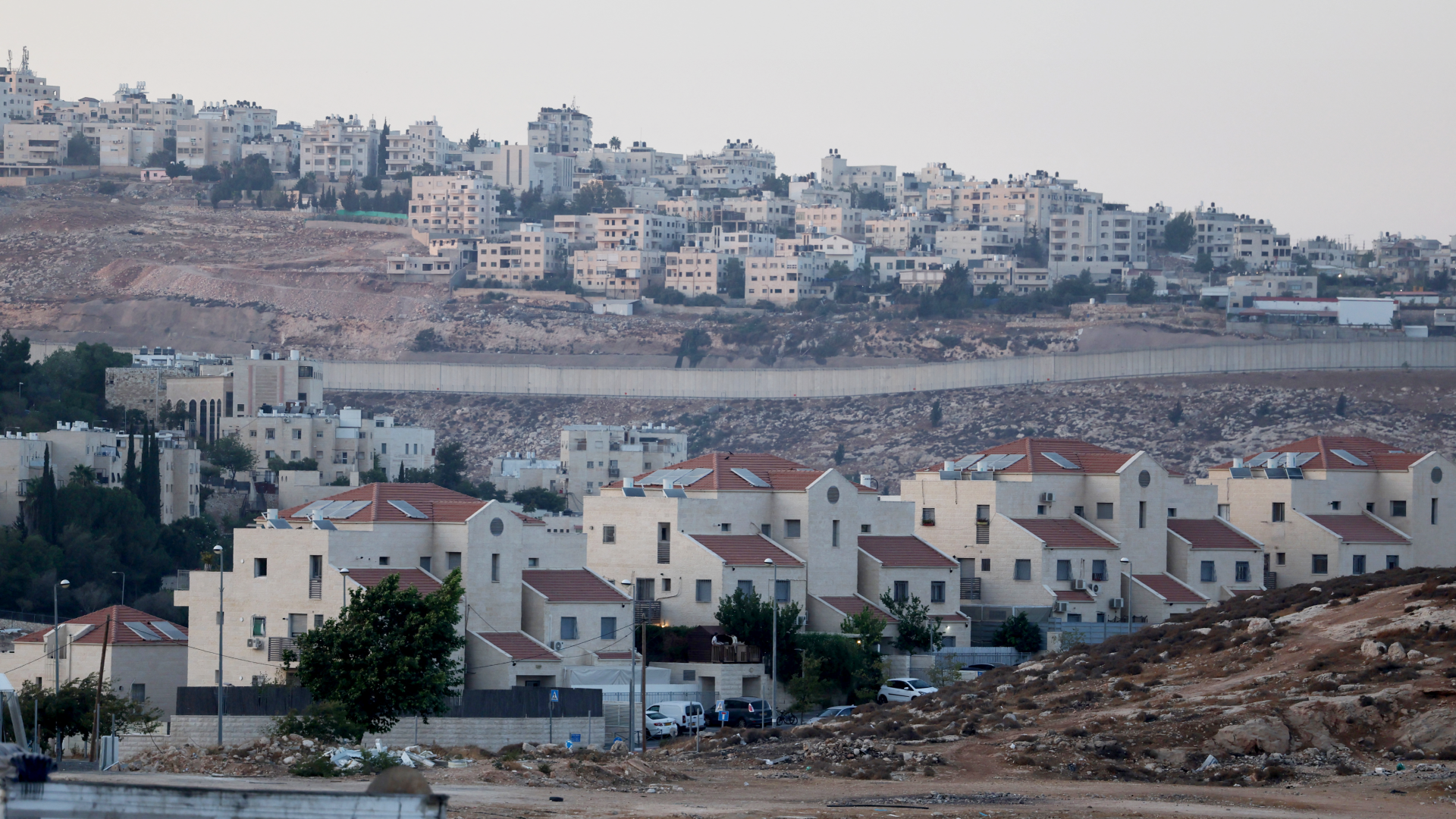
    The cabinet approved the sweeping changes on Sunday, which effectively expand Israel’s civil authority in Areas A and B of the West Bank—regions that have been under Palestinian Authority jurisdiction since the 1993 Oslo Accords. During the meeting, Smotrich acknowledged potential international objections but asserted the measures’ compliance with international law as interpreted by Israel’s Ministry of Justice.

    Baharav-Miara reinforced Smotrich’s position, confirming to ministers that his assessment was “correct” and that all approved measures aligned with this legal interpretation. She added that prepared responses were available for any foreign criticism.

    The attorney general’s support surprised many cabinet members, considering her status as a controversial figure within Prime Minister Benjamin Netanyahu’s government. Previously, the cabinet had voted unanimously to dismiss Baharav-Miara in August, but Israel’s Supreme Court immediately blocked this decision.

    The policy changes include facilitating land ownership for Jewish Israelis in the West Bank by removing restrictions on selling Palestinian-owned land, easing sales regulations, and making land registration records public. Critics warn these measures could accelerate settlement expansion and potentially enable document forgery in land purchases.

    International response has been swift and critical. Multiple nations, including the UK and United States, have condemned the move and warned against annexation of occupied territories, which violates international law. The European Union, United Nations, and eight Muslim-majority countries—Egypt, Indonesia, Jordan, Pakistan, Qatar, Saudi Arabia, Turkey, and the United Arab Emirates—have denounced the measures as imposing “unlawful Israeli sovereignty” in the West Bank. Analysts suggest these changes may effectively cement de facto annexation and signal the end of the Oslo Accords framework.

  • Stephen Chow deepfakes spark legal, ethical concerns in China

    Stephen Chow deepfakes spark legal, ethical concerns in China

    China is confronting a mounting legal and ethical crisis surrounding the proliferation of unauthorized AI-generated deepfakes, with iconic film star Stephen Chow emerging as a primary victim. The sophisticated manipulation of digital likenesses has ignited urgent calls for enhanced platform governance and stricter enforcement of digital identity rights across the nation.

    The controversy gained significant traction when Stephen Chow’s agent, Chen Zhenyu, publicly challenged the legality of these synthetic media creations through a Weibo post this Monday. Chen questioned the platforms’ regulatory failures while suggesting creators were likely monetizing these unauthorized representations without consent.

    This technological dilemma has become particularly pronounced during the Spring Festival period, with AI-generated greeting videos featuring celebrities like comedians Feng Gong and Cai Ming alongside Hong Kong superstar Andy Lau appearing unexpectedly in users’ social media feeds. These fabricated clips show celebrities casually making dumplings in homes and delivering personalized holiday wishes, blurring the boundaries between reality and simulation.

    Legal experts are sounding alarms about the fundamental rights violations inherent in such practices. Professor Zhang Linghan, Director of the Institute of AI Law and Governance at the China University of Political Science and Law, emphasized that facial and vocal data constitute sensitive personal information with distinct biometric functions. Their unauthorized commercial exploitation represents a clear infringement of individual rights.

    China’s existing legal framework, including provisions within the Civil Code and specific regulations governing deep synthesis technologies, explicitly classifies faces and voices as protected personal data. The legislation establishes that unauthorized creation or distribution of such content violates portrait and voice rights, with liabilities extending even to non-commercial applications. The alarming realism of contemporary synthetic media poses substantial risks for misinformation campaigns and fraudulent activities, potentially undermining the integrity of digital ecosystems.

  • Gunman holds students and teachers hostage at Thai school; number unknown

    Gunman holds students and teachers hostage at Thai school; number unknown

    A severe security emergency erupted in southern Thailand on Wednesday when an armed assailant stormed a school in Songkhla province, taking an undisclosed number of students and educators hostage. Provincial authorities confirmed the ongoing crisis through official social media channels, indicating that negotiations were underway.

    Initial reports from law enforcement revealed that at least three individuals sustained injuries during the initial shooting incident that preceded the hostage situation. The precise condition of the wounded victims remains unclear as emergency responders established a security perimeter around the educational facility.

    The incident, which occurred on February 11, 2026, represents one of the most serious school security breaches in recent Thai history. Local police and special forces units have been deployed to the scene, though officials have maintained tight control over information disclosure to ensure operational security during the critical response phase.

    Educational institutions throughout the region have been placed on heightened alert as authorities work to resolve the situation without further casualties. The identity of the perpetrator and their specific motivations remain unknown at this developing stage of the investigation.