标签: Asia

亚洲

  • Toxic air, broken roads and unpicked rubbish – why India’s big cities are becoming unliveable

    Toxic air, broken roads and unpicked rubbish – why India’s big cities are becoming unliveable

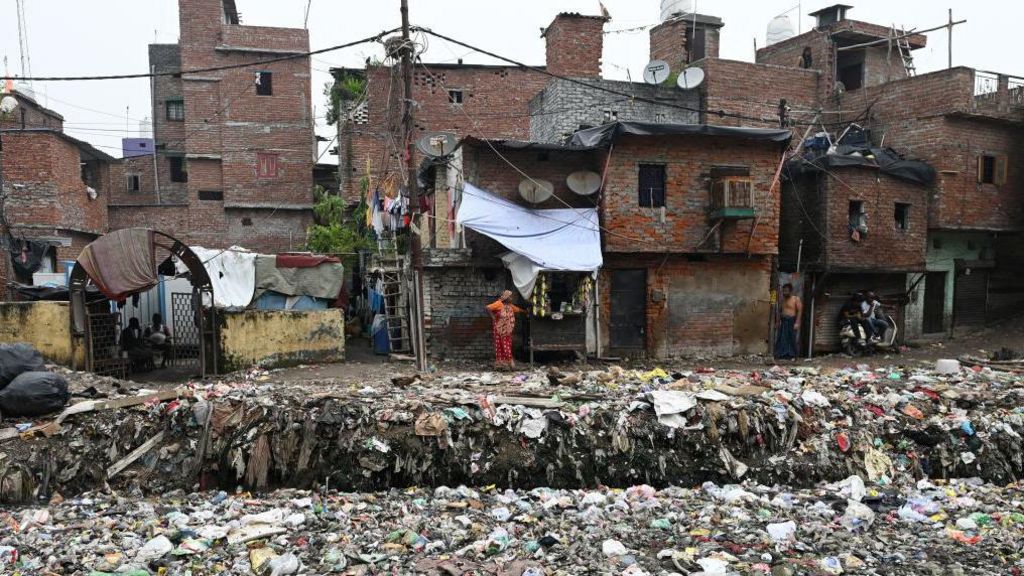
    Despite massive infrastructure investments and rapid GDP growth, India’s major metropolitan centers continue grappling with severe urban decay that threatens their livability. Cities like Jaipur, Bengaluru, Mumbai, and Delhi—despite their economic significance and historical heritage—face overwhelming challenges including traffic gridlock, toxic air pollution, inadequate waste management, and crumbling infrastructure.

    The contrast between India’s economic progress and urban deterioration presents a puzzling paradox. While the Modi administration has prioritized state-funded infrastructure projects—resulting in modern airports, expanded highway networks, and new metro systems—these developments have failed to translate into improved urban living conditions. Bengaluru’s tech billionaires and ordinary citizens alike have publicly expressed frustration with perpetual traffic snarls and garbage accumulation. Mumbai residents have staged unusual protests against dangerous potholes and sewage overflows, while Delhi’s winter air quality regularly reaches hazardous levels, prompting medical advisories for vulnerable populations.

    Experts identify flawed governance structures as the fundamental cause of India’s urban crisis. Constitutional frameworks established decades ago never anticipated the massive scale of contemporary urbanization, leaving cities without adequate autonomous authority. Infrastructure specialist Vinayak Chatterjee notes that while the 1992 constitutional amendment theoretically empowered local bodies, implementation remains incomplete due to resistance from state-level bureaucracies and political interests.

    This governance deficit stands in stark contrast to China’s urban management model, where city mayors exercise substantial executive powers over planning and development, with clear performance incentives and accountability mechanisms. Indian cities, by comparison, suffer from emaciated local governments lacking revenue-raising authority and appointment powers.

    The problem extends beyond governance to basic data deficiencies. With the last census conducted over fifteen years ago and the next delayed until 2026, urban planners operate without current information on urbanization patterns and demographics. This data vacuum compounds existing challenges in addressing sanitation, transportation, and environmental issues.

    Some experts suggest that only a crisis comparable to London’s 1858 ‘Great Stink’—which prompted comprehensive sewer system reforms—will generate sufficient political will to address India’s urban decay. Until then, cities continue deteriorating despite economic growth, with their glorious architectural heritage increasingly overshadowed by urban dysfunction.


  • ‘Shivering from cold and fear’: Over 42,000 tents damaged as rains ravage Gaza camps

    ‘Shivering from cold and fear’: Over 42,000 tents damaged as rains ravage Gaza camps

    Heavy winter rainfall has plunged displaced Palestinians in Gaza into deeper misery, destroying or damaging over 42,000 tents and makeshift shelters according to United Nations assessments. The overnight deluge flooded camps within minutes, soaking food supplies and blankets while leaving vulnerable families exposed to freezing temperatures.

    Jamil al-Sharafi, a 47-year-old father of six sheltering in Al-Mawasi, described watching his tent flood instantly. ‘My children are shivering from cold and fear… The tent was completely flooded within minutes. We lost our blankets, and all the food is soaked,’ he reported. His family is among approximately 1.5 million Gazans displaced by recent conflict, now surviving in temporary camps with inadequate protection from the elements.

    This meteorological crisis follows similar heavy rains earlier in December that claimed at least 18 lives through building collapses and hypothermia according to Gaza’s civil defence agency. The UN humanitarian office confirmed 17 structures collapsed during the previous storm, compounding the devastation in a territory where 80% of buildings have already been damaged or destroyed by warfare.

    Despite a fragile ceasefire between Israel and Hamas, the humanitarian situation remains critical. Displaced families crowd into tarpaulin tents surrounded by mud and standing water, with nighttime temperatures hovering between 8-12°C (46-54°F). Elderly resident Umm Rami Bulbul pleaded for mobile homes rather than tents, stating ‘Living in tents means we die from the cold in the rain and from the heat in the summer.’

    The crisis is exacerbated by insufficient aid delivery. Amjad Al-Shawa, director of the Palestinian NGO Network in Gaza, revealed that of 300,000 tents needed, only 60,000 have reached the territory due to Israeli restrictions on humanitarian access. UNRWA chief Philippe Lazzarini condemned the situation on social media platform X, emphasizing ‘There is nothing inevitable about this. Aid supplies are not being allowed in at the scale required.’

    Samia Abu Jabba articulated the collective despair: ‘I sleep in the cold, and water floods us and my children’s clothes. They are freezing. What did the people of Gaza and their children do to deserve this?’ The compounded crises of war destruction, inadequate shelter, and restricted aid have created what humanitarian organizations describe as one of the most severe emergency situations in the region.

  • AI spending, strong corporate profits, Fed rate cuts seen as key to 2026 stock market

    AI spending, strong corporate profits, Fed rate cuts seen as key to 2026 stock market

    As Wall Street concludes a remarkable third consecutive year of double-digit gains, analysts are scrutinizing the catalysts required to sustain this bull market into 2026. The S&P 500’s impressive 17% ascent in 2025 follows 24% and 23% surges in 2023 and 2024 respectively, creating speculation about whether a fourth stellar year is achievable.

    Market strategists identify three critical pillars for continued growth: robust artificial intelligence expenditure, substantial corporate profit expansion, and accommodative Federal Reserve monetary policies. According to LSEG data, S&P 500 companies are projected to deliver over 15% earnings growth in 2026, building upon a solid 13% increase in 2025. This growth is expected to broaden beyond the technology sector’s dominant players, with the famed ‘Magnificent Seven’ anticipated to see their earnings advantage narrow significantly.

    The AI investment phenomenon remains a double-edged sword. While massive infrastructure spending and application demand have driven valuations, recent concerns about capital expenditure returns have created volatility. LPL Financial’s Jeff Buchbinder notes, ‘If companies reduce guided capex and market confidence in AI returns diminishes, we could be looking at a flat or modestly negative year.’

    Federal Reserve policy represents another crucial variable. Investors are pricing in at least two additional quarter-point rate cuts in 2026, following 175 basis points of reductions throughout 2024-2025. PNC Financial’s Yung-Yu Ma emphasizes, ‘The Fed maintaining a dovish stance is probably the biggest driver I’d be looking for.’ The upcoming appointment of a new Fed chair by President Trump adds another layer of policy uncertainty.

    Historical patterns offer mixed signals. LPL Research indicates that in seven bull markets reaching their fourth year since 1950, the average gain was 12.8% with positive performance in six instances. However, CFRA data shows midterm election years typically deliver subpar returns averaging just 3.8% for the S&P 500 compared to 11% in other presidential term years.

    Geopolitical factors, particularly U.S.-China relations, could serve as potential wildcards. While tariffs caused extreme volatility in early 2025, the relationship between the world’s two largest economies remains a swing factor that could produce unexpected positive catalysts according to market observers.

  • ‘Angel for animals’: Peta founder hails French film icon Brigitte Bardot

    ‘Angel for animals’: Peta founder hails French film icon Brigitte Bardot

    The global animal rights community is mourning the loss of French cinematic legend Brigitte Bardot, who passed away at age 91. Ingrid Newkirk, founder of People for the Ethical Treatment of Animals (PETA), issued a heartfelt tribute celebrating Bardot’s transformative journey from international screen icon to one of history’s most influential animal welfare advocates.

    Newkirk characterized Bardot as ‘an angel for animals’ who consistently leveraged her celebrity status to champion animal protection causes. The PETA founder revealed that Bardot had personally participated in numerous organizational campaigns throughout her advocacy career, including a successful 2013 initiative that persuaded luxury British retailer Fortnum & Mason to cease sales of foie gras.

    Bardot’s remarkable transition from entertainment to activism began in 1973 when she voluntarily retired from her illustrious film career at its peak. She relocated permanently to her Saint-Tropez residence on the French Riviera, where she established what would become her life’s work: the Brigitte Bardot Foundation for animal protection in 1986.

    Her advocacy portfolio encompassed diverse and impactful campaigns spanning several decades. She emerged as a vocal protector of baby seals and elephants, campaigned vigorously against ritual animal sacrifice practices, and demanded the closure of horse slaughterhouses. Newkirk emphasized that Bardot often stated she ‘truly bloomed’ through her animal protection work, and called upon the public to honor her memory by performing acts of kindness toward animals.

  • Catching the hunters trapping rare songbirds in China

    Catching the hunters trapping rare songbirds in China

    In the predawn darkness surrounding Beijing’s sprawling metropolis, a silent war unfolds across the grasslands where migratory birds seek refuge. Silva Gu, a dedicated conservationist, moves with practiced stealth through these urban oases, tracking those who would profit from capturing protected songbirds.

    The illegal trade in songbirds has become an increasingly lucrative enterprise in China, where economic pressures have driven many to seek income through low-risk, high-reward activities. A single Siberian rubythroat can command nearly 2,000 yuan (£210; $280) on the black market—exceeding many farmers’ monthly earnings. This profitability persists despite wildlife protection laws, as fines often fail to outweigh potential profits.

    During critical migration periods, particularly in October when billions of birds travel along major flyways through China, poachers deploy nearly invisible ‘mist nets’ that can trap hundreds of small birds overnight. These nets pose particular danger to protected species like the meadow pipit, an important indicator species whose population health reflects environmental conditions.

    Silva’s journey began in childhood, exploring a very different Beijing in the 1990s—one where grasslands stretched further and wildlife thrived. Witnessing rapid urbanization consume these natural spaces, he dedicated himself to conservation work. Over the past decade, he has personally intervened in countless poaching operations, sometimes facing physical retaliation from wildlife traders.

    His efforts have evolved from solitary patrols to founding the Beijing Migratory Bird Squad, through which he has successfully engaged law enforcement authorities. Initially met with indifference in 2015, Silva’s persistent advocacy has gradually shifted police attitudes. Authorities now recognize that combating wildlife crime often leads to uncovering other criminal activities.

    Despite these advances, challenges remain profound. Cultural traditions dating to the Qing Dynasty, when keeping caged birds symbolized status and elegance, continue primarily among older generations. Many retirees in their 60s and 70s maintain the practice without recognizing its ecological impact or legal implications.

    Silva employs sophisticated tactics against poachers, studying satellite imagery to identify frequently used paths and net placement patterns. He maps these against migratory routes to predict where birds will rest, allowing targeted interventions. His work costs over 100,000 yuan ($14,000) annually, funded primarily through donations that have dwindled amid economic slowdowns.

    Recent developments suggest growing institutional support. China’s Ministry of Public Security has launched campaigns against wildlife trafficking, while state media has emphasized the importance of bird protection for ecosystem health. These changes reflect increasing recognition of conservation needs, though enforcement remains inconsistent.

    Silva’s work demonstrates both the progress and persistent challenges in wildlife protection. While he has directly rescued over 20,000 birds and disrupted countless poaching operations, he acknowledges that lasting change requires generational shift in attitudes toward conservation. Until then, he continues his solitary patrols, striving to restore Beijing’s skies to their former chorus of songbirds.

  • Israel’s Ben Gvir pushes bill to ban Islamic call to prayer

    Israel’s Ben Gvir pushes bill to ban Islamic call to prayer

    A contentious legislative proposal is advancing through Israel’s political system that would grant the state unprecedented authority to regulate the Islamic call to prayer. Sponsored by Jewish Power party member and National Security Committee chair Zvika Fogel, the bill mandates that all mosque loudspeaker broadcasts must obtain government licensing to operate legally.

    The proposed legislation establishes stringent criteria for approval, including specific volume limitations, mandatory noise-reduction implementations, and evaluations of mosque proximity to residential zones. Under these provisions, law enforcement would gain powers to immediately silence loudspeakers violating permit conditions and confiscate equipment for repeated offenses. Financial penalties would be severe, with unauthorized loudspeaker installation carrying fines of 50,000 shekels ($15,660) and permit violations resulting in 10,000 shekel ($3,100) penalties.

    Proponents, including National Security Minister Itamar Ben Gvir, frame the initiative as addressing public health concerns. They characterize the muezzin’s call as “unreasonable noise” that allegedly compromises residents’ wellbeing and quality of life. Fogel asserts existing legislation provides insufficient tools to handle what he describes as systematic legal violations affecting communities.

    Palestinian citizens of Israel and religious leaders have vehemently opposed the measure, rejecting the noise pollution justification as disingenuous. Human rights attorney Khaled Zabarqa contends the legislation represents another systematic effort to erase Palestinian cultural and religious identity from public spaces. “The call to prayer has existed for hundreds of years and has been recited daily since Israel was established,” Zabarqa noted. “It did not suddenly become a noise problem.”

    Sheikh Kamal Khatib, former deputy leader of the banned Islamic Movement in Israel, condemned the proposal as particularly dangerous compared to previous restriction attempts because it seeks to institutionalize the ban through formal legislation. Khatib characterized the initiative as part of an escalating religious conflict targeting Muslim communities and warned that any limitation on religious practices must be categorically rejected.

    This represents not the first attempt to regulate mosque broadcasts, with a similar 2017 proposal passing initial parliamentary reading before stalling. The current effort reflects ongoing tensions between religious expression and state authority in Israel’s complex sociopolitical landscape.

  • Shadab returns to Pakistan T20I squad for Sri Lanka tour

    Shadab returns to Pakistan T20I squad for Sri Lanka tour

    Pakistan’s cricket selectors have announced a revitalized T20 International squad for the upcoming three-match series against Sri Lanka, marking the triumphant return of all-rounder Shadab Khan after his prolonged injury absence. The 27-year-old talent has successfully recovered from shoulder surgery performed in Britain, having been sidelined since June due to the debilitating injury.

    The Pakistan Cricket Board revealed that while several senior players including captain Babar Azam and pace spearheads Shaheen Shah Afridi, Haris Rauf, and Hasan Ali will be unavailable due to commitments in Australia’s Big Bash League, the team features promising new talent. Uncapped wicketkeeper-batsman Khawaja Nafay earns his maiden call-up following impressive performances with Pakistan’s secondary squad over the past two years.

    Salman Ali Agha retains captaincy for the series, which will be held in Dambulla on January 7, 9, and 11. This tour represents Pakistan’s final preparatory phase before the crucial Twenty20 World Cup scheduled for February-March across India and Sri Lanka. The selection strategy appears focused on evaluating both returning veterans and emerging players under competitive conditions.

    The complete squad comprises: Salman Agha (captain), Abdul Samad, Abrar Ahmed, Faheem Ashraf, Fakhar Zaman, Khawaja Nafay, Mohammad Nawaz, Salman Mirza, Mohammad Wasim, Naseem Shah, Sahibzada Farhan, Saim Ayub, Shadab Khan, Usman Khan, and Usman Tariq.

  • Delhi Police arrest 7 for selling expired food from US, UAE in India

    Delhi Police arrest 7 for selling expired food from US, UAE in India

    Delhi Police’s Crime Branch has dismantled a sophisticated international operation involving the illegal import and distribution of expired food products from the United States, United Arab Emirates, and United Kingdom. Seven individuals have been apprehended in connection with this extensive scam, which defrauded consumers of approximately Rs43 million (Indian Rupees).

    The criminal network specialized in acquiring expired or nearly expired consumable goods from Mumbai-based wholesalers. These products, bearing internationally recognized brands including Nescafe, Lays, Oreo, Lipton, Starbucks, and Kewpie, underwent systematic reprocessing at a concealed facility. The operation involved sophisticated manipulation techniques including expiration date alteration, product repackaging, and generation of counterfeit barcodes to conceal the items’ true age and origin.

    Law enforcement authorities uncovered the entire adulteration setup during coordinated raids in Delhi’s wholesale district of Sadar Bazar, specifically targeting locations in Pahari Dheeraj and Faiz Ganj. The seized evidence included specialized equipment for repackaging operations and a fake barcode printer used to mislabel products. The compromised items spanned multiple food categories including infant nutrition products, chocolate confectioneries, beverages, condiments, and snack foods.

    The investigation revealed that these manipulated products were strategically channeled to premium grocery retailers across India, targeting discerning consumers who trusted established international brands. This case highlights significant vulnerabilities in food import verification processes and distribution networks, raising serious concerns about public health safeguards and regulatory oversight in India’s food supply chain.

  • UAE property market: BNW Developments plans Dh20-billion projects in 2026

    UAE property market: BNW Developments plans Dh20-billion projects in 2026

    Dubai-based real estate developer BNW Developments has unveiled ambitious expansion plans totaling Dh20 billion (approximately $5.45 billion) for 2026, with strategic focus on Ras Al Khaimah’s rapidly growing property market. The announcement came during the launch ceremony of the Tonino Lamborghini Residences on Al Marjan Island, highlighting the company’s commitment to ultra-luxury developments.

    Chairman and Founder Ankur Aggarwal revealed that the development portfolio includes twelve major projects across Ras Al Khaimah, comprising eight developments in RAK Central and four waterfront properties on Al Marjan Island. These projects will collectively encompass over 10 million square feet of built-up area, featuring a mix of luxury residences, five-star hotel brands, and exclusive branded developments.

    International investor interest has reached unprecedented levels, particularly from American, European, and Australian markets. Aggarwal noted that while Indian investors prioritize returns and accessible entry points, Western markets demonstrate stronger appetite for premium luxury offerings. The company’s current portfolio exceeds Dh32 billion in gross development value across the UAE.

    Al Marjan Island emerges as a focal point in this expansion, with Aggarwal describing its transformation as ‘unmatchable’ within the UAE real estate landscape. The island’s growing prestige is bolstered by incoming Michelin-starred restaurants and world-class infrastructure developments.

    The Tonino Lamborghini Residences project itself will feature 377 units including studios, one-to-three bedroom apartments, villas, penthouses, and mansions. This partnership represents BNW’s strategy to collaborate with global design icons, combining Italian luxury aesthetics with Middle Eastern architectural vision.

    Dr. Vivek Anand Oberoi, Managing Director and Co-Founder, emphasized the emotional and aesthetic dimensions of their developments, stating that each project transforms space into experiential living. Tonino Lamborghini himself endorsed this philosophy, describing the project as creating environments where contemporary comfort meets international charm, with every detail bearing his distinctive stylistic signature.

  • Bangladesh police say student leader’s killers fled to India

    Bangladesh police say student leader’s killers fled to India

    Bangladeshi authorities have confirmed that suspects in the assassination of prominent student activist Sharif Osman Hadi have fled to India, escalating diplomatic tensions between the neighboring nations. The development comes amid ongoing violent protests that have shaken the interim government in Dhaka.

    Hadi, a vocal critic of Indian influence in Bangladesh and participant in last year’s pro-democracy uprising, was fatally shot by masked assailants in Dhaka on December 12th. Despite being transferred to a Singapore hospital for emergency treatment, the student leader succumbed to his injuries.

    According to SN Nazrul Islam, a senior Dhaka Metropolitan Police officer, the investigation has determined the killing was premeditated. Two primary suspects—Faisal Karim Masud and Alamgir Sheikh—reportedly crossed into India through the Haluaghat border shortly after the attack. Indian citizens allegedly received the fugitives and escorted them into Meghalaya state before transferring them to accomplices.

    Bangladeshi investigators confirm coordination with Indian counterparts, who have reportedly arrested two suspected accomplices in Meghalaya. However, senior Meghalaya police officials declined to comment when contacted by international media.

    The assassination has triggered widespread unrest across Bangladesh, with protesters torching multiple buildings including two major newspapers perceived as pro-India and a prominent cultural institution. The violence has intensified pressure on the interim government to resolve the case, particularly since Hadi was expected to contest February’s general elections.

    Diplomatic relations between the nations have deteriorated significantly since former Prime Minister Sheikh Hasina fled to India following last year’s uprising. India maintains it is considering Dhaka’s extradition requests for Hasina, who received a death sentence in absentia for her alleged role in suppressing the pro-democracy movement.

    The recent lynching of a garment worker by a mob on December 18th has further strained bilateral ties. Amid the deteriorating security situation, Khuda Baksh Chowdhury, special assistant to interim leader Muhammad Yunus overseeing home affairs, resigned on Wednesday.