标签: Asia

亚洲

  • South Korea president vows to reveal truth on anniversary of deadly Jeju Air crash

    South Korea president vows to reveal truth on anniversary of deadly Jeju Air crash

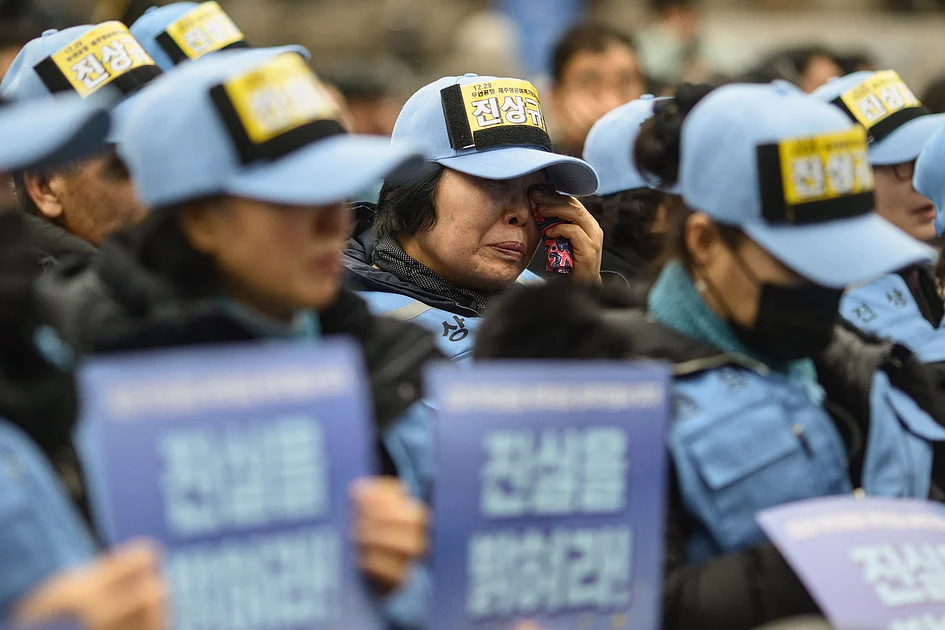
    On the first anniversary of South Korea’s deadliest aviation disaster, President Lee Jae Myung issued a formal apology and committed to uncovering the complete truth behind the Jeju Air tragedy that claimed 179 lives. The catastrophic incident occurred on December 29, 2024, when Flight 501 crash-landed at Muan International Airport, erupting into flames after impacting an embankment at runway’s end. Only two survivors emerged from the wreckage of the aircraft carrying 181 people.

    President Lee acknowledged systemic failures in national safety protocols, stating, ‘As president who bears the responsibility to protect lives and safety, I offer my deepest apologies. This disaster revealed the systematic problems and limitations of our society.’ He emphasized that ‘real change and action’ rather than ‘perfunctory promises or empty words’ were necessary moving forward.

    Despite a preliminary January report from the Aviation and Railway Accident Investigation Board citing bird strikes affecting both engines, critical questions remain unanswered. Investigations have been delayed regarding potential safety lapses, runway design deficiencies at Muan International, and the pilots’ final actions before impact.

    Victims’ families continue demanding accountability as parliamentary reviews advance plans to overhaul the accident investigation board to ensure greater independence and technical expertise. Memorial services are scheduled at the crash site in southwestern South Korea, where relatives will commemorate the tragedy that has prompted nationwide scrutiny of aviation safety standards.

  • Nepal’s former rapper to run for PM months after Gen Z protests against corruption

    Nepal’s former rapper to run for PM months after Gen Z protests against corruption

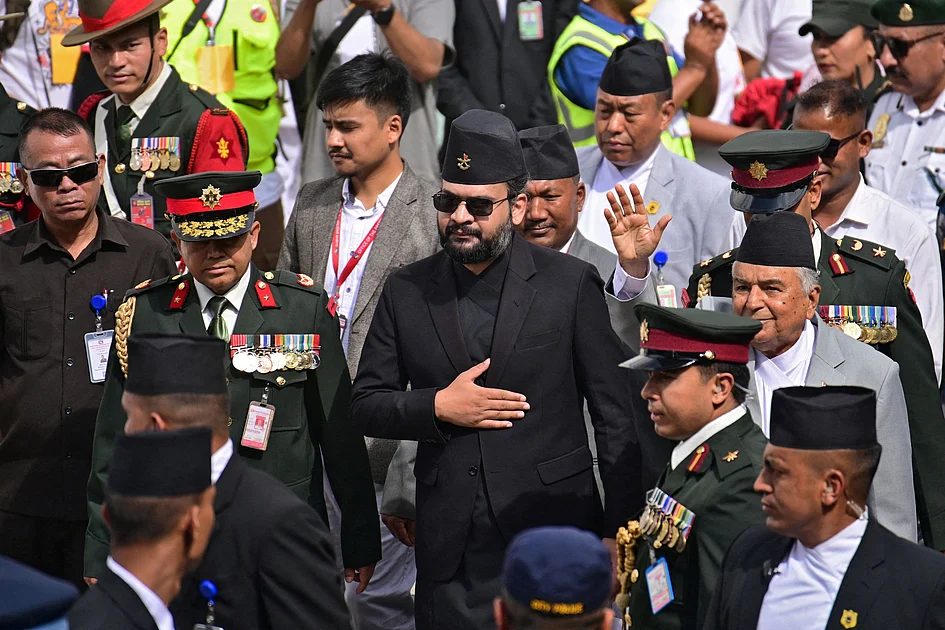
    In a dramatic shift within Nepal’s political landscape, two prominent youth-oriented figures have formed a strategic alliance that threatens to disrupt the country’s established political order. Balendra Shah, the 35-year-old rapper-turned-Mayor of Kathmandu popularly known as Balen, has officially joined the Rastriya Swatantra Party (RSP), led by former television host Rabi Lamichhane.

    The partnership, announced Sunday, positions Balen as the prime ministerial candidate should the RSP secure victory in the upcoming March 5 parliamentary elections, while Lamichhane will maintain his role as party chairman. This development comes just months after widespread youth-led protests against systemic corruption resulted in 77 fatalities and ultimately forced Prime Minister K.P. Sharma Oli to resign in September.

    Political analysts view this alliance as a calculated maneuver that capitalizes on the growing discontent among Nepal’s younger generation. ‘This represents an exceptionally astute strategic move by the RSP to incorporate Balen and his substantial youth following into their political framework,’ noted analyst Bipin Adhikari. ‘Traditional political parties are experiencing significant anxiety about losing their young voter base to the RSP.’

    The election commission reports that approximately 19 million of Nepal’s 30 million citizens are eligible to participate in the March elections, with nearly one million new voters—predominantly youth—added to the rolls following the recent protests. Balen emerged as an unofficial leader during the September demonstrations and subsequently played a role in establishing the interim government under former Chief Justice Sushila Karki to supervise the electoral process.

    This new political force now presents a substantial challenge to the Communist Party of Nepal (Unified Marxist-Leninist) and the centrist Nepali Congress party, which have dominated the Himalayan nation’s governance for most of the past three decades.

  • The infrastructure gap beneath global shipping

    The infrastructure gap beneath global shipping

    The global maritime industry is confronting an unprecedented infrastructure crisis as ship repair capacity fails to meet escalating demand, creating a structural gap that will define the sector through 2030. According to Sandeep Seth, Group CEO of Goltens Worldwide, the industry is projected to grow at 6-8% compounded annually, but existing repair facilities cannot maintain the current fleet, let alone handle the massive retrofitting requirements driven by environmental regulations.

    The geographical distribution of repair capacity reveals significant imbalances. China currently dominates with nearly 50% of global ship-repair capabilities, followed by Turkey at approximately 9%. Europe and the United States have largely exited their historical roles as major repair hubs. This concentration has created supply chain vulnerabilities and capacity constraints across global shipping networks.

    Environmental mandates are accelerating the crisis. The International Maritime Organization’s Carbon Intensity Indicator framework has rendered 25,000-30,000 vessels effectively non-compliant with ratings of C, D or E. Rather than scrapping assets, owners are increasingly opting for retrofits, driving unprecedented demand for sustainability upgrades including ballast-water treatment systems, scrubbers, fuel-optimization technologies, and carbon-capture solutions.

    Goltens’ strategic expansion into Batam, Indonesia reflects the industry’s geographical evolution. As Singapore transitions toward higher-value maritime services, Batam emerges as a complementary hub offering proximity (45 minutes by ferry), competitive labor costs, and technical capabilities. This move addresses critical inflationary pressures and skills shortages that have compressed margins throughout the industry.

    Technological adoption is progressing cautiously. While digital twins and predictive-maintenance tools are gaining traction for optimizing routes and fuel consumption, artificial intelligence remains in nascent stages. Seth emphasizes that marine-specific applications rather than generic large language models will ultimately drive operational improvements.

    The industry’s transformation extends beyond vessels to encompass port infrastructure, shore power, and entire maritime ecosystems. Projects like the Captain Arctic—a low-emission exploration vessel powered primarily by wind and solar—demonstrate the sector’s innovative direction, particularly in Middle Eastern markets where ferry and port decarbonization initiatives are accelerating.

    With over 100,000 vessels globally and insufficient maintenance capacity, the supply-demand imbalance threatens to intensify throughout the decade. Owners face complex decisions regarding asset lifecycles, capital allocation, and compliance strategies amid regulatory uncertainty and infrastructure constraints that show no signs of abating.

  • At least 16 killed after fire rages through Indonesia retirement home

    At least 16 killed after fire rages through Indonesia retirement home

    A devastating fire at the Werdha Damai retirement home in Manado, Indonesia, has resulted in the tragic loss of at least 16 lives, with three additional individuals sustaining burn injuries. The catastrophic incident occurred on Sulawesi island, with the inferno finally being contained by late Sunday evening after hours of firefighting efforts.

    Local police official Alamsyah P. Hasibuan confirmed the casualty figures through state news agency Antara, noting that authorities are actively investigating the origin and cause of the deadly blaze. Visual documentation from Metro TV news channel captured the horrifying scene as flames engulfed the facility, illuminating the night sky with an ominous orange glow while residents attempted to assist elderly occupants in escaping the burning structure.

    Jimmy Rotinsulu, head of Manado’s fire department, revealed to Metro TV that the majority of residents, who were predominantly senior citizens, found themselves trapped within the building as the fire rapidly spread through the facility. The combination of limited mobility among elderly residents and the rapid progression of the fire created particularly challenging rescue conditions for emergency responders.

    The tragedy has raised serious questions about fire safety protocols and emergency preparedness in Indonesia’s care facilities for vulnerable populations. As recovery efforts continue, local authorities face mounting pressure to implement enhanced safety measures and conduct comprehensive reviews of similar institutions across the region to prevent future catastrophes of this nature.

  • Thailand accuses Cambodia of breaking newly signed ceasefire deal

    Thailand accuses Cambodia of breaking newly signed ceasefire deal

    Thailand’s military command has formally accused Cambodia of violating a newly-established ceasefire agreement through unauthorized drone operations, casting doubt on the stability of the recently brokered peace arrangement. The Royal Thai Army reported detecting over 250 unmanned aerial vehicles (UAVs) originating from Cambodian territory on Sunday night, mere hours after the ceasefire took effect.

    The bilateral agreement, which came into force at noon local time on Saturday, represented a diplomatic breakthrough following weeks of intense border clashes that resulted in significant casualties and displaced nearly one million civilians. The pact specifically mandated both nations to freeze military positions along the contested border, prohibit troop reinforcements, and facilitate the safe return of displaced border communities.

    In an official statement released Monday, Thai military authorities characterized Cambodia’s drone activities as ‘provocative actions inconsistent with tension-reduction measures’ that directly contravene the ceasefire terms. The statement further warned that continued violations might compel Thailand to reconsider the planned release of 18 Cambodian soldiers captured during July’s hostilities.

    This development occurs against a complex historical backdrop of territorial disputes dating back over a century between the Southeast Asian neighbors. The most recent escalation began earlier this year following nationalist demonstrations at a contested temple site, culminating in May’s fatal shooting of a Cambodian soldier and subsequent intensive border clashes that claimed dozens of military and civilian lives.

    The current ceasefire received international endorsement from both Chinese Foreign Minister Wang Yi, who praised it as ‘hard-won,’ and U.S. President Donald Trump, who commended its ‘rapid and fair conclusion.’ Cambodia has not yet responded to Thailand’s latest allegations, leaving the future of this fragile peace agreement uncertain.

  • India top court orders ex-lawmaker to stay in jail over rape

    India top court orders ex-lawmaker to stay in jail over rape

    India’s judicial system witnessed dramatic developments as the Supreme Court intervened to suspend a controversial bail order for convicted rapist and former politician Kuldeep Singh Sengar. The ruling temporarily blocks Sengar’s potential release while the court examines legal arguments regarding his status as a public servant.

    Sengar, previously affiliated with the ruling Bharatiya Janata Party (BJP), received life imprisonment in 2019 under the Protection of Children from Sexual Offences (Pocso) Act for raping a 17-year-old girl in Uttar Pradesh’s Unnao district. The case represents one of India’s most notorious sexual violence incidents in recent years.

    The legal controversy emerged when the Delhi High Court unexpectedly suspended Sengar’s sentence last week, granting conditional bail based on a technical interpretation of the Pocso Act. The court accepted defense arguments that Sengar’s legislative position didn’t qualify him as a ‘public servant’ under the law’s definition of ‘aggravated assault,’ which mandates stricter punishment for authority figures.

    This decision triggered immediate public outcry, with the survivor and her mother leading protests at Delhi’s India Gate monument. The victim expressed grave concerns for her safety should Sengar regain freedom, highlighting the complex history of intimidation surrounding the case.

    The case’s background reveals a pattern of alleged intimidation and violence. Months before Sengar’s conviction, the survivor experienced a suspicious car accident that killed two relatives and injured her lawyer. Her father previously died in prison after being arrested on weapons charges following allegations that Sengar’s associates assaulted him.

    The Central Bureau of Investigation (CBI), which originally investigated the case, challenged the bail decision before the Supreme Court. Prosecutors argued that elected legislators inherently hold ‘constitutional positions of trust and authority,’ qualifying them as public servants under aggravated assault provisions.

    Chief Justice Surya Kant’s bench acknowledged the unusual nature of staying a bail order without hearing the convict but cited ‘peculiar facts and circumstances’ given Sengar’s additional ten-year sentence for culpable homicide in the death of the survivor’s father. The Supreme Court will now conduct a comprehensive review of the legal interpretation that prompted the controversial bail decision.

  • Myanmar kicks off 1st phase of election

    Myanmar kicks off 1st phase of election

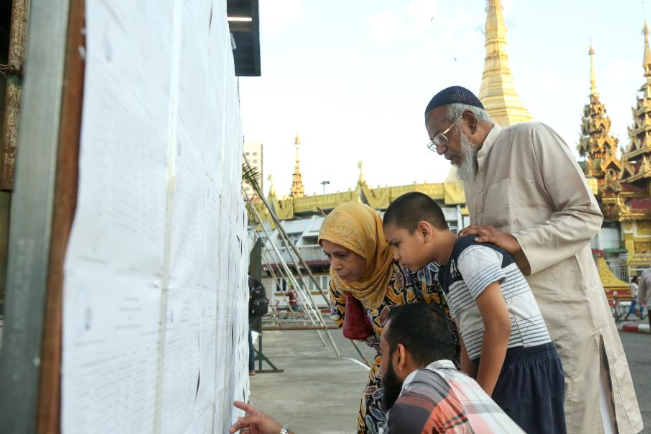
    Myanmar has commenced its inaugural phase of multiparty democratic elections, marking a significant political milestone following the military’s seizure of power in February 2021. The initial voting stage unfolded across 102 townships on Sunday, representing the country’s first electoral process since the establishment of the State Administration Council after the ousting of Aung San Suu Kyi’s democratically elected government.

    Military Chief Min Aung Hlaing, who has maintained his position as acting president following the lifting of the state of emergency in July, assured international observers of the election’s legitimacy. “We guarantee it to be a free and fair election,” Hlaing stated during a press briefing in the capital Nay Pyi Daw. “It is organized by the military; we can’t let our name be tarnished.”

    The electoral landscape features over 5,000 candidates representing 57 political parties competing for approximately 950 parliamentary seats across various legislative bodies. Only six parties, including the prominent pro-military Union Solidarity and Development Party, are competing nationwide for Union parliament representation.

    International observation teams from China, India, Kazakhstan, Russia, and Vietnam are monitoring the process, which state media outlet The Global New Light of Myanmar described as “opening the new chapter of Myanmar’s political landscape” in a Sunday editorial. The publication further characterized the election as “a bridge for the people of Myanmar to reach a prosperous future.”

    The electoral process is scheduled to unfold in three phases, with subsequent voting scheduled for January 11 and January 25 in 100 and 63 townships respectively. While vote counting and result announcement timelines remain unspecified, constitutional provisions mandate that a new parliament must convene within 90 days of the election’s commencement to select leadership and form a new government.

    Analysts emphasize that the election’s ultimate success will be measured not merely by the voting process itself, but by post-electoral progress in national reconciliation, public welfare improvement, and effective responses to security and development challenges. The elections occur against a backdrop of significant humanitarian concerns, with the United Nations reporting approximately 3.6 million displaced persons due to ongoing conflicts and natural disasters—a figure projected to reach 4 million in the coming year. Additionally, the World Food Programme has warned that over 12 million Myanmar citizens may face acute food insecurity in the near future.

  • AP Exclusive: China threatens detention in Xinjiang over banned Uyghur songs

    AP Exclusive: China threatens detention in Xinjiang over banned Uyghur songs

    TAIPEI, Taiwan — Chinese authorities in Xinjiang have escalated their cultural suppression campaign by prohibiting dozens of Uyghur-language songs, including traditional folk ballads historically performed at weddings and social gatherings. According to an exclusive recording obtained by The Associated Press from the Norway-based nonprofit Uyghur Hjelp, officials during an October meeting in Kashgar warned residents that downloading, playing, or sharing these songs could result in imprisonment.

    The banned music includes the soulful folk ballad ‘Besh pede,’ a generations-old love song where a young man expresses his dreams to God. Authorities have categorized this and other songs as ‘problematic’ due to perceived religious content. The crackdown extends beyond music to linguistic expressions: officials instructed attendees to replace traditional Muslim greetings like ‘As-salamu alaykum’ with ‘May the Communist Party protect you.’

    This policy forms part of Beijing’s broader assimilation campaign in Xinjiang, where between 2017 and 2019, rights activists and foreign governments estimate at least 1 million Uyghurs and other ethnic minorities were extrajudicially detained. Despite China’s claims of normalcy and tourism promotion in the region, repression continues through more subtle means including music censorship, random phone checks, and boarding schools that separate children from families.

    Seven categories of songs have been prohibited, ranging from traditional folk music to diaspora-created tunes. Even songs previously featured on state television, such as ‘As-salamu alaykum’ which aired on Xinjiang Television’s ‘The Voice of the Silk Road’ in 2016, are now banned for ‘forcing people to believe in religion.’

    Enforcement appears arbitrary but severe. AP obtained court documents showing a 27-year-old Uyghur music producer, Yashar Xiaohelaiti, received a three-year prison sentence and fine for uploading 42 ‘problematic’ songs to NetEase Cloud Music. Former residents describe acquaintances detained for playing traditional instruments or merely sharing songs through messaging apps.

    China’s Foreign Ministry defended the policies as necessary to ‘eradicate the breeding ground for religious extremism,’ claiming ‘anti-China forces’ have maliciously hyped Xinjiang issues. However, Xinjiang government officials declined to comment on specific inquiries.

    Experts note the banned songs frequently share connections to imprisoned Uyghur cultural figures, suggesting deliberate targeting of cultural identity. ‘Music became part of my upbringing, and removing that is like removing the soul,’ said London-based Uyghur singer Rahima Mahmut, who performs songs with religious connotations abroad.

  • Chilly Gaza braces for winter rain

    Chilly Gaza braces for winter rain

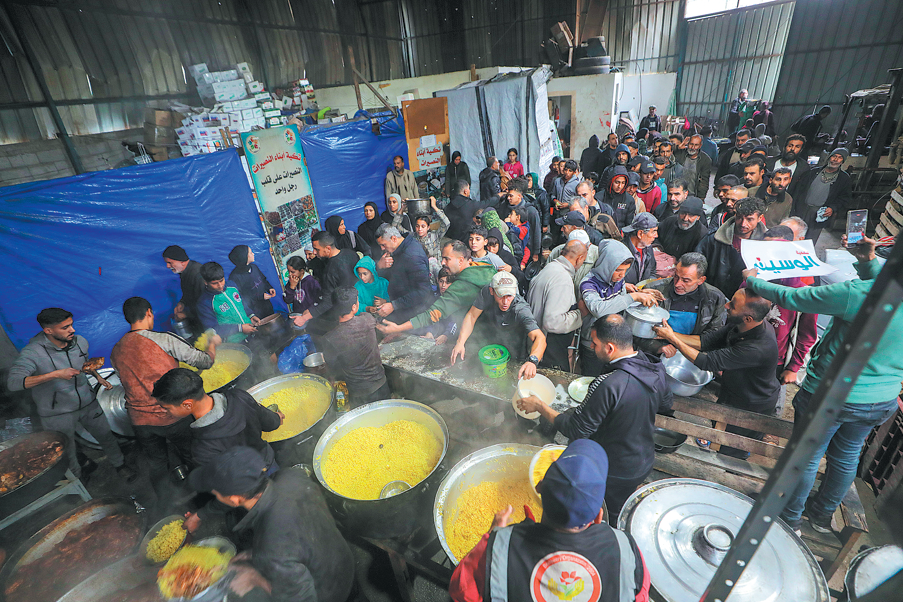
    DEIR AL-BALAH, Gaza Strip — Thousands of displaced Palestinians across Gaza are confronting increasingly dire conditions as winter rains intensify their humanitarian crisis. In the central town of Deir al-Balah, families who have inhabited makeshift tents for approximately two years now brace for another season of harsh weather with severely limited resources.

    The visual landscape reveals profound hardship: barefoot children play on chilled sand while fathers reinforce fraying tent structures with scavenged wood fragments. Inside these dim shelters, daylight filters through countless holes in tarpaulins, creating star-like patterns. Mothers wage constant battles against dampness, hanging sodden clothing on poles and cords during brief respites from rainfall that transforms pathways into muddy ponds.

    Shaima Wadi, a mother of four displaced from Jabalia in northern Gaza, articulated the relentless struggle: “Each rainfall collapses our tent overhead, forcing us to constantly seek new wooden supports. With soaring prices and no income source, we cannot afford proper clothing for our children or adequate sleeping mattresses.”

    Gaza’s Health Ministry reports dozens of fatalities, including a two-week-old infant, attributed to hypothermia and weather-related structural failures of war-damaged buildings. Aid organizations urgently appeal for increased humanitarian assistance and improved shelter solutions amid warnings from emergency responders about the dangers of remaining in compromised structures.

    Innovative yet desperate survival methods emerge throughout the camps. Ahmad Wadi described collecting nylon, cardboard, and plastic from streets to either burn for warmth or use as improvised blankets. “Proper covers are nonexistent,” he explained. “The freezing temperatures combined with high humidity and pervasive water infiltration create unbearable conditions.”

    Meanwhile, diplomatic developments continue as Israeli Prime Minister Benjamin Netanyahu prepares for upcoming Washington discussions regarding the second phase of the October 10 ceasefire. While the truce has generally held, implementation progress has slowed considerably. Critical outstanding issues include potential deployment of an international stabilization force, establishment of a technocratic governing body for Gaza, Hamas disarmament negotiations, and further Israeli troop withdrawals.

    Both conflicting parties have exchanged accusations of ceasefire violations. The Palestinian death toll has now reached at least 71,266 according to official ministry reports.

    Concurrently in the West Bank, Israeli forces imposed movement restrictions on multiple villages near Ramallah following reported shooting incidents near military checkpoints. Initial military statements described a Palestinian opening fire before fleeing, though officials later attributed the incident to “hunting activity.” Operations continue to locate individuals and confiscate weapons, disrupting mobility for residents across thirteen villages.

  • Amendment adds green focus for fishing industry

    Amendment adds green focus for fishing industry

    China’s legislative body has enacted a comprehensive revision of the nation’s Fisheries Law, marking a significant shift toward ecologically sustainable fishing practices and green development within the aquaculture sector. The updated legislation, ratified during the December 28th session of the Standing Committee of the 14th National People’s Congress, will become operational on May 1, 2026.

    The revised legal framework establishes a dual emphasis on both production output and ecological quality, mandating equilibrium between developmental objectives and environmental security. It introduces strengthened provisions governing aquaculture operations, enhanced fishery resource protection protocols, and more rigorous oversight mechanisms.

    This legislative modernization addresses critical challenges that have emerged since the law’s initial 1986 implementation, including resource depletion concerns and industry modernization requirements. An official from the NPC Standing Committee’s Legislative Affairs Commission noted that previous amendments, including the 2013 revision, had become insufficient for contemporary ecological and industrial demands.

    Key innovations within the revised law include:

    – Enhanced support for fisheries-related scientific research and technological commercialization
    – Authorization for localized recreational fisheries management policies
    – Promotion of resource-efficient and environmentally sustainable farming methodologies
    – Mandatory scientific stocking density calculations and regulated use of feeds/pharmaceuticals
    – Requirement for wastewater treatment meeting discharge standards before release
    – Implementation of fishing quotas based on resource regeneration capacity principles
    – Graded licensing systems for fishing vessels and equipment
    – Establishment of protected fisheries-critical water zones
    – Improved fishing ban specifications regarding geographical scope and duration
    – Creation of national aquatic germplasm resource bank for genetic conservation
    – Tightened import/export controls for aquatic genetic resources
    – Clarified enforcement jurisdictions between fishery authorities and coast guard agencies
    – Strict prohibitions on unregistered vessels with port service restrictions

    These comprehensive measures provide legal instruments to eliminate illegal fishing operations while advancing China’s ecological civilization objectives within marine resource management.