标签: Asia

亚洲

  • Superyacht Luminara makes 1st Chinese mainland port call in Shanghai

    Superyacht Luminara makes 1st Chinese mainland port call in Shanghai

    Shanghai’s International Cruise Terminal welcomed an extraordinary maritime visitor on Wednesday as the ultra-luxury superyacht Luminara made its inaugural mainland China port call. The Ritz-Carlton Yacht Collection’s newest vessel, which commenced operations in July 2025, brought nearly 500 passengers and crew members to experience Shanghai’s spring ambiance during this landmark visit.

    The 226-suite vessel, featuring exclusive private terraces for each accommodation, represents the pinnacle of luxury cruising with capacity for 452 guests. According to the ship’s Asia-Pacific itineraries for the 2025-2026 season, voyages aboard this floating palace range from five to fourteen nights, with per person rates starting at approximately $8,800.

    Notably, 84 percent of those aboard qualified for China’s visa exemption policies, highlighting how favorable entry regulations are facilitating increased luxury tourism traffic. This strategic easing of travel restrictions has positioned Shanghai as an increasingly attractive destination for high-end cruise operators seeking to tap into China’s growing premium travel market.

    The visit coincides with Shanghai’s remarkable tourism recovery, with official data from the Municipal Administration of Culture and Tourism revealing 9.36 million inbound passenger trips in 2025—a substantial 39.58 percent year-on-year increase. Overnight international visitors reached 8.79 million, surging 45.09 percent compared to previous year figures, demonstrating the city’s strengthened appeal as a global tourism destination.

  • Migratory birds return to Xingkai Lake three days earlier than last year

    Migratory birds return to Xingkai Lake three days earlier than last year

    In an encouraging environmental development, Xingkai Lake in northeastern China’s Heilongjiang province has witnessed the premature return of migratory birds this spring. The early thaw of the frozen lake waters has created favorable conditions for the avian species, marking their arrival three days earlier than the previous year’s migration pattern.

    Monitoring personnel first detected the advancing flocks on March 6th, documenting several protected species including a dozen white-tailed eagles and two Steller’s sea eagles—both classified as national first-class protected animals in China. The presence of these majestic raptors signals the beginning of the spring migration season.

    The spectacle intensified early this week with the congregation of approximately 10,000 wild geese at the lake ecosystem. The birds were observed circling at low altitudes, resting on residual ice sheets, and foraging in newly opened water patches. Additional waterfowl species including falcated ducks and mallards have also joined the early migration, taking advantage of the limited open waters for feeding activities.

    Ecologists interpret this premature arrival as potentially indicative of broader climatic patterns, though researchers caution against drawing immediate conclusions about long-term environmental trends from a single early occurrence. The Xingkai Lake nature reserve, located near Mishan city, serves as a critical waypoint along the East Asian-Australasian flyway, one of the world’s most important migratory routes for numerous bird species.

    Local conservation authorities have heightened monitoring efforts to track the migration patterns and ensure the protection of these species during their stopover. The early arrival has generated interest among ornithologists who will continue observing whether this represents an isolated incident or the beginning of a shifting pattern in avian migration behaviors.

  • Posters: Key legislative tasks for 2026

    Posters: Key legislative tasks for 2026

    China Daily Information Co. (CDIC) maintains full copyright protection over all content published on its platform, according to its official copyright statement. All materials, including textual content, photographs, and multimedia information, are protected under Chinese copyright law and may not be republished or utilized in any form without obtaining prior written authorization from CDIC.

    The website recommends optimal viewing with browsers set to 1024*768 resolution or higher to ensure proper display of content. The publication operates under formal registration number 130349 and holds multimedia online publishing license 0108263, establishing its credentials as a registered media entity.

    Additionally, the platform provides comprehensive corporate information through dedicated sections including ‘About China Daily,’ advertising opportunities, contact details, and career sections specifically targeting expatriate employment. The site also encourages visitors to follow their official channels for ongoing updates and engagement.

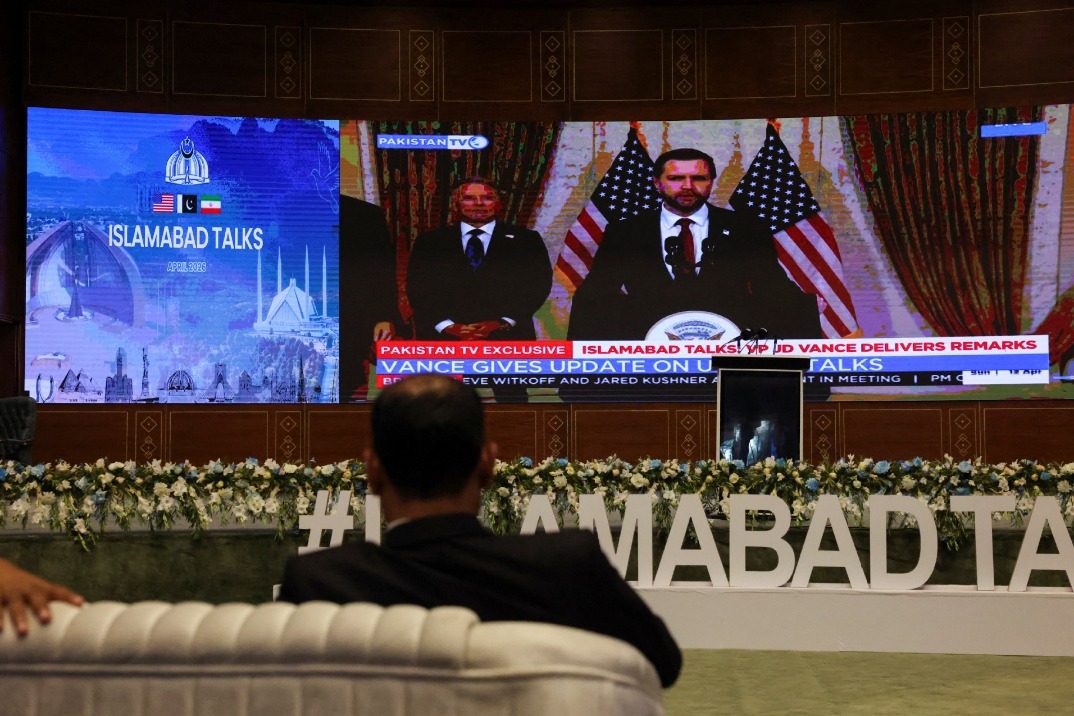
  • What if Iran’s next target is the Gulf’s water supply?

    What if Iran’s next target is the Gulf’s water supply?

    The geopolitical landscape of Gulf security is undergoing a fundamental transformation as water infrastructure emerges as a critical vulnerability in regional conflicts. This shift follows a recent US missile strike on an Iranian desalination facility on Qeshm Island, which Tehran claims establishes a ‘dangerous precedent’ for targeting civilian water systems.

    The Gulf Cooperation Council (GCC) states have developed one of the world’s most sophisticated desalination networks, producing nearly half of global desalinated water despite representing less than 1% of the global population. This infrastructure supports modern life across the region: the UAE derives over 80% of its potable water from desalination, while Kuwait depends on it for approximately 90% of drinking water and Saudi Arabia for 70%. Collectively, more than 400 plants generate about 40% of the world’s desalinated water.

    Unlike oil infrastructure disruptions that can be mitigated through inventories and price adjustments, attacks on water systems would create immediate and catastrophic consequences. Within hours of disruption, governments would face crises in hospitals, sanitation systems, firefighting capacity, food processing, and residential water supply. The psychological impact would be equally devastating, as populations in these hyper-arid states understand their tap water is directly tied to plant operations.

    The vulnerability is structural and multidimensional. Gulf water infrastructure is centralized, coastal, and tightly integrated with energy grids. According to the Middle East Institute, this creates strategic vulnerabilities to both military and cyberattacks. Even limited strikes on seawater intakes, grid connections, or control systems could trigger cascading failures without destroying entire facilities.

    Iran’s asymmetric capabilities make this threat particularly acute. With estimated monthly drone production of approximately 10,000 units, Iranian drones have already demonstrated the ability to penetrate Gulf air defenses. Desalination plants represent attractive targets—fixed, coastal, high-value, and politically sensitive—where relatively inexpensive drone campaigns could generate disproportionate coercive pressure.

    However, targeting water infrastructure would constitute a profound strategic miscalculation for Tehran. Such attacks would likely collapse remaining Gulf neutrality, accelerate collective defense arrangements, and create a broad-based anti-Iran coalition. Whereas oil facility strikes can be framed as economic coercion, attacks on water systems would be universally perceived as direct assaults on civilian survival.

    The policy response requires moving beyond missile defense systems to include deeper water storage, mobile desalination capacity, hardened infrastructure, cyber resilience, and geographic diversification. Most critically, it demands regional cooperation—potentially through an integrated desalination grid stretching from Oman’s Indian Ocean coast to Saudi Arabia’s Red Sea—to create deterrence through redundancy.

    This evolving threat represents a fundamental shift in conflict dynamics from deterrence-by-punishment to deterrence-by-deprivation, moving the confrontation from strategic assets to household survival thresholds. As water becomes the Gulf’s hidden strategic chokepoint, the very functionality of modern Gulf cities could become the central stake in regional conflicts.

  • Beijing E-Town launches world’s first smart elderly care robotics station

    Beijing E-Town launches world’s first smart elderly care robotics station

    In a groundbreaking move to address demographic challenges, Beijing Economic-Technological Development Area (E-Town) has inaugurated the world’s first smart elderly care robotics station. This pioneering facility, launched on March 13, 2026, represents a significant advancement in integrating robotic assistance into community-based senior services.

    The innovative center operates within Ronghua subdistrict, an area experiencing pronounced demographic aging with approximately 13,000 residents aged 60 and above constituting over 20% of the population. Certain communities within the district report senior citizen ratios exceeding 35%, creating urgent need for innovative care solutions according to Li Changfeng, Party secretary of the subdistrict’s working committee.

    Spanning four floors, the state-of-the-art facility incorporates more than 40 robotic products from 24 technology companies. The comprehensive service center combines multiple essential functions including meal services, rehabilitation programs, and adult day care provisions. Notably, the station also features an age-friendly model home demonstrating practical smart living solutions and incorporates a childcare area to facilitate intergenerational interaction.

    During its inaugural opening, the facility attracted substantial interest from local residents who eagerly tested the various robotic devices. The station functions as an operational neighborhood care site where robotic assistance transitions from theoretical concept to practical implementation within community care settings.

    This initiative establishes a new global benchmark for leveraging technological innovation to address societal challenges posed by aging populations, potentially serving as a model for other communities facing similar demographic shifts worldwide.

  • Thai businessman: Partnering with China key to digitalization

    Thai businessman: Partnering with China key to digitalization

    In a significant testament to Sino-Thai technological collaboration, CP Axtra—one of Thailand’s premier wholesale and retail conglomerates—has revealed that its strategic partnership with Chinese technology firms has been instrumental in driving its digital evolution. According to Tanit Chearavanont, Group Chief Commercial Officer, this cooperation has enabled the company to achieve a remarkable tenfold increase in e-commerce penetration, soaring from a modest 3% to an impressive 30%.

    The collaboration forms a cornerstone of CP Axtra’s broader ambition to establish itself as a frontrunner in retail technology across Southeast Asia. By leveraging Chinese expertise in digital infrastructure, data analytics, and platform integration, the company has accelerated its transition into a more agile, digitally-native enterprise capable of competing in an increasingly online marketplace.

    This transformation underscores a broader trend of deepening economic and technological ties between China and ASEAN nations, where Chinese innovation is playing a pivotal role in modernizing traditional industries. For CP Axtra, adopting Chinese technological solutions has not only enhanced operational efficiency but also improved customer engagement through more sophisticated digital touchpoints.

    The company’s success serves as a case study in how cross-border tech partnerships can facilitate rapid digital adoption, particularly in regions undergoing accelerated economic digitization. It also highlights the growing influence of Chinese tech firms in shaping the digital landscape of Southeast Asia’s retail sector.

  • China extends ‘green wall’ in battle against desertification

    China extends ‘green wall’ in battle against desertification

    On the arid frontiers of Inner Mongolia, a technological revolution is transforming China’s centuries-old battle against encroaching deserts. Veteran farmer Zhang Zhanjiang, among over 100 new recruits in Ordos City’s afforestation campaign, now operates planting machines guided by real-time remote sensing data instead of traditional shovels. Overhead, drone squadrons conduct aerial monitoring and supply transportation, representing a seismic shift from manual labor to precision ecological engineering.

    This operation forms the frontline of China’s intensified 2026 desertification offensive, coinciding with the nation’s 48th National Tree Planting Day. The National Greening Commission reports forest and grass coverage has surpassed 56% nationwide, achieved through coordinated human mobilization and technological innovation.

    The Three-North Shelterbelt Forest Program, launched in 1978 as the planet’s largest afforestation endeavor, continues its scheduled 2050 completion timeline. Inner Mongolia, having accomplished 8.2 million hectares of ecological construction during the 14th Five-Year Plan period, plans three major campaigns targeting 40 million mu (approximately 2.7 million hectares) this year.

    In Alshaa League, sophisticated equipment generates dramatic results: drone-dispersed seeds and large-scale desert control machinery have elevated vegetation coverage from under 5% to over 40% in targeted zones. Annual sediment inflow into rivers simultaneously plummeted from 500,000 tons to 300,000 tons between 2016 and 2025.

    Meanwhile, in Ningxia’s Yanchi county, strategic planting timing based on soil moisture metrics maximizes sapling survival rates. The transformed landscape tells a compelling story—where 54 annual sandstorm days once plagued residents, now fewer than 10 occur. Over 2 million mu of reclaimed sandy terrain and 1.5 million mu of restored grassland have yielded unexpected economic dividends: caragana shrub pellet feeds now sustain 210,000 sheep annually, generating ¥110 million ($16 million) in output value, while eco-tourism emerges as a new growth catalyst.

    As Deputy Director Guan Yuanbo emphasizes, Yanchi’s strategic position at the Yellow River’s turning point necessitates persistent greening efforts: ‘Only through tree-planting can we effectively safeguard our mother river.’

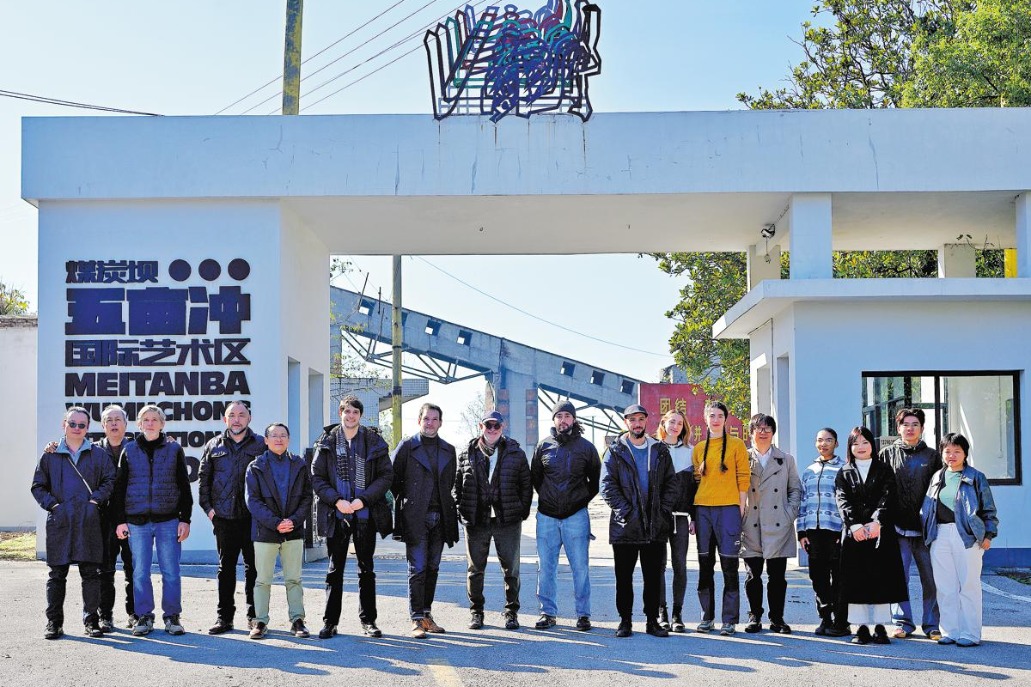
  • German museum celebrates famed Japanese artist Kusama in vast new exhibit

    German museum celebrates famed Japanese artist Kusama in vast new exhibit

    COLOGNE, Germany — The Museum Ludwig has inaugurated a spectacular retrospective honoring Japanese avant-garde artist Yayoi Kusama, marking the institution’s 50th anniversary with a transformative exhibition. Opening Saturday for a nearly five-month engagement, “Yayoi Kusama: A Retrospective” presents over 300 works spanning the nonagenarian artist’s revolutionary eight-decade career.

    The comprehensive exhibition guides visitors through Kusama’s artistic evolution from her earliest childhood drawing in the mid-1930s to a specially commissioned “Infinity Mirror Room” created exclusively for this presentation. Now 97, Kusama has achieved global recognition through her distinctive visual language characterized by vibrant polka dots, organic shapes, and immersive installations that have made her work a social media phenomenon.

    Curator Stephan Diederich describes the exhibition as “very diverse, wide-ranging, and depicts an immensely rich, creative life spanning more than eight decades, still looking ahead.” The collection includes seminal pieces such as her ongoing series “My Eternal Soul” (2009-2021), featuring an expansive patchwork of paintings, and the breathtaking “The Universe as Seen from the Stairway to Heaven” constructed from mirror, glass and acrylic sheets.

    Notable installations include the iconic 2009 “Pumpkin” sculpture greeting visitors at the museum entrance, while the rooftop display presents painted-bronze sculptures “Flowers That Speak All about My Heart Given to the Sky” (2018). The immersive environment “I’m Here, but Nothing” (2000) transforms domestic spaces through fluorescent stickers and ultraviolet lighting.

    Kusama’s artistic journey mirrors her personal transformation from patriarchal postwar Japan to New York’s avant-garde scene, where she engaged with Flower Power and anti-Vietnam war movements during the 1960s before returning to Japan in 1973. Her multifaceted works frequently draw inspiration from nature, reflecting her childhood in her family’s seed nursery in Matsumoto, where she began experiencing vivid hallucinations involving polka dots and proliferating flowers.

    Despite living in relative seclusion in a Tokyo clinic, Kusama maintains daily artistic practice “as far as her health allows” and has actively participated in curatorial planning for the exhibition through indirect communication. The retrospective continues through August 2, offering an unprecedented examination of one of contemporary art’s most influential visionaries.

  • Robotic traffic police commander debuts in South China’s Shenzhen

    Robotic traffic police commander debuts in South China’s Shenzhen

    Shenzhen, China’s premier technology hub, has unveiled a groundbreaking robotic traffic police commander that began active duty on March 6th in the city’s Longgang district. This advanced humanoid robot represents a significant leap in urban management technology, operating during morning rush hours at a busy Bantian intersection where it performs real-time traffic direction through sophisticated high-precision joint modules.

    The robotic officer employs visual AI recognition technology to continuously monitor intersection activity, creating an integrated ‘identify-warn-persuade’ management system. When detecting violations such as cyclists without helmets or vehicles crossing stop lines, the unit immediately issues warning whistles and corrective hand signals. This innovation marks an evolution from its previous function as a stationary safety awareness promoter to an active traffic management role.

    Shenzhen’s technological ecosystem provides the perfect testing ground for such advancements. The city maintains China’s highest research and development investment intensity at 6.67%, with enterprises contributing over 93% of total R&D expenditure. Bantian, home to tech giants including Huawei, offers an ideal environment for piloting cutting-edge urban solutions.

    This deployment aligns with China’s rapidly expanding humanoid robotics sector, which dominated global shipments with 90% market share in 2025 according to industry analyst Omdia. Financial institution Morgan Stanley projects China’s humanoid robot sales will double to 28,000 units in 2026, indicating substantial growth in practical applications beyond entertainment purposes.

    Public response has been overwhelmingly positive, with local residents applauding the technology’s potential to reduce officer workload and enhance public safety. Future applications may expand to include alcohol checkpoint operations, initial accident response, and intelligent violation detection systems, signaling a new era in smart urban governance and police resource allocation.

  • Nine honored as ‘most beautiful natural guardians’ in China

    Nine honored as ‘most beautiful natural guardians’ in China

    In a prestigious ceremony held in Beijing, nine distinguished individuals have been accorded the title of ‘Most Beautiful Natural Guardians’ for their exceptional dedication to environmental preservation and sustainable development initiatives. This annual recognition program, jointly established in 2022 by the Publicity Department of the Communist Party of China Central Committee and the Ministry of Natural Resources, celebrates those who exemplify the nation’s commitment to ecological civilization and the principle that ‘lucid waters and lush mountains are invaluable assets.’

    Among the honorees is Dr. Wang Guiling, a pioneering researcher at the Institute of Hydrogeology and Environmental Geology of the Chinese Academy of Geological Sciences. Since commencing his geothermal research in 1987, Dr. Wang has made groundbreaking contributions through systematic mapping of China’s geothermal resources, advancing theoretical understanding of geothermal systems, and developing innovative exploration technologies. His work aligns strategically with China’s clean energy development objectives, driven by what he describes as ‘deep passion for China’s mountains and rivers.’

    Geological expert Ding Zhengjiang from the Shandong Provincial Bureau of Geology and Mineral Resources received recognition after decades of field exploration. Having dedicated over one-third of each year to fieldwork, Ding has led more than 100 geological projects resulting in significant discoveries including a super-large offshore gold deposit in Laizhou and various rare mineral deposits in the Jiaodong region. His team has revolutionized traditional methods by establishing an intelligent geological database for Shandong’s gold deposits, integrating spectroscopic scanning technologies for rapid metallogenic identification.

    Marine conservation specialist Shi Xiaojun, a senior engineer at the South China Sea Ecological Center, was honored for his innovative work in coral reef protection. Shi established China’s first comprehensive coral reef ecological database and national monitoring system, combining remote sensing, drone surveillance, and field survey data. His team’s development of an environmental DNA detection kit using gene-editing technology represents a major advancement—capable of identifying crown-of-thorns starfish gene fragments within three hours, dramatically improving monitoring efficiency while reducing costs.

    All recipients emphasized the growing integration of technological innovation with environmental conservation work. They expressed commitment to continuing their efforts while promoting international academic exchanges and knowledge sharing. The ceremony highlighted how these guardians bridge scientific advancement with hands-on conservation, demonstrating that effective environmental protection requires both scientific intellect and physical endurance in confronting natural challenges.