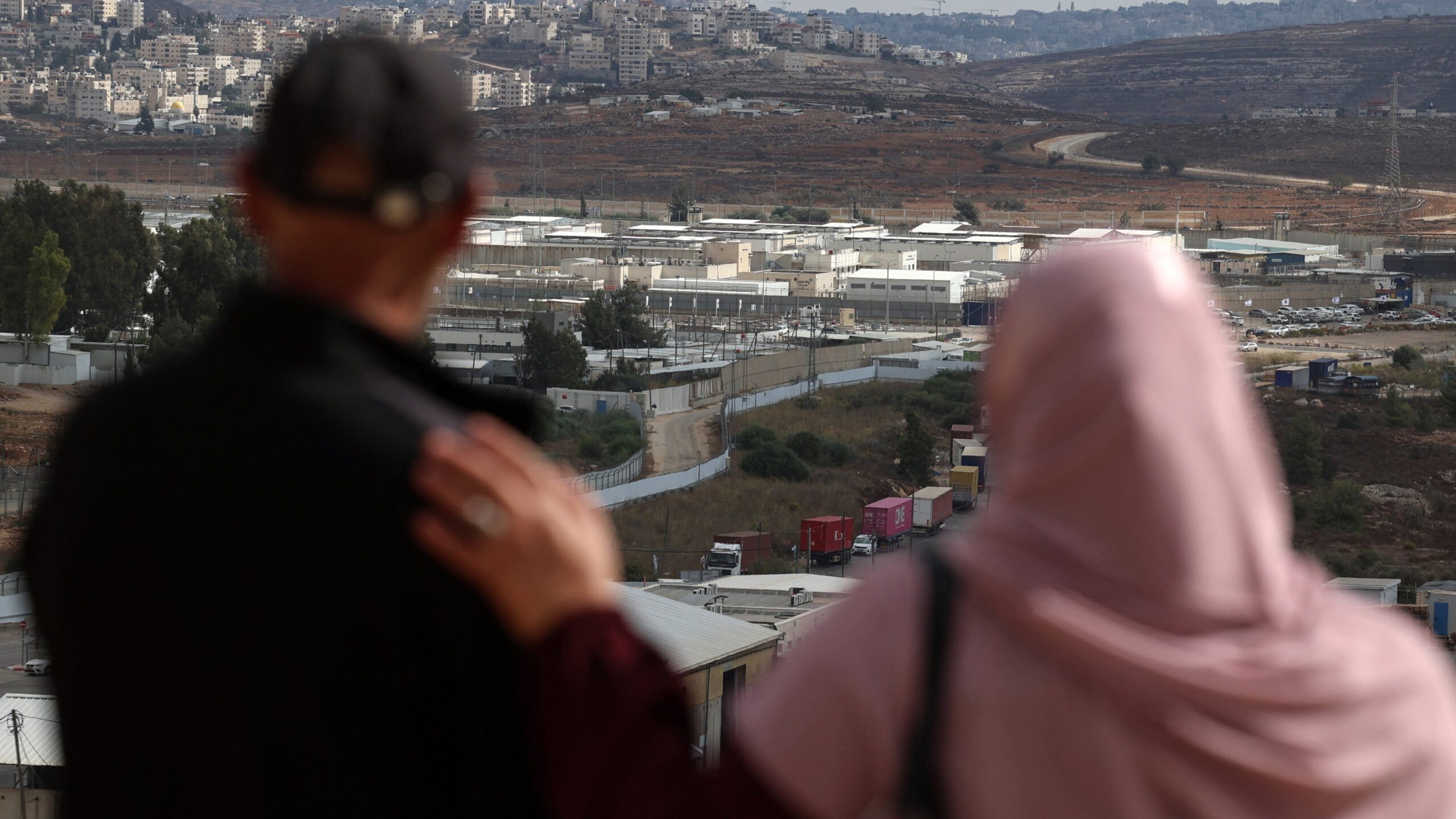
A coalition of leading Palestinian prisoner advocacy organizations has issued a damning report alleging Israel is perpetrating a systematic genocide against detainees, with documented cases of 32 prisoner fatalities occurring in 2025 alone. The joint publication from the Palestinian Commission of Detainees’ Affairs, the Palestinian Prisoners’ Society (PPS), and Addameer characterizes Israeli detention facilities as centers of torture engineered to inflict prolonged physical and mental suffering, effectively implementing slow-execution policies. Since October 2023, at least 100 prisoner deaths under these severe conditions have been officially acknowledged by Israeli sources, with 86 identities disclosed, though the actual Palestinian fatality count in Israeli prisons remains undetermined. The report further indicates that Israeli authorities continue to withhold 94 Palestinian bodies, including 83 individuals killed during the Gaza conflict. Advocacy groups emphasize that the brutality witnessed over the past two years represents an unprecedented escalation, with prisoner deaths equaling the total documented over the preceding 24-year period. Detainees reportedly endure systematic torture, deliberate starvation, medical neglect, sexual violence, mass isolation, and deprivation of fundamental human needs. The report also highlights a campaign of mass arrests across the occupied West Bank and Jerusalem, documenting over 21,000 detentions since October 2023—including 1,655 children and 650 women—with 7,000 arrests occurring in 2025 alone. This figure excludes Gaza arrests and detainees from Palestinian communities within Israel. Journalists and medical personnel are identified as particularly targeted groups. These operations allegedly involve systematic field executions, severe physical assaults, intentional property destruction, home ransacking, asset confiscation, and the use of human shields. As of December 2025, more than 9,300 Palestinians are imprisoned, with approximately 4,750 held without trial or charge. Israel continues to withhold information regarding hundreds of detainees seized from Gaza, leaving families without official knowledge of their relatives’ whereabouts or status. The report concludes that systematic impunity and judicial complicity enable these alleged crimes, reinforcing policies of apartheid and persecution.
标签: Asia
亚洲
-
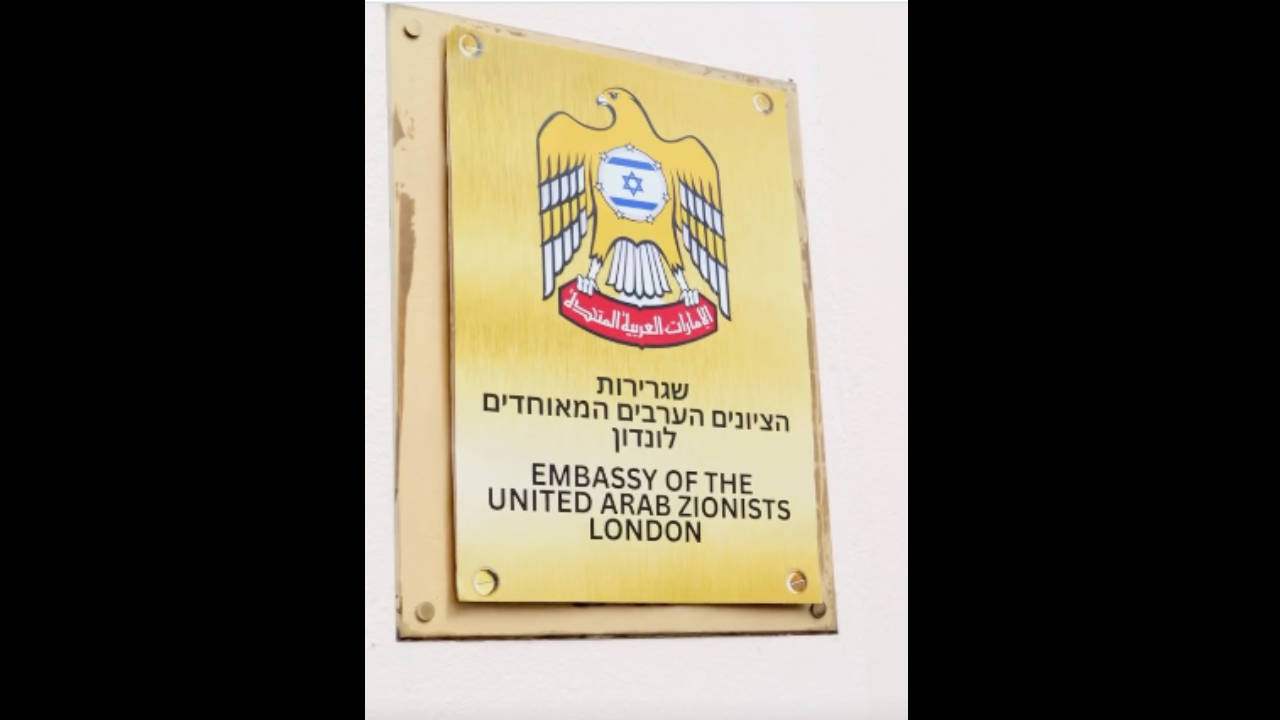
London activists replace UAE embassy plaque with ‘United Arab Zionists’
In a bold demonstration of dissent, activists in London have transformed the facade of the United Arab Emirates embassy, replacing its official designation with a politically charged placard labeling it the ‘Embassy of the United Arab Zionists’ in both English and Hebrew. The protest, organized by the youth-led movement ‘Deenified’, featured masked participants carrying symbolic props including shrouded toy infants and placards accusing the UAE of ‘Supporting Genocides in Sudan and Gaza’.
The demonstration reflects escalating frustration toward Arab nations that normalized relations with Israel through the US-brokered Abraham Accords of 2020. The UAE, Bahrain, Morocco, and Sudan established formal diplomatic and trade ties with Israel, drawing renewed criticism amid Israel’s military actions in Gaza and broader regional conflicts.
Simultaneously, the UAE faces mounting condemnation for its alleged role in Sudan’s civil war. Activists have launched boycott campaigns and public awareness efforts, including a prominent Oxford Street billboard highlighting the juxtaposition between Dubai’s luxury image and the humanitarian crisis in Sudan. According to Middle East Eye reports, the UAE has been supplying weapons to the Rapid Support Forces (RSF) paramilitary group through complex transnational networks.
The Sudan conflict, erupting in April 2023 from power struggles between national armed forces and the RSF, has resulted in catastrophic human losses exceeding 150,000 fatalities and displaced approximately 14 million people, creating one of the world’s most severe humanitarian disasters.
-

China’s poverty eradication practice inspires world
International development specialists worldwide are recognizing China’s monumental achievement in poverty elimination as a transformative model for global development strategies. The unprecedented success, accomplished through resolute national leadership and meticulously implemented targeted approaches, presents actionable insights for emerging economies grappling with similar challenges.
Development economists highlight that China’s comprehensive anti-poverty framework combined top-down political commitment with grassroots implementation mechanisms. This multi-dimensional strategy incorporated infrastructure development, educational enhancement, and economic empowerment programs tailored to regional specificities. The scale and speed of China’s poverty reduction—lifting hundreds of millions from deprivation within decades—represents one of the most significant socioeconomic transformations in modern history.
Global South nations are particularly examining China’s experience as they formulate their own development agendas. The Chinese approach demonstrates how coordinated policy measures, technological integration, and social mobilization can simultaneously address both income poverty and multidimensional deprivation. International organizations are documenting these methodologies for potential adaptation in different cultural and economic contexts.
This recognition comes as developing countries seek practical solutions to achieve their Sustainable Development Goals by 2030. China’s experience provides empirical evidence that large-scale poverty reduction is achievable through context-specific strategies that combine economic growth with targeted social protection measures. The model emphasizes the importance of maintaining poverty alleviation as a consistent national priority supported by measurable implementation frameworks.
-

Stripping Alaa Abd el-Fattah of citizenship would be a ‘dangerous’ precedent, rights groups warn
A contentious political battle has emerged in the United Kingdom regarding the citizenship status of British-Egyptian activist Alaa Abd el-Fattah, with human rights organizations warning that proposed measures could establish a dangerous precedent for fundamental freedoms.
The 44-year-old prominent figure of the 2011 Arab Spring uprising recently arrived in the UK following his release from Egyptian imprisonment, where he had spent most of the past decade after Abdel Fattah el-Sisi’s military takeover in 2013. His arrival, initially welcomed by Prime Minister Keir Starmer, quickly turned controversial when opposition politicians uncovered social media posts dating back to 2008 that they characterized as antisemitic and advocating violence.
Reform UK leader Nigel Farage announced he had reported Abd el-Fattah to the Metropolitan Police’s counterterrorism unit, while Conservative Party leader Kemi Badenoch publicly advocated for stripping his citizenship through a Daily Mail column. Despite the activist’s comprehensive apology on Monday, in which he explained many posts were misinterpreted sarcasm or expressions of youthful anger during regional conflicts, demands for citizenship revocation persist.
Legal organization Reprieve condemned the proposals as “alarming authoritarian overreach” that threatens rule of law principles. Deputy Chief Executive Dan Dolan emphasized that permitting politicians to strip citizenship based on social media content establishes a dangerous precedent that disproportionately targets non-white citizens with dual nationality.
Abd el-Fattah’s complex history includes significant activism during Egypt’s democratic revolution, subsequent imprisonment under both Muslim Brotherhood and Sisi regimes, and recent removal from terrorism watchlists two months before his release. Human rights experts warn that forced return to Egypt would likely result in renewed persecution, arbitrary detention, or fabricated charges by Egyptian authorities.
The case has become instrumentalized by both UK right-wing groups and pro-government Egyptian media, creating psychological distress for Abd el-Fattah’s family while potentially undermining his legal status in an increasingly unstable global environment. The Home Office has remained silent on whether deportation proceedings are being considered.
-
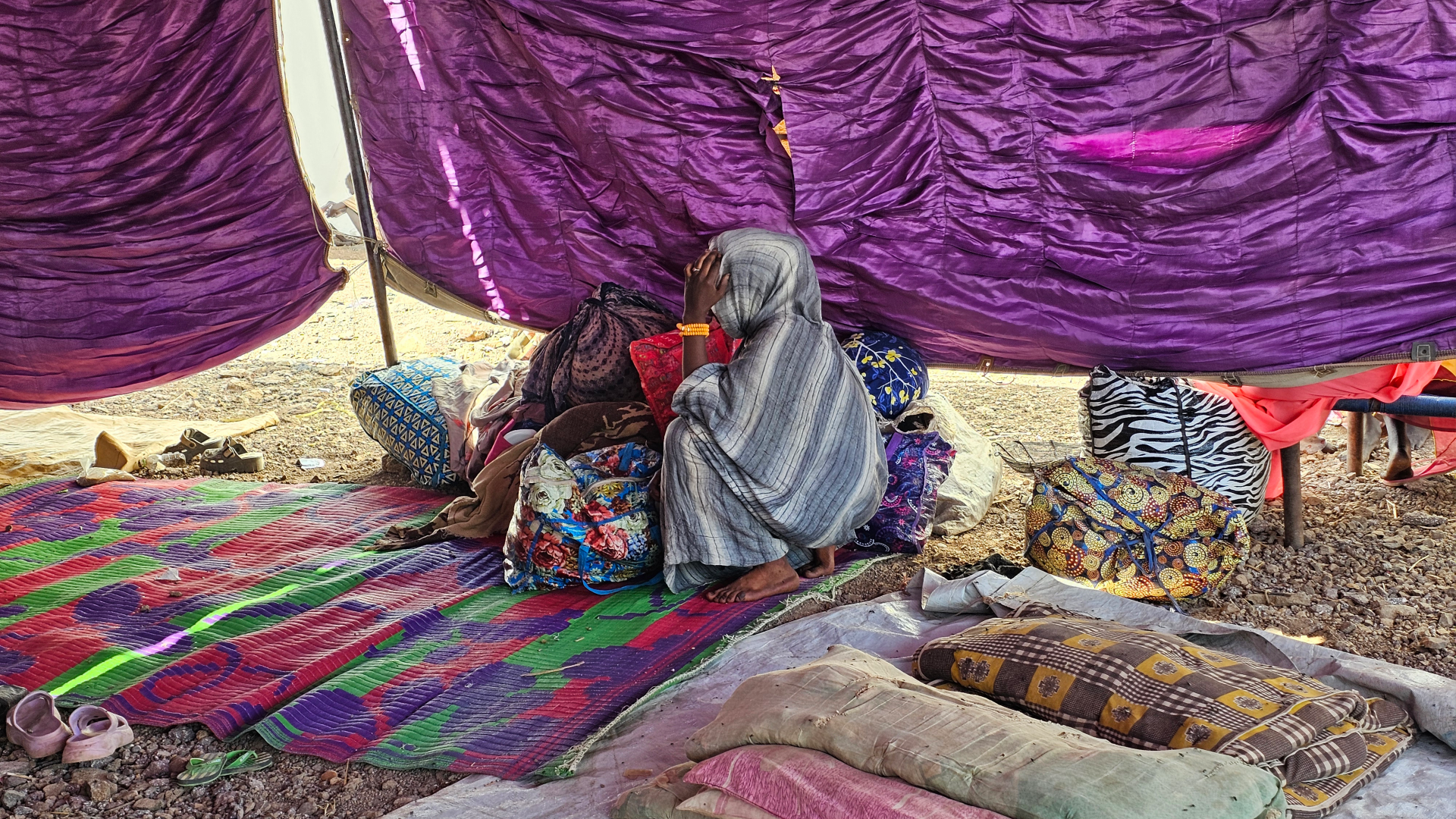
UN aid workers describe Sudan’s el-Fasher as a ‘crime scene’ after RSF takeover
United Nations aid personnel have finally gained access to Sudan’s el-Fasher city, only to discover a landscape of devastation following its capture by the paramilitary Rapid Support Forces (RSF). Senior UN official Denise Brown, the UN Resident and Humanitarian Coordinator for Sudan, characterized the scene as a “crime scene” with remarkably few survivors remaining after the violent takeover.
The carefully negotiated entry, which occurred on Friday after weeks of diplomatic efforts, revealed a city largely emptied of its population. Brown expressed particular concern for injured individuals who remained unseen during the assessment and those potentially detained by the paramilitary forces. The visit’s primary objective was to evaluate whether safe humanitarian access could be established for delivering essential supplies to the devastated region.
According to displacement estimates, over 100,000 residents have fled el-Fasher since late October when the RSF, after maintaining a 500-day siege, wrested control from the Sudanese Armed Forces and their allied Joint Forces. Those who remained were typically individuals too elderly, ill, or severely injured to attempt escape.
Disturbing evidence compiled by the Yale Humanitarian Research Lab indicates the RSF has engaged in systematic efforts to conceal mass atrocities, including the destruction of evidence through burial and burning of victims. Multiple witnesses have reported to Middle East Eye that the paramilitary group has conducted mass executions targeting specific ethnic groups and perceived political opponents, alongside widespread incidents of sexual violence.
Survivor testimonies describe horrific scenes, with one witness recounting how RSF forces methodically entered neighborhoods and opened fire on civilians. Another survivor reported extortion attempts, with family members detained until substantial ransoms were paid.
The scale of violence has been so extensive that satellite imagery analysis has identified 38 distinct locations showing reddish discoloration consistent with blood spills visible from space. This episode represents one of the most brutal chapters in Sudan’s conflict that began in April 2023, creating what the UN has classified as the world’s most severe humanitarian crisis.
International attention has increasingly focused on the United Arab Emirates’ alleged role as the primary sponsor of the RSF, despite Abu Dhabi’s consistent denials. The UAE now faces accusations of complicity in genocide at the International Court of Justice, though jurisdictional issues have complicated the case filed by the Sudanese government in April.
The atrocities in el-Fasher have triggered global condemnation, with coordinated protests and targeted lobbying campaigns against the UAE emerging worldwide. In London’s Oxford Street, billboards have appeared directly linking the Emirates to the Sudan conflict, signaling growing international awareness and outrage over the humanitarian catastrophe.
-
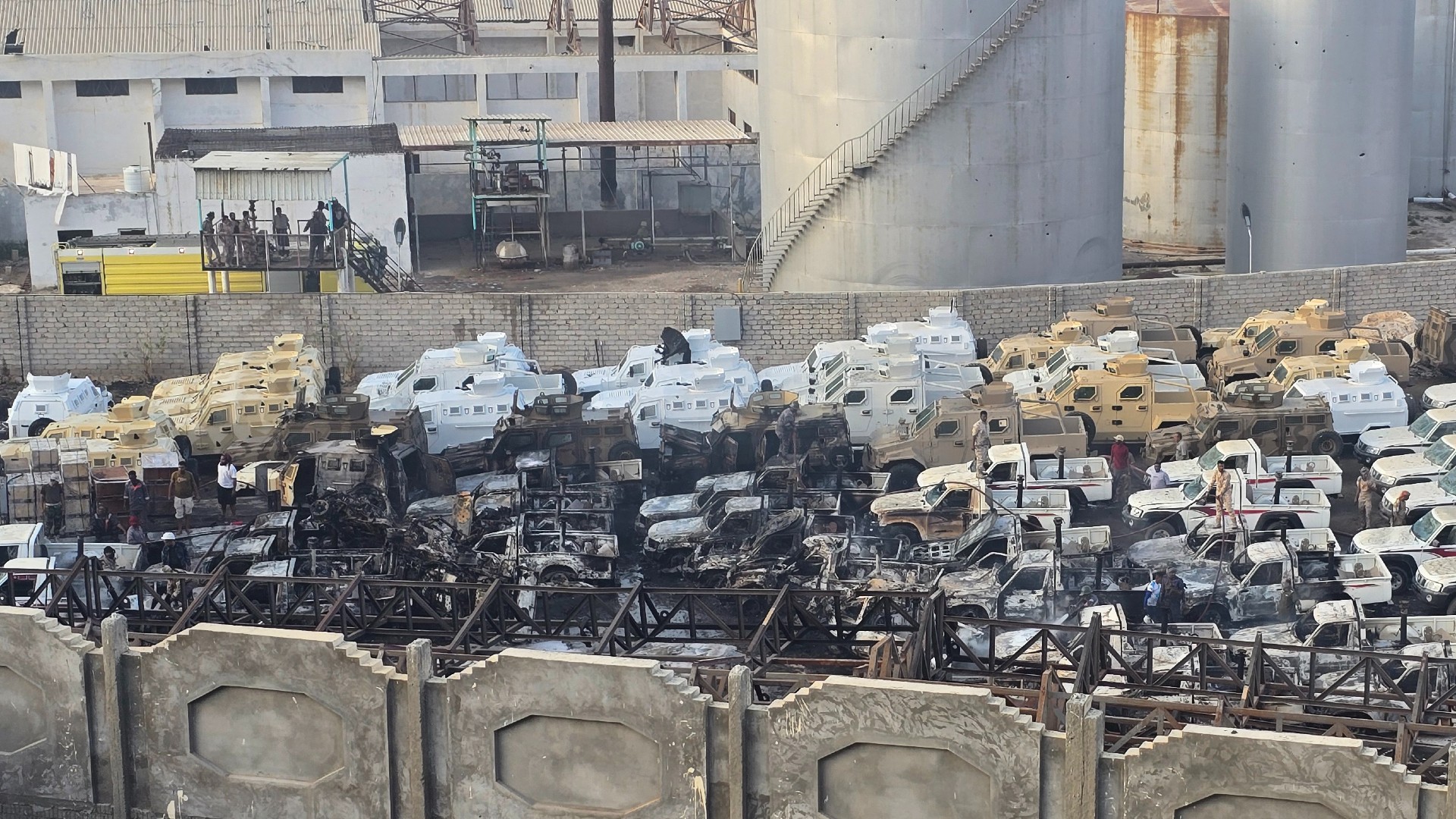
Saudi Arabia bombs UAE shipment in Yemen and calls out Emirati role
In a significant escalation of tensions between Gulf allies, Saudi Arabia has conducted airstrikes targeting an alleged United Arab Emirates weapons shipment destined for southern Yemeni separatists. The Saudi military confirmed it destroyed weapons and combat vehicles unloaded from two vessels originating from Fujairah, a major Emirati port city.
The operation occurred early Tuesday near the port of Mukalla, where authorities received an evacuation warning just minutes before the strike. Saudi officials stated the vessels had disabled tracking systems and were supplying the Southern Transitional Council (STC), a secessionist group that has recently made substantial territorial gains in southern Yemen. The Saudi statement emphasized these weapons “constituted an imminent threat” to regional security.
Concurrently, Riyadh issued its strongest diplomatic rebuke yet against Abu Dhabi, directly accusing the UAE of “pressuring” STC forces to conduct military operations along Saudi Arabia’s southern border regions. The Saudi foreign ministry characterized these actions as “highly dangerous” and contrary to the founding principles of their coalition, which was established to support Yemen’s internationally recognized government.
The statement marked an unprecedented public condemnation between the nominal allies, with Saudi Arabia declaring any threat to its national security “a red line” that would be met with decisive action. This development follows the STC’s recent seizure of extensive territory and the hoisting of South Yemen’s historic flag in captured areas.
In response, Rashad al-Alimi, head of Yemen’s Presidential Leadership Council, canceled a joint defense agreement with the UAE and demanded the withdrawal of Emirati forces from Yemen within 24 hours. The strike represents the second alleged Saudi attack on STC positions in recent days, though previous incidents went unconfirmed by Riyadh.
-
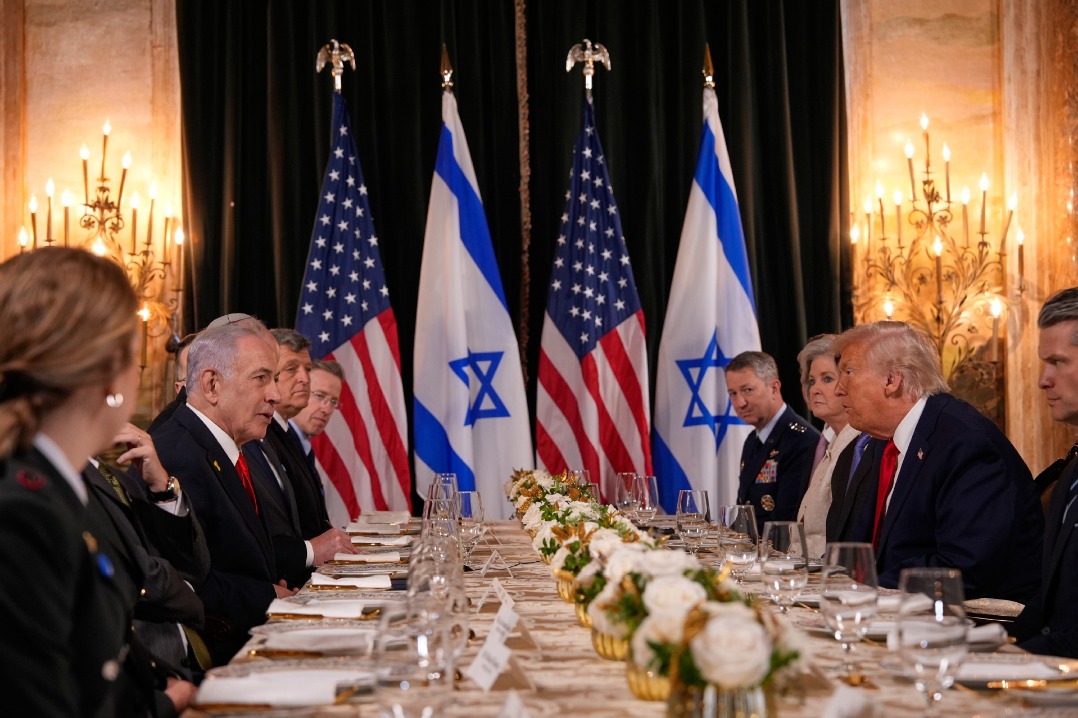
Trump issues fresh warning to Hamas and Iran after talks with Netanyahu
In a significant diplomatic engagement at his Mar-a-Lago resort in Florida, former US President Donald Trump delivered forceful warnings to both Hamas and Iran during a joint media appearance with Israeli Prime Minister Benjamin Netanyahu on December 29. The meeting underscored the complex dynamics of Middle Eastern politics and the ongoing conflict in Gaza.
Trump issued an uncompromising ultimatum to Hamas, demanding complete disarmament or facing severe consequences, which he dramatically characterized as ‘hell to pay.’ This强硬 stance comes amid stalled progress on the US-brokered Gaza ceasefire agreement, with recent developments suggesting Israel’s commitment to the peace process has been less than wholehearted.
The former president maintained that Israel had fully complied with existing agreements, asserting they had ‘lived up to the plan, 100 percent.’ This declaration appears contradictory to reports from Gaza, where approximately 400 casualties have been recorded since the October ceasefire. The humanitarian situation remains dire, with Palestinians enduring extreme weather conditions including flooding and cold temperatures while facing critical shortages of essential supplies.
According to UNRWA assessments, months of sustained conflict and mass displacement have forced Gaza’s population to survive amid crumbling infrastructure, with many sheltering in flimsy tents or makeshift arrangements. The recent Storm Byron, which struck the region in mid-December, exacerbated the crisis, causing structural collapses and damaging over 42,000 shelters, affecting at least 235,000 vulnerable individuals.
Regional experts have interpreted the Trump-Netanyahu meeting as signaling a shift in US foreign policy approach. Abdolreza Alami of the Asia West East Centre noted that the engagement represented less a genuine diplomatic effort and more a return to ‘political blackmail’ tactics. He suggested Trump’s rhetoric indicates a transformation of America’s role from neutral mediator to active participant in the conflict.
Regarding Iran, Trump expressed serious concerns about Tehran’s nuclear capabilities and ballistic missile program, threatening new preventive actions. He pledged unequivocal support for potential Israeli strikes against Iran, characterizing the missile program as an ‘existential threat’ that demanded a robust response.
Analysts warn that this confrontational approach may prove counterproductive, potentially driving Tehran toward more advanced defensive strategies and ultimately undermining regional stability. Historical patterns suggest that pressure tactics against Iran typically result in hardened positions and accelerated weapons development rather than diplomatic concessions.
-

FTA announces changes to fees on services from January 1
The United Arab Emirates’ Federal Tax Authority (FTA) has unveiled significant modifications to its service fee framework, set to take effect on January 1, 2026. This regulatory update introduces two new charges while simultaneously eliminating fees for several essential certification services.
Under the new provisions, businesses will encounter two additional fee categories: an ‘Application for entering into a Unilateral Advance Pricing Agreement for the first time’ and an ‘Application for renewal or amendment of a Unilateral Advance Pricing Agreement.’ These changes reflect the FTA’s evolving approach to complex international tax arrangements.
Conversely, in a move toward digital transformation and reduced administrative burdens, the authority will now issue both new and replacement certified Tax Registration Certificates and Warehouse Keeper Registration Certificates without charge. These documents will be provided electronically and feature embedded QR code technology, enabling instant verification of registration status through digital channels.
This shift to paperless certification aligns with the UAE’s broader digital government initiatives, streamlining processes for registered businesses while enhancing security measures through verifiable digital credentials. The elimination of physical certificate requirements represents a significant step toward modernizing tax administration services across the Emirates.
-

Changchun’s restored Fengle Theatre to host orchestral New Year concert
The newly restored Fengle Theatre, now operating as Jilin Provincial Music Hall, prepares to host its inaugural grand performance—a New Year’s Symphony Concert by the Jilin Symphony Orchestra on December 31st at 7 PM. This landmark event marks the cultural renaissance of a venue that once stood at the heart of Changchun’s artistic community.
Musicians have been diligently rehearsing within the revitalized space, where the acoustics of the historically significant building now resonate with both Chinese and Western musical traditions. The carefully curated program bridges cultural divides by pairing quintessential Chinese compositions like ‘The Yellow River Piano Concerto’ and ‘Butterfly Lovers’ with festive works from the Strauss family, including Johann Strauss I’s rarely performed ‘Chinese Gallop’—a 19th-century European interpretation of Chinese musical themes.
For orchestra members, particularly those with deep local connections, the performance carries profound significance. Principal trumpet Song Yujia, a Changchun native, reflects on childhood memories of the building when the surrounding district served as the city’s primary cultural quarter for film and performances. The restoration represents not merely architectural preservation but the reawakening of cultural memory and community identity.
The concert’s programming intentionally creates a dialogue between Eastern and Western musical traditions, showcasing how cultural exchange has evolved from 19th-century European imaginations of China to contemporary artistic collaboration. This New Year’s event establishes the revived Fengle Theatre as a renewed beacon for cultural excellence in Northeast China.
-

UAE: Jimmy Choo announces collaboration with first Emirati female racing driver
In a landmark fusion of high-performance sport and luxury fashion, British design house Jimmy Choo has unveiled a strategic partnership with Amna Al Qubaisi, the pioneering Emirati racing driver who made history as the first Arab woman to compete in Formula E. The collaboration was formally announced by Jaime Wynn, President of Jimmy Choo, during a panel discussion at the prestigious World Sports Summit, held at Madinat Jumeirah.
The forthcoming campaign, scheduled for release in late January, represents a significant shift in how luxury brands engage with athletic ambassadors. Wynn articulated this evolving strategy, stating, ‘Luxury brands are transitioning from being perceived as inaccessible to becoming intentional and carefully curated. Through partnerships with elite athletes like Amna, we are creating that essential gateway.’
This alliance highlights the growing convergence between the worlds of elite motorsport and high fashion, while simultaneously celebrating a monumental figure in Middle Eastern sports history. Al Qubaisi’s groundbreaking achievements in the male-dominated racing world have established her as an inspirational figure and a symbol of progressive change.
The partnership signals Jimmy Choo’s commitment to aligning with individuals who embody both excellence and barrier-breaking accomplishment, rather than traditional celebrity endorsements. This campaign is poised to showcase how performance footwear and luxury design can intersect with the dynamic, high-octane world of electric racing.