标签: Asia

亚洲

  • Shohei Ohtani ends World Baseball Classic just like in 2023, but as loser instead of champion

    Shohei Ohtani ends World Baseball Classic just like in 2023, but as loser instead of champion

    In a stunning reversal of baseball fortunes, Japan’s World Baseball Classic dynasty crumbled Saturday night in an 8-5 quarterfinal defeat against Venezuela at loanDepot Park. The loss marked a dramatic departure from Japan’s triumphant 2023 championship victory, particularly for superstar Shohei Ohtani, who experienced polar opposite emotions from his championship-clinching moment against Team USA just one year earlier.

    Baseball’s premier player concluded Japan’s elimination with an infield popup in the ninth inning, subsequently removing his batting equipment with visible dejection as Venezuelan celebrations erupted across the field. “I was really disappointed,” Ohtani stated afterward, capturing the somber mood of the Japanese squad.

    The defeat terminated Japan’s remarkable tournament legacy, snapping an 11-game WBC winning streak that dated back to 2017. The Samurai Warriors had previously reached the semifinals in all five WBC tournaments and remained the only nation to capture consecutive titles (2006, 2009).

    Japan initially appeared poised for victory after Shota Morishita’s three-run homer in the third inning established a 5-2 advantage. However, Venezuela mounted a spectacular comeback with Maikel Garcia’s two-run blast in the fifth inning and Wilyer Abreu’s decisive three-run shot in the sixth that permanently shifted momentum.

    Despite Ohtani’s tournament-leading .462 batting average, three home runs, and seven RBIs, the two-way superstar struggled in his final three plate appearances with two strikeouts before his game-ending popup. Manager Hirokazu Ibata acknowledged the strategic limitations of deploying Ohtani exclusively as a hitter, noting “We didn’t have an option for Ohtani to pitch from the middle of the game.”

    The loss highlighted Japan’s broader statistical regression, with team batting average dropping from .299 in 2023 to .284 and ERA rising from a tournament-best 2.29 to 3.35. The absence of pitcher Roki Sasaki further hampered Japan’s defensive capabilities, while Ohtani’s restricted role as hitter-only limited strategic options in critical moments.

  • Kimi Antonelli takes his first F1 win with victory in China to extend Mercedes’ dominant start

    Kimi Antonelli takes his first F1 win with victory in China to extend Mercedes’ dominant start

    SHANGHAI — Mercedes rookie Kimi Antonelli shattered expectations at the Chinese Grand Prix on Sunday, securing his maiden Formula 1 victory and cementing his status as the sport’s second-youngest race winner at just 19 years old. The Italian driver delivered a masterclass performance, fending off intense pressure from teammate George Russell and Ferrari’s charging duo to claim a decisive win.

    Antonelli’s emotional podium moment saw him joined by Russell in second place and seven-time champion Lewis Hamilton in third—marking Hamilton’s first podium finish since his high-profile switch to Ferrari. “I’m speechless. I’m about to cry, to be honest,” an overwhelmed Antonelli confessed during post-race celebrations. “Thank you to my team for helping me achieve this dream.

    The victory validates Mercedes team principal Toto Wolff’s controversial decision to recruit the young Italian prodigy into Hamilton’s former seat. Wolff had faced considerable skepticism when Antonelli joined Mercedes’ junior program at age 11 and later crashed within minutes of his 2024 practice debut. “Many said it was too early last year,” Wolff acknowledged to Sky Sport Germany. “We asked ourselves whether it was too much pressure, but today he delivered ruthlessly.”

    The race unfolded with dramatic intensity as Russell engaged in a wheel-to-wheel battle with both Ferrari drivers, creating a buffer that allowed Antonelli to build an insurmountable lead. Despite a late braking scare that Antonelli described as giving him “a little bit of a heart attack,” the young driver maintained composure to take the checkered flag.

    Notable retirements and technical issues plagued multiple teams, with reigning champion Max Verstappen suffering a power unit failure while running sixth. McLaren endured a catastrophic double DNS (Did Not Start) as both Lando Norris and Oscar Piastri encountered electrical failures before the race began. The team confirmed “two different electrical problems on the power unit side” after investigation.

    Antonelli’s triumph makes him the first Italian winner since Giancarlo Fisichella in 2006—a full five months before the young driver was born. Only Max Verstappen achieved a Grand Prix victory at a younger age, having won at 18 in 2016.

    The event occurred against the backdrop of Formula 1’s announcement canceling next month’s Middle Eastern races in Bahrain and Saudi Arabia due to regional conflict, adding further significance to this complete demonstration of emerging talent amid the sport’s evolving landscape.

  • South Africa bowls out New Zealand for 91 and wins the 1st T20 by 7 wickets

    South Africa bowls out New Zealand for 91 and wins the 1st T20 by 7 wickets

    In a stunning display of cricketing prowess, a significantly inexperienced South African team dominated World Cup finalist New Zealand, securing a decisive seven-wicket victory in the first Twenty20 international at Mount Maunganui’s Bay Oval on Sunday.

    The match witnessed an extraordinary collapse from the New Zealand batting lineup, which was dismissed for a meager 91 runs in just 14.3 overs. This total stands as New Zealand’s second-lowest ever against South Africa and ranks among their top ten worst performances in T20 international history. The devastation began early during the powerplay, where New Zealand lost five crucial wickets, from which they never managed to recover.

    South Africa’s bowling attack, featuring four debutants, executed a masterclass in disciplined and aggressive bowling. Gerald Coetzee set the tone by dismissing openers Devon Conway and Tom Latham within the first three overs, finishing with impressive figures of 2-14. Ottneil Baartman (2-22) continued the assault on the top order, while 19-year-old debutant Nqobani Mokoena delivered the final blows to the lower order, earning Player of the Match honors with his 3-26. Captain Keshav Maharaj also contributed significantly with 2-25.

    Chasing a modest target of 92, South Africa’s response was anchored by opener Connor Esterhuizen, who displayed remarkable composure with an unbeaten 45 from 48 balls. He was ably supported by fellow debutant Dian Forrester, who remained 16 not out. Esterhuizen fittingly sealed the victory with a six off Kyle Jamieson in the 17th over, concluding the match with 20 balls to spare.

    The match highlighted New Zealand’s significant challenges, fielding a team missing eight key players from their recent World Cup squad, including their entire top-six batting lineup. Captain Mitchell Santner acknowledged his team’s struggles, noting the unexpected conditions and South Africa’s superior bowling execution. Despite a fighting effort from New Zealand’s spinners on a turning pitch, the early damage proved insurmountable.

  • A bus carrying Indian pilgrims plunges off a mountain road in Nepal, killing 7

    A bus carrying Indian pilgrims plunges off a mountain road in Nepal, killing 7

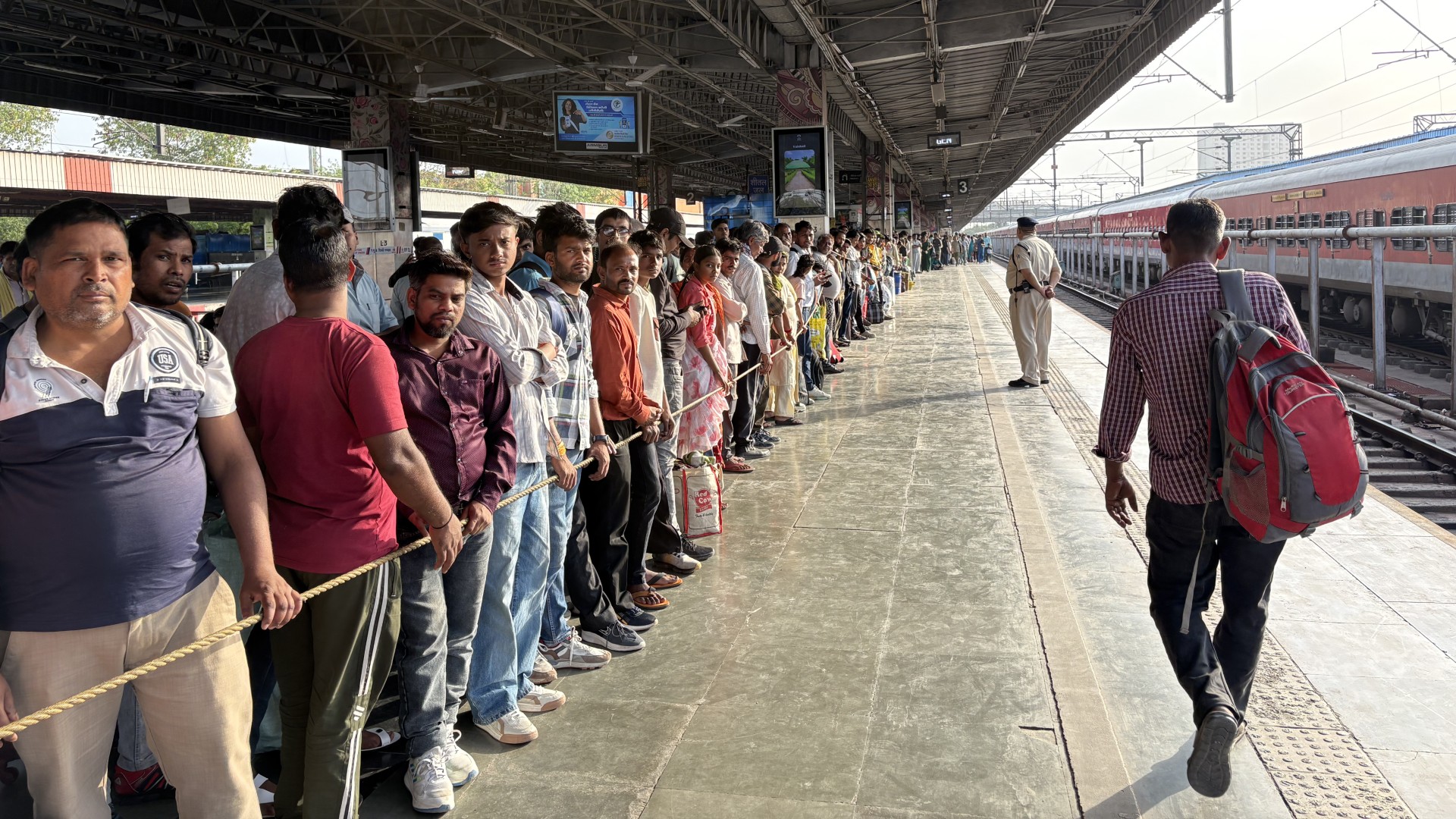
    A tragic bus accident in central Nepal has resulted in seven fatalities and nine injuries, predominantly affecting Indian pilgrims returning from a religious site. The incident occurred Saturday night near Shahid Lakhan village, approximately 120 kilometers west of Kathmandu, when the vehicle lost control on a mountainous curve.

    The bus was transporting devotees back from the revered Manakamana Temple, a significant Hindu pilgrimage destination where believers seek divine blessings. According to local authorities, the vehicle was descending the mountain road when it veered off a sharp bend, plunging approximately 150 meters down a steep slope before coming to rest in a ravine.

    Police confirmed that all seven deceased were Indian nationals participating in the religious journey. Among the nine injured survivors, seven were Indian pilgrims, while the remaining two included the Nepali driver and his assistant. Emergency response teams comprising police officers and local villagers rushed to the crash site, extracting victims from the wreckage and coordinating ambulance transport to nearby medical facilities.

    The mountainous terrain of Nepal presents persistent transportation challenges, with narrow, winding roads and frequently inadequate vehicle maintenance contributing to regular accidents. Official procedures are underway for autopsy examinations before the remains of the deceased can be released to their families.

    This incident highlights the ongoing infrastructure and transportation safety concerns in Nepal’s Himalayan regions, where difficult geography combined with insufficient road maintenance continues to endanger travelers, particularly along religious pilgrimage routes.

  • Iran war: Israel tells US its running low on missile interceptors

    Iran war: Israel tells US its running low on missile interceptors

    Israeli officials have issued an urgent warning to the United States regarding critically depleted stocks of ballistic missile interceptors as the military confrontation with Iran extends into its third consecutive week, according to U.S. officials who spoke with Semafor.

    The current conflict finds Israel’s air defense networks already strained from previous engagements with Iran last year, during which substantial quantities of interceptors were deployed to neutralize incoming missile threats. The persistent barrage from Iranian forces has placed unprecedented pressure on Israel’s long-range defense capabilities, creating one of the most significant logistical challenges of the ongoing hostilities.

    Complicating Israel’s defensive operations, intelligence assessments indicate that Iran has modified certain missiles to carry cluster munition payloads, presenting more complex interception scenarios that accelerate the consumption rate of defensive munitions. This tactical evolution has further exacerbated the depletion of Israel’s interceptor inventory.

    Washington has monitored this developing situation for several months, with one U.S. official confirming: “This development aligns with our earlier projections and anticipations.” The same official emphasized that while Israel faces critical shortages, the United States maintains robust interceptor reserves without comparable supply constraints. This assurance comes amid growing concerns that prolonged regional conflict could rapidly diminish missile defense resources across allied nations.

    The potential transfer of additional interceptors to Israel remains uncertain. While previous U.S. military assistance packages have included comprehensive missile defense systems, any further allocations could impact American strategic inventories. The U.S. official stated that American forces “maintain all necessary resources to safeguard our bases, personnel, and interests within the region,” adding that Israeli authorities are “developing innovative solutions to address their supply challenges.

    Recent assertions by former President Donald Trump regarding America’s “virtually unlimited” munitions capacity could not be independently verified. Historical data reveals that during a 12-day confrontation with Iran in June, U.S. forces deployed over 150 Terminal High Altitude Area Defense (THAAD) interceptors—approximately one-quarter of the then-current inventory. In the initial phase of the present conflict, Washington reportedly expended Patriot interceptors valued at approximately $2.4 billion.

  • Millions in Vietnam to vote for a new legislature in general election

    Millions in Vietnam to vote for a new legislature in general election

    HANOI, Vietnam — Vietnamese citizens participated in nationwide parliamentary elections on Sunday to select 500 representatives for the National Assembly. This electoral process follows the Communist Party’s January congress where To Lam secured reelection as general secretary, the nation’s most influential political position.

    Approximately 79 million registered voters were eligible to choose from 864 pre-screened candidates, all vetted and approved by the ruling Communist Party. The electoral system ensures the National Assembly maintains alignment with the party’s political directives and policy objectives.

    Following his vote in Hanoi, General Secretary Lam characterized the election as “a national celebration” demonstrating public support for the political process. He emphasized that citizens were selecting representatives committed to national development, sovereignty preservation, and stability maintenance.

    The newly constituted Assembly, scheduled to convene its inaugural session in April, will formally endorse key governmental appointments and implement policy priorities established during the party congress. These priorities emphasize sustained economic expansion and political continuity under the Communist Party’s centralized leadership framework.

    Vietnam’s remarkable economic transformation over the past decade, fueled by manufacturing exports and foreign investment, provides context for these elections. The country has emerged as a strategic alternative in global supply chains, attracting significant electronics and textile manufacturers diversifying operations beyond China.

    The government has established an ambitious target exceeding 10% annual growth through private sector-led development—a notable policy shift for the communist state. This recalibration focuses on advancing higher-value industries, modernized production systems, and broader integration of technology and digital solutions.

    Despite economic optimism, challenges persist from global trade tensions and tariff implementations, particularly those initiated by the Trump administration, which affect Vietnam’s export-dependent economy.

    Voter participation historically exceeds 90%, with polling facilities established across urban centers, rural communities, and remote regions to facilitate universal access. Retired official Doan Thi Bich expressed typical voter sentiment, stating confidence in selecting “candidates with morals, dedication and competence to serve the country.”

  • Trump’s call for countries to send warships to protect the Strait of Hormuz brings no promises

    Trump’s call for countries to send warships to protect the Strait of Hormuz brings no promises

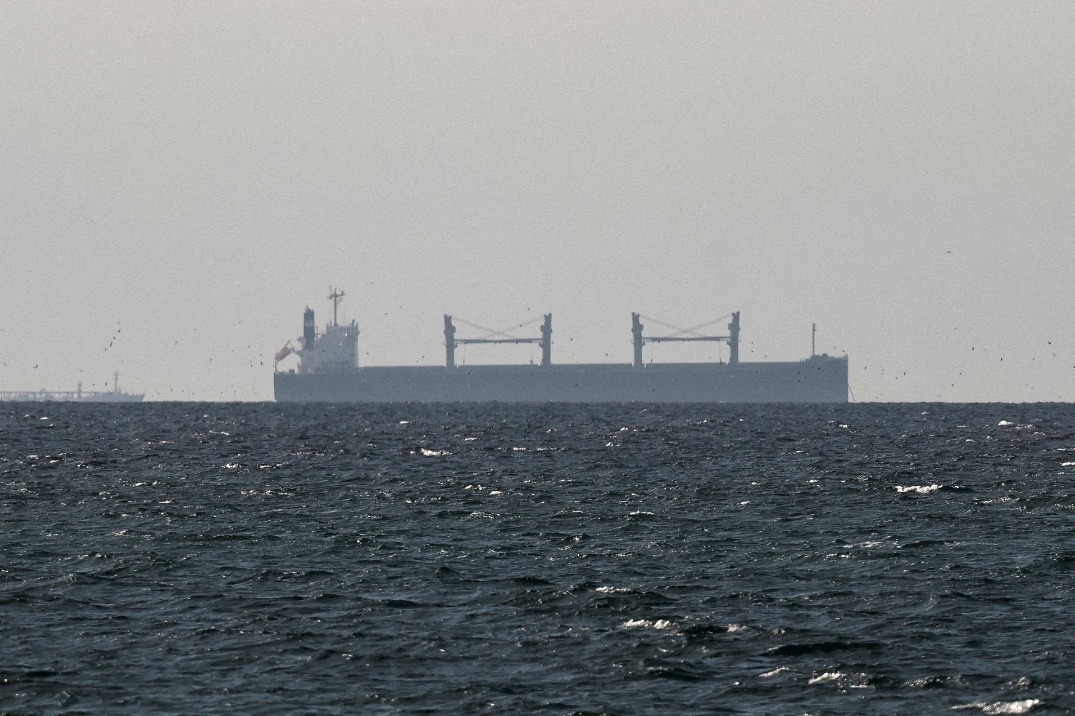
    International responses to U.S. President Donald Trump’s appeal for a multinational naval coalition to secure the Strait of Hormuz remained notably non-committal on Sunday, as escalating Middle East tensions continue to disrupt global oil supplies. The strategic waterway, typically handling 20% of worldwide oil exports, has become a focal point in the ongoing Iran conflict.

    Despite Energy Secretary Chris Wright’s expressed confidence in China becoming “a constructive partner” in reopening the vital shipping lane, no concrete commitments emerged from the nations contacted. Meanwhile, Iranian Foreign Minister Abbas Araghchi revealed that Tehran has granted passage to vessels from “different countries” while maintaining the strait’s closure to U.S. and allied ships.

    The diplomatic stalemate persists amid Araghchi’s firm stance against negotiations with Americans, citing coordinated U.S.-Israeli attacks on February 28 that occurred during indirect nuclear talks. The foreign minister explicitly stated Iran has “no plan to recover” enriched uranium damaged in last year’s attacks.

    European and Asian responses reflected cautious deliberation. U.K. Energy Secretary Ed Miliband emphasized that ending the war represents the “best and surest” solution, while South Korea’s Foreign Ministry acknowledged it would “closely coordinate and carefully review” the situation. France previously discussed potential international escort missions with European and Asian partners, though only when “circumstances permit.”

    The International Energy Agency announced emergency measures to stabilize markets, increasing its planned oil stock release from 400 million to nearly 412 million barrels—described as “by far the largest ever” collective action. Asian members will release stocks immediately, with European and American reserves following from late March.

    Regional violence intensified with Gulf Arab states reporting new missile and drone attacks, following Iran’s unprecedented threat against United Arab Emirates ports. Bahrain, Saudi Arabia and the UAE activated defense systems against incoming projectiles, while Iran accused the U.S. of launching strikes from Emirati territory—a claim both U.S. Central Command and UAE officials denied.

    Humanitarian costs mounted across the region, with the International Committee of the Red Cross reporting over 1,300 fatalities in Iran alone, including 223 women and 202 children. Israeli authorities confirmed 12 deaths from Iranian missile strikes, while at least 13 U.S. military personnel have perished—including six in a recent Iraq plane crash. Lebanon’s Health Ministry documented 820 fatalities since Hezbollah began strikes against Israel, displacing approximately 800,000 people amid severe weather conditions.

    Military analysts note Iran’s evolving tactics, including use of cluster bombs capable of evading air defenses and striking multiple locations simultaneously, as evidenced by damage across 23 sites in central Israel and Tel Aviv.

  • Venezuela rallies to beat Shohei Ohtani and defending champ Japan 8-5, advance to WBC semis

    Venezuela rallies to beat Shohei Ohtani and defending champ Japan 8-5, advance to WBC semis

    In a stunning reversal at the World Baseball Classic quarterfinals, Venezuela mounted a dramatic comeback to defeat Shohei Ohtani’s Japan 8-5 on Saturday night, snapping Japan’s 11-game tournament winning streak and advancing to the semifinals for the first time since 2009.

    The game featured explosive offense from both sides, with Japan building an early 5-2 lead through a four-run third inning highlighted by Shota Morishita’s tiebreaking three-run homer off Venezuelan starter Ranger Suárez. Ohtani, the 2023 WBC MVP, contributed to Japan’s offense with a massive 427-foot solo shot to center field in the first inning—his third home run of the tournament.

    Venezuela’s comeback began in the fifth inning when Maikel Garcia ignited the rally with a two-run homer against Japanese pitcher Chihiro Sumida, narrowing the deficit to 5-4. The game completely turned in the sixth inning when Wilyer Abreu delivered the decisive blow—a 409-foot, three-run homer on Hiromi Itoh’s 2-1 fastball that gave Venezuela a permanent lead at 7-5.

    Venezuela added an insurance run in the eighth when Ezequiel Tovar doubled and subsequently scored on a throwing error by Japanese reliever Atsuki Taneichi during a pickoff attempt.

    The victory secured Venezuela not only a semifinal berth against unbeaten Italy on Monday but also clinched their qualification for the six-nation baseball tournament at the 2028 Olympics, joining the United States and Dominican Republic.

    Venezuela’s bullpen proved instrumental in preserving the lead, with Enmanuel De Jesus earning the win after pitching 2 1/3 scoreless innings, and Daniel Palencia securing the save by getting Ohtani to pop out for the final out.

  • Counterespionage thriller is first Chinese movie to get backing of intelligence agency

    Counterespionage thriller is first Chinese movie to get backing of intelligence agency

    In an unprecedented move, China’s traditionally secretive Ministry of State Security (MSS) has entered the world of cinematic storytelling with its officially endorsed spy thriller ‘Scare Out.’ Directed by Oscar-nominated filmmaker Zhang Yimou, the film represents a significant departure from the agency’s conventional opacity, marking the first motion picture to receive direct support from China’s intelligence apparatus.

    The high-octane production features dramatic sequences including drone-assisted pursuits through Shenzhen’s glass-walled skyscrapers, showcasing sophisticated intelligence operations against espionage threats. Starring acclaimed actors Jackson Yee and Zhu Yilong, the narrative centers on hunting a mole within China’s intelligence service who leaks classified information about a new fighter jet.

    This cinematic project forms part of MSS’s broader strategy toward public engagement, transitioning from complete secrecy to controlled transparency. The ministry, which established its social media presence just two years ago, has increasingly utilized platforms like WeChat to share educational content, including real case studies, comics, and mini-films about national security.

    According to security experts, the film represents a sophisticated effort to mobilize public support for national security initiatives. ‘It wants to build public and popular support to encourage people to share information,’ observed Sheena Greitens, associate professor at the University of Texas at Austin, noting the agency’s attempt to make national security ‘entertaining and fun to support.’

    The production benefited from direct MSS involvement, with state security officers accompanying the filming process to ensure authenticity. Zhang emphasized in a People’s Daily op-ed that this guidance was crucial for achieving realism in depicting intelligence operations.

    Since its February 17 release coinciding with Chinese New Year, the film has achieved substantial commercial success, generating 1.1 billion yuan ($160 million) within two weeks and receiving international screenings in the U.S., Canada, and Australia. Audience responses have varied from unexpected enjoyment to appreciation for its patriotic educational value compared to traditional lectures.

    The release coincides with heightened intelligence tensions, particularly as the CIA has recently circulated Mandarin-language recruitment videos targeting Chinese officials. China’s Ministry of Foreign Affairs has condemned these efforts, pledging to prevent foreign infiltration attempts.

  • Hamas congratulates Iran’s new leader, urges Tehran not to hit neighbours

    Hamas congratulates Iran’s new leader, urges Tehran not to hit neighbours

    The Palestinian organization Hamas has issued a formal condemnation of the joint military campaign conducted by the United States and Israel against Iran, characterizing the offensive as a clear breach of international legal standards. In an official communiqué released on Saturday, the movement articulated its position that the ongoing hostilities fundamentally contradict the broader interests of both the Islamic world and the Middle Eastern region, emphasizing the critical necessity for an immediate cessation of all military operations.

    Beyond its condemnation, Hamas actively called upon regional governments to initiate coordinated diplomatic measures aimed at de-escalating the conflict. Striking a nuanced position, the group also appealed directly to Iranian leadership, urging strategic restraint and specifically requesting that Tehran avoid extending military operations into neighboring nations’ territories. This dual approach reflects Hamas’s attempt to balance its ideological alignment with Iran against the practical realities of regional stability.

    This significant political statement emerges against a backdrop of escalating tensions that threaten to transform the current conflict into a broader regional confrontation. The offensive, initiated on February 28th by American and Israeli forces, resulted in the deaths of numerous high-ranking Iranian officials, including the country’s Supreme Leader Ayatollah Ali Khamenei.

    In a related development, Hamas extended formal congratulations to Ayatollah Sayyid Mojtaba Husseini Khamenei following his appointment as Iran’s new Supreme Leader. Mohammad Darwish, presiding chairman of Hamas’s leadership council, conveyed the movement’s confidence in the new leader’s capability to navigate Iran through this period of regional instability while maintaining the foundational principles of the Islamic Revolution.

    The organization further expressed its expectation that Iran would continue its decades-long policy of supporting the Palestinian cause and their resistance movement. Iranian forces have responded to the initial offensive with coordinated missile and drone attacks targeting both Israeli territory and American interests throughout the region, significantly widening the scope of the conflict and increasing concerns about prolonged regional warfare.