标签: Asia

亚洲

  • The Global Mayors Dialogue · Harbin opens Tuesday

    The Global Mayors Dialogue · Harbin opens Tuesday

    The northeastern Chinese city of Harbin inaugurated the Global Mayors Dialogue on Tuesday, transforming its winter landscape into a platform for international cooperation and cultural exchange. The event brings together municipal leaders from across the world to foster dialogue and collaboration against the backdrop of Harbin’s renowned winter attractions.

    The city has deployed its characteristic warmth and hospitality to welcome international delegates, showcasing traditional delicacies like sugar-coated haws and century-old Modern brand ice lollipops alongside breathtaking ice sculptures that illuminate the streets. The carefully curated atmosphere combines cultural heritage with modern diplomatic engagement, creating a unique environment for cross-border municipal cooperation.

    This gathering represents significant soft power diplomacy through urban governance exchange, allowing mayors to share best practices in city management, sustainable development, and cultural preservation. The timing during Harbin’s peak winter season highlights how cities can leverage their unique seasonal characteristics to promote international dialogue and economic opportunity.

    The dialogue occurs alongside several other significant international developments, including climate action discussions, European diplomatic initiatives, and Middle Eastern security matters, positioning urban governance as an essential component of global cooperation frameworks. The event demonstrates how city-to-city diplomacy complements traditional state-level interactions in addressing common challenges.

  • West Bank: Palestinian journalist and boy among dozens arrested by Israeli forces

    West Bank: Palestinian journalist and boy among dozens arrested by Israeli forces

    Israeli military operations across the occupied West Bank resulted in the detention of numerous Palestinians on Monday, with local media reporting widespread arrest campaigns targeting multiple regions. The operations notably included the apprehension of journalist Enas Ikhlawi from her residence in Idhna, west of Hebron, and 15-year-old Yazan al-Aloul during raids in the Nur Shams refugee camp near Tulkarm.

    In the Aida refugee camp north of Bethlehem, local sources indicated that Israeli forces arrested more than 25 Palestinians, conducting extensive house searches and employing intimidation tactics. Additional arrests were reported in Qalqilya, Ramallah, and Tubas, continuing a pattern of nightly operations that have become increasingly frequent since the onset of the Gaza conflict in 2023.

    Statistical data reveals that Israeli forces have detained over 21,000 Palestinians from the West Bank in just over two years. Current figures show approximately 9,250 Palestinians remain in Israeli detention, including 350 children and about 50 women. Nearly half of these detainees are held under administrative detention orders without formal charges or trial.

    Human rights organizations have documented systematic abuses against Palestinian prisoners, alleging deliberate targeting through physical and psychological mistreatment, including torture, starvation, denial of medical care, and solitary confinement. These claims find support in a report from Israel’s Public Defender’s Office, which acknowledges systematic violence by prison staff and highlights severe hunger among detainees resulting in extreme weight loss, weakness, and fainting episodes.

    The humanitarian crisis has reached lethal proportions, with a joint report by Palestinian rights groups documenting 32 detainee deaths in Israeli custody in 2025 alone—including one child—bringing the total number of prisoner fatalities since October 2023 to over 100.

  • 5.4-magnitude quake hits India’s Assam, near border with Bhutan

    5.4-magnitude quake hits India’s Assam, near border with Bhutan

    A moderate seismic event registering 5.4 on the Richter scale struck northeastern India’s Assam state in the early hours of Monday morning. The United States Geological Survey (USGS) confirmed the earthquake’s epicenter was positioned just three kilometers from the village of Dhing, located near India’s sensitive border region with Bhutan.

    The tremor occurred at approximately 4:17 AM local time (2:47 AM UAE time on Sunday), with preliminary reports indicating strong ground shaking in the immediate vicinity. Despite the significant seismic activity, the USGS preliminary assessment suggested limited population impact due to the remote nature of the affected area.

    This event occurs within the seismically active Himalayan region, which experiences numerous earthquakes annually and has witnessed some of India’s most devastating seismic disasters in recorded history. The region’s tectonic vulnerability stems from the ongoing collision between the Indian and Eurasian continental plates, which continues to generate substantial seismic stress along the Himalayan fault lines.

    Historical context reveals the area’s tragic seismic legacy, including the catastrophic 1950 earthquake that claimed approximately 4,800 lives across Assam and Tibet. The Great Assam Earthquake of 1897 remains documented as one of the most powerful seismic events ever recorded in the Indian subcontinent, resulting in hundreds of fatalities across the remote mountainous terrain.

    Current monitoring indicates no immediate reports of significant damage or casualties, though regional authorities remain on alert for potential aftershocks and are conducting preliminary damage assessments in the affected border region.

  • Expert calls for inclusive, equitable system for delivering climate action

    Expert calls for inclusive, equitable system for delivering climate action

    The year 2025 marked a critical juncture in global climate efforts as the international community confronted escalating environmental challenges amid growing geopolitical fragmentation. According to Erik Solheim, Co-chair of the Europe-Asia Center and former UN Under-Secretary-General, the world reached multiple climate “tipping points” while temperatures continued their dangerous upward trajectory, particularly threatening ecosystems and economies across the Global South.

    Solheim, who previously served as Executive Director of the UN Environment Programme, identified that geopolitical tensions and divergent policies among major powers have significantly complicated unified climate action. The United States’ withdrawal from the Paris Agreement under its current administration has introduced substantial uncertainties into global climate governance mechanisms, exacerbating climate-critical risks for nations already facing extreme weather events, food insecurity, and ecological degradation.

    Despite renewable energy deployment growing faster than the global average in Global South nations—driven by abundant solar and wind resources—these regions continue to struggle with financing gaps, technological access, and adaptive capacity. UN Secretary-General António Guterres highlighted this disparity in July 2025, noting that Africa—possessing 60% of the world’s best solar resources—received merely 2% of global clean energy investments.

    Amid these challenges, China has emerged as a significant force in climate engagement with other Global South members. The country’s remarkable transformation over the past decade includes ambitious renewable energy targets that have positioned it as a global leader in solar, wind, and hydropower deployment. In September 2025, China reinforced its commitment through new Paris Agreement-aligned targets, including expanding non-fossil energy consumption, broadening its carbon market, and integrating climate adaptation into policy frameworks.

    Solheim emphasized that China’s Global Governance Initiative and Global Development Initiative propose multilateral cooperation models grounded in sovereign equality, consultation, and shared benefits—principles that resonate with developing nations seeking greater influence in international decision-making. “Truly effective governance must be people-centered and responsive to changing global realities,” Solheim stated, “rather than confined to structures shaped in the mid-20th century.”

    The expert concluded that while principles of equity and sovereignty provide a foundation for fairer global cooperation, they must translate into concrete political action and institutional reform to deliver tangible results for vulnerable populations worldwide.

  • Chinese astronauts complete 1st cave survival training

    Chinese astronauts complete 1st cave survival training

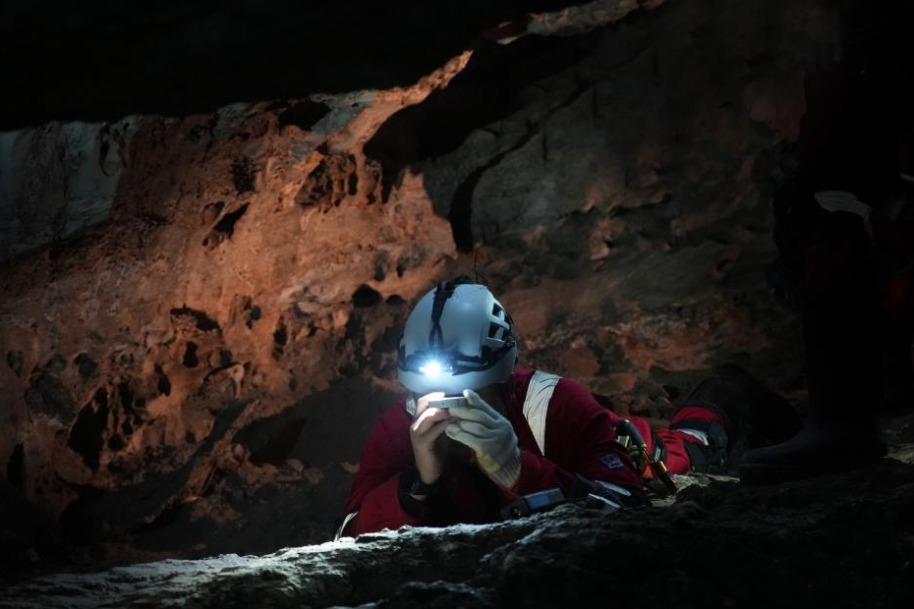
    In a groundbreaking initiative to prepare space explorers for extreme environments, twenty-eight Chinese astronauts have successfully concluded the nation’s inaugural cave survival training program. The intensive month-long exercise, orchestrated by the Astronaut Center of China in Chongqing’s Wulong district, represents a significant advancement in human spaceflight preparation methodology.

    The comprehensive training regimen incorporated over ten specialized activities designed to simulate challenging conditions astronauts might encounter during space missions. Participants conducted environmental monitoring, performed detailed cave mapping operations, engaged in simulated communication exercises replicating spacecraft-ground control interactions, and underwent rigorous psychological and behavioral conditioning.

    Astronauts were organized into four distinct groups, each enduring six days and five nights within natural cave systems characterized by average temperatures of 8°C and humidity levels reaching 99%. The training curriculum required participants to navigate exceptionally narrow passages, execute technical climbs and rappels along cliff faces, and withstand prolonged exposure to cold, damp conditions while managing substantial physical demands.

    Beyond physical challenges, the program addressed critical psychological aspects of space exploration, including overcoming darkness-induced anxiety and coping with sensory deprivation environments. This domestic training initiative follows China’s previous participation in international programs, notably astronaut Ye Guangfu’s involvement in the European Space Agency’s underground training in Italy during 2016.

    The China Manned Space Agency has announced plans to continue these advanced training programs for both veteran astronauts and new recruits, emphasizing the importance of developing enhanced adaptability to extreme environments and improving mission accomplishment capabilities for future space exploration endeavors.

  • Xi meets Taoiseach of Ireland

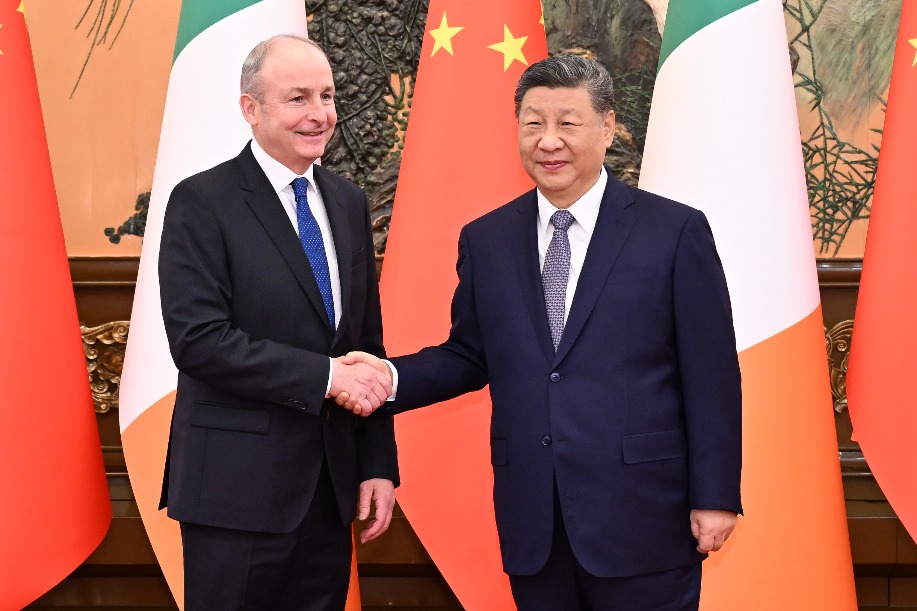
    Xi meets Taoiseach of Ireland

    China Daily Information Co (CDIC) holds exclusive copyright protection for all content published on its digital platform, according to the site’s published terms. The comprehensive copyright notice specifies that all materials—including textual content, photographic images, and multimedia information—remain the intellectual property of CDIC since 1994.

    The organization explicitly prohibits republication or utilization of any content without obtaining prior written authorization. The notice further emphasizes that any form of unauthorized use constitutes a violation of CDIC’s protected rights.

    Technical recommendations accompany the copyright information, with the site advising visitors to utilize browsers set at 1024*768 resolution or higher for optimal viewing experience. The published notice also references official registration details, including License number 0108263 for multimedia online publishing and Registration Number 130349.

    Additionally, the footer section provides navigation to organizational information pages, including sections detailing company background, advertising opportunities, contact channels, and employment information for both general positions and expatriate opportunities. The notice concludes with social media engagement prompts, encouraging visitors to follow the organization’s digital channels.

  • Themed high-speed train of Harbin Ice-Snow World starts operation in NE China’s Heilongjiang

    Themed high-speed train of Harbin Ice-Snow World starts operation in NE China’s Heilongjiang

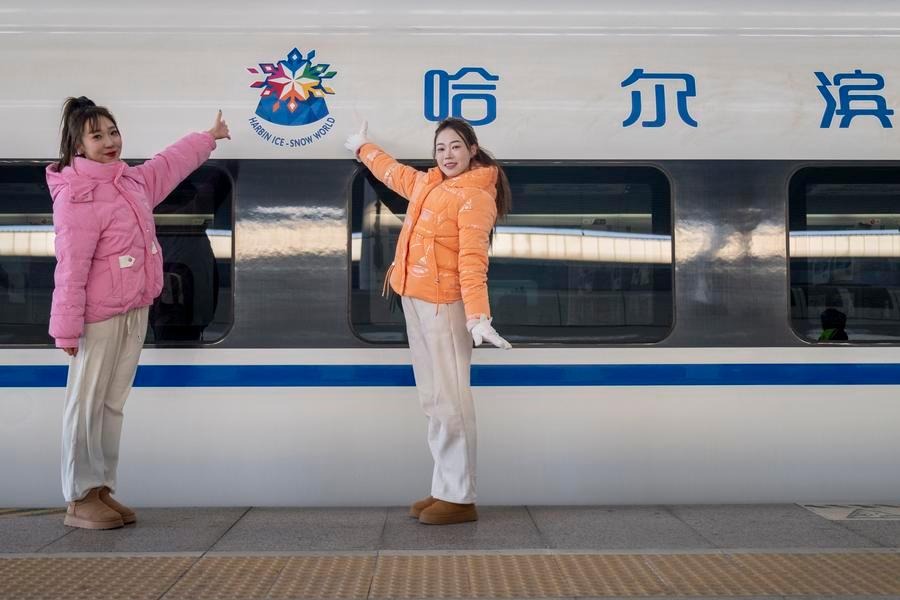
    HEILONGJIANG – A specially designed high-speed railway service showcasing the Harbin Ice-Snow World festival commenced operations from Harbin West Station on January 4, 2026. The G1276 bullet train embarked on its inaugural journey to Wuhan, Hubei Province, marking a significant development in regional tourism infrastructure.

    The visually distinctive train features comprehensive thematic decorations throughout both interior and exterior compartments, creating an immersive travel experience that celebrates northeastern China’s renowned winter festival. This initiative represents a strategic fusion of transportation technology and cultural tourism, designed to enhance passenger engagement while promoting regional economic development.

    Performers in ceremonial attire gathered at Harbin West Station for the launch event, commemorating the occasion with photographs alongside the newly deployed train. The vibrant livery and customized interior design elements transform the conveyance into a mobile ambassador for Heilongjiang’s winter tourism offerings.

    Transportation officials indicate this specialized service will operate throughout the winter season, connecting northern and central China while showcasing the cultural significance of the Harbin International Ice and Snow Festival. The project demonstrates innovative approaches to boosting regional tourism through transportation infrastructure, potentially establishing a template for other seasonal tourism destinations.

    The themed train service arrives as China continues to expand its high-speed rail network while developing integrated tourism experiences. This initiative specifically supports the growth of the ‘ice and snow economy’ – a strategic priority for northeastern provinces seeking to capitalize on their winter climate and cultural assets.

  • Founder of Indonesian ride-hailing app Gojek stands trial over Chromebooks procurement

    Founder of Indonesian ride-hailing app Gojek stands trial over Chromebooks procurement

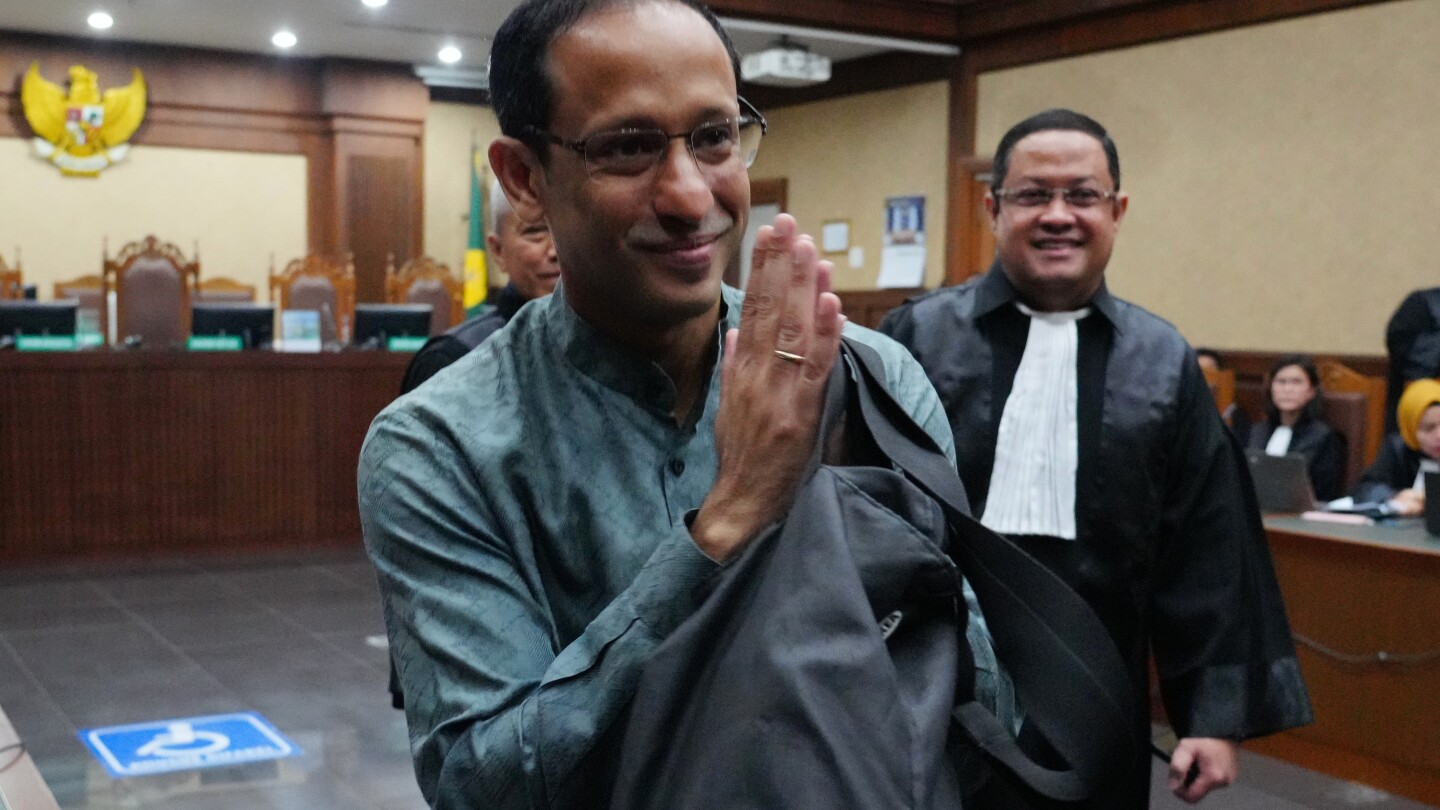
    JAKARTA, Indonesia — Indonesia’s Corruption Court commenced proceedings on Monday against Nadiem Anwar Makarim, the co-founder of ride-hailing giant Gojek and former Education Minister, in a high-profile corruption case centered on a massive school technology procurement project.

    The 41-year-old Harvard graduate, who served as Minister of Education, Culture, Research and Technology from 2019 to 2024, stands accused of orchestrating a scheme that allegedly caused significant state losses through the controversial purchase of Google Chromebooks for educational institutions. The investigation, led by Jakarta’s Attorney General’s Office, culminated in Makarim’s arrest on September 7th amid allegations of a $125 billion corruption scandal linked to the initiative.

    The procurement formed part of the government’s ambitious ‘digitalization of schools’ policy, designed to enhance digital infrastructure in remote educational facilities. However, prosecutors contend that Makarim deliberately favored Google’s Chromebook technology despite internal ministry research teams rejecting the model due to its incompatibility with regions lacking reliable internet connectivity.

    According to the indictment, Makarim manipulated the nationwide procurement process during 2020-2021 to serve personal business interests rather than educational needs. Prosecutors allege he pressured Google to invest approximately $787 million in PT Aplikasi Karya Anak Bangsa (PT AKAB), Gojek’s parent company, while personally receiving 809 billion rupiah ($48.2 million) in connection with the program.

    Lead prosecutor Muhammad Fadli Paramajeng told the three-judge panel that the procurement disregarded standard pricing benchmarks and technical requirements, particularly for under-resourced regions. The acquisition of over 1.2 million Chromebooks allegedly aimed to strengthen Google’s dominance in Indonesia’s education technology ecosystem while facilitating substantial investments in Makarim’s former company.

    The prosecution argues that Makarim’s 2019 resignation from PT AKAB and Gojek constituted ‘strategic concealment’ to mask conflicts of interest, while he maintained indirect control through appointed associates. Makarim faces potential life imprisonment under Indonesia’s 2001 Corruption Law for causing state losses and misusing public funds.

    Makarim has vigorously denied all allegations, asserting through his defense team that he never personally received funds from the Chromebook procurement. His attorneys contend that Google’s investment predated his ministerial tenure and represented routine corporate activity unrelated to the laptop agreement. They further note that Makarim divested from PT AKAB upon taking office, experienced a more than 50% wealth reduction during his term, and delegated procurement decisions to technical teams rather than exercising ministerial authority.

    Defense lawyer Ari Yusuf Amir characterized the indictment as ‘unclear, inaccurate and incomplete,’ arguing it improperly conflated Makarim’s policy-making role with operational decisions made by other officials. Three additional individuals—two former education ministry officials and a technology consultant—face related charges, while another staff member remains at large.

  • Yemen govt forces retake Hadramout

    Yemen govt forces retake Hadramout

    In a significant military development, Yemen’s internationally recognized government has announced the complete recapture of the oil-rich Hadramout province following a decisive Saudi-backed operation against separatist forces. The offensive, which culminated on Saturday, successfully displaced fighters aligned with the Southern Transitional Council (STC) from key strategic positions across the southeastern region.

    According to statements from Rashad al-Alimi, head of Yemen’s Presidential Leadership Council, government security forces have been directed to secure all state institutions and protect public and private property throughout the reclaimed territory. The state-run Saba news agency confirmed that administration troops have assumed control over all military and security installations within the province.

    The provincial capital Mukalla, a critical port city, fell under government control after STC fighters withdrew under sustained aerial bombardment from Saudi warplanes. Military officials reported that troops entered the city without major resistance and immediately began securing government facilities. However, local residents described scenes of chaos and looting at several installations, including Al Rayyan airport, involving both civilians and newly arrived pro-government tribal fighters.

    Government forces also reclaimed Seiyun, Hadramout’s second-largest city, approximately one month after its capture by STC forces. Military sources indicated that separatist troops withdrew from Seiyun airport and other key institutions, enabling government forces to establish full control.

    In a parallel development, STC forces reportedly withdrew from government institutions in the eastern province of Al-Mahrah without engaging in combat. The Saba agency reported that STC-affiliated units evacuated Ghaydah airport and the presidential palace in the provincial capital, with Governor Al-Alimi tasking local authorities with restoring order and taking control of military camps.

    The STC responded to these developments by welcoming Saudi Arabia’s invitation to sponsor a southern dialogue conference, characterizing the initiative as a practical step toward addressing longstanding southern aspirations. The group expressed optimism that this could facilitate “serious dialogue” regarding the future of southern Yemen.

    The recent clashes erupted following a government offensive launched on Friday, with hundreds of Saudi-backed troops advancing toward Hadramout to expel STC forces and reassert central government authority. Local sources reported that intensified Saudi airstrikes in support of the operation resulted in more than 20 fatalities and dozens of injuries.

    This military confrontation occurred amid the STC’s announcement of a two-year transitional period to administer southern Yemen, to be followed by a referendum on independence. Tensions between the government and the separatist group escalated significantly last month when STC forces seized substantial territory in Hadramout and Al-Mahrah—regions Saudi Arabia considers strategically vital due to their proximity to its border and concentration of Yemen’s remaining energy resources.

    Yemen’s complex civil war, ongoing since 2014 when Houthi forces captured the capital Sanaa, has involved multiple factions with competing interests. The UAE-backed STC, formed in 2017 to advocate for southern independence, had nominally joined the Saudi-led coalition and the Presidential Leadership Council in 2022 but maintained persistent disagreements with the central government regarding power-sharing arrangements and control over territory and resources.


  • Research establishes brain normative references for Chinese population

    Research establishes brain normative references for Chinese population

    A groundbreaking study conducted by Chinese researchers has successfully established comprehensive normative references for brain structure across the entire lifespan of the Chinese population, marking a significant advancement in neurological diagnostics. The research, led by Professor Liu Ya’ou from the Department of Radiology at Beijing Tiantan Hospital, addresses critical gaps in neurological healthcare specific to Chinese patients.

    The research initiative emerged from two fundamental challenges in China’s neurological diagnostics landscape. First, existing brain normative standards predominantly derive from Western populations, creating potential inaccuracies when applied to Chinese patients due to distinct genetic backgrounds and environmental factors. Second, the medical community lacked sufficient data to differentiate between normal aging processes and pathological neurological changes, often resulting in delayed diagnoses and missed intervention opportunities.

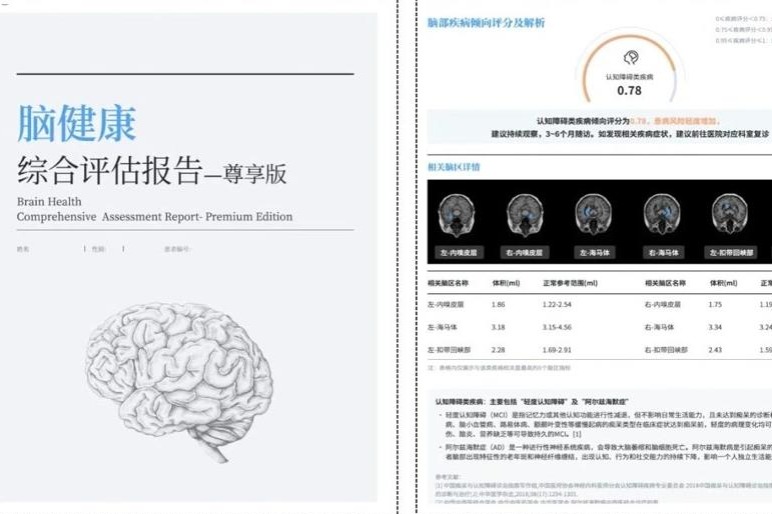
    To overcome these limitations, the collaborative team from Beijing Tiantan Hospital and Beijing Normal University analyzed an extensive dataset comprising magnetic resonance imaging scans from 24,061 healthy Chinese individuals and 3,932 patients with neurological disorders. Their comprehensive analysis established standardized reference ranges for 228 critical structural indicators specifically tailored to the Chinese population.

    Published in the prestigious international journal Nature Neuroscience, the findings demonstrate how individual brain deviation scores calculated from these normative references can rapidly quantify structural abnormalities and facilitate precise disease identification. The research reveals distinct neurological patterns: Alzheimer’s disease manifests through widespread deviations across multiple brain structures, Parkinson’s disease primarily affects deep gray matter, while multiple sclerosis predominantly involves white matter and thalamus volume alterations.

    This innovative framework, currently undergoing clinical pilot testing at Beijing Tiantan Hospital, enables earlier screening and diagnosis of neurological disorders while supporting more targeted treatment strategies. The research team is expanding collaborations with medical imaging corporations to integrate multi-modal imaging, blood biomarkers, and genetic testing data, further advancing precision medicine approaches for brain health and major neurological conditions.