标签: Asia

亚洲

  • Saudi Arabia launches project allowing visitors to walk Prophet Muhammad’s footsteps

    Saudi Arabia launches project allowing visitors to walk Prophet Muhammad’s footsteps

    Saudi Arabia has officially inaugurated the groundbreaking ‘Ala Khutah’ project, an ambitious cultural and spiritual initiative that recreates Prophet Muhammad’s (PBUH) historic migration from Makkah to Madinah. The project, launched under the supervision of the Saudi General Entertainment Authority (GEA), represents a significant development in religious tourism and cultural preservation.

    Spanning 470 kilometers of historic terrain, the immersive experience features 41 meticulously documented landmarks, 59 educational stations, and 5 major event locations that collectively trace the original Hijrah route. Visitors will undertake 305 kilometers of the journey on foot, following the precise path taken during the first year of the Islamic calendar.

    The project incorporates cutting-edge augmented reality technology to recreate historical events and provide workshops, offering participants both educational and spiritual enrichment. Infrastructure along the route includes seven dedicated accommodations, over 112 restaurants, and 68 retail establishments to support pilgrims throughout their journey.

    GEA Chairman Turki Al Sheikh emphasized the project’s dual purpose of documenting historic milestones while fostering deeper understanding of the Prophet’s life. According to official statements, the initial phase aims to welcome one million visitors, with ambitious targets of five million by 2030 and potential expansion to accommodate ten million participants.

    The ‘Ala Khutah’ initiative forms part of Saudi Arabia’s broader Vision 2030 strategy to enhance cultural tourism and religious visitation experiences. This project follows other recent developments in spiritual tourism infrastructure, including expansion projects around the Grand Mosque in Makkah.

  • Breather for buyers as Dubai gold prices fall, lose nearly Dh14 per gram in 6 days

    Breather for buyers as Dubai gold prices fall, lose nearly Dh14 per gram in 6 days

    Dubai’s gold market experienced a notable downturn this week as prices continued their descent for the second consecutive trading session. The precious metal’s decline, attributed primarily to a strengthening US dollar and subdued trading activity across Asian markets, has created favorable conditions for both retail consumers and strategic investors.

    According to the latest data from the Dubai Jewellery Group, 24K gold opened Tuesday’s trading at Dh596.75 per gram, representing a significant drop from Monday’s closing price of Dh602.0 per gram. This downward trajectory has persisted for six consecutive days, cumulatively reducing gold prices by nearly Dh14 per gram across all variants.

    The price correction has extended across all gold categories, with 22K, 21K, 18K, and 14K gold now trading at Dh552.5, Dh529.75, Dh454.25, and Dh354.25 per gram respectively. This broad-based decline has generated renewed interest among jewelry shoppers in the UAE, particularly those planning purchases for upcoming weddings and special events.

    Concurrently, international spot gold prices reflected the trend, trading at $4,941.18 per ounce with a 1% decline as of 9:10 AM UAE time on Tuesday. Market analysts interpret this correction as a potential buying opportunity, with many investors increasing their exposure to both physical bullion and digital gold assets.

    Vijay Valecha, Chief Investment Officer at Century Financial, provided expert analysis of the underlying market dynamics. ‘Recent US CPI data offered limited relief,’ Valecha noted. ‘While headline CPI benefited from energy price movements and core inflation moderated slightly due to softer shelter components, underlying details remain concerning. Core goods inflation has shown signs of firming, potentially indicating early effects of tariff implementations.’

    The Federal Reserve’s monetary policy outlook has consequently adjusted, with Fed funds futures currently pricing approximately 62.1 basis points of cuts by year-end—equivalent to roughly two and a half quarter-point adjustments. This anticipated easing cycle, potentially beginning in June and extending through the second half, traditionally provides support for gold valuations.

    Valecha further highlighted gold’s complex behavior during equity market stress periods, noting that ‘in times of extreme equity market distress, the precious metal sometimes experiences correlated declines as investors liquidate liquid assets to cover losses elsewhere.’ This characteristic underscores gold’s dual role as both a safe-haven asset and a liquid financial instrument.

  • Jordan’s Queen Rania meets the Ambanis, Bollywood stars during India visit

    Jordan’s Queen Rania meets the Ambanis, Bollywood stars during India visit

    Her Majesty Queen Rania Al Abdullah of Jordan has embarked on a multifaceted visit to India, seamlessly blending diplomatic engagement with cultural appreciation and advocacy for women’s leadership. The royal’s itinerary included a prominent stop in Mumbai, where she was hosted by Mukesh Ambani, Chairman of Reliance Industries and among Asia’s most influential business magnates, and his family at their residence.

    The visit was documented through official social media channels, where Queen Rania expressed profound gratitude for the Ambani family’s hospitality. ‘My deepest appreciation to Mr. Mukesh Ambani for his gracious hosting in Mumbai,’ she remarked. ‘Your genuine warmth and exceptional hospitality have profoundly enriched my experience in India.’ The royal’s attire—an elegant white blouse paired with an intricately embroidered midi skirt and green sash—reflected a thoughtful blend of contemporary and traditional elements.

    A highlight of the Mumbai agenda was Queen Rania’s engagement at the Nita Mukesh Ambani Cultural Centre, where she participated in an exclusive roundtable discussion with distinguished female leaders from various sectors including business, entrepreneurship, and the arts. The session focused on critical issues surrounding women’s empowerment and leadership development.

    Bollywood icon Karisma Kapoor, who attended the private gathering, described the event as ‘an honor and privilege’ in her social media reflections. She emphasized the significance of such dialogues, noting that ‘when women converge with purpose and vision, they not only shape conversations but actively mold the future for subsequent generations.’

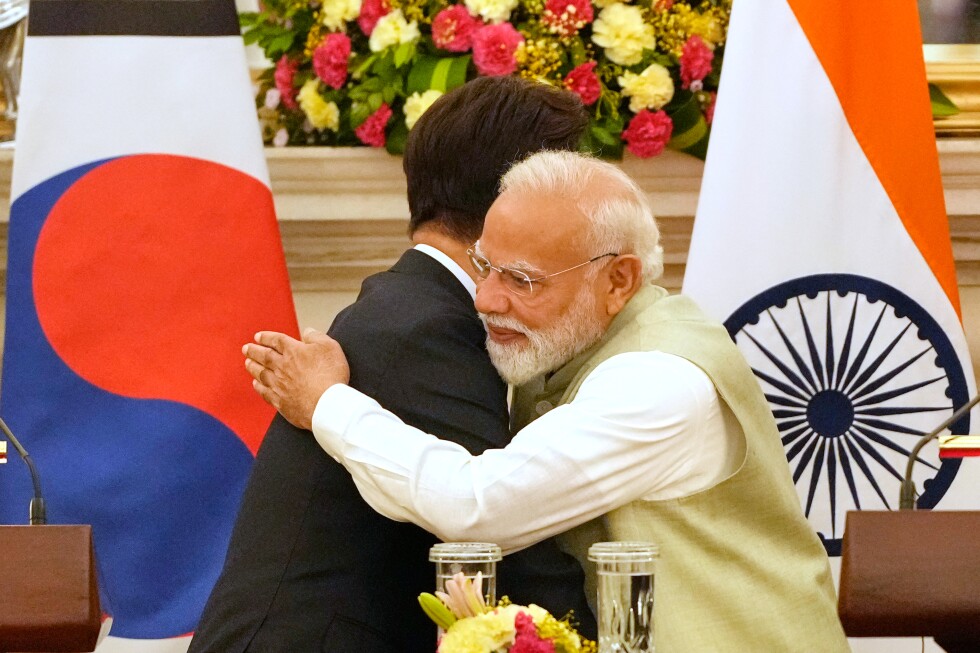
    Earlier during her Indian tour, Queen Rania delivered a keynote address at the ET Now Global Business Summit in New Delhi, sharing the platform with Prime Minister Narendra Modi and other policy influencers. In her address, she articulated the often-overlooked virtue of humility as a fundamental leadership quality in contemporary global governance. ‘Humility represents not hesitation, but honesty regarding our limitations,’ she asserted. ‘This awareness enables the construction of more inclusive and resilient systems that effectively serve broader populations.’

    The Jordanian Queen’s visit exemplifies modern diplomatic outreach, combining traditional statecraft with cultural exchange and substantive discourse on social advancement.

  • Air India Express unveils new Hyderabad-Dubai non-stop flights

    Air India Express unveils new Hyderabad-Dubai non-stop flights

    Air India Express has officially announced the launch of non-stop flight services connecting Hyderabad and Dubai, marking a significant expansion of its Gulf network. The new route, scheduled to commence operations on March 29, 2026, represents a strategic realignment within the Air India Group’s restructuring initiative that will see numerous Middle Eastern routes transition to its low-cost subsidiary.

    The airline confirmed that passengers booking these flights will have access to its premium ‘Gourmair’ hot meal service starting at just ₹500. This development comes alongside the carrier’s ongoing ‘Xpress More Sale,’ offering substantial discounts of up to 20% on both domestic and international routes, with approximately five million seats available at promotional fares.

    Hyderabad’s Rajiv Gandhi International Airport already serves as a operational hub for Air India Express, with existing connections to multiple Gulf destinations including Abu Dhabi, Bahrain, Dammam, Doha, Jeddah, Kuwait City, Muscat, and Sharjah. The addition of Dubai flights further solidifies the airline’s position in the competitive India-Gulf aviation market.

    The promotional sale, which began with early access through the airline’s digital platforms on February 1, officially ran from February 2-5, 2026. Bookings made during this period are valid for travel between February 11 and December 31, 2026, covering the carrier’s entire route network.

  • Ocalan announces first phase of PKK dissolution is complete

    Ocalan announces first phase of PKK dissolution is complete

    In a significant development for Middle Eastern geopolitics, Abdullah Ocalan, the incarcerated founder of the Kurdistan Workers’ Party (PKK), has confirmed the completion of the initial phase of his organization’s dissolution. The message was conveyed by Mithat Sancar, a parliamentarian from Turkey’s pro-Kurdish DEM Party, following a three-hour meeting with Ocalan at his Imrali Island prison.

    Sancar reported Ocalan’s declaration that ‘the first phase has concluded with the dissolution of the organisation and the termination of armed struggle,’ marking a potential watershed moment in the four-decade conflict that has claimed tens of thousands of lives. The PKK leader now emphasizes transitioning to a second phase focused on ‘integration aspects’ – what he terms ‘democratic integration.’

    This transformation follows Ocalan’s historic February 2023 appeal for the PKK and its regional affiliates – including branches in Syria, Iran, and Iraq under the Group of Communities in Kurdistan (KCK) – to disarm and disband. The PKK formally committed to this directive in March by announcing a ceasefire.

    The dissolution process faced complications regarding the status of the Syrian Democratic Forces (SDF), led by the PKK’s Syrian affiliate, the People’s Protection Units (YPG). Escalating clashes between Syrian government forces and the SDF earlier this year threatened to derail the entire process until diplomatic interventions prevailed.

    Sancar credited multiple actors for facilitating negotiations, including Iraqi Kurdish leaders Masoud Barzani, Nechirvan Barzani, and Bafel Talabani, while emphasizing Ocalan’s behind-the-scenes role as crucial. US-backed negotiations culminated in a January 30 integration agreement and ceasefire, transferring control of northeastern Syria to Damascus and outlining phased integration of SDF forces into the Syrian army.

    Ocalan maintains that integration must transcend mere merger, requiring ‘recognition of existence and rights [of Kurds], democracy, and protection of those gains.’ He has simultaneously demanded improved living and communication conditions at Imrali to contribute effectively to the second phase.

    The developments coincide with unexpected support from Devlet Bahceli, chairman of the nationalist MHP party and architect of the PKK deal, who recently advocated for Ocalan to receive the ‘right to hope’ – a Turkish legal principle allowing life-sentenced prisoners possibility of release. Bahceli also called for reinstating removed Kurdish mayors and releasing Kurdish political leader Selahattin Demirtas.

  • Frederick Wiseman, Oscar-winning documentary filmmaker, dies at 96

    Frederick Wiseman, Oscar-winning documentary filmmaker, dies at 96

    Frederick Wiseman, the groundbreaking documentary filmmaker whose observational style revolutionized nonfiction cinema, passed away peacefully on Monday at age 96. His production company, Zipporah Films, confirmed the news without disclosing the cause of death.

    Wiseman’s extraordinary six-decade career produced approximately 50 films that meticulously documented American institutions through his distinctive “direct cinema” approach. His cameras captured the inner workings of schools, hospitals, government bodies, and cultural organizations without narration, interviews, or artificial lighting—creating immersive experiences that allowed audiences to draw their own conclusions.

    The filmmaker’s method involved shooting hundreds of hours of raw footage that he would personally edit into feature-length documentaries. “The audience is placed in the middle of these events and asked to think through their own relationship to what they are seeing and hearing,” Wiseman told Documentary Magazine in 1991.

    Despite limited commercial distribution, Wiseman’s work earned critical acclaim and numerous honors, including an honorary Academy Award in 2016. The Academy praised his “masterful and distinctive documentaries [that] examine the familiar and reveal the unexpected.” His additional accolades included four Emmy Awards and recognition from major international film festivals.

    Born in Boston to Jewish immigrant parents on January 1, 1930, Wiseman initially pursued law before abandoning the profession for filmmaking. His groundbreaking 1967 debut, “Titicut Follies,” exposed conditions at a Massachusetts prison-hospital for the criminally insane and established his uncompromising observational style.

    Wiseman’s filmography includes seminal works like “High School” (1968), “Law and Order” (1969), and later projects examining European cultural institutions. His final film, 2023’s “Menus-Plaisirs — Les Troisgros,” continued his tradition of lengthy, immersive documentaries that challenged conventional viewing experiences.

    The filmmaker is survived by his sons, David and Eric. His wife Zipporah, a law professor for whom he named his production company, passed away in 2021.

  • Sri Lankan lawmakers scrap their pensions, delivering on a campaign promise

    Sri Lankan lawmakers scrap their pensions, delivering on a campaign promise

    COLOMBO, Sri Lanka — In a sweeping legislative action addressing public anger over economic mismanagement, Sri Lanka’s parliament voted decisively on Tuesday to eliminate pension benefits for lawmakers. The bill passed with overwhelming support, receiving 154 votes in favor with only two oppositions in the 225-member assembly.

    The move fulfills a central campaign pledge by President Anura Kumara Dissanayake’s Marxist-leaning government, elected in 2024 amid widespread resentment toward political elites blamed for the nation’s devastating 2022 economic collapse. The new legislation terminates payments to all current recipients and those who would have qualified under the previous system, which provided pensions after just five years of parliamentary service.

    This represents the administration’s second major austerity measure targeting political privileges, following September’s abolition of perks for former presidents that included state-funded housing, allowances, pensions, transportation, and dedicated offices with staff for ex-leaders and their widows.

    Justice Minister Harshana Nanayakkara, who presented the bill, emphasized that lawmakers had “no moral right” to receive pensions while the nation struggles to recover from its worst economic crisis. The country declared bankruptcy in April 2022 with over $83 billion in debt, prompting a $2.9 billion International Monetary Fund bailout package in 2023.

    Sri Lanka’s economic devastation—characterized by severe shortages of food, medicine, fuel, and electricity—sparked mass protests that ultimately forced former President Gotabaya Rajapaksa from office. The crisis stemmed from economic mismanagement compounded by COVID-19 pandemic impacts and 2019 terrorism attacks that crippled the vital tourism industry.

    The government recently announced completion of debt restructuring agreements with bilateral, multilateral, and private creditors, seeking $17 billion in debt service relief as the nation continues its recovery journey.

  • In the face of history, Japan’s discomfort telling

    In the face of history, Japan’s discomfort telling

    The Munich Security Conference became an unexpected arena for historical reckoning as Chinese Foreign Minister Wang Yi’s remarks about Japan’s wartime legacy triggered a diplomatic confrontation. During the 62nd gathering of global security leaders, Wang drew pointed comparisons between Japan and Germany’s approaches to addressing their historical responsibilities, highlighting stark contrasts in how the two nations have institutionalized remembrance of wartime actions.

    Wang’s commentary, grounded in the foundational agreements that established the post-1945 Asia-Pacific order, emphasized that China’s position on Taiwan’s status and Japan’s renunciation of militarism reflected Allied consensus rather than Chinese invention. The Chinese diplomat’s statements met with appreciative reception from European delegates familiar with confronting difficult historical truths.

    Japan’s response demonstrated notable sensitivity, with Tokyo lodging formal diplomatic protests with unusual urgency. The reaction appeared disproportionate to Wang’s actual statements, which primarily reiterated established historical facts and international agreements. Japanese officials framed their response within the context of contemporary security concerns, attempting to link Asian regional stability to the ongoing situation in Ukraine.

    Observers noted the particular irony of this exchange occurring in Germany, a nation that has systematically addressed its Nazi past through legal frameworks criminalizing Nazi symbolism and creating comprehensive remembrance institutions. German officials present at the conference maintained composure during Wang’s historical comparisons, acknowledging the points without diplomatic protest.

    The exchange revealed deeper tensions regarding Japan’s ongoing relationship with its wartime history, particularly concerning the Yasukuni Shrine where Class-A war criminals are honored. Recent statements from Japanese Prime Minister Sanae Takaichi about creating “the environment” for visiting the shrine have raised concerns among Japan’s neighbors about the nation’s historical perspective.

    Japan’s diplomatic strategy in Munich appeared focused on securing Western support for its military expansion plans, framed as “burden-sharing” within collective security arrangements. However, European officials preoccupied with transatlantic relations and domestic security challenges showed limited enthusiasm for underwriting Tokyo’s ambitions, despite Japanese efforts to present regional security through a Cold War-era lens.

    The conference ultimately demonstrated that historical accountability remains an unresolved element in Asia-Pacific relations, with China presenting itself as a stabilizing force committed to regional peace while Japan seeks to advance its security agenda through strengthened Western alliances.

  • CBSE says all Grade 10 students must attempt first exam

    CBSE says all Grade 10 students must attempt first exam

    The Central Board of Secondary Education (CBSE) has instituted a stringent new examination requirement mandating all Class 10 students to participate in the initial board examination session. According to an official communication released on Saturday, the educational board clarified that attendance during the first examination series is compulsory for all registered candidates.

    The policy establishes that students who miss three or more subject examinations during the initial testing period will be automatically disqualified from participating in the second examination session. These students will be categorized under ‘Essential Repeat’ status, requiring them to wait until the following year’s main examinations in February to attempt their tests again.

    CBSE developed these guidelines in response to numerous student requests seeking permission to bypass the first examination and directly appear for the second session. The board’s comprehensive framework outlines specific eligibility criteria for second examination participation, including: improvement category applications for up to three main subjects, first/third chance compartment examinations, combined compartment and improvement attempts, and improvement opportunities for students who passed through subject replacement.

    The notification further specified that students receiving ‘Compartment’ results in the initial examination will be permitted to reappear in the second session under the compartment category, though additional subjects beyond the standard curriculum will not be permitted after passing Class X. The board explicitly stated it will not entertain any further queries regarding this policy, emphasizing the finality of these examination regulations.

  • Japan’s Kashiwazaki-Kariwa nuclear plant resumes power transmission

    Japan’s Kashiwazaki-Kariwa nuclear plant resumes power transmission

    In a landmark development for Japan’s energy sector, Tokyo Electric Power Company (TEPCO) has successfully recommenced electricity generation and transmission from its Kashiwazaki-Kariwa nuclear facility in Niigata prefecture. This reactivation marks the first operational resumption of a TEPCO-controlled nuclear unit since the catastrophic Fukushima Daiichi incident in March 2011.

    The Number 6 reactor at the plant initiated power delivery to the Tokyo metropolitan grid at 10:00 PM local time on Monday, ending an approximate 14-year suspension of nuclear energy distribution. The restart follows extensive safety evaluations and represents a pivotal moment in Japan’s gradual return to nuclear power generation.

    According to the operational timeline, TEPCO will incrementally increase the reactor’s output capacity to 50% of its maximum 1.35-million-kilowatt potential before implementing a temporary shutdown later this week. This planned pause will facilitate comprehensive testing of the power-generation infrastructure. Provided all systems perform within expected parameters, the utility company anticipates elevating output to full capacity and initiating commercial operations by March 18.

    The Kashiwazaki-Kariwa facility, situated approximately 220 kilometers northwest of Tokyo, holds distinction as the world’s largest nuclear power plant by potential generation capacity. Despite its technical significance, the reactor’s reactivation has encountered substantial opposition from local communities and seismic experts who contend the plant resides above an active geological fault line, raising ongoing safety concerns.