标签: Asia

亚洲

  • ‘RRR’ and ‘Peddi’ star Ram Charan, wife Upasana welcome twins: a baby boy and girl

    ‘RRR’ and ‘Peddi’ star Ram Charan, wife Upasana welcome twins: a baby boy and girl

    In a joyous development within India’s entertainment industry, acclaimed actor Ram Charan and his entrepreneur wife Upasana Konidela have welcomed twins—a boy and a girl—marking a significant expansion of their family. The announcement was formally made on social media by Ram Charan’s father, veteran Telugu cinema icon Chiranjeevi, who expressed profound gratitude for the overwhelming support received from well-wishers.

    The veteran actor’s official statement emphasized that both newborns and the mother are in excellent health, describing the arrival as a moment of ‘pure joy and divine blessing’ for the entire family. This event marks the couple’s second and third children, following the birth of their first daughter, Klin Kaara, in 2023, whom they have notably kept out of the public spotlight.

    Social media platforms have been inundated with celebratory messages from fans, industry colleagues, and admirers nationwide, reflecting Ram Charan’s substantial popularity following his global recognition through the blockbuster film ‘RRR.’ The actor’s professional trajectory continues its upward climb with the anticipated release of his forthcoming project ‘Peddi,’ scheduled for global distribution on March 27, 2026. Directed by Buchi Babu Sana of ‘Uppena’ fame, the film features an ensemble cast including Janhvi Kapoor and represents another significant milestone in Charan’s evolving career.

  • Israel partially reopens Gaza’s Rafah crossing for ‘limited passage of residents’

    Israel partially reopens Gaza’s Rafah crossing for ‘limited passage of residents’

    In a significant development following months of international pressure, Israeli authorities have partially reactivated the Rafah border crossing between Gaza and Egypt, though initial operations remain strictly limited to pedestrian transit. This cautiously orchestrated reopening occurs against a backdrop of persistent violence, with Gaza’s civil defence agency reporting numerous casualties from Israeli military actions just one day prior, despite an officially declared ceasefire.

    The Rafah crossing represents a critical humanitarian corridor for both civilian movement and aid distribution, yet had remained shuttered since Israeli forces assumed control in May 2024 during hostilities with Hamas, excepting a brief operational window in early 2025. COGAT, Israel’s defence coordination unit for Palestinian civilian affairs, characterized Sunday’s activation as “an initial pilot phase” conducted in coordination with European Union monitoring, emphasizing that full bidirectional passenger movement would commence upon completion of preliminary preparations.

    The reopening follows Israel’s recovery of Ran Gvili’s remains—the final Israeli hostage held in Gaza—whose repatriation had been stipulated as a precondition for border access. Meanwhile, approximately 200 medically vulnerable patients await evacuation authorization, with Gaza’s health ministry confirming their urgent need for overseas treatment. Concurrently, a 40-member Palestinian Authority contingent has positioned itself on the Egyptian border awaiting entry permission to initiate administrative functions.

    While a broader reopening is anticipated Monday, sources indicate no consensus has been reached regarding transit quotas. Egyptian officials have committed to admitting all Israel-approved departures. The crossing’s operationalization is expected to facilitate the entry of the newly established National Committee for the Administration of Gaza (NCAG)—a 15-member technocratic body tasked with governing the territory’s 2.2 million residents under US-supervised ceasefire provisions, though committee members confirm no immediate entry timeline has been established.

  • Pakistan says cricket team will boycott T20 World Cup match against India

    Pakistan says cricket team will boycott T20 World Cup match against India

    In a controversial decision with far-reaching implications for international cricket, the Pakistani government has granted its national team permission to compete in the upcoming ICC T20 World Cup while simultaneously mandating a boycott of its high-profile group stage match against arch-rival India.

    The tournament, co-hosted by India and Sri Lanka and featuring twenty national teams, commences this Saturday. The Pakistani squad will conduct all its matches in Sri Lanka, a logistical arrangement necessitated by the persistent political tensions between Islamabad and New Delhi.

    Official communication from the Government of the Islamic Republic of Pakistan, disseminated via its verified social media channel, explicitly stated: “The Pakistan Cricket Team shall not take the field in the match scheduled on 15th February 2026 against India.” No specific justification was provided for this selective boycott. However, the decision follows strong criticism from Pakistan Cricket Board (PCB) Chairman Mohsin Naqvi, who previously accused the International Cricket Council (ICC) of applying “double standards” in its scheduling. Naqvi had been particularly vocal regarding the ICC’s refusal to relocate Bangladesh’s matches to Sri Lanka, a team ultimately replaced by Scotland for the tournament. The PCB chairman presented the complex situation to Prime Minister Shehbaz Sharif, leaving the final participation decision to the government.

    The ICC responded with a formal statement expressing deep concern, noting it was awaiting official confirmation from the PCB. The global governing body warned that Pakistan’s stance threatens “the spirit and sanctity” of world sporting events. “This position of selective participation is difficult to reconcile with the fundamental premise of a global sporting event where all qualified teams are expected to compete on equal terms,” the ICC asserted. While acknowledging governmental roles in national policy, the council emphasized that the boycott disadvantages global cricket and disappoints millions of fans, including those in Pakistan. The ICC urged the PCB to seek a “mutually acceptable resolution” and cautioned about the “significant and long-term implications” for Pakistan’s standing within the international cricket ecosystem.

    The financial ramifications are substantial, as a Pakistan-India clash traditionally generates enormous broadcast revenue and sponsor interest. A forfeit would automatically award two points to India. This diplomatic friction extends beyond politics onto the pitch; last year during the Asia Cup in the UAE, Indian players notably refused to shake hands with their Pakistani counterparts.

    Team captain Salman Ali Agha, fresh from a 3-0 T20 series victory over Australia in Lahore, confirmed the team would comply with governmental directives. “It’s not our decision, we can’t do anything about it,” Agha stated. “We will do whatever our government and the PCB chairman say.” Pakistan’s tournament begins with a match against the Netherlands on Saturday, followed by fixtures against the U.S. on February 10th and Namibia on February 18th.

  • ‘Mardaani 3’ review: Rani Mukerji’s cop action drama stumbles

    ‘Mardaani 3’ review: Rani Mukerji’s cop action drama stumbles

    The highly anticipated third installment of the Mardaani franchise delivers a mixed bag of gritty social commentary and disappointing narrative execution. While Rani Mukerji returns with compelling intensity as the formidable Inspector Shivani Shivaji Roy, the film struggles to maintain its initial momentum, ultimately collapsing under the weight of convoluted plotting and underdeveloped antagonists.

    The narrative opens with promise, exploring the disturbing phenomenon of girl child trafficking through the mysterious disappearance of two young victims—one from privileged diplomatic circles, another from impoverished circumstances. This setup effectively establishes the film’s central theme: the stark disparity in institutional response based on social status. The introduction of a female antagonist, Amma (Mallika Prasad), provides fresh dynamic to the franchise, suggesting a nuanced exploration of gender and villainy.

    Director Abhiraj Minawala demonstrates competent handling of the first act, crafting tense sequences that highlight both Shivani’s investigative prowess and Amma’s menacing presence. Prasad delivers a chilling performance that nearly matches Mukerji’s commanding screen presence, creating several electrifying confrontations between the two formidable women.

    However, the film undergoes a dramatic tonal shift post-interval, introducing an additional male villain whose cartoonish villainy and absurd scientific experiments undermine the grounded realism established earlier. The screenplay fractures into multiple disjointed directions, abandoning its social critique for generic action tropes reminiscent of 1990s Bollywood melodrama. What begins as a thoughtful examination of systemic violence against women degenerates into conventional masala entertainment, complete with exaggerated monologues and predictable set pieces.

    Despite these narrative flaws, Mukerji’s performance remains consistently excellent. Her portrayal of Shivani continues to resonate with authenticity and emotional depth, particularly during scenes where she confronts institutional indifference toward marginalized victims. The film’s production values and technical execution maintain professional standards throughout, though they cannot compensate for the fundamental storytelling deficiencies.

    The supporting cast receives minimal development, with most characters functioning as mere props to highlight Shivani’s heroism. This represents a significant departure from previous installments, which featured memorable antagonists that challenged the protagonist in compelling ways. The final product suggests a franchise struggling to balance social relevance with commercial expectations, ultimately satisfying neither objective completely.

  • Rafah border crossing reopens on limited, trial basis

    Rafah border crossing reopens on limited, trial basis

    The Rafah border crossing, Gaza’s primary connection to the external world, has initiated a preliminary reopening procedure on Sunday following an extensive 18-month closure period. This development emerges as a significant implementation measure subsequent to the Israel-Hamas ceasefire enacted on October 10, 2025.

    According to statements from Palestinian authorities conveyed to Xinhua, the present operation constitutes an experimental phase and does not presently impose restrictions on the transit of travelers or medical patients. The Israeli Coordinator of Government Activities in the Territories (COGAT), an agency operating under the Defense Ministry, confirmed the resumption of border operations exclusively for pedestrian movement, with comprehensive bidirectional transit anticipated to commence imminently.

    A collaborative delegation comprising Palestinian, Egyptian, and European representatives is presently stationed at the crossing facility to conduct operational simulations and assess procedural readiness. Shadi Othman, the European Union’s media officer based in Jerusalem, characterized the event as a ‘trial simulation’ designed to evaluate on-ground operational capabilities through coordinated efforts with all involved stakeholders, including the European mission and Egyptian authorities.

    Othman emphasized that the paramount objective during this preliminary stage remains ensuring the crossing’s operational capacity for seamless bidirectional civilian transit. Notwithstanding these developments, Gaza’s health authorities indicate that no formal notifications regarding specific movement schedules for patients or travelers have been disseminated, attributing this delay to pending finalization of official crossing registries and procedural arrangements.

  • Saudi-Pakistan mutual defence pact will not include Turkey: Sources

    Saudi-Pakistan mutual defence pact will not include Turkey: Sources

    Saudi Arabian military sources have definitively stated that the recently established mutual defense agreement with Pakistan will remain exclusively bilateral, dismissing speculation about Turkish inclusion. This clarification comes following earlier reports from Turkish officials suggesting potential trilateral negotiations.

    The defense pact, formally announced last year, has generated significant international attention due to its strategic implications in a region experiencing heightened tensions. These tensions escalated following Israeli airstrikes in Doha targeting Hamas officials and subsequent Iranian bombing of a US air base in Qatar.

    A source within Saudi military circles explicitly told AFP: ‘Turkey won’t join the defense pact with Pakistan. It’s a bilateral pact with Pakistan and will remain a bilateral pact.’ This position was corroborated by a Gulf official who emphasized: ‘We have common agreements with Turkey but the one with Pakistan will stay bilateral.’

    The agreement’s significance is magnified by Pakistan’s status as a nuclear power, raising questions about potential nuclear components to the arrangement. This development occurs against the backdrop of recent intensified conflict between Pakistan and India in May, which resulted in over 70 casualties through missile, drone, and artillery exchanges—the most severe clashes between these nuclear-armed neighbors since 1999.

    Saudi Arabia played a crucial mediating role in de-escalating the Pakistan-India conflict, demonstrating Riyadh’s growing influence in regional security matters. Notably, Saudi Arabia maintains strong diplomatic and economic ties with India, which relies heavily on Saudi petroleum imports, with the Kingdom ranking as India’s third-largest oil supplier according to Indian foreign ministry data.

  • Pakistan trounces Australia by 111 runs to complete a 3-0 T20 series sweep

    Pakistan trounces Australia by 111 runs to complete a 3-0 T20 series sweep

    In a stunning pre-World Cup display, Pakistan delivered Australia’s most crushing defeat in Twenty20 cricket history with a monumental 111-run victory in Lahore on Sunday, completing a dominant 3-0 series sweep.

    The comprehensive triumph surpassed Australia’s previous worst T20 loss—a 100-run defeat against England in 2005. With the T20 World Cup co-hosted by India and Sri Lanka approaching, Australia’s persistent vulnerability against spin bowling was ruthlessly exposed by left-arm spinner Mohammad Nawaz, who recorded career-best figures of 5-18.

    Pakistan’s strategic decision-making proved impeccable from the outset, winning their third consecutive toss and posting a formidable 207-6—their highest-ever T20 total against Australia. The visitors crumbled under pressure, bowled out for a meager 96 in just 16.5 overs.

    Captain Salman Ali Agha expressed supreme confidence in his squad’s performance: ‘Over the past two days, we’ve been exceptional across all departments without discernible flaws. Our domination has been absolute, and I’m maintaining an optimal mindset for leadership and batting as we approach the World Cup.’

    Opener Saim Ayub provided stability with 56 off 57 balls, while under-scrutiny batsman Babar Azam answered critics with an unbeaten 50 off 36 deliveries. The innings’ explosive catalyst was Shadab Khan’s blistering 46 off just 19 balls, featuring five sixes that propelled Pakistan’s momentum.

    Australia’s batting collapse began early with Shaheen Shah Afridi dismantling the top order, removing captain Mitchell Marsh and Matt Renshaw for single-digit scores. Nawaz’s spin wizardry then dismantled the middle order, with Marcus Stoinis (23) and Cameron Green (22) among his victims.

    Marsh acknowledged Pakistan’s superiority: ‘We were comprehensively outplayed throughout this series. Chasing on this surface proved exceptionally challenging, but we’ll extract valuable lessons from these defeats as we prepare for the World Cup.’

    The series demonstrated Pakistan’s emerging strength in T20 cricket, having previously secured victories by 19 runs and 90 runs in the opening matches.

  • Pakistan says it has killed 145 ‘Indian-backed terrorists’ in Balochistan after deadly attacks

    Pakistan says it has killed 145 ‘Indian-backed terrorists’ in Balochistan after deadly attacks

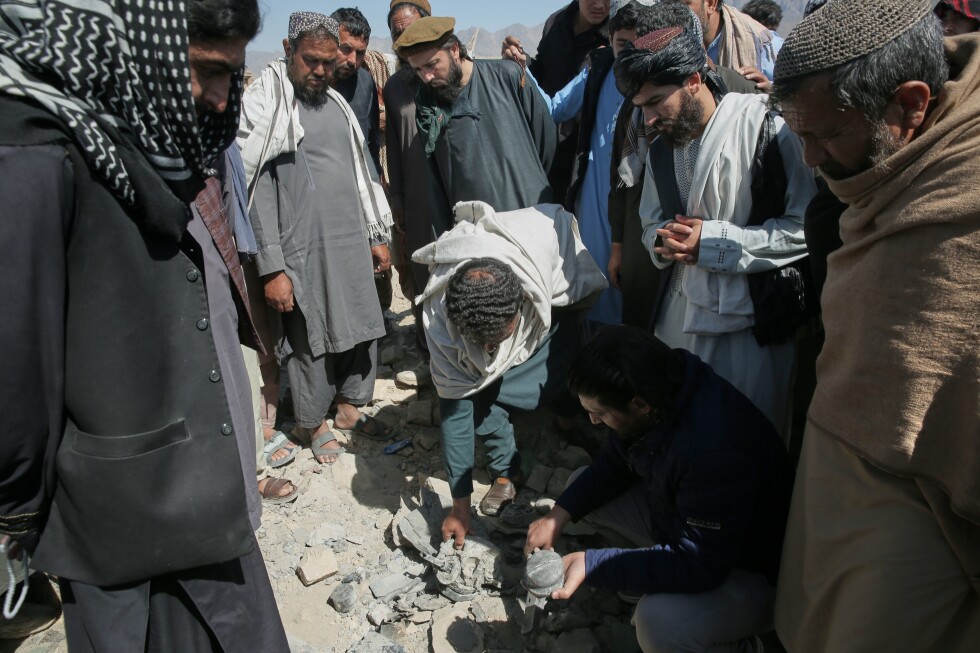
    Pakistani security forces have conducted a sweeping counterterrorism operation in the volatile southwestern province of Balochistan, resulting in the deaths of 145 militants allegedly backed by Indian intelligence. The intensive 40-hour campaign, which concluded on Sunday, represents the most significant single counterinsurgency achievement in decades according to provincial authorities.

    The operation was launched in direct response to coordinated suicide bombings and armed assaults that claimed 33 lives on Saturday, including 18 civilians and 15 security personnel. Among the civilian casualties were five women and three children, highlighting the brutal nature of the attacks that targeted both security infrastructure and residential areas.

    Sarfraz Bugti, Balochistan’s Chief Minister, identified the eliminated fighters as members of the banned Baloch Liberation Army (BLA), which Pakistani officials refer to as ‘Fitna al-Hindustan’ or ‘Indian Mischief.’ Bugti revealed that some of the deceased militants were Afghan nationals, reinforcing Pakistan’s longstanding allegations of cross-border terrorist support.

    The attacks occurred in a region critical to Pakistan’s economic ambitions, where the government has been actively seeking foreign investment in mining and mineral extraction. This security challenge emerges just months after a major U.S. metals corporation finalized a $500 million investment agreement with Pakistan in September 2025.

    Residents described scenes of terror as armed militants roamed freely before security forces intervened. ‘It was a very scary day in the history of Quetta,’ recounted local resident Khan Muhammad, reflecting the panic that gripped the provincial capital.

    Bugti reiterated accusations against both India and Afghanistan, claiming senior BLA leadership operates from Afghan territory despite Taliban commitments under the 2020 Doha agreement to prevent such cross-border operations. These allegations occur against a backdrop of heightened tensions between Pakistan and Afghanistan, including recent Pakistani airstrikes on alleged terrorist hideouts inside Afghan territory.

    The BLA, designated as a foreign terrorist organization by the U.S. State Department in August 2025, has conducted numerous attacks targeting security forces, Chinese interests, and infrastructure projects in the resource-rich province. The group is part of a long-standing separatist insurgency by ethnic Baloch groups seeking greater autonomy or independence from Pakistan’s central government.

  • India budget will focus on accelerating, sustaining strong economic growth, finance minister says

    India budget will focus on accelerating, sustaining strong economic growth, finance minister says

    Indian Finance Minister Nirmala Sitharaman has outlined an ambitious economic vision for the upcoming annual budget, emphasizing accelerated growth trajectories and enhanced business competitiveness despite global volatility. The fiscal plan prioritizes structural reforms, financial sector strengthening, and strategic investments in emerging technologies including artificial intelligence.

    Current economic indicators reveal robust performance with 7.4% growth projected for the present financial year alongside remarkably controlled inflation near 2%. The government’s fiscal discipline is demonstrated through a managed deficit of 4.4% of GDP.

    Recent months have witnessed comprehensive policy measures designed to stimulate private investment and consumer demand. These include significant tax reductions, labor law modernization, and unprecedented opening of India’s nuclear power sector to private participation. Additional transformative policies are anticipated in the forthcoming budget announcement.

    Prime Minister Narendra Modi characterized this approach as shifting from ‘long-term problems to long-term solutions,’ creating predictable economic conditions that build international confidence. His administration forecasts continued expansion between 6.8-7.2% for the next fiscal year, with the coming quarter-century deemed critical for achieving developed economy status.

    Manufacturing receives particular attention with plans for a third major revitalization effort following previous initiatives. Defense manufacturing regulations are expected to undergo significant liberalization to attract investment.

    Internationally, India is pursuing strategic trade agreements, including a landmark pact with the European Union, to counterbalance recent trade challenges including 50% tariffs imposed by the Trump administration on certain Indian exports to the United States.

  • Davidson lands stunning play-off eagle to seal maiden MENA Golf Tour title in Egypt

    Davidson lands stunning play-off eagle to seal maiden MENA Golf Tour title in Egypt

    In a stunning display of resilience and skill, Welsh golfer Jack Davidson captured his maiden MENA Golf Tour championship with a breathtaking eagle putt during a sudden-death playoff at the Egypt Golf Series Address Marassi Golf Resort 2. The dramatic conclusion saw Davidson defeat Spain’s Juan Salama on the first extra hole after both competitors finished regulation play tied at 14-under-par.

    The championship showdown reached its climax on the par-five 18th hole, where both players demonstrated exceptional precision off the tee. Davidson’s strategic approach shot landed securely on the green’s center, while Salama’s second effort settled on the fringe. The Spanish contender attempted an ambitious eagle chip but encountered an unfavorable lie, resulting in a shot that fell short of the target. Seizing the opportunity, Davidson calmly sank a 25-foot eagle putt to claim victory.

    Davidson’s triumph represents a remarkable turnaround from his opening round performance, where he carded a one-over-par 71 that left him seemingly out of contention. His prospects transformed dramatically during the second round when he equaled the course record with an spectacular 63, propelling him into the tournament’s upper echelons. The final round saw Davidson maintain his momentum with three birdies on the front nine and a crucial birdie on the 18th to force the playoff.

    Emotional following his victory, Davidson reflected on his challenging journey: ‘The past two years presented significant difficulties, and my relationship with golf had deteriorated considerably by last year’s conclusion. Through substantial personal changes and assembling an exceptional support team, I’ve completely transformed both my technical game and competitive mindset.’

    The tournament’s supporting cast included Scotland’s Michael Stewart, who secured solo third position at 13-under-par. The Czech Republic’s Dominik Pavoucek and England’s Curtis Knipes shared fourth place at 11-under. Egypt’s Adam Elshamy achieved dual distinction as leading amateur and top Egyptian competitor for the second consecutive week, finishing at one-under-par.

    Davidson’s victory earned him $18,000 from the tournament’s $100,000 prize fund along with valuable Official World Golf Ranking points. The MENA Golf Tour continues its Egypt Swing with the upcoming Egypt Golf Series Madinaty at Cairo’s Madinaty Golf Club from February 3-5.