标签: Asia

亚洲

  • China’s top legislator meets ROK president

    China’s top legislator meets ROK president

    In a significant diplomatic engagement, Zhao Leji, Chairman of China’s National People’s Congress Standing Committee, held substantive talks with South Korean President Lee Jae-myung in Beijing on Tuesday. The high-level meeting built upon Monday’s presidential discussions, marking a concerted effort to advance Sino-ROK relations through legislative channels.

    Zhao emphasized the distinctive cooperative nature that has characterized bilateral ties throughout the three decades since diplomatic normalization. He articulated China’s commitment to implementing the strategic consensus reached by both nations’ leaders, particularly focusing on reinforcing neighborly friendship, expanding mutually beneficial cooperation, and strengthening public support foundations for long-term partnership stability.

    The Chinese legislative leader specifically highlighted the NPC’s willingness to sustain high-level exchange momentum with South Korea’s National Assembly. This parliamentary cooperation aims to enhance communication across multiple tiers and diverse fields while establishing legal safeguards for bilateral collaborative initiatives.

    President Lee reciprocated these sentiments, expressing South Korea’s readiness to deepen economic and cultural cooperation with China. He advocated for intensified exchanges between legislative bodies and political parties, coupled with enhanced people-to-people interactions to further bolster bilateral relationship development.

    The meeting represents a strategic parliamentary complement to executive-level diplomacy, demonstrating both nations’ multi-branch governmental approach to fostering stable, long-term strategic cooperation amid evolving regional dynamics.

  • Ministry OKs new public college focused on cyberspace security

    Ministry OKs new public college focused on cyberspace security

    In a significant move to address national strategic needs, China’s Ministry of Education has greenlit the establishment and renaming of 15 tertiary institutions, with cybersecurity and emergency management education receiving particular emphasis. The newly published roster reveals a substantial commitment to specialized higher education reform.

    The most prominent addition is a public college exclusively dedicated to cyberspace security, which will operate under the sponsorship of Wuhan municipal government in Hubei province. This institution has been strategically positioned as a high-level, application-oriented university designed to cultivate specialized talent in the critical field of cybersecurity.

    Concurrently, a landmark development in emergency management education emerges through the merger of North China Institute of Science and Technology and the Institute of Disaster Prevention, both located in Hebei province. The consolidated institution will be renamed the University of Emergency Management, marking China’s first higher education establishment specifically bearing this nomenclature. Operated under the auspices of the Ministry of Emergency Management, the university will be situated in Yanjiao, Langfang, adjacent to Beijing’s municipal administrative center.

    The ministry clarified that these approvals followed thorough deliberations during official meetings and strict adherence to China’s higher education legislation and regulatory frameworks. The complete list encompasses nine newly established institutions, comprising seven public universities and two private ones, reflecting a diversified approach to educational expansion.

  • Residents rebuild lives in new homes a year after Xizang quake

    Residents rebuild lives in new homes a year after Xizang quake

    Amidst the harsh winter temperatures plunging to -16°C at the foothills of snow-capped mountains, a remarkable story of resilience unfolds in Dingri county, Xizang Autonomous Region. Exactly one year after a catastrophic 6.8-magnitude earthquake devastated the area, local residents are celebrating new beginnings in recently reconstructed homes.

    The January 7, 2025 seismic event that struck Dingri and adjacent counties resulted in significant casualties and destroyed tens of thousands of residences. Today, the landscape tells a different story—one of recovery and renewal. Through comprehensive government-led reconstruction initiatives, survivors are actively rebuilding their lives with renewed optimism.

    Steam rises from cooking pots in newly constructed reinforced concrete houses, where families like that of Kyiba from Nesemo village in Shekar township are preparing for traditional celebrations. With the Losar New Year approaching in two weeks, Kyiba prepares fresh pastries for guests in her family’s new home, symbolizing both cultural continuity and physical recovery.

    The massive rehabilitation effort has extended across seven counties, 47 towns, and 486 villages throughout the affected region. Official reports indicate that reconstruction authorities have successfully rebuilt over 22,000 residential structures while performing essential repairs and reinforcements on more than 10,500 additional homes.

    This comprehensive rebuilding program represents one of the most significant post-disaster recovery operations in the region’s recent history. The transformation from devastation to habitation within twelve months demonstrates exceptional coordination between government agencies and local communities. As temperatures remain bitterly cold outside, the warmth inside these new homes reflects not just physical comfort but also the restored spirit of Tibetan communities moving forward from tragedy.

  • New system erases duplicate enrollments, fake student records

    New system erases duplicate enrollments, fake student records

    China’s education sector has taken a significant step forward in combating academic fraud with the nationwide implementation of an upgraded student information management system. Deployed on January 6, 2026, this comprehensive platform operates across five administrative levels—national, provincial, municipal, county/district, and individual schools—creating an integrated digital ecosystem for student data management.

    The enhanced system directly addresses longstanding issues of duplicate student registrations and fabricated enrollment records that have plagued China’s education system. By integrating with the national population database, the platform employs advanced identity verification protocols that automatically detect and eliminate fraudulent registrations. This technological intervention comes amid growing public concern over cases where individuals obtained multiple school registrations or were enrolled without actual attendance.

    The development follows high-profile scandals, including the case of actress Nashi from Inner Mongolia, who was found to have fabricated her college entrance exam application using a false identity from Hohhot No 8 Middle School despite never attending the institution. Such incidents have sparked widespread social media discourse and demands for improved oversight mechanisms.

    Beyond fraud prevention, the revamped platform streamlines core educational processes including student enrollment, transfers, graduation procedures, and academic progression through unified online services. The system also enhances data application capabilities for broader educational management, enabling real-time attendance monitoring, precise subsidy allocation, and support for cross-sector initiatives such as family tax deductions and anti-trafficking efforts.

    The Ministry of Education emphasizes that this upgrade represents a crucial component of China’s digital transformation in education, providing a more reliable foundation for policy implementation, resource distribution, and equitable service delivery across the nation’s educational institutions.

  • China to further bolster flood, geological disaster rescue forces in northern regions

    China to further bolster flood, geological disaster rescue forces in northern regions

    In response to increasingly evident northward shifts in China’s rainfall patterns, national authorities have announced comprehensive measures to significantly enhance emergency response capabilities across northern regions. The strategic initiative emerged from Tuesday’s national conference on emergency management, highlighting growing concerns over intensified flood and geological disaster risks.

    The Ministry of Emergency Management revealed alarming trends in recent meteorological data, indicating substantial increases in the frequency, intensity, and precipitation volume of disaster-causing heavy rainfall events. This climatic transformation has prompted a fundamental reassessment of regional disaster preparedness frameworks.

    Core components of the reinforcement strategy include substantial upgrades to firefighting and rescue infrastructures, accelerated development of specialized aviation rescue teams, and establishment of geographically distributed emergency response centers tailored to regional vulnerability profiles. The ministry further emphasized parallel enhancements to specialized industrial rescue capacities spanning critical sectors including metallurgy, electrical infrastructure, passenger cableway systems, and inland waterway transportation networks.

    A particularly notable aspect involves the operational integration of large-scale firefighting aircraft, representing a significant technological advancement in China’s aerial emergency response capabilities. This multi-layered approach reflects China’s proactive stance in adapting to evolving environmental challenges through coordinated institutional, technological, and specialized workforce development.

  • Daluo Port in Yunnan sets annual cross-border traffic record

    Daluo Port in Yunnan sets annual cross-border traffic record

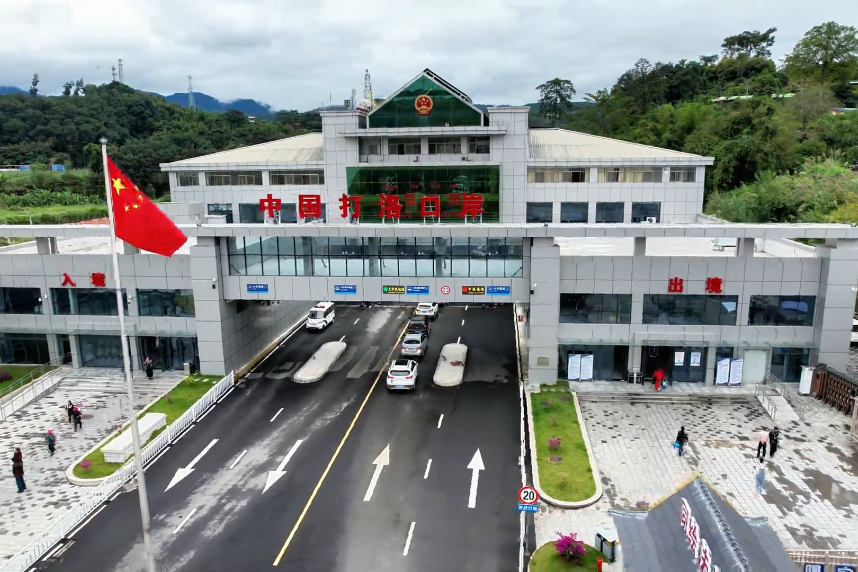
    Daluo Port, a critical gateway in China’s southwestern Yunnan province, has achieved a historic milestone in cross-border movement during 2025, recording its highest passenger traffic since its establishment in 1951. Located in the Xishuangbanna Dai Autonomous Prefecture, this strategic border crossing witnessed an extraordinary surge of 2.2 million border crossings throughout the year, representing a remarkable 30.2% increase compared to 2024 figures.

    The port’s escalating significance is demonstrated through its consistently growing daily throughput, which regularly exceeds 6,000 passengers and peaks above 10,000 travelers during high-volume periods. This substantial growth trajectory underscores the region’s expanding economic dynamism and deepening international connectivity within China’s Belt and Road Initiative framework.

    To accommodate this unprecedented flow of cross-border movement, the Daluo Border Inspection Station has implemented comprehensive operational enhancements. These measures include the complete activation of all inspection channels, sophisticated passenger flow management protocols, enhanced on-site navigation assistance, and the integration of advanced digital and intelligent clearance systems. These technological and procedural advancements have been instrumental in maintaining both security efficiency and processing speed despite the record-breaking passenger volumes.

    The port’s performance serves as a tangible indicator of strengthening economic ties between China and Southeast Asian nations, positioning Yunnan province as an increasingly vital hub for regional trade and cultural exchange.

  • Japan nuclear plant operator may have underestimated quake risks

    Japan nuclear plant operator may have underestimated quake risks

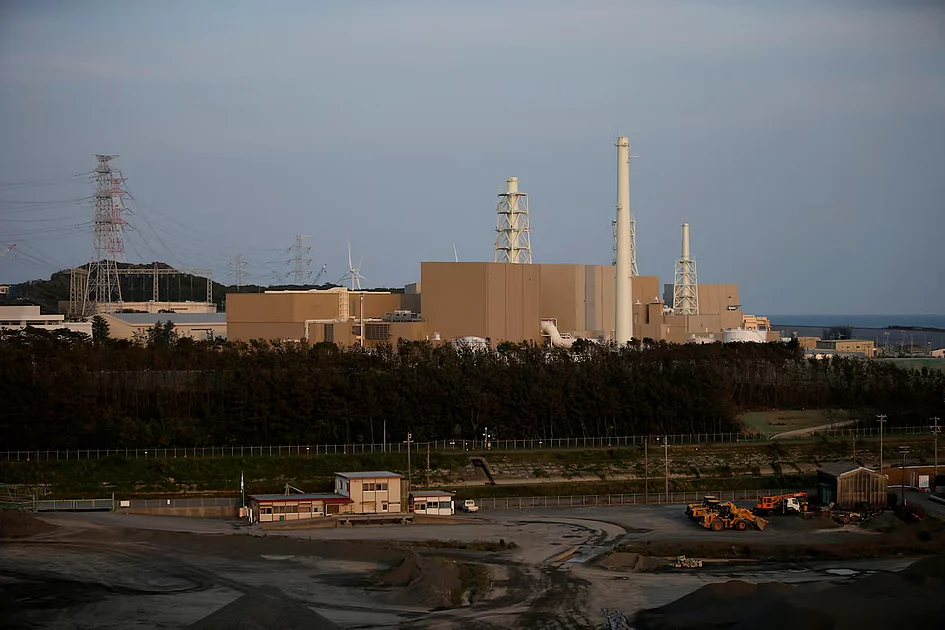
    A major Japanese energy utility has admitted to potentially providing regulators with inaccurate seismic data, casting doubt on earthquake risk assessments for one of its nuclear facilities. Chubu Electric Power Company disclosed that its estimated maximum seismic ground motion calculations for the Hamaoka nuclear plant might have been significantly underestimated.

    The revelation comes as Japan aggressively pursues nuclear power reactivation nearly fifteen years after the catastrophic Fukushima disaster. The Hamaoka facility, situated in central Japan’s Shizuoka prefecture, occupies a region scientists consider highly vulnerable to an impending ‘megaquake’ along the Nankai Trough seismic zone.

    Company President Kingo Hayashi addressed journalists during an emergency press conference, stating: ‘This incident could profoundly impact our safety review process and damage the trust of local communities and stakeholders, potentially shaking the very foundation of our nuclear operations.’

    The Nuclear Regulation Authority (NRA) suspended its safety evaluation process for Hamaoka in late December following whistleblower allegations received in February 2025. The informant claimed Chubu Electric might have utilized different data than what was officially presented to regulatory authorities.

    NRA official Keiichi Watanabe confirmed the agency launched an independent investigation, with public hearings scheduled to commence Wednesday. The seismic ground motion estimate—previously approved at 1,200 gal (a measurement of quake acceleration intensity)—serves as the critical foundation for earthquake-resistant nuclear plant design.

    This development occurs alongside Japan’s broader nuclear renaissance. The resource-limited nation seeks to reduce fossil fuel dependence, achieve carbon neutrality by 2050, and meet escalating energy demands driven by artificial intelligence infrastructure. The world’s largest nuclear facility, Kashiwazaki-Kariwa, anticipates operational restart later this month pending final regulatory approval.

    Government projections indicate a potential Nankai Trough earthquake could trigger catastrophic consequences, including tsunamis claiming up to 298,000 lives and causing approximately $2 trillion in damages. Chubu Electric has established a legal panel to investigate the data discrepancies as regulatory scrutiny intensifies.

  • Indonesian rescuers recover third body from tour boat sinking

    Indonesian rescuers recover third body from tour boat sinking

    Indonesian search teams have retrieved a third victim from the devastating tour boat sinking that struck a Spanish family during their Christmas vacation in Komodo National Park. The latest recovery occurred Tuesday near Pede beach, where local fishermen discovered the wreckage approximately 14 kilometers from the original incident location.

    The tragedy unfolded on December 26th when the vessel carrying Valencia CF Women’s B coach Fernando Martín, 44, his immediate family, and five local personnel experienced critical engine failure and capsized. While Martín’s wife and one child survived alongside all four crew members and their guide, the coach himself and his daughter perished in the accident. Their remains were cremated in Bali on Monday following relatives’ requests, as confirmed by East Nusa Tenggara Police spokesperson Ariasandy.

    This incident highlights persistent maritime safety concerns throughout the Indonesian archipelago, where vessels serve as essential transportation between the nation’s 17,000 islands. Despite their critical role, regulatory enforcement remains inconsistent, with overcrowding and inadequate safety protocols contributing to frequent nautical accidents. Rescue operations continue as authorities search for Martín’s two remaining missing sons.

  • China’s civil aviation sector achieves steady growth in 2025

    China’s civil aviation sector achieves steady growth in 2025

    China’s civil aviation industry demonstrated remarkable resilience and growth throughout 2025, according to official data released at the national civil aviation work conference in Beijing. The comprehensive performance metrics reveal an industry experiencing robust expansion across all key operational areas.

    The Civil Aviation Administration of China (CAAC) reported a total transportation turnover of 164.08 billion tonne-kilometers for the year, representing a substantial 10.5% increase compared to 2024 figures. Passenger traffic showed strong recovery with 770 million travelers taking to the skies, marking a 5.5% year-on-year growth. The cargo sector emerged as particularly dynamic, with mail and freight volume reaching 10.17 million tonnes – an impressive 13.3% surge from the previous year.

    CAAC Director Song Zhiyong highlighted the industry’s overall stable development trajectory, noting that all major objectives and operational tasks had been successfully accomplished. International routes experienced extraordinary growth, with passenger traffic jumping 21.6% annually. Specific regional markets showed exceptional performance: Latin American routes skyrocketed by 108.6%, while connections to Central Asia, West Asia, and Africa increased by 59.3%, 33.4%, and 39% respectively.

    Financial performance showed significant improvement as the industry recorded combined profits totaling 6.5 billion yuan (approximately $926.28 million). Looking forward to 2026, projections indicate continued expansion with anticipated transportation turnover of 175 billion tonne-kilometers, passenger traffic of 810 million, and cargo volume of 10.7 million tonnes, signaling sustained momentum in China’s aviation sector.

  • How a decade of dedicated protection is transforming China’s mother river

    How a decade of dedicated protection is transforming China’s mother river

    A remarkable ecological transformation is underway along China’s Yangtze River, reversing decades of environmental degradation through a comprehensive conservation strategy implemented over the past ten years. The 6,300-kilometer waterway, once described as “seriously ill” due to severe pollution and biodiversity loss, has achieved previously unimaginable water quality levels and witnessed the return of native fish species to long-barren stretches.

    The watershed moment occurred on January 5, 2016, when Chinese leadership established the guiding principle that development along the Yangtze River Economic Belt must prioritize ecological protection and green development. This policy shift initiated a comprehensive approach combining strict environmental safeguards, structural economic reforms, and technology-driven governance across 11 provinces and municipalities that collectively generate nearly half of China’s GDP.

    According to Wang Yanxin, academician of the Chinese Academy of Sciences, “The Yangtze conservation drive has woven environmental protection into the fabric of high-quality development, fundamentally reshaping the river basin’s growth model while accelerating transitions in production methods, energy systems, and rural community development.”

    The most dramatic intervention came on January 1, 2021, with the implementation of a comprehensive 10-year fishing ban affecting more than 230,000 fishers across ten provincial regions. This unprecedented measure aimed to reverse the decline in aquatic biodiversity by halting exploitation entirely rather than merely managing it.

    Chongqing municipality, serving as a critical ecological gateway in the river’s upper reaches, demonstrated the policy’s implementation challenges and successes. More than 5,300 fishing boats were retired and over 10,000 fishers transitioned to land-based livelihoods. Many former fishers, like 58-year-old Li Daiguo who now serves on a fisheries enforcement team, have found new purpose in river protection roles while applying their knowledge of the waterways.

    Supported by technological innovation, Chongqing has deployed an AI-powered monitoring system integrating over 1,200 riverside cameras and numerous drones that automatically identify illegal fishing activities, pollution risks, and enforcement gaps. Local authorities report handling more than 5,000 alerts through this system, significantly enhancing regulatory effectiveness.

    The ecological results are quantitatively demonstrated: high-quality water sections have increased from 82.3% in 2016 to over 98% today, while biodiversity shows strong recovery. The population of the iconic Yangtze finless porpoise reached 1,249 in 2023—a 23.4% increase from 2017—and surveys recorded 344 native fish species between 2021-2024, representing an increase of 36 species compared to the 2017-2020 period.

    This conservation effort received robust legal foundation through China’s first river-basin-specific legislation, the Yangtze River Protection Law enacted in March 2021, which established ecological protection and green development as formal guiding principles.

    Contrary to conventional wisdom that environmental protection hinders economic development, the Yangtze River Economic Belt has demonstrated simultaneous ecological and economic progress. Regional GDP has more than doubled over the past decade, with the economic belt’s contribution to national output increasing from 42.2% to 47.3% during this period.

    The region has emerged as a dynamic innovation hub, producing internationally competitive technology companies including AI startup DeepSeek and robotics manufacturer Unitree Robotics, while developing world-class industrial clusters in automotive manufacturing and electronic information sectors.

    The Yangtze River Delta exemplifies this integrated approach, where green industries achieve remarkable efficiency. New-energy vehicle production now takes as little as four hours through coordinated regional specialization: design and software development in Shanghai, battery systems installation in Anhui, final assembly in Jiangsu, and intelligent systems testing in Zhejiang.

    The delta has become China’s largest automotive manufacturing hub, accounting for nearly 40% of the country’s new-energy vehicle output and over one-quarter of global production. Simultaneously, the region has phased out outdated industrial capacity, dismantling 1,361 illegal docks and standardizing or closing more than 200,000 discharge outlets along the Yangtze.

    Wang Changlin, deputy head of the National Development and Reform Commission, emphasized that while the economic belt accounts for approximately one-third of China’s energy consumption and carbon emissions, it generates close to half of the country’s GDP, demonstrating its role as a testing ground for environmentally prioritized development.

    Looking forward, sustained commitment will determine long-term success. The next phase of Yangtze protection will require enhanced technological application, closer coordination between pollution control and carbon reduction, and development of market-based mechanisms for environmental governance, according to experts involved in the initiative.