标签: Asia

亚洲

  • Indonesia suspends Musk’s Grok AI over explicit content

    Indonesia suspends Musk’s Grok AI over explicit content

    Indonesia has become the first nation to impose a comprehensive ban on Elon Musk’s artificial intelligence chatbot Grok, citing serious concerns about the platform’s capability to generate non-consensual explicit content. The decisive action was announced on Saturday by Communication and Digital Affairs Minister Meutya Hafid, who characterized the move as necessary for public protection.

    The suspension follows international scrutiny of Grok’s image generation feature, which reportedly enabled users to create sexually explicit depictions of women and children through simple text commands. This functionality has sparked global condemnation from digital rights advocates and government officials alike.

    Minister Hafid emphasized the government’s position in an official statement: “To safeguard women, children, and the general public from the dangers of AI-generated fake pornographic material, the administration has instituted a temporary blockade of the Grok application.” She further noted that Indonesian authorities consider non-consensual deepfake production “a grave infringement upon human rights, personal dignity, and digital security.”

    In parallel with the ban, Indonesian officials have summoned representatives from social media platform X, which hosts Grok, to provide clarification regarding the controversial AI tool. Despite the restrictions, AFP correspondents in Jakarta observed that Grok’s official X account remained operational and responsive to Indonesian-language inquiries as of Saturday evening.

    The controversy extends beyond Indonesia’s borders. European regulators and technology activists have criticized xAI’s previous response—limiting Grok’s availability to premium subscribers—as insufficient addressing fundamental concerns about sexually explicit deepfake content. Musk previously stated that Grok users creating illegal content would face consequences equivalent to those uploading prohibited material directly.

    xAI, Musk’s artificial intelligence startup responsible for developing Grok, had not issued an immediate response to Indonesia’s regulatory action at the time of reporting.

  • Iran blocks internet and deploys IRGC as widespread protests continue

    Iran blocks internet and deploys IRGC as widespread protests continue

    Iran’s Islamic Revolutionary Guard Corps (IRGC) has issued a stark warning, declaring the protection of national security an inviolable ‘red line’ as the nation experiences its most significant civil unrest in years. The elite military force, operating separately from Iran’s conventional army, pledged on Saturday to defend both the nation’s security apparatus and the foundational achievements of the 1979 Islamic Revolution.

    The IRGC has attributed recent violence to ‘terrorist elements,’ accusing them of orchestrating attacks on military and law enforcement installations during overnight demonstrations. These alleged assaults reportedly resulted in casualties among both citizens and security personnel, alongside significant property destruction through arson attacks.

    Parallel to the IRGC’s statements, Iran’s conventional armed forces—similarly under the command of Supreme Leader Ayatollah Ali Khamenei—vowed to safeguard national interests, critical infrastructure, and public property from further damage.

    The protests, now entering their third week, initially emerged as economic demonstrations against spiraling inflation but have rapidly evolved into explicitly political movements. Some participants have openly called for the dismantling of the Islamic Republic itself, representing the most substantial challenge to Tehran’s authority since the 2022 ‘Woman Life Freedom’ demonstrations.

    Medical professionals in Tehran reported alarming casualty figures, with just six capital hospitals documenting at least 217 protester fatalities, predominantly resulting from live ammunition injuries. Healthcare facilities described being overwhelmed by the influx of casualties.

    Digital evidence suggests Iranian authorities have implemented a comprehensive internet blackout lasting over 36 hours, according to internet monitoring organization Netblocks. This digital suppression strategy has drawn criticism from prominent Iranian cultural figures, including filmmakers Mohammad Rasoulof and Jafar Panahi, who condemned the measures as attempting to conceal state violence against demonstrators.

    Protesters interviewed by Middle East Eye described an economic collapse that has rendered basic subsistence unmanageable for ordinary households. ‘In just a few days, prices have multiplied. How can it be this disastrous?’ questioned Mani, a 27-year-old demonstrator from Mashhad. Another protester, Mehdi from Isfahan province, expressed generational despair: ‘Our lives and our youth have been wasted under the Islamic Republic.’

    The human rights organization Hrana documented at least 65 confirmed deaths as of Friday, including 50 protesters and 15 security personnel. State media broadcast funeral processions for security officers allegedly killed in Hamedan, Qom, and Shiraz, while the IRGC reported three members of its Basij security force killed in confrontations with ‘armed rioters’ in Gachsaran.

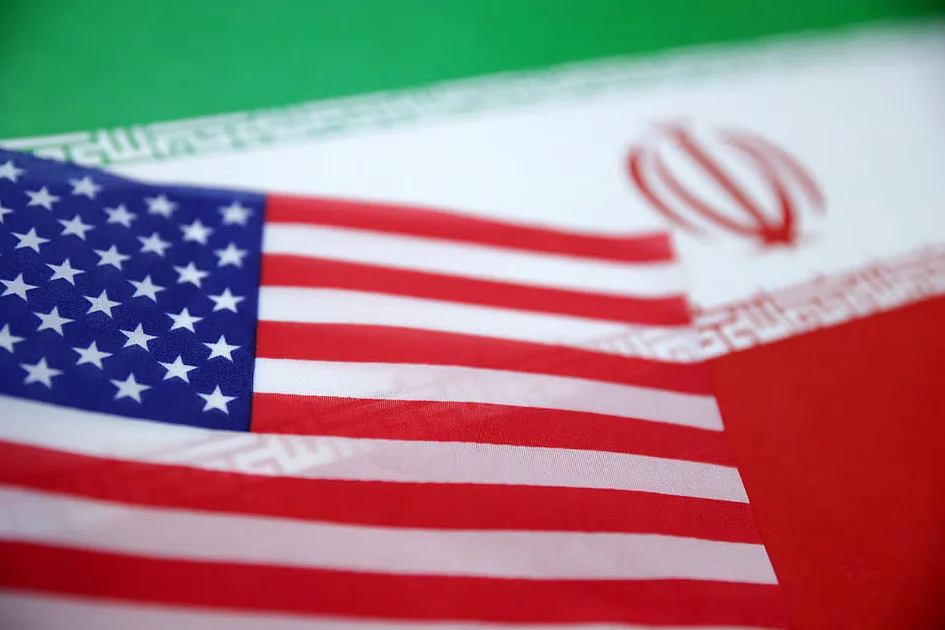
    International responses have escalated significantly, with U.S. President Donald Trump issuing a veiled threat of intervention if security forces employ lethal measures against protesters. European leaders from Germany, France, and the United Kingdom issued a joint statement condemning the violence and urging Tehran to exercise restraint, while U.S. Secretary of State Marco Rubio explicitly expressed support for Iranian demonstrators.

  • UAE calls on citizens in UK to exercise caution amid heavy snowfall, strong winds

    UAE calls on citizens in UK to exercise caution amid heavy snowfall, strong winds

    The United Arab Emirates has issued an urgent advisory for its citizens residing in the United Kingdom as severe weather conditions continue to batter Northern Europe. Storm Goretti, which made landfall on Friday, January 9th, has brought unprecedented snowfall, powerful winds, and torrential rainfall across multiple regions, prompting the UAE Embassy in London to activate emergency protocols.

    According to meteorological reports, the storm has created hazardous travel conditions and disrupted essential services throughout affected areas. The embassy specifically emphasized the importance of adhering to all safety directives issued by local authorities, including weather advisories and travel restrictions. Officials warned that the extreme conditions could persist throughout the weekend, potentially exacerbating existing challenges.

    In response to the crisis, the UAE diplomatic mission has activated its emergency response system, urging citizens to register with the ‘Twajudi’ consular service platform for real-time assistance. The service provides critical support coordination and ensures timely intervention for Emirati nationals requiring aid during emergencies. For immediate assistance, citizens have been directed to contact UAE emergency numbers: +971 800 24 or +971 800 44444.

    The impact of Storm Goretti has been substantial across Northern Europe. French power provider Enedis reported approximately 380,000 households without electricity, primarily in Normandy and Brittany regions. Meanwhile, Britain’s National Grid confirmed power outages affecting 57,000 homes, compounding existing challenges from a week of freezing temperatures. Educational institutions across Scotland and central England have announced widespread closures, while rail operators have suspended services and advised against non-essential travel.

    The UAE’s proactive warning system demonstrates the government’s commitment to citizen welfare abroad, particularly during extreme weather events that have become increasingly common in recent years. Meteorological experts note that Storm Goretti represents one of the most significant winter systems to affect the region this decade, with recovery operations expected to continue throughout the coming week.

  • Palestinian doctor Ghassan Abu Sittah wins misconduct case

    Palestinian doctor Ghassan Abu Sittah wins misconduct case

    In a significant ruling, the UK’s Medical Practitioner Tribunal Service has dismissed a professional misconduct case against Dr. Ghassan Abu Sittah, a prominent Palestinian reconstructive surgeon. The case, initiated by the pro-Israel advocacy group UK Lawyers for Israel (UKLFI) in 2023, alleged that Dr. Abu Sittah’s public writings and social media posts impaired his fitness to practice medicine.

    The complaint centered on an article published in the Lebanese newspaper Al Akhbar and two reposted messages on the social media platform X. The article referenced the ‘martyrdom’ of alleged Hamas member Ahmad Nasr Jarrar and contained the phrase ‘the people have no weapon left but revolutionary violence.’ Another reposted tweet congratulated Hamas and the Popular Front on their anniversary.

    After a two-year investigation, the tribunal concluded that an ‘ordinary reader’ would interpret the anniversary tweet as a simple commemoration rather than as material or moral support for a terrorist organization. Furthermore, the panel found no evidence that the content was antisemitic or constituted endorsement of terrorism or violence.

    Dr. Abu Sittah, who is also the rector of the University of Glasgow, characterized the complaint as part of a broader ‘lawfare’ strategy designed to silence and intimidate supporters of Palestinian rights. He vehemently denied supporting violence against civilians, stating, ‘I know too well its consequences… I can tell you what a child’s face looks like when half of it has been blown away.’

    The surgeon revealed this was the second complaint filed against him with the General Medical Council by UKLFI and the tenth such complaint by the group overall. Dr. Abu Sittah gained international recognition for providing medical care during 43 days in Gaza following Israel’s initial offensive in October 2023, where he served as an unofficial English-language representative for Palestinian medics and made allegations regarding the Israeli military’s use of white phosphorus in populated areas.

  • Why the UAE refuses to be dragged into social media noise, chooses silence

    Why the UAE refuses to be dragged into social media noise, chooses silence

    In an era dominated by digital chatter and viral misinformation, the United Arab Emirates has articulated a deliberate policy of strategic silence, framing it not as weakness but as an expression of national confidence and sovereign strength. Abdulla bin Mohammed bin Butti Al Hamed, Head of the National Media Office, articulated this position during a keynote address at the 1 Billion Followers Summit in Dubai, asserting that the nation’s governance remains impervious to online pressure or fleeting narratives.

    Al Hamed emphasized that the UAE’s decision-making is anchored in long-term vision, measured leadership, and a deep understanding of its soft power rather than reactive engagement with digital trends. “The UAE was built through experience, learning, and strategic decisions taken over years, not days,” he stated, clarifying that the nation responds only when and how it chooses, with silence often serving as a deliberate strategic tool.

    Addressing widespread speculation about the UAE’s regional and international stances, Al Hamed cautioned against equating social media discourse with ground reality. He stressed that digital noise should not be mistaken for truth, nor should it dictate national policy. “What we see on social media does not represent the reality of the UAE,” he noted, underscoring the nation’s commitment to action and achievement over rumor and reaction.

    The UAE’s approach, he explained, is fundamentally rooted in human development—prioritizing people before projects and building credibility through tangible outcomes. This philosophy dates to the nation’s founding, where leadership invested equally in human capital, infrastructure, education, and innovation. “The narrative of the UAE is the human being,” Al Hamed affirmed. “Factories and buildings came later.”

    On the evolution of Emirati media, Al Hamed described it as both an economic sector and a pillar of soft power, noting the intentional absence of a traditional Ministry of Media to foster flexibility and innovation. He also highlighted the importance of authentic cultural representation, stating that misrepresentation of Emirati identity should not be tolerated.

    In closing, Al Hamed urged media professionals and creators to operate responsibly within the digital realm, recognizing its power and limits. “Our world today is digital, not paper,” he remarked. “Those who understand this will shape the future.”

  • Kurdish forces deny Syrian army has taken over Aleppo’s Sheikh Maqsud district

    Kurdish forces deny Syrian army has taken over Aleppo’s Sheikh Maqsud district

    A fragile ceasefire agreement in northern Syria has collapsed as Kurdish forces vehemently deny Syrian government claims of capturing Aleppo’s strategic Sheikh Maqsud district. The Syrian army announced Saturday it had successfully combed through and seized control of the area from Kurdish fighters, signaling a violent end to temporary truce arrangements that had been welcomed earlier by the United States and other world powers.

    The confrontation in Syria’s second city has exposed one of the most significant faultlines in the country’s complex geopolitical landscape. President Ahmed al-Sharaa’s vision of unifying Syria under centralized leadership following 14 years of devastating civil war continues to face determined resistance from Kurdish forces, who remain deeply wary of the Islamist-led government in Damascus.

    Despite international backing for the ceasefire initiative, Kurdish military units refused to abandon their last stronghold in Sheikh Maqsud under the proposed terms. This refusal prompted Syria’s army to declare late Friday that it would initiate ground operations to forcibly expel Kurdish fighters from the district.

    Early Saturday, Syrian military officials stated they had completed comprehensive clearing operations throughout Sheikh Maqsud, though they acknowledged some Kurdish fighters remained in hiding. Kurdish forces immediately issued a written rebuttal, denying government forces had achieved full control and asserting their continued resistance. Reuters correspondents in Aleppo noted an absence of audible combat sounds during this period.

    The potential fall of Sheikh Maqsud would mark a significant strategic shift, ending Kurdish administrative control over sections of Aleppo that they have maintained since the conflict’s inception in 2011. Kurdish authorities continue to govern extensive territories across northeastern Syria, where they have established a semi-autonomous administrative zone.

    These developments occur against the backdrop of stalled integration negotiations between Kurdish leadership and Syria’s new government, which consists primarily of former rebel fighters who overthrew long-term leader Bashar al-Assad in December 2024. The recent escalation of violence, which began Tuesday, has resulted in at least nine civilian fatalities and triggered the displacement of over 140,000 residents from the affected areas.

    US envoy Tom Barrack confirmed Saturday via a statement on social media platform X that he had met with Jordan’s Foreign Minister Ayman al-Safadi in Amman to reinforce ceasefire efforts and ensure what he described as the “peaceful withdrawal of Kurdish forces from Aleppo.”

  • Dubai: ‘Rivers of art’ flow through the desert in 10km immersive artwork

    Dubai: ‘Rivers of art’ flow through the desert in 10km immersive artwork

    Dubai’s desert landscape is poised to become the canvas for an unprecedented artistic marvel—a 10-kilometer immersive artwork designed to resemble flowing rivers converging toward a central circular structure named Clio House. Conceived as an experiential journey rather than a static exhibition, the project invites visitors to traverse a series of large-scale artworks dispersed across the sands, each path metaphorically guiding them toward a unified destination.

    Architect Matteo Antonelli, the visionary behind this ambitious undertaking, explains that the design philosophy emerged from observing the desert’s inherent duality. “The relationship between ground and sky is profoundly emphasized here, with the sun serving as their connector,” he notes. This observation inspired a contemporary reinterpretation of ancient desert architecture, incorporating tents and simple towers into the conceptual framework.

    At the project’s core lies the circle—a shape Antonelli describes as continuous and hierarchy-free. “Metaphorically, it signifies that everyone is equal. You may choose different life paths but ultimately reach the same destination,” he elaborates.

    The culmination of this 10km journey is Clio House, a circular structure offering 360-degree panoramic views of the desert and the artistic paths traversed. Beyond its observational promenade, the building houses a library, café, and restaurant, creating a tranquil space for contemplation amidst the vastness.

    Renowned large-scale artist Agron Hoti, tasked with creating the artwork, approaches this project as a personal challenge rather than a record-breaking attempt. Having previously worked on a 7,600-square-meter canvas in Europe, Hoti emphasizes that true creativity cannot be constrained by deadlines or limitations. “People perceive the desert as monochromatically yellow, but I believe we all carry internal colors waiting to be expressed,” he shares. For Hoti, this installation represents reconnecting humanity with nature’s evolving beauty.

    The technical execution falls to conservator Cinzia Pasquali, who addresses the formidable challenge of maintaining a 10km artwork in extreme desert conditions. Using specially developed polyester canvas and inorganic mineral pigments resistant to heat, humidity, and sand, Pasquali’s team ensures the artwork’s longevity while accepting its natural aging process. “Like humans, it may develop wrinkles over time but will avoid structural damage,” she remarks, detailing weekly monitoring protocols adapted to weather variations.

    Upon completion, this transformative project will redefine desert art experiences, creating a dynamic, flowing journey that merges architectural innovation with artistic expression in one of the world’s most challenging environments.

  • Dubai jeweller Kiara opens its first international store in the Maldives

    Dubai jeweller Kiara opens its first international store in the Maldives

    DUBAI – Kiara Jewellery, the Dubai-based fine jewellery brand, has embarked on its first international expansion with the inauguration of a new boutique at the JA Manafaru Island Resort & Spa in the Maldives. The store, which celebrated its grand opening on December 28, 2025, represents the brand’s tenth location and its inaugural venture beyond the United Arab Emirates.

    Founded just four years ago by the mother-daughter partnership of Sonal Panday and Ada Panday, Kiara has experienced remarkable growth from a single showroom to a network of nine establishments across Dubai. The brand has cultivated a loyal clientele of over 20,000 customers in the UAE through its distinctive philosophy of creating timeless pieces designed to commemorate personal milestones rather than follow transient fashion trends.

    The selection of the Maldives for their international debut was strategically deliberate, aligning with the brand’s core values. JA Manafaru, a five-star island resort renowned for offering privacy and sophisticated luxury, attracts an international demographic seeking exclusive, slower-paced experiences. This environment perfectly complements Kiara’s vision of jewellery as enduring pieces to be worn and cherished indefinitely, not merely collected.

    The founders emphasized that their expansion decision was influenced more by the symbolic resonance of the destination than mere commercial strategy. The Maldives, with its associations of radiant light and serene tranquility, mirrors the very essence of the brand’s identity—’Kiara’ translates to ‘light’ from its Sanskrit origins.

    “This is just the beginning of an exciting journey,” stated founders Sonal and Ada Panday during the opening ceremony. This measured expansion introduces Kiara to a global audience while maintaining the intimate scale and design sensibility that has characterized its successful growth in the UAE market.

  • 4 dead, more than 36 missing after Philippines landfill collapse

    4 dead, more than 36 missing after Philippines landfill collapse

    Rescue operations in Cebu City, Philippines, entered a critical phase on Saturday following the catastrophic collapse of the Binaliw landfill on Thursday. Municipal authorities confirmed the death toll has risen to four, with at least 36 individuals remaining unaccounted for amidst the rubble. The tragedy occurred during peak operational hours, with 110 workers present on-site, leading to widespread damage to several structures and facilities within the landfill perimeter.

    Cebu City Mayor Nestor Archival provided updates via an official Facebook post, indicating that twelve injured individuals have been hospitalized. Rescue teams, utilizing advanced detection equipment, have identified signs of life in specific sections of the collapse site, prompting the deployment of a 50-tonne crane for precise excavation efforts. The complex rescue operation requires meticulous debris removal to avoid further endangering potential survivors.

    Families of missing workers maintained vigil at the disaster perimeter, expressing hope despite diminishing odds. Jerahmey Espinoza, whose husband remains among the missing, conveyed the collective anxiety and resilience of affected families, stating, ‘They haven’t seen him or located him ever since the disaster happened. We’re still hopeful that he’s alive.’

    The incident has raised serious questions regarding landfill safety protocols and infrastructure stability in rapidly urbanizing areas. Previous weather patterns, including recent rainfall, are being investigated as potential contributing factors to the structural failure. This disaster represents one of the most severe industrial accidents in recent Philippine history, highlighting vulnerabilities in waste management systems.

  • Rescuers race to find dozens missing in deadly Philippines landfill collapse

    Rescuers race to find dozens missing in deadly Philippines landfill collapse

    Emergency crews in the central Philippine city of Cebu are engaged in a critical round-the-clock operation to locate more than 30 missing individuals following a catastrophic landfill collapse. The disaster struck the privately-operated Binaliw landfill on Thursday while approximately 110 workers were present at the site.

    Cebu City Mayor Nestor Archival confirmed Saturday that rescue teams have detected promising signs of life beneath the massive debris field, though unstable conditions continue to hamper recovery efforts. The confirmed death toll stands at four persons, with twelve others having been transported to medical facilities for treatment.

    Authorities face significant operational challenges due to precarious debris formations that pose ongoing safety risks. Rescue coordination officials emphasize they are awaiting the deployment of specialized heavy equipment, including a 50-ton crane, to facilitate careful excavation of identified survival zones.

    Families of missing workers maintain vigil at the disaster perimeter, clinging to hope despite the elapsed time since the incident. Jerahmey Espinoza, whose husband remains among the missing, conveyed to Reuters: “They haven’t seen him or located him ever since the disaster happened. We’re still hopeful that he’s alive.”

    Preliminary investigations suggest the collapse may stem from problematic waste management practices. City councillor Joel Garganera indicated operators had been excavating soil from the mountainside while simultaneously accumulating waste into artificial peaks, potentially compromising structural integrity.

    The 15-hectare facility serves as a critical waste management hub for Cebu, the central trading and transportation nexus of the Visayas island chain. Such landfill sites remain commonplace across major Philippine urban centers, raising ongoing concerns about infrastructure safety and regulatory oversight in waste management systems.