标签: Asia

亚洲

  • ‘Go take your oil:’ Nato fissure erupts over Iran as allies brush off US

    ‘Go take your oil:’ Nato fissure erupts over Iran as allies brush off US

    The ongoing US-Israeli military campaign against Iran has opened a deep and widening breach between the United States and its longstanding NATO allies, with multiple member states rejecting American requests for military access, basing rights, and defensive assets even as the Trump administration casts new uncertainty over its commitment to the alliance’s core mutual defense pledge.

    Multiple European capitals have now publicly pushed back against Washington’s demands. Spain has barred US military aircraft bound for Iran-related operations from entering its airspace, according to official statements. Leading Italian newspaper Corriere della Sera also reported that Rome has denied landing access to US military aircraft en route to the Middle East at a key Sicilian base, a striking move given Italy’s right-leaning government under Prime Minister Giorgia Meloni, traditionally aligned with US foreign policy goals.

    Poland, a central European nation that has stood as one of Washington’s most reliable NATO allies since the end of the Cold War and where former President Trump retains broad popular support amid the country’s powerful right-wing populist movement, also issued a public denial on Tuesday. Warsaw rejected claims it had agreed to redeploy its Patriot air defense systems to the Middle East, confirming it turned down an informal request from the Trump administration for the assets.

    While Spanish Prime Minister Pedro Sanchez, a leftist leader, publicly opposed the US-Israeli war from its earliest days, the scope of refusals spanning ideologically diverse governments makes clear that Washington’s diplomatic isolation on the conflict is accelerating.

    Trump amplified transatlantic tensions in a post on the social platform X on Tuesday, calling out major European powers for their refusal to back the campaign. He revealed that France, which has long maintained an independent foreign policy agenda in the Middle East, has also denied US aircraft carrying military equipment to Israel permission to transit its airspace. He also publicly criticized the United Kingdom for declining to join the war effort, ending his post with a blunt warning: “The USA will remember !!!”

    The combative posture has been echoed across the Trump administration. When asked about growing alliance tensions, US Secretary of War Pete Hegseth declined to explicitly commit to NATO’s Article 5, the foundational clause that states an armed attack against one member is considered an attack against all, instead deferring any judgment on the commitment to Trump.

    Hegseth defended the US-led campaign against Iran, arguing the operation was launched “on behalf of the free world” and allies whose missile capabilities faced threats from Tehran. “When we ask for additional assistance or simple access, basing and overflight, we get questions or roadblocks or hesitations,” he told reporters.

    But that framing stands in stark contrast to how NATO allies view the conflict, according to Ian Lesser, vice president of the German Marshall Fund in the United States, who spoke to Middle East Eye. “There is a basic concern that Europe is being asked to contribute to and approve of operations they had no role in shaping and a strategy they had no role in shaping,” Lesser explained.

    “This war is both unpopular among the public and, in some cases, the elite, and it could take a direction that European allies can’t shape. That’s not a good recipe for cooperation,” he added.

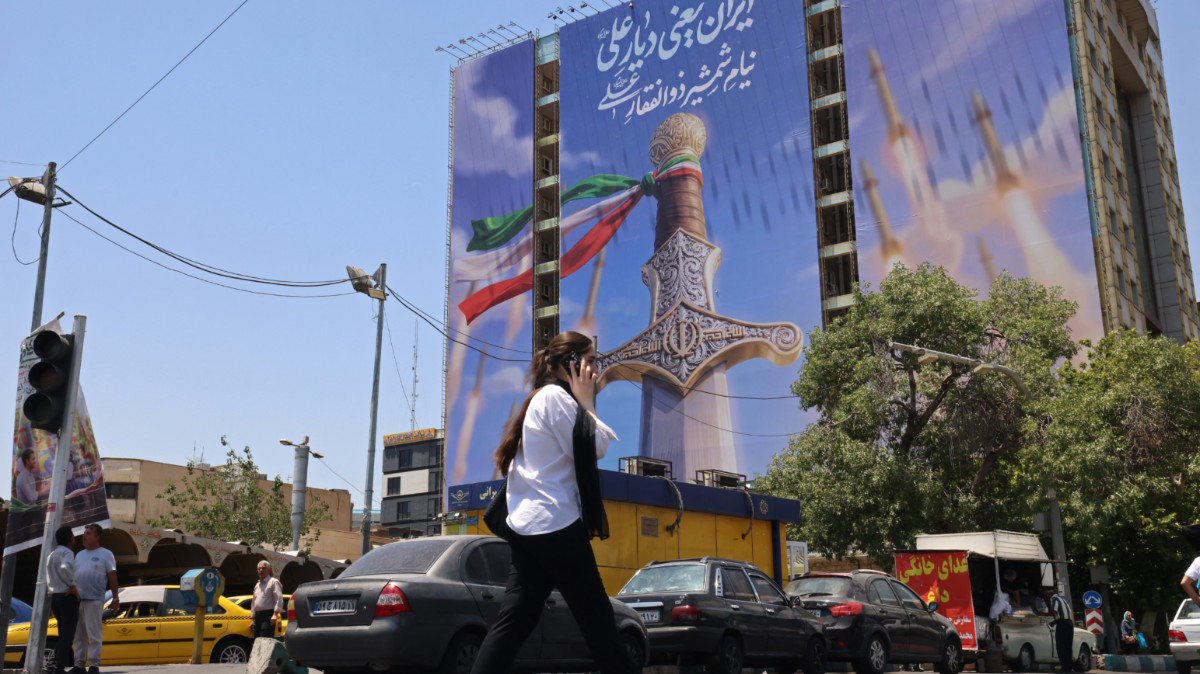
    Tehran has responded to the US-Israeli offensive with a large-scale retaliatory campaign, launching thousands of missiles and drones targeting Israel and Arab Gulf states. While Iranian strikes on Gulf territory have specifically targeted US military bases with precision, Tehran has also attacked civilian infrastructure and energy facilities in the region in retaliation for similar Israeli strikes on Iranian targets.

    Washington has pushed Gulf Arab states to join the offensive against Iran, and Middle East Eye was first to report that the US has secured access to King Fahd Air Base in western Saudi Arabia after Iranian drone and missile strikes damaged facilities at US bases closer to the Gulf. To bolster its Iran deployment, the Trump administration has also reallocated critical military resources, including marines and air defense systems, away from East Asia.

    For NATO allies, the conflict has already carried a steep economic cost. After Iran seized effective control of the Strait of Hormuz, the world’s most critical energy chokepoint, and implemented a new system for approving safe passage for vessels, global oil and gas prices have surged, hitting European economies particularly hard. Roughly 20 percent of the world’s total energy supplies pass through the strait, and NATO countries, which have already cut most imports of Russian energy following the 2022 invasion of Ukraine, are facing unprecedented energy market volatility as a result.

    Iran’s consolidation of control over the strait has emerged as a major strategic embarrassment for the Trump administration, which has built its global superpower legitimacy on two core foundations: unwavering commitment to the NATO alliance, and guaranteed security for global energy flows out of the Persian Gulf. Tehran is now working to establish an alternative transit framework that prioritizes non-Western aligned vessels, including ships flagged by neutral countries like Pakistan and cargo carrying energy priced in Chinese renminbi instead of the US dollar, a direct challenge to Washington’s global financial and energy dominance.

    Trump has dramatically shifted his public posture on the crisis in recent days, moving from threatening to “obliterate” Iran’s entire energy grid if Tehran refused to surrender control of the strait, to stepping back and shifting responsibility to US allies. In a social media post directed at Washington’s uncooperative allies including the UK on Tuesday, Trump wrote: “Just TAKE IT. You’ll have to start learning how to fight for yourself, the USA won’t be there to help you anymore, just like you weren’t there for us. Iran has been, essentially, decimated. The hard part is done. Go get your own oil!”

    Analysts warn Trump’s threat to cede control of the strait to Iran is self-defeating if he eventually seeks NATO support to reimpose Western oversight of the waterway. If Tehran retains de facto control over the strait, Lesser said European allies will be forced to reconsider their entire regional security framework, and have little incentive to back the US war effort in the meantime.

    “Why would Nato countries make themselves more exposed by assisting the US war on Iran? They can probably imagine this going in a direction that allows certain traffic through Hormuz, but not all,” Lesser said, adding that European capitals also do not want to be publicly associated with a war that is deeply unpopular at home.

    In a sign that Tehran is actively encouraging NATO allies to break with Washington, Iran has publicly signaled it will reward countries that refuse to back the US campaign. The Iranian embassy in Spain said Thursday that Tehran would accommodate any request from Madrid for Spanish-flagged vessels to receive guaranteed safe passage through the strait. While Spain’s commercial shipping fleet is relatively small, the gesture carries clear symbolic weight for transatlantic relations.

  • ‘My six-year-old has nosebleeds’: Chiang Mai air pollution sparks health fears

    ‘My six-year-old has nosebleeds’: Chiang Mai air pollution sparks health fears

    Once celebrated for its misty mountain vistas, crisp cool air and lush tropical landscapes, Chiang Mai in northern Thailand has now become a city gripped by a recurring public health crisis. Decades of unaddressed seasonal air pollution have pushed long-time residents to the breaking point, with many families weighing permanent departure to protect their children’s health.

    Tirayut Wongsantisuk, a 41-year-old father, never imagined he would leave the city he and his wife chose for its idyllic natural setting when they relocated in the 2010s. Today, that dream has turned into a daily nightmare: two of his young daughters suffer from frequent nosebleeds, and his six-year-old eldest has developed painful skin rashes and swollen, allergy-ridden eyelids. The persistent poor air quality has left Tirayut with no good options. “I’ve been thinking, maybe we really should move during this season… because if something irreversible happens to our child, we’ll feel terrible forever,” he told the BBC in an on-the-ground interview.

    Tirayut’s fear is shared by dozens of other Chiang Mai families caught in this year’s particularly severe fire season. Over the past week, smoke from hundreds of raging blazes has choked the entire northern region, pushing Chiang Mai to the top of IQAir’s global ranking of the world’s most polluted major cities. When a BBC reporting team visited the area last week, a thick, acrid blanket of haze erased the iconic mountain views that draw millions of tourists each year, and a constant smell of burning hung in the air.

    Official satellite data underscores the scale of the crisis: on April 1 alone, the system detected 4,750 active fire hotspots across Thailand, a new record, with the vast majority concentrated in the forested and agricultural lands of the north. By the following morning, Chiang Mai’s average PM2.5 concentration — the tiny toxic particles that penetrate deep into the lungs and bloodstream — was rated “very unhealthy” by global public health standards.

    The annual crisis runs from November to March, a window that aligns with common agricultural practice: many smallholder farmers burn residual crop stubble to clear fields ahead of planting new season seeds. Dry seasonal conditions also fan the spread of spontaneous wildfires across parched forest and grassland areas. Local media has shared dramatic imagery of mountain slopes entirely engulfed in flames, with some residents comparing the blazing lines of fire to erupting volcanoes.

    To curb the spread of blazes, Thai authorities have already implemented emergency measures: all high-fire-risk national parks have been closed to the public, and officials have announced that anyone caught intentionally starting fires in restricted zones will be arrested on site. Under current Thai law, those convicted of illegal forest burning face maximum penalties of 20 years in prison and fines of up to 2 million baht, equivalent to roughly $61,100. Even so, the strict penalties have failed to deter the annual burning that drives the haze crisis.

    Public health experts warn that long-term exposure to PM2.5 haze causes a cascade of health complications, ranging from mild issues like itchy eyes and frequent nosebleeds to life-threatening conditions such as respiratory failure and heart attacks. For Benjamas Jaiparkan, a 35-year-old public school teacher in Chiang Mai, the risk is too great to ignore. She has already sent her two children to stay with relatives in neighboring Phayao province, where air quality remains far better than in Chiang Mai, and is now planning a permanent move. Her four-year-old son began experiencing regular nosebleeds last year, and she fears permanent damage to his developing lungs. “I feel so sorry for him because I don’t know how much more his lungs can take,” she said.

    Frustration with government inaction has been building for years among Chiang Mai residents. Activists and affected communities have repeatedly filed legal action to force systemic change. In July 2023, more than 1,700 Chiang Mai residents brought a lawsuit against former Prime Minister Prayut Chan-o-cha and two leading state agencies, arguing that the government’s failure to curb northern air pollution had cut an average of five years off each resident’s life expectancy. In January 2024, a Chiang Mai court ruled in favor of the plaintiffs, ordering the national government to draft a binding emergency action plan to improve air quality within 90 days.

    The crisis is not isolated to Thailand: hazardous seasonal haze has become a regional public health emergency across Southeast Asia. This year, Malaysia and Indonesia have both recorded their highest number of fire hotspots in seven years, spreading poor air quality across borders and affecting millions of people across the region.

  • Food assistance slashed for hundreds of thousands of Rohingya refugees trapped in Bangladesh camps

    Food assistance slashed for hundreds of thousands of Rohingya refugees trapped in Bangladesh camps

    More than seven years after hundreds of thousands of Rohingya ethnic minorities fled genocidal violence at the hands of Myanmar’s military, the vulnerable refugee community trapped in overcrowded Bangladeshi camps faces a new crisis: reduced food assistance that aid leaders and residents warn will deepen hunger and push desperate people toward deadly risks.

    Starting Wednesday, the United Nations World Food Program rolled out a new tiered assistance model for the 1.2 million Rohingya residing in the squalid Cox’s Bazar refugee settlements. Under the revised framework, monthly food aid allocations will be adjusted based on assessed household vulnerability. While one-third of the population classified as “extremely food insecure” — including child-headed households — will retain the current $12 per person monthly allocation, roughly 17% of refugees will see their aid cut to just $7 per month, with the remaining population receiving reductions between these two amounts, meaning two-thirds of the entire community will face smaller food assistance stipends.

    For decades, the Rohingya, a stateless Muslim minority group in majority-Buddhist Myanmar, faced systemic discrimination. A 2017 widescale military crackdown that the United States has formally recognized as genocide pushed more than 700,000 additional Rohingya across the border into Bangladesh, where they are legally barred from holding formal employment. With no path to safe repatriation following the 2021 military coup that kept the same leadership responsible for the 2017 violence in power, the entire community remains almost entirely dependent on international humanitarian aid to meet basic needs. Even before the cuts, refugees repeatedly warned the existing $12 monthly stipend was barely enough to avoid hunger.

    “It is very difficult to understand how we will survive now with only $7. Our children will suffer the most,” said Mohammed Rahim, a camp resident and father of three who was already struggling to feed his family before the reduction. “I am deeply concerned that people may face severe hunger and some may even die due to lack of food.”

    The WFP has publicly linked the risk of aid reductions to sweeping 2024 funding cuts from the U.S. and other major donor nations that stripped the agency of one-third of its core budget. However, WFP spokesperson Kun Li rejected characterizing the new policy as a general “ration cut,” arguing the term only applies when assistance falls below the 2,100 daily calories per person that is the global emergency food aid minimum. The agency claims even refugees receiving the $7 monthly stipend will still meet this calorie threshold, framing the tiered model as a step to improve fairness, transparency, and equity by targeting more support to the most vulnerable.

    That framing is rejected by Bangladeshi officials overseeing the refugee response. “But a ration cut is precisely what the change means for the Rohingya,” said Mohammad Mizanur Rahman, Bangladesh’s Refugee Relief and Repatriation Commissioner. Rahman warned the cuts will push already desperate refugees to flee the camps in search of food and work, threatening to unravel law and order in the surrounding region. This is not an idle concern: past aid cuts have already driven a surge in harmful coping strategies, including child marriage, child labor, and kidnapping, as desperate families struggle to get by.

    Funding shortfalls have plagued Rohingya support programs for years. In 2025, core Rohingya assistance programs were only half funded, and so far in 2026, just 19% of required funding has been secured. The WFP was already forced to slash rations to $8 per month in 2023 due to donation shortfalls. By November that year, the agency confirmed 90% of camp residents could not afford a nutritionally adequate diet, and 15% of children suffered from acute malnutrition — the highest rate ever recorded in the settlements. Rations were only restored to $12 per month in 2024.

    Already, the cuts have sparked widespread outcry among the refugee community. Dozens of Rohingya held peaceful protests across the camps on Tuesday, demanding the reversal of the new policy and restoration of full rations. Many carried signs reading “Food is a right, not a choice” and warning that widespread starvation will follow the cuts.

    For Rahim, the new $7 allocation brings impossible risks. The 40-year-old father lives with a chronic illness, and he cannot safely send his children outside the camps to work due to soaring rates of kidnapping, violence, and human trafficking. He said dozens of refugees he knows are already weighing deadly options that they would have otherwise rejected: returning to Myanmar to face persecution and violence, or undertaking dangerous, irregular sea journeys to Malaysia in overcrowded, unseaworthy fishing vessels. Hundreds of Rohingya die or disappear on these risky voyages every year.

    “Ration cuts are pushing people toward life-threatening risks, leaving them with no safe choices,” Rahim said. “I am very worried about the future of our children.”

  • As US gasoline passes $4, Hegseth says ground war still an option

    As US gasoline passes $4, Hegseth says ground war still an option

    WASHINGTON — Five weeks into active hostilities between the United States and Iran, the Biden administration (correction: current Trump administration) has moved to frame skyrocketing national gasoline prices as a temporary side effect of the conflict, while top defense officials have refused to take any military option — including a full ground deployment of U.S. troops — off the table.

    In his first public briefing at the Pentagon since mid-March, Defense Secretary Pete Hegseth told reporters Tuesday that the timeline for concluding combat operations and achieving U.S. war aims rests solely with President Donald Trump, warning that the coming days will prove decisive for the conflict. He also confirmed that diplomatic negotiations between the two nations remain active, and suggested the talks have gained momentum in recent days.

    The prolonged conflict has already sent shockwaves through both global and domestic U.S. economies, with new data from automotive group AAA showing the national average price for regular gasoline in the U.S. has crossed the $4 per gallon threshold for the first time in four years. Photographic documentation from a Providence, Rhode Island gas station taken March 31, 2026 shows regular fuel priced at $3.89 per gallon, just shy of the national benchmark.

    White House Press Secretary Karoline Leavitt pushed back against growing public frustration over fuel costs in an official statement, arguing that once the administration’s Operation Epic Fury concludes, gas prices will fall sharply back to the multi-year lows U.S. drivers saw before the current market disruption. She added that President Trump remains dedicated to expanding American energy production to achieve long-term energy dominance, cut household costs, and put more disposable income back into the budgets of working American families.

    Within hours of the White House’s statement, Iran’s parliamentary speaker Mohammad-Bagher Ghalibaf seized on the price surge to criticize U.S. policy, sharing a link to a U.S. news report on soaring gas prices to the social platform X with the caption: “Sad, but this is what happens when your leaders put others ahead of hard-working and ordinary Americans.”

    The primary driver of the global energy price spike is Iran’s ongoing blockade of commercial and military vessels from the U.S. and its allies at the Strait of Hormuz, a critical chokepoint that carries a large share of the world’s petroleum and liquefied natural gas exports. As of 12:45 p.m. Eastern Time Tuesday, Brent crude, the global benchmark for oil pricing, was trading at just over $119 per barrel. Open source data from MarineTraffic and United Nations estimates show between 2,000 and 3,000 cargo vessels and oil tankers, carrying roughly 20,000 crew members, remain stranded in the Persian Gulf due to the blockade.

    President Trump has claimed in recent public comments that Iran has agreed to allow a small number of third-party oil tankers to pass through the strait, first saying eight to 10 Pakistani tankers would be permitted during a cabinet meeting Thursday, then raising that number to 20 during comments Sunday. But data from the Joint Maritime Information Center contradicts those claims, showing only four large, location-transmitting tankers crossed the strait on Friday and Saturday combined.

    When asked about potential ground operations, Hegseth said the administration would not foreclose any military response to Iranian aggression, but declined to share specific operational details during his public briefing. “You can’t fight and win a war if you tell your adversary what you are willing to do, or what you are not willing to do — to include boots on the ground,” Hegseth said. “Our adversary right now thinks there are 15 different ways we could come at them with boots on the ground. And guess what? There are. So if we needed to, we could execute those options on behalf of the president of the United States and this department, or maybe we don’t have to use them at all. Maybe negotiations work.”

    Trump echoed Hegseth’s comments on diplomatic progress during remarks to reporters aboard Air Force One Sunday, saying talks with Iran are ongoing both directly and indirectly, and that the discussions are “very good.” “We’re doing extremely well,” the president said. “But you never know with Iran because we negotiate with them, and then we always have to blow ‘em up.”

    The president has repeatedly issued public threats to bomb Iran’s critical energy infrastructure, and has set a self-imposed deadline of April 6 for Iran to meet all U.S. demands before launching new strikes. On Monday night, Trump shared video of a recent U.S. strike on an Iranian ammunition depot in the central province of Isfahan to his Truth Social platform. But Iranian Foreign Ministry spokesperson Esmaeil Baqaei denied any diplomatic talks are taking place with the U.S., according to Iranian state news outlet Tasmin News Agency.

    U.S. military buildup in the region continues: U.S. Central Command confirmed that up to 3,500 U.S. Marines and sailors arrived in the Persian Gulf region Saturday, bringing total U.S. troop levels in the area to roughly 50,000 — an increase of 10,000 from the standard peacetime deployment of 40,000. Ghalibaf warned Sunday that any U.S. ground offensive into Iran would be met with “severe punishment,” per Iranian state media. For context, the 2003 U.S. ground invasion of Iraq saw more than 300,000 American troops deployed to the region, according to historical archives from the Council on Foreign Relations.

  • Business sentiments in Japan improving despite Iran worries

    Business sentiments in Japan improving despite Iran worries

    TOKYO – The Bank of Japan’s closely watched quarterly tankan survey, published Wednesday, has delivered a fourth consecutive quarter of improving business sentiment among the nation’s large manufacturing firms. The key diffusion index, which measures the gap between companies reporting positive business conditions and those forecasting a downturn, edged up to 17 in March, up one point from the December reading.

    This modest uptick comes despite mounting global and domestic economic headwinds, fueled by the ongoing conflict in Iran that has stirred widespread anxiety over energy supply security and broader Japanese economic growth. Unlike the manufacturing sector’s gain, sentiment among large non-manufacturing businesses, spanning retail, hospitality and other service segments, held steady at 36, matching the previous survey’s reading.

    While Japan’s overall inflation rate has stayed far more muted than in many other advanced economies, upward pressure on fuel prices and a range of consumer goods has accelerated concerns across markets and households. Geopolitical uncertainty surrounding the duration of the Iran conflict and unpredictable policy signals from former U.S. President Donald Trump have added to market volatility, pushing Japan’s benchmark Nikkei 225 index into sharp swings over recent weeks.

    A depreciating yen and soaring energy costs have combined to push up living costs for ordinary Japanese consumers, leading a growing number of analysts to forecast that the Bank of Japan could move to raise interest rates at its upcoming monetary policy meeting. The central bank wrapped up years of negative interest rates, implemented to combat decades of stubborn deflation, when it normalized monetary policy in 2024. It has held its benchmark policy rate steady at 0.75% since the beginning of the year, and its next policy board gathering is scheduled for April 27-28.

    Historically, a weaker yen has been a boon for Japan’s export-led economy, which built its global reputation on high-volume shipments of automobiles and consumer electronics. When the yen depreciates, overseas earnings earned in foreign currencies translate back to larger yen denominated profits for exporting firms. But in recent decades, Japan’s economic dynamics have shifted dramatically: as a resource-poor nation, Japan now imports nearly all of its energy needs, along with large volumes of food and critical manufacturing components. A weak yen now raises import costs sharply, eroding household purchasing power and cutting into corporate margins for import-dependent firms. The U.S. dollar has continued its rapid ascent against the yen in recent trading sessions, amplifying these inflationary pressures.

  • Asia stocks jump after Trump suggests Iran war could end in weeks

    Asia stocks jump after Trump suggests Iran war could end in weeks

    Global financial markets reacted with a sharp surge in Asian equities during Wednesday’s early trading session, driven by an unexpected announcement from former U.S. President Donald Trump that American military forces will complete their withdrawal from Iran within two to three weeks — regardless of whether a diplomatic agreement is reached with Tehran’s government.

    In early morning trading, Japan’s benchmark Nikkei 225 index climbed by nearly 4 percentage points, while South Korea’s primary Kospi index jumped more than 6%. Despite this significant upward movement, both major regional indexes remain below their pre-conflict levels, prior to the outbreak of the Iran war on February 28.

    While equities gained ground, oil markets continued to edge upward: June-delivery Brent Crude, the global benchmark for oil pricing, traded 1.2% higher at $105.36 per barrel, equal to approximately £79.61. This uptick follows a historic monthly surge in May-delivery Brent during March, when the contract jumped 64% — its largest one-month gain in more than three decades. That spike came after Iran threatened to block all commercial shipping through the Strait of Hormuz, a critical chokepoint that carries roughly 20% of the world’s daily oil supply.

    Speaking from the Oval Office on Tuesday, Trump told reporters that Iran is “begging to make a deal” to end the conflict, but added that reaching an agreement is “irrelevant” to the United States’ planned withdrawal timeline.

    Hours before Trump’s statement, Iranian President Masoud Pezeshkian confirmed that his administration holds the “necessary will” to reach a negotiated end to the war, but outlined that Tehran requires concrete security guarantees to prevent future cross-border aggression from resuming.

    For context, global oil pricing relies on monthly futures contracts, where buyers agree to purchase crude at a set price for future delivery. When futures prices rise, the increase is almost always passed through to consumers in the form of higher gasoline, diesel, and jet fuel prices, as oil is a core input for nearly all global transportation and manufacturing activity.

    Goh Jing Rong, an energy markets analyst at Singapore Management University, explained that the March 2025 price surge was the largest single monthly jump for Brent crude since the 1990 Gulf War, when Iraq’s invasion of Kuwait removed both countries’ production from global markets and triggered a historic energy supply shock. Goh added that the current rally is driven overwhelmingly by market fear: the threat of a full shutdown of the Strait of Hormuz has created widespread anxiety over potential global supply disruptions.

    “Prices have also been pushed up by growing concerns over rising insurance premiums for oil tankers traversing the region, and the vulnerability of other critical shipping waterways in the Middle East,” Goh added.

    In recent days, the escalation of conflict has widened after Iran-backed Houthi militants in Yemen entered the conflict, raising new fears that the group could disrupt commercial shipping through the Red Sea, another key global trade route for energy and goods.

    Ole Hansen, head of commodity strategy at Danish investment bank Saxo Bank, noted that another factor pushing prices higher is aggressive bidding from oil refiners, who are rushing to build inventory and boost production amid widespread global shortages of jet fuel and diesel. “Refiners are competing to lock in crude supplies to meet existing demand gaps, which is putting additional upward pressure on benchmark prices,” Hansen explained.

    The current conflict has hit Northeast Asian economies particularly hard: both Japan and South Korea rely heavily on imported energy from the Middle East, leaving them more exposed to supply disruptions and price spikes than most other developed economies.

  • Billion-plus people, three million officials, 33 questions – India begins huge census

    Billion-plus people, three million officials, 33 questions – India begins huge census

    On Wednesday, India officially kicked off the largest population enumeration exercise in global history, marking the first full national population count the country has conducted in over 15 years. What began as a routine decennial survey scheduled for 2021 was delayed first by the COVID-19 pandemic, and later pushed back further by administrative and electoral logistics — the first time India has missed its decennial census schedule in modern history.

    When complete, this 12-month, two-phase initiative will have counted every single one of India’s more than 1.4 billion residents, carried out by a team of more than 3 million trained enumerators across 36 states and union territories, covering more than 640,000 villages, 9,700 towns and 7,000 sub-districts. Most field workers are drawn from existing public sector ranks, including schoolteachers, local government officials and state administrative staff.

    Today, India holds the title of the world’s most populous country, having overtaken China in total population in 2023 according to United Nations Population Fund estimates. Even with gradually falling national fertility rates, the country retains its status as one of the world’s youngest major nations, with a median population age of just 28 and nearly 70 percent of its population falling within the working-age bracket.

    This 16th national census, the eighth conducted since India gained independence from British colonial rule in 1947, marks a major milestone in the evolution of the country’s data collection efforts. For the first time ever, the entire operation will leverage digital infrastructure: enumerators will use custom mobile applications to collect and submit data in real time, and authorities have introduced a new self-enumeration option that allows residents to submit their own details via a multilingual online portal that generates a unique verification ID for census workers to confirm.

    The rollout will proceed in staggered phases. An initial pilot launch across selected regions including Andaman and Nicobar Islands, Delhi, Goa, Karnataka, Mizoram and Odisha will open with self-enumeration running from April 1 to April 15, followed by the first national phase of data collection: the House Listing and Housing Census, to be completed between April 16 and May 15 in these pilot areas. This first phase of the national operation gathers 33 core points of data covering housing type, access to basic amenities, household assets and household structure, covering questions ranging from roofing material to primary cereal consumption to internet access and the number of married couples residing in a single home. The second phase, full population enumeration scheduled for February 2027, will collect granular demographic data on education, migration history, fertility rates, and for the first time in decades, will include full caste enumeration — a long-debated and politically sensitive topic in Indian public life.

    The scope and structure of India’s census has evolved steadily since its colonial origins, reflecting shifting administrative and policy priorities across the decades. The first attempted nationwide census in 1872 included just 17 questions, focused almost entirely on recording basic household structure and core identity markers such as age, religion, caste and occupation. The first fully synchronized nationwide census followed in 1881, establishing a core template of identity markers, social classifications, and basic questions around literacy and disability. Over the early 20th century, questions on occupation, language and literacy were refined to capture more nuanced details, including secondary employment and economic dependency. By 1941, the survey had expanded to 22 questions, shifting from purely identity tracking to capturing how Indians lived, adding new metrics for fertility, employment status, economic dependency, migration and job search that signaled a growing policy focus on economic outcomes.

    After independence, the scope expanded further: the 1951 and 1961 censuses added questions on nationality, displacement from the 1947 Partition, land ownership and expanded employment categories. From the 1970s onward, the census adopted an explicitly socio-economic focus, adding standard questions on migration history, duration of residence, detailed fertility patterns and granular employment classifications. The 2001 and 2011 rounds adapted to India’s rapid modernization, adding tracking for commuting patterns, distinctions between marginal and full-time work, school attendance and more detailed disability and fertility data. The 2026 round continues this evolution, updating social classifications to recognize changing relationship norms: couples in live-in relationships may now be recorded as married if they self-identify their relationship as a stable union, a quiet shift toward acknowledging evolving social realities across the country.

    As the scope of data collection has expanded, so too have public and expert concerns over data use and potential misapplication. Some analysts note that prior efforts to build centralized national databases including the National Population Register, alongside intensive revisions to national electoral rolls, have stoked public anxieties that population counting could be tied to citizenship verification and exclusion.

    “Although the census has nothing to do with citizenship, this can create anxiety, prompting some families to over-report or list absent migrant members during the census to avoid any perceived exclusion,” explained KS James, an Indian demographer affiliated with Princeton University.

    Beyond these public concerns, experts emphasize a more fundamental policy gap that the census is set to address: for 15 years, India has crafted national policy without an updated full population baseline. In the absence of a fresh enumeration, policymakers have relied on sample surveys to track everything from consumption expenditure to labor force trends, with the national statistics ministry working to maintain broad representativeness, but gaps remain.

    For Ashwini Deshpande, an economist at Ashoka University, the census does more than count people: it updates the basic geographic and social map of India itself, reclassifying areas as rural, urban or the fast-growing peri-urban category that has emerged alongside rapid economic growth. Most current geographic classification still relies on 2011 census data, even though decades of urbanization have blurred traditional boundaries that shape how policy is targeted.

    “That has real consequences for India’s vast welfare and public spending system,” Deshpande noted. If program eligibility relies on outdated or inaccurate geographic and population data, the number of eligible beneficiaries can be wildly misjudged, distorting service and fund delivery. For example, the Mahatma Gandhi National Rural Employment Guarantee Act, the country’s flagship rural jobs scheme, depends on accurate definitions of which areas count as rural — a classification that has shifted dramatically across 15 years of rapid development.

    Without up-to-date full population data, millions of urban migrant workers, most of whom work in informal sectors and live in informal housing, remain undercounted in policy design — a gap that was starkly exposed during the height of the COVID-19 pandemic when millions of workers were left without access to state support.

    “This census is crucial — it is the definitive snapshot of India, capturing everything from caste and religion to jobs, education and amenities, and offering the most complete picture of how the population lives,” Deshpande said.

  • Iranian missiles don’t pose a threat to the US, Pete Hegseth admits

    Iranian missiles don’t pose a threat to the US, Pete Hegseth admits

    In his first press briefing held on Tuesday, more than a month after the United States and Israel launched their military campaign against Iran, US Secretary of Defense Pete Hegseth made a striking admission that undermines the White House’s repeated claims of an “imminent threat” from Tehran: Iran’s ballistic missiles do not have the range to strike the US mainland.

    Hegseth explained that Washington’s military commitment in the region is focused on protecting US regional assets and its Middle Eastern allies from Iran’s capabilities, and it is now time for European allies to pull their weight in the conflict. Speaking to reporters Tuesday, he argued, “These are missiles that don’t even range the United States of America. They range allies and others. And yet, when asked for additional assistance… we get questions or roadblocks or hesitations.” He added that President Donald Trump has emphasized that alliances lose meaning when member states refuse to stand together when their support is needed.

    Hegseth’s comments came in direct support of a post Trump published earlier that day on his Truth Social platform, where the president publicly demanded the United Kingdom “build up some courage, go to the Strait [of Hormuz], and just TAKE IT”, adding that US allies “You’ll have to start learning how to fight for yourself.”

    Defending the administration’s military strategy, Hegseth asserted that since the US-Israeli offensive began on February 28, Washington has dictated the terms of engagement, leaving Iran unable to mount an effective military response to the campaign. This claim, however, leaves a critical question unanswered: if the US holds the clear upper hand in the conflict, why is Trump pushing NATO allies to contribute more support to the operation?

    A key domestic pressure shaping the administration’s push for allied support comes from surging US energy prices. On Tuesday, the national average price of gasoline in the US spiked above $4 per gallon, piling additional financial strain on American households that lack accessible alternative transportation options. Lowering gas prices was a central campaign promise for Trump, who has repeatedly criticized his predecessor Joe Biden for high energy costs during his term.

    Currently, Iran is blocking the Strait of Hormuz, a critical global oil chokepoint, to oil tankers linked to the US and Israel, banking on the resulting energy price shock to erode domestic support for the conflict in the US and weaken Washington’s resolve. Hegseth issued a blunt warning to Tehran on Tuesday: “Open it for business, or we have options, and we certainly do.” He declined to elaborate on what those potential options might be, noting that “Don’t tell your enemy what you’re willing to do or not do, and don’t tell your enemy when you’re willing to stop.”

    When questioned about the “ongoing negotiations” Trump has referenced that Iranian officials have repeatedly denied, Hegseth claimed that Iran’s original ruling regime has been entirely destroyed, a second iteration is largely defunct, and the current third governing body has been far more open to talks. This shift, he claimed, is purely a result of overwhelming US military pressure. He also told reporters that the past 24 hours had seen the lowest volume of Iranian missile and drone launches, arguing that US airstrikes “are damaging the morale of the Iranian military, leading to widespread desertions, key personnel shortages, and causing frustrations amongst senior leaders”.

    That assessment directly contradicts the findings of independent security experts tracking Iranian military activity. These analysts confirm that Iran has maintained a steady rate of drone and missile strikes consistent with the pace recorded over the past 20 days, and that launch volumes have actually increased in recent days compared to early March. Experts also note that Iranian strikes have grown more precise in target selection in recent weeks.

    On Tuesday, Iran’s Revolutionary Guard Corps issued a new warning, stating that it will target 18 US-based corporations operating in the Middle East, labeling these entities as “institutions involved in terrorist activities” tied to Washington’s military campaign.

    This report was published by Middle East Eye, a media outlet that provides independent, in-depth coverage of the Middle East, North Africa and surrounding regions.

  • Nevada lithium mine clears major hurdle despite conservationists’ worries for rare wildflower

    Nevada lithium mine clears major hurdle despite conservationists’ worries for rare wildflower

    In a landmark ruling that has split opinions on clean energy development and endangered species protection, a Nevada-based federal judge has rejected a legal challenge from environmental groups seeking to halt construction of the Rhyolite Ridge Lithium/Boron Project, a mine that conservationists warn threatens the survival of the only existing population of rare Tiehm’s buckwheat wildflower.

    The 11-square-mile Rhyolite Ridge development, located in Esmeralda County between Reno and Las Vegas, is led by Australian mining firm Ioneer. The site hosts the world’s largest known deposit of lithium and boron outside of Turkey, positioning it as a key component of U.S. plans to build a domestic supply chain for critical minerals. The project would be only the third lithium mine in Nevada and one of the rare operations that processes extracted minerals on-site, a capability that significantly reduces reliance on overseas processing. Lithium is a non-substitutable core input for electric vehicle (EV) batteries, making the project a high-priority asset for the United States’ clean energy transition.

    On Friday, U.S. District Judge Cristina Silva, a nominee of the Biden administration, ruled that the federal government followed proper procedure in approving the development and conducted a rigorous, legally sufficient assessment of the project’s impact on the rare wildflower. Tiehm’s buckwheat grows exclusively across just 10 acres within the mine’s project boundary. The judge found Ioneer’s proposed mitigation measures—including fenced protection for the wildflower’s habitat and dedicated buffer zones separating mining activity from the plant’s range—meet the standards required under the Endangered Species Act. Silva noted that only 4.9% of the species’ designated 1.4-square-mile critical habitat would be lost to project development.

    Despite the ruling, the Center for Biological Diversity, the lead conservation group behind the lawsuit, has pledged to continue its fight. The organization secured federal endangered species status for Tiehm’s buckwheat in 2022, and leaders confirm they are actively preparing an appeal to the Ninth Circuit Court of Appeals. Patrick Donnelly, Great Basin Director for the Center for Biological Diversity, argues the case carries far-reaching implications for all protected species and habitats across the country under the Endangered Species Act.

    Donnelly warned that erosion of protections for this small wildflower sets a dangerous precedent for future rollbacks of endangered species safeguards. Standing just a few inches tall, Tiehm’s buckwheat is found only in the Silver Peak Range, where its 10-acre range is roughly the size of seven American football fields. Every spring, the plant blooms with bright yellow pom-pom-shaped flowers that form the center of a unique, localized pollinator ecosystem. Donnelly says incremental habitat losses have already brought the species to the brink, and mine development would deliver a fatal “death blow,” increasing extinction risk and damaging regional biodiversity. He also cast doubt on the effectiveness of Ioneer’s proposed fencing, arguing the measure cannot fully protect the wildflower from mining-related disruption.

    For the project’s backers, the ruling represents a critical legal victory that paves the way for advancing a development they say will deliver wide-ranging economic and national security benefits. Rowe, Ioneer’s Managing Director, says the $2 billion mine would operate for more than 77 years and produce enough lithium carbonate annually to supply roughly 400,000 electric vehicles. Alongside lithium, the mine will produce boric acid, a material used in pest control, flame retardants, and a range of medical and personal care products. In a formal statement, Ioneer Vice President of Corporate Development and External Affairs Chad Yeftich emphasized the project will create hundreds of domestic manufacturing jobs, cut U.S. dependence on foreign mineral imports and processing, and establish a reliable domestic supply of two strategically critical minerals.

    The project has drawn bipartisan support from recent U.S. administrations, aligned with goals to expand domestic critical mineral production. Rhyolite Ridge first received federal approval during the Biden administration as part of the president’s clean energy transition agenda, while the Trump administration also publicly backed lithium development in Nevada as a strategy to strengthen domestic critical mineral manufacturing. In January 2025, the U.S. Department of Energy finalized a nearly $1 billion loan to support the project. Ioneer still aims to break ground by the end of 2025, with commercial production on track to launch in 2029, though the firm is still seeking a new financial partner after major backer Sibanye Stillwater withdrew from the project last year, citing unfavorable financial projections. The U.S. Interior Department declined to provide comment on the recent ruling.

  • China and Pakistan issue five-point plan for ‘immediate ceasefire’ in war on Iran

    China and Pakistan issue five-point plan for ‘immediate ceasefire’ in war on Iran

    Against the backdrop of a escalating regional conflict that has roiled global energy markets since it began in late February 2025, China and Pakistan have jointly put forward a landmark five-point framework aimed at de-escalating tensions and bringing an end to the US-Israeli war on Iran. The proposal was made public this Tuesday, following high-level bilateral talks between Chinese Foreign Minister Wang Yi and his Pakistani counterpart Ishaq Dar in Beijing.

    During the meeting, the two senior diplomats reaffirmed their commitment to strengthening strategic communication and coordinated action on the Iran crisis, pledging to continue pushing for a diplomatic resolution to the ongoing violence. This proposal marks the first time a major global power has laid out a clear, formal pathway to end the conflict that has upended stability across the Middle East.

    China, the world’s second-largest economy, holds significant stakes in regional stability: it is the top importer of crude oil from both Iran and Saudi Arabia, and maintains deep strategic, military and diplomatic ties with Pakistan, which has long served as an informal mediator between Washington and Tehran. As regional intelligence outlet Middle East Eye first exclusively reported, China has supplied military support to Iran following the US-Israeli offensive launched in June 2025. In exchange for oil, Iran has replenished its air defense systems with Chinese-made missile batteries, and MENA region officials confirm Tehran has also acquired small quantities of offensive weaponry and unmanned aerial vehicles from China. One senior Arab diplomat told Middle East Eye that Tehran views Beijing as a critical guarantor for any future peace agreement reached with the United States.

    The five-point proposal opens with a clear call for an immediate cessation of all hostilities across the Middle East, and the launch of inclusive peace negotiations without unnecessary delay. The joint statement stresses that China and Pakistan back all relevant parties entering talks with a commitment to resolving disputes through peaceful means, and obligate all sides to rule out the use or threat of force throughout the negotiation process.

    The plan also demands an immediate halt to all attacks targeting civilian populations and non-military infrastructure, explicitly naming energy facilities, desalination plants, power grids, and peaceful nuclear infrastructure including operating nuclear power plants as sites that must be protected. To date, Israeli forces have carried out repeated strikes on Iranian gas fields, energy production facilities and industrial manufacturing hubs. US President Donald Trump has openly threatened to “obliterate” Iran’s entire energy grid in retaliation for Tehran’s seizure of control over the Strait of Hormuz, a threat that widely violates international norms, as large-scale attacks on an adversary’s critical energy infrastructure are generally recognized as war crimes. For its part, Iran has responded to Israeli strikes by launching thousands of missiles and drones against energy installations and civilian infrastructure across Israel and Arab Gulf states.

    The widespread targeting of energy production infrastructure has already sent global oil and natural gas prices soaring to multi-year highs, while Iran’s new control over the Strait of Hormuz — one of the world’s most critical energy chokepoints — has emerged as the central flashpoint of the conflict. Maritime sources who spoke to Middle East Eye confirm Iran has established a fully functional independent transit system for commercial vessels passing through the waterway, and Lloyd’s List, a leading global maritime intelligence publication, records that Iran has collected as much as $2 million in transit fees from commercial vessels in individual cases. On Tuesday, Iranian state media reported that the Iranian parliament formally approved legislation to formalize the collection of tolls from all commercial ships transiting the Strait.

    Under the United Nations Convention on the Law of the Sea (UNCLOS), coastal states are prohibited from charging transit fees for foreign vessels passing through their territorial waters, though neither the United States nor Iran is a contracting party to the convention. Notably, China and Pakistan’s joint proposal explicitly rejects Iran’s push to monetize access to the strait. The joint statement emphasizes that “the Strait of Hormuz, together with its adjacent waters, is an important global shipping route for goods and energy,” and calls for the immediate restoration of unimpeded normal passage through the strategic waterway.

    The final pillar of the five-point plan calls for the establishment of a comprehensive regional peace framework rooted in multilateral cooperation and upholding the primacy of the UN Charter in international relations. This proposal marks a significant step forward in international efforts to end the conflict that threatens to expand into a wider regional war and trigger a sustained global energy crisis.