标签: Asia

亚洲

  • Social media erupts with support for Iranian protesters, trepidation about foreign interference

    Social media erupts with support for Iranian protesters, trepidation about foreign interference

    Social media platforms have emerged as the central battleground for discourse surrounding the escalating protest movement in Iran, revealing a multifaceted conflict that defies simplistic geopolitical narratives. What originated as economic demonstrations by shopkeepers protesting rampant inflation has rapidly evolved into a widespread domestic and international demand for systemic political reform.

    The scale of the unrest is significant, with Reuters reporting approximately 2,000 fatalities—including both civilians and security personnel—while the U.S.-based Human Rights Activists News Agency documents over 10,700 arrests as the protests enter their third week. These represent the most substantial demonstrations since the 2022 ‘Woman Life Freedom’ movement.

    International reactions have further complicated the situation. U.S. President Donald Trump has openly contemplated intervention, stating military officials are ‘looking at some very strong options’ while simultaneously imposing a 25% tariff on nations conducting business with Iran. Israeli officials, including former defense minister Yoav Gallant, have explicitly advocated for regime change, encouraging revolt against Tehran’s leadership.

    Amid these developments, social media has become a platform for nuanced analysis. Palestinian-American comedian Sammy Obeid articulated a perspective gaining traction online: ‘A million things can be true at once.’ This sentiment acknowledges simultaneous realities—Iranian government oppression, external exploitation by intelligence agencies, and Western economic sanctions that have crippled Iran’s economy while disproportionately affecting the middle class that could drive change.

    Iranian-American commentator Ariana Jasmine Afshar echoed this complexity: ‘Iranian people who currently live under an oppressive dictatorship deserve to express themselves without state sanctioned violence AND the US, western forces and Israel have cause irreparable harm to Iranians.’

    Regional experts emphasize Iran’s civil society as the potential driver for organic political transformation. Ellie Geranmayeh of the European Council for Foreign Relations notes that Western discourse often overlooks that Iranian protesters aren’t necessarily calling for foreign military intervention. Mohammad Ali Shabani, editor of Amwaj magazine, suggests most Iranians would welcome sanctions relief and recognize the Islamic Republic’s impermanence, but prefer change without external imposition.

    As Iran’s foreign minister maintains that Tehran remains open to either ‘war or dialogue,’ the digital discourse continues to highlight that supporting Iranian self-determination requires rejecting both domestic oppression and foreign interventionism.

  • Two firms fined 23 million yuan for deadly Jiangxi fire

    Two firms fined 23 million yuan for deadly Jiangxi fire

    Two enterprises in China’s Jiangxi province have been ordered to pay substantial penalties totaling 23 million yuan (approximately $3.3 million) for their responsibility in a catastrophic fire incident that resulted in numerous fatalities and significant economic damage. The Jiangxi Provincial Department of Emergency Management formally announced the sanctions through official notices published on Monday.

    Xinyu Ningshuang Refrigeration Equipment Company received a 12 million yuan fine, while Xinyu Boyi Education Consulting was penalized 11 million yuan for their respective roles in the tragedy that unfolded in the Jialeyuan community of Yushui district.

    The devastating blaze erupted at 3:22 PM on January 24, 2024, within a mixed-use commercial and residential building, ultimately claiming 39 lives and leaving nine individuals injured. The incident caused direct economic losses estimated at 43.53 million yuan.

    According to an official investigation report endorsed by China’s State Council, the disaster resulted from multiple systemic failures. These included unauthorized modifications to the building’s intended use, problematic construction practices, operational violations, inherent fire safety deficiencies, and inadequate oversight by local regulatory bodies.

    The penalty documentation revealed that Ningshuang Refrigeration Equipment operated without mandatory professional certifications or proper safety management protocols. The company had illegally constructed a cold storage facility in the building’s basement while neglecting essential safety measures. Notably, the firm failed to conduct technical safety briefings, implement appropriate fire prevention protocols, or address static electricity risks associated with plastic film installation activities.

    Separate findings determined that Xinyu Boyi Education Consulting had exceeded its licensed business scope and operated within premises that violated fundamental fire safety requirements.

    Authorities confirmed that additional legal accountability measures against responsible parties are currently underway, signaling continued judicial proceedings related to this tragic incident.

  • Beijing introduces new policies to enhance parks

    Beijing introduces new policies to enhance parks

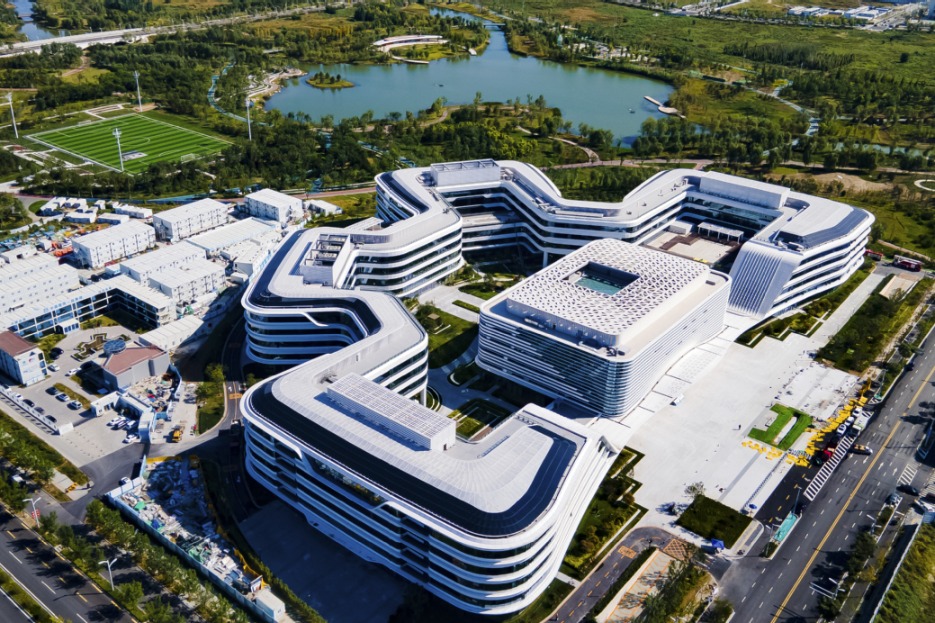
    The Beijing municipal government has launched a comprehensive initiative to reimagine the city’s extensive park network through 15 strategic measures designed to integrate green spaces more seamlessly into urban life. This groundbreaking policy shift aims to transform the capital’s 1,136 existing parks—which collectively attract over 500 million annual visits—into more accessible, functional, and commercially vibrant community hubs.

    The multifaceted approach addresses five critical areas of development, beginning with the elimination of physical and functional barriers to create borderless park environments. The plan mandates enhanced visitor facilities during peak periods, including temporary parking solutions and additional restroom facilities. Commercial enhancements will introduce cafes and cultural markets to improve the visitor experience while maintaining the parks’ fundamental recreational purpose.

    A significant operational reform introduces corporate management structures to park administration. While preserving public welfare values, parks may now be entrusted to professional enterprises through contracts extending up to five years, enabling scaled operations and branded management approaches. A business whitelist system will standardize commercial activities while encouraging integrated cultural, tourism, sports, and educational programming.

    The strategy differentiates approaches based on park typology: historical parks will prioritize cultural preservation, comprehensive parks will diversify their offerings, community parks will enhance neighborhood services, specialized parks will develop unique identities, and ecological parks will expand outdoor experiences including fitness programming and nature education.

    Additional innovations include relaxed restrictions on park infrastructure, permitting the rental of eligible buildings and development of non-paved activity areas. The city will also trial a ‘citizen park manager’ program, inviting resident participation in park oversight and management decisions. This initiative aligns with Beijing’s broader plan to develop 200 additional parks over the next decade, substantially expanding the city’s green infrastructure.

  • ABA League: Dubai Basketball maintain winning
streak with a 90-79 victory over Borac Mozzart

    ABA League: Dubai Basketball maintain winning streak with a 90-79 victory over Borac Mozzart

    Dubai Basketball has fortified its commanding position in the ABA League, extending its flawless winning streak to 12 consecutive victories following a hard-fought 90-79 triumph over Borac Mozzart at the Coca-Cola Arena. The match not only demonstrated the team’s competitive resilience but also marked a watershed moment for basketball development in the United Arab Emirates.

    The game witnessed the historic professional debut of 17-year-old Tomislav Vuckovic, a graduate of the Dubai Basketball Academy. His inclusion in the starting lineup represents the first instance of an academy product transitioning directly to the senior professional team, actualizing the club’s long-term vision for cultivating homegrown talent.

    Despite an uncharacteristically sluggish start that saw Borac Mozzart capitalize on defensive lapses to secure a 23-19 first-quarter lead, Dubai Basketball gradually established control through the orchestration of former NBA players McKinley Wright and Dwayne Bacon. The team entered halftime with a narrow 41-37 advantage.

    Strategic depth ultimately proved decisive as the contest progressed. Newcomer Kenan Kamenjaš delivered an impressive performance alongside seasoned veterans Nemanja Dangubić and Klemen Prepelič, while Borac’s efforts remained predominantly reliant on individual performances from Marko Jošilo and Diante Baldwin.

    Head coach Jurica Golemac acknowledged the challenging circumstances, stating: ‘We extend congratulations to our players for securing this victory amidst a demanding schedule. After overcoming our initial performance issues, we established superior rhythm in the second half and managed the game effectively through shared minutes and injury-free execution.’

    The final quarter demonstrated Dubai’s composure under pressure as they maintained their advantage without significant threats to the margin. Bacon led scoring with 15 points while Kamenjaš contributed 13 points and 7 rebounds.

    The team now prepares for a pivotal EuroLeague Round 22 confrontation against Virtus Bologna, where they currently hold 12th position—just one rank above their upcoming opponents. This matchup represents a critical opportunity for Dubai Basketball to consolidate their standing before their home audience.

    Tickets for the highly anticipated encounter are available through the Coca-Cola Arena’s official platform.

  • Marriage registrations surge in Shanghai following nationwide policy change

    Marriage registrations surge in Shanghai following nationwide policy change

    Shanghai witnessed a remarkable upswing in matrimonial registrations throughout 2025, with official data revealing approximately 125,000 couples formalizing their unions. This represents a substantial 39% increase from the previous year’s figure of around 90,000 marriages, according to Monday’s announcement from the Shanghai Civil Affairs Bureau.

    The significant surge is directly linked to China’s groundbreaking nationwide marriage registration policy implemented in May 2025. This revolutionary reform eliminated previous geographic restrictions, enabling couples to complete marriage and divorce procedures at any registration center across the country, regardless of their permanent household registration status.

    Shanghai’s implementation of this national initiative proved particularly impactful, with the city processing over 41,300 total registrations under the new framework. Among these, marriage applications dominated with more than 34,000 filings, demonstrating how policy accessibility directly influenced personal decisions.

    Concurrent with the registration boom, demographic trends showed remarkable stability. The average age for first-time marriages maintained consistency at 29.7 years overall, with men averaging 30.3 years and women at 29.1 years. These figures have remained virtually unchanged throughout the past five-year period, indicating that while policy changes affected registration timing, they didn’t alter fundamental societal patterns regarding marriage timing.

    The comprehensive data suggests that administrative convenience rather than shifting social attitudes primarily drove the registration increase, making matrimonial legal processes more accessible to mobile urban populations.

  • Will Iran’s crackdown playbook work this time?

    Will Iran’s crackdown playbook work this time?

    Iran has plunged into a nationwide digital darkness as its government implements a complete internet shutdown in response to unprecedented anti-regime protests that have spread across all 31 provinces. The current wave of demonstrations marks a significant escalation in Iran’s long history of civil unrest, distinguished by its explicit calls for regime change and the emergence of clear leadership from exiled opposition figures.

    The catalyst for these events emerged in late December when Tehran’s bazaar merchants initiated protests against the country’s theocratic rulers following the Iranian currency’s sharp collapse. These demonstrations remained limited initially until Reza Pahlavi, the US-based son of Iran’s former shah, issued a public call for nationwide protests last Thursday and Friday. Despite initial dismissal from authorities who questioned Pahlavi’s influence, his Instagram video garnered over 90 million views and nearly 500,000 comments—unprecedented engagement for Persian-language social media content.

    This mobilization represents the first time since the 1979 Iranian Revolution that a political figure has successfully issued a protest call explicitly framed around regime change that garnered massive public response. Unlike the leaderless, social media-driven protests of 2017-2018, 2019-2020, and 2022, or the reform-seeking Green Movement of 2009, the current movement combines digital tools with identifiable leadership, significantly enhancing its potential reach and impact.

    In response, the regime has deployed its full arsenal of digital authoritarian strategies. On January 8, authorities imposed a complete internet blackout, simultaneously cutting telephone lines and SMS services. This drastic measure has isolated over 85 million Iranians, restricting information flow exclusively to state-run outlets like Tasnim and Fars News, both affiliated with the Islamic Revolutionary Guard Corps (IRGC).

    The internet shutdown represents just one component of Iran’s sophisticated digital repression apparatus. The regime has simultaneously activated its extensive network of facial recognition cameras, largely imported from China, to identify and arrest protesters. Additionally, state media has intensified propaganda efforts, constructing narratives that frame protesters as foreign-backed terrorists rather than legitimate dissenters.

    President Masoud Pezeshkian has characterized participants as ‘trained terrorists’ brought into the country by enemies, while parliamentary speaker Mohammad Bagher Ghalibaf alleges the nation faces ‘a phase of terrorist warfare.’ These narratives deliberately obscure the protests’ domestic origins and justify violent suppression.

    Despite the digital blackout, limited Starlink satellite internet access has allowed a small number of videos to reach the outside world, documenting a brutal crackdown that has reportedly resulted in hundreds—possibly thousands—of fatalities and over 10,000 arrests. In a countermove, protesters have attempted to disable the regime’s ubiquitous surveillance cameras.

    The current situation echoes the 2019 protests where approximately 1,500 people were killed under similar digital blackout conditions, though the explicit regime-change demands and leadership structure distinguish the current movement. As authorities work to disrupt remaining Starlink signals, protesters continue risking their lives to make their voices heard beyond Iran’s digital iron curtain.

  • Iranian protesters reject US and Israeli interference

    Iranian protesters reject US and Israeli interference

    Former U.S. Secretary of State Mike Pompeo’s New Year greeting to Iranian protesters has ignited controversy and intensified speculation about foreign involvement in Iran’s ongoing civil unrest. Pompeo’s message, which specifically addressed “every Mossad agent walking beside” demonstrators, has been interpreted by many as validating the Islamic Republic’s claims that Israeli operatives have infiltrated the protest movement.

    The demonstrations, which began on December 28th and have spread across all 31 Iranian provinces, were initially triggered by spiraling living costs and state repression. However, the situation has been compounded by regional tensions following Israel’s June 2025 airstrikes that killed approximately 1,000 people and the recent U.S. kidnapping of Iran ally Nicolas Maduro in Venezuela.

    According to Iran Human Rights (IHR), at least 648 protesters have been killed and approximately 10,000 arrested, though an Iranian security official suggested the death toll might be as high as 2,000, including security personnel.

    The international response has been markedly different from previous protest cycles. U.S. President Donald Trump has openly encouraged protesters, promising that “help is on the way,” while former Israeli Defense Minister Yoav Gallant stated that “the regime in Iran must fall” and advocated steering events with “an invisible hand.”

    Within Iran, opinions are divided regarding foreign intervention. Some protesters, like 17-year-old Artin from Karaj, welcome potential U.S. and Israeli involvement, viewing these countries as “friends of the Iranian people.” Others express deep skepticism about foreign motives. Sara, a 39-year-old demonstrator from Tehran, questioned whether Israel genuinely seeks democracy in Iran, noting that “Israel wants a weak Iran.”

    Reza Pahlavi, son of Iran’s former ruler, has positioned himself as a potential alternative leader, having cultivated relationships with American and Israeli officials. His mother, Farah Pahlavi, has publicly supported the protesters and called for security forces to join them.

    The European Commission has promised new sanctions against Tehran in response to the “horrifying” death toll, while the U.S. has warned its citizens to leave Iran and imposed tariffs on Iran’s trading partners as the situation continues to deteriorate.

  • Iran nationwide internet shutdown has now lasted over 108 hours, monitor says

    Iran nationwide internet shutdown has now lasted over 108 hours, monitor says

    Iran has entered its fifth consecutive day of a complete nationwide internet blackout, with digital rights monitor Netblocks confirming the disruption has surpassed 108 hours as of Tuesday. The unprecedented telecommunications shutdown has effectively severed Iran’s population of over 87 million people from global digital networks and internal communication channels.

    According to Netblocks’ latest assessment via social media platform X, the comprehensive internet blackout has left Iranian citizens completely isolated from international connectivity and from each other. Digital activists and human rights organizations express grave concerns that the extended communications blackout serves as a deliberate measure to conceal the government’s aggressive suppression of widespread civil protests.

    The prolonged disruption represents one of the most severe digital censorship measures implemented by Iranian authorities in recent years, exceeding previous intermittent shutdowns during periods of civil unrest. Internet monitoring organizations report near-total disruption across mobile data networks, broadband services, and even virtual private networks (VPNs) that citizens typically use to bypass government restrictions.

    This extended digital isolation occurs amid reports of significant public demonstrations across multiple Iranian provinces. The complete information blackout prevents independent verification of events on the ground, including potential casualties, arrests, or the scale of military and security force deployments. International human rights watchdogs have condemned the shutdown as a violation of fundamental rights to information and communication.

    The Iranian government has historically implemented temporary internet restrictions during periods of social unrest, though rarely maintaining them for such an extended duration. Telecommunications experts note that sustained nationwide blackouts require sophisticated technical capabilities and represent significant economic costs, estimated at millions of dollars in daily economic losses across various sectors.

  • Reza Pahlavi: Iran’s ex-crown prince dreaming of homecoming

    Reza Pahlavi: Iran’s ex-crown prince dreaming of homecoming

    Reza Pahlavi, the former crown prince of Iran who has lived in exile for nearly five decades, has unexpectedly become a central figure in the anti-government protests shaking the Islamic Republic. The 65-year-old US-based royal has leveraged social media to encourage nightly demonstrations, with his name becoming a rallying cry for many protesters despite his long absence from Iranian soil.

    Pahlavi’s sudden prominence comes as surprise to many observers. According to Jason Brodsky of United Against Nuclear Iran, the exiled prince has demonstrated a remarkable “ability to turn out Iranians in the streets,” with distinct pro-Pahlavi chants emerging during demonstrations. Brodsky notes this reflects “a nostalgia for the Pahlavi era that has been building for some time,” though not necessarily indicating universal support for monarchical restoration.

    The son of the last Shah left Iran in 1978 at age 17 for military pilot training in the United States, narrowly missing the 1979 Islamic Revolution that overthrew his father and ended millennia of Persian monarchy. This timing, according to analyst Clement Therme, has spared him association with the excesses of imperial rule, allowing him to emerge as the “main popular opposition figure” both within and outside Iran.

    Pahlavi maintains he seeks not restoration of the throne but leadership of a transition to democracy, telling AFP during a Paris visit: “I don’t believe I need a title to play that role. The important thing is to be someone who can galvanize a nation.” He has called for a secular Iran with greater social freedoms, particularly for women, while allowing space for supporters of the current regime.

    Yet significant challenges remain. Pahlavi remains a polarizing figure even within Iran’s fractured opposition. His 2023 visit to Israel without coordinating with allied groups created immediate tensions, while pro-monarchy social media accounts frequently attack other opposition figures, including imprisoned Nobel Peace Prize winner Narges Mohammadi.

    International recognition has also proven elusive. When asked about meeting Pahlavi, former US President Donald Trump responded: “I’ve watched him, and he seems like a nice person, but I’m not sure it would be appropriate at this point to do that as president.”

    The royal has endured profound personal tragedies during his exile, including the drug-related death of his sister Leila in 2001 and the suicide of his brother Ali Reza in 2011, which the family attributed to his sorrow over “the loss of his homeland, father and sister.”

    Despite these obstacles, academic Arash Azizi of Yale University notes Pahlavi’s support has grown as he’s perceived as “the only nationally known opposition leader with something of a plan to confront the regime.” However, Azizi cautions that his supporters “are still a minority in a highly divided country,” with his camp often alienating potential allies rather than unifying opposition forces.

  • Gaza ‘dying slowly’ amid collapsing buildings and severe cold

    Gaza ‘dying slowly’ amid collapsing buildings and severe cold

    A severe winter storm has plunged the Gaza Strip into a deepening humanitarian crisis, claiming at least six lives within a 24-hour period as freezing temperatures and structural collapses threaten the besieged population. According to the Palestinian health ministry, a one-year-old infant succumbed to exposure, raising the winter death toll for children to seven. Simultaneously, Gaza’s civil defense reported the death of a young man crushed by collapsing sections of al-Saraya Mosque in Gaza City—the fifth such fatality from infrastructure failures in a single day.

    The cumulative impact of seasonal storms and flooding has resulted in at least 24 fatalities this winter, exacerbating the vulnerability of over 1.5 million displaced Palestinians. The territory’s infrastructure, already decimated by more than two years of sustained Israeli bombardment, now poses lethal risks to inhabitants. Despite a ceasefire agreement signed in October, an analysis by The New York Times indicates that Israel has demolished over 2,500 buildings since the truce took effect.

    Civil defense spokesperson Mahmoud Basal accused Israeli authorities of restricting the entry of essential shelter materials, caravans, and construction supplies, intensifying the effects of the natural disaster. Basal warned of an approaching polar storm that would bring ‘catastrophic’ conditions and ‘preventable deaths.’ The Government Media Office in Gaza reported that more than 7,000 tents were swept away by strong winds and heavy rain in just 48 hours, describing the situation as ‘Gaza dying slowly.’

    Health officials highlighted the rapid spread of respiratory diseases, hypothermia, and worsening malnutrition. Muhammad Abu Salmiya, director of al-Shifa Medical Complex, reported the emergence of mutated respiratory viruses, with more than five children and ten elderly individuals recently dying from respiratory complications. Salmiya attributed the deteriorating health conditions to the combined impact of Israel’s military operations and epidemic spread among displaced populations.

    The World Health Organization noted that over 18,500 individuals, including 4,000 children, require urgent medical evacuation. Muneer al-Boursh, Director General of Gaza’s Ministry of Health, characterized the situation as the ‘engineering of slow death,’ emphasizing that much of the permitted aid consists of non-nutritional items while medicines, vitamins, and infant formula are systematically denied entry. Israeli forces continue to violate the ceasefire agreement by restricting aid flow and blocking most medical evacuation requests, alongside ongoing bombardment that has resulted in over 71,424 Palestinian fatalities, predominantly civilians, according to Israeli military data.