标签: Asia

亚洲

  • Trump hints at striking Iran as White House tells Tehran to make a deal

    Trump hints at striking Iran as White House tells Tehran to make a deal

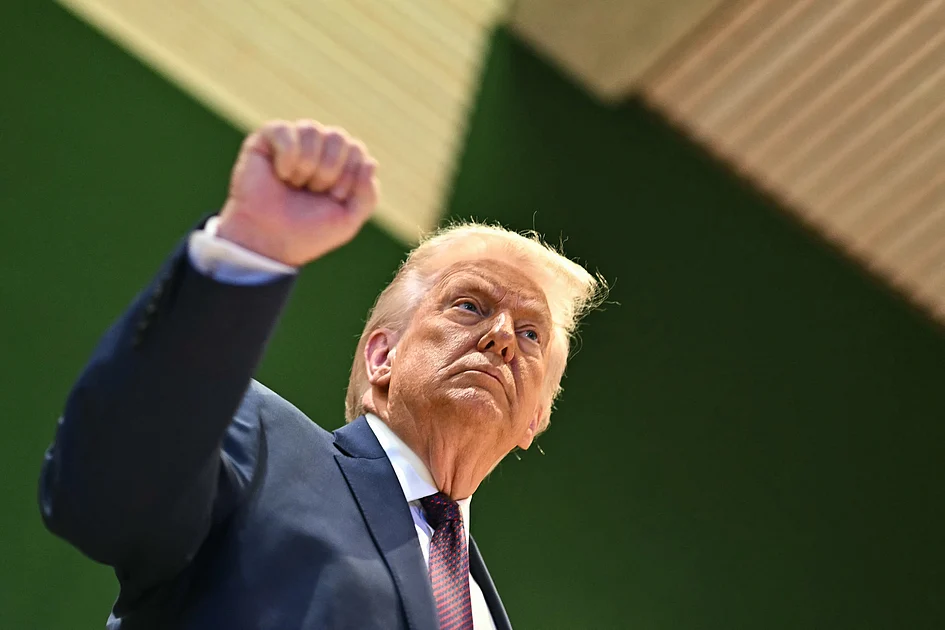
    The White House has issued a stark warning to Tehran, suggesting Iran would be “wise” to reach an agreement with the United States amid escalating military posturing and renewed diplomatic efforts. President Donald Trump has repeatedly hinted at potential military action against Iran, with satellite imagery confirming the USS Abraham Lincoln aircraft carrier and its air wing positioned approximately 700 kilometers from the Iranian coastline as of February 15th.

    The two nations recently resumed indirect negotiations mediated by Oman, marking the first serious diplomatic engagement since previous talks collapsed following Israeli surprise strikes on Iranian nuclear sites last June. That military confrontation escalated into a 12-day war that briefly saw American participation in bombing campaigns against Iranian facilities.

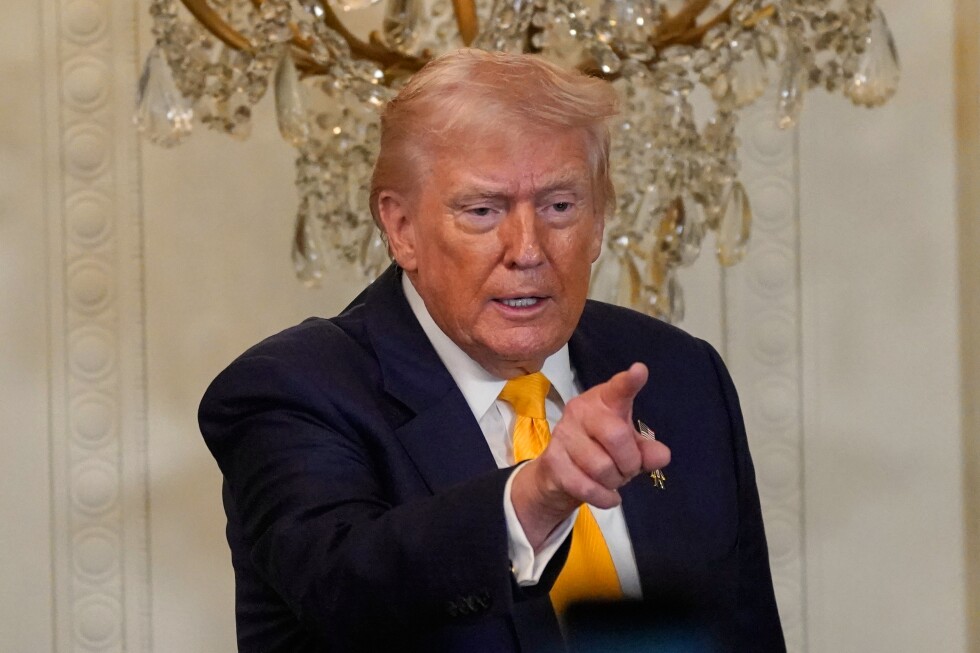
    White House Press Secretary Karoline Leavitt emphasized the administration’s position, stating, “Iran would be very wise to make a deal with President Trump and with his administration.” Meanwhile, Trump himself suggested on his Truth Social platform that the United States might initiate strikes, with reports indicating military preparations could be finalized as early as this weekend, though no final decision has been confirmed.

    According to intelligence sources cited by major news organizations, Trump has received comprehensive military briefings outlining options “designed to maximize damage,” including potential campaigns targeting Iranian political and military leadership with regime change objectives.

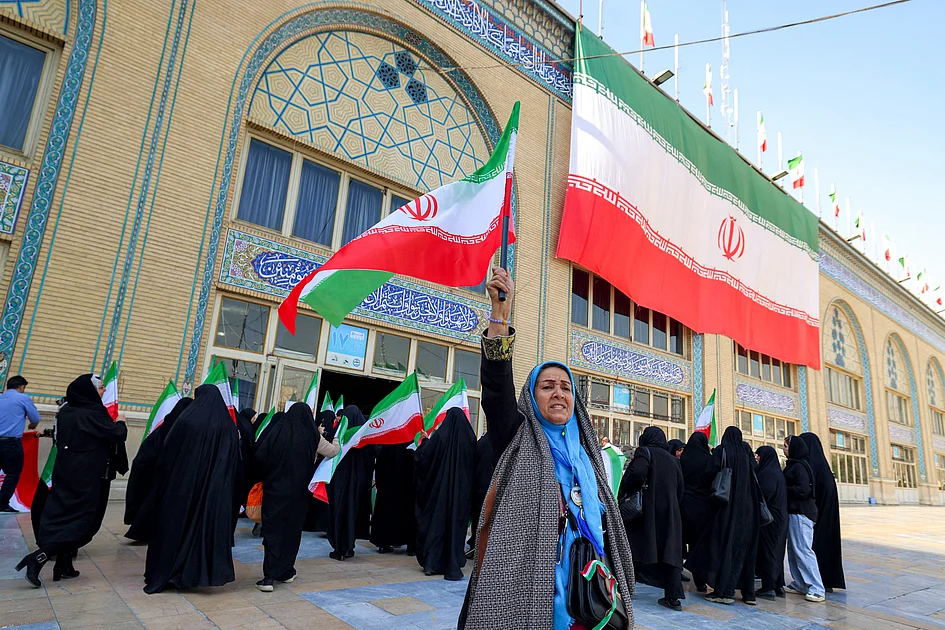
    Iranian officials have responded with measured defiance. Foreign Minister Abbas Araghchi confirmed Tehran is “drafting” a framework for future talks, while President Masoud Pezeshkian insisted “We do not want war” but warned Iran would not accept humiliating demands. “If they are going to try to impose their will on us, humiliate us and demand that we bow our heads at any cost, should we accept that?” Pezeshkian questioned.

    The diplomatic stalemate continues as both sides demonstrate military capabilities. Washington has deployed a second aircraft carrier to the region, while Iran’s Islamic Revolutionary Guard Corps has initiated war games in the strategically vital Strait of Hormuz, through which significant global energy supplies transit. Iranian state media has confirmed temporary closures of portions of the waterway during these exercises.

    Meanwhile, International Atomic Energy Agency head Rafael Grossi has engaged with Iranian officials regarding Tehran’s nuclear program, which has seen reduced cooperation with UN inspectors following previous attacks on facilities. US Energy Secretary Chris Wright reinforced Washington’s position, vowing to prevent Iranian nuclear weapons acquisition “one way or the other,” citing Tehran’s stated intentions as “entirely unacceptable.”

  • Woman accused of using ChatGPT to plan drug murders

    Woman accused of using ChatGPT to plan drug murders

    A 21-year-old South Korean woman faces murder charges following a disturbing investigation that revealed her use of OpenAI’s ChatGPT to research lethal drug interactions before allegedly poisoning multiple men. Seoul police authorities disclosed that the suspect, identified only by her surname Kim, systematically queried the AI chatbot about the dangers of mixing sleeping pills with alcohol prior to the fatal incidents.

    Digital forensic analysis of Kim’s mobile device uncovered specific searches including ‘What happens if you take sleeping pills with alcohol?’, ‘How many do you need to take for it to be dangerous?’, and the direct question ‘Could it kill someone?’ These discoveries directly contradict Kim’s initial statements to investigators where she claimed unawareness that combining prescribed benzodiazepine sedatives with alcohol could prove fatal.

    The timeline of alleged crimes begins in December 2023 when Kim first administered sedative-laced drinks to her then-partner in a Namyangju cafe parking lot, resulting in temporary unconsciousness. Police evidence indicates Kim escalated drug quantities in subsequent attacks. On January 28, 2024, a man in his twenties was found dead in a Gangbuk-gu motel hours after accompanying Kim. Using identical methodology, another victim died on February 9 after checking into a different motel with the suspect.

    Kim was initially arrested on February 11 on charges of inflicting bodily injury resulting in death, but prosecutors have since upgraded charges to premeditated murder based on digital evidence and toxicology reports. The investigation remains active as authorities examine potential additional victims beyond the three confirmed cases.

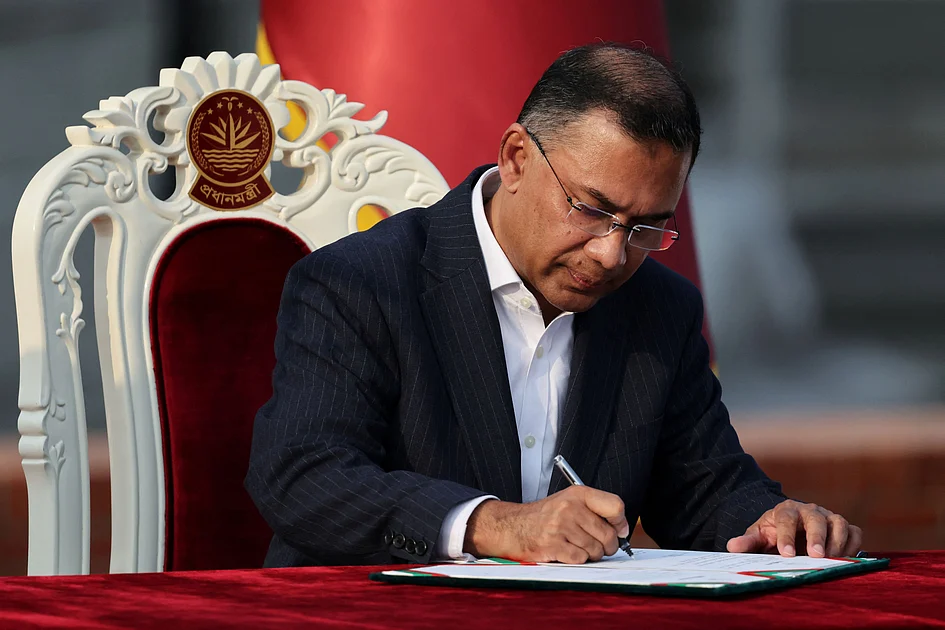
  • Bangladesh’s new PM Tarique Rahman pledges price stability during Ramadan

    Bangladesh’s new PM Tarique Rahman pledges price stability during Ramadan

    In his inaugural policy address, Bangladesh’s newly appointed Prime Minister Tarique Rahman has committed to addressing the nation’s pressing economic challenges during the holy month of Ramadan. The 60-year-old political scion, sworn into office on Tuesday, faces the formidable task of stabilizing essential commodity prices while implementing comprehensive governance reforms.

    Rahman, son of former Prime Minister Khaleda Zia and the late President Ziaur Rahman, assumes leadership following his party’s decisive electoral victory. His administration inherits a complex landscape marked by political turbulence and economic strain, particularly after the 2024 uprising that ousted Sheikh Hasina’s government.

    During a nationally televised speech on Wednesday evening, the Prime Minister issued a stern warning against commercial exploitation during Ramadan. He emphasized the spiritual significance of the holy month, stating, ‘This period of self-purification should not exacerbate public hardship. Traders must refrain from treating Ramadan as an opportunity for excessive profit and ensure essential goods remain accessible to all citizens.’

    The government’s commitment comes against a backdrop of persistent inflationary pressures. Recent data reveals Bangladesh’s annual inflation reached 8.58% in January 2026—the highest recorded since May 2025—with food prices continuing to burden household economies.

    Rahman outlined a multi-faceted approach to economic management, pledging to dismantle market syndicates that manipulate prices while establishing robust mechanisms to protect both consumers and legitimate businesses. His administration will prioritize judicial reforms and anti-corruption measures, asserting that ‘the rule of law, rather than political influence or coercion, will serve as the foundational principle of governance.’

    Beyond immediate economic concerns, the Prime Minister revealed ambitious infrastructure modernization plans. These include comprehensive reorganization and expansion of the national railway network, alongside enhanced coordination between transportation ministries to develop an integrated transit system. This initiative aims to alleviate urban congestion while improving nationwide connectivity and commercial efficiency.

  • Trump’s ‘Board of Peace’ to hold first meeting with eyes on Gaza and beyond

    Trump’s ‘Board of Peace’ to hold first meeting with eyes on Gaza and beyond

    Washington witnessed the inaugural gathering of President Donald Trump’s newly established ‘Board of Peace’ on Thursday, an institution conceived with immediate focus on Gaza’s stabilization but designed with far broader geopolitical ambitions. The high-profile assembly brought together approximately two dozen world leaders and senior officials, notably including several of Trump’s authoritarian-leaning allies while conspicuously excluding traditional European democratic partners typically aligned with U.S. initiatives.

    The board’s formation follows the Trump administration’s successful mediation of an October ceasefire in Gaza, achieved through collaborative diplomacy with Qatar and Egypt, which halted two years of devastating conflict. According to U.S. officials, the peace plan has now progressed to its second phase, prioritizing the disarmament of Hamas—the Palestinian group whose October 7, 2023 attack on Israel triggered massive military retaliation. Gaza’s Hamas-operated health ministry reports at least 601 casualties since the truce implementation.

    Central to Thursday’s deliberations were substantial financial commitments exceeding $5 billion for Gaza’s reconstruction, where extensive infrastructure lies in ruins. President Trump has notably suggested developing resorts in the territory, drawing from his background as a property magnate. The meeting also advanced plans for an International Stabilization Force to ensure security, with Indonesia—the world’s largest Muslim-majority nation—expressing readiness to contribute up to 8,000 troops pending confirmation.

    Israeli Prime Minister Benjamin Netanyahu emphasized the priority of disarming Hamas, specifically targeting AK-47 rifles as ‘the main weapon that has to go.’ Strategic affairs expert Jeremy Issacharoff acknowledged the complexity of disarmament while stressing that a credible pathway would determine the initiative’s viability. Meanwhile, Hamas spokesman Hazem Qassem urged the board to compel Israel to cease violations and lift its longstanding siege of Gaza.

    The board’s operational framework grants Trump veto power and permanent leadership privileges even after leaving office, with permanent membership requiring a $1 billion contribution. The initiative has drawn criticism from analysts like Bruce Jones of the Brookings Institution, who described it as ‘a confused mix of ambition and narcissism, unleavened by any effort at intellectual coherence.’

    The attendance roster reflected Trump’s diplomatic preferences, featuring Hungarian Prime Minister Viktor Orban and Argentina’s President Javier Millei, while traditional U.S. allies including France and Canada were notably absent. Japan remained undecided on membership, and Brazilian President Lula da Silva declined participation, criticizing the board as ‘a new UN where only [Trump] is the owner.’

  • Tata’s data centre business signs up OpenAI as first customer

    Tata’s data centre business signs up OpenAI as first customer

    In a landmark development for India’s technology sector, Tata Consultancy Services has announced a strategic partnership with artificial intelligence pioneer OpenAI. The parent company of ChatGPT revealed on Thursday that it will become the inaugural customer for Tata’s newly established data center business, committing to an initial capacity of 100 megawatts.

    The collaboration represents a significant endorsement of India’s growing data infrastructure capabilities. Concurrently, Tata Group unveiled ambitious internal plans to implement ChatGPT Enterprise across its vast organizational network. This enterprise-wide deployment will commence with several hundred thousand employees and gradually expand throughout the conglomerate’s diverse business units over the coming years.

    This dual-faceted agreement underscores the accelerating global demand for advanced computing infrastructure driven by artificial intelligence applications. The partnership positions Tata Group at the forefront of India’s digital transformation while providing OpenAI with critical infrastructure support for its expanding operations. The arrangement also signals growing confidence among international technology leaders in India’s capacity to support cutting-edge AI development and deployment.

    The announcement comes amid increased investment activity in India’s data center sector, with several global technology giants recently committing substantial resources to develop digital infrastructure throughout the country. This growing interest reflects India’s emerging status as a crucial hub for digital services and artificial intelligence innovation.

  • Tariffs paid by midsized US firms tripled last year, new analysis from JPMorganChase Institute shows

    Tariffs paid by midsized US firms tripled last year, new analysis from JPMorganChase Institute shows

    New economic research from JPMorgan Chase Institute reveals a dramatic 300% surge in tariff payments by American midsized businesses throughout 2024, directly challenging the Trump administration’s assertion that foreign entities bear the cost of import taxes. The comprehensive study, published Thursday, demonstrates how companies employing approximately 48 million U.S. workers have been forced to absorb substantial new operational expenses through price increases, workforce reductions, or diminished profit margins.

    The analysis specifically examined middle-market enterprises—firms generating between $10 million and $1 billion annually with fewer than 500 employees—which possess neither the pricing power of large multinationals nor the agility of smaller operations. According to Chi Mac, the Institute’s Business Research Director, “This represents a fundamental transformation in their cost structure. We’re observing tangible evidence of supply chain diversification away from China toward alternative Asian markets.”

    The data indicates payments to Chinese suppliers have declined by approximately 20% since October 2024, though researchers caution this could reflect either genuine supply chain relocation or mere rerouting of Chinese goods through third countries. The Trump administration has maintained that tariffs strengthen national security and economic independence, with National Economic Council Director Kevin Hassett recently dismissing contrary Federal Reserve research as “an embarrassment” that warranted “disciplinary” action.

    Despite administration claims of economic benefits, the New York Federal Reserve calculates the average tariff rate has jumped from 2.6% to 13% under Trump’s policies. Academic economists estimate consumer prices have risen approximately 0.8 percentage points higher than baseline projections due to tariff impacts. The Supreme Court is poised to rule on whether Trump exceeded executive authority by declaring an economic emergency to implement tariffs without congressional approval.

  • Iran issues Notam over planned rocket launches on February 19 amid tensions

    Iran issues Notam over planned rocket launches on February 19 amid tensions

    Iran has escalated regional tensions by issuing a formal Notice to Airmen (NOTAM) announcing planned rocket launches across its southern territories on Thursday, February 19th, 2026. The advisory, published on the US Federal Aviation Administration’s website, indicates airspace closures will be in effect from 03:30 to 13:30 GMT.

    This development occurs alongside significant military movements in the strategically vital Strait of Hormuz. Iranian naval forces recently concluded drills in the area and are scheduled to commence joint exercises with Russia’s navy on the same day as the rocket tests.

    The NOTAM issuance coincides with heightened diplomatic friction between Tehran and Washington. US Vice President JD Vance has publicly stated that the administration is reevaluating its approach toward Iran, considering whether to maintain diplomatic channels or pursue alternative strategies. This reassessment follows the deployment of US warships to waters near Iran.

    Further complicating the situation, Iranian authorities announced plans to temporarily close sections of the Strait of Hormuz for several hours on Tuesday. This critical maritime passage handles approximately one-fifth of global oil shipments. Tehran has historically threatened complete closure of the strait in response to military aggression, an action that would severely disrupt international energy markets and likely trigger substantial oil price increases.

    The ongoing tensions are set against the backdrop of nuclear negotiations between Iran and the United States, with discussions scheduled to continue in Oman despite disagreements over the negotiation framework. The US has maintained a naval presence in the Gulf region to pressure Tehran into making concessions regarding its nuclear program.

  • Ramadan 2026: How food walks unite cultures across Indian cities

    Ramadan 2026: How food walks unite cultures across Indian cities

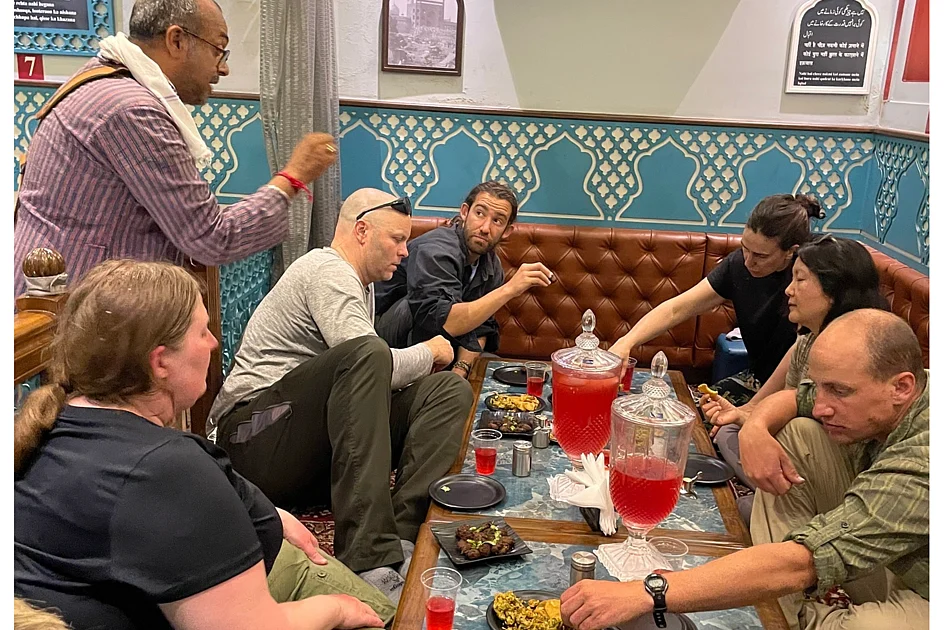
    Across India’s urban landscapes, an innovative cultural initiative is transforming Ramadan traditions into powerful tools for interfaith dialogue and community building. What began as a passion project among Delhi enthusiasts in 2012 has evolved into a nationwide movement that brings together Muslims and non-Muslims through shared culinary experiences and meaningful conversations.

    DelhiByFoot Adventures, the pioneering organization behind these Ramadan food walks, has expanded its operations to include Kolkata and Hyderabad, demonstrating growing interest in cross-cultural engagement. The program ‘Iftar Sey Sehari Tak’ (From Iftar to Sehri) offers midnight walking tours during Ramadan that have attracted both local residents and international visitors seeking authentic cultural immersion.

    Ramit Mitra, co-founder of the initiative, emphasizes its inclusive nature: ‘We have included people from all cultures and faiths, helping to bring them closer to each other.’ The concept emerged from shared passions and a mutual appreciation for Delhi’s rich cultural offerings, but has since developed into a meaningful platform for intercultural exchange.

    The organization has curated diverse experiences ranging from Iftar celebrations inside Delhi’s historic Jama Masjid to intimate home gatherings featuring traditional Ramadan foods from Hyderabad, Lucknow, and Bhopal. These home-based events often occur in the residences of artists, musicians, calligraphers, and food historians, providing unique insights into regional culinary traditions.

    Remarkably, the majority of participants in these community-led events come from non-Muslim backgrounds. They attend not only for the sumptuous Iftar spreads but also for discussions about fasting practices, religious philosophies, and shared human experiences across different faith traditions.

    For Ramadan 2026, the organization has developed special programming including Iftar celebrations at the homes of Hindustani Classical vocal musicians and curated menus featuring dishes from Uttar Pradesh, Telangana, Bihar, and Karnataka. The events feature food historians presenting royal family recipes and pop-up menus inspired by nawabi traditions.

    The initiative now includes overnight walks from Iftar to Sehri in Delhi and Mumbai, plus a four-day Ramadan special tour in Hyderabad. Each city offers distinct culinary experiences, with Ramadan markets in Mumbai, Bangalore, Lucknow, Kolkata, and Bhopal providing unique regional flavors and cultural insights.

    Through these shared meals and conversations, participants not only explore India’s diverse culinary heritage but also establish emotional connections with hosts, exchanging childhood memories of Ramadan and other festivals that once united communities across religious boundaries.

  • Alysa Liu carries US medal hopes into concluding women’s free skate at the Milan Cortina Olympics

    Alysa Liu carries US medal hopes into concluding women’s free skate at the Milan Cortina Olympics

    The final chapter of women’s figure skating at the Milan Cortina Winter Olympics unfolds Thursday night with an unprecedented potential podium sweep by Japanese athletes, while American champion Alysa Liu carries her nation’s golden aspirations against formidable competition.

    Japan’s formidable trio—Ami Nakai (17), Kaori Sakamoto (25), and Mone Chiba—stand positioned to achieve what no nation has accomplished in Olympic history: a complete women’s figure skating podium domination. Nakai, inspired by legendary skater Mao Asada, leads the competition after delivering one of only two successful triple axels during Tuesday’s short program. Sakamoto, the 2022 Beijing bronze medalist, trails by a mere point in what she暗示 might be her Olympic finale.

    Challenging the Japanese dominance is American skater Alysa Liu, who has positioned herself as the only non-Japanese contender within striking distance of the podium. The 20-year-old from California’s Bay Area has staged a remarkable comeback after a two-year retirement, during which she rediscovered her passion for skating. Her victory at last year’s World Championships—ending a 16-year American drought since Kimmie Meissner—preceded her current quest to become the first U.S. women’s Olympic champion since Sarah Hughes in 2002.

    The competition’s unpredictable variable arrives in the form of Russian skater Adeliia Petrosian (18), who competes as a neutral athlete amid Russia’s ongoing exclusion from international events due to geopolitical circumstances. As the latest prodigy from controversial coach Eteri Tutberidze’s stable, Petrosian represents the only contender capable of executing quadruple jumps—a technical element that could dramatically alter the competition’s outcome. Despite limited international exposure and concerns about inflated domestic scores, her Milan performances have demonstrated medal-winning potential.

    This showdown marks another chapter in Russia’s figure skating dominance, with no non-Russian athlete having claimed Olympic gold since South Korea’s Yuna Kim at the 2010 Vancouver Games. The evening promises not only technical excellence but compelling narratives of perseverance, national pride, and athletic legacy across generations of skaters.

  • Steed & Steel: Striding through Year of the Horse

    Steed & Steel: Striding through Year of the Horse

    China Daily Information Co (CDIC) has issued a formal copyright notification asserting exclusive ownership over all content published across its digital platforms. The comprehensive protection extends to textual materials, photographic content, multimedia information, and all other published elements appearing on the company’s website.

    According to the established policy, republication or utilization of any protected content in any form requires obtaining prior written authorization from CDIC. The company explicitly prohibits unauthorized use of its intellectual property, reinforcing its commitment to safeguarding digital assets against copyright infringement.

    The notice additionally provides technical recommendations for optimal user experience, suggesting that visitors utilize browsers with 1024*768 resolution or higher for proper site functionality. This technical specification aims to ensure consistent content presentation and accessibility across different viewing environments.

    Furthermore, the publication details include reference to multimedia online publishing license number 0108263 and registration number 130349, providing official documentation of the platform’s operational credentials. The footer section contains standard corporate information including details about the organization, advertising opportunities, contact channels, and employment provisions for both general and expatriate positions.

    The copyright statement concludes with an invitation for users to follow the organization’s digital channels through provided social media connections, maintaining engagement with its audience while protecting proprietary content.